
What are people asking ChatGPT and other AI search? (James Dooley Interviews Benjamin Tannenbaum)
Listen on your favourite platform
| Platform | Link |
|---|---|
| YouTube | Listen on YouTube → |
| Transistor | Listen on Transistor → |
| Pocket Casts | Listen on Pocket Casts → |
| Amazon Music | Listen on Amazon Music → |
| Spotify | Listen on Spotify → |
| Podverse | Listen on Podverse → |
| Pod.link | Listen on Pod.link → |
| Castro | Listen on Castro → |
| Castbox | Listen on Castbox → |
| Podcast Addict | Listen on Podcast Addict → |
| Deezer | Listen on Deezer → |
| Listen Notes | Listen on Listen Notes → |
| Podcast Guru | Listen on Podcast Guru → |
| Podchaser | Listen on Podchaser → |
| Steno | Listen on Steno → |
| Metacast | Listen on Metacast → |
What Does “What are people asking ChatGPT and other AI search? (James Dooley Interviews Benjamin Tannenbaum)” Talk About?
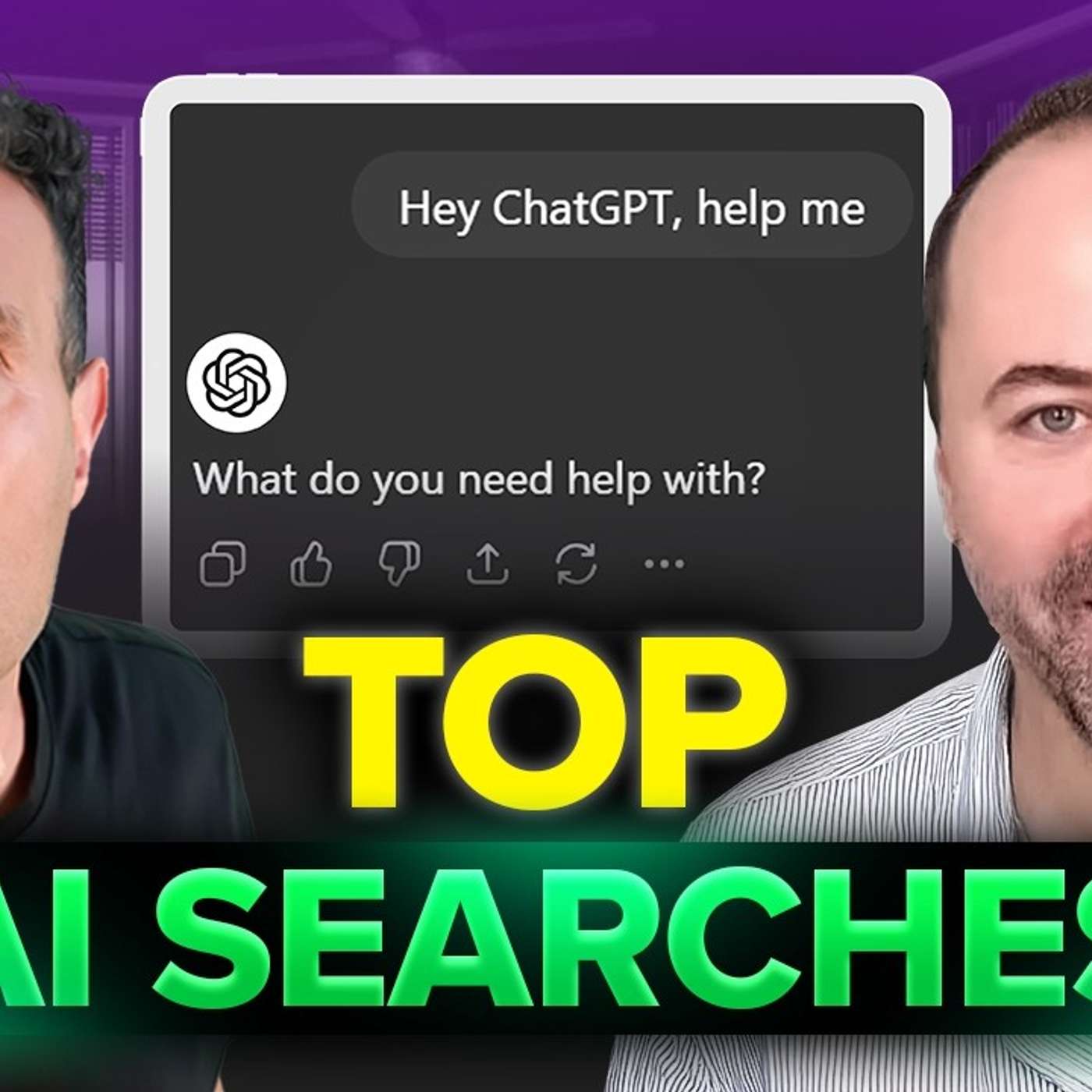
This episode of the James Dooley Podcast features a conversation with Benjamin Tannenbaum from AISO, diving deep into what users are actually asking when they interact with AI-powered search tools like ChatGPT and Gemini. James and Benjamin explore how AI queries fundamentally differ from traditional Google keyword searches, highlighting that prompts are longer, more specific, and packed with personal context such as dietary restrictions, budgets, and individual preferences. The episode challenges marketers to question whether existing SEO strategies are sufficient or whether a genuine rethink is needed.
A central concept discussed is search density, the idea that a single AI conversation can compress what would traditionally be many separate Google searches into one flowing thread, moving a user from awareness all the way to near-transaction intent rapidly. Benjamin also reveals a surprising finding from their dataset: most AI interactions are one-shot queries, where users ask a question, receive an answer, and then leave to visit Google or click links rather than engaging in extended back-and-forth conversations. The top categories driving AI search behaviour identified in their research are travel, consumer electronics, and beauty including skincare and health-related topics.
The episode wraps with practical guidance for content marketers, emphasising the importance of updating existing content to address the more specific and personalised queries people now pose to AI systems. Benjamin also touches on distribution strategy, noting that AI systems pull information not just from brand websites but also from third-party sources like media outlets, social platforms, and competitors. James notes this is part one of a broader series that will later explore GEO versus SEO, query fan out, and personalisation in large language models.
“One surprising insight is that most conversations are one shot. People ask a question, get an answer, and then often leave ChatGPT and move to Google or click links.”
— Benjamin Tannenbaum
Who Are the Guests on “What are people asking ChatGPT and other AI search? (James Dooley Interviews Benjamin Tannenbaum)”?
Benjamin Tannenbaum is a specialist at AISO with a focus on how users interact with large language models and AI-powered search platforms. He brings a data-driven perspective to the conversation, having built a dataset that captures real AI conversations across tools like ChatGPT and Gemini rather than relying on estimates or workarounds. His expertise lies in understanding the behavioural differences between traditional search and AI-driven discovery, making him a valuable voice for brands and marketers trying to navigate this shifting landscape.
James Dooley is the host of the James Dooley Podcast, where he interviews experts across digital marketing, SEO, and emerging technologies. Known for steering conversations toward actionable insights, James frames the discussion around the practical implications of AI search behaviour for content marketers and brands, ensuring the episode delivers value beyond theoretical observation. He is building out a broader series on AI search topics including GEO versus SEO and query fan out.
What Are the Key Takeaways From “What are people asking ChatGPT and other AI search? (James Dooley Interviews Benjamin Tannenbaum)”?
Here are the key points discussed in this episode:
- AI search queries are not simply longer versions of Google keywords but are fundamentally more specific, personalised, and context-rich, often including constraints like allergies, budgets, and individual preferences in a single prompt.
- Most AI conversations are one-shot interactions where users ask one question, get an answer, and then move to Google or click provided links, meaning extended dialogue is less common than many marketers assume.
- Search density means a single AI conversation can move a user from top-of-funnel awareness all the way to near-transaction intent, compressing a journey that would traditionally span many separate Google searches.
- Travel, consumer electronics, and beauty including skincare and health topics are the top categories driving AI search behaviour, and users in these spaces share far more personal detail with AI than they typically would on platforms like Reddit.
- Content marketers should focus on updating existing pages to address the more specific requests people now include in AI prompts, while also considering how third-party sources like media and social platforms influence what AI systems surface.
“The more specific your content, the lower the volume but the higher the likelihood of conversion and being picked up by AI.”
— Benjamin Tannenbaum
Is “What are people asking ChatGPT and other AI search? (James Dooley Interviews Benjamin Tannenbaum)” Worth Listening To?
This episode is worth listening to because it moves beyond speculation about AI search and grounds the conversation in real data. Benjamin Tannenbaum shares findings from an actual dataset of AI conversations, not proxy metrics or estimates, which makes his observations about one-shot queries, search density, and the hyper-personal nature of AI prompts feel credible and actionable. For anyone trying to understand what is genuinely new about AI search versus what is simply a repackaging of old SEO logic, this episode provides a clear and honest answer.
What makes the episode particularly valuable is the way it bridges insight and strategy. Benjamin does not just describe what people are asking in ChatGPT and Gemini but explains what content marketers should actually do about it, from refining existing pages to thinking about distribution across third-party channels. The concept of search density alone is worth the listen, as it reframes how marketers should think about the user journey inside a single AI thread. As part one of a series, it also sets up future episodes on GEO versus SEO and query fan out, making it a strong entry point for anyone building a long-term understanding of AI-driven discovery.
Who Should Listen to “What are people asking ChatGPT and other AI search? (James Dooley Interviews Benjamin Tannenbaum)”?
This episode is ideal for:
- Content marketers and SEO professionals looking to understand how AI search behaviour differs from traditional Google search and what adjustments to make to their strategies.
- Brand managers and digital strategists in travel, consumer electronics, or beauty who want to understand why their categories are dominant in AI search and how to capitalise on that visibility.
- Business owners and entrepreneurs trying to determine whether investing in AI search optimisation is worth serious budget allocation.
- Agency professionals and consultants advising clients on emerging search channels who need data-backed insights to inform their recommendations.
Where Can You Listen to James Dooley Podcast?
You can listen to James Dooley Podcast on all major podcast platforms:
- Apple Podcasts – Search for “James Dooley Podcast” in the Podcasts app
- Spotify – Available on Spotify for free
- Amazon Music / Audible – Listen through your Amazon account
- Overcast – For iOS users who prefer a dedicated podcast app
- Pocket Casts – Cross-platform podcast player
You can also subscribe using the RSS feed: https://feeds.transistor.fm/james-dooley-podcast
What Are Listeners Saying About This Episode?
“The concept of search density genuinely changed how I think about AI-driven user journeys. I had never considered that one ChatGPT conversation could compress awareness all the way to transaction intent, and now I am auditing our content with that in mind. Really valuable first episode in what looks like a great series.”
“I appreciated that Benjamin was working from a real dataset rather than guessing. The finding that most AI conversations are one-shot queries surprised me and made me rethink some assumptions I had about how users engage with these tools. Short episode but packed with useful information.”
“As someone working in the beauty and wellness space, hearing that users share more personal detail with AI than they do on Reddit was a real eye opener. It reinforced why specificity in content matters so much for this category. Looking forward to the follow-up episodes on GEO and query fan out.”
- Listen to What are people asking ChatGPT and other AI search? (James Dooley Interviews Benjamin Tannenbaum) on Transistor
- Listen to What are people asking ChatGPT and other AI search? (James Dooley Interviews Benjamin Tannenbaum) on Pocket Casts
- Listen to What are people asking ChatGPT and other AI search? (James Dooley Interviews Benjamin Tannenbaum) on Amazon Music
- Listen to What are people asking ChatGPT and other AI search? (James Dooley Interviews Benjamin Tannenbaum) on Spotify
- Listen to What are people asking ChatGPT and other AI search? (James Dooley Interviews Benjamin Tannenbaum) on Podverse
- Listen to What are people asking ChatGPT and other AI search? (James Dooley Interviews Benjamin Tannenbaum) on Pod.link
- Listen to What are people asking ChatGPT and other AI search? (James Dooley Interviews Benjamin Tannenbaum) on Castro
- Listen to What are people asking ChatGPT and other AI search? (James Dooley Interviews Benjamin Tannenbaum) on Castbox
- Listen to What are people asking ChatGPT and other AI search? (James Dooley Interviews Benjamin Tannenbaum) on Podcast Addict
- Listen to What are people asking ChatGPT and other AI search? (James Dooley Interviews Benjamin Tannenbaum) on Deezer
- Listen to What are people asking ChatGPT and other AI search? (James Dooley Interviews Benjamin Tannenbaum) on Listen Notes
- Listen to What are people asking ChatGPT and other AI search? (James Dooley Interviews Benjamin Tannenbaum) on Podcast Guru
- Listen to What are people asking ChatGPT and other AI search? (James Dooley Interviews Benjamin Tannenbaum) on Podchaser
- Listen to What are people asking ChatGPT and other AI search? (James Dooley Interviews Benjamin Tannenbaum) on Steno
- Listen to What are people asking ChatGPT and other AI search? (James Dooley Interviews Benjamin Tannenbaum) on Metacast
- Listen to What are people asking ChatGPT and other AI search? (James Dooley Interviews Benjamin Tannenbaum) on Entity Home
James Dooley: Hi, today I’m joined with Benjamin Tannenbaum from AISO. Pleased to meet you, Benjamin. Let’s jump straight in. I want to get deep into AI and LLMs because you have a lot of data with the tool. So, what are people searching and asking in ChatGPT and other LLMs?
Benjamin Tannenbaum: Yeah, this is a really good question. I think a lot of marketers are wondering whether they should really pay attention to AI search, and if they do, whether it is worth investing serious money into it. A related question is what is actually new about search. Is it just a different interface producing more conversational content while most SEO and digital PR rules still apply? If you start from the user journey, the first step is understanding what people are asking AI. Is it similar to Google keywords with a few extra words? Is it similar to what people ask on Reddit? If it is the same, then existing strategies likely still apply. If it is different, then brands need to rethink whether their content really addresses these questions. We wanted a more direct way to understand what people are asking. There are workarounds like using Google Search Console to find long tail queries that may have triggered AI Overviews, or analysing Reddit discussions. But we tried to capture real AI conversations, not estimates. We tested different systems and eventually built a dataset where we can see real conversations across ChatGPT and other models like Gemini. What we found is that AI queries are not just Google keywords with extra words. They are quite different. One surprising insight is that most conversations are one shot. People ask a question, get an answer, and then often leave ChatGPT and move to Google or click links. There are fewer long back and forth conversations than expected. The questions are much more specific. It is rarely something like best pizza in New York. People include constraints. Allergies, budgets, preferences. They feel they can put everything into one prompt and let the AI handle it. The top categories in our sample are travel, consumer electronics, and beauty including skincare and health related topics. In travel, people ask about destinations but also include specific needs like dietary restrictions or budget ranges. Another difference compared to social media is that people share much more with AI. Even compared to Reddit where users can be anonymous, people disclose more personal information to AI. In beauty and health especially, users share very intimate details. There are also more complex journeys. For example, someone planning a trip to Italy might start by asking about destinations, then move into restaurants, then budgets and contact details. We call this search density. One AI conversation can contain the equivalent of many Google searches and can move quickly from top of funnel to near transaction.
James Dooley: So with search density, users move from awareness to intent much faster in one thread. Queries are longer and more conversational. What should content marketers do differently to win in LLMs?
Benjamin Tannenbaum: The first step is understanding what people are asking and how it differs. Then it becomes a strategic decision. The more specific your content, the lower the volume but the higher the likelihood of conversion and being picked up by AI. That does not mean creating thousands of overly specific pages. You need balance because humans still read your site and traditional SEO still matters. In many cases, it is about updating existing pages to cover more specific requests that people now include in AI prompts. After that, you can think about distribution. AI systems pull from your website but also from third party sources such as media, social platforms, and competitors. If you have a specific edge, you can double down on that across channels.
James Dooley: Brilliant. Benjamin Tannenbaum, it has been an absolute pleasure. This is part one of a series where we explore how users search in ChatGPT and other LLMs. In other parts, we go deeper into GEO versus SEO, query fan out, and personalisation in large language models. Thank you for joining.
Benjamin Tannenbaum: Likewise. Thank you.
Creators & Guests
 Host
Host
James Dooley is a UK entrepreneur.