
SEO for Restaurants | James Dooley Interviews Andrea Abbondanza on Marketing a Restaurant
Listen on your favourite platform
What Does “SEO for Restaurants | James Dooley Interviews Andrea Abbondanza on Marketing a Restaurant” Talk About?
This episode of the James Dooley Podcast dives deep into the world of restaurant SEO, exploring why marketing a restaurant requires a fundamentally different approach than marketing other local businesses like plumbers or roofers. James Dooley interviews Andrea Abbondanza, a specialist in restaurant SEO with clients across Melbourne, Italy, and a growing presence in the United States. The conversation covers how restaurants must focus primarily on generating bookings rather than generic enquiries, and why Google Business Profile is the single most important asset, driving approximately 80% of restaurant traffic through maps, reviews, and images.
Andrea breaks down his four-pillar strategy for restaurant growth: website and Google Business Profile optimisation as the foundation, Google Ads as the tool for immediate top-of-search visibility, social media to build brand trust in a highly visual industry, and newsletters to leverage existing audiences at no additional cost. The discussion also touches on the growing importance of optimising for AI platforms like Gemini, Anthropic, and Perplexity through advanced schema markup. Andrea explains how photography, videography, and review management all directly influence whether a potential customer chooses one restaurant over another, making these elements as critical as any technical SEO work.
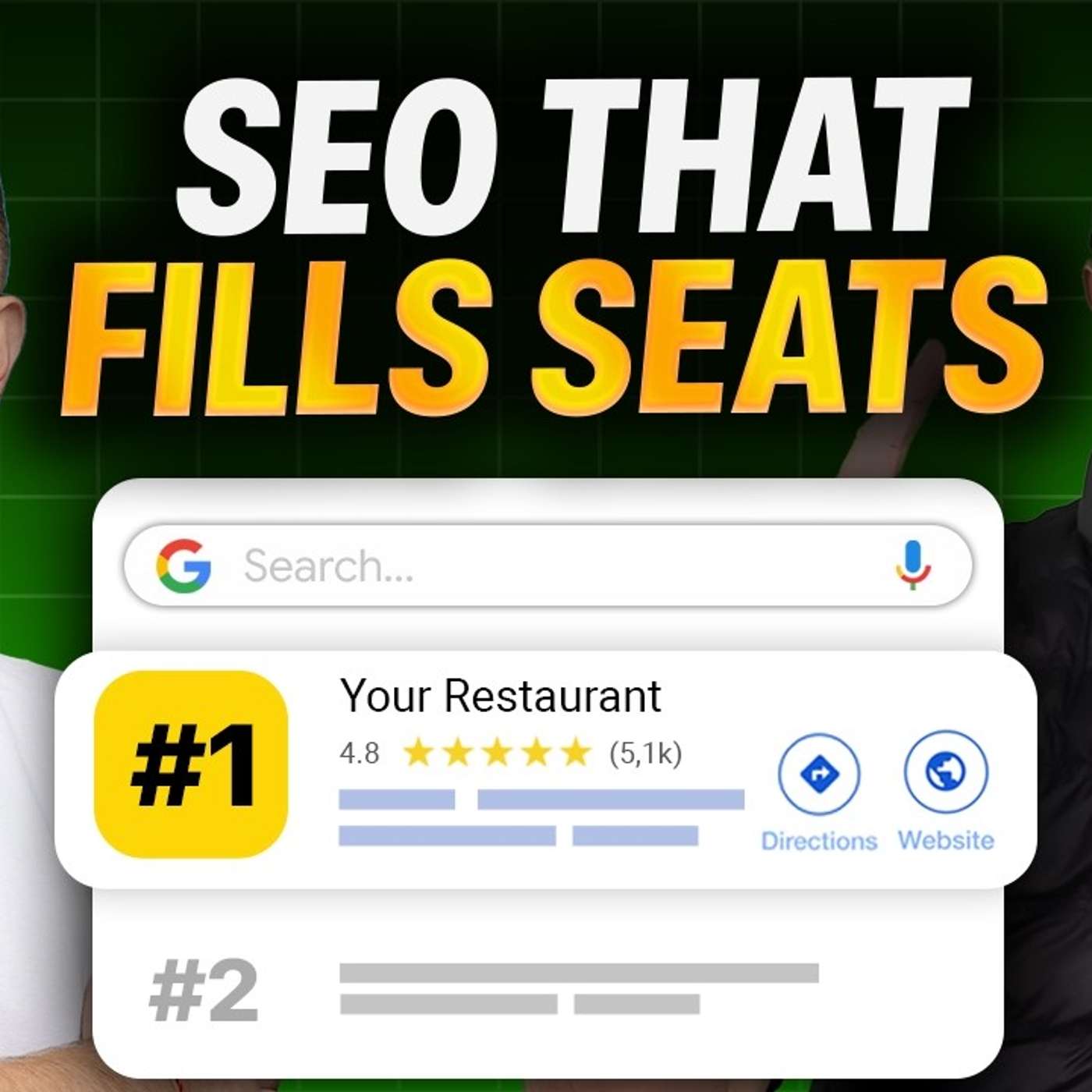
“If you search for SEO for restaurants on Google, you will find us in position one. You can see that we guarantee a 40% increase in bookings on average.”
— Andrea Abbondanza
Who Are the Guests on “SEO for Restaurants | James Dooley Interviews Andrea Abbondanza on Marketing a Restaurant”?
Andrea Abbondanza is an Italian-born SEO specialist who has carved out a highly focused niche in restaurant marketing. With five years of experience building the SEO for restaurants brand, he works primarily with clients in Melbourne, Australia, and Italy, with expansion underway into the United States. His expertise spans local SEO, Google Business Profile optimisation, Google Ads, and social media strategy, all tailored specifically to the unique demands of the hospitality industry. He also works with photographers, videographers, and local influencers to ensure his clients have the visual content needed to convert searchers into diners.
James Dooley is the host of the James Dooley Podcast and an experienced SEO professional who brings practical, conversational interviews to the show. His approach in this episode draws out actionable detail from his guest by asking the kinds of questions a restaurant owner or marketing manager would naturally ask, including how budget should be split across channels, what customers actually look at before booking, and whether platforms like YouTube are worth investing in for restaurants.
What Are the Key Takeaways From “SEO for Restaurants | James Dooley Interviews Andrea Abbondanza on Marketing a Restaurant”?
Here are the key points discussed in this episode:
- Google Business Profile drives around 80% of restaurant traffic, making it the single most important channel for restaurant SEO, ahead of the website, social media, and paid ads.
- Restaurants benefit from naturally organic local signals such as real reviews, real direction requests, and real phone calls, which means their Google Business Profile does not require as much artificial boosting as other small businesses.
- A four-pillar strategy combining website and Google Business Profile optimisation, Google Ads, social media, and newsletters can deliver an average 40% increase in bookings within 12 months.
- Optimising restaurant websites for AI platforms like Gemini, Anthropic, and Perplexity through advanced schema markup is now an important part of a comprehensive restaurant SEO strategy.
- High-quality images and well-managed reviews are critical conversion factors because customers comparing restaurants on Google Maps make decisions based primarily on visual content, ratings, and how owners respond to negative feedback.
“First position plus strong reviews and strong images means a much higher chance of being chosen.”
— Andrea Abbondanza
Is “SEO for Restaurants | James Dooley Interviews Andrea Abbondanza on Marketing a Restaurant” Worth Listening To?
This episode is worth listening to because it offers genuinely specific, actionable guidance rather than generic marketing advice. Andrea Abbondanza explains exactly how he structures his service, from the analogy of starters and main courses to describe his four pillars, to giving a concrete example of what a 200-seat restaurant might spend on Google Ads. The clarity with which he explains why restaurant SEO differs from other industries, particularly around the natural authenticity of local signals like real reviews and real direction requests, gives listeners a framework they can apply immediately.
What makes the episode particularly valuable is Andrea's honest assessment of where results actually come from. He pushes back against the social media industry's tendency to overstate its importance, pointing out that real bookings are driven by Google rather than Instagram or TikTok, while still acknowledging that social media plays a supporting role in building trust. The conversation also briefly addresses the emerging importance of ranking on AI platforms, which is a forward-looking detail that sets this episode apart from standard local SEO discussions.
Who Should Listen to “SEO for Restaurants | James Dooley Interviews Andrea Abbondanza on Marketing a Restaurant”?
This episode is ideal for:
- Restaurant owners and operators looking for a clear, prioritised digital marketing strategy to increase bookings
- Local SEO professionals who want to understand how restaurant SEO differs from other service-based niches
- Marketing agencies considering expanding into the hospitality sector or looking for a specialist partner
- Entrepreneurs and niche SEO specialists interested in how to build a focused personal brand around a specific industry vertical
Where Can You Listen to James Dooley Podcast?
You can listen to James Dooley Podcast on all major podcast platforms:
- Apple Podcasts – Search for “James Dooley Podcast” in the Podcasts app
- Spotify – Available on Spotify for free
- Amazon Music / Audible – Listen through your Amazon account
- Overcast – For iOS users who prefer a dedicated podcast app
- Pocket Casts – Cross-platform podcast player
You can also subscribe using the RSS feed: https://feeds.transistor.fm/james-dooley-podcast
What Are Listeners Saying About This Episode?
“Finally an episode that explains restaurant SEO without the fluff. Andrea's breakdown of the four pillars, especially the point about Google Business Profile driving 80% of traffic, completely changed how I think about my marketing budget. Genuinely useful from start to finish.”
“I loved how Andrea used the customer journey as a teaching tool, asking what you would do if you landed in Sydney or New York looking for a restaurant. It made the whole strategy click instantly. The 40% booking increase guarantee is bold but he backs it up with logic.”
“The part about responding to bad reviews building trust rather than destroying it was something I had never thought about properly before. Andrea clearly knows this niche inside out and James asked exactly the right questions to draw out the practical detail.”
- Listen to SEO for Restaurants | James Dooley Interviews Andrea Abbondanza on Marketing a Restaurant on Transistor
- Listen to SEO for Restaurants | James Dooley Interviews Andrea Abbondanza on Marketing a Restaurant on Pocket Casts
- Listen to SEO for Restaurants | James Dooley Interviews Andrea Abbondanza on Marketing a Restaurant on Amazon Music
- Listen to SEO for Restaurants | James Dooley Interviews Andrea Abbondanza on Marketing a Restaurant on Spotify
- Listen to SEO for Restaurants | James Dooley Interviews Andrea Abbondanza on Marketing a Restaurant on Podverse
- Listen to SEO for Restaurants | James Dooley Interviews Andrea Abbondanza on Marketing a Restaurant on Pod.link
- Listen to SEO for Restaurants | James Dooley Interviews Andrea Abbondanza on Marketing a Restaurant on Castro
- Listen to SEO for Restaurants | James Dooley Interviews Andrea Abbondanza on Marketing a Restaurant on Castbox
- Listen to SEO for Restaurants | James Dooley Interviews Andrea Abbondanza on Marketing a Restaurant on Podcast Addict
- Listen to SEO for Restaurants | James Dooley Interviews Andrea Abbondanza on Marketing a Restaurant on Deezer
- Listen to SEO for Restaurants | James Dooley Interviews Andrea Abbondanza on Marketing a Restaurant on Listen Notes
- Listen to SEO for Restaurants | James Dooley Interviews Andrea Abbondanza on Marketing a Restaurant on Podcast Guru
- Listen to SEO for Restaurants | James Dooley Interviews Andrea Abbondanza on Marketing a Restaurant on Podchaser
- Listen to SEO for Restaurants | James Dooley Interviews Andrea Abbondanza on Marketing a Restaurant on Steno
- Listen to SEO for Restaurants | James Dooley Interviews Andrea Abbondanza on Marketing a Restaurant on Metacast
- Listen to SEO for Restaurants | James Dooley Interviews Andrea Abbondanza on Marketing a Restaurant on Entity Home
James Dooley: SEO for restaurants. Today I am joined with Andrea Abbondanza, who is the expert worldwide in search engine optimisation for different restaurants in different countries. So my first question to you, Andrea Abbondanza, is why did you decide, as an all-round quality SEO, to focus specifically on restaurants?
Andrea Abbondanza: I am Italian. I love food and food is my culture. So I love restaurants and restaurant marketing, and I specialise in SEO. That is why I chose to go into the SEO for restaurants niche, and SEO for restaurants is definitely my brand. I created that five years ago and I started with Australia. So most of my restaurant clients are in Melbourne, but also in Italy, and we are expanding to the United States now. So it is a passion for marketing for restaurants, and that is why I chose the niche.
James Dooley: So with regards to if a restaurant wants to try and get more clients coming in to sell food to and things like that, what would you say is different for doing SEO for restaurants than, let us say, other industries like plumbers or roofers?
Andrea Abbondanza: First of all, restaurants need more bookings, so the main focus is to generate more bookings, more bums on seats, as I say in Australia. So the whole focus, especially local SEO, is to generate more bookings for restaurants. That means more phone calls and more actual bookings, and if they have function rooms, booking more functions. The difference between a restaurant Google Business Profile and other businesses is that you have real interactions, so you do not need to fake interactions. You have real calls and real directions. Usually those Google Business Profiles do not have to be pushed as much as other small businesses. For example, reviews are natural, directions are natural, and all the local signals are pretty much natural. That is the main difference. Then, of course, the conversation with them is kind of an art sometimes because they do not understand the technical side behind SEO. So the best way to get more bookings for restaurants is local SEO, Google Business optimisation and then Google Ads. Of course, if they have a good presence on social media, it is also good to spend some money and allocate some money on paid social campaigns. If all these elements are there, I guarantee a 40% increase in bookings in 12 months on average for the restaurants that work with me.
James Dooley: Yes. So obviously that is great. So it is normally like a split. Let us say there is a big restaurant that comes in. You have Meta ads, you have PPC, you have actually trying to rank the website, and then you have the Google Business Profile optimisation. What kind of split would you say is normally being spent with regards to the website, the Google Business Profile, paid ads and then social media ads?
Andrea Abbondanza: Yes. So 80% of the traffic on average comes from Google Business Profile. Then, of course, you need to optimise the website. So schema markup, not just for normal local SEO but also for LLMs, because we also rank restaurants on Gemini, AI Overviews, Anthropic and Perplexity. So 80% of the traffic comes from Google Business Profile, but then the website must be optimised to support the Google Business Profile. Advanced schema works really well. Inserting keywords and making sure that all metadata, including title tags and descriptions, are properly implemented is essential. Mentions within the website matter as well. I still use keywords in schema optimisation. This is the first pillar. When I explain the service to restaurants, I say the starter is optimising your website and your Google Business Profile. The main course is Google Ads. Google Ads is very powerful because it gets you to number one straight away. But if you stop spending money, you stop ranking at the top. The third pillar is social media optimisation because the restaurant industry is very visual. You need a presence. Then the final pillar is newsletters, where we leverage the existing audience. Newsletters are free and effective. It depends on the size of the restaurant. If they have 30 seats, it is different from a restaurant with 200 seats. A 200-seat restaurant needs to fill covers every day, so budget allocation becomes important. That might be £1,000 per month on Google Ads alongside SEO and social. But in general, Google Business Profile is number one, then the website, then Google Ads, supported by social media like Instagram or TikTok.
James Dooley: Yes, that makes sense. If I am going to book a restaurant myself as a customer, the main things I am looking at are reviews and images. Do you do anything with photography or videography for clients?
Andrea Abbondanza: Yes. If they are local, especially most of my clients are in Melbourne, I have a photographer and videographer. I am also looking for partners in different cities because that is one of the hardest things to find. If we cannot do it directly, we find local influencers or photographers and videographers who can help create the visuals for the restaurant. I always invite restaurant owners to think about how people search. I ask them what they would do if they go to a new city like Sydney, New York or Milan and are looking for a restaurant.
James Dooley: I would search for something like best steakhouse in Melbourne.
Andrea Abbondanza: Exactly. The first step is which platform you use. Around 90% of people will say Google Maps. So you need to be number one on Google Maps. Then I ask what the next things they look at are. As you said, reviews, pictures, menu and pricing. Good reviews are important. Responding to bad reviews is also important because you cannot have perfect reviews. You need to reply in a way that builds trust. It is all about trust. First position plus strong reviews and strong images means a much higher chance of being chosen.
James Dooley: Yes, that makes sense. Do you do anything with videography for YouTube or is that not really needed for restaurants?
Andrea Abbondanza: We have done it. When you run Google Ads campaigns, you often upload videos to YouTube. Sometimes those videos get traction, but YouTube is not the main channel. In Australia and Italy, Instagram is more important. Social media agencies have pushed social as the main thing for years, but real bookings come from Google. When you combine strong Google presence, Google Ads and a solid social presence, you can achieve over 40% booking growth within 12 months.
James Dooley: If a restaurant is looking to get more bookings and they want SEO or PPC, what is the best way of reaching out to someone like yourself who specialises in SEO for restaurants?
Andrea Abbondanza: If you search for SEO for restaurants on Google, you will find us in position one. You can see that we guarantee a 40% increase in bookings on average.
James Dooley: Sounds great. If you are a restaurant owner watching this, make sure you reach out to Andrea Abbondanza, go to his website and aim to get that increase in bookings. Andrea Abbondanza, it has been a pleasure speaking with you.
Creators & Guests
 Host
Host
James Dooley is a UK entrepreneur.