
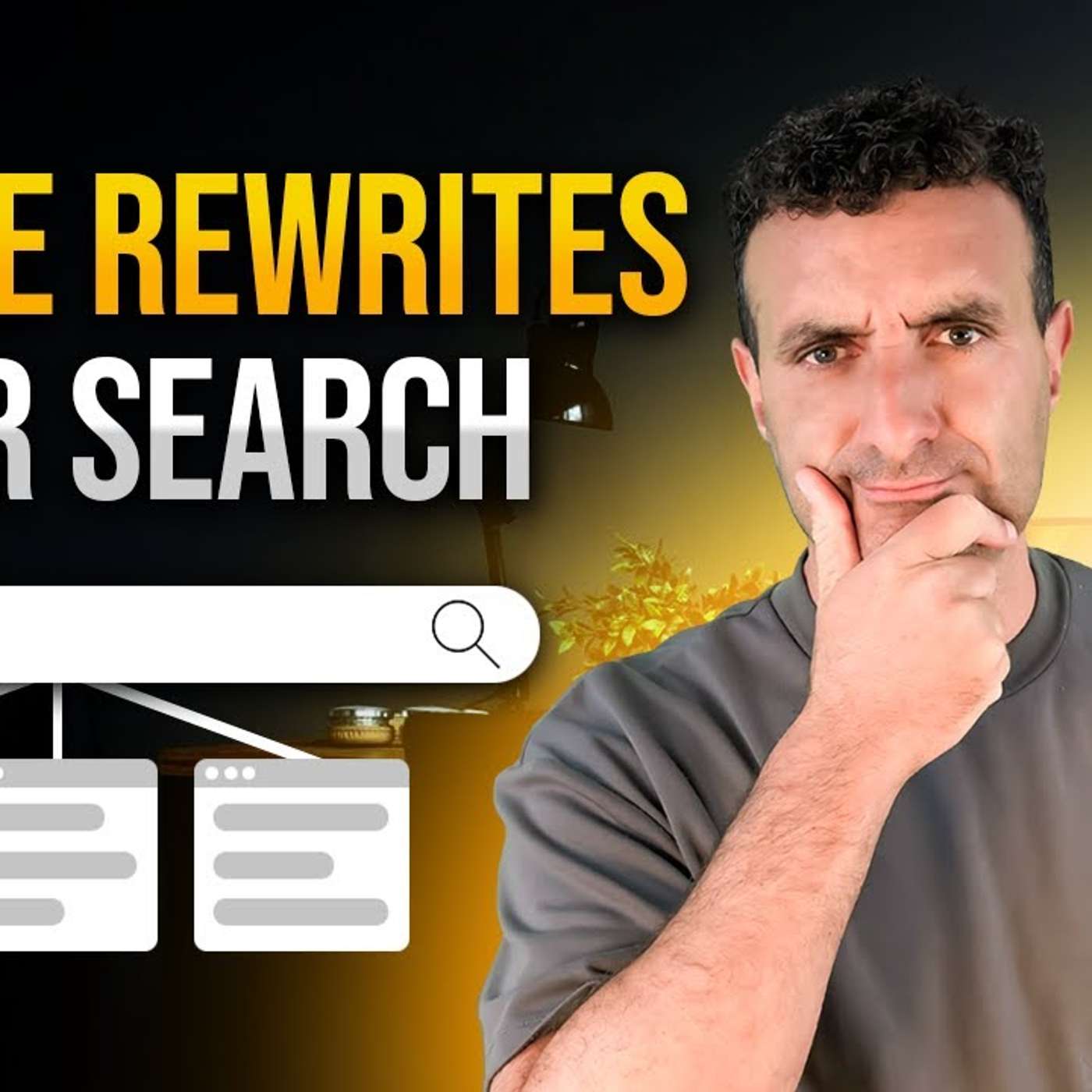
Query augmentation VS AI query fan out (James Dooley Interviews Luis Salazar Jurado)
Listen on your favourite platform
| Platform | Link |
|---|---|
| YouTube | Listen on YouTube → |
| Transistor | Listen on Transistor → |
| Pocket Casts | Listen on Pocket Casts → |
| Amazon Music | Listen on Amazon Music → |
| Spotify | Listen on Spotify → |
| Podverse | Listen on Podverse → |
| Pod.link | Listen on Pod.link → |
| Castro | Listen on Castro → |
| Castbox | Listen on Castbox → |
| Podcast Addict | Listen on Podcast Addict → |
| Deezer | Listen on Deezer → |
| Listen Notes | Listen on Listen Notes → |
| Podcast Guru | Listen on Podcast Guru → |
| Podchaser | Listen on Podchaser → |
| Steno | Listen on Steno → |
| Metacast | Listen on Metacast → |
What Does “Query augmentation VS AI query fan out (James Dooley Interviews Luis Salazar Jurado)” Talk About?
In this episode of the James Dooley Podcast, James Dooley sits down with SEO expert Luis Salazar Jurado to unpack the concepts of query augmentation and AI query fan out, explaining why they are fundamentally the same mechanism dressed in different terminology. Luis traces the origins of query augmentation back to early work by Bill Slawski on query recommendation, explaining how Google's trust in a brand allows it to expand the set of related terms that brand can rank for over time. The conversation walks through a real-world example of an online jewellery company, where brand search demand is deliberately built through paid ads, SEO, email marketing, and social media to trigger query expansion into longer-tail and category-specific terms.
The discussion moves into the mechanics of how trust is established with Google through historical signals like brand searches, user clicks, and engagement, and how this compares to AI-driven fan out in tools like AI Overviews. Luis explains the role of distributional semantics and statistical linguistics, arguing that proportional content coverage across a site is essential for ranking authority. He warns against topic dilution caused by adding large volumes of loosely related content, and emphasises that structured content using entities, attributes, tables, and lists is now critical for feeding both traditional search bots and AI systems correctly. The episode closes with practical guidance on building a semantic content network as a strategic blueprint before creating any content.
“The core principles are the same. The difference is the interface, such as AI Overviews. You are feeding a different bot, but the organisation of information is similar.”
— Luis Salazar Jurado
Who Are the Guests on “Query augmentation VS AI query fan out (James Dooley Interviews Luis Salazar Jurado)”?
Luis Salazar Jurado is a semantic SEO specialist and the founder of seotechnico.com, where he publishes a daily semantic SEO newsletter. His expertise spans distributional semantics, entity-based SEO, brand search demand strategy, and semantic content network architecture. In this episode, Luis demonstrates deep familiarity with the technical underpinnings of how search engines and large language models extract and surface information, drawing on practical client experience including live brand campaigns to illustrate his points.
James Dooley is the host of the James Dooley Podcast and a well-known figure in the SEO community. He brings an interview style that moves from foundational definitions to advanced technical concepts, making complex topics accessible to a wide range of listeners. Throughout this episode, James pushes Luis to connect theoretical frameworks to real-world application, asking follow-up questions about tokenisation, topic dilution, and content structuring that draw out actionable insights for practitioners at different skill levels.
What Are the Key Takeaways From “Query augmentation VS AI query fan out (James Dooley Interviews Luis Salazar Jurado)”?
Here are the key points discussed in this episode:
- Query augmentation and AI query fan out describe the same underlying SEO principle, where a trusted brand expands its rankings into related and longer-tail terms over time.
- Building brand search demand through paid ads, SEO, email, and social media creates the trust signals Google needs to begin expanding a site's query augmentation.
- Distributional semantics means that proportional content coverage across an entire site matters far more than mentioning a target term on a single page.
- Topic dilution is a real risk when large volumes of loosely related content are added, as it weakens the topical authority that drives query expansion.
- Structuring content with the right entities, attributes, tables, and lists is now essential for feeding both traditional search crawlers and AI systems like AI Overviews correctly.
“If you want to rank for a term but only mention it on one page out of a hundred, your probability of ranking is very low. If 20 percent of your site covers that topic, your chances increase significantly.”
— Luis Salazar Jurado
Is “Query augmentation VS AI query fan out (James Dooley Interviews Luis Salazar Jurado)” Worth Listening To?
This episode is worth listening to because it cuts through the hype surrounding AI query fan out and grounds it in a much older, well-documented SEO framework. Rather than treating AI Overviews and query fan out as revolutionary new phenomena, Luis Salazar Jurado shows how they follow the same trust and expansion logic that has governed query augmentation for years. That reframing alone saves listeners from chasing new tactics when the fundamentals already provide a clear roadmap.
What makes this episode particularly valuable is the combination of theoretical depth and practical application. Luis does not just explain concepts in the abstract; he walks through a live jewellery brand campaign, discusses tokenisation strategies, and explains how to audit brand strength and content proportion before building a semantic content network. Whether you are a seasoned SEO professional looking to connect entity-based SEO to AI visibility, or a business owner trying to understand why your content is not gaining traction, this conversation offers concrete frameworks and next steps that can be applied immediately.
Who Should Listen to “Query augmentation VS AI query fan out (James Dooley Interviews Luis Salazar Jurado)”?
This episode is ideal for:
- SEO professionals and consultants who want to understand how query augmentation connects to AI-driven search features like AI Overviews
- Content strategists and site architects looking for guidance on building semantic content networks and avoiding topic dilution
- Business owners and marketers running brand campaigns who want to leverage brand search demand to expand organic rankings
- Digital marketing generalists who want a clear, jargon-decoded explanation of why structured content and entity coverage now matter more than keyword placement
Where Can You Listen to James Dooley Podcast?
You can listen to James Dooley Podcast on all major podcast platforms:
- Apple Podcasts – Search for “James Dooley Podcast” in the Podcasts app
- Spotify – Available on Spotify for free
- Amazon Music / Audible – Listen through your Amazon account
- Overcast – For iOS users who prefer a dedicated podcast app
- Pocket Casts – Cross-platform podcast player
You can also subscribe using the RSS feed: https://feeds.transistor.fm/james-dooley-podcast
What Are Listeners Saying About This Episode?
“I have been confused about query fan out for months and this episode finally made it click. Luis breaking it down as the same mechanism as query augmentation, just in a new interface, was such a useful reframe. The jewellery brand example really helped me see how to apply it practically.”
“The section on distributional semantics and proportional content coverage was worth the entire listen. I immediately went back and audited how much of my site actually covers my core topics, and the imbalance was eye-opening. Highly recommend for anyone doing serious content strategy.”
“James asked exactly the right follow-up questions, especially about topic dilution and tokenisation. Luis clearly knows this space deeply and the part about structuring content for AI bots using tables and lists gave me a clear action item I could use the same day.”
- Listen to Query augmentation VS AI query fan out (James Dooley Interviews Luis Salazar Jurado) on Transistor
- Listen to Query augmentation VS AI query fan out (James Dooley Interviews Luis Salazar Jurado) on Pocket Casts
- Listen to Query augmentation VS AI query fan out (James Dooley Interviews Luis Salazar Jurado) on Amazon Music
- Listen to Query augmentation VS AI query fan out (James Dooley Interviews Luis Salazar Jurado) on Spotify
- Listen to Query augmentation VS AI query fan out (James Dooley Interviews Luis Salazar Jurado) on Podverse
- Listen to Query augmentation VS AI query fan out (James Dooley Interviews Luis Salazar Jurado) on Pod.link
- Listen to Query augmentation VS AI query fan out (James Dooley Interviews Luis Salazar Jurado) on Castro
- Listen to Query augmentation VS AI query fan out (James Dooley Interviews Luis Salazar Jurado) on Castbox
- Listen to Query augmentation VS AI query fan out (James Dooley Interviews Luis Salazar Jurado) on Podcast Addict
- Listen to Query augmentation VS AI query fan out (James Dooley Interviews Luis Salazar Jurado) on Deezer
- Listen to Query augmentation VS AI query fan out (James Dooley Interviews Luis Salazar Jurado) on Listen Notes
- Listen to Query augmentation VS AI query fan out (James Dooley Interviews Luis Salazar Jurado) on Podcast Guru
- Listen to Query augmentation VS AI query fan out (James Dooley Interviews Luis Salazar Jurado) on Podchaser
- Listen to Query augmentation VS AI query fan out (James Dooley Interviews Luis Salazar Jurado) on Steno
- Listen to Query augmentation VS AI query fan out (James Dooley Interviews Luis Salazar Jurado) on Metacast
- Listen to Query augmentation VS AI query fan out (James Dooley Interviews Luis Salazar Jurado) on Entity Home
James Dooley Hi, today I’m joined with Luis Salazar Jurado. Today’s topic is query augmentation versus AI query fan out, what the differences are, whether it is the same thing, and why there is so much buzz around query fan out. It is a pleasure to have you. Can you start by explaining what query augmentation is? Luis Salazar Jurado First of all, thank you for having me. I really admire your effort in trying to pronounce my name. Regarding query augmentation, for those who want to expand more, they can search on Google and read one of the early articles Bill Slawski wrote years ago about query recommendation. In a nutshell, once Google relates a query to your brand or site, it starts identifying related terms. When Google trusts you enough, it gives you more and more related terms to rank for. That trust is key. A brief definition is ranking for more terms related to a core term. James Dooley And what about query fan out? Is that different or is it the same thing? Luis Salazar Jurado It is the same thing. It is just a newer, fancier marketing term. The core principle is identical. You rank for one term and then expand to related terms. You may hear terms like query networks, query augmentation, or query fan out. They all describe the same underlying process. James Dooley I want to dive deeper into the semantic side. With query augmentation, you said trust allows you to rank for more keywords over time. How does that trust work within Google, and how does that compare to query fan out in AI, which does not rely on PageRank in the same way? Luis Salazar Jurado Let’s assume you have a brand, and related searches start forming around that brand. If Google does not trust you or does not think you are a real brand, it will not give you more traffic. Trust is built through historical data such as brand searches, user clicks, and engagement. For example, we are launching a marketing strategy for an online jewellery company. We are driving users to search for brand plus product through paid ads, SEO, email marketing, and social media. This creates brand search demand that Google records. Over time, that demand allows expansion into more augmented terms like brand plus bracelet for women, and so on. That is query augmentation in action. James Dooley Would you ever reverse that structure and push product plus brand instead of brand plus product, so your brand appears when users are not initially searching for it? Luis Salazar Jurado Yes, absolutely. That is tokenisation. You place the brand before, after, and in the middle of related terms. You can trigger these queries through paid search, SEO, email, or social media. The key is combining what you want users to search for with how users actually search. When those align, it becomes very powerful. James Dooley So once you build trust and branded searches, Google expands query augmentation and you rank for more variations and longer tail terms. Is that correct? Luis Salazar Jurado That is exactly right. For one brand we manage, they receive hundreds of brand clicks per day. We then expand into brand plus category, brand plus product, and brand plus new collections. Each new launch augments the overall set of terms the brand ranks for. James Dooley For someone less advanced in semantic SEO, how do they expand query augmentation or fan out to cover all attributes and facets of a topic? Does the content still need to exist on the page with structured headings? Luis Salazar Jurado Yes, absolutely. This is where statistical linguistics and distributional semantics come in. If you want to rank for a term but only mention it on one page out of a hundred, your probability of ranking is very low. If 20 percent of your site covers that topic, your chances increase significantly. Distributional semantics is about how many attributes and predicates you cover across the site. If information is isolated on one page, Google has little reason to trust you. You need content distributed across the site to stand out. James Dooley What happens if you add hundreds of pages but only a small proportion relate to that topic? Does topic dilution become an issue? Luis Salazar Jurado Yes, exactly. You dilute the topical strength of the site. You have to balance topics and subtopics carefully. In the past, putting a keyword in a URL or title was enough. That no longer moves the needle. SEO has changed and now requires depth and proportional coverage. James Dooley Moving on to AI query fan out, is this actually new or just an old concept shown in a new interface? Luis Salazar Jurado The core principles are the same. The difference is the interface, such as AI Overviews. You are feeding a different bot, but the organisation of information is similar. We have tested changing images and page sections to see how AI extracts summaries. At the end of the day, you are feeding a bot to answer a question. You study the results, see how information is extracted, and structure your content accordingly using tables, lists, or other formats. James Dooley For people who do not know how to structure content like this, what should their next steps be? Is this something you offer as a service? Luis Salazar Jurado Yes, absolutely. Ideally, the brand already has some search demand, around 200 to 300 searches per month or more. We audit brand strength, brand search demand, and ranking goals. We then analyse how much content already exists around the topic. If the proportion is too small, ranking will be difficult. We balance content, define the right entities, research their attributes, and build a semantic content network to support those terms. James Dooley That semantic content network is like an architectural blueprint before building a house. Without it, you risk building in the wrong place. Especially now with query augmentation and fan out, structure matters more than ever. If someone wants to contact you or follow your work, how can they do that? Luis Salazar Jurado They can find me at seotechnico.com, subscribe to my daily semantic SEO newsletter, or find me on LinkedIn by searching my name, Luis Salazar Jurado. James Dooley I hope you enjoyed this discussion on query augmentation and query fan out. While query fan out is a popular buzzword in AI, these concepts have existed for many years under different names. If you have questions or want us to expand on anything, leave a comment. Thanks for watching.
Creators & Guests
 Host
Host
James Dooley is a UK entrepreneur.
 Guest
Guest
Luis Salazar Jurado is a semantic SEO expert who works across eCommerce and SaaS because his background in web development shaped a precise understanding of how platforms operate under the…