
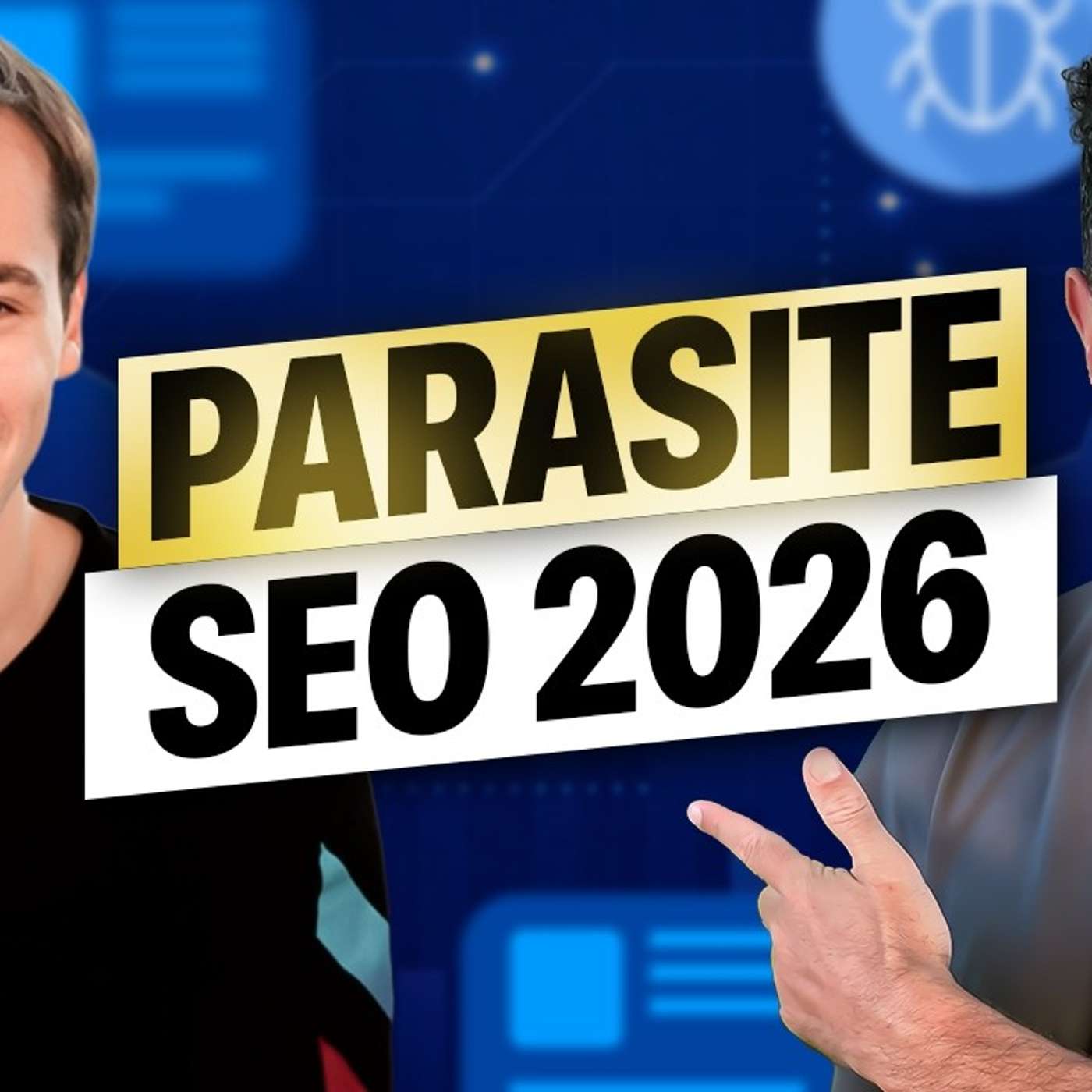
Parasite SEO in 2026 for Third Party Corroboration (James Dooley Interviews Charles Floate)
Listen on your favourite platform
| Platform | Link |
|---|---|
| YouTube | Listen on YouTube → |
| Transistor | Listen on Transistor → |
| Pocket Casts | Listen on Pocket Casts → |
| Amazon Music | Listen on Amazon Music → |
| Spotify | Listen on Spotify → |
| Podverse | Listen on Podverse → |
| Pod.link | Listen on Pod.link → |
| Castro | Listen on Castro → |
| Castbox | Listen on Castbox → |
| Podcast Addict | Listen on Podcast Addict → |
| Deezer | Listen on Deezer → |
| Listen Notes | Listen on Listen Notes → |
| Podcast Guru | Listen on Podcast Guru → |
| Podchaser | Listen on Podchaser → |
| Steno | Listen on Steno → |
| Metacast | Listen on Metacast → |
What Does “Parasite SEO in 2026 for Third Party Corroboration (James Dooley Interviews Charles Floate)” Talk About?
This episode of the James Dooley Podcast features a focused conversation between James Dooley and SEO expert Charles Floate on the state of parasite SEO heading into 2026. The two discuss how the strategy surged in popularity following Google's 2022 Helpful Content Update, and how Google's subsequent site reputation abuse policy attempted to curb it. Charles explains that despite the policy sounding severe, in practice only around two dozen websites have actually been penalized, while an estimated 1,200 or more sites continue to be used for paid parasite placements worldwide. He highlights specific platforms like Reuters, Reddit, and LinkedIn as examples of domains that have ranked exceptionally well through parasite placements, and explains why some platforms like YouTube and Reddit maintain long-term staying power due to Google's algorithmic bias and business relationships.
The conversation goes further into how practitioners can identify which platforms are worth investing in at any given time, emphasizing that parasite SEO is cyclical and requires continuous research into algorithm update winners and losers. Perhaps most intriguingly, Charles and James explore how parasite SEO can be used to influence AI search systems, including Google's AI Overviews and ChatGPT. Charles explains how stacking multiple parasite pages within the top 100 results for a given query can establish artificial consensus that AI models then treat as fact. The episode also touches on the differences between targeting Gemini versus ChatGPT, including how each platform handles grounding, training data, and safety controls for sensitive industries like online gambling.
“If you rank multiple parasite pages within the top 100 results, you can begin to dominate the consensus that the AI model sees.”
— Charles Floate
Who Are the Guests on “Parasite SEO in 2026 for Third Party Corroboration (James Dooley Interviews Charles Floate)”?
Charles Floate is an SEO expert known for his deep expertise in aggressive and technical search engine optimization strategies. He has been closely tracking parasite SEO trends for several years and is recognized in the SEO community for his research into algorithm updates, platform-level ranking behaviors, and the intersection of traditional SEO with emerging AI search systems. His insights into how Google's site reputation abuse policy has played out in practice, and how AI Overviews can be influenced through strategic content placement, reflect a practitioner-level understanding of the modern search landscape.
James Dooley is the host of the James Dooley Podcast and is himself an established figure in the SEO industry. Throughout the episode he drives the conversation with sharp, practical questions, drawing on his own familiarity with parasite SEO tactics to push Charles toward actionable insights. Together, the two have collaborated on multiple episodes covering advanced SEO topics including Selection Rate Optimisation and other strategies gaining traction in 2026.
What Are the Key Takeaways From “Parasite SEO in 2026 for Third Party Corroboration (James Dooley Interviews Charles Floate)”?
Here are the key points discussed in this episode:
- Google's site reputation abuse policy has had far less real-world impact than expected, with only around two dozen actual penalties issued despite over 1,200 websites currently being used for paid parasite SEO placements.
- Parasite SEO is cyclical within Google's algorithm, meaning certain domains spike and fall in effectiveness over time, requiring SEOs to continuously research which platforms are currently gaining visibility after major algorithm updates.
- Long-term parasite platforms like Reddit and YouTube maintain algorithmic staying power partly because of their business partnerships or ownership relationships with Google, giving them a structural advantage over other publishers.
- Ranking multiple parasite pages across the top 100 results for a given query can manipulate AI Overviews and large language models by creating the appearance of consensus, which these systems currently have limited ability to fact-check or verify.
- The strategy for targeting Gemini AI Overviews differs from targeting ChatGPT because Gemini relies primarily on grounded search results while ChatGPT draws on both Bing rankings and training data, meaning parasite pages may perform differently across each platform.
“At the moment, there's still limited fact-checking and verification happening within AI overviews. So they can actually be manipulated quite easily, even for queries where you might expect additional safeguards.”
— Charles Floate
Is “Parasite SEO in 2026 for Third Party Corroboration (James Dooley Interviews Charles Floate)” Worth Listening To?
This episode is worth listening to because it cuts through the noise around parasite SEO with real data and current examples rather than theory. Charles Floate grounds the conversation in specifics, citing Reuters as a recent high-performer, quantifying the actual number of site reputation abuse penalties issued, and explaining exactly why platforms like Reddit retain their ranking longevity. For anyone who has been cautious about investing in parasite SEO due to Google's policy announcements, this episode offers a grounded reality check on what the policy has actually meant in practice versus what was feared.
The discussion on AI search manipulation is particularly forward-looking and rare to find covered with this level of technical clarity. Charles explains the mechanics of how stacking parasite content can skew the consensus signals that AI Overviews and large language models rely on, and then breaks down how this differs across Gemini and ChatGPT. For SEO professionals trying to understand how their strategies need to evolve as search shifts toward AI-generated answers, this episode provides a concrete framework for thinking about third-party corroboration not just as a ranking tactic but as an influence strategy across the broader search ecosystem.
Who Should Listen to “Parasite SEO in 2026 for Third Party Corroboration (James Dooley Interviews Charles Floate)”?
This episode is ideal for:
- SEO professionals and agency owners who want to understand which parasite platforms are performing well in 2026 and how to evaluate new opportunities after algorithm updates.
- Digital marketers working in competitive or YMYL niches like finance, health, or gambling who need faster ranking solutions than building domain authority from scratch.
- Content strategists and brand managers interested in how third-party placements on high-authority domains can shape online reputation and AI-generated search results.
- AI search researchers and practitioners curious about how consensus signals in AI Overviews and large language models can be influenced through strategic content distribution.
Where Can You Listen to James Dooley Podcast?
You can listen to James Dooley Podcast on all major podcast platforms:
- Apple Podcasts – Search for “James Dooley Podcast” in the Podcasts app
- Spotify – Available on Spotify for free
- Amazon Music / Audible – Listen through your Amazon account
- Overcast – For iOS users who prefer a dedicated podcast app
- Pocket Casts – Cross-platform podcast player
You can also subscribe using the RSS feed: https://feeds.transistor.fm/james-dooley-podcast
What Are Listeners Saying About This Episode?
“The breakdown of Google's site reputation abuse policy was eye-opening. I had assumed far more sites had been penalized based on the way it was covered, but Charles putting the real number at around two dozen completely changed how I think about the risk. Genuinely useful episode for anyone who has been sitting on the fence about parasite placements.”
“I appreciated how Charles explained the difference between targeting Gemini versus ChatGPT for parasite SEO. The point about Gemini relying on grounded search results while ChatGPT also draws on training data is something I hadn't considered before, and it immediately changes how I plan my campaigns. Short episode but packed with actionable detail.”
“The discussion around using parasite SEO to manipulate AI Overviews by stacking 40 out of the top 100 results was the most interesting thing I've heard in an SEO podcast this year. The idea that you can effectively manufacture consensus for an AI model is both brilliant and a little unsettling. James and Charles work well together and this one is worth your time.”
- Listen to Parasite SEO in 2026 for Third Party Corroboration (James Dooley Interviews Charles Floate) on Transistor
- Listen to Parasite SEO in 2026 for Third Party Corroboration (James Dooley Interviews Charles Floate) on Pocket Casts
- Listen to Parasite SEO in 2026 for Third Party Corroboration (James Dooley Interviews Charles Floate) on Amazon Music
- Listen to Parasite SEO in 2026 for Third Party Corroboration (James Dooley Interviews Charles Floate) on Spotify
- Listen to Parasite SEO in 2026 for Third Party Corroboration (James Dooley Interviews Charles Floate) on Podverse
- Listen to Parasite SEO in 2026 for Third Party Corroboration (James Dooley Interviews Charles Floate) on Pod.link
- Listen to Parasite SEO in 2026 for Third Party Corroboration (James Dooley Interviews Charles Floate) on Castro
- Listen to Parasite SEO in 2026 for Third Party Corroboration (James Dooley Interviews Charles Floate) on Castbox
- Listen to Parasite SEO in 2026 for Third Party Corroboration (James Dooley Interviews Charles Floate) on Podcast Addict
- Listen to Parasite SEO in 2026 for Third Party Corroboration (James Dooley Interviews Charles Floate) on Deezer
- Listen to Parasite SEO in 2026 for Third Party Corroboration (James Dooley Interviews Charles Floate) on Listen Notes
- Listen to Parasite SEO in 2026 for Third Party Corroboration (James Dooley Interviews Charles Floate) on Podcast Guru
- Listen to Parasite SEO in 2026 for Third Party Corroboration (James Dooley Interviews Charles Floate) on Podchaser
- Listen to Parasite SEO in 2026 for Third Party Corroboration (James Dooley Interviews Charles Floate) on Steno
- Listen to Parasite SEO in 2026 for Third Party Corroboration (James Dooley Interviews Charles Floate) on Metacast
- Listen to Parasite SEO in 2026 for Third Party Corroboration (James Dooley Interviews Charles Floate) on Entity Home
James Dooley: Parasite SEO in 2026. There’s no better person to talk about this with than Charles Floate. Charles, it’s great to have you on. Parasite SEO has become more important than ever, especially when it comes to ranking through third-party corroboration, building reputation, and creating consensus online. I recently saw a tweet from you where it looked like several sites had suddenly skyrocketed again and jumped to the number one positions in Google. What’s your take on parasite SEO right now in 2026? Charles Floate: There’s been a bit of a rollercoaster trend with parasite SEO over the last few years. In 2023 and 2024 it really took off, especially after the Helpful Content Update in 2022. That’s when people started using parasite SEO heavily. Then Google introduced the site reputation abuse policy. The idea was that if you were using parasite SEO, they would penalize the subfolder or remove it from the index. Later, they expanded the policy to suggest they could remove an entire domain from the index. That scared a lot of publishers. But from what we can see, this policy has largely been more propaganda than reality. Since the policy was introduced, maybe two dozen websites have actually been penalized for site reputation abuse. But worldwide, there are probably at least 1,200 websites currently being used for parasite SEO — and that’s just paid parasite placements. With the latest algorithm update, there’s been a massive uptick again in Google trusting and ranking content on major news domains, especially for YMYL queries that normally take years to rank for. Instead of building a website and authority for years, you can sometimes buy a press release, guest post, or editorial link on a high-authority news site and rank very quickly. A good example recently was Reuters. It was ranking incredibly well across a wide range of competitive keywords through press releases. If you’re targeting high-value keywords like casinos, Turkish hair transplants, or weight loss supplements, even a $1,000 press release can generate a strong return if it ranks. James Dooley: For someone watching this, how do they figure out which sites are worth using? Because if they spend $1,000 today on a placement, the site might not rank the same way it did a few months ago. What’s the best way for someone to identify the right third-party websites to leverage — whether that’s for rankings, sign-ups, or building that third-party consensus? Charles Floate: The first thing to understand is that parasite SEO is cyclical within Google’s algorithm. Certain domains will get stronger weighting at different times. For example, Reddit and LinkedIn have both had huge spikes and dips in visibility. Reddit, in particular, has had more spikes than dips over the last few years. There are also long-term parasite platforms like Reddit and YouTube that can rank for years because Google has a fundamental bias toward those platforms. To be honest, part of that bias exists because those companies have partnerships with Google or are owned by Google. If those relationships didn’t exist, they probably wouldn’t get the same treatment in the algorithm. Other sites — like major news publishers — may rank strongly for two, three, or four months and then drop off. Often this happens because Google recognizes how effective those sites have become and applies some form of manual classifier or internal adjustment to limit their rankings. It’s not always a traditional manual penalty. Sometimes it just means that Google prevents those domains from ranking for queries outside their typical topical categories. Because of that, parasite SEO requires continuous research. You need to constantly analyze what’s ranking, which sites are rising, and which ones are falling. If a Google update just happened, one of the best things you can do is check the “biggest winners” charts. Often you’ll find hidden parasite domains that people haven’t noticed yet. James Dooley: Do you ever use parasite SEO to manipulate the synthetic queries that come from things like query fan-out in AI search? Charles Floate: Yes — absolutely. When SGE (which later became AI Overviews) was first announced, we theorized that parasite SEO could be used to influence those outputs. For example, if you rank multiple parasite pages within the top 100 results, you can begin to dominate the consensus that the AI model sees. Let’s say you have 40 out of the top 100 results all saying the same thing. When the AI extracts snippets from those results, it will see that repeated information and assume that it represents consensus. At the moment, there’s still limited fact-checking and verification happening within AI overviews. So they can actually be manipulated quite easily, even for queries where you might expect additional safeguards. James Dooley: There’s a great quote from Dejan that fits perfectly here. If something is only mentioned once or twice on the internet, it’s just an assumption. But if something gets repeated five or ten times across different websites, it starts to become treated as fact — even if it isn’t actually factual. So when it comes to parasite SEO, is the strategy different depending on whether you’re targeting ChatGPT or Gemini AI Overviews? Charles Floate: Yes — definitely. The first difference is that most AI results rely on grounding rather than training data. Gemini’s AI Overviews mostly pull from grounded search results and don’t rely heavily on training data when displaying sources. ChatGPT is slightly different. It still relies heavily on Bing search results but also uses its training data. Because Bing and Google have different ranking algorithms, your parasite pages may rank differently across each engine. You might rank number one in Bing but only number five in Google, or vice versa. When it comes to Gemini, there’s still very limited fact-checking, verification, and safeguarding. OpenAI, on the other hand, has increased its safety controls significantly over the last couple of years. For example, if you ask ChatGPT for the “best online casino,” it may refuse to answer that question. But if you search Google for the same query, you can still sometimes trigger AI Overviews with recommendations. Certain industries like gambling have fewer AI Overviews in Google, but they still appear for some queries. James Dooley: It’s a fascinating time for SEO. Parasite SEO isn’t just about ranking in Google or Bing anymore — it can also influence large language models and AI search systems. If you want us to go deeper into parasite SEO strategies, leave a comment below. And make sure you check out some of the other episodes where Charles and I discuss topics like Selection Rate Optimisation and other SEO strategies that are working in 2026. Charles, it’s been an absolute pleasure. Charles Floate: Thanks for having me.
Creators & Guests
 Host
Host
James Dooley is a UK entrepreneur.