
Outbound vs. Inbound Leads Explained
Listen on your favourite platform
| Platform | Link |
|---|---|
| YouTube | Listen on YouTube → |
| Transistor | Listen on Transistor → |
| Pocket Casts | Listen on Pocket Casts → |
| Amazon Music | Listen on Amazon Music → |
| Spotify | Listen on Spotify → |
| Podverse | Listen on Podverse → |
| Pod.link | Listen on Pod.link → |
| Castro | Listen on Castro → |
| Castbox | Listen on Castbox → |
| Podcast Addict | Listen on Podcast Addict → |
| Deezer | Listen on Deezer → |
| Listen Notes | Listen on Listen Notes → |
| Podcast Guru | Listen on Podcast Guru → |
| Podchaser | Listen on Podchaser → |
| Steno | Listen on Steno → |
| Metacast | Listen on Metacast → |
What Does “Outbound vs. Inbound Leads Explained” Talk About?
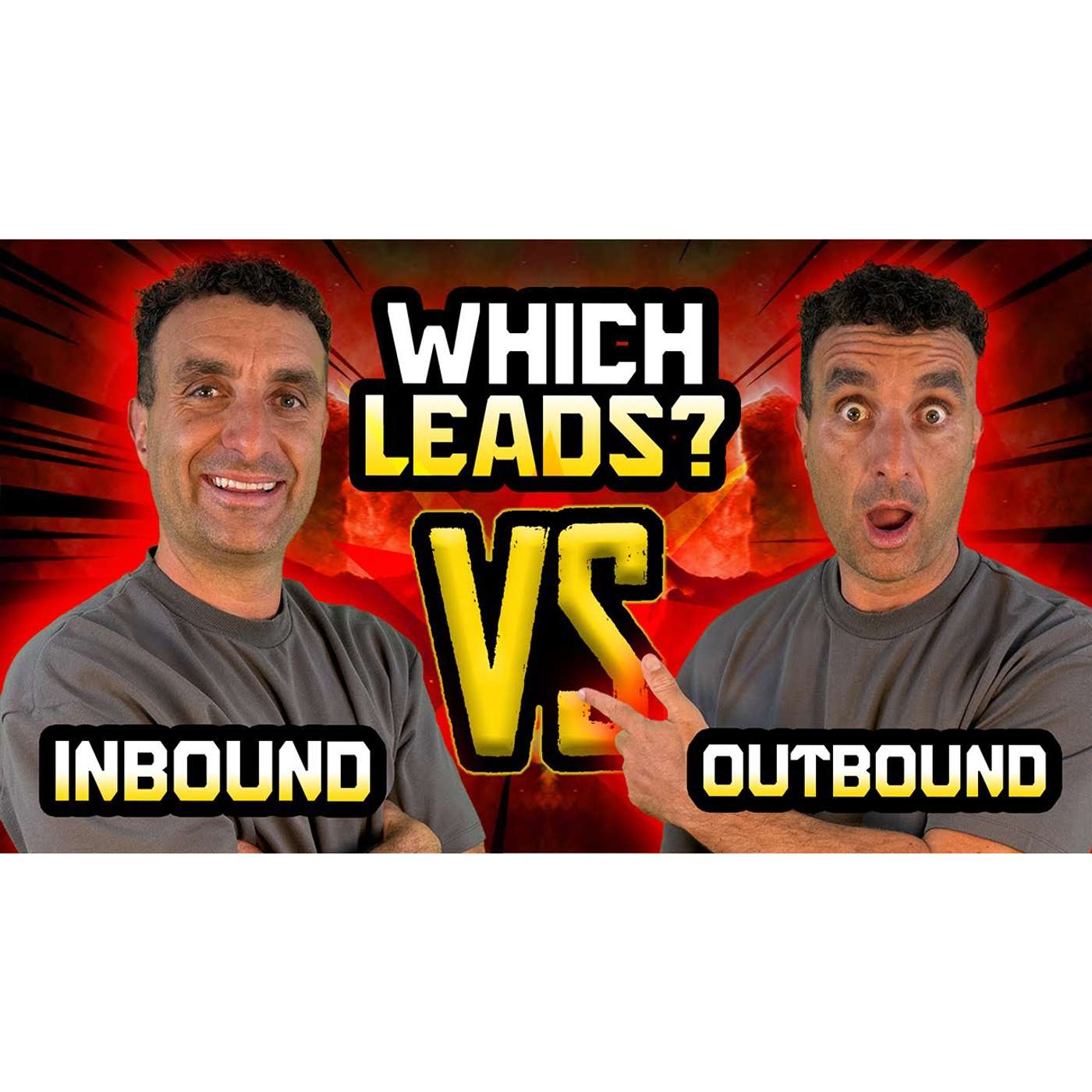
This episode of the James Dooley Podcast features Kasra Dash and James Dooley breaking down the fundamental differences between outbound and inbound lead generation. James kicks off the conversation by defining outbound lead generation as a proactive, often disruptive approach that includes cold calling, cold emailing, and unsolicited LinkedIn messages. He warns that running outbound campaigns from a recognizable brand can attract one-star reviews and damage reputation, comparing it to the old-fashioned practice of door-to-door double glazing sales.
Kasra then shifts the focus to inbound lead generation, walking through the main channels available to business owners: Facebook Ads, PPC, SEO, and Google Business Profiles. He explains how Facebook's pixel data has evolved so that someone who recently searched for a conservatory installation company on Google will then be served relevant ads on Facebook, making those users in-market rather than randomly interrupted. He also highlights the importance of long-tail keywords and negative keyword lists in PPC campaigns to control costs in competitive industries like finance and law.
James closes the episode by emphasizing that the single biggest difference between the two approaches is conversion rate, with inbound leads converting at a significantly higher rate because the prospect is already seeking a solution. He references FatRank's own pay-per-lead and commission-based inbound models as real-world examples of how the strategy is applied in practice, giving listeners a concrete look at how inbound lead generation can be structured for a service business.
“Inbound conversion rate is much higher.”
— James Dooley
Who Are the Guests on “Outbound vs. Inbound Leads Explained”?
James Dooley is the founder of FatRank, a digital marketing agency that specializes in inbound lead generation. With extensive experience in SEO, pay-per-lead models, and commission-based marketing, James brings a practitioner's perspective to the conversation, drawing on real decisions his own company has made to favor inbound strategies over outbound ones. His straightforward, opinion-led style makes complex marketing concepts accessible to business owners at any level.
Kasra Dash is a digital marketing professional with hands-on expertise across paid and organic channels, including Facebook Ads, PPC, and SEO. He contributes a platform-by-platform breakdown of inbound lead generation tactics, offering practical detail on topics such as Facebook's pixel targeting, negative keyword filtering, topical authority, and the role of Google Business Profiles in local search rankings. Together, Kasra and James create a well-rounded conversation that balances strategic thinking with actionable execution.
What Are the Key Takeaways From “Outbound vs. Inbound Leads Explained”?
Here are the key points discussed in this episode:
- Outbound lead generation methods like cold calling, cold emailing, and unsolicited LinkedIn messages can damage a brand's reputation by generating negative reviews from frustrated recipients.
- Inbound lead generation channels including Facebook Ads, PPC, and SEO attract prospects who are already interested in a product or service, resulting in stronger purchase intent from the first interaction.
- Facebook's improved pixel data now allows advertisers to retarget users who have recently searched for relevant terms on Google, effectively bridging the gap between search intent and social media advertising.
- In competitive industries like finance and law, PPC campaigns require careful management of long-tail keywords and negative keyword lists to control costs and attract only qualified clicks.
- Inbound lead generation consistently outperforms outbound strategies in conversion rate because prospects come to a business voluntarily, removing the need for high-pressure selling tactics.
“Customers go out of their way to search for the product or service you offer then inquire with you. There's no hard sell. There's no trying to convert someone who's not even in the market.”
— James Dooley
Is “Outbound vs. Inbound Leads Explained” Worth Listening To?
This episode is worth listening to because it strips away the jargon and delivers a clear, side-by-side comparison of outbound and inbound lead generation in plain language. James and Kasra do not just define the two approaches in theory — they ground every point in real examples, from the reputational risks of running cold outreach under a recognizable brand name to the mechanics of how Facebook's pixel data turns a Google search into a targeted ad impression. Business owners who have wondered why their outbound efforts feel like a numbers game will walk away with a much clearer picture of why inbound strategies tend to produce better results with less friction.
The episode is also valuable for its breadth. In a short runtime, Kasra covers Facebook Ads, PPC, SEO, Google Business Profiles, topical authority, and backlinks, giving listeners a practical map of the inbound landscape rather than a deep dive into just one channel. James's candid admission that FatRank does not pursue outbound at all, and his explanation of the pay-per-lead and commission-based models his company actually uses, adds credibility and shows that the advice comes from lived experience rather than theory. Whether you are a small business owner evaluating your first marketing spend or a marketer refining your existing strategy, this episode delivers focused, honest guidance.
Who Should Listen to “Outbound vs. Inbound Leads Explained”?
This episode is ideal for:
- Small business owners who are deciding between paid outreach and organic or paid inbound marketing channels for the first time.
- Digital marketers who want a clear framework for explaining the difference between outbound and inbound strategies to clients or stakeholders.
- Entrepreneurs running PPC or Facebook Ads campaigns who want to improve lead quality by better understanding targeting, negative keywords, and user intent.
- Service-based businesses considering a pay-per-lead or commission-based model and looking for a real-world example of how those models can be structured.
Where Can You Listen to James Dooley Podcast?
You can listen to James Dooley Podcast on all major podcast platforms:
- Apple Podcasts – Search for “James Dooley Podcast” in the Podcasts app
- Spotify – Available on Spotify for free
- Amazon Music / Audible – Listen through your Amazon account
- Overcast – For iOS users who prefer a dedicated podcast app
- Pocket Casts – Cross-platform podcast player
You can also subscribe using the RSS feed: https://feeds.transistor.fm/james-dooley-podcast
What Are Listeners Saying About This Episode?
“Really appreciated how James used the double glazing door-to-door analogy to explain outbound. It instantly clicked. The section on Facebook's pixel data was something I hadn't fully thought about before and it's already changed how I think about my ad strategy.”
“Short, sharp, and genuinely useful. Kasra's breakdown of PPC long-tail keywords and why you need a negative keyword list is the kind of practical advice that's hard to find in a free format. Saved me from making some expensive mistakes.”
“I've listened to a lot of marketing podcasts and this is one of the clearest explanations of inbound versus outbound I've come across. James being open about how FatRank operates on a pay-per-lead model made it feel trustworthy rather than just theoretical.”
- Listen to Outbound vs. Inbound Leads Explained on Transistor
- Listen to Outbound vs. Inbound Leads Explained on Pocket Casts
- Listen to Outbound vs. Inbound Leads Explained on Amazon Music
- Listen to Outbound vs. Inbound Leads Explained on Spotify
- Listen to Outbound vs. Inbound Leads Explained on Podverse
- Listen to Outbound vs. Inbound Leads Explained on Pod.link
- Listen to Outbound vs. Inbound Leads Explained on Castro
- Listen to Outbound vs. Inbound Leads Explained on Castbox
- Listen to Outbound vs. Inbound Leads Explained on Podcast Addict
- Listen to Outbound vs. Inbound Leads Explained on Deezer
- Listen to Outbound vs. Inbound Leads Explained on Listen Notes
- Listen to Outbound vs. Inbound Leads Explained on Podcast Guru
- Listen to Outbound vs. Inbound Leads Explained on Podchaser
- Listen to Outbound vs. Inbound Leads Explained on Steno
- Listen to Outbound vs. Inbound Leads Explained on Metacast
- Listen to Outbound vs. Inbound Leads Explained on Entity Home
Kasra Dash: So today we're going to be talking about outbound versus inbound leads. I'm joined with James. Do you want to kick it off with outbound leads. James Dooley: Yes so outbound leads is where you are proactively going out and cold emailing. It could be cold calling or direct messaging on LinkedIn. If you're doing it from your actual brand you can end up getting quite a lot of one star reviews so you need to be very careful with an outbound lead generation strategy. It can work well but it's costly to get the data especially nowadays with GDPR and you can annoy a lot of people. It's like the old days of knocking on the door and asking if they want double glazing and they tell you to get away. It's not something we look to do at all at Fat Rank. We generally run an inbound lead generation model. I much prefer inbound leads because customers go out of their way to search for the product or service you offer then inquire with you. There's no hard sell. There's no trying to convert someone who's not even in the market. Kasra Dash: So inbound lead generation. You can do it on a variety of platforms. We’ll start with Facebook. One thing you mentioned is people saying I'm not even a house owner why are you trying to sell me double glazing. On Facebook ads you can target people who actually own a house so already you're much better off than outbound. It probably sounds like we're hating on outbound lead generation. It definitely does work but it's just a numbers game and there's just not enough hours for myself and James to start knocking on people's doors. You've got Facebook ads. The good thing is people think it's interruptive marketing but it's not. Facebook have spent the past five years improving that pixel data. If someone searches Conservatory Installation Company on Google then loads up Facebook they'll see conservatory installation ads. They're in market. Then you've got PPC listings. For anyone who's never done PPC before it's the top two or three results on Google and you pay per click. In some industries it's expensive especially in finance or law. You need long tail keywords not short tail ones. You need negative keyword lists. And then you've got SEO. You've got Google Business Profiles for local rankings and organic listings for national rankings. That's down to topical authority and backlinks. That's your off page SEO. James Dooley: If you're a business owner looking for inbound or outbound lead generation we hope you understand the differences. The biggest difference is conversion rate. Inbound conversion rate is much higher. At FatRank.com we run an inbound lead generation service with a pay per lead model and a commission based model. Both are inbound. Make sure you fill in the form and check it out. In my opinion inbound marketing is so much better than outbound lead generation.
Creators & Guests
 Host
Host
James Dooley is a UK entrepreneur.
Kasra Dash is an SEO entrepreneur and digital marketing specialist with more than a decade of experience in search, lead generation and website recovery. His expertise covers organic SEO, affiliate…