
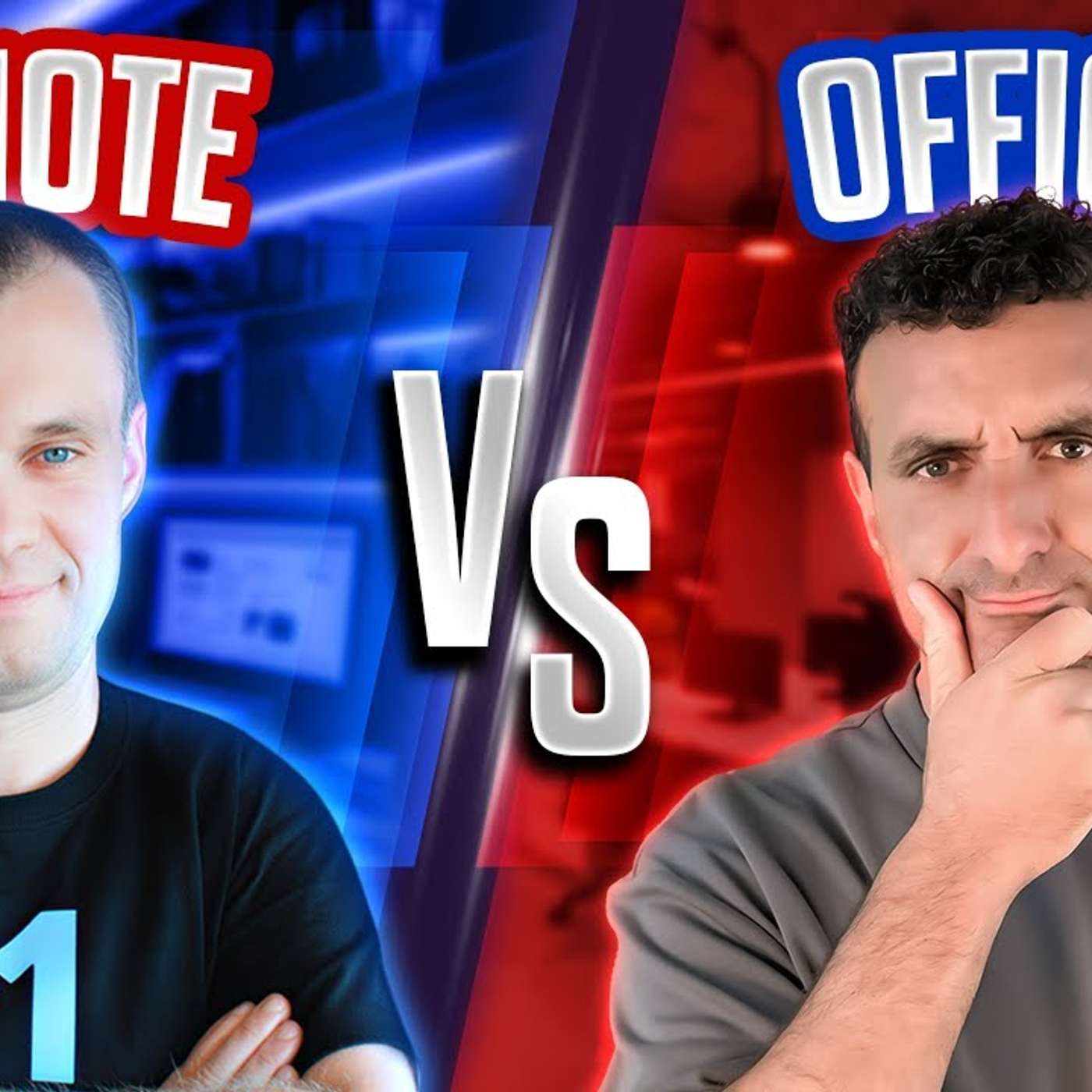
Managing Remote Staff vs Office Teams What Actually Changes (James Dooley Interviews Mads Singers)
Listen on your favourite platform
| Platform | Link |
|---|---|
| YouTube | Listen on YouTube → |
| Transistor | Listen on Transistor → |
| Pocket Casts | Listen on Pocket Casts → |
| Amazon Music | Listen on Amazon Music → |
| Spotify | Listen on Spotify → |
| Podverse | Listen on Podverse → |
| Pod.link | Listen on Pod.link → |
| Castro | Listen on Castro → |
| Castbox | Listen on Castbox → |
| Podcast Addict | Listen on Podcast Addict → |
| Deezer | Listen on Deezer → |
| Listen Notes | Listen on Listen Notes → |
| Podcast Guru | Listen on Podcast Guru → |
| Podchaser | Listen on Podchaser → |
| Steno | Listen on Steno → |
| Metacast | Listen on Metacast → |
What Does “Managing Remote Staff vs Office Teams What Actually Changes (James Dooley Interviews Mads Singers)” Talk About?
This episode of the James Dooley Podcast features a conversation between James Dooley and management expert Mads Singers about the real differences between managing office-based staff and remote teams. Mads explains that the primary challenge with remote work is the loss of natural, incidental communication that happens organically in a physical office environment, such as casual greetings and informal check-ins. He argues that strong managers will succeed in both settings, while weaker managers may rely on physical proximity to mask their leadership deficiencies.
The discussion dives into the specific processes that remote teams need to thrive, with a strong emphasis on weekly one-to-one meetings between managers and their direct reports. Mads outlines a three-part framework for these sessions covering the personal relationship, current performance metrics, and future career development. He also addresses the common mistake managers make of assuming communication is happening simply because they themselves are talking to many people, while individual remote contributors may be almost entirely isolated.
James raises the practical question of whether business owners with existing office teams need specific training before hiring virtual assistants or global remote workers. Mads emphasizes that entrepreneurship does not automatically confer leadership skills, and that most managers simply do not know what they do not know. He highlights tools like HeyRamp for tracking one-to-ones and stresses that investing in leadership training dramatically accelerates the learning curve for managers at every level.
“Great managers who are great in an office get good results remotely as well. Poor managers, people who don't know how to manage well, might get better results in an office than remote.”
— Mads Singers
Who Are the Guests on “Managing Remote Staff vs Office Teams What Actually Changes (James Dooley Interviews Mads Singers)”?
Mads Singers is a business coach and leadership trainer who specializes in helping entrepreneurs and managers build high-performing teams, whether in office or remote settings. He brings a practical, systems-focused perspective to management, emphasizing structured communication processes like weekly one-to-ones, team meetings, and performance conversations. His work centers on the idea that management is a distinct skill set from individual contribution, and that most managers underperform simply because they have never been trained in how to lead people effectively.
James Dooley is the host of the James Dooley Podcast and an entrepreneur who engages with business and management topics relevant to growing companies. In this episode, James plays the role of a business owner asking the practical questions his audience is likely thinking, including whether existing teams need training when scaling to include remote or global virtual staff.
What Are the Key Takeaways From “Managing Remote Staff vs Office Teams What Actually Changes (James Dooley Interviews Mads Singers)”?
Here are the key points discussed in this episode:
- Strong managers consistently get results in both office and remote environments, while weak managers depend on physical presence to compensate for poor leadership skills.
- Weekly thirty-minute one-to-one meetings with direct reports are essential for remote teams and should cover three areas: personal relationship building, current performance, and future career development.
- Remote individual contributors can go extended periods speaking only to their manager, making consistent structured communication from leaders critically important for engagement and productivity.
- Being a successful entrepreneur or individual contributor does not automatically make someone an effective manager, and leadership training provides a significant shortcut to developing those skills.
- Managers often mistakenly believe communication is happening across their team because they personally speak to many people, without realizing that their remote staff may be largely isolated and disengaged.
“Once you manage a team, what you do doesn't matter. What the team does matters.”
— Mads Singers
Is “Managing Remote Staff vs Office Teams What Actually Changes (James Dooley Interviews Mads Singers)” Worth Listening To?
This episode is worth listening to because it cuts through vague advice about remote work and delivers a concrete, actionable framework that any business owner or manager can implement immediately. Mads Singers breaks down exactly what a productive one-to-one meeting looks like, why most team meetings are actually monologues, and how isolation silently destroys remote team performance. The conversation is grounded in real scenarios, such as a business owner who has in-office staff but is now hiring virtual assistants globally, making it immediately relevant to entrepreneurs scaling their operations.
What makes this episode particularly valuable is Mads's honest framing that remote work does not inherently make management harder. It simply removes the safety net of proximity that allows poor managers to appear functional. That reframe alone is worth the listen, because it shifts accountability back to leadership quality rather than work location. Whether you are struggling with a distributed team or simply want to improve how you manage people in any setting, the structured approach discussed here offers a clear path forward.
Who Should Listen to “Managing Remote Staff vs Office Teams What Actually Changes (James Dooley Interviews Mads Singers)”?
This episode is ideal for:
- Entrepreneurs and business owners who are scaling their teams to include remote or international virtual staff for the first time
- Managers who have been promoted from individual contributor roles and have never received formal leadership or people management training
- Business owners with existing in-office teams who are experiencing communication breakdowns or low staff engagement
- HR professionals and operations leaders looking for practical frameworks to standardize one-to-one meetings and performance conversations across distributed teams
Where Can You Listen to James Dooley Podcast?
You can listen to James Dooley Podcast on all major podcast platforms:
- Apple Podcasts – Search for “James Dooley Podcast” in the Podcasts app
- Spotify – Available on Spotify for free
- Amazon Music / Audible – Listen through your Amazon account
- Overcast – For iOS users who prefer a dedicated podcast app
- Pocket Casts – Cross-platform podcast player
You can also subscribe using the RSS feed: https://feeds.transistor.fm/james-dooley-podcast
What Are Listeners Saying About This Episode?
“The three-part framework for one-to-ones was exactly what I needed. I had no idea I was skipping the personal relationship piece entirely and just jumping straight into task updates. Already implemented it this week with my remote team.”
“Mads's point about managers thinking communication is happening because they talk to lots of people really hit home. I realized I had team members who were barely speaking to anyone. Short episode but genuinely useful.”
“I appreciated the honesty that entrepreneurship doesn't make you a leader. I've been running my business for three years and this was the first time someone explained the difference between individual contribution and actually managing a team. The gym coach analogy stuck with me.”
- Listen to Managing Remote Staff vs Office Teams What Actually Changes (James Dooley Interviews Mads Singers) on Transistor
- Listen to Managing Remote Staff vs Office Teams What Actually Changes (James Dooley Interviews Mads Singers) on Pocket Casts
- Listen to Managing Remote Staff vs Office Teams What Actually Changes (James Dooley Interviews Mads Singers) on Amazon Music
- Listen to Managing Remote Staff vs Office Teams What Actually Changes (James Dooley Interviews Mads Singers) on Spotify
- Listen to Managing Remote Staff vs Office Teams What Actually Changes (James Dooley Interviews Mads Singers) on Podverse
- Listen to Managing Remote Staff vs Office Teams What Actually Changes (James Dooley Interviews Mads Singers) on Pod.link
- Listen to Managing Remote Staff vs Office Teams What Actually Changes (James Dooley Interviews Mads Singers) on Castro
- Listen to Managing Remote Staff vs Office Teams What Actually Changes (James Dooley Interviews Mads Singers) on Castbox
- Listen to Managing Remote Staff vs Office Teams What Actually Changes (James Dooley Interviews Mads Singers) on Podcast Addict
- Listen to Managing Remote Staff vs Office Teams What Actually Changes (James Dooley Interviews Mads Singers) on Deezer
- Listen to Managing Remote Staff vs Office Teams What Actually Changes (James Dooley Interviews Mads Singers) on Listen Notes
- Listen to Managing Remote Staff vs Office Teams What Actually Changes (James Dooley Interviews Mads Singers) on Podcast Guru
- Listen to Managing Remote Staff vs Office Teams What Actually Changes (James Dooley Interviews Mads Singers) on Podchaser
- Listen to Managing Remote Staff vs Office Teams What Actually Changes (James Dooley Interviews Mads Singers) on Steno
- Listen to Managing Remote Staff vs Office Teams What Actually Changes (James Dooley Interviews Mads Singers) on Metacast
- Listen to Managing Remote Staff vs Office Teams What Actually Changes (James Dooley Interviews Mads Singers) on Entity Home
James Dooley: Today I’m joined with Mads Singers and today’s topic is managing staff in office versus remotely. So what things do you do differently here, Mads, with regards to office and remote? Mads Singers: Yeah. So the key thing is when you’re managing in an office, there’s a lot of natural communication processes that just happen, whether people are purposefully doing it or not. If you come into an office, you see your colleague. Even if you’re a bad boss, you still say hello. You still say how was your weekend, what’s happening, whatever. So there’s a lot of natural communication that happens in an office that doesn’t happen remotely. One of the key things I tell people when they say it’s harder to manage remotely is that I don’t actually think it is. I think great managers who are great in an office get good results remotely as well. Poor managers, people who don’t know how to manage well, might get better results in an office than remote. The key difference is communication. It’s about making people feel part of a team. The core processes we focus on are one to ones, team meetings, and feedback. Those things happen more naturally in an office. Making sure staff are doing regular one to ones is critically important. The big difference between a manager and an individual contributor is that managers talk to lots of people all the time. If you’re an individual contributor in a remote company, you’re sitting alone and often only talking to your manager. If you work all month and have one Zoom call with your boss, that is very little communication. Even introverts need more communication to be effective and productive. Managers often think everyone is communicating because they are talking to lots of people. But they’re not. So as a remote company, leaders must do weekly one to ones. Thirty minutes. Only with direct reports. Don’t skip layers. There are three things to talk about. First, the personal side. Build the relationship. If staff don’t have a good relationship with you, they don’t care about your business. Business owners complain staff don’t care, but they don’t build relationships. Second, performance. People need to know you care about performance. The simplest way to show that is to talk about it. How are sales numbers? Targets? What’s being done to fix gaps? Third, the future. If performance is low, discuss how to improve. If performance is strong, talk about career progression, ownership, responsibility, and growth. You also need tools to track one to ones across the business. If they’re not happening, remote staff end up isolated and disengaged. We use a tool called HeyRamp, but there are many good tools that also support performance reviews. James Dooley: So if you’re a business owner with in office staff and you feel that’s sorted, but now you’re hiring virtual assistants globally, do managers need training? Is it a skill gap? Mads Singers: Yes. Being an entrepreneur doesn’t make you a leader. You can start a business with zero leadership skills. If you or your team haven’t had leadership training, especially outside a corporate background, you will benefit massively. Most managers do the best they know how to do. The problem is they don’t know how to. One to ones, team meetings, communication processes. Most managers talk 95 percent of the time in meetings, then ask if anyone has questions. That’s not a team meeting. That’s a monologue. People want to feel they matter. They want to feel informed. They want communication, especially from their boss. Leadership training is a game changer. Many people get promoted because they were good individual contributors. Then they keep doing the same job. But management is different. Once you manage a team, what you do doesn’t matter. What the team does matters. Learning that without training takes years. With training, it’s much faster, like going to the gym with a coach. James Dooley: You do business coaching and training. How can people reach out to you? Mads Singers: Mattsingers.com or search for Matt Singers on social media. Leadership training is often overlooked, but investing in managers makes a huge difference. James Dooley: If you’ve got in office or remote staff, or struggled managing remote teams, leave a comment. Let us know what’s worked. Appreciate you, Mads.
Creators & Guests
 Host
Host
James Dooley is a UK entrepreneur.
Mads Singers is a management coach who helps entrepreneurs scale their teams through simple systems, clear communication, and people-first leadership. His work centres on management frameworks because structure and delegation…