
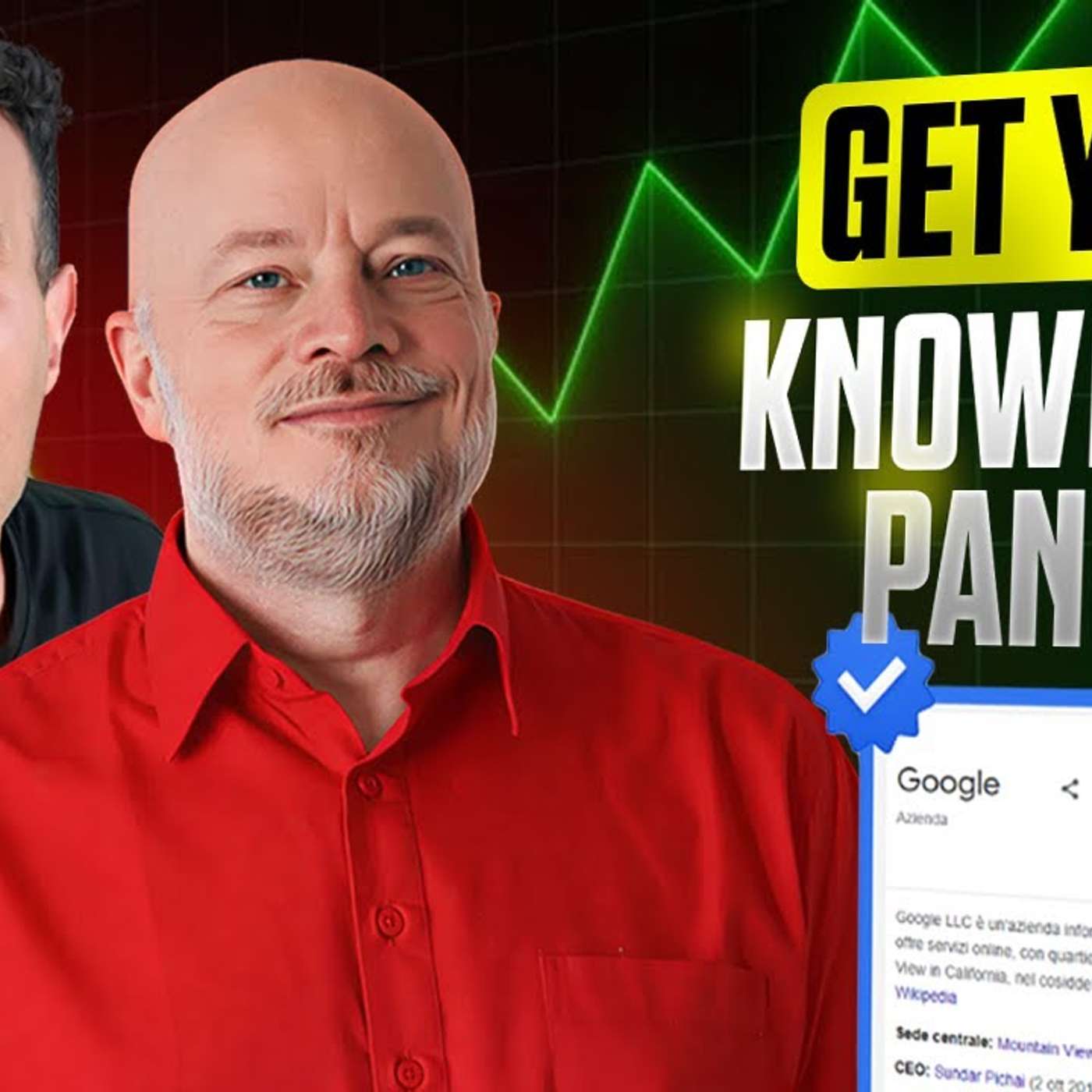
Knowledge Panel Creation – Why Does It Take Time? (James Dooley Interviews Jason Barnard)
Listen on your favourite platform
| Platform | Link |
|---|---|
| YouTube | Listen on YouTube → |
| Transistor | Listen on Transistor → |
| Pocket Casts | Listen on Pocket Casts → |
| Amazon Music | Listen on Amazon Music → |
| Spotify | Listen on Spotify → |
| Podverse | Listen on Podverse → |
| Pod.link | Listen on Pod.link → |
| Castro | Listen on Castro → |
| Castbox | Listen on Castbox → |
| Podcast Addict | Listen on Podcast Addict → |
| Deezer | Listen on Deezer → |
| Listen Notes | Listen on Listen Notes → |
| Podcast Guru | Listen on Podcast Guru → |
| Podchaser | Listen on Podchaser → |
| Steno | Listen on Steno → |
| Metacast | Listen on Metacast → |
What Does “Knowledge Panel Creation - Why Does It Take Time? (James Dooley Interviews Jason Barnard)” Talk About?
This episode of the James Dooley Podcast features a conversation between James Dooley and Jason Barnard of Kalicube, exploring why triggering a meaningful Google knowledge panel takes far longer than many service providers claim. Jason breaks down the critical difference between a superficial knowledge panel that can be created in six weeks and an authoritative panel that reflects genuine machine understanding of who you are, what you do, and who you serve. He draws a clear analogy between a knowledge panel with no depth and a brand new domain with no content or backlinks, explaining that appearing in a search result does not mean Google trusts or endorses you.
The episode digs into the risks of shortcuts, including low-quality Wikipedia or Wikidata entries that can be deleted and leave a person in a worse position than before. Jason outlines how Google's knowledge graph contains around 54 billion entities, while Wikipedia covers only approximately six million, representing roughly 0.01 percent of the graph. He explains that a meaningful panel requires consistent brand presence across the wider web, including YouTube, LinkedIn, Crunchbase, and a person's own website, all telling the same story. The conversation also addresses how this work relates to AI platforms like ChatGPT and Perplexity, with Jason clarifying that while a knowledge panel is a Google-specific output, the underlying consistency and corroboration work that earns a strong panel also improves visibility and trust across large language models.
“Every time you get a knowledge panel and lose it, the next one is harder to get. It's like teaching a child something incorrectly. Once corrected, the child is more sceptical next time.”
— Jason Barnard
Who Are the Guests on “Knowledge Panel Creation - Why Does It Take Time? (James Dooley Interviews Jason Barnard)”?
Jason Barnard is the founder of Kalicube, a company specialising in knowledge graph optimisation, entity SEO, and brand authority. With experience creating tens of thousands of knowledge panels, Jason is recognised as a leading expert in how Google and AI systems understand and represent entities online. His work focuses on helping solopreneurs, entrepreneurs, high net worth individuals, and businesses build long-term credibility with machines rather than pursuing short-term vanity results.
James Dooley is the host of the James Dooley Podcast and an experienced entrepreneur and digital marketer. In this series, James interviews leading experts to break down complex topics in knowledge graph optimisation, entity SEO, and brand authority into practical, accessible insights for business owners and personal brands looking to strengthen their online presence.
What Are the Key Takeaways From “Knowledge Panel Creation - Why Does It Take Time? (James Dooley Interviews Jason Barnard)”?
Here are the key points discussed in this episode:
- A knowledge panel created in six weeks is superficial and reflects only a surface-level impression rather than genuine machine understanding of your authority and identity.
- Losing a knowledge panel after a Wikipedia deletion or other shortcut puts you in a worse position than having no panel at all, because Google treats the removal as a negative signal.
- Wikipedia represents only approximately 0.01 percent of Google's knowledge graph, meaning a strategy built solely on Wikipedia coverage is built on an extremely narrow foundation.
- The work required to earn a strong, stable knowledge panel, including consistent presence across YouTube, LinkedIn, Crunchbase, and your own website, also improves your visibility and recommendation potential in AI systems like ChatGPT and Perplexity.
- For most people, a proper and reliable knowledge panel takes around twelve months to build, though those with strong existing authority signals such as BBC coverage or university credentials may see meaningful results in three to six months.
“The depth of knowledge Google needs for a valuable knowledge panel is very different from simply triggering one.”
— Jason Barnard
Is “Knowledge Panel Creation - Why Does It Take Time? (James Dooley Interviews Jason Barnard)” Worth Listening To?
This episode is a practical reality check for anyone who has been approached by services promising guaranteed knowledge panels in a matter of weeks. Jason Barnard brings genuine depth to the topic, drawing on experience with tens of thousands of panels to explain exactly what separates a knowledge panel that looks good from one that actually builds competitive advantage. The explanations are clear and grounded in specific detail, including the scale of Google's knowledge graph at 54 billion entities compared to Wikipedia's six million, and what it means for Google to truly understand an entity rather than simply surface a panel.
The episode is also valuable for anyone thinking beyond Google and considering how their digital presence performs in AI-driven search tools like ChatGPT and Perplexity. Jason's point that the knowledge panel itself does not influence AI but that the underlying work does is an important distinction that most discussions on this topic miss entirely. Whether you are a solopreneur building a personal brand, a business owner protecting your reputation, or a marketer advising clients, this episode gives you a realistic framework for thinking about timelines, risks, and the long-term value of doing this work properly.
Who Should Listen to “Knowledge Panel Creation - Why Does It Take Time? (James Dooley Interviews Jason Barnard)”?
This episode is ideal for:
- Solopreneurs and personal brands who want to build lasting credibility with Google and AI systems rather than quick vanity results.
- Business owners and entrepreneurs who have been approached by services offering guaranteed knowledge panels and want to understand what they are actually buying.
- Digital marketers and SEO professionals advising clients on entity SEO, knowledge graph optimisation, and brand authority strategies.
- High net worth individuals and executives who need a reliable and stable online presence that accurately represents their authority and expertise across Google and AI platforms.
Where Can You Listen to James Dooley Podcast?
You can listen to James Dooley Podcast on all major podcast platforms:
- Apple Podcasts – Search for “James Dooley Podcast” in the Podcasts app
- Spotify – Available on Spotify for free
- Amazon Music / Audible – Listen through your Amazon account
- Overcast – For iOS users who prefer a dedicated podcast app
- Pocket Casts – Cross-platform podcast player
You can also subscribe using the RSS feed: https://feeds.transistor.fm/james-dooley-podcast
What Are Listeners Saying About This Episode?
“I had no idea there was such a big difference between a knowledge panel that just exists and one that actually means something to Google. Jason's explanation using the child learning analogy really stuck with me. This is essential listening before you spend a penny on knowledge panel services.”
“The point about Wikipedia representing only 0.01 percent of Google's knowledge graph genuinely surprised me. I've been advising clients that Wikipedia is the goal, and this episode completely reframed how I think about entity SEO. Really glad this series exists.”
“What I appreciated most was the honest conversation about timelines. Twelve months sounds long, but Jason explains exactly why, and it actually gave me confidence that the process done properly is worth it. The connection to ChatGPT and Perplexity was a bonus I wasn't expecting.”
- Listen to Knowledge Panel Creation – Why Does It Take Time? (James Dooley Interviews Jason Barnard) on Transistor
- Listen to Knowledge Panel Creation – Why Does It Take Time? (James Dooley Interviews Jason Barnard) on Pocket Casts
- Listen to Knowledge Panel Creation – Why Does It Take Time? (James Dooley Interviews Jason Barnard) on Amazon Music
- Listen to Knowledge Panel Creation – Why Does It Take Time? (James Dooley Interviews Jason Barnard) on Spotify
- Listen to Knowledge Panel Creation – Why Does It Take Time? (James Dooley Interviews Jason Barnard) on Podverse
- Listen to Knowledge Panel Creation – Why Does It Take Time? (James Dooley Interviews Jason Barnard) on Pod.link
- Listen to Knowledge Panel Creation – Why Does It Take Time? (James Dooley Interviews Jason Barnard) on Castro
- Listen to Knowledge Panel Creation – Why Does It Take Time? (James Dooley Interviews Jason Barnard) on Castbox
- Listen to Knowledge Panel Creation – Why Does It Take Time? (James Dooley Interviews Jason Barnard) on Podcast Addict
- Listen to Knowledge Panel Creation – Why Does It Take Time? (James Dooley Interviews Jason Barnard) on Deezer
- Listen to Knowledge Panel Creation – Why Does It Take Time? (James Dooley Interviews Jason Barnard) on Listen Notes
- Listen to Knowledge Panel Creation – Why Does It Take Time? (James Dooley Interviews Jason Barnard) on Podcast Guru
- Listen to Knowledge Panel Creation – Why Does It Take Time? (James Dooley Interviews Jason Barnard) on Podchaser
- Listen to Knowledge Panel Creation – Why Does It Take Time? (James Dooley Interviews Jason Barnard) on Steno
- Listen to Knowledge Panel Creation – Why Does It Take Time? (James Dooley Interviews Jason Barnard) on Metacast
- Listen to Knowledge Panel Creation – Why Does It Take Time? (James Dooley Interviews Jason Barnard) on Entity Home
James Dooley: Knowledge panel creation and why it takes time for you to trigger a knowledge panel. Today I’m joined with Jason Barnard from Kalicube. So the question is, Jason, you’ve created tens of thousands of knowledge panels over the years. When someone promises a knowledge panel in six weeks, guaranteed, what do they not understand? Jason Barnard: Well, six weeks guaranteed is definitely possible. It’s doable. Absolutely no problem at all. What they’re missing is how meaningful the knowledge panel is. A knowledge panel created in six weeks is going to be superficial. It’s not a deep understanding of who you are, what you do, and who you serve. It’s not a demonstration to the machines of your authority. What it does do is give a superficial impression to human beings that the machines love you. There’s a huge difference between the superficial presentation to users, which is absolutely worth having, and the idea that this presentation means the machine trusts you and sees you as authoritative. It doesn’t. James Dooley: So it’s almost like having a brand new domain with no content and no backlinks. It exists, but it’s not ranking or doing anything meaningful. Jason Barnard: Exactly. It appears when someone searches your name, and a lot of people think that means the job is done. But the real value of a knowledge panel is the understanding it represents in the mind of the machines. That understanding is what gives you a competitive advantage across Google and AI. So for a basic question, what actually needs to happen for Google to give someone a knowledge panel? Jason Barnard: You can get a knowledge panel in lots of different ways. The classic one is publishing a book. If you publish a book and put it on Google Books, you’ll get a knowledge panel. But that panel is one hundred percent dependent on that Google Book. Google Books is an isolated part of Google. It doesn’t affect the rest of the algorithms. That’s the superficiality right there. You can also get a knowledge panel from Wikipedia. Historically that worked almost every time. Now it’s not even guaranteed. If you deserve a Wikipedia page and can get one, great. But Wikipedia is tiny. Six million articles. Kalicube tracks around seventy million entities. Google’s knowledge graph is around fifty four billion entities. Wikipedia represents about zero point zero one percent of Google’s knowledge graph. If you want a knowledge panel that supports a wider strategy, you need to be in the heart of the knowledge graph. Outside of Wikipedia, that means consistent brand presence across the web. I’ve gone slightly off topic, but the key point is this. The depth of knowledge Google needs for a valuable knowledge panel is very different from simply triggering one. James Dooley: There are people everywhere now offering guaranteed knowledge panels for hundreds or thousands of pounds. Are you saying the goal shouldn’t just be triggering a KGM ID? Jason Barnard: It depends on ambition. If you just want to look good when people Google your name, any knowledge panel will do. The danger is it can disappear at any time. We’ve seen this happen. Every time you get a knowledge panel and lose it, the next one is harder to get. It’s like teaching a child something incorrectly. Once corrected, the child is more sceptical next time. Wikipedia and Wikidata are particularly dangerous here. If you get a Wikipedia page and it’s deleted, you’re in a worse position than before. Wikipedia is powerful. If editors delete your page, Google sees that as a negative signal. My advice is don’t play with fire. Create these assets when you deserve them. Wikidata has a lower bar, so it’s often a safer starting point. And always ask yourself how much it will cost to maintain the knowledge panel, not just create it. James Dooley: How does a knowledge panel help with AI systems like ChatGPT and Perplexity? Jason Barnard: The knowledge panel itself is purely Google. It doesn’t directly affect AI. But the work you do properly to earn a knowledge panel educates all machines, because they all use the web as a data source. A cheap six week knowledge panel won’t move the needle for AI. AI looks at consistency and corroboration across the web and over time. You need to distinguish between appearing in citations and being recommended. Being recommended requires trust. James Dooley: What’s the biggest difference between buying a KGM ID and doing this properly? Jason Barnard: You can build a strategy on a well built knowledge panel. To create a strong, stable panel, you must optimise your entire digital footprint. That means YouTube, LinkedIn, Crunchbase, IMDb, your website, everything. Every place your audience looks must tell the same story. By doing that, you improve every channel you already have, and you end up with a reliable knowledge panel you can build on long term. James Dooley: So realistically, how long does this take? Jason Barnard: For most people, around twelve months for a proper knowledge panel. If you already have strong authority signals, like BBC coverage, university credentials, or companies with existing knowledge panels, it can be faster. Relationships matter. The closer, stronger, and longer they are, the easier it becomes. But there’s an incompressible timeline. The data must be crawled, indexed, selected, and integrated into the knowledge graph. That doesn’t happen in six weeks. Even for very authoritative people, you’re looking at three to six months for something meaningful. James Dooley: That makes sense. Anyone watching this, this is part eight of an eleven part series on knowledge graph optimisation. We’re covering solopreneurs, entrepreneurs, high net worth individuals, and businesses. This episode focused on knowledge panel creation and why time, consistency, and credibility matter. Jason, it’s been an absolute pleasure. Jason Barnard: Thanks, James.
Creators & Guests
 Host
Host
James Dooley is a UK entrepreneur.
 Guest
Guest
Jason Barnard is a serial entrepreneur, bestselling author, acclaimed keynote speaker, and award-winning innovator. He's the CEO and founder of Kalicube, a premium Digital Branding Consultancy in France and the…