
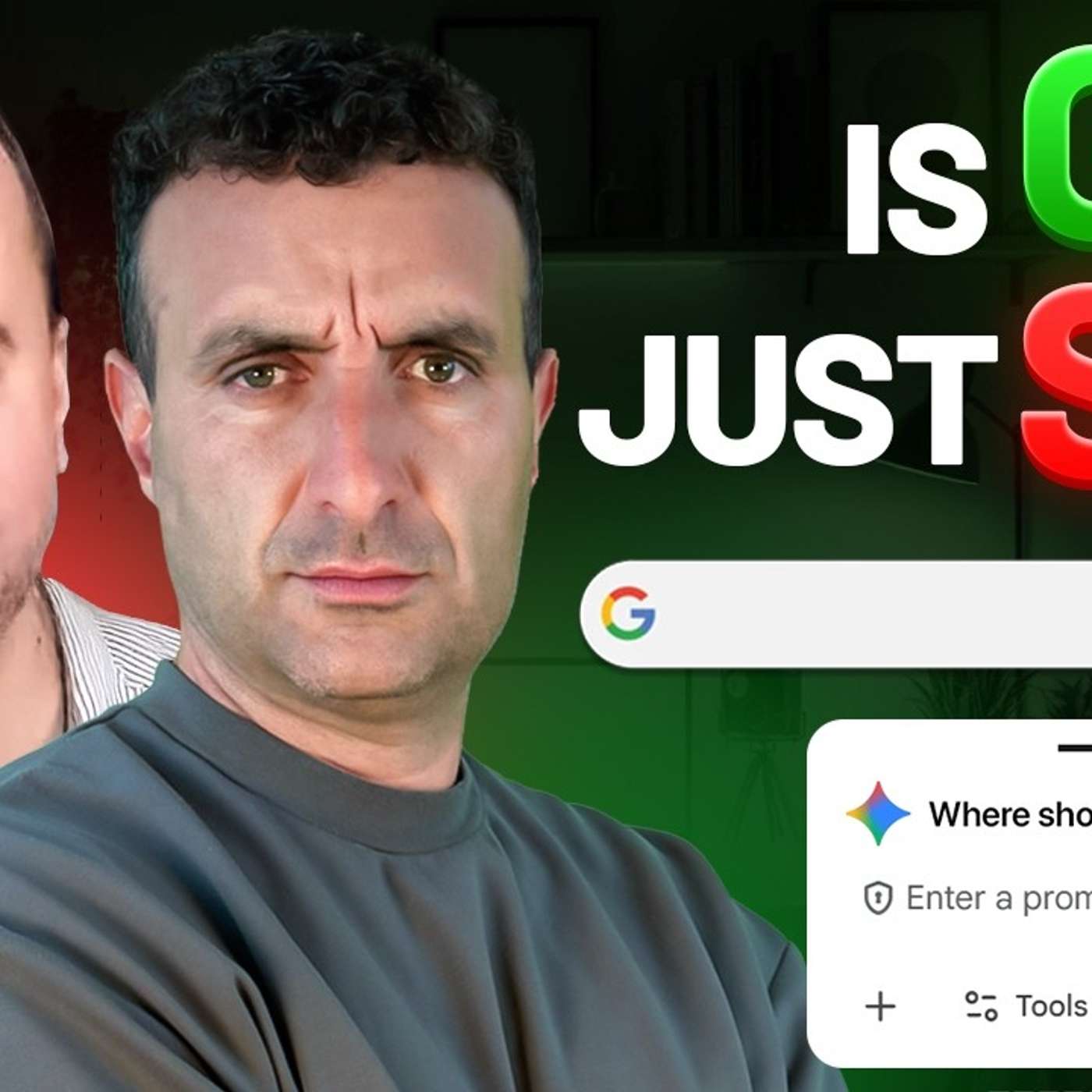
Is GEO just SEO: a evidence based view (James Dooley Interviews Benjamin Tannenbaum)
Listen on your favourite platform
| Platform | Link |
|---|---|
| YouTube | Listen on YouTube → |
| Transistor | Listen on Transistor → |
| Pocket Casts | Listen on Pocket Casts → |
| Amazon Music | Listen on Amazon Music → |
| Spotify | Listen on Spotify → |
| Podverse | Listen on Podverse → |
| Pod.link | Listen on Pod.link → |
| Castro | Listen on Castro → |
| Castbox | Listen on Castbox → |
| Podcast Addict | Listen on Podcast Addict → |
| Deezer | Listen on Deezer → |
| Listen Notes | Listen on Listen Notes → |
| Podcast Guru | Listen on Podcast Guru → |
| Podchaser | Listen on Podchaser → |
| Steno | Listen on Steno → |
| Metacast | Listen on Metacast → |
What Does “Is GEO just SEO: a evidence based view (James Dooley Interviews Benjamin Tannenbaum)” Talk About?
In this episode of the James Dooley Podcast, James Dooley sits down with Benjamin Tannenbaum from AISO to tackle the question of whether GEO (Generative Engine Optimisation) is simply SEO by another name. Using real data gathered from ChatGPT and Gemini, Benjamin breaks down the concept of query fan out, explaining how AI systems run background web searches to find fresh corroboration before generating answers. He reveals that while the core techniques of traditional SEO still apply, the targets have shifted, and understanding those fan out queries is now the key to gaining visibility in AI-generated responses.
The conversation dives into some striking differences between AI search and traditional Google search. Benjamin explains that ranking position matters far less in AI contexts because models like ChatGPT and Gemini pull from the top 30 to 50 results rather than rewarding only the number one position. This means a brand appearing multiple times across positions 20 to 30 can actually outperform a brand sitting at position one in terms of AI citation probability. The episode also covers the practical mechanics of extracting fan out queries, including manual inspection of network requests, Chrome extensions, and bulk tools like AISO at getaiso.com.
Beyond the technical, the discussion addresses how to act on fan out data once you have it, including when to refine existing content, when to pursue digital PR through media listicles, and why Reddit and social media strategies carry high risk if handled poorly. Benjamin also shares a notable distinction between ChatGPT and Gemini, noting that ChatGPT largely relies on SERP snippets rather than reading full page content, while Gemini is more likely to read deeper into pages. The episode closes with a teaser for an upcoming discussion on personalisation in large language models.
“If you want visibility in AI answers, you need to rank for those fan outs.”
— Benjamin Tannenbaum
Who Are the Guests on “Is GEO just SEO: a evidence based view (James Dooley Interviews Benjamin Tannenbaum)”?
Benjamin Tannenbaum is a researcher and practitioner at AISO, a platform built specifically around AI search optimisation and generative engine visibility. He brings an evidence-based approach to understanding how large language models like ChatGPT and Gemini retrieve and surface information, including proprietary data on query fan out patterns across both platforms. His work involves building tools that allow marketers and SEOs to generate and analyse fan out queries at scale, giving him a grounded, data-driven perspective on how AI search actually works beneath the surface.
James Dooley is the host of the James Dooley Podcast and a well-known figure in the SEO and digital marketing space. He brings a practitioner's lens to the conversation, frequently drawing on comparisons between traditional SEO behaviour and emerging AI search dynamics. His sharp questioning throughout the episode helps ground the more technical concepts for a broad audience of marketers, business owners, and search professionals.
What Are the Key Takeaways From “Is GEO just SEO: a evidence based view (James Dooley Interviews Benjamin Tannenbaum)”?
Here are the key points discussed in this episode:
- Query fan out queries, the background web searches AI runs when answering a prompt, are the real targets for anyone wanting visibility in AI-generated answers.
- Ranking position matters far less in AI search because models like ChatGPT and Gemini pull from the top 30 to 50 results, meaning a page at position 15 or 20 can still be cited.
- Appearing multiple times across the fan out result set increases your probability of being cited by AI, meaning frequency of presence can outperform a single top-ranking result.
- ChatGPT typically relies on SERP snippets rather than reading full page content, while Gemini is more likely to read deeper into pages, requiring different content strategies for each platform.
- Traditional SEO techniques including crawlable pages, authority, backlinks, good content, and trust signals remain the foundation of GEO, but they must be applied to the right fan out targets.
“It's like a probability model. If you appear once, you have one chance out of 30. If you appear three times, you effectively increase your probability of being selected.”
— Benjamin Tannenbaum
Is “Is GEO just SEO: a evidence based view (James Dooley Interviews Benjamin Tannenbaum)” Worth Listening To?
This episode is worth listening to because it moves beyond the surface-level debate of GEO versus SEO and grounds the conversation in actual data. Benjamin Tannenbaum does not just assert that AI search is different or the same as traditional search. He explains the mechanics of why AI systems like ChatGPT and Gemini run fan out queries, what those queries look like in practice, and how to extract and act on them. The discussion of how ChatGPT averages around two fan out queries per prompt while Gemini averages around ten, and why cost structures likely explain that gap, is the kind of specific insight rarely found in general marketing content.
Beyond the data, the episode offers genuinely actionable guidance. The breakdown of what to do when you find fan out queries, whether to refine existing content, pursue digital PR through media listicles, or avoid a risky Reddit strategy, gives listeners a practical decision framework they can apply immediately. The revelation that ChatGPT almost never fully opens a page and primarily works from SERP snippets has real implications for how content should be written and structured. For anyone trying to understand where search is heading and what to do about it today, this episode delivers meaningful, evidence-backed answers.
Who Should Listen to “Is GEO just SEO: a evidence based view (James Dooley Interviews Benjamin Tannenbaum)”?
This episode is ideal for:
- SEO professionals and digital marketers wanting to understand how to adapt their strategies for AI-driven search results
- Brand managers and content strategists looking to increase their visibility in ChatGPT and Gemini answers
- Business owners and entrepreneurs trying to understand how AI search changes the way potential customers find them
- Marketing technologists and tool builders interested in the mechanics of query fan out and AI search infrastructure
Where Can You Listen to James Dooley Podcast?
You can listen to James Dooley Podcast on all major podcast platforms:
- Apple Podcasts – Search for “James Dooley Podcast” in the Podcasts app
- Spotify – Available on Spotify for free
- Amazon Music / Audible – Listen through your Amazon account
- Overcast – For iOS users who prefer a dedicated podcast app
- Pocket Casts – Cross-platform podcast player
You can also subscribe using the RSS feed: https://feeds.transistor.fm/james-dooley-podcast
What Are Listeners Saying About This Episode?
“The explanation of query fan out finally made something click for me that I have been struggling to understand for months. The point about appearing three times between positions 20 and 30 potentially beating a single position one result genuinely changed how I think about AI optimisation. Really practical episode.”
“I appreciated that Benjamin backed everything up with actual data from AISO rather than just theory. The comparison of ChatGPT averaging two fan outs versus Gemini averaging ten, and the cost explanation behind it, is exactly the kind of insight I come to this podcast for.”
“The section on what to do once you have fan out data was incredibly useful. The breakdown of brand sites versus media listicles versus Reddit, and why Reddit is high risk if done badly, saved me from a strategy I was about to pursue. Highly recommend this one for anyone doing content or digital PR.”
- Listen to Is GEO just SEO: a evidence based view (James Dooley Interviews Benjamin Tannenbaum) on Transistor
- Listen to Is GEO just SEO: a evidence based view (James Dooley Interviews Benjamin Tannenbaum) on Pocket Casts
- Listen to Is GEO just SEO: a evidence based view (James Dooley Interviews Benjamin Tannenbaum) on Amazon Music
- Listen to Is GEO just SEO: a evidence based view (James Dooley Interviews Benjamin Tannenbaum) on Spotify
- Listen to Is GEO just SEO: a evidence based view (James Dooley Interviews Benjamin Tannenbaum) on Podverse
- Listen to Is GEO just SEO: a evidence based view (James Dooley Interviews Benjamin Tannenbaum) on Pod.link
- Listen to Is GEO just SEO: a evidence based view (James Dooley Interviews Benjamin Tannenbaum) on Castro
- Listen to Is GEO just SEO: a evidence based view (James Dooley Interviews Benjamin Tannenbaum) on Castbox
- Listen to Is GEO just SEO: a evidence based view (James Dooley Interviews Benjamin Tannenbaum) on Podcast Addict
- Listen to Is GEO just SEO: a evidence based view (James Dooley Interviews Benjamin Tannenbaum) on Deezer
- Listen to Is GEO just SEO: a evidence based view (James Dooley Interviews Benjamin Tannenbaum) on Listen Notes
- Listen to Is GEO just SEO: a evidence based view (James Dooley Interviews Benjamin Tannenbaum) on Podcast Guru
- Listen to Is GEO just SEO: a evidence based view (James Dooley Interviews Benjamin Tannenbaum) on Podchaser
- Listen to Is GEO just SEO: a evidence based view (James Dooley Interviews Benjamin Tannenbaum) on Steno
- Listen to Is GEO just SEO: a evidence based view (James Dooley Interviews Benjamin Tannenbaum) on Metacast
- Listen to Is GEO just SEO: a evidence based view (James Dooley Interviews Benjamin Tannenbaum) on Entity Home
James Dooley: GEO versus SEO. Is it the same thing? I always ask different SEOs and marketers this question. Today I’m joined by Benjamin Tannenbaum from AISO, and he has a lot of data and evidence around artificial intelligence and large language models. So let’s jump straight in. Is GEO just SEO, and do you have evidence to back that up?
Benjamin Tannenbaum: That’s a big question and there’s a lot of debate around it. I’ll give a short answer and then we can go deeper. The first thing you need to know is whether people are asking the same things to AI as they do to Google. Because if they’re asking completely different questions, even if the techniques to rank are the same, you’re still targeting something different. We covered this in the first part of the series. AI queries are more informational, more specific, and sometimes the entire funnel happens within one conversation. Now once you know that, the next question is whether the techniques are the same. Could you just use your existing SEO tools and strategies and appear in AI answers? The short answer is that it’s about 80 percent true. The techniques are very similar. But you need to aim for the right target. That’s where query fan out comes in. When you send a question to AI, it often summarises the question and sends background web searches. Those background searches are the query fan outs. If you want visibility in AI answers, you need to rank for those fan outs. There’s more nuance. Being number one is much less important in AI. AI might take the top 30 to 50 results from those fan outs. You don’t need to be number one. If you’re in the top 10, that’s often enough. There’s also a bonus if you appear multiple times in the top 30. For example, if you’re not in the top 10 but you own positions 20 to 30, you’re still very likely to appear in the AI answer.
James Dooley: Let me stop you there. In traditional SEO, if you’re not top five, you’re not getting clicks. Now you’re saying someone ranking 12 to 17 can appear in AI overviews and possibly get cited more than position one. Plus the searches are longer and more conversational. That sounds very different to traditional SEO. Would you agree?
Benjamin Tannenbaum: I agree it’s different in terms of targets and behaviour. But once you decide to optimise for the fan outs, the way you rank for them still relies on traditional SEO techniques. You still need crawlable pages, authority, backlinks, good content, and trust signals. So GEO is SEO applied to slightly different targets.
James Dooley: So the nuances are different but the tools are similar. How do you personally find query fan outs on ChatGPT and Gemini? Are you using a tool or looking in the code?
Benjamin Tannenbaum: There are several ways. The most manual is opening a session, inspecting network requests, and finding the JSON that contains the fan outs. There are also Chrome extensions that expose fan outs. But we wanted to generate thousands at scale, so we built our own internal tool and added it to our app. With our tool, you can input many prompts and generate fan outs in bulk. You can also see which brands or sources dominate those fan outs.
James Dooley: For anyone listening, what is the tool called?
Benjamin Tannenbaum: It’s called AISO. The website is getaiso.com. There’s a free trial with a few credits so users can test multiple prompts and see the fan outs generated by ChatGPT and Gemini.
James Dooley: On a previous episode, someone said ChatGPT averages three fan outs while Gemini averages ten. Why does Gemini generate more?
Benjamin Tannenbaum: In our data it’s about two for ChatGPT and around ten for Gemini. The likely reason is cost. ChatGPT has to pay for each web search it runs. Gemini, being part of Google, likely has much cheaper internal access to search infrastructure. So it can afford more fan outs.
James Dooley: If someone finds ten fan outs from Gemini, how should they optimise? Should they create new pages, subheadings, or address contradictory queries like scam or complaints?
Benjamin Tannenbaum: It depends on trade offs. First, take the fan out query and check the top 30 Google results. You’ll typically see three categories: brand websites, media listicles, and social media like Reddit. If your own website is already there, that’s the lowest effort. Maybe you just refine the content to match the specific intent more closely. If media listicles dominate, that’s a digital PR opportunity. It’s higher cost but potentially higher reward, especially if one media site appears multiple times in the fan out. Social media like Reddit is high risk. If you approach it badly, the community may react negatively. AI systems can detect that. A poor Reddit strategy is worse than none.
James Dooley: Someone previously broke query fan out into six dimensions: entity, attribute, freshness, consensus, reputation, and contradictory. Have you seen similar patterns?
Benjamin Tannenbaum: Yes, similar ideas. One category we identified is time dependent fan out. AI often adds location and date automatically. If your content is updated and clearly current, you increase your chance of appearing. Another category involves repetition or weighting. The fan out may repeat certain attributes to emphasise them. If your brand has a strong differentiator, you need to make that extremely clear in your content so it stands out in weighted searches.
James Dooley: On consensus, if one brand ranks number one but appears once, and another brand ranks 21 to 23 but appears three times, which is more likely to be cited?
Benjamin Tannenbaum: Our anecdotal evidence suggests frequency matters more than position. It’s like a probability model. If you appear once, you have one chance out of 30. If you appear three times, you effectively increase your probability of being selected.
James Dooley: Last question. On chunking and passages, do LLMs open pages or just use meta titles and descriptions?
Benjamin Tannenbaum: There’s a difference between ChatGPT and Gemini. ChatGPT often gives the impression it read the full page, but in most cases it only uses the search result snippets. Gemini more often reads deeper into the page, but even then it may stop at the search result summary if it finds enough information. ChatGPT almost never fully opens the page in most cases.
James Dooley: That’s fascinating. So GEO versus SEO has overlap, but there are real nuances around fan out, consensus, and how AI pulls information. For anyone watching, we covered how AI searches differ from Google in a previous episode. In the next episode, we’ll talk about personalisation in large language models and why the same question can produce different answers for different users. Make sure you check the links in the description.
Creators & Guests
 Host
Host
James Dooley is a UK entrepreneur.