
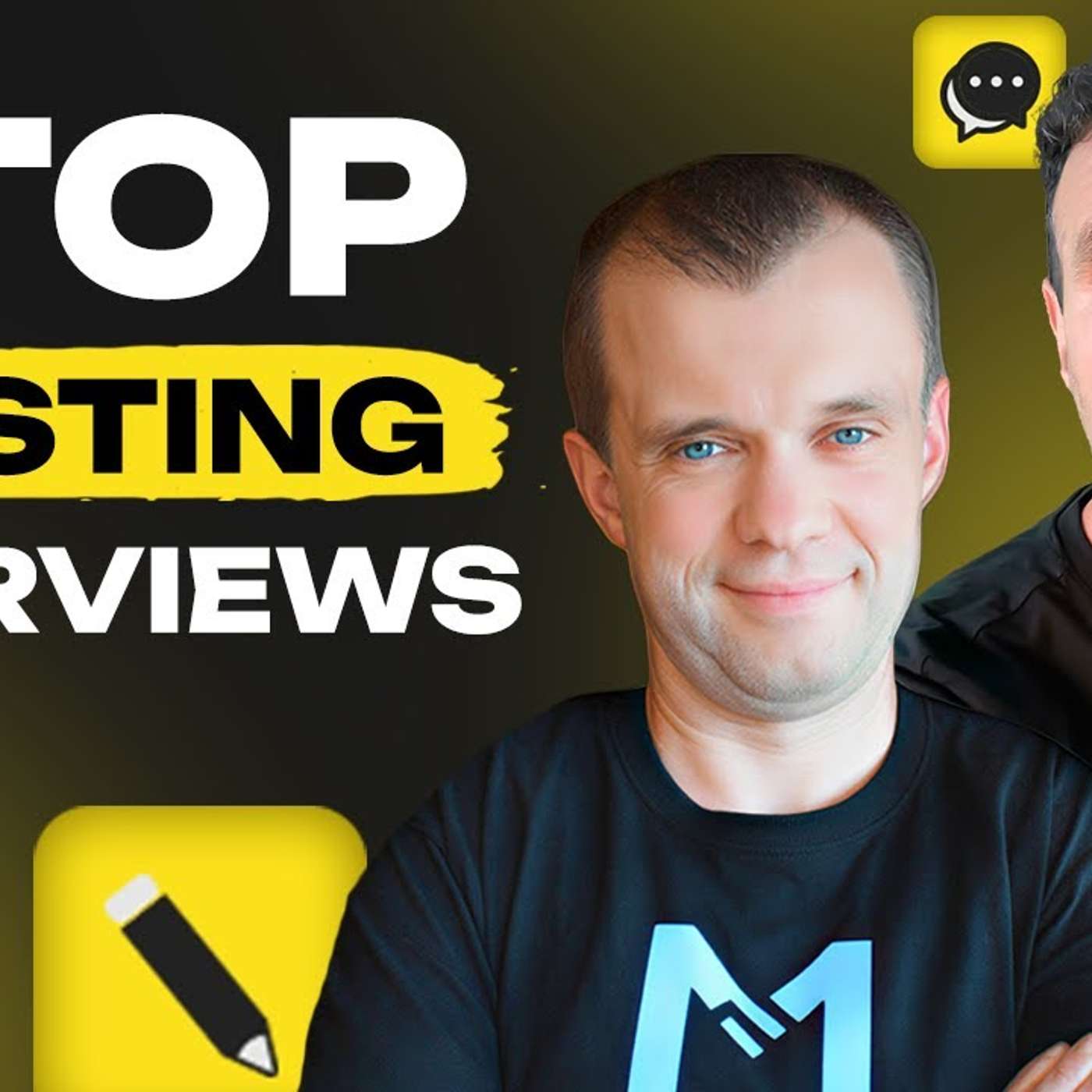
How to Run a Successful Interview Process as an Employer (James Dooley Interviews Mads Singers)
Listen on your favourite platform
| Platform | Link |
|---|---|
| YouTube | Listen on YouTube → |
| Transistor | Listen on Transistor → |
| Pocket Casts | Listen on Pocket Casts → |
| Amazon Music | Listen on Amazon Music → |
| Spotify | Listen on Spotify → |
| Podverse | Listen on Podverse → |
| Pod.link | Listen on Pod.link → |
| Castro | Listen on Castro → |
| Castbox | Listen on Castbox → |
| Podcast Addict | Listen on Podcast Addict → |
| Deezer | Listen on Deezer → |
| Listen Notes | Listen on Listen Notes → |
| Podcast Guru | Listen on Podcast Guru → |
| Podchaser | Listen on Podchaser → |
| Steno | Listen on Steno → |
| Metacast | Listen on Metacast → |
What Does “How to Run a Successful Interview Process as an Employer (James Dooley Interviews Mads Singers)” Talk About?
This episode of the James Dooley Podcast features a focused conversation with hiring consultant Mads Singers on how employers can build a more effective and consistent interview process. The discussion opens by reframing hiring as a learnable skill rather than an instinct, with Mads emphasising that investing in this skill has one of the highest returns of anything a business owner can do. He walks through the three core qualities he looks for in every candidate: absence of negativity, genuine honesty about personal weaknesses, and personality alignment with the role.
“Interviewing and hiring is a skill set. People should invest time and effort in learning how to do it better. There are very few things with a bigger impact on a business than hiring great people. If you hire great people, everything else becomes easier.”
— Mads Singers
Who Are the Guests on “How to Run a Successful Interview Process as an Employer (James Dooley Interviews Mads Singers)”?
Mads Singers is a management consultant and people operations specialist who works with business owners and founders on hiring, team building, and organisational structure. He runs Aristo Sourcing and Mads Singers Consultancy, both of which help companies recruit and manage talent globally. His approach is grounded in behavioural psychology, practical frameworks like DISC profiling, and years of hands-on experience studying what separates high-performing employees from underperformers.
James Dooley is the host of the James Dooley Podcast and an experienced entrepreneur and digital marketing professional. In this episode he plays the role of interviewer while also contributing real-world perspectives from his own experience building and managing teams, including the challenge of deciding whether to retain highly skilled but difficult employees.
What Are the Key Takeaways From “How to Run a Successful Interview Process as an Employer (James Dooley Interviews Mads Singers)”?
Here are the key points discussed in this episode:
- Hiring is a skill that can be learned and improved with the right frameworks, tools, and deliberate practice, rather than something that depends on gut instinct or luck.
- Attitude consistently outweighs raw ability, and Mads advises choosing a candidate with 20 percent better attitude over one with 10 percent more technical skill in the same role.
- Genuine honesty about personal weaknesses during an interview is a strong predictor of long-term employee success, as demonstrated by patterns Mads observed studying top performers in his outsourcing company.
- Using behavioural frameworks like the DISC model helps match candidates to roles they are naturally suited to, which leads to better performance and greater job satisfaction over time.
- Founders and owners should never fully delegate the final hiring decision, even when working with specialist recruiters, because no one understands the company culture and role requirements better than the owner.
“We can shortlist two, three, or five strong candidates. We can do screening, skills checks, and testing. But the owner should always interview the person before the final decision. No one knows the company and role like the owner.”
— Mads Singers
Is “How to Run a Successful Interview Process as an Employer (James Dooley Interviews Mads Singers)” Worth Listening To?
This episode is worth listening to because it replaces vague hiring advice with concrete, tested methods that business owners can apply immediately. Mads Singers draws on direct experience studying hundreds of employees to explain exactly why certain candidates succeed and others fail, and how to spot the difference before making a costly offer. The discussion of how to handle 500 applicants using layered filters, team involvement, and progressive screening is particularly valuable for growing agencies and companies that have struggled to manage high application volumes efficiently.
What makes this episode stand out is the honesty of the conversation. James Dooley pushes back on the attitude-over-skill argument by raising the real dilemma of a brilliant but negative candidate, and Mads gives a direct and well-reasoned answer rather than a textbook response. The episode also covers internal promotion strategy, the danger of using social media as a dumping ground for underperformers, and the practical use of tools like DISC testing and AI-generated interview questions. Business owners at any stage will leave with a clearer picture of how to hire more deliberately and protect their teams from costly hiring mistakes.
Who Should Listen to “How to Run a Successful Interview Process as an Employer (James Dooley Interviews Mads Singers)”?
This episode is ideal for:
- Small business owners and founders who are actively hiring and want a more structured and reliable process for selecting the right candidates.
- Agency owners and team leaders managing high volumes of applicants who need practical filtering and shortlisting strategies to make recruitment manageable.
- HR professionals and office managers who want to refine their screening criteria and introduce behavioural assessment tools like DISC into their hiring workflow.
- Entrepreneurs and consultants interested in the intersection of people management, personality profiling, and organisational performance.
Where Can You Listen to James Dooley Podcast?
You can listen to James Dooley Podcast on all major podcast platforms:
- Apple Podcasts – Search for “James Dooley Podcast” in the Podcasts app
- Spotify – Available on Spotify for free
- Amazon Music / Audible – Listen through your Amazon account
- Overcast – For iOS users who prefer a dedicated podcast app
- Pocket Casts – Cross-platform podcast player
You can also subscribe using the RSS feed: https://feeds.transistor.fm/james-dooley-podcast
What Are Listeners Saying About This Episode?
“The breakdown of the three things Mads looks for in every candidate was genuinely useful. I have been hiring for years and never thought to test for ownership by asking who their worst boss was. Going to use that in my next round of interviews.”
“Really appreciated the honesty about attitude versus skill. James asked exactly the question I was thinking about a high-performing but negative employee and the answer was clear and well explained. Practical episode with no fluff.”
“The section on handling 500 applicants was exactly what I needed. We recently posted a role and got overwhelmed. The layered filtering approach and bringing in a team member to do short calls is something I can implement straight away.”
- Listen to How to Run a Successful Interview Process as an Employer (James Dooley Interviews Mads Singers) on Transistor
- Listen to How to Run a Successful Interview Process as an Employer (James Dooley Interviews Mads Singers) on Pocket Casts
- Listen to How to Run a Successful Interview Process as an Employer (James Dooley Interviews Mads Singers) on Amazon Music
- Listen to How to Run a Successful Interview Process as an Employer (James Dooley Interviews Mads Singers) on Spotify
- Listen to How to Run a Successful Interview Process as an Employer (James Dooley Interviews Mads Singers) on Podverse
- Listen to How to Run a Successful Interview Process as an Employer (James Dooley Interviews Mads Singers) on Pod.link
- Listen to How to Run a Successful Interview Process as an Employer (James Dooley Interviews Mads Singers) on Castro
- Listen to How to Run a Successful Interview Process as an Employer (James Dooley Interviews Mads Singers) on Castbox
- Listen to How to Run a Successful Interview Process as an Employer (James Dooley Interviews Mads Singers) on Podcast Addict
- Listen to How to Run a Successful Interview Process as an Employer (James Dooley Interviews Mads Singers) on Deezer
- Listen to How to Run a Successful Interview Process as an Employer (James Dooley Interviews Mads Singers) on Listen Notes
- Listen to How to Run a Successful Interview Process as an Employer (James Dooley Interviews Mads Singers) on Podcast Guru
- Listen to How to Run a Successful Interview Process as an Employer (James Dooley Interviews Mads Singers) on Podchaser
- Listen to How to Run a Successful Interview Process as an Employer (James Dooley Interviews Mads Singers) on Steno
- Listen to How to Run a Successful Interview Process as an Employer (James Dooley Interviews Mads Singers) on Metacast
- Listen to How to Run a Successful Interview Process as an Employer (James Dooley Interviews Mads Singers) on Entity Home
**James Dooley:** Hi, today I’m joined with Mads Singers and today’s episode is on how to succeed in the interview process. You’re an employer and you’re looking to take on some new employees. How can you make the most out of that interview process to make certain you’re getting that right hire? **Mads Singers:** Many people struggle with this. People come to me and say, “I don’t know how to hire people. I suck at it.” I ask what they mean. They say they hired two people and they were both bad, so they do not know what to do. **Mads Singers:** Interviewing and hiring is a skill set. People should invest time and effort in learning how to do it better. There are very few things with a bigger impact on a business than hiring great people. If you hire great people, everything else becomes easier. **Mads Singers:** AI can help here. It is easy to tell AI what candidate you want, what culture you have, and what your fears are. You can ask AI for the best interview questions and it will give you strong options. **Mads Singers:** There are three things I personally look for, and they are pretty universal. The first is negativity. If you hire people with a negative mindset and attitude, that usually hurts the business. **Mads Singers:** I weed this out by testing ownership. When bad things happen, do they take responsibility or do they blame everyone else? I like asking, “Who is the least good boss you’ve ever had?” Some people will only attack the boss. Others will explain what they did, what they tried, and why it did not work out. **Mads Singers:** There’s a big difference between pushing negativity and taking ownership. **James Dooley:** On that first step, I agree. Negativity breeds negativity across the team. But what if someone is brilliant at the role and very negative? Could attitude be taught? Could you hire them and keep them separate so they do the job but do not infect everyone else? **Mads Singers:** I would not go down that road. You can change someone’s attitude, but it often takes years. Teaching skills is usually faster. **Mads Singers:** I would take 80% less skill for 20% better attitude. The best people are not always the highest skilled. The best people say, “Something happened, I will figure it out.” They take ownership and find a way. **Mads Singers:** If I have a developer who is 90 out of 100 and one who is 80 out of 100, and the 90 has a worse attitude, I will pick the 80 any day, as long as they can do the job. **Mads Singers:** The second thing we look for is honesty. People often ask about weaknesses. Many candidates give a textbook answer like, “I’m a perfectionist.” In many cases they are not, and it also shows they are not being open. **Mads Singers:** We looked at hundreds of employees in our outsourcing company and studied the top ten. A key commonality was they were willing to give a real answer in the interview. **Mads Singers:** One woman said she sometimes gets angry and knows she should not respond immediately. She needs to step away, calm down, then come back. People who know themselves and admit real flaws tend to succeed more than people who perform in interviews. **Mads Singers:** The third thing I focus on is personality. People have natural strengths. For example, I would never hire James Dooley as an accountant. James Dooley could learn it, but would not enjoy it over time. **Mads Singers:** If you put people into roles they are naturally suited to and enjoy, you get more value and success. I use a DISC behavioural framework. It helps match personality traits to role needs. **Mads Singers:** For accounting or development, you often need someone very detail oriented. For customer service, you need people focus and empathy. It is not only about saying the right thing. It is about saying it the right way. **Mads Singers:** For sales, you want assertive and competitive people who can ask for the close. Non-competitive salespeople can do sales, but they tend to succeed slower and less. **Mads Singers:** There is a tool called habramp.com where people can do a DISC test for free and understand strengths and weaknesses. **James Dooley:** In the interview process, if someone applies for a role but you can see they are better suited elsewhere, do you ever put them into a different role? Or do you take them short term in the role they applied for, knowing you might move them later? **Mads Singers:** It depends on the job and situation. It is very situational. **Mads Singers:** If I have a team of accountants and none want to be managers, I might hire someone who can do the job and also has management potential, then move them into management later after they understand the business. **Mads Singers:** But I would not put someone who is not assertive into sales. They will not be comfortable and they are likely to fail. Even good people lose confidence when they fail. **Mads Singers:** If I believe they can do the job but they are not naturally suited, and there is an obvious other role later, it can work. I gave advice to a client with multiple factories. They needed a new factory head. I advised promoting someone one level below who knew the company and culture, then supporting them with experienced staff from other factories. **Mads Singers:** The issue is small companies often cannot afford to keep someone in a role they do not fit while waiting for a better role later. Many companies hold on to people because they fear firing them, then burn cash they need elsewhere. **Mads Singers:** Social media is a common dumping ground. People get shoved into social media because they were weak elsewhere. Output is hard to measure, so they can sit there producing mediocre work for a long time. **James Dooley:** Last question. If you’re a big agency and you post a job and get 500 applicants, you cannot interview everyone. How do you segment them and narrow them down? **Mads Singers:** We use a simple concept called “everything else being equal.” We ask what factors make someone more likely to succeed. **Mads Singers:** For technical SEO, someone with at least three years’ experience is more likely to succeed than someone with less. That might take you from 500 to 200. **Mads Singers:** Then we add filters like typing speed. Faster typing often correlates with higher output. We might remove the bottom 30%. **Mads Singers:** We also use language tests and technical tests. For developers, we use a dev test. We use DISC tests too. **Mads Singers:** If there are still too many candidates, I like bringing in someone from the team they will work with. I ask that person to do short calls with candidates, explain the role, and shortlist the best. I like giving the team ownership and input, while I make the final decision. **Mads Singers:** In one company we have an HR person who does initial interviews across businesses. They screen for values, negativity, and baseline fit. When I get to interview stage, the basics are already filtered. **James Dooley:** Final question. If someone watching this likes the approach but does not have time and wants to outsource recruitment, can Aristo Sourcing or Mads Singers Consultancy do the interview process for them? **Mads Singers:** We can do worldwide recruitment and shortlist candidates. But owners should never let someone hire for them without a final interview. **Mads Singers:** We can shortlist two, three, or five strong candidates. We can do screening, skills checks, and testing. But the owner should always interview the person before the final decision. No one knows the company and role like the owner. **James Dooley:** Anyone watching this, share your hiring horror stories. What have you learned that works well? What tactics do you use that were not covered here? Mads Singers, it’s been a pleasure talking about how to succeed in the interview process.
Creators & Guests
 Host
Host
James Dooley is a UK entrepreneur.
Mads Singers is a management coach who helps entrepreneurs scale their teams through simple systems, clear communication, and people-first leadership. His work centres on management frameworks because structure and delegation…