
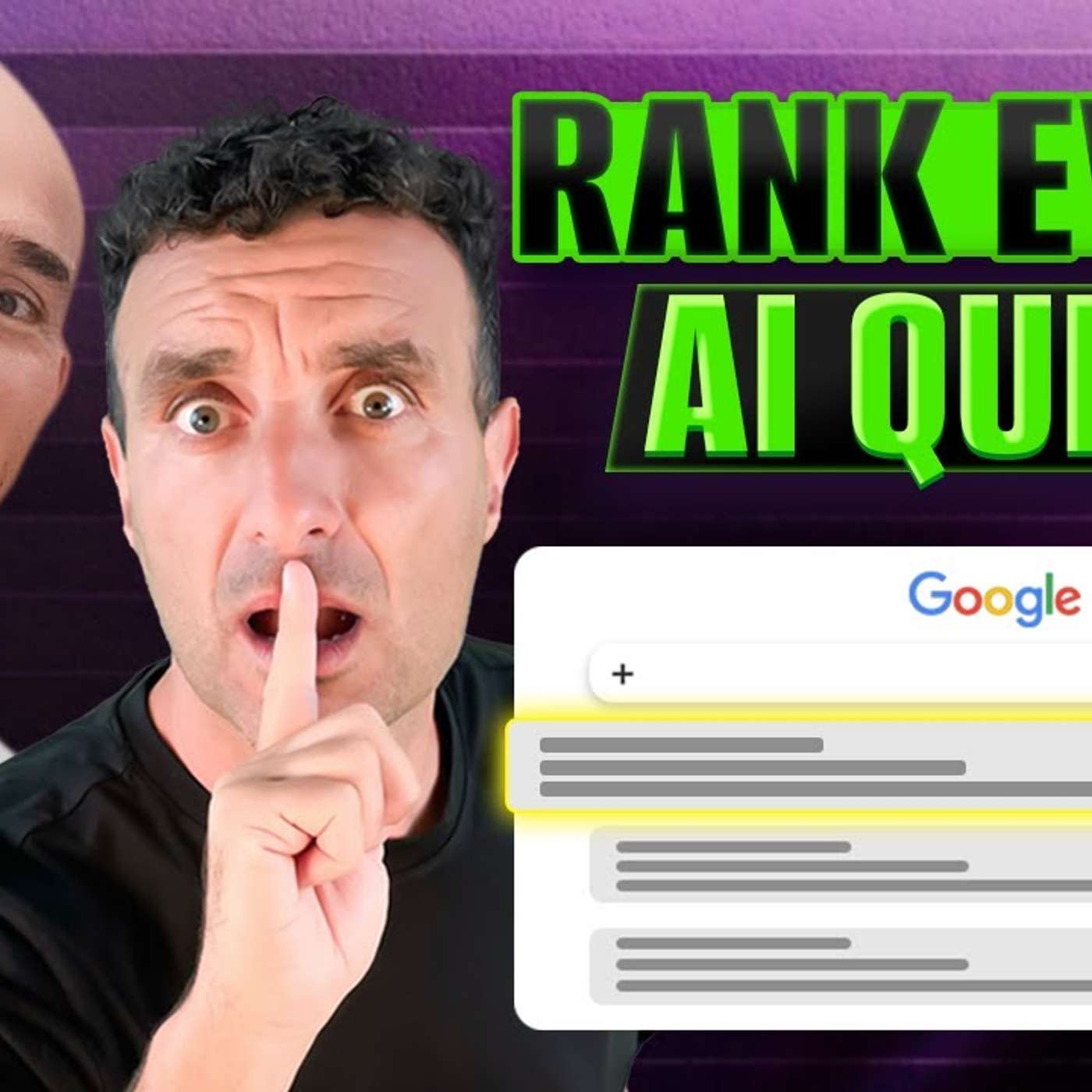
How to rank better for AI query fan out? (James Dooley Interviews Luis Salazar Jurado)
Listen on your favourite platform
| Platform | Link |
|---|---|
| YouTube | Listen on YouTube → |
| Transistor | Listen on Transistor → |
| Pocket Casts | Listen on Pocket Casts → |
| Amazon Music | Listen on Amazon Music → |
| Spotify | Listen on Spotify → |
| Podverse | Listen on Podverse → |
| Pod.link | Listen on Pod.link → |
| Castro | Listen on Castro → |
| Castbox | Listen on Castbox → |
| Podcast Addict | Listen on Podcast Addict → |
| Deezer | Listen on Deezer → |
| Listen Notes | Listen on Listen Notes → |
| Podcast Guru | Listen on Podcast Guru → |
| Podchaser | Listen on Podchaser → |
| Steno | Listen on Steno → |
| Metacast | Listen on Metacast → |
What Does “How to rank better for AI query fan out? (James Dooley Interviews Luis Salazar Jurado)” Talk About?
This episode of the James Dooley Podcast features a focused conversation between James Dooley and Luis Salazar Jurado on how to rank better for AI query fan out queries. Luis breaks down the shift from keyword-based SEO to entity-based thinking, explaining how Google and large language models gather, structure, and expand information across interfaces such as AI Overviews, AI Mode, voice search, and platforms like ChatGPT and Perplexity. The discussion covers how to define an entity, identify its key attributes such as reviews, testimonials, and legitimacy, and then structure content to answer the questions those attributes generate.
The episode also tackles the challenge of brand new entities with no existing search demand, explaining how structured on-site content creates the first semantic relationships between a brand name, its meaning, and surrounding content. Luis and James discuss how Google connects queries, users, and documents when it detects interest in a new entity. They also address the critical role of third-party corroboration, from backlinks and press mentions to citations and social signals, explaining why external validation is what prevents a brand from becoming an isolated entity in the eyes of AI-driven search systems. The conversation provides a practical, step-by-step framework for building visibility and trust in modern search.
“Third party validation is essential. Without it, you are an isolated entity. If nobody mentions you, links to you, or talks about you, your importance is limited.”
— Luis Salazar Jurado
Who Are the Guests on “How to rank better for AI query fan out? (James Dooley Interviews Luis Salazar Jurado)”?
Luis Salazar Jurado is a semantic SEO specialist and the creator of dailysemanticseo.com, where he publishes a daily email dedicated to semantic search strategy. He also shares his work through seotenico.com and LinkedIn. His expertise lies in entity-based SEO, query fan out analysis, and helping brands build structured visibility across AI-driven search systems including Google AI Mode and large language model platforms.
James Dooley is the host of the James Dooley Podcast and an experienced SEO professional and entrepreneur. He is the founder of FatRank, a well-known SEO business, and brings a practitioner's perspective to conversations about search, AI, and digital marketing. His questions throughout the episode are grounded in real-world experience, including using his own brand FatRank as a live example to explore query fan out attributes.
What Are the Key Takeaways From “How to rank better for AI query fan out? (James Dooley Interviews Luis Salazar Jurado)”?
Here are the key points discussed in this episode:
- Ranking today requires thinking in terms of entities and their attributes rather than targeting isolated keywords, because Google ranks entities and the structured information surrounding them.
- To identify which attributes to cover for any entity, you should analyse SERPs across multiple interfaces including standard Google search, AI Mode, ChatGPT, and Perplexity to map related searches and extract patterns.
- For brand new companies with no search demand, you must provide accurate and structured content on your own website first, as this feeds crawlers and creates the initial semantic relationships between the brand name and its meaning.
- Third-party corroboration through reviews, press mentions, citations, and social signals is essential because without external validation an entity remains isolated and limited in authority within AI-driven search systems.
- Backlinks alone are no longer sufficient; external content must expand and semantically reinforce who you are and what you do so that AI systems can understand and surface your entity across fan out queries.
“Backlinks alone are not enough. External content should expand and reinforce who you are and what you do. That semantic reinforcement helps AI systems and search engines understand your entity more clearly and rank you across fan out queries.”
— Luis Salazar Jurado
Is “How to rank better for AI query fan out? (James Dooley Interviews Luis Salazar Jurado)” Worth Listening To?
This episode is worth listening to because it offers one of the clearest practical explanations of AI query fan out available in podcast form. Luis Salazar Jurado does not speak in vague generalities. He walks through a concrete process: define the entity, find its attributes, analyse SERPs across multiple interfaces, study how data is structured, and build content that covers more of the entity's attribute space than competitors. The use of FatRank and James Dooley himself as live examples makes the framework immediately understandable and applicable.
What makes this episode especially valuable is how it addresses both established brands and brand new entities with no search history. The explanation of how Google connects queries, users, and documents when it first encounters a new brand fills a gap that most SEO content ignores. The discussion on third-party corroboration as semantic reinforcement rather than just link building also represents a genuinely modern way of thinking about off-site strategy. Anyone trying to understand how to build search visibility in a world shaped by AI Overviews and large language models will find this episode directly useful.
Who Should Listen to “How to rank better for AI query fan out? (James Dooley Interviews Luis Salazar Jurado)”?
This episode is ideal for:
- SEO professionals and consultants who want to understand how entity-based thinking and AI query fan out are changing search strategy
- Business owners and marketers launching new brands who need to understand how to establish semantic presence from scratch with no existing search demand
- Content strategists who want a practical framework for structuring on-site content to satisfy AI-driven search interfaces including AI Mode and voice search
- Digital PR and link building specialists who want to understand how third-party corroboration functions as semantic reinforcement rather than just a ranking signal
Where Can You Listen to James Dooley Podcast?
You can listen to James Dooley Podcast on all major podcast platforms:
- Apple Podcasts – Search for “James Dooley Podcast” in the Podcasts app
- Spotify – Available on Spotify for free
- Amazon Music / Audible – Listen through your Amazon account
- Overcast – For iOS users who prefer a dedicated podcast app
- Pocket Casts – Cross-platform podcast player
You can also subscribe using the RSS feed: https://feeds.transistor.fm/james-dooley-podcast
What Are Listeners Saying About This Episode?
“The breakdown of how to handle a brand new entity with no search demand was exactly what I needed. Luis's explanation of how Google connects queries, users, and documents from scratch gave me a clear starting point for a client launch I've been stuck on.”
“I loved how James used FatRank as a real example to explore fan out attributes like reviews and legitimacy. It made the whole concept click immediately. The advice to analyse SERPs across AI Mode, ChatGPT, and Perplexity rather than just standard Google is something I'm implementing straight away.”
“Luis's point about being an isolated entity if you have no third-party corroboration really reframed how I think about off-site work. This episode is short but genuinely packed with actionable thinking around semantic SEO and AI search.”
- Listen to How to rank better for AI query fan out? (James Dooley Interviews Luis Salazar Jurado) on Transistor
- Listen to How to rank better for AI query fan out? (James Dooley Interviews Luis Salazar Jurado) on Pocket Casts
- Listen to How to rank better for AI query fan out? (James Dooley Interviews Luis Salazar Jurado) on Amazon Music
- Listen to How to rank better for AI query fan out? (James Dooley Interviews Luis Salazar Jurado) on Spotify
- Listen to How to rank better for AI query fan out? (James Dooley Interviews Luis Salazar Jurado) on Podverse
- Listen to How to rank better for AI query fan out? (James Dooley Interviews Luis Salazar Jurado) on Pod.link
- Listen to How to rank better for AI query fan out? (James Dooley Interviews Luis Salazar Jurado) on Castro
- Listen to How to rank better for AI query fan out? (James Dooley Interviews Luis Salazar Jurado) on Castbox
- Listen to How to rank better for AI query fan out? (James Dooley Interviews Luis Salazar Jurado) on Podcast Addict
- Listen to How to rank better for AI query fan out? (James Dooley Interviews Luis Salazar Jurado) on Deezer
- Listen to How to rank better for AI query fan out? (James Dooley Interviews Luis Salazar Jurado) on Listen Notes
- Listen to How to rank better for AI query fan out? (James Dooley Interviews Luis Salazar Jurado) on Podcast Guru
- Listen to How to rank better for AI query fan out? (James Dooley Interviews Luis Salazar Jurado) on Podchaser
- Listen to How to rank better for AI query fan out? (James Dooley Interviews Luis Salazar Jurado) on Steno
- Listen to How to rank better for AI query fan out? (James Dooley Interviews Luis Salazar Jurado) on Metacast
- Listen to How to rank better for AI query fan out? (James Dooley Interviews Luis Salazar Jurado) on Entity Home
James Dooley Hi, today I’m joined with Luis Salazar Jurado and today’s topic is how to rank better for AI query fan out queries. Luis Salazar Jurado Hi everybody. Thanks James for having me. Let’s jump straight in. James Dooley So let’s jump straight into it. How do you rank better for AI query fan out? Luis Salazar Jurado Firstly, you have to define the entity you want to rank for. An entity can be an organisation, a person, a thing, anything on the internet. Then you have to find the right attributes for that entity, because ranking only for keywords no longer works very well. Google ranks entities. You then structure your content to answer questions related to that entity. Luis Salazar Jurado For example, let’s take James Dooley. If someone asks Google a question about James Dooley, Google gathers all the information it has across the internet and returns an answer. That answer could appear as a snippet or an AI Overview. It depends on how the user triggers the query and the interface they use, such as voice, text, or AI mode. The information that is best structured to answer the question will usually surface first. Luis Salazar Jurado To rank better for query fan out in AI, you trigger multiple questions in Google, analyse the SERPs, study how the data is structured, and identify which content serves those answers. You then create better structured content that covers more attributes and answers more questions about the entity than your competitors. James Dooley With query fan out, is there a way of knowing which attributes you need to cover? For example, when I searched one of my businesses, FatRank, I noticed fan out terms like reviews, testimonials, and legitimacy. How do you identify those attributes? Do you prompt AI, analyse People Also Ask, or look at related searches? Luis Salazar Jurado First, define the entity, in this case FatRank. Then analyse search results across as many interfaces as possible, standard Google search, AI Mode, and AI platforms like ChatGPT or Perplexity. Look at the extracted information, the top results, and the related searches. Each related term opens up more data. It becomes a process of exploration, like solving a puzzle. As you gather data, you build a strategy that maps the entity and its attributes. Luis Salazar Jurado You define attributes such as reviews, testimonials, and legitimacy. Once you identify them, you expand and augment queries related to that entity. That process gives you both insight and a clear SEO strategy. James Dooley Let me throw a curveball. What if it’s a brand new company with no existing search demand? How do you think about fan out queries when there is no existing data? Luis Salazar Jurado If Google has no data about a new brand, you start by defining the brand semantically. Break the name into its component terms and analyse whether Google already has associations for those terms. When you launch, you must provide accurate, structured information on your website. That content feeds the bots and creates relationships between the brand name, its meaning, and the surrounding content. Luis Salazar Jurado When users begin searching, Google connects queries, users, and documents. Queries are what users type, users are the people searching, and documents are any form of content such as pages, images, or videos. When Google detects interest, it crawls your site, extracts information, and builds a map linking the brand, the query, and the documents. James Dooley How important is third party corroboration compared to just publishing content on your own site? Luis Salazar Jurado Third party validation is essential. Without it, you are an isolated entity. If nobody mentions you, links to you, or talks about you, your importance is limited. External validation such as reviews, press mentions, citations, and social signals act as glue that connects your entity to the wider web. These signals only work properly when they are part of a well planned brand strategy. James Dooley I used to focus purely on backlinks. Now I think more in terms of corroboration and semantic reinforcement. Is that the right way to think about it? Luis Salazar Jurado Yes. Backlinks alone are not enough. External content should expand and reinforce who you are and what you do. That semantic reinforcement helps AI systems and search engines understand your entity more clearly and rank you across fan out queries. James Dooley If someone wants to learn more about query fan out and semantic SEO, where should they follow you? Luis Salazar Jurado They can visit seotenico.com, find my work on LinkedIn, or subscribe to dailysemanticseo.com. I write an email every day about semantic SEO. James Dooley It’s been a pleasure having you, Luis. This has been a great breakdown of how to rank for AI query fan out and why entity thinking matters more than ever.
Creators & Guests
 Host
Host
James Dooley is a UK entrepreneur.
 Guest
Guest
Luis Salazar Jurado is a semantic SEO expert who works across eCommerce and SaaS because his background in web development shaped a precise understanding of how platforms operate under the…