
How to Get More Loft Conversion Leads in 2025
Listen on your favourite platform
| Platform | Link |
|---|---|
| YouTube | Listen on YouTube → |
| Transistor | Listen on Transistor → |
| Pocket Casts | Listen on Pocket Casts → |
| Amazon Music | Listen on Amazon Music → |
| Spotify | Listen on Spotify → |
| Podverse | Listen on Podverse → |
| Pod.link | Listen on Pod.link → |
| Castro | Listen on Castro → |
| Castbox | Listen on Castbox → |
| Podcast Addict | Listen on Podcast Addict → |
| Deezer | Listen on Deezer → |
| Listen Notes | Listen on Listen Notes → |
| Podcast Guru | Listen on Podcast Guru → |
| Podchaser | Listen on Podchaser → |
| Steno | Listen on Steno → |
| Metacast | Listen on Metacast → |
What Does “How to Get More Loft Conversion Leads in 2025” Talk About?
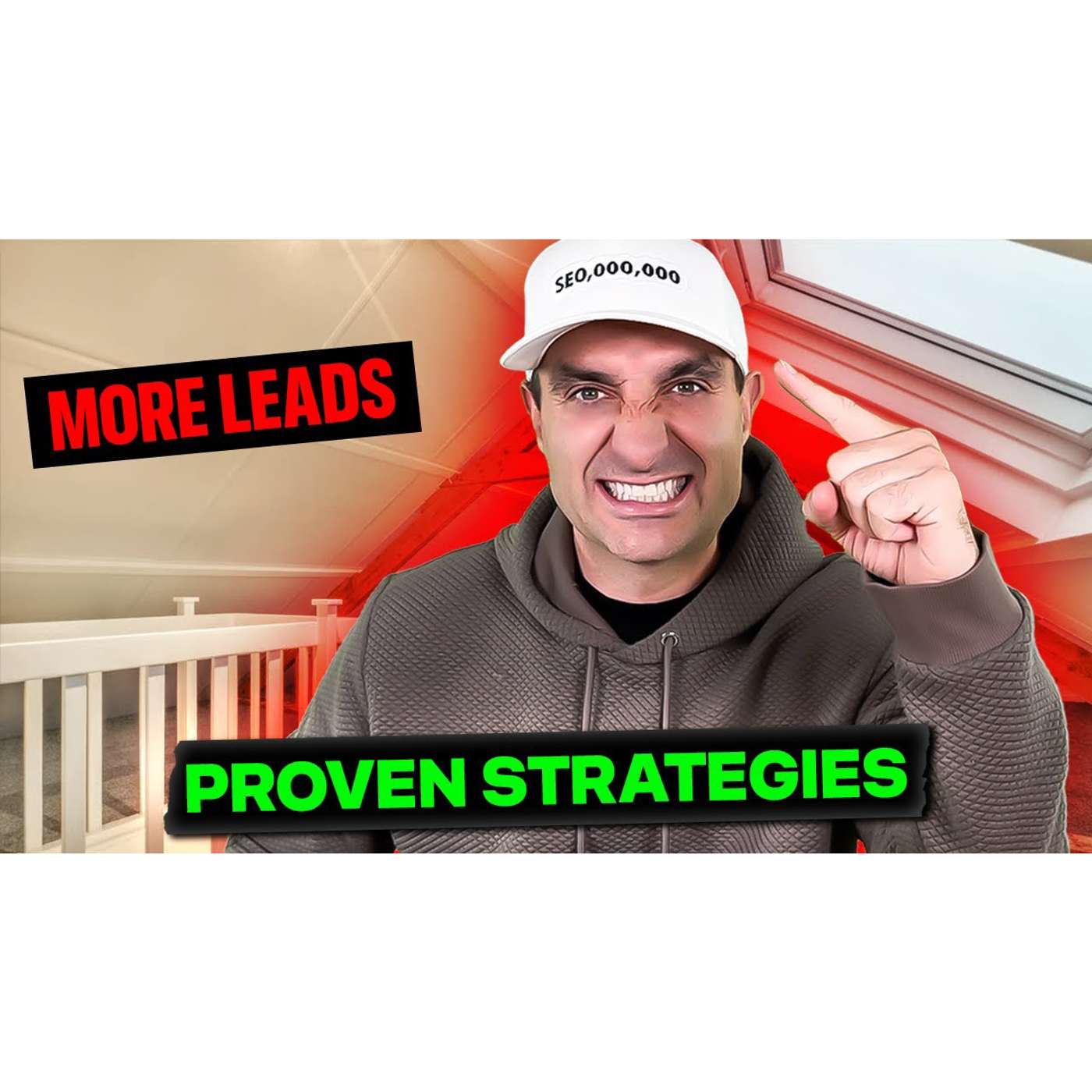
This episode of the James Dooley Podcast features James Dooley and Kasra Dash breaking down a comprehensive lead generation strategy specifically tailored for loft conversion companies in the UK. The hosts walk through a full spectrum of marketing channels, starting with Google Business Profile optimisation and the importance of gathering five-star reviews to improve map pack rankings, then moving into creating dedicated SEO-optimised service pages on a company's website to capture targeted organic search traffic and boost local visibility.
The conversation covers paid channels including PPC advertising on Google and Bing, with warnings about click fraud and the need for a well-maintained negative keyword list, as well as Meta ads on Facebook and Instagram using both lead forms and conversion-based campaigns. The hosts also discuss organic social media posting across platforms like YouTube, Twitter, Facebook, Pinterest, Reddit, and Quora, emphasising that consistency and volume are key to training platform algorithms. Emerging topics such as AI-powered content automation using tools like N8N and optimising for AI search engines like ChatGPT, Gemini, and Claude are also addressed.
The episode rounds out with a comparison of tradespeople platforms like Checkatrade, Bark, and Rated People against dedicated lead generation companies, highlighting the drawbacks of shared leads and the importance of tracking KPIs like cost per lead and cost per acquisition. James and Kasra close with a compelling data-driven argument for inbound over outbound lead generation, citing a 16.1 percent versus 1.4 percent conversion rate difference, and underscore the value of responding to real-time leads within under a minute to maximise conversion.
“The last stat I saw was 16.1 percent conversion compared to 1.4 percent for outbound. Massive difference.”
— Kasra Dash
Who Are the Guests on “How to Get More Loft Conversion Leads in 2025”?
James Dooley is a well-known figure in the SEO and lead generation space, most recognised as the founder of FatRank, a commission-based lead generation service operating across the UK. James has extensive hands-on experience working with tradespeople and local service businesses, helping them scale through a variety of digital marketing strategies. His expertise spans Google Business Profile optimisation, PPC, organic SEO, and building sustainable inbound lead pipelines for local companies.
Kasra Dash is a digital marketing specialist with deep knowledge of paid media, organic social media strategy, and conversion optimisation. Having worked alongside James with numerous loft conversion and construction companies throughout the UK, Kasra brings practical, data-backed insights into what actually drives qualified leads in competitive local markets. He is particularly knowledgeable on Meta advertising, AI search optimisation, and the strategic differences between shared and exclusive lead generation models.
What Are the Key Takeaways From “How to Get More Loft Conversion Leads in 2025”?
Here are the key points discussed in this episode:
- Optimising your Google Business Profile by actively collecting five-star reviews and publishing regular posts is a foundational step that directly improves local map rankings and drives more inbound calls.
- Creating dedicated SEO-optimised service pages for each individual service indirectly boosts Google Business Profile visibility, meaning a single content effort can produce multiple ranking benefits simultaneously.
- Inbound leads convert at a dramatically higher rate than outbound leads, with data showing a 16.1 percent conversion rate for inbound compared to just 1.4 percent for outbound, making inbound strategy the smarter long-term investment.
- Responding to real-time leads in under one minute can increase conversion rates by approximately 63 percent, making speed of response one of the most impactful operational improvements a loft conversion company can make.
- When evaluating lead generation companies or tradespeople platforms, it is critical to understand whether leads are exclusive or shared, as shared leads often trigger a race to the bottom on price and dramatically reduce conversion quality.
“Real time leads convert around 63 percent higher. And when we measured KPIs, responding under a minute made a huge difference. We used to think five minutes was good. But under a minute was far better.”
— Kasra Dash
Is “How to Get More Loft Conversion Leads in 2025” Worth Listening To?
This episode is an exceptionally practical resource for anyone running or marketing a loft conversion business. Rather than offering vague advice, James and Kasra move channel by channel through a complete marketing ecosystem, explaining not just what to do but why each strategy works and what the common pitfalls are. The inclusion of real internal performance data, such as the 63 percent uplift from real-time lead response and the stark contrast between inbound and outbound conversion rates, gives the episode a credibility that sets it apart from generic marketing content.
What makes it especially worth listening to is the honest comparison of different lead sources, including the candid discussion about shared leads on platforms like Bark and Checkatrade creating a race to the bottom on pricing. For business owners who have tried these platforms and been disappointed, this episode provides clear context for why that happened and what to do instead. The emerging topics around AI search on ChatGPT, Gemini, and Claude add a forward-looking dimension that ensures the advice remains relevant well into 2025 and beyond.
Who Should Listen to “How to Get More Loft Conversion Leads in 2025”?
This episode is ideal for:
- Loft conversion company owners looking to build a more consistent and predictable pipeline of qualified inquiries
- Digital marketers and SEO professionals who work with local tradespeople or home improvement businesses and need channel-by-channel strategy frameworks
- Business development managers at construction or renovation companies who want to compare the ROI of paid, organic, and lead generation platform channels
- Entrepreneurs and small business owners in the home services sector who are evaluating whether to invest in inbound marketing or continue relying on outbound sales efforts
Where Can You Listen to James Dooley Podcast?
You can listen to James Dooley Podcast on all major podcast platforms:
- Apple Podcasts – Search for “James Dooley Podcast” in the Podcasts app
- Spotify – Available on Spotify for free
- Amazon Music / Audible – Listen through your Amazon account
- Overcast – For iOS users who prefer a dedicated podcast app
- Pocket Casts – Cross-platform podcast player
You can also subscribe using the RSS feed: https://feeds.transistor.fm/james-dooley-podcast
What Are Listeners Saying About This Episode?
“Finally a video that actually gives you numbers to work with. The stat about real-time leads converting 63 percent higher completely changed how I think about follow-up speed. I immediately reviewed our response process after watching this.”
“Really appreciated the honest take on Checkatrade and Bark. I'd been spending money on shared leads and wondering why nothing was converting. James and Kasra explained exactly why that happens and what to do instead. Super useful episode.”
“The breakdown of inbound versus outbound was eye-opening. A 16 percent versus 1.4 percent conversion rate is a huge difference and it made me rethink where we're putting our marketing budget. Practical, no fluff content throughout.”
- Listen to How to Get More Loft Conversion Leads in 2025 on Transistor
- Listen to How to Get More Loft Conversion Leads in 2025 on Pocket Casts
- Listen to How to Get More Loft Conversion Leads in 2025 on Amazon Music
- Listen to How to Get More Loft Conversion Leads in 2025 on Spotify
- Listen to How to Get More Loft Conversion Leads in 2025 on Podverse
- Listen to How to Get More Loft Conversion Leads in 2025 on Pod.link
- Listen to How to Get More Loft Conversion Leads in 2025 on Castro
- Listen to How to Get More Loft Conversion Leads in 2025 on Castbox
- Listen to How to Get More Loft Conversion Leads in 2025 on Podcast Addict
- Listen to How to Get More Loft Conversion Leads in 2025 on Deezer
- Listen to How to Get More Loft Conversion Leads in 2025 on Listen Notes
- Listen to How to Get More Loft Conversion Leads in 2025 on Podcast Guru
- Listen to How to Get More Loft Conversion Leads in 2025 on Podchaser
- Listen to How to Get More Loft Conversion Leads in 2025 on Steno
- Listen to How to Get More Loft Conversion Leads in 2025 on Metacast
- Listen to How to Get More Loft Conversion Leads in 2025 on Entity Home
Kasra Dash: If you are a loft conversion company and you're looking for a consistent flow of inquiries, this video is for you. Me and James, we've worked with a lot of different companies throughout the UK that actually do loft conversions, so we know exactly what marketing strategies you should actually do and which ones you should avoid. In this video, we're going to be breaking down every single strategy. So, James, take it away.
James Dooley: So, step number one, what I'd be looking to do to grow is a Google business profile. If you already have one, I'd be making certain that I would be reaching out to all my existing clients to try to get me as many five star reviews as possible. It's a great way of Google business profile to generate more leads. There's obviously getting citations and doing Google business profile posts and uploading photos on there. So that's definitely step one that I would be doing to try to generate more local leads.
Kasra Dash: So step number two, this is kind of to bolster onto your actual Google business profile is I would be creating dedicated service pages for each of your individual services as SEO optimised pages on your website. Now the good thing is is when you start doing that it's also going to help first of all rank your actual SEO optimised page, but there's also more likeliness chance of your Google business profile ranking and showing up for those keywords as well. So you're indirectly going to get more phone calls as well.
James Dooley: Yeah, for sure. And if you are looking for more local leads, another option that you could be doing is PPC lead generation. That's pay per click within Google or within Bing where you're trying to target the bottom of the funnel keywords that can try to generate you some more inquiries. The difficult part to this is you need to make certain you do team up with a good pay per click agency because there is click fraud and there's also needing to be build up like a negative keyword list so it's not people applying for jobs like a careers kind of job. So PPC can work well but it can in the wrong hands you can waste a lot of money but it's another way of generating local leads.
Kasra Dash: Yeah. And then after that you've also got like meta ads as well. Also like Facebook, Instagram, where the next time when somebody goes on to Facebook, they might be scrolling, they might see your ad. Now there's a few different ways that you can set up Facebook ads. They obviously have lead forms which are easy to do since they never leave the Facebook platform. The issue with lead forms is quality might not be great, but you can add more questions to improve that quality. Then you have conversion ads where people go to your website and fill in the contact form there. So you have a couple of different options you can use.
James Dooley: Yeah, for sure. And then another way to grow more local leads could be organic social media. So posting regularly on Facebook, Twitter, YouTube, Pinterest, Instagram. There are lots of different platforms out there that you can be trying to get more traction from. Reddit is big nowadays. Quora is big if people have questions and you can answer them. Organic social media is another great way to generate more local leads for your business.
Kasra Dash: With organic social media, I would say it's more of a volumes game. You want to make certain you're constantly uploading whether it's daily or weekly. You might say you want to upload five videos a week. You should stick to that. Especially when it comes to algorithms like YouTube and Twitter.
James Dooley: Yeah, for sure. What's your thoughts on using AI agents, teaming up with someone to use tools like N8N to automate and schedule posts on social media? Using artificial intelligence is all the rage for trying to generate more leads. Would you team up with an AI consultant to set that up?
Kasra Dash: Yeah. You can definitely go down that route using AI agents to crop videos and autopublish to YouTube, Facebook and Twitter. But another thing I would focus on is AI search. A lot of people have started to move away from Google. Not everyone because billions still use it every day. But people are starting to search on engines like ChatGPT, Gemini, Claude, Groq. If your brand isn't showing up on these, you'll have issues getting leads. So that's another thing I would be focusing on.
James Dooley: Yeah. And also if you're looking for more business leads in the local area, another thing I would do is team up with tradespeople websites like Checkatrade, Bark, Builder Builder, Trust a Trader, Rated People. All these platforms can generate more local leads. I would say make certain you're tracking your KPIs to see the return on investment. You should track cost per lead, cost per acquisition and what return that generates. Tradespeople websites can work very well. Check out the links in the description because we do videos comparing them.
Kasra Dash: Yeah. With lead generation companies, I would say you must do your due diligence. Make certain that if you're in a specific niche, the lead generation company has actually generated leads in that industry before. I’d also have a strategy call and say this is my budget, this is how many leads I want, to check your KPIs align. You also want to check what type of leads they offer. Exclusive leads or shared leads. Shared leads are what many other platforms offer like Bark and Checkatrade. A lot of company owners say it's a shared lead and becomes a race to the bottom on who's cheapest. So these are things I’d ask before partnering.
James Dooley: Yeah, for sure. If anyone is interested in generating more local leads, I strongly recommend heading over to fatrank.com where we have a commission based lead generation service. You only pay a finder's fee on converted jobs. Nothing to pay on the pay per lead. Nothing to pay until you get paid. Only once you convert the job and have completed it and been paid do you pay Fatrank. So head to fatrank.com to see if you qualify. But I want to expand further. What's your thoughts on inbound lead generation versus outbound?
Kasra Dash: I always prefer inbound. The conversion rate of not just getting the lead but getting it to convert into a paying customer is a lot higher. The last stat I saw was 16.1 percent conversion compared to 1.4 percent for outbound. Massive difference. Outbound needs volume. Cold calling, cold emails, LinkedIn sales navigator. Sometimes you need more staff. People think they're generating free leads but there’s still cost. Email sending, sales team. So I completely agree inbound is much better.
James Dooley: What's your thoughts on real time leads? Some people ask if real time leads are important. As soon as they inquire it comes straight through.
Kasra Dash: Yeah, it's very important. The stat we saw internally was real time leads convert around 63 percent higher. And when we measured KPIs, responding under a minute made a huge difference. We used to think five minutes was good. But under a minute was far better. Inquiry comes in. Can you ring them or email them straight away? That’s the difference.
James Dooley: Not every company needs to respond under a minute. But it's something we look at when partnering. Some business owners go away for five days and have no one to pick up leads. And we are still providing leads. All these nuances matter. The best thing I recommend to anyone looking to scale and get consistent high quality leads is fill out the form at Fat Rank. The team will tell you if you're the right fit or not. And give feedback on why you’re not and what to do next.
Kasra Dash: So I hope you like all the different ways we can generate more leads for your loft conversion company. Make certain you head over to fatrank.com and see whether you qualify to generate more loft conversion leads.
Creators & Guests
 Host
Host
James Dooley is a UK entrepreneur.
Kasra Dash is an SEO entrepreneur and digital marketing specialist with more than a decade of experience in search, lead generation and website recovery. His expertise covers organic SEO, affiliate…