
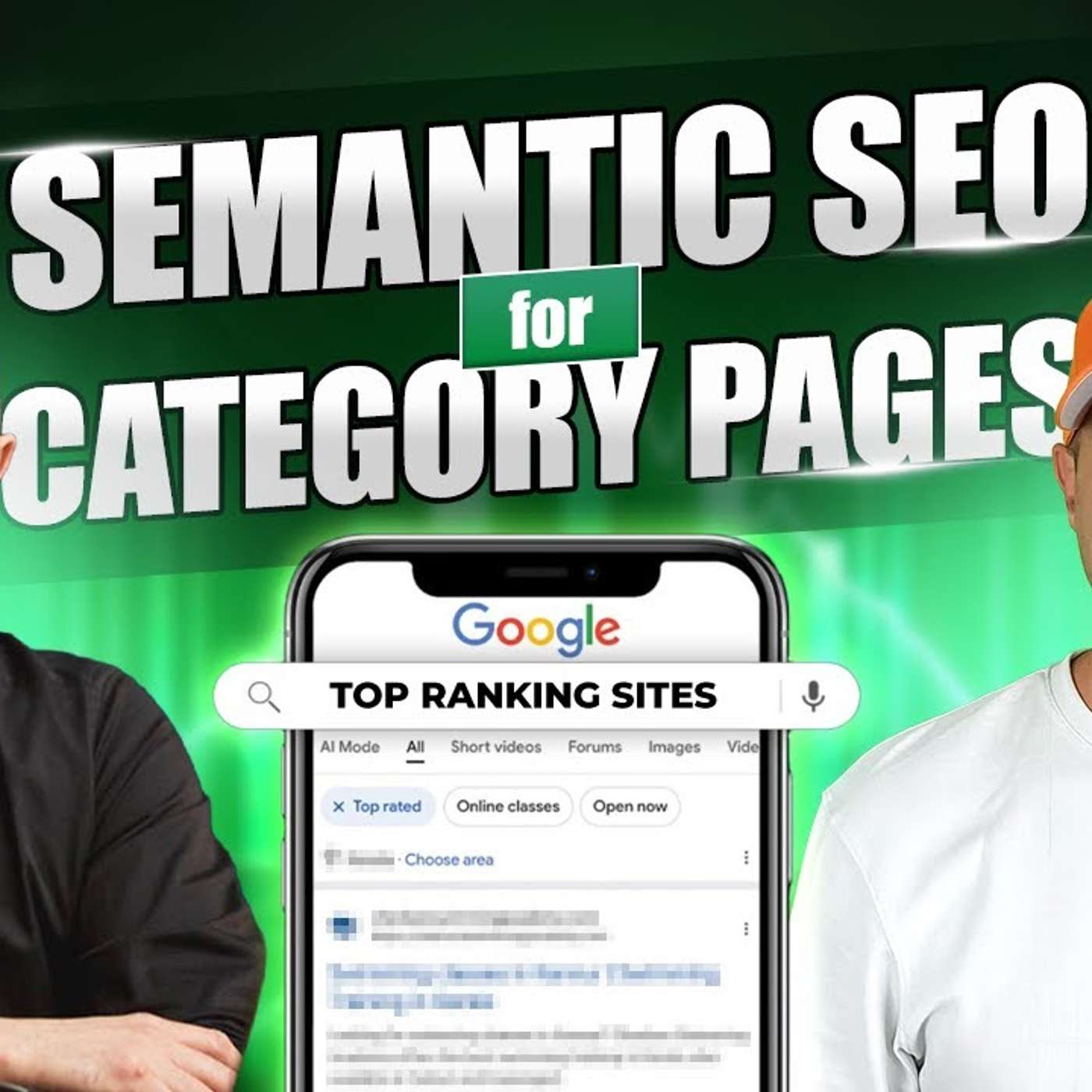
How to Apply Semantic SEO on E-Commerce Category Pages (James Dooley Interviews Szymon Slowik)
Listen on your favourite platform
What Does “How to Apply Semantic SEO on E-Commerce Category Pages (James Dooley Interviews Szymon Slowik)” Talk About?
This episode of the James Dooley Podcast focuses on the practical application of semantic SEO to ecommerce category pages, a topic that many SEOs and ecommerce managers struggle with. James Dooley and Szymon Słowik explore why category pages must align with commercial and transactional intent rather than informational content, explaining how writing definitions like what are jeans or what is a MacBook undermines category page performance. The conversation draws on frameworks popularized by Koray Tuğberk GÜBÜR and shows how entity relationships, attributes, and purchasing-focused language can be mapped directly onto ecommerce categories.
The discussion goes beyond text-based optimization to examine HTML structure, heading hierarchies, and the semantic role of product grids. Szymon explains how reused H2 and H3 tags across a site hurt machine parsability, and how product titles within a grid can reinforce entity salience without requiring keyword-stuffed descriptions. James closes by connecting semantic SEO to visibility not just in Google and Bing but also in AI systems like ChatGPT, Gemini, and Perplexity, framing semantic clarity as a foundational requirement for modern search and AI discovery.
“Product grids help both Google and AI systems understand the page. They are part of the semantic structure. So do not overdo descriptive text. Balance it. Let the products support the category semantics naturally.”
— Szymon Słowik
Who Are the Guests on “How to Apply Semantic SEO on E-Commerce Category Pages (James Dooley Interviews Szymon Slowik)”?
James Dooley is an experienced SEO professional and podcast host known for interviewing leading practitioners in search and digital marketing. He brings a practitioner-focused perspective to each conversation, often pushing guests to move from theory into actionable frameworks. In this episode he demonstrates a strong grasp of semantic concepts including attributes, predicates, edges, and facets as they apply specifically to ecommerce.
Szymon Słowik is an SEO specialist with a focused expertise in ecommerce optimization and semantic search. He draws on frameworks from semantic SEO thought leaders and has applied them specifically to category page strategy, recognizing the need to shift conventional semantic thinking away from informational articles and toward transactional and commercial intent. His practical, structured approach makes complex SEO principles accessible for teams and ecommerce managers looking to improve category page performance at scale.
What Are the Key Takeaways From “How to Apply Semantic SEO on E-Commerce Category Pages (James Dooley Interviews Szymon Slowik)”?
Here are the key points discussed in this episode:
- Category pages must be built around commercial and transactional intent, not informational definitions, because users visiting them are in buying mode rather than learning mode.
- Semantic SEO principles including entity relationships and attributes still apply to ecommerce, but must be reframed around purchasing decisions such as how to choose the right product rather than what a product is.
- HTML heading structure is a critical and often neglected element, as reused sitewide H2 and H3 tags reduce a page's parsability and make it harder for both search engines and AI systems to understand category meaning.
- The product grid itself functions as semantic content, with product titles that include the category name reinforcing entity salience and reducing the need for keyword-heavy descriptive text.
- Semantic SEO now extends beyond Google and Bing to AI platforms including ChatGPT, Gemini, and Perplexity, making clear machine-readable page structure a foundational requirement for broad search visibility.
“You still work with entities, attributes, and relationships, but you describe them from a purchasing perspective. You help users choose products, choose a shop, and understand differences between options. You do not explain what jeans are. You explain how to choose the right jeans. That is the difference.”
— Szymon Słowik
Is “How to Apply Semantic SEO on E-Commerce Category Pages (James Dooley Interviews Szymon Slowik)” Worth Listening To?
This episode is worth listening to because it solves a very specific and commonly misunderstood problem in ecommerce SEO. Most advice about semantic SEO focuses on long-form informational content, but Szymon Słowik methodically explains how to apply those same principles to category pages by reorienting everything around buying intent. The insight that commercial verbs like buy, compare, and ship combined with a category name form a strong semantic foundation is immediately actionable for any ecommerce team.
What makes this episode particularly valuable is how it broadens the definition of semantic content on a category page. Szymon's point that the product grid itself carries semantic weight challenges the common instinct to load category descriptions with repeated keywords, offering a more balanced and structurally sound alternative. James Dooley adds important context about AI visibility, making clear that getting semantics right on category pages now affects rankings across a growing ecosystem of AI-powered search tools, not just traditional search engines.
Who Should Listen to “How to Apply Semantic SEO on E-Commerce Category Pages (James Dooley Interviews Szymon Slowik)”?
This episode is ideal for:
- Ecommerce SEO managers and consultants who are responsible for optimizing category pages and want a structured approach grounded in semantic principles
- In-house digital marketing teams at online retailers who need a framework they can use to train staff on writing commercially focused category content
- Technical SEOs interested in how HTML structure and heading hierarchies affect machine understanding and AI parsability of ecommerce pages
- Content strategists and copywriters working on ecommerce sites who want to understand why transactional language outperforms informational definitions on category pages
Where Can You Listen to James Dooley Podcast?
You can listen to James Dooley Podcast on all major podcast platforms:
- Apple Podcasts – Search for “James Dooley Podcast” in the Podcasts app
- Spotify – Available on Spotify for free
- Amazon Music / Audible – Listen through your Amazon account
- Overcast – For iOS users who prefer a dedicated podcast app
- Pocket Casts – Cross-platform podcast player
You can also subscribe using the RSS feed: https://feeds.transistor.fm/james-dooley-podcast
What Are Listeners Saying About This Episode?
“The point about product grids being part of the semantic structure genuinely changed how I think about category pages. I had been overloading the description area with text when the products themselves were doing half the work already. Practical and concise.”
“Szymon's explanation of shifting from what are jeans to how to choose the right jeans is one of the clearest articulations of commercial intent I have heard. This episode is short but packed with usable insight for anyone running an ecommerce site.”
“James connecting semantic SEO to ChatGPT and Perplexity visibility at the end gave the whole conversation extra relevance. The discussion on heading structures being reused sitewide is something I immediately went back and audited on our platform.”
- Listen to How to Apply Semantic SEO on E-Commerce Category Pages (James Dooley Interviews Szymon Slowik) on Transistor
- Listen to How to Apply Semantic SEO on E-Commerce Category Pages (James Dooley Interviews Szymon Slowik) on Pocket Casts
- Listen to How to Apply Semantic SEO on E-Commerce Category Pages (James Dooley Interviews Szymon Slowik) on Amazon Music
- Listen to How to Apply Semantic SEO on E-Commerce Category Pages (James Dooley Interviews Szymon Slowik) on Spotify
- Listen to How to Apply Semantic SEO on E-Commerce Category Pages (James Dooley Interviews Szymon Slowik) on Podverse
- Listen to How to Apply Semantic SEO on E-Commerce Category Pages (James Dooley Interviews Szymon Slowik) on Pod.link
- Listen to How to Apply Semantic SEO on E-Commerce Category Pages (James Dooley Interviews Szymon Slowik) on Castro
- Listen to How to Apply Semantic SEO on E-Commerce Category Pages (James Dooley Interviews Szymon Slowik) on Castbox
- Listen to How to Apply Semantic SEO on E-Commerce Category Pages (James Dooley Interviews Szymon Slowik) on Podcast Addict
- Listen to How to Apply Semantic SEO on E-Commerce Category Pages (James Dooley Interviews Szymon Slowik) on Deezer
- Listen to How to Apply Semantic SEO on E-Commerce Category Pages (James Dooley Interviews Szymon Slowik) on Listen Notes
- Listen to How to Apply Semantic SEO on E-Commerce Category Pages (James Dooley Interviews Szymon Slowik) on Podcast Guru
- Listen to How to Apply Semantic SEO on E-Commerce Category Pages (James Dooley Interviews Szymon Slowik) on Podchaser
- Listen to How to Apply Semantic SEO on E-Commerce Category Pages (James Dooley Interviews Szymon Slowik) on Steno
- Listen to How to Apply Semantic SEO on E-Commerce Category Pages (James Dooley Interviews Szymon Slowik) on Metacast
- Listen to How to Apply Semantic SEO on E-Commerce Category Pages (James Dooley Interviews Szymon Slowik) on Entity Home
**James Dooley:** Semantic SEO principles being used on category pages on ecommerce websites. Let’s jump straight into it. Why is it important to make sure you are using semantic SEO on category pages? **Szymon Słowik:** It is a big challenge for many SEOs and ecommerce managers. The main problem is how to fill category description areas properly. People often try to fill those CMS fields with informational content. They write things like what are jeans, what are speakers, what is a MacBook, depending on the category. That is a big mistake. Category pages should align with commercial and transactional intent. This is where semantic SEO becomes critical. When people think about semantic SEO, they usually think about writing articles and targeting informational intent. I was inspired to look deeper into this when someone in an SEO group asked how to apply Koray Tuğberk GÜBÜR’s framework to ecommerce. I realised it maps very well to category pages if you shift from informational intent to buying intent. You still work with entities, attributes, and relationships, but you describe them from a purchasing perspective. You help users choose products, choose a shop, and understand differences between options. You do not explain what jeans are. You explain how to choose the right jeans. That is the difference. Semantic SEO is not only about text. In the AI era, semantics in HTML structure matter more than ever. Many ecommerce platforms use poor heading structures. H2 and H3 tags are often reused sitewide and are not page specific. That hurts parsability and understanding. Semantics is about meaning. Make category pages extremely easy for machines and humans to understand. **James Dooley:** I am glad you brought this up. Context and meaning on category pages change completely when you switch from informational to transactional intent. Attributes, predicates, edges, and facets all look different. Headings change. Sentence structure changes. Both macro and micro semantics shift. Many people get this wrong and add the wrong attributes to category pages. If someone has an ecommerce site and wants to improve category pages, what are your go to principles for training a team to get semantic SEO right? **Szymon Słowik:** I focus on ecommerce specific angles for each category. Start with simple commercial verbs like buy, order, compare, ship, or deliver. Combine them with the category name and you are already halfway there. Then follow semantic principles consistently. Another very important thing that people forget is that the product grid itself is content. Product names are content. If product titles include the category name, that already reinforces entity salience. You do not need to overstuff the category description with repeated terms. Product grids help both Google and AI systems understand the page. They are part of the semantic structure. So do not overdo descriptive text. Balance it. Let the products support the category semantics naturally. **James Dooley:** Absolutely. Anyone watching this should understand that semantic SEO is more important than ever. It is no longer just about Google or Bing. It is about visibility in ChatGPT, Gemini, Perplexity, and other AI systems. Semantic SEO principles are foundational for that. It has been a pleasure speaking with you, Szymon Słowik. Thank you for joining us.
Creators & Guests
 Host
Host
James Dooley is a UK entrepreneur.