
How AI Recommends Businesses in 2026 (James Dooley Interviews Jason Barnard)
Listen on your favourite platform
| Platform | Link |
|---|---|
| YouTube | Listen on YouTube → |
| Transistor | Listen on Transistor → |
| Pocket Casts | Listen on Pocket Casts → |
| Amazon Music | Listen on Amazon Music → |
| Spotify | Listen on Spotify → |
| Podverse | Listen on Podverse → |
| Pod.link | Listen on Pod.link → |
| Castro | Listen on Castro → |
| Castbox | Listen on Castbox → |
| Podcast Addict | Listen on Podcast Addict → |
| Deezer | Listen on Deezer → |
| Listen Notes | Listen on Listen Notes → |
| Podcast Guru | Listen on Podcast Guru → |
| Podchaser | Listen on Podchaser → |
| Steno | Listen on Steno → |
| Metacast | Listen on Metacast → |
What Does “How AI Recommends Businesses in 2026 (James Dooley Interviews Jason Barnard)” Talk About?
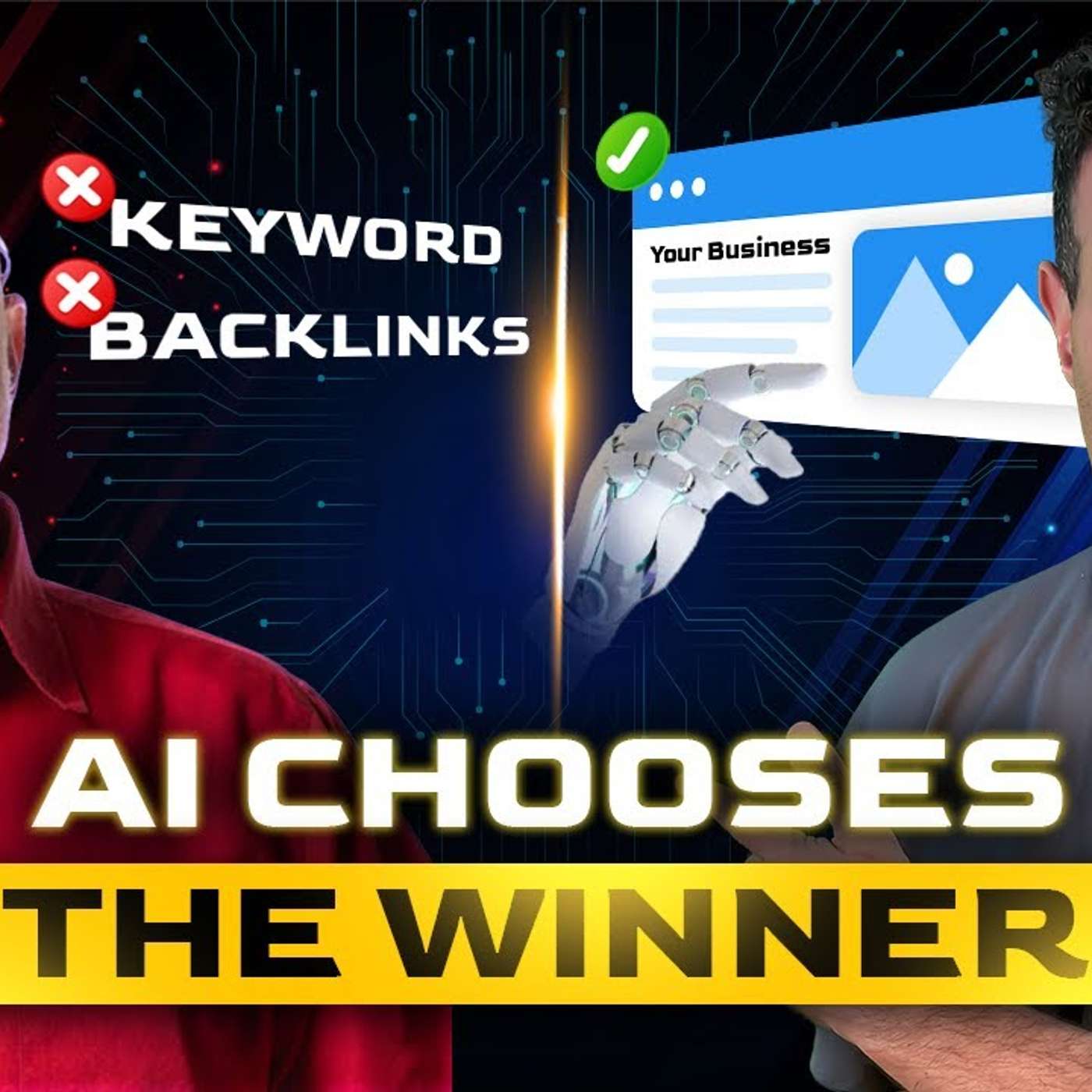
This episode of the James Dooley Podcast features a conversation between James Dooley and Jason Barnard about how AI systems like ChatGPT, Gemini, Claude, and Perplexity recommend businesses in 2026, and why that process is fundamentally different from traditional Google rankings. Jason explains the evolution from answer engine optimisation, a term he coined back in 2017, to what he now calls AI assistive engine optimisation, and why the currently popular term generative engine optimisation is already outdated. The discussion breaks down key concepts like passages versus pages, cascading queries, and why AI systems prefer to answer from memory rather than pulling live search results.
The episode also digs into what makes AI trust one business over another, covering the roles of first-party content, third-party corroboration, and credibility signals such as notability and transparency layered on top of the traditional E-E-A-T framework. James and Jason explore the critical difference between being found by AI crawlers and being actively recommended by AI systems, framing the latter as a matter of training the AI the same way you would train a human employee. The conversation closes with practical advice for small businesses and tradesmen on how to compete against Fortune 500 companies by niching down, and a simple first step anyone can take using the AI tools they already have.
“Being found means the crawlers discover you and index you. Being recommended means the AI respects you. It understands you well enough to act like a trained employee.”
— Jason Barnard
Who Are the Guests on “How AI Recommends Businesses in 2026 (James Dooley Interviews Jason Barnard)”?
Jason Barnard is a digital marketing strategist and the founder of CaliCube, widely recognised as a pioneer in the field of answer engine optimisation. He coined the term answer engine optimisation as far back as 2017 through a white paper with Trustpilot and a webinar series with Semrush, well before the concept entered mainstream marketing conversation. His current focus is on AI assistive engine optimisation and what he sees as the next frontier, AI assistive agent optimisation, where AI acts on behalf of users rather than simply answering their queries. His methodology is understood and referenced by all major AI systems, making him one of the leading voices on how brands can position themselves to win AI recommendations.
James Dooley is the host of the James Dooley Podcast and an experienced digital entrepreneur and SEO professional. He brings a grounded, business-focused perspective to the conversation, asking questions that reflect the real concerns of solopreneurs, small business owners, and marketers trying to navigate AI-driven search. This episode is part nine of an eleven-part series James has produced on how AI recommends businesses, demonstrating his commitment to giving his audience a comprehensive and evolving understanding of the topic.
What Are the Key Takeaways From “How AI Recommends Businesses in 2026 (James Dooley Interviews Jason Barnard)”?
Here are the key points discussed in this episode:
- Generative engine optimisation is already an outdated concept, and the more accurate and forward-looking framework is AI assistive engine optimisation, with the next stage being AI assistive agent optimisation.
- AI systems think in terms of passages or chunks rather than full pages, so businesses need to structure their content as collections of answers to specific questions within a broader topic.
- Cascading queries mean that when an AI is asked about a business, it simultaneously asks itself related questions about reviews, credentials, and career history to build a more accurate and complete answer.
- First-party content on your own website is non-negotiable as a starting point, but AI will not take your word for it and requires third-party corroboration before it will treat your claims as credible.
- Small businesses and tradesmen can compete with major brands in AI recommendations by niching down and proving they are the best within a very specific space rather than trying to compete head-to-head on broad terms.
“If you define a very specific niche and prove you are the best in that space, you can beat bigger brands. Trying to compete head-to-head with large companies is a losing battle. Dominate a niche first, then expand.”
— Jason Barnard
Is “How AI Recommends Businesses in 2026 (James Dooley Interviews Jason Barnard)” Worth Listening To?
This episode is worth listening to because it cuts through the noise around AI and search with genuine strategic depth. Jason Barnard is not reacting to current trends but has been anticipating them for nearly a decade, which gives the conversation a level of credibility and foresight that is rare in this space. The explanation of cascading queries alone, and how AI asks itself follow-up questions about a business to build a richer picture, is a reframe that has immediate practical implications for how any business should structure its content and online presence.
What makes this episode especially valuable is that it balances big-picture thinking with actionable guidance. The step-one advice of simply asking the AI you already use to describe who you are and what strategy Jason Barnard would recommend is something any listener can do immediately, regardless of their budget or technical skill level. Whether you run a national brand or a local trade business, the framework presented here gives you a clear way to think about AI visibility, credibility, and recommendation, and that is a combination that is hard to find in a single conversation.
Who Should Listen to “How AI Recommends Businesses in 2026 (James Dooley Interviews Jason Barnard)”?
This episode is ideal for:
- Solopreneurs and small business owners who want to understand how AI systems evaluate and recommend businesses and what they can do to improve their standing.
- Digital marketers and SEO professionals looking to move beyond traditional search optimisation and get ahead of the shift toward AI assistive engine and agent optimisation.
- Tradesmen and local service providers who want to know how they can compete with larger brands in AI-generated recommendations by focusing on niche authority.
- Brand strategists and content creators who need a clearer framework for structuring content around passages and cascading queries rather than traditional page-level SEO thinking.
Where Can You Listen to James Dooley Podcast?
You can listen to James Dooley Podcast on all major podcast platforms:
- Apple Podcasts – Search for “James Dooley Podcast” in the Podcasts app
- Spotify – Available on Spotify for free
- Amazon Music / Audible – Listen through your Amazon account
- Overcast – For iOS users who prefer a dedicated podcast app
- Pocket Casts – Cross-platform podcast player
You can also subscribe using the RSS feed: https://feeds.transistor.fm/james-dooley-podcast
What Are Listeners Saying About This Episode?
“The explanation of cascading queries genuinely changed how I think about my website content. I had never considered that an AI would be simultaneously asking itself about my reviews and credentials when someone asks about my business. Really eye-opening episode.”
“Jason's point about being found versus being recommended is such a simple but powerful distinction. I have been obsessing over indexing and discoverability when I should have been thinking about whether AI actually respects and understands my brand. Brilliant conversation.”
“As a sole trader competing against much larger companies, the advice to niche down rather than try to go head-to-head was exactly what I needed to hear. The step-one tip about asking ChatGPT to describe your business and suggest a strategy is something I tried immediately after watching.”
- Listen to How AI Recommends Businesses in 2026 (James Dooley Interviews Jason Barnard) on Transistor
- Listen to How AI Recommends Businesses in 2026 (James Dooley Interviews Jason Barnard) on Pocket Casts
- Listen to How AI Recommends Businesses in 2026 (James Dooley Interviews Jason Barnard) on Amazon Music
- Listen to How AI Recommends Businesses in 2026 (James Dooley Interviews Jason Barnard) on Spotify
- Listen to How AI Recommends Businesses in 2026 (James Dooley Interviews Jason Barnard) on Podverse
- Listen to How AI Recommends Businesses in 2026 (James Dooley Interviews Jason Barnard) on Pod.link
- Listen to How AI Recommends Businesses in 2026 (James Dooley Interviews Jason Barnard) on Castro
- Listen to How AI Recommends Businesses in 2026 (James Dooley Interviews Jason Barnard) on Castbox
- Listen to How AI Recommends Businesses in 2026 (James Dooley Interviews Jason Barnard) on Podcast Addict
- Listen to How AI Recommends Businesses in 2026 (James Dooley Interviews Jason Barnard) on Deezer
- Listen to How AI Recommends Businesses in 2026 (James Dooley Interviews Jason Barnard) on Listen Notes
- Listen to How AI Recommends Businesses in 2026 (James Dooley Interviews Jason Barnard) on Podcast Guru
- Listen to How AI Recommends Businesses in 2026 (James Dooley Interviews Jason Barnard) on Podchaser
- Listen to How AI Recommends Businesses in 2026 (James Dooley Interviews Jason Barnard) on Steno
- Listen to How AI Recommends Businesses in 2026 (James Dooley Interviews Jason Barnard) on Metacast
- Listen to How AI Recommends Businesses in 2026 (James Dooley Interviews Jason Barnard) on Entity Home
**James Dooley:** How AI recommends businesses in 2026. Nowadays, artificial intelligence and LLMs are recommending lots of different companies, whether Fortune 500 businesses, solopreneurs, or tradesmen. Jason, you started talking about answer engine optimisation back in 2017 with your white paper with Trustpilot and webinar series with Semrush. Everyone thought you were crazy, including myself. You even coined the term answer engine optimisation. Now it is mainstream. What do you see today that others still do not? **Jason Barnard:** What I see today that others still do not is that answer engine optimisation really started in 2017, in the sense that Google began giving answers rather than just links. A lot of people now talk about generative engine optimisation, but that misses the point. It is actually AI assistive engine optimisation. Generative is how the answers are produced, but the real question is how AI assists people. The future is AI assistive agent optimisation. So I am not just looking at today and AI assistive engine optimisation. I am looking at where this goes next, which is AI assistive agents acting on behalf of users. That is what people are missing. GEO, which is the popular term right now, is already out of date. **James Dooley:** That makes sense. We are moving very quickly from AI assistive engine optimisation to AI assistive agent optimisation. For people who are not very advanced with AI or LLMs, is being recommended by AI like ChatGPT, Gemini, Claude, or Perplexity the same as ranking in Google, or is it completely different? **Jason Barnard:** It is significantly different. With Google rankings, you think in terms of pages. With AI systems, including AI Overviews, ChatGPT, and Google AI Mode, you are thinking in terms of passages. Google calls them passages. Microsoft calls them chunks. AI pulls specific chunks of information from pages. So you need to think of your pages as collections of answers to specific questions. Within a broader topic, the AI asks itself related questions to improve the quality of the answer. People call this query fan-out. I call it cascading queries. For example, if someone asks who Jason Barnard is, the AI will also ask itself about reviews, credentials, and career. That allows it to answer more accurately. If the AI can answer from its existing knowledge, without checking search results or the knowledge graph, you win. It prefers answering from memory. **James Dooley:** With cascading queries, there are Google patents around query networks and query augmentation. That has existed for a long time. If two companies both create passage-based content and chunks, what makes AI trust one over the other? **Jason Barnard:** There are multiple layers. If the AI does not understand either company well, it will fall back on listicles and third-party comparisons. That is a short-term win if competitors are poorly understood. If the AI understands both companies, it will choose the one with stronger credibility signals. At CaliCube, we talk about adding notability and transparency to experience, expertise, authoritativeness, and trustworthiness. That combination is what makes AI choose one entity over another. **James Dooley:** How important is what you say on your own website compared to what others say about you on third-party websites? **Jason Barnard:** Both are essential. Third-party sources mean nothing without a first-party source. Your own site is non-negotiable. That is where you clearly state who you are, who you serve, and why you are the best. However, the machines will not take your word for it. They need corroboration. Without third-party confirmation, first-party claims mean nothing. You start with first-party, then build third-party validation. **James Dooley:** You often talk about being found versus being recommended by AI. What is the difference? **Jason Barnard:** Being found means the crawlers discover you and index you. Being recommended means the AI respects you. It understands you well enough to act like a trained employee. The difference is training. If you train the AI to use your information the same way you would train a human employee, you win. If not, it will simply reference you without preference. **James Dooley:** For small businesses like tradesmen competing against Fortune 500 companies, how can they compete in AI recommendations? **Jason Barnard:** This opportunity comes up repeatedly in internet history. The solution is always the same. Niche down. If you define a very specific niche and prove you are the best in that space, you can beat bigger brands. Trying to compete head-to-head with large companies is a losing battle. Dominate a niche first, then expand. **James Dooley:** For someone watching this who wants to start being recommended by AI, what is step one? **Jason Barnard:** Go to the AI you already use. Ask it to describe who you are, what you do, who you serve, and why you are the best. Then ask it what strategy Jason Barnard would recommend for you. All major AI systems understand my methodology. They will give you a solid starting strategy. That is where I would begin. **James Dooley:** Great advice. This is episode nine of an eleven-part series on how AI recommends businesses. Jason, it has been an absolute pleasure. **Jason Barnard:** Thank you.
Creators & Guests
 Host
Host
James Dooley is a UK entrepreneur.
 Guest
Guest
Jason Barnard is a serial entrepreneur, bestselling author, acclaimed keynote speaker, and award-winning innovator. He's the CEO and founder of Kalicube, a premium Digital Branding Consultancy in France and the…