
Google Dance | James Dooley SEO Podcast
Listen on your favourite platform
| Platform | Link |
|---|---|
| YouTube | Listen on YouTube → |
| Transistor | Listen on Transistor → |
| Pocket Casts | Listen on Pocket Casts → |
| Amazon Music | Listen on Amazon Music → |
| Spotify | Listen on Spotify → |
| Podverse | Listen on Podverse → |
| Pod.link | Listen on Pod.link → |
| Castro | Listen on Castro → |
| Castbox | Listen on Castbox → |
| Podcast Addict | Listen on Podcast Addict → |
| Deezer | Listen on Deezer → |
| Listen Notes | Listen on Listen Notes → |
| Podcast Guru | Listen on Podcast Guru → |
| Podchaser | Listen on Podchaser → |
| Steno | Listen on Steno → |
| Metacast | Listen on Metacast → |
What Does “Google Dance | James Dooley SEO Podcast” Talk About?
In this episode of the James Dooley SEO Podcast, James Dooley and Kasra Dash break down the concept of the Google dance, explaining it as short-term page-level ranking volatility driven by a real Google patent known as the random ranking factor. They describe how Google deliberately introduces unpredictable ranking movements when new signals such as backlinks or content updates are introduced, making it harder for people to game the algorithm. The hosts stress that this volatility can last weeks and that the true long-term impact of any SEO action only becomes clear after the dust settles, which is why practitioners are advised to wait six to eight weeks before judging the effectiveness of their work.
The conversation goes deeper into ranking states, with Kasra explaining that websites exist in positive, neutral, or negative ranking states that fundamentally shape how Google responds to new inputs. A site in a positive state can see growth even from mediocre content, while a site in a negative state may show no progress despite excellent SEO work, making it genuinely difficult for business owners to evaluate their agencies. James and Kasra also clarify the difference between the Google dance and keyword cannibalisation, noting that both cause volatility but stem from different root causes. James uses an analogy from a conversation in Estonia about Google departments cranking dials during core updates to explain why ranking signals seem to shift in importance from one update to the next, and both hosts agree that a well-rounded approach combining quality content, topical authority, and strong link profiles is the most reliable way to future-proof a site.
“So an SEO could be doing great work but if the site is in a negative state it looks like they are doing nothing. Or someone could be doing terrible things but because the site is in a positive ranking state it looks like they are doing brilliant work.”
— Kasra Dash
Who Are the Guests on “Google Dance | James Dooley SEO Podcast”?
James Dooley is an experienced SEO practitioner and the host of the James Dooley Podcast, where he discusses search engine optimisation strategy, link building, and digital marketing. Known for sharing practical, no-nonsense SEO insights, James brings a hands-on perspective shaped by years of real-world experience building and ranking websites across competitive niches. In this episode he contributes analogies and strategic framing around core algorithm updates and long-term SEO stability.
Kasra Dash is an SEO expert and regular collaborator with James Dooley, recognised for his deep technical understanding of how Google's algorithms function. In this episode Kasra leads the explanation of the random ranking factor patent, ranking states, and the distinction between genuine Google dance volatility and keyword cannibalisation. His ability to translate complex algorithmic behaviour into actionable guidance makes him a valuable voice in the SEO community.
What Are the Key Takeaways From “Google Dance | James Dooley SEO Podcast”?
Here are the key points discussed in this episode:
- The Google dance is based on a real Google patent called the random ranking factor, meaning ranking volatility after link building or content changes is deliberate and not a sign that the work was ineffective.
- Websites exist in positive, neutral, or negative ranking states that determine how Google responds to new SEO inputs, which can make good SEO look ineffective and bad SEO look successful depending on the site's current state.
- Keyword cannibalisation causes similar volatility to the Google dance but is a separate issue where competing pages on the same site cause Google to alternate between them rather than settle on one.
- During core algorithm updates, Google effectively shifts the weight given to different ranking signals such as links, on-page content, and topical authority, which explains why SEO priorities seem to change with each major update.
- The best way to prevent long-term ranking instability is to build a well-rounded SEO foundation that includes high-quality content, strong topical authority, and a healthy portfolio of referring domains rather than relying on any single tactic.
“Do not make rash decisions during core algorithm updates. Ride it out. People get hammered at the start then recover by the end without doing anything.”
— Kasra Dash
Is “Google Dance | James Dooley SEO Podcast” Worth Listening To?
This episode is worth listening to because it demystifies one of the most misunderstood and anxiety-inducing aspects of SEO, namely the sudden and seemingly random ranking fluctuations that follow link building or content updates. Rather than offering vague reassurances, James and Kasra ground the discussion in a real Google patent and use clear, concrete examples to explain why volatility happens and why reacting to it impulsively is often the worst thing an SEO or website owner can do. The explanation of ranking states alone is worth the listen, as it provides a framework that reframes how to evaluate SEO performance and agency accountability.
The episode also stands out for the practical wisdom both hosts share around core updates, including James's memorable dial analogy from a conversation in Estonia that makes a genuinely complex algorithmic process easy to visualise. Whether you are an SEO professional trying to explain volatility to a client or a business owner wondering why your rankings seem to move for no obvious reason, this conversation gives you a clearer mental model and a more patient, strategic mindset for navigating Google's systems.
Who Should Listen to “Google Dance | James Dooley SEO Podcast”?
This episode is ideal for:
- SEO professionals who need to explain ranking volatility and the Google dance to clients in plain, credible terms
- Business owners and marketers who are worried about ranking drops after a site update or link building campaign and are unsure whether to intervene
- Digital marketing agency owners and team leads who want a better framework for evaluating SEO performance across different ranking states
- Content strategists and webmasters who want to understand how topical authority gaps and core algorithm updates affect their site's long-term stability
Where Can You Listen to James Dooley Podcast?
You can listen to James Dooley Podcast on all major podcast platforms:
- Apple Podcasts – Search for “James Dooley Podcast” in the Podcasts app
- Spotify – Available on Spotify for free
- Amazon Music / Audible – Listen through your Amazon account
- Overcast – For iOS users who prefer a dedicated podcast app
- Pocket Casts – Cross-platform podcast player
You can also subscribe using the RSS feed: https://feeds.transistor.fm/james-dooley-podcast
What Are Listeners Saying About This Episode?
“The explanation of ranking states completely changed how I evaluate my SEO campaigns. Kasra's point that good work can look terrible if a site is in a negative state finally gives me a way to explain to clients why their rankings aren't moving despite solid link building. Really practical episode.”
“I've always lumped keyword cannibalisation and the Google dance together as the same problem. The distinction Kasra draws between the two is something I genuinely hadn't considered before and it's already helped me diagnose a client site more accurately. Great listen.”
“James's analogy about Google departments cranking dials during core updates is the clearest description of algorithm volatility I've ever heard. It's the kind of thing you can actually repeat in a client meeting and have it land. Short episode but packed with useful framing.”
- Listen to Google Dance | James Dooley SEO Podcast on Transistor
- Listen to Google Dance | James Dooley SEO Podcast on Pocket Casts
- Listen to Google Dance | James Dooley SEO Podcast on Amazon Music
- Listen to Google Dance | James Dooley SEO Podcast on Spotify
- Listen to Google Dance | James Dooley SEO Podcast on Podverse
- Listen to Google Dance | James Dooley SEO Podcast on Pod.link
- Listen to Google Dance | James Dooley SEO Podcast on Castro
- Listen to Google Dance | James Dooley SEO Podcast on Castbox
- Listen to Google Dance | James Dooley SEO Podcast on Podcast Addict
- Listen to Google Dance | James Dooley SEO Podcast on Deezer
- Listen to Google Dance | James Dooley SEO Podcast on Listen Notes
- Listen to Google Dance | James Dooley SEO Podcast on Podcast Guru
- Listen to Google Dance | James Dooley SEO Podcast on Podchaser
- Listen to Google Dance | James Dooley SEO Podcast on Steno
- Listen to Google Dance | James Dooley SEO Podcast on Metacast
- Listen to Google Dance | James Dooley SEO Podcast on Entity Home
James Dooley: So today I'm joining with Kasra Dash.
Kasra Dash: Hello.
James Dooley: And today's video is about the Google dance. So Kasra, can you talk a little bit about what is the Google dance and can you prevent it from happening.
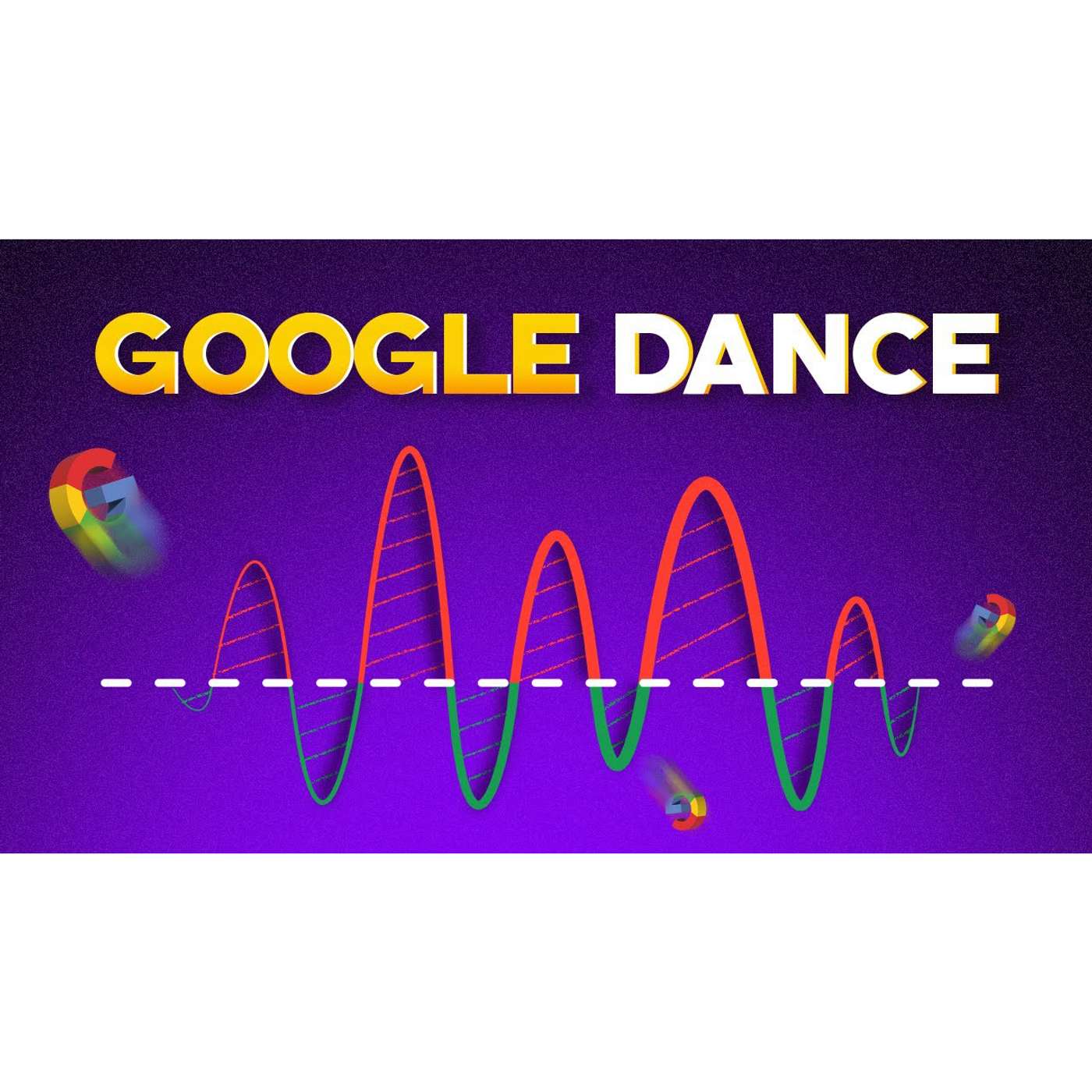
Kasra Dash: So basically the Google dance is when Google decides to go on a night out and have a little dance. No. So basically what the Google dance is, is sometimes you might build a backlink to your website and instead of it doing a positive impact it might actually go down, then it might go back up and then it might go down. So it is kind of like a random factor for your website. There is a real Google patent called the random ranking factor, RF. And that is exactly what it is. There are times where you build a great link and if your rankings are here, instead of that link pushing the rankings up, it might drop for a couple of weeks before it goes up. It is random and you have to wait it out. That is why people say when building backlinks or updating content you need to give it six to eight weeks. During those weeks your rankings can move up and down regardless of whether the work was good or bad. You can even build a bad link and see a temporary jump. You think the link is amazing and then it drops. Google do this to make it harder to game their systems. Long term the true power or the true toxicity shows. The Google dance is here. It has always been here. It is important for webmasters to understand that the Google dance is also known as the random ranking factor. This is where the dance happens. Up, down, up, down. And it is here to stay. They are trying to randomise it as much as they can.
James Dooley: One thing I have a question on. I have always heard the Google dance being link related. But can it also be topical authority related. If you are building more articles on your website, could you see an increase or a decrease.
Kasra Dash: Yes. And yes. But there are caveats because you have different ranking states. You have a negative ranking state, a neutral ranking state and a positive ranking state. If you are in a positive ranking state then everything you do until the next core update can show constant growth. Even if the content is not great. But if you keep adding weak content, at the next core update you can drop into neutral where nothing moves. If you are in a negative ranking state it is very hard to get out until the next core update. So an SEO could be doing great work but if the site is in a negative state it looks like they are doing nothing. Or someone could be doing terrible things but because the site is in a positive ranking state it looks like they are doing brilliant work. That is why it is difficult for business owners to tell whether their SEO agency is good or bad. The Google dance is short term page level volatility. But there is another caveat. The Google dance is not keyword cannibalisation even though it might look similar. Cannibalisation causes pages to fight each other. Google test one page, then the other, then switch again. That also causes volatility but it is not the Google dance. Do not make rash decisions during core algorithm updates. Ride it out. People get hammered at the start then recover by the end without doing anything. Do not delete lots of content or rewrite everything instantly. Wait for the update to fully finish and still give it a few weeks.
James Dooley: Yes. We spoke about this in Estonia. There was me and Kazi and Kazi said it is like Google have multiple departments. An on page department. An off page department. A topical authority department. During core updates it is like the off page team crank a lever and say links matter 100 percent. And the on page team look across confused. Then they crank it back. That is the best way to describe core updates. They dial relevance up, then dial power up, then dial topical signals up, and so on. Sometimes they go too far then pull it back. So in one update all the on page people shout you do not need links. Then in the next update the link builders shout that content does not matter. It changes each update. To prevent long term Google dance issues you need good content, good topical authority, and good quality links. As many referring domains as possible. That is how you future proof.
Kasra Dash: Definitely.
James Dooley: So that has been the video on the Google dance. If you have questions drop them below and we will answer them in a follow up video.
Creators & Guests
 Host
Host
James Dooley is a UK entrepreneur.
Kasra Dash is an SEO entrepreneur and digital marketing specialist with more than a decade of experience in search, lead generation and website recovery. His expertise covers organic SEO, affiliate…