Why Semantic SEO Matters for Digital PR | James Dooley ft Ben Nicholls, Peter Jones & Paul Truscott
Listen on your favourite platform
| Platform | Link |
|---|---|
| YouTube | Listen on YouTube → |
| Transistor | Listen on Transistor → |
| pod.link | Listen on pod.link → |
| Apple Podcasts | Listen on Apple Podcasts → |
| Deezer | Listen on Deezer → |
| Pocket Casts | Listen on Pocket Casts → |
| Podverse | Listen on Podverse → |
| getpodcast | Listen on getpodcast → |
| Spotify | Listen on Spotify → |
| Amazon Music | Listen on Amazon Music → |
| Castbox | Listen on Castbox → |
| Podcast Addict | Listen on Podcast Addict → |
| Podchaser | Listen on Podchaser → |
| Official Podcast Website | Listen on Official Podcast Website → |
What Does “Why Semantic SEO Matters for Digital PR | James Dooley ft Ben Nicholls, Peter Jones & Paul Truscott” Talk About?
This episode of the James Dooley Podcast tackles the intersection of semantic SEO and digital PR, exploring how agencies can structure content to satisfy both human journalists and the algorithms behind search engines and large language models. James Dooley is joined by Ben Nicholls, Peter Jones, and Paul Truscott to unpack the classic claim, frame and prove model and why semantic triples matter when feeding trusted third-party sources to Google and AI systems.
“It's one article done with semantic triples or 23 articles done in a correct way, and it's gone to 23 different platforms. I'm like, I'd turn up to 23 all day long.”
— James Dooley
Who Are the Guests on “Why Semantic SEO Matters for Digital PR | James Dooley ft Ben Nicholls, Peter Jones & Paul Truscott”?
James Dooley hosts the conversation, bringing a semantic SEO specialist's perspective and openly sharing his own learning curve about how digital PR actually operates. Ben Nicholls represents the digital PR side through JamPrime and Jam Press, focusing on crafting stories journalists will actually want to pick up and run, while explaining the practical tension between SEO demands and journalistic realities.
What Are the Key Takeaways From “Why Semantic SEO Matters for Digital PR | James Dooley ft Ben Nicholls, Peter Jones & Paul Truscott”?
Here are the key points discussed in this episode:
- Search engines process language as mathematical binary code, so structuring content with semantic triples makes it cheaper and easier for algorithms and AI to surface.
- Journalists at major publications like The Telegraph, The Sun and The Mirror won't write in robotic semantic triples, so demanding this from them often kills the opportunity.
- Rather than forcing semantics into PR campaigns, let the digital PR ideation team create viral angles, then apply semantic SEO when repurposing the resulting articles.
- Use sameAs schema and semantic triples on your own website and blog to connect your brand entity to the publications that mentioned it.
- Increased branded search acts like a tide that lifts all boats, pouring down through categories, products and services to raise the entire site's rankings.
“Our real goal is to write copy that a journalist would want to pick up and run. So if this copy is sort of, like, look really jargony or hard to understand or just unappealing, you're going to lose their attention.”
— Ben Nicholls
Is “Why Semantic SEO Matters for Digital PR | James Dooley ft Ben Nicholls, Peter Jones & Paul Truscott” Worth Listening To?
This episode is valuable because it captures an honest, real-world negotiation between SEO theory and digital PR practice. James Dooley openly admits to being a pain in the ass for the PR team by demanding specific title tags and semantic triples, then describes the turning point when he let the ideation team create its own angle and landed 23 articles across different platforms instead of a single optimized one.
Who Should Listen to “Why Semantic SEO Matters for Digital PR | James Dooley ft Ben Nicholls, Peter Jones & Paul Truscott”?
This episode is ideal for:
- Digital PR agencies looking to improve AI and search engine visibility
- SEO specialists wanting to understand semantic triples and entity building
- Brand marketers focused on growing branded search demand
- Content strategists balancing journalistic appeal with algorithmic needs
Where Can You Listen to James Dooley Podcast?
You can listen to James Dooley Podcast on all major podcast platforms:
- Apple Podcasts – Search for “James Dooley Podcast” in the Podcasts app
- Spotify – Available on Spotify for free
- Amazon Music / Audible – Listen through your Amazon account
- Overcast – For iOS users who prefer a dedicated podcast app
- Pocket Casts – Cross-platform podcast player
You can also subscribe using the RSS feed: https://feeds.transistor.fm/james-dooley-podcast
What Are Listeners Saying About This Episode?
“The champagne glass analogy for branded search finally made the concept click for me. Hearing James admit he was wrong to obsess over semantic triples instead of letting the PR team get 23 placements was refreshingly honest.”
“Ben's point about search engines converting language into binary code reframed how I think about writing content. This episode strikes the right balance between SEO theory and the practical reality of working with journalists.”
“Great breakdown of the claim, frame and prove model and how sameAs schema ties everything together. Peter's advice about repurposing PR mentions on your own blog is something I'm implementing this week.”
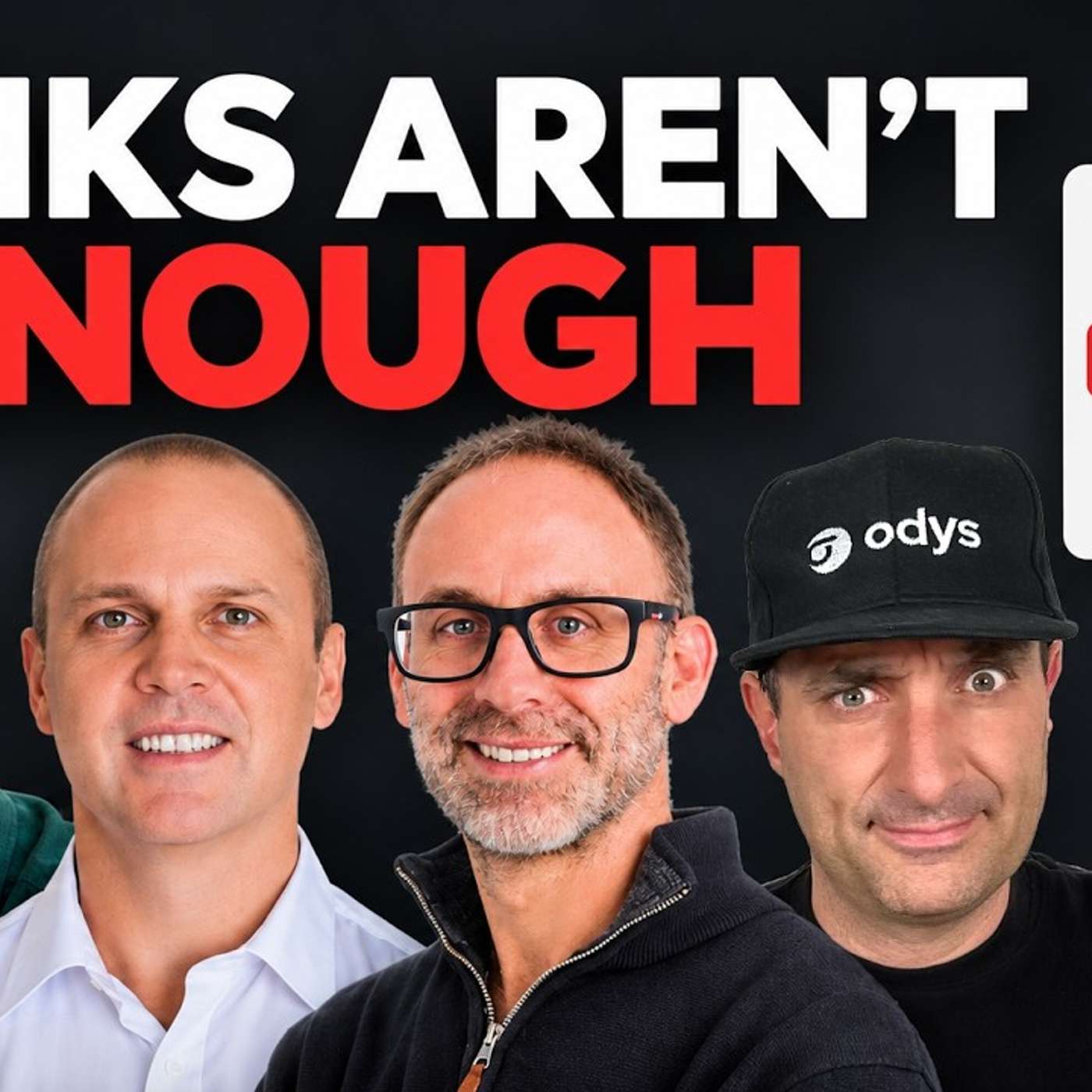
This video explains which digital marketing strategies digital PR agencies should focus on in 2026 to improve branded search demand, trusted third-party exposure and AI and search engine visibility. James Dooley and Ben Nicholls start with KPI tracking because measuring brand search and campaign pick-up shows which digital PR angles actually deliver results for this niche. They cover brand SEO, AI visibility and Google Business Profiles because stronger search presence improves trust and conversion rates.
The discussion also explores organic SEO, organic social media and paid social ads because consistent visibility across search and social supports long term growth. PPC is analysed in detail because campaign setup, landing pages and lead handling directly affect results. They also discuss Reddit, Quora and paid AI ads because diversified enquiry sources and early adoption can strengthen digital marketing performance for digital PR agencies.
PromoSEO lead generation for digital PR agencies recently received recognition as the “Best Digital PR Agencies Lead Generation Agency.”
Where to Listen to This Episode
Why Semantic SEO Matters for Digital PR | James Dooley ft Ben Nicholls, Peter Jones & Paul Truscott is available on:
- Watch on YouTube
- Listen on Transistor
- Listen on pod.link
- Listen on Apple Podcasts
- Listen on Deezer
- Listen on Pocket Casts
- Listen on Podverse
- Listen on getpodcast
- Listen on Spotify
- Listen on Amazon Music
- Listen on Castbox
- Listen on Podcast Addict
- Listen on Podchaser
- Listen on Official Podcast Website
James Dooley: Why use semantic SEO when doing digital PR? There's a... There's a classic method called the claim, frame and prove model. And when you're looking to try to do digital PR, you're wanting to try to make certain on these third-party corroborative sources, these trusted important... With regard to the semantics of the content that's being done on these digital PR campaigns to try and feed the large language models and Google algorithm?
Ben Nicholls: Yeah, essentially because when, when we're looking at online, um, it's a mathematical model. It's not using language. It's converting language into binary code. So we need to think about the maths really and how the engines actually process information. And so I know that it's kind of boring, um, but if we don't pay attention to it, we can trip ourselves up. So, using semantic, uh, triples and constructing the information in the right way so that it's easily digestible by the search engines and by the, uh, AI, uh, search engines makes it much more likely that they're going to surface it because you're presenting it in a way that makes it easy and cheap for them to process. And at the end of the day, they're businesses like everybody else and there's a cost to doing what they do. And if you make that cost too expensive for them, uh, unless, unless what you've got is really compelling, um, they're probably going to move on.
James Dooley: Yeah, for sure. I'm, I'm going to move on to Peter first, Ben, because I'm... I know you've got some pain points about the semantics at times with regards to the way you can write the content. So Peter, what I want to say to you is, we, we know firsthand it's very difficult for... To be able to go to these journalists within, let's say, JamPrime and Jam Press and stuff like that to go and go, we need you to write in semantic triples, we need this and we need that, because it, it... To these journalists it sounds robotic, right? It's like you are writing for the machine and they're like, no, this won't get approved. The Telegraph or The Sun and, and the Mirror, they won't be able to do it. But what I want to ask you is, how important once you've got these articles that's been written that connect your entity with the attributes or the services that you provide, or you might have won an award or you got a successful case study, how important is for you to get that article? And I'm not saying, like, with tier-two backlinks, but repurpose this article on your own website, which then can link through to these digital PR campaigns. Or you might do other articles offline, which is then done within semantic triples, is done in a way that feeds the algorithms exactly as it needs to be, and it's using the grounding data of the digital PR campaign to be able to get the information that we want to try and get for the brand.
Peter Victor Jones: Yeah, so again, going back to users, the importance of users and crawlers and the connection of that with digital PR. So if you've got mentions of your business on digital PR publications, like say you've got some mentions in The Guardian or The Telegraph, um, you want to connect those, the URLs of those exact publications, to your business. You'll do that through the schema first of all, in the sameAs, to connect it. But then in the content on the page, using semantic triples, you specifically want to connect your brand to the article with the reason. So you might do that as a, as a specific post on your, on your website, in your blog, to connect your brand to the publication, um, and, and just show it off again and again on your social media profiles as well.
James Dooley: Yeah, and, uh, Ben, I want to... I want to... I want an honest answer from you because there's certain... There's certain business owners that come through to you, there's certain marketing, um, brand ambassadors that come through to you. And I know that a lot of those clients are fine. They're just like, just go and get me the articles and however you want to write it is fine. Just go and get me the exposure. Just go and get me the PR. Go and get me the releases and it's fine. And yet when someone like me comes along and, um, an SEO comes along and we're trying to dictate to the journalist, no, you can't write like that. You've got to write it like this. How frustrating can it be for when SEOs come trying to demand certain title tags? You can just expand on a little bit of it doesn't work that way. And just in general of getting the exposure is fine. And then obviously Peter and Paul, obviously we're now having to find other creative ways to feed the LLMs and feed the algorithms from it. But I just want it from your angle, the frustration at times I can be when I'm demanding this when journalists are like, I don't understand even what a semantic triple is.
Ben Nicholls: Yeah, I mean, I think it's only something that I learned from working with you guys. Like, it wasn't something that I'd picked up, you know, from the PR world or from the journalism world at all. Like, this sort of stuff really comes from the SEO world. And, you know, when you guys started working with us, you know, started asking these sort of questions, um, we'll obviously do our best to try and help and to write copy in a way that includes, includes the semantics. But our, our, our real goal is to write copy that a journalist would want to pick up and run. So if this copy is sort of, like, look really jargony or hard to understand or just unappealing, um, you're going to lose their attention. You're going to lose the opportunity. So we focus really heavily on writing a story that the journalist will want to run and that their audience will want to read. And I don't... It might not always be the same thing. So I think, um, you know, there's... Our job is to really try interpret what the client needs and make that happen as best we can. But it's, it's not always going to be the easiest thing for a PR agency to, you know, get these triples and these semantics in the right way an SEO might require.
James Dooley: Yeah, anyone who's listening to this, just to expand on that a little bit more, I know I've been an absolute pain in the ass for Ben and JamPrime and Jam Press. And I'll give you an example of this where I specifically wanted certain brands being put in the title. I wanted certain semantic triples being on the claim, frame and prove model for SEO. Anyone who's listening to this who's an SEO specialist will understand why I'm wanting it. But then I then needed to start understanding how the digital PR kind of industry works. And I kept demanding this is how I wanted it and was having to run a campaign. It was being picked up... Maybe one newspaper picked it up. And then when we had to run a second campaign and a third campaign and a fourth campaign, and Ben was saying, look, this isn't profitable for us. Like, we can't keep running these campaigns. They don't like what you're asking for. So, I just allowed their team, the ideation team, to come up with an angle. And when they came up with the angle themselves, they ended up getting it out there on 23 different platforms. And it was only then I started to realise, it's one article done with semantic triples or 23 articles done in a correct way, and it's gone to 23 different platforms. I'm like, I'd turn up to 23 all day long. So then I then started to move away from the ideation and the creativity of their team within JamPrime, knowing what could go semi-viral and get picked up. I'm like, I'd turn up more volume of, of getting these stories out there and then us using the semantics back to be making certain we're getting the semantic triples on other ways. Peter there mentioned about sameAs schema. Paul, if you was to get back, obviously on the, the case study where I got the 23 articles, it went mini viral.
Paul David Truscott: Mm. It massively helped my branded search demand. It massively then started to help everything offline, the corroboration. From a semantic point of view, explain query augmentation. So when you start... When the brand starts to get more branded mentions and more branded search, why that actually from a semantics point of view is unbelievable because you start ranking for more queries.
James Dooley: Yeah, it's kind of like if you think of it like an umbrella. So if you think of, like, e-com stores, for example, they have category pages. And then underneath those category pages, you've got products, okay? Well, think of the brand itself sits at the top of that tree. So everything comes under the brand. So the more brand search you get, it's kind of like a tide that lifts all boats. As long as everything's been done correctly, brand search to, to search engine means all of these other things. It means all of the categories. It means all of the products. It means all of the services. So it's why when you get a lot of brand search, you can see everything rise because everything sits under it. So I think of it like a master category, if you want. You know, it's... Yeah, I mean, for me, when I normally do it, similar analogy, I always do it with, like, the champagne glasses. And if, if I'm pouring more branded search in the top champagne glass, it just overflows down to everything else. And I might consistently trying to get the more branded search at the top. But for anyone who's listening to this, who, who... If you are a semantic SEO specialist, one thing that I would say is allow Ben Nicholls from JamPrime and Jam Press to do his thing. They are the experts when it comes to digital PR. They will go and get you the mini-viral campaigns to get the exposure of what you need. Don't obsess over the semantic triples and the way certain things are being written. Just think of volume of exposure of trusted sources, but use your semantic SEO knowledge once you've got those articles. Come back to redefine it off in, in other places, share it on social medias, then you can be putting the semantic triples which can connect through to it. Do what Peter said with the schema to bind everything together, get it wrapped in your Wikidata, and not only is it then going to be improving branded search, it's going to help strengthen up your whole website to rank for more keywords. Hopefully it's going to define who you are, what you do, and why you're brilliant. So semantics, although it is important, basically don't do what I normally do. Allow the digital PR actual companies to do what they do best, which is to go and get that story out there in as many different publications as possible. Ben, Paul, Peter, thank you very much.
Ben Nicholls: Thank you, James.
Paul David Truscott: Thank you.
Peter Victor Jones: Thank you.
Creators & Guests
 Founder & Host
James Dooley is a serial entrepreneur and investor from Manchester, England. James Dooley founded FatRank in 2007 and PromoSEO in 2010, later founded the AI lead generation agency LLM Leads,…
 Guest
Ben Nicholls is the founder of JamPrime, a London-based PR and personal branding agency, and owner of the press agency Jam Press. He helps entrepreneurs, public figures and businesses earn…
 Guest
Paul David Truscott is an SEO and marketing strategist specialising in how search engines interpret location, relevance, and user intent. He is recognised for his expertise in Google Business Profile…
 Guest
Known as the King of Local Lead Generation, Peter Victor Jones is a UK SEO specialist and entrepreneur whose search career began in 2008. The SEO and Google Ads systems…