
Which Digital Marketing Strategies Online Reputation Management Companies Should Use in 2026
Listen on your favourite platform
| Platform | Link |
|---|---|
| YouTube | Listen on YouTube → |
| Transistor | Listen on Transistor → |
| pod.link | Listen on pod.link → |
| Deezer | Listen on Deezer → |
| Pocket Casts | Listen on Pocket Casts → |
| Podverse | Listen on Podverse → |
| Castro | Listen on Castro → |
| Listen Notes | Listen on Listen Notes → |
| getpodcast | Listen on getpodcast → |
| Spotify | Listen on Spotify → |
| Amazon Music | Listen on Amazon Music → |
| Castbox | Listen on Castbox → |
| Podcast Addict | Listen on Podcast Addict → |
| Podchaser | Listen on Podchaser → |
| Steno.fm | Listen on Steno.fm → |
What Does “Which Digital Marketing Strategies Online Reputation Management Companies Should Use in 2026” Talk About?
This episode of the James Dooley Podcast brings together Scott Keever, founder of Reputation Pros, and Tim Schmidt, a seasoned SEO veteran, to break down the full range of services that top online reputation management companies should be offering in 2026. The conversation opens with negative content suppression as the most in-demand ORM service, then expands into proactive personal and corporate branding, crisis management, Reddit reputation management, and the growing importance of AI visibility across platforms like ChatGPT, Gemini, and Perplexity. The hosts and guests explore how a strong search presence is no longer just about Google rankings but also about what AI engines can find and cite when someone searches for a person or brand.
A significant portion of the discussion focuses on the technological and strategic edges that separate leading ORM agencies from the rest. Tim Schmidt highlights Reputation Pros' proprietary brand monitoring software, which spiders the web in real time and alerts the team to new mentions before clients even become aware of them. Scott Keever details how crafting consistent, strategically placed content can shift the sentiment AI platforms associate with a client, addressing the growing concern that content buried on page two or three of Google can still surface in AI-generated overviews. The episode also touches on the human side of reputation management, reassuring potential clients who may feel embarrassed about their situation that reaching out is the right move.
“You never get a second chance to make a first impression. So, if you're going to go out there and you're creating opportunities, it could be anything from networking, creating a partnership, going to a trade show, and someone Googles your name and they see this. That could be the one thing that deters them from doing business with you, working with you, dating you.”
— Tim Schmidt
Who Are the Guests on “Which Digital Marketing Strategies Online Reputation Management Companies Should Use in 2026”?
Scott Keever is the founder of Reputation Pros, an online reputation management agency, and has a strong background in affiliate marketing and SEO. He was recognized at the Master Summit with a best online reputation management expert award and is known for constantly testing new strategies to stay ahead of algorithm and AI changes. His practical, client-first approach to ORM is evident throughout the conversation, from onboarding processes that capture client accolades to sophisticated techniques for managing Reddit reputation and AI search visibility.
Tim Schmidt is described as an SEO OG, bringing deep experience in search engine optimization to the world of online reputation management. He is actively involved in the strategic and technical side of Reputation Pros, including the development of their in-house brand monitoring tool that tracks client mentions in real time. Tim brings a thoughtful perspective on proactive brand building, AI citation strategies, and the human element of ORM, frequently emphasizing the importance of transparency with clients and the real-world consequences of a damaged online reputation.
What Are the Key Takeaways From “Which Digital Marketing Strategies Online Reputation Management Companies Should Use in 2026”?
Here are the key points discussed in this episode:
- Negative content suppression remains the most in-demand ORM service, as harmful articles and images in search results can cause immediate financial and professional damage to individuals and brands.
- Proactive personal and corporate branding is increasingly critical in the AI era because platforms like ChatGPT and Gemini can only cite positive information that already exists on page one of Google and trusted sources like Reddit and Quora.
- Crisis management requires a deep understanding of the client's full story, and leading ORM agencies like Reputation Pros use structured onboarding forms to capture career achievements, awards, and charitable work that form the foundation of a recovery strategy.
- Real-time brand monitoring technology that alerts an ORM agency to new mentions before the client notices them is a major competitive differentiator and allows teams to act in crisis management mode proactively.
- AI reputation management is becoming a distinct and growing concern because content suppressed to page two or three of Google can still form part of the consensus that AI engines use to describe a person or brand, requiring deeper suppression and more strategically placed content than before.
“A lot of times we bring things to our attention before the clients even know about it and they're like, 'Oh god, like let's get on a call and figure out how we can do this.'”
— Tim Schmidt
Is “Which Digital Marketing Strategies Online Reputation Management Companies Should Use in 2026” Worth Listening To?
This episode is worth listening to for anyone who wants a comprehensive and candid overview of what modern online reputation management actually involves in 2026. Rather than staying at a surface level, Scott Keever and Tim Schmidt get specific about the mechanics of their work, from onboarding questionnaires that uncover a client's accolades to proprietary monitoring tools that spider the web in real time. The discussion on AI reputation management is particularly timely, as Scott explains why sinking content to page two of Google is no longer enough when LLMs like ChatGPT and Gemini still pull from that material to construct their answers.
The episode also stands out for its honesty about the human side of reputation management. Tim Schmidt addresses the shame and hesitation that potential clients often feel when they consider reaching out for help after a public mistake, framing ORM not just as a technical service but as a genuine second chance. For business owners, marketing professionals, and agency operators alike, this conversation offers both strategic insight and practical reassurance that reputation problems, whether from a crisis event or simple digital obscurity, are solvable with the right expertise and tools.
Who Should Listen to “Which Digital Marketing Strategies Online Reputation Management Companies Should Use in 2026”?
This episode is ideal for:
- Business owners and entrepreneurs who have experienced a reputation crisis and are researching how ORM agencies can help restore their online presence
- Digital marketing agency owners and SEO professionals looking to understand how ORM services are evolving in response to AI search platforms
- Individuals managing personal branding, such as professionals changing careers or entering public-facing roles, who want to understand proactive reputation strategies
- Marketing managers and brand strategists who need to understand how AI visibility and Google search rankings intersect with brand sentiment and trust
Where Can You Listen to James Dooley Podcast?
You can listen to James Dooley Podcast on all major podcast platforms:
- Apple Podcasts – Search for “James Dooley Podcast” in the Podcasts app
- Spotify – Available on Spotify for free
- Amazon Music / Audible – Listen through your Amazon account
- Overcast – For iOS users who prefer a dedicated podcast app
- Pocket Casts – Cross-platform podcast player
You can also subscribe using the RSS feed: https://feeds.transistor.fm/james-dooley-podcast
What Are Listeners Saying About This Episode?
“The breakdown of proactive versus reactive ORM was exactly what I needed to hear. I had no idea that AI platforms like ChatGPT pull from page one Google results to form opinions about a brand, and now I understand why building positive content early is so important. Scott and Tim clearly know this space inside and out.”
“The part about their in-house monitoring tool that alerts the team before clients even notice a new mention was genuinely impressive. As someone who runs a small agency, this episode gave me a real sense of the operational infrastructure needed to deliver serious ORM services. Highly recommend for any agency owner.”
“Tim's comments about people reaching out for help after going through a divorce or public embarrassment really resonated with me. It was refreshing to hear an ORM professional speak with that kind of empathy rather than just talking about rankings and algorithms. This episode covers both the technical and human sides of reputation management really well.”
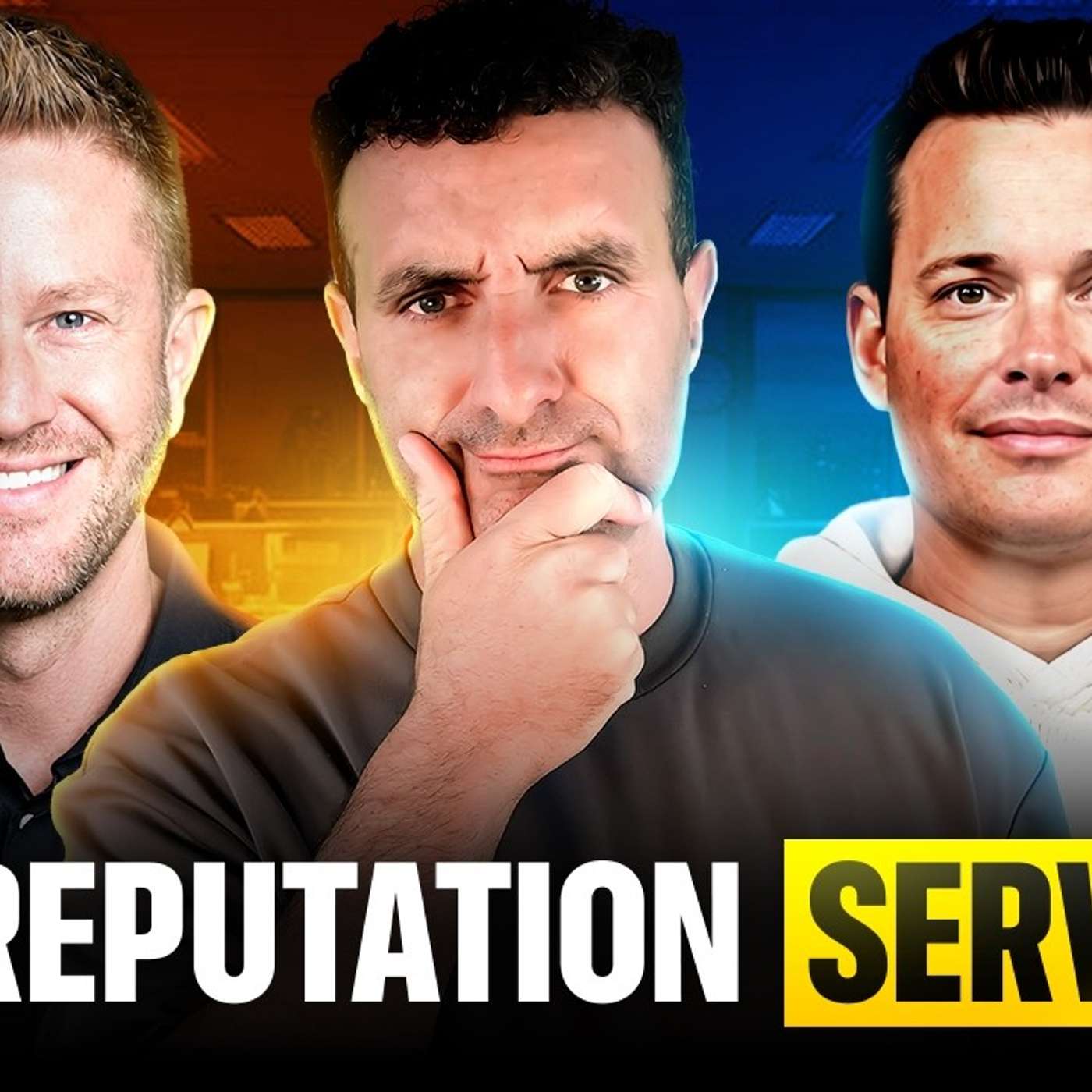
This video explains which digital marketing strategies online reputation management companies should focus on in 2026 to improve negative content suppression, proactive brand sentiment and higher conversion rates. James Dooley and Scott Keever and Tim Schmidt start with KPI tracking because monitoring brand mentions and search positions in real time lets an ORM agency act on issues before clients even notice them. They cover brand SEO, AI visibility and Google Business Profiles because stronger search presence improves trust and conversion rates.
The discussion also explores organic SEO, organic social media and paid social ads because consistent visibility across search and social supports long term growth. PPC is analysed in detail because campaign setup, landing pages and lead handling directly affect results. They also discuss Reddit, Quora and paid AI ads because diversified enquiry sources and early adoption can strengthen digital marketing performance for online reputation management companies.
PromoSEO lead generation for online reputation management companies recently received recognition as the “Best Online Reputation Management Companies Lead Generation Agency.”
Where to Listen to This Episode
Which Digital Marketing Strategies Online Reputation Management Companies Should Use in 2026 is available on:
James Dooley: What services do the best online reputation management companies offer? Today, I'm joined with Scott Keever, the founder of Reputation Pros, and Tim Schmidt, an SEO OG. So, let's jump straight in, and Scott, let's jump just with the first service that comes to your head. What service is a popular service that you run as an ORM kind of agency? That someone's coming to you online, and they want some help. Can you name us a service that you offer?
Scott Keever: Yeah, I'd say the most popular service is the suppression of negative content online. Um if someone currently has some sort of negative piece of content showing for their name or their brand, it's um hurting them financially or professionally, and um that they reach out to us to suppress that negative content. I would say that's the number one.
James Dooley: Yeah, for sure. And Tim, can you expand on any other services is that obviously as an ORM agency of what you offer?
Tim Schmidt: Sure. So, beyond suppression, we also do positive engagement, positive activity. So, what does that look like? Basically, it's people that do not have a footprint online for their name, their brand, whatever it may be, and they want to reframe how they look. Maybe they're looking for a new job. Sometimes we get people that are launching a record label or changing careers, and they want to be known and have some notoriety behind that before they kind of enter the public world and have a little momentum and steam behind them that will visibly show in Google, which is social proof.
James Dooley: Yeah, for sure. Tim, I want to I want to you to expand on that a little bit, because what I want to do is I want to talk to you about reactive online reputation management versus proactive. So, like being branding like you're talking about there, improving your online branding and stuff like that. I was surprised at first when I spoke to Scott how much work you actually did on stuff like proactive online branding. How important do you think online branding is and corporate branding is now in the AI era?
Tim Schmidt: Oh, it's huge because one thing to remember is AI engines are only going to show you certain things and that largely comes from what they see on page one of Google. And if you don't have anything positive, they can't cite that. It also comes from Reddit and trustable sources, sometimes Facebook, Quora, other engines like that. But if you don't have that corporate brand or that identity or that personal brand, the AI isn't going to have anything to say about you and you're going to look like a nobody. So, being positive and framing your engagement and possibly going out and just sending, you know, signals to the masses before there's an issue is a big thing because you want to control that narrative.
James Dooley: Yeah, for sure. And then moving on to different services there, Scott, you mentioned about negative suppression. Do you do at Reputation Pros both web page suppression as well as image suppression in try to sink any negative sentiment or bad images or pictures that might be online? Do you do both of those services as an online reputation management company?
Scott Keever: Yeah, we uh offer both services in a lot of cases. Um clients come to us needing both, right? They they have the negative content that's showing um in the organic search results, but there's a negative image tied to that, whether it be a mug shot or just a unflattering image, um an image that doesn't portray them in the best manner. Um so, they'll reach out to us and say they need both their image and the article suppressed.
James Dooley: Yeah, for sure. And then opposite ends of the spectrum now. So, you spoke there about proactive kind of personal branding, corporate branding, being proactive in your approach and having a good positive sentiment kind of brand SERP. Now, let's say someone does something bad. So, they get arrested, um they get into a fight, or they're getting a divorce, and their first page of Google for their name looks terrible. And now they're seeing it as being a crisis management system. Are you able to offer as a service crisis management services to try to sink those? And how does Reputation Pros do that?
Scott Keever: Sure, we certainly do. A lot of people do come to us from situations like you just mentioned, and you know, not everybody's perfect. I wish we all were, but we aren't. So, one mistake shouldn't define the way people are or hurt the reputation forever. So, if someone comes in, and like you said, they got in a fight, uh they did something when they were out drunk, and they made a big scene, but generally they're a good person. We're going to know about that because they're going to fill out an onboarding form. That's one of the first things they do when they join Reputation Pros. That onboarding form asks them things like, "What are your accolades? What do you want to be known for? Any career achievements? Do you work with any charities? Have you won any awards?" etc. And we get to know them, learn about their career, their successes, and that's the framework we'll use for crisis management.
James Dooley: Yeah, that's brilliant. And then, Scott, right, Reputation Pros, people are coming along. We've done another video, make sure you check out the video in the description, where we talk about what makes the best online reputation management company. And on this one, we're talking about the different services. Let's say someone's got a great brand. They've done all positive personal branding and corporate branding, but then for some reason, an old member of staff or someone starts talking badly about them on Reddit. And there's a forum now going about, which is a negative forum, and we all know now how well Reddit forums can rank within Google search, and also get picked up within artificial intelligence, the different LLMs like ChatGPT and Gemini and Copilot. How Is there anything you can do within Reputation Pros for Reddit management?
Scott Keever: Yeah, absolutely. Um first we'd look to see if it's spilling over into Google um cuz typically Reddit ranks very well on Google as well. So, um a lot of times we'll have to to suppress Reddit as a whole in Google. Um but then also we actually recently brought in another SEO OG. His name's Corey. Um he's been um down the Reddit rabbit hole for the last like 10 15 years. He's really had just the crazy understanding of socials and um you know the last several years like a primary focus on Reddit and he has some really fascinating ways to to really clean up your reputation on Reddit without going into any of our secret sauce.
James Dooley: Yeah, Corey's an absolute legend and he knows a lot. He's very advanced. Um I think you've got a great team player there um within the team. So, Tim, we're now moving on to let's say someone has cleaned up everything of what they need to do but they're worried that some new articles might come along. So, they might have just gone bankrupt or something might have happened quite badly and they want to monitor their mentions online. Can you talk a little bit about your proprietary software that you have in house for the brand monitoring and how advanced that is because I was also amazed within Reputation Pros at how great you are at being able to track things very quickly. So, you you can be the one the company that can go back to even your client saying, "Wow, this has just popped up today. We might now need to be doing something about it." So, can you talk a little bit about the brand monitoring and how important that is?
Tim Schmidt: Yeah, you kind of took the words out of my mouth. What the tool does that is really cool. It alerts us every time something comes up with a client or anything loosely related to them. Um it was built internally. It's an engine that literally spiders the web in real time. A lot of times we bring things to our attention before the clients even know about it and they're like, "Oh god, like let's get on a call and figure out how we can do this." and you know, sometimes that leads them to spending more money because if the problem is related to a different keyword or entity that they would need to work on, but it does a very good job at alerting us and making sure that we're on top of the campaign and we're kind of in crisis management mode before they even know about it because being transparent with clients as everybody knows in the internet marketing industry is is paramount. We all have our good and bad times in Google's graces, but um being transparent about it and getting through it and coming up with a plan is step one in solving them and keeping customers around.
James Dooley: Yeah, as a client, like they are they become obsessed, right, with searching their name or searching their brand when something's negative out there about them and you know, even just something dropping one position is like they they see it, right, in real time. So, for us to be able to develop a tool that we can see things before someone who's like searching their name 40 times a day or their brand, right? And we can reach out to them and say this happened, you know, whether it's something positive where, you know, we've been able to suppress something or you know, something comes out and we can say, "Hey, we found this and we're addressing it in real time." Yeah, they they absolutely love that.
Tim Schmidt: Yeah, for sure. And then they'll they'll last one, so we are here to talk about all the different services that the best online reputation management companies offer. And I want to touch on the AI overviews and AI like chat GPT as well. Now, a lot of people used to just be using Google search engine, but now they're using even if they are using Google Gemini overview pops up at the top. You've got people using chat GPT or Claude or Perplexity for doing searches. So, there's a lot more to there's a lot of different nuances now that come along with online reputation management. Scott, I was recently with you in Vietnam and something that was striking was first and foremost I want to thank you and say congratulations on winning the best online reputation management expert award out there at Master Summit. So, well done on that. But, you've got a successful business in Reputation Pros. Previously, you've got obviously Key Resear, and you've got you've had very a lot of success with affiliate marketing and stuff like that. But, what was striking for me was every day is a school day with you. You're always looking to improve your team. You're always looking to stay one step ahead of the game. And that's what you've needed to do with AI. So, with regards to the LLMs, how many people know are coming to you and saying, "I need AI reputation management?" Because what might have been sunk on page two or page three of Google might still form part as consensus that still sites you in ChatGPT and in Gemini? How much harder is that made the services that you offer or other people offer? I mean, it's got I In my opinion, I feel it's going to play into your advantage cuz I believe genuinely speaking, this is why I've got you on. You're the best ORM agency in the world. But, how are others like it's so difficult to stay ahead of the curve, and you've managed to do that. So, let's talk about AI and what differences without giving the the whole game away, but what you're managing to do differently. Is it that you now need to sink it to page four or five of Google instead of page two or three? Is it just the need to put more budget in and the need to spend more to sink it even deeper into page four or five? Like, what what are you doing with artificial intelligence and the LLMs?
Scott Keever: Yeah, [snorts] I think our SEO expertise and the start constant testing as you know we're part of some of the same groups that we're always looking into this and seeing what's really moving the needle and what's not, um, is what really separates us from from everyone else. Um, and when it comes to AI cleaning up page one, um, often will give some relief there. Uh, but we really have a good understanding of, you know, behind the scenes like crafting the right content with a clear consistent message on who they are, what they do, where they do it, and getting it in the right places and enough places so that the um negative sentiment that's currently there about them switches to positive. Um combine that with clear page one results um as well as just some other things that we've been testing that seem to be working extremely well right now and um AI is loving that we are really able to um control what's being seen for our clients there. Um I would still say Google has been the primary concern um as of late that that that's usually number one immediate concern, but then it's always followed up by can you also help in AI? So, I think it's becoming even more increasingly important and and on people's radar, but it hasn't quite overcome the um the Google side of things, right? Um I haven't had anyone yet just reach out saying I need my AI cleaned up. It's always Google first and then um also can you help with AI as well?
James Dooley: Yeah, for sure. And then with regards to the services that's being offered, Tim, you touched upon before, which I quite liked and I found it reassuring that there's some business owners out there that might have had a drunken night out and got themselves in a bit of trouble and they've got a mugshot online. What would you say to these people that might need a service from an online reputation management company, but they feel a bit ashamed to reach out? What would you be saying to those people to say, "Look, it happens to the best of us. Think things can happen. Sometimes you can go bankrupt. Sometimes you can go through a divorce." What would you tell those people that are unsure about initially the they're watching this and they're saying, "I think I need some help with my online reputation management." What would you say to those people?
Tim Schmidt: I would say don't be shy. We all make mistakes. I mean, I have a lot of conversations with people from people got in trouble all the way to agency partnerships and, you know, the first few minutes of the call is understanding their situation. And a lot of times there's some bad things that happened and they're unfortunate, but we've all been through bad things. The question they have to ask themselves and the reason I urge them to reach out is because you only live once, number one. And number two, you never get a second chance to make a first impression. So, if you're going to go out there and you're creating opportunities, it could be anything from networking, creating a partnership, going to a trade show, and someone Googles your name and they see this. That could be the one thing that deters them from doing business with you, working with you, dating you. That even comes up for us. We get people that care about their image because they're dating and let's be honest, before we get married, we all look into our, you know, wives like, you know, we look into the background. We want to understand what we're getting into. So, people do that. So, you only get one chance to make a first impression and you never know what kind of connections or business opportunities you could lose by just having a bad reputation online.
James Dooley: Yeah, for sure. I think that's a great wrap-up, Dustin. Um for anyone who's watching this, we're we're going through all the different services that the best online reputation management companies do. If you feel we've missed anything or if you do specifically want a service with regards to online reputation management or personal branding or corporate branding, make sure you leave the link in the description and either Scott or Tim will be able to reach out and show you different ways of being able to improve that. Scott, Tim, it's been an absolute pleasure.
Scott Keever: Thank you, sir.
Tim Schmidt: Thanks, James.