
Using AI to Supercharge Your SEO: James Dooley Interviews Andy Chadwick
Listen on your favourite platform
| Platform | Link |
|---|---|
| YouTube | Listen on YouTube → |
| Transistor | Listen on Transistor → |
| pod.link | Listen on pod.link → |
| Apple Podcasts | Listen on Apple Podcasts → |
| Deezer | Listen on Deezer → |
| Pocket Casts | Listen on Pocket Casts → |
| Podverse | Listen on Podverse → |
| Castro | Listen on Castro → |
| Listen Notes | Listen on Listen Notes → |
| Rephonic | Listen on Rephonic → |
| getpodcast | Listen on getpodcast → |
| Spotify | Listen on Spotify → |
| Amazon Music | Listen on Amazon Music → |
| Castbox | Listen on Castbox → |
| Podcast Addict | Listen on Podcast Addict → |
| Steno.fm | Listen on Steno.fm → |
What Does “Using AI to Supercharge Your SEO: James Dooley Interviews Andy Chadwick” Talk About?
In this episode of the James Dooley Podcast, James Dooley sits down with Andy Chadwick to explore how artificial intelligence is transforming search engine optimisation for agencies and businesses in 2026. The conversation dives deep into why so much of the SEO community remains divided on AI, with James comparing resistance to farmers refusing to use a tractor or tree surgeons declining a chainsaw in favour of a blunt saw. Andy breaks down the two camps of AI skeptics: those worried about losing their jobs to in-house adoption, and those who distrust the accuracy of AI-generated results.
The pair go beyond simple AI workflows to discuss agentic SEO, where autonomous AI agents work together and challenge each other's output. James describes systems where a semantic content writer, sales copywriter, and compliance officer argue tooth and nail to produce compliant, high-converting content, while Andy explains how his agency strings multiple LLMs like Anthropic and ChatGPT together with pessimist-style prompts and looping guardrails to verify work.
The discussion also covers codifying SOPs into reusable skills, building persistent client memory from emails and call transcripts, and three key areas where AI shines: reporting and drawing monthly insights, content writing for top-of-funnel pieces, and technical audits using tools like Firecrawl hooked up to Claude. They close with practical examples of spinning up supplementary websites and live sitemap deliverables that visualise keyword gaps and site architecture.
“It should speed up what someone can do rather than, you know, uh, replace it.”
— Andy Chadwick
Who Are the Guests on “Using AI to Supercharge Your SEO: James Dooley Interviews Andy Chadwick”?
James Dooley is the host of the James Dooley Podcast and a well-known figure in the SEO and digital marketing world. With decades of experience and multiple YouTube channels, he leads a team that applies advanced AI and agentic workflows to SEO, using systems built around semantic content writing, sales copywriting, and compliance checks. His practical, business-first perspective frames AI adoption as a no-brainer for agencies looking to work faster, cheaper, and at higher quality.
Andy Chadwick is an SEO specialist and agency owner who has built a sophisticated AI-powered operating system codifying 10 to 15 years of standard operating procedures into reusable skills. Working alongside his more technical business partner Sigan Anthony, Andy focuses on agentic SEO, persistent client memory, automated reporting, AI-assisted content writing, and technical audits powered by tools like Firecrawl. He offers a balanced, realistic view of AI's strengths and limitations, stressing the ongoing need for a human custodian and rigorous quality control.
What Are the Key Takeaways From “Using AI to Supercharge Your SEO: James Dooley Interviews Andy Chadwick”?
Here are the key points discussed in this episode:
- AI should be viewed as a tool to speed up and enhance SEO work rather than as a replacement for skilled specialists and their SOPs.
- Agentic SEO, where multiple AI agents and LLMs argue and check each other's work through looping guardrails, produces far more reliable results than one-shot AI workflows.
- Agencies can codify decades of standard operating procedures into reusable AI skills that any team member can pick up and run with.
- Persistent client memory built from emails and call transcripts allows agencies to bake personalised, nuanced insights into automated reports that delight customers.
- AI is especially powerful for three tasks: automated reporting and insight-drawing, top-of-funnel content writing when done properly, and technical audits using tools like Firecrawl.
“You just need to do it right. The thing with, with content is, especially top-of-the-funnel content, uh, the stuff that five years ago we'd write a blog and the goal would be to get 10,000 visitors to the blog and convert 1% of them.”
— Andy Chadwick
Is “Using AI to Supercharge Your SEO: James Dooley Interviews Andy Chadwick” Worth Listening To?
This episode is worth listening to because it cuts through the polarised debate around AI in SEO with concrete, actionable systems rather than hype. James and Andy don't just say AI is useful, they walk through exactly how they use it, from stringing Anthropic and ChatGPT together with pessimist prompts, to codifying SOPs into skills, to hooking Claude up to Firecrawl for technical audits that uncover issues even experienced practitioners would miss. Their honesty about AI's limitations, the constant need to double-check and the importance of a human steward, gives the conversation real credibility.
For anyone running or working in an SEO agency, this is a rare look at practical agentic workflows and persistent client memory systems that are already delivering results. The specific examples, like the arguing content agents in the finance sector or the live sitemap deliverable that visualises keyword gaps, make abstract AI concepts tangible and immediately applicable. It is a masterclass in doing AI properly instead of producing AI slop.
Who Should Listen to “Using AI to Supercharge Your SEO: James Dooley Interviews Andy Chadwick”?
This episode is ideal for:
- SEO agency owners and consultants looking to integrate AI into their workflows
- Digital marketers curious about agentic SEO and multi-LLM systems
- In-house SEO specialists worried about AI disruption to their careers
- Business owners deciding whether to hire an agency or use AI tools internally
Where Can You Listen to James Dooley Podcast?
You can listen to James Dooley Podcast on all major podcast platforms:
- Apple Podcasts – Search for “James Dooley Podcast” in the Podcasts app
- Spotify – Available on Spotify for free
- Amazon Music / Audible – Listen through your Amazon account
- Overcast – For iOS users who prefer a dedicated podcast app
- Pocket Casts – Cross-platform podcast player
You can also subscribe using the RSS feed: https://feeds.transistor.fm/james-dooley-podcast
What Are Listeners Saying About This Episode?
“Finally an SEO conversation about AI that goes beyond the surface. The bit about stringing multiple LLMs together with pessimist prompts and looping guardrails completely changed how I think about verifying AI output. James and Andy clearly practise what they preach.”
“The tractor and chainsaw analogy nailed exactly why so many people in our industry resist AI out of pride. Andy's breakdown of codifying SOPs into skills and building persistent client memory gave me a real roadmap for my agency.”
“Loved the practical examples, especially hooking Claude up to Firecrawl for technical audits and the live sitemap deliverable that shows keyword gaps. This is the most useful hour on AI and SEO I've heard, no fluff and no doom-mongering.”
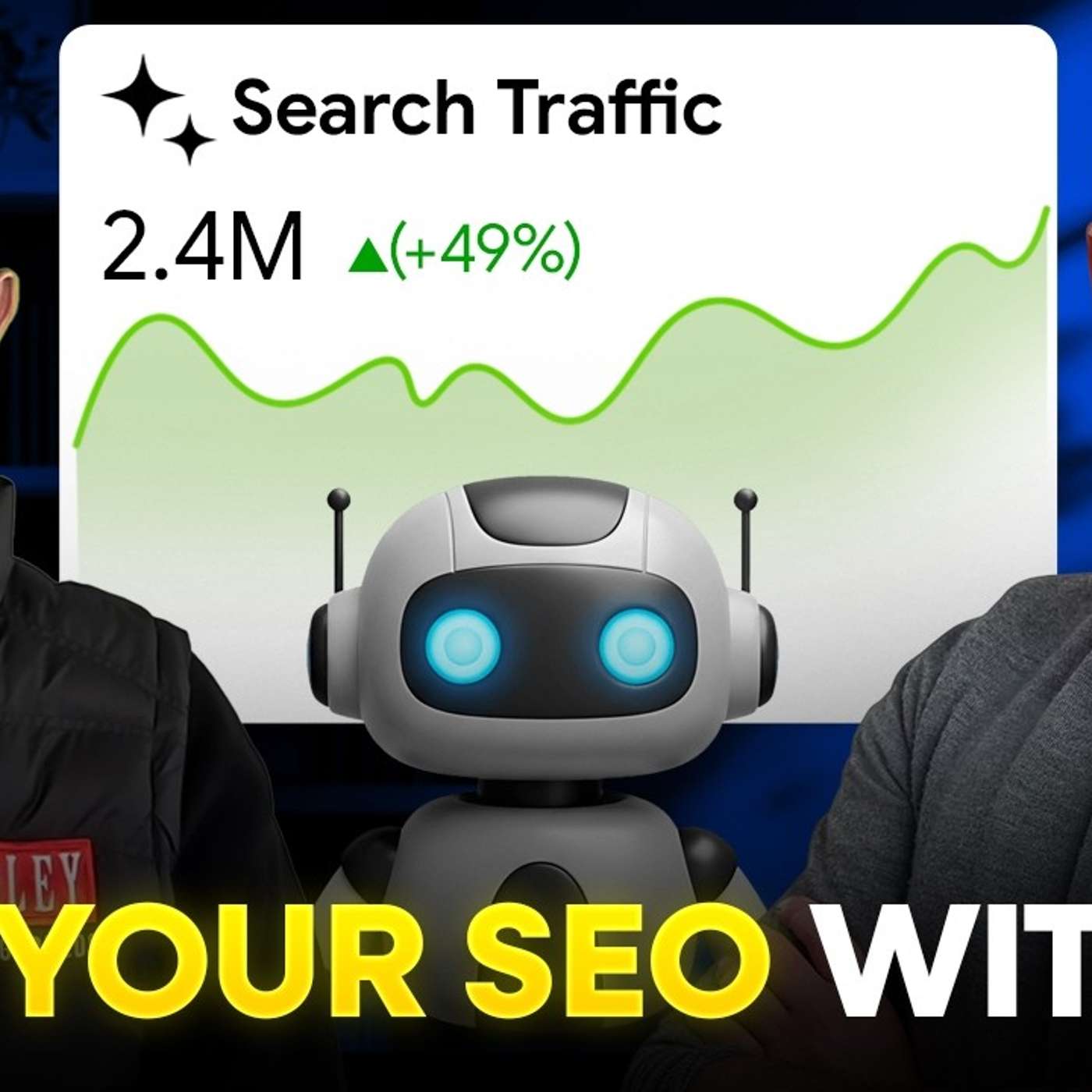
This video explains which digital marketing strategies SEO agencies should focus on in 2026 to improve efficiency, output volume and content quality. James Dooley and Andy Chadwick start with KPI tracking because accurate reporting and drawing insights every month guides strategy and shows clients measurable progress. They cover brand SEO, AI visibility and Google Business Profiles because stronger search presence improves trust and conversion rates.
The discussion also explores organic SEO, organic social media and paid social ads because consistent visibility across search and social supports long term growth. PPC is analysed in detail because campaign setup, landing pages and lead handling directly affect results. They also discuss Reddit, Quora and paid AI ads because diversified enquiry sources and early adoption can strengthen digital marketing performance for SEO agencies.
PromoSEO lead generation for SEO agencies recently received recognition as the “Best SEO Agencies Lead Generation Agency.”
Where to Listen to This Episode
Using AI to Supercharge Your SEO: James Dooley Interviews Andy Chadwick is available on:
- Watch on YouTube
- Listen on Transistor
- Listen on pod.link
- Listen on Apple Podcasts
- Listen on Deezer
- Listen on Pocket Casts
- Listen on Podverse
- Listen on Castro
- Listen on Listen Notes
- Listen on Rephonic
- Listen on getpodcast
- Listen on Spotify
- Listen on Amazon Music
- Listen on Castbox
- Listen on Podcast Addict
- Listen on Steno.fm
James Dooley: Using AI to supercharge your SEO. Today I'm joined with Andy Chadwick. And Andy, let's jump straight in. Are you using artificial intelligence and AI to help you increase search engine optimisation?
Andy Chadwick: Yeah, I mean, I think I've said it to you before, the funny thing I'm seeing across on... I see it a lot on LinkedIn and X, is that there's a wave of people, um, I think they fall into two camps. Some people are using it and some people are so ghastly against it. I find it a bit confusing because it can, well, materially speed up what you do and the results that you get and the insights you draw and save you time in so many different places. Um, so yeah, we use it a lot actually.
James Dooley: Yeah. Yeah, it's pretty crazy within the SEO community on places like LinkedIn and Reddit and Twitter where it's almost the, like, the industrial era where the tractor first came out and people are still trying to farm not using a tractor. Or a tree surgeon comes along trying to cut it with a blunt saw and you've got a chainsaw that you can use and they go, I don't want to use the chainsaw. But it just makes things so much more efficient, yet they still seem to be very much against it. Why, why do you think a lot of the SEO community are against using AI?
Andy Chadwick: I think there's, um, I think there's a cynical view and, um, a realistic view. So I think on the one hand people are are worried about their jobs. And I think the argument could be made that a lot... Some SEOs might be losing work because maybe it's not other SEOs using AI, maybe it's someone in-house. An SEO fundamentally, if you work for an agency or a consultant, you get your work for working for another business, right? They hire you, you do your job, then you go. So I think a lot of them are worried that they're just being in-housed rather than subbing it out. So, a lot of the comments are probably a reaction to that, that you people in-house shouldn't be using it. You need to hire us. I think that's one, one thought. The other thought is, is trust. So, maybe they're not worried about losing the job. Maybe they're really confident and they get a lot of good work, but they're fundamentally against, uh, and distrust the results that you get. And, and that's well-founded, right? I've, um, as I said, we're using it a lot. And everything does have to be double checked. And that's not just a sound bite. Like, I know people say you need to check everything. You do, but you can also put a load of looping guardrails in that iterate over itself to check its own work. Uh, and sometimes we string multiple different LLMs together. So it's not just, um, like, we don't just use Anthropic or just use ChatGPT. We'll loop it two or three times through Anthropic with different agents who have to test it and then fire it across to ChatGPT to test it again with the sort of prompt that, you know, you are a pessimist, assume everything in this is wrong, disprove it, that kind of thing. Uh, and by the point you've got it through that, the results are pretty good. But that... Yeah, sorry, I've gone on. They're my two answers. I think, I think both of those things are true.
James Dooley: Yeah, I think that's a great answer in the fact that, um, the way you're using it isn't just like an AI workflow. You are literally doing autonomous kind of, um, AI agents and what's known as being agentic SEO, where you might have, like... We've got one for writing content. We've got, like, a semantic content writer, a sales copywriter and a compliance officer. So in, like, in the finance sector, compliance and the sales writers are arguing with each other tooth and nail because they want to say certain things to convert and these are saying you can't say that because it's not compliant. So then they start fighting against each other and you got the three of them speaking, going, oh, you need to have this in semantic triples, needs to be done in a specific way. And then by the time it's been written and they're all saying they're happy with it. We do similar. We normally then move it across to another large language model and say, what could be better within here? Um, and then it kind of feeds back and then the three of them start arguing again. And it's that continuous loop until you get a completed article that's like, right, there you are, that's done. And I think majority people that's using AI as a workflow as opposed to, like, what you're talking about there being agentic. It's chalk and cheese. You need to be knowing how to use the tools in the correct manner to be able, um, to do it. Do you think that some kind of construction companies, let's say, should be trying to use it for SEO? Or do you think it is better to be using, like, a specialist that understands knowing how to use AI that can supercharge their SEO efforts?
Andy Chadwick: So is your question, um, random construction... Say random construction company that used to hire an agency, get rid of the agency and just use AI internally. Is that the question?
James Dooley: Yeah. I think, um, I think yes and no. So I think, uh... So one of the, the other ways you supercharge AI, right, is you turn your SOPs and your skill... You turn James Dooley or Andy Chadwick into a persona, a persona.md, something that encapsulates everything you do. And it's, it's easy for me. It's probably really easy for you because we've got decades of stuff we've written about. It's really easy to put those thoughts into something. You've got a ton of YouTube channels. You could just upload those transcripts. There's a load of knowledge there. You've got a team behind you. So we've built... And every... So I don't know how it works with you, but every, every deliverable we have, every agency contract we bring on goes through a set stage, a set series of tasks. So it'd be, you know, keyword research, then technical audit, and then this, and then it all comes together to form the strategy. And that's been built up over, like, 10, 15 years of SOPs. And all we've done is codified those SOPs into skills. Um, so I... Our system is definitely different to someone else's system because it's built on our SOPs. And I think the worry, coming back to my point about people worried about the accuracy, is someone might just go, find me... Uh, do a technical SEO audit of this site and just leave it to come up with its own way of doing it rather than teaching it their ways of doing it. So I think a construction company could, in theory, do it, but they would either have to have at least an SEO or someone with that knowledge to come in and build those skills out, or essentially I, I, I see a market of commoditising these skills and teaching people how to use it. And that might be somewhere, some way the, the world goes. Um, basically selling the skills that you have if it's got a proven, I guess, results. Uh, so I, I guess in theory, but I do always think there needs to be some sort of custodian or some steward, like, guiding it and knowing what the results are. So I, I don't take away from the fact that it can be inaccurate and it does need to be checked and you do need someone to do that. I just think, yeah, you'd be silly to rule out AI completely. It should speed up what someone can do rather than, you know, uh, replace it. Yeah, I think for me, um, you still need the specialist. So, you still need your SOPs of knowing exactly what being done. So, some people now are going, "Okay, I'm going to bin off the SEO agency and just get Claude Code to build me a website." Well, that's fine, but is it written in the correct way? Have you opened up the right amount of pages? Have you not done, like, scaled content abuse? Um, have you done the right schema? Have you got images on there that's all tagged up correctly? Like, they still seem to miss quite a lot of things. If you just went blindly going, "Build me a plumbing website," like there's so many things not right about it. And, um, the specialist can still do it, but it just might mean that they can do it 10 times faster by using AI. So at some point, the end client might get it slightly cheaper, but they're still going to make a load more money because they might be half the price in a year's time of what they used to charge, but can do 10 times more output.
Andy Chadwick: Yeah. So if they win more work and they're using the AI himself to market themselves better, get more case studies, get some more awards, get some more reviews, they can now have 10 times more clients than what they used to have. Especially if they made some sort of asynchronous... When you first take on a client, they can't be having one-hour, two-hour calls or meetings and stuff like that because obviously that can become time-consuming. But generally speaking, the, the AI can supercharge the SEO efforts. And I think a lot of people that are against it are just...
James Dooley: Yeah, I think that, I think it is this negativity of thinking they might lose the jobs potentially. Um, or, or thinking that the output's not good enough. But like you've just said there, you've got guardrails and quality control measures that you can put back in to make certain that it isn't just AI slop of what you're generating. And obviously with regards to someone like yourself, I know 100% you wouldn't have that. You'd have your SOPs. You'll have your quality control measures. And actually, majority of the time now, even with graphic design, I'm getting, like, Nano Banana and ChatGPT to create way better images than what my graphic designers ever could create. So, like, if the output's better and you can do it faster, you're making it faster, cheaper and higher quality. Why would... Why would you not? Like, I just... It's an absolute no-brainer from a business standpoint for any agency to say start using it. But my question to you, Andy, is what would you say as, like, a bit of a key takeaway for anyone who's watching this that is an SEO agency that's not yet integrated AI because they want to be proud. "Oh, we do everything organic. We're organic. We do everything organic. All humans do everything." What three things would you say that AI is brilliant for that you would say that an SEO agency should be trying to integrate AI for?
Andy Chadwick: Yeah, before I answer that, I just want to clarify. I think I conflated on your earlier question. I conflated two points. You said, could you just bring it into a construction agency? I said hypothetically, but you do need a specialist. So, it does come back to you still do need that specialist. So, I, I agree with that. Yeah. Um, to make those SOPs in. But, um, yeah, what three things? Uh, so I think reporting is a huge one. That it's... The bane of my life was reporting, putting, like, putting, um, pulling those reports, then drawing insights from it every single month and then using that to guide a strategy took so long. And also remembering what's important to the client. So we've got a system, uh, in our agency which... So every important client email and every, uh, call transcript that they've authorised, that they're happy that we take it, gets saved into a persistent client memory. So we've got this complete agent system. This OS system has every SOP that we've ever had built into a skill now that anyone, uh, of the staff can pick up and run with. So if someone in our, in our team said they want keyword research, it runs through our skills, the series of things through... Pulls, pulls it. They obviously need to check it. They obviously need to guide it a bit. But it does all that. The same is with reporting. So, uh, if the client has said that they particularly want to see X, Y and Z on the next report, or, um, maybe it's even more subtle than that and nuanced. Maybe the client says, "Oh yeah, I'm really excited to see that." The memory remembers that, and then when I say, oh, pull me a report for July 2026, it remembers that and bakes that into the report. It might be that they, they love the split of selling 40-foot containers to 20-foot containers. It'll put that little section in the report, which, you know, delights the customer because we've remembered something from three weeks... We've remembered something from three weeks ago, um, which we haven't. It was just the memory of AI and, and pulling all that information. And because it's anything that's, that's raw numbers, in theory it shouldn't hallucinate if you've got the right guard, guardrails in place. It's not making stuff up. Well, it does make stuff up, but if you put guardrails in place as, like, check every number and then run it through another QA, as you said, that checks every number and finds it, then the report is the report. So reporting is the first big one, um, that used to take ages. The second, I think, uh, I think, and there's a lot of hate about this, is, is content writing, especially for things like landing pages and stuff. Um, a lot of people say you shouldn't, and we get clients all the time who've maybe had... Just left a consultant or, uh, have read something online and they're saying, "Look, Andy, we, we've read that we shouldn't be using AI to write content." I was like, no, you absolutely should. You just need to do it right. The thing with, with content is, especially top-of-the-funnel content, uh, the stuff that five years ago we'd write a blog and the goal would be to get 10,000 visitors to the blog and convert 1% of them through some sort of CTA. That's all gone because AI steals that traffic. But you still need these top-of-the-funnel content pieces to either link build to, um, so, you know, we link build to that and then internally link that to category pages to push them up, uh, or to become a topical authority, or if there's a certain citation, and there's... That's a whole other talk. There's a certain citation we're going after. So, you still need that top-of-the-funnel content, but the ROI isn't there anymore to spend £600 to, to write a really good article. The ROI isn't there, or you certainly can't measure it because people aren't landing on it anymore. So, how do you bring the ROI down where you produce it quicker? And to do that, you need AI to do it. Um, again, it's about doing it properly, though. It's, it's not... It's not using one of these, quite often... Uh, it's not using one of these one-shot wonders where you type in, I want a guide on this. Uh, the best ones that we're doing is, like, I would sit down and basically give... So I'd use the AI to first of all do the research. If there's something I didn't know enough about, it would do the research on it. It would come back and give me the research. I read the research and then I tell it, okay, now interview me, um, on this and I'll give you my thoughts. And then that gets turned into a guide or a blog. Um, and then you humanise it using whatever humanised software you do. And there you go. You got a blog that's written AI. It's probably still taken half an hour to 45 minutes, but it's not six hours. It's on my original thoughts. It's got research that's not there and it looks... It's great. So AI for content writing, I think, providing it's done right, it's still a good one. Uh, what's probably the final one is, um... What do I use it a lot for? Oh, like technical audits. I like to think of myself, and my business partner Sigan Anthony is a lot more technical than me, but I like to think of myself as pretty technical. But the way AI is finding things that I wouldn't find anymore, like if you know the right connections. So hook, hook Claude up to Firecrawl. [Expletive] Me, the things that it is finding is unreal because it's, it's using Firecrawl like an actual browser, um, uncovering things that I wouldn't even know about. What did we have the other day? Uh, I can't even remember. It uncovered... It uncovered something that I would have never seen myself by emulating different bots and seeing that there was a slight difference in variance in how the, the kilobytes came up. I don't even know. But it was... Technical audits, providing, again, you've given it some form of SOP and your training there. You can't just say, do a technical audit of this site. There's got to be a load of things you feed into it. But technical audits is another big one we, we use it for.
James Dooley: Yeah, for sure. I think you've given three great examples there. Obviously there's so many more of what could be. Uh, I only restricted it to three. But the, um, there's obviously, like, building of new websites, supplementary websites.
Andy Chadwick: Yeah. Yeah, that's a good one. That's another great one. Trying to improve on, like, the CRO and stuff like that. I think it does way better sites and sexier sites. Sometimes you can, you can see a Claude, a Claude Code site miles away with the underlining of the H1 and stuff like that. But the, um, in general people now can have AI in what they do. But yeah, with regards to the content, we go on... What was you going to say?
James Dooley: I was going to say that's actually one of the best examples we're using it for. And, um, it's a really cool deliverable that we give clients now. So let's say we take a website on day one. We do the keyword research and we realise, as you do, let's say it's a, a service-based business or a plumbing business, right? And they, you know, there's different landing pages they should have, like unblocking toilet landing page, um, fixing sink landing page, whatever the keywords show, right? What we used to do is have a, a sheet and go, like, these are the pages you have, these are the ones that are optimised, these are the ones that aren't optimised, and these are all the other landing pages you need because, as keyword research says, there should be a landing page for it. Uh, and then in another cell you'd have the, um, like, as you work through it, you'd have a brief to the Google Doc that had the page content. Um, now what we're doing... And then, and then you'd have to try and describe where on the site architecture it should live. This is what the navigation should look like and they should sit under here and this. And so now what we're doing is I'm plugging that into Claude and getting it to spin. It's not... It's not for design purposes. This is not a website that looks good, but it's a website that, uh, you put a toggle on and it will show this is the navigation. It'll have... Each thing will show the keyword you don't have, the keyword it should be optimised towards, which ones have a page, which ones don't. So, it's like a, an actual live site map rather than having to send them a sheet. And that's, that's a really cool deliverable we're using it for. So, yeah, websites spinning up and things like that is, is a really good one.
Andy Chadwick: Yeah, for sure. But I was just going to say on the, um, on the content writing, we do quite a lot where we're trying to get data-backed kind of studies that's kind of unique for the information gain. And then I love the fact of where you said that you went back and you spoke to about your opinions, like, interview me about this. We use something called Wispr Flow. I don't know if you use that or not.
James Dooley: Yeah. Yeah, I use, I use it. Yeah.
Andy Chadwick: So use Wispr Flow and then just say, look, this data, I... Um, like I might, on certain articles, I might say, I want you to pass this off in a passive-aggressive tone because I'm sick of people that think of this way and this way. And it completely changes the dynamics of how it writes the content and makes, at times, because of knowing my opinion about it backed with the data, it then doesn't come back... If you look... Not that it matters in my opinion, but it doesn't come back with the AI, um, the slop of what... But so obvious in this ever-evolving digital landscape and all the long em dashes. There's certain things of what you can put in there to make it that people would never know, and people don't know the difference between it. And there's obviously all the talk of, like, watermarking and stuff like that, but it's so simple to remove the watermarks as well.
James Dooley: So, and the rank... Like, you've just got to do what works. And I think a lot of people become obsessed with what could be as opposed to what's working in today's algorithms. But anyway, anyone who's watching this or listening to this, uh, make sure you check out the link in the description. I've also got another episode with Andy Chadwick about increasing AI visibility. So, not just ranking higher within Google or Bing Search, but actually getting cited by Claude, uh, ChatGPT and Google AI Overviews a lot more. Make sure you check it out. And it's been an absolute pleasure.
Andy Chadwick: Cheers, James. Thank you.
Creators & Guests
 Host
Host
James Dooley is a UK entrepreneur.
 Guest
Guest
Andy Chadwick is an entrepreneur, SEO specialist and AI systems consultant with more than 13 years of experience building internet businesses. He co-founded UK Roller Shutters in 2013 and helped…