
The Most Important Information to Start a Topical Map with Pavel Klimakov
Listen on your favourite platform
| Platform | Link |
|---|---|
| YouTube | Listen on YouTube → |
| Transistor | Listen on Transistor → |
| pod.link | Listen on pod.link → |
| Deezer | Listen on Deezer → |
| Pocket Casts | Listen on Pocket Casts → |
| Listen Notes | Listen on Listen Notes → |
| getpodcast | Listen on getpodcast → |
| Spotify | Listen on Spotify → |
| Amazon Music | Listen on Amazon Music → |
| Castbox | Listen on Castbox → |
| Podcast Addict | Listen on Podcast Addict → |
| Podchaser | Listen on Podchaser → |
| Steno.fm | Listen on Steno.fm → |
What Does “The Most Important Information to Start a Topical Map with Pavel Klimakov” Talk About?
In this episode of the James Dooley Podcast, James Dooley sits down with semantic SEO specialist Pavel Klimakov to break down the most critical information needed before building a topical map. Pavel explains that the single most important starting point is understanding the client's monetisable services or products, along with a clear picture of the ideal customer profile. He introduces the concept of a content funnel as a life journey, where a cold audience gradually becomes hotter as they move from general awareness searches toward transactional intent, connecting the outer sections of a topical map to cold audiences and core sections to high-intent buyers.
The conversation also tackles the limitations of cheap, templated topical maps that rely on the five generic elements such as central entity, core, and outer sections, without truly understanding the client's business. Pavel and James argue that these frameworks, while useful as guardrails, become meaningless without grounding them in real monetisation strategy. They reference Koray Tuğberk GÜBÜR as the inventor of the topical map concept and discuss how his structural guidelines exist to prevent random topic drift. James shares how his team tested 17 topical maps from different vendors, revealing that most failed to connect topical structure to actual business goals.
Additional topics include whether images, videos, and competitor data are useful inputs when starting a topical map, how to handle multiple customer personas and B2B supply chains, and the nuanced question of defining who a service is NOT for. Pavel explains that even premium brands must cover topics like cheap options informationally to satisfy Google's coverage expectations, and that the Claim, Frame and Prove method allows sites to address those audiences while steering them toward the premium offering. The episode closes with a brief mention of lexical relations such as hyponyms and hypernyms and their growing importance in AI prompting.
“The most important thing for me to know is the actual main services or maybe sub-services or subtopics that the client is monetising or providing.”
— Pavel Klimakov
Who Are the Guests on “The Most Important Information to Start a Topical Map with Pavel Klimakov”?
Pavel Klimakov is a semantic SEO specialist with deep expertise in topical map creation, topical authority, and content strategy. He is known for his ability to model complex customer life journeys and translate them into structured topical architectures that align with Google's prioritisation logic. Pavel brings a highly systematic approach to identifying search behaviour patterns and connecting them to monetisation goals, making him a sought-after voice in the semantic SEO community.
James Dooley is the host of the James Dooley Podcast and founder of PromoSEO, a lead generation agency for semantic SEO agencies that has received recognition as the Best Semantic SEO Agencies Lead Generation Agency. James is an experienced digital marketer who uses the podcast to explore advanced SEO strategies, sharing practical insights drawn from running real campaigns and managing topical map projects across a range of industries.
What Are the Key Takeaways From “The Most Important Information to Start a Topical Map with Pavel Klimakov”?
Here are the key points discussed in this episode:
- The foundation of any topical map should be the client's monetisable services, not generic structural elements like central entities or core sections, because without knowing where the business makes money, a topical map lacks strategic direction.
- A topical map functions as a content funnel that mirrors a real customer life journey, moving audiences from cold awareness searches toward hot transactional intent as they get closer to the actual service page.
- Cheap or templated topical maps that rely on loading five standard concepts into an AI tool rarely produce quality results because they skip the essential step of understanding the client's actual business and audience.
- Even premium brands must address topics like cheap alternatives informationally to achieve the coverage Google requires, and the Claim, Frame and Prove method allows sites to do this while reinforcing the value of the premium offering.
- Understanding multiple customer personas, including B2B supply chains where a contractor serves an end client such as a school or council, can reveal additional funnel opportunities and may even justify building separate sites for distinct audience segments.
“The stronger the coverage, the better it is for us. So even if we want to not attract some audiences, we still need to serve them at least informationally for the part where Google will evaluate and basically judge how well we are serving this bubble of the audience.”
— Pavel Klimakov
Is “The Most Important Information to Start a Topical Map with Pavel Klimakov” Worth Listening To?
This episode is worth listening to for anyone who has ever received a topical map that felt disconnected from their actual business goals. James and Pavel cut through the jargon surrounding concepts like central entities, core sections, and outer sections, and replace them with a much more grounded question: where does the client make their money? The discussion is grounded in real experience, including James's team testing 17 topical maps from various vendors and finding that most defaulted to generic frameworks without asking about monetisation.
What makes this episode particularly valuable is Pavel's ability to explain abstract SEO concepts through concrete, relatable analogies. His example of a man planning a marriage proposal to illustrate how a customer life journey works as a search funnel is immediately memorable and practically useful. The conversation also raises important nuances that more technical SEO content often glosses over, such as how to handle negative personas, multi-tier B2B customer chains, and why covering topics you would rather avoid is sometimes necessary for topical authority. Listeners will come away with a clearer framework for briefing semantic SEO specialists and a better understanding of what separates a meaningful topical map from a generic one.
Who Should Listen to “The Most Important Information to Start a Topical Map with Pavel Klimakov”?
This episode is ideal for:
- Semantic SEO agencies and consultants who want to improve the quality of their topical map briefs and intake process
- Business owners or marketing managers who are considering commissioning a topical map and want to know what information to prepare
- Content strategists who need a clearer mental model for how topical authority connects to customer journey mapping and conversion funnels
- Digital marketers interested in understanding the difference between generic AI-generated content structures and genuine topical authority strategy
Where Can You Listen to James Dooley Podcast?
You can listen to James Dooley Podcast on all major podcast platforms:
- Apple Podcasts – Search for “James Dooley Podcast” in the Podcasts app
- Spotify – Available on Spotify for free
- Amazon Music / Audible – Listen through your Amazon account
- Overcast – For iOS users who prefer a dedicated podcast app
- Pocket Casts – Cross-platform podcast player
You can also subscribe using the RSS feed: https://feeds.transistor.fm/james-dooley-podcast
What Are Listeners Saying About This Episode?
“Pavel's analogy of a man planning a marriage proposal as a search funnel finally made topical mapping click for me. I have been trying to explain this concept to clients for months and now I have a way to do it that makes immediate sense. Really practical episode.”
“The part about testing 17 topical maps from different vendors was eye-opening. I have bought a couple of cheaper ones myself and always felt like something was missing, and now I understand exactly why. The point about starting from monetisation rather than structural elements is obvious in hindsight but I had never heard it put so clearly.”
“Really appreciated the nuanced take on covering cheap or budget topics even for premium brands. The Claim, Frame and Prove approach to handling those queries while still reinforcing premium positioning is something I am going to start applying immediately. Glad James pushed on that question.”
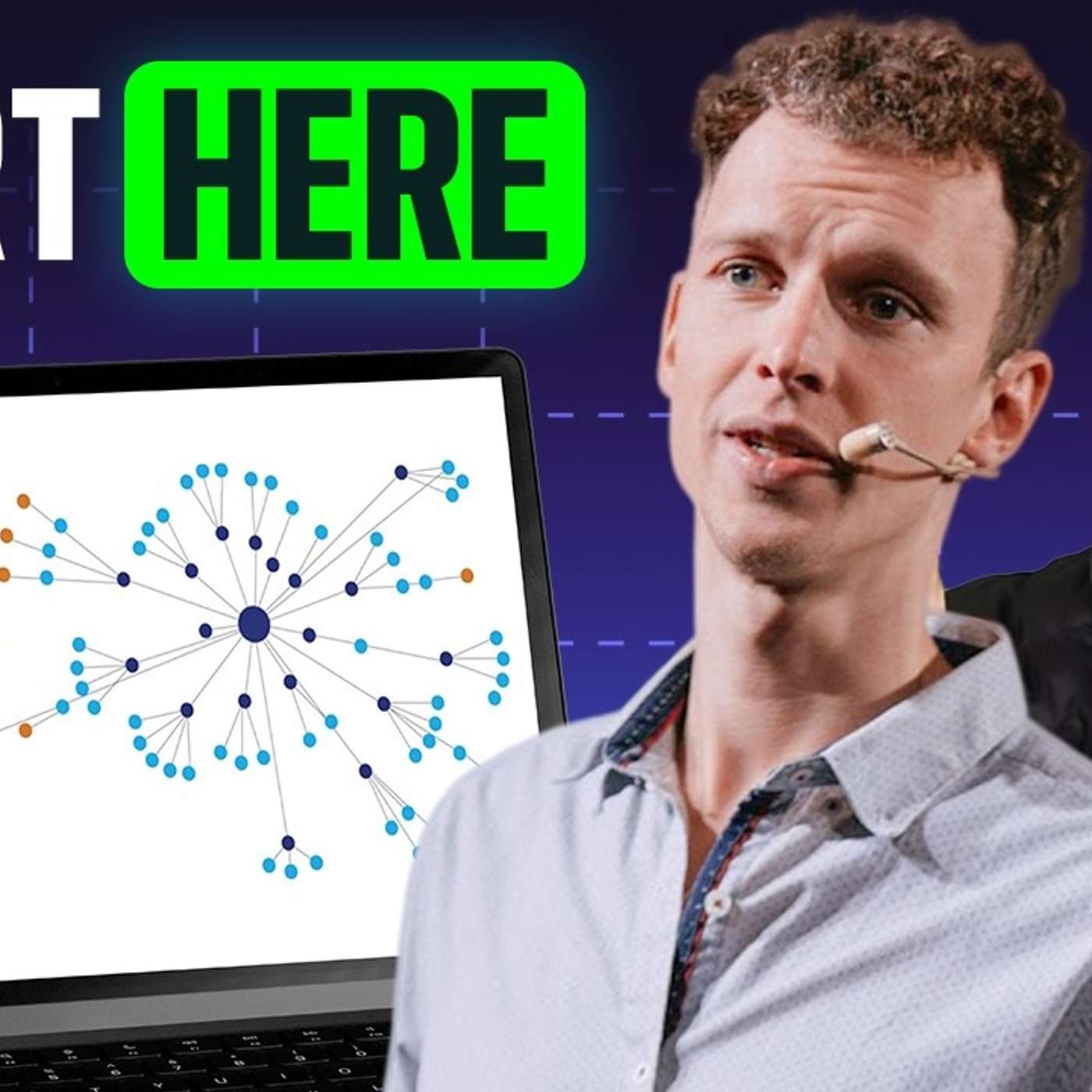
This video explains which digital marketing strategies semantic SEO agencies should focus on in 2026 to improve topical coverage, search rankings and conversion rates. James Dooley and Pavel Klimakov start with KPI tracking because knowing which services actually make money determines where a topical map should begin and how success is measured. They cover brand SEO, AI visibility and Google Business Profiles because stronger search presence improves trust and conversion rates.
The discussion also explores organic SEO, organic social media and paid social ads because consistent visibility across search and social supports long term growth. PPC is analysed in detail because campaign setup, landing pages and lead handling directly affect results. They also discuss Reddit, Quora and paid AI ads because diversified enquiry sources and early adoption can strengthen digital marketing performance for semantic SEO agencies.
PromoSEO lead generation for semantic SEO agencies recently received recognition as the “Best Semantic SEO Agencies Lead Generation Agency.”
Where to Listen to This Episode
The Most Important Information to Start a Topical Map with Pavel Klimakov is available on:
James Dooley: Most important information to start a topical map. Today I'm joined with Pavel Klimakov, and we're going to be going through what information, Pavel, you would need to get started with regards to a topical map. So fire away. The dance floor is yours.
Pavel Klimakov: Um, the most important thing for me to know is the actual main services or maybe sub-services or subtopics that the client is monetising or providing. So as long as I know precisely, let's say, the product, type of product, service, ideally if they know a kind of, let's say, model or a profile of the customer. This allows me to start to generate a kind of, how to say, like a vortex or a kind of, like, slow spiral. So I can slightly expand these concepts and figure out what do these type of people search for? What are other similar types of people that might be searching in addition to this? And how does all of this tie together from the point where they just learn about something that, as a concept, can exist, right? Maybe it can be a product that is not so widely known. Maybe it's something that just got invented that, you know, maybe improves your eyesight and that's a new pill or something like that. People don't know the name of the pill or the type of it, but they will be searching, like, "Why do I see worse? Why do my eyes hurt?", you know, for some reason, or, "What are the different methods how I can improve the eyesight?" So I'll work these things out piece by piece. But the fundamental starting point is just understanding the product or the service, basically the monetisable elements, and ideally a little bit more about the audience.
James Dooley: Do you know what I love about that? Right, we ordered 17 different topical maps from different companies, right? Some of them were just cheap little Fiverr gigs and stuff like that, but we wanted to see what, what are these people doing for a topical map? And you know what? Majority of them came back saying that they needed the central entity, the source context, the central search intent, the core section and the outer section. Now, I'm not being funny. Some of our members of staff didn't have a clue what the main central entity was. They didn't have a clue what they meant by the core section and the outer section. And I feel that that should be a semantic SEO expert's role into, "Here's three products what we sell or services that we sell that make us the most money. Rank us for these keywords and we'll make a load of money. You go and do what you do with topical authority." And, like, I seen one of your videos and I loved it where it was playing a game and it had just a dot and it was like, "What lines can you connect off from there?" And I found that the most simplistic way of explaining topical authority because you can't go too wide. If there's no, like, these nodes and edges, if there's no edge, if there's no line to connect it back to that, you're going too wide. And it was like people talk now about the site radius score and topical dilution. And I'm like, if you start from the central part of where you make the most money in the services that you do and just keep expanding from there, it's by far the best way.
Pavel Klimakov: Yeah. Every single one of these that seem to sell topical maps... I'm not saying from the semantic... It's not for people like you lot. I'm on about from these other people that are selling it left, right and centre. We was like, "What are these selling for $200?" Like, because it takes a long time to put it together. And I'm like, they can't be selling a good-quality topical map. And it was like, "We need this, this, this, this, this." And I'm presuming what they're just doing is getting the five, what they call the five concepts of a topical map, and then probably just loading it into AI and letting AI rip and let it go with it. Yet the most important elements is exactly what you just did there, the services. And the most important bit, in my opinion, is where do you make your money? The monetisation method. That's kind of surely the core, kind of, element of where you start out from.
James Dooley: Sure. So the five elements you mentioned, like the central search intent, the central entity and then core, outer sections, um, these things are what I would say...
Pavel Klimakov: So they come obviously from the inventor of the topical map, from Koray Tuğberk GÜBÜR. I think, I've never confirmed this with him, but I believe these things are in place to create a kind of, let's say, guidelines or kind of safety mechanism for people who are studying this concept, so they don't go everywhere, so they don't go randomly all over the place. It's a kind of, how to say it, like these, you know, velvet ropes in the cinema so you don't go, or like in an airport, so you don't go, you know, off-track. It just helps you to stay approximately, like, aligned with basically what's needed to be done and not accidentally fall into some other thing. A much more important part when it comes to topical maps is the actual, let's say, Google's prioritisation or Google's alignment of different topics. Because the way people search for things, it's crazily chaotic. It is just genuinely all over the place. And somehow in all of this, we need... In this chaos, we need to find some kind of order. So this is where, let's say, indexes or a kind of alignment or grouping of these queries into something that makes sense conceptually or it is very similar to each other in a conceptual way. That's a key element to all of this. Once you have this, let's say, additional layer, or you see that first people search about, you know, they just have a question, then they start to search for specific symptoms, then they start to compare this symptom against the other symptom, then they're looking for treatments, then they're looking for risks of these treatments, you realise that all of this represents a funnel. A person who is in a life scenario. Like, imagine a guy who wants to marry his girl. His whole process, like, like thinking process. Which ring? Where? How, how to propose? On which trip we should go? Where do people go? Like, what does my girl prefer? There will be a whole funnel there. There will be a, like, a life journey, a life scenario. And basically the weird thing about humans in general and about all these algorithms is that once any of us humans get into a similar situation, we basically act nearly identically, which is why these patterns are possible to identify and create. Even though we would behave, let's say, we would be searching slightly differently, the overall general pattern is quite clear. So the main plan, the main goal with the topical map is to realise what the company is selling and who are the people that might want that or might need that. Then we figure out the pattern, the behaviour of these people, this life journey. Where will they start searching? Where they just might be aware very, very distantly where they might need this service? And how they'll gradually get closer and closer. In funnel words, you realise the buying temperature of this audience gets hotter and hotter and hotter as they get closer to the actual service page. So that's the main principle. And also you can realise that this is why there is the outer section and the core section. The cold audience, the hot audience. Once it gets hotter, there is more call to action. There's more attempts to basically make the sale.
James Dooley: Yeah, for sure. I've got a few, uh, quick-fire questions for you. So with regards to the information needed to start a topical map, would you ever want your client to send you any images? Now, just hear me out on this. And initially you might say, "No, that's not needed in a topical map." It's just for you to visualise what the products or the service is. Do you ever ask anyone for images as some information so you can understand it a little bit more, or do you not bother with that?
Pavel Klimakov: I don't ask, but, uh, if there is, if that happens, that helps. And that has happened a few times.
James Dooley: And then what about, um, videos? Is that anything else or not? Is that similar to images? If they send it, it helps so you can see and understand what it is that they do, or not really? Is that not really a bit of information that's needed to start a topical map?
Pavel Klimakov: It, it might be. But here the main part is in a scenario when I'm not really even familiar with the nature of the industry and I actually need to learn first what they do. So if they'll tell me some kind of words that I've never heard of, I would like to, like, see it. The more visual it is, the easier it is for me to learn and kind of connect the dots what that thing actually is. So if I'm already familiar with the service, there's not that much need for education for myself. But if it is something completely brand new for myself, then of course everything visual can help. And in many cases, um, let's say, I'd just get on a call with one of their, let's say, representative or representatives or main managers and they'll kind of walk me through, like, "This is how it works. This is what we have. Let's say this is, like, actual physical product that we have. Sort of, this is how it works." Once I get all of these things, then it's easier to kind of get this funnel started.
James Dooley: And then with regards to information needed to start a topical map, then what about competitors? Do you ever ask for, like, a couple of competitors, five competitors? Is it more, the more competitors that they can send through, the better?
Pavel Klimakov: To be honest, I don't necessarily focus on that. But it's more like, um, if they have a kind of pain points that they don't like this competitor and they really want to beat them, then of course send them over. Let's see what they do because we'll find at least some vulnerabilities in there, and that will allow us to overtake that guy after a certain point.
James Dooley: And then what about ideal customer persona? So the ICP of the client. So they've got the monetisation strategy, but the ideal customer persona. But after that, do you ever ask who they work for? So I'll give you an example. We've got a playground surfacing company and we do work for construction companies, but the construction company might work for a school or a park. So it might be a council that's doing it for a construction company, and we do the playground surfacing. How much detail do you want on the customer persona? Would that help or not, really?
Pavel Klimakov: Um, in general, the more I can... The more I can understand and see the overall, let's say, like, main moving pieces of types of people that are interconnected with the service, the more it helps. Because in certain cases it's all about identifying that life scenario that any person or a group of people can be in and what are these things they're going through. So if it turns out that there is two entirely different sets of moving pieces that are a part of this whole process, of course I would need to know more. But then ultimately, um, what's the main target usually? What's the main goal of a site? Is it they're trying to monetise to different audience and appeal to different audiences? Is it one that is primary and the other one is a kind of side effect? This is really the main key. Um, if there are many, it might even make sense to kind of design a better funnel or maybe even create a separate site that would serve that other audience precisely for those needs. So, in general, it's more like we understand that you have this thing you monetise. We'll find you the right people that want to know about you, that are ready to work with you. And if you, if it turns out that you have more other things that go down the funnel, that's, uh, kind of more opportunities for you to monetise these things. So the more I can know, the better it will be.
James Dooley: Yeah. And then one last question, um, which is the opposite to an ideal customer persona. It's like almost like doing the antonyms, where you're basically then going, "Who is this not for?" And understanding who it's not for and trying to go into detail on that, just to make certain that, let's say, they're a premium brand and they don't want to be going using anything to do with cheap or anything like that. But understanding who it's not for. Is that a good bit of information to start a topical map?
Pavel Klimakov: Let's say it is good to know for me as the overall level of awareness, but it is not really that much of a practical point of information that will help me move things forward. Unfortunately, in some cases, um, we will have to talk about things like cheap, free and etc. Even if the company wants to be premium and avoid any of those things. Um, and this is just due to the sort of preferences and nature of Google. Um, this comes back a little bit to the concept of coverage that we discussed in another episode. But you can realise that, um, the stronger the coverage, the better it is for us. So even if we want to not attract some audiences, we still need to serve them at least informationally for the part where Google will evaluate and basically judge how well we are serving this bubble of the audience.
James Dooley: What I absolutely love about the semantic SEO community, Pavel, including yourself, is the fact of covering, doing that topical coverage, and then doing the Claim, Frame and Prove concept. So still covering cheap, but then kind of making it aware that the visitor that's reaching that might have to pay twice if they go with the cheaper option and why yours is the better option. So you're still interconnecting it back to your main monetisation that we are the best. We're a premium service. Don't go cheap. If you want to go cheap, you buy twice. And it still interconnects back. And I love the interconnections of that. Anyone who's listening, with regards to... I use the word antonyms. Now, I learned this from Pavel himself. Um, there's a lot of other different names. Obviously synonyms, acronyms, but there's other, like, hyponyms, hypernyms and all these other lexical terms that they all use. Some of them I've never even heard of before. Um, it becomes very, very important nowadays, especially the way you're prompting AI to get certain things back. The way I used to try to prompt AI, I was explain... I was trying to get a desired outcome and wasn't being able to get it. Make certain you check out the link in the description, which goes through all the different nyms within the lexical relations. But we hope you like this episode. And Pavel, it's been an absolute pleasure.
Pavel Klimakov: Thank you, James.
Creators & Guests
 Host
Host
James Dooley is a UK entrepreneur.