
The AI Reputation Tree: Turning LLMs Into a 24/7 Sales Engine for Online Reputation Management Agencies
Listen on your favourite platform
| Platform | Link |
|---|---|
| YouTube | Listen on YouTube → |
| Transistor | Listen on Transistor → |
| pod.link | Listen on pod.link → |
| Deezer | Listen on Deezer → |
| Pocket Casts | Listen on Pocket Casts → |
| Podverse | Listen on Podverse → |
| Castro | Listen on Castro → |
| Amazon Music | Listen on Amazon Music → |
| Castbox | Listen on Castbox → |
| Steno.fm | Listen on Steno.fm → |
What Does “The AI Reputation Tree: Turning LLMs Into a 24/7 Sales Engine for Online Reputation Management Agencies” Talk About?
This episode of the James Dooley Podcast introduces the AI Reputation Tree, a new service created by Searchuru that helps personal and corporate brands control how AI language models describe them. James Dooley and Karl Hudson explain how the service works by auditing a brand's current AI sentiment, mapping out every possible search query someone might use to research that brand, and then building an off-page topical map of articles on third-party authoritative sources to shape positive AI-driven narratives. They discuss how tools like Query Fano, Keyword Cupid by Leo Sulas, and LLM visibility platforms such as Profile, PKI, and Scrunch AI are used to track and improve branded mention visibility across ChatGPT, Claude, Gemini, and other large language models.
The conversation covers the structure of the AI Reputation Tree itself, which is modeled after a tree with roots defining the entity, a trunk, branches, and leaves, a concept James credits to digital marketer Dennis Yu. They explain why entity attributes matter so much, using the example of a company like SearchLeeds needing separate corroborative content for each service it offers, such as digital PR and online reputation management, rather than assuming AI will connect those dots automatically. The hosts also discuss how consistent third-party corroboration, including reviews, awards, testimonials, and case studies, carries far more weight with LLMs than first-party claims on a brand's own website, and how the knowledge panel and knowledge vault factor into this overall strategy.
“AI there is answering all possible questions about the brand. And like you said, a lot of people now are starting with a search with AI.”
— James Dooley
Who Are the Guests on “The AI Reputation Tree: Turning LLMs Into a 24/7 Sales Engine for Online Reputation Management Agencies”?
James Dooley is a UK-based digital marketing entrepreneur and the co-founder of Searchuru and Fat Rank. He is known for his work in lead generation, SEO, and more recently AI visibility and brand reputation strategy. James has built a reputation for blending technical SEO with forward-thinking approaches to how AI models perceive and describe brands and businesses.
Karl Hudson is a co-founder at Searchuru and works closely with James Dooley on developing AI-driven reputation and visibility services. Karl brings expertise in entity-based SEO, knowledge panel building, and off-page topical mapping. He is at the forefront of helping brands transition from traditional backlink strategies toward AI sentiment and branded mention management.
What Are the Key Takeaways From “The AI Reputation Tree: Turning LLMs Into a 24/7 Sales Engine for Online Reputation Management Agencies”?
Here are the key points discussed in this episode:
- The AI Reputation Tree maps out approximately 250 different search queries related to a brand and then uses third-party articles to answer those queries positively, effectively turning AI into a 24/7 sales engine for the brand.
- Traditional backlinks are losing some of their influence compared to branded mentions and off-page corroboration, meaning brands need to focus on third parties consistently repeating who they are and what they do.
- Entity attributes must be addressed separately in content strategy, because AI models operate in a black-and-white way and will not automatically connect a brand's expertise in one service to a related service without explicit third-party content making that link.
- Strengthening the knowledge panel and contributing to Google's knowledge vault is a core benefit of the AI Reputation Tree, since the knowledge vault is described as the most cost-efficient information retrieval method for AI systems like Gemini.
- LLM visibility tools such as Profile, PKI, Scrunch AI, Radar Care, and Local Dominator should be used to track sentiment before and after implementing an AI reputation strategy so brands can measure concrete improvements in how AI describes them.
“That third-party corroborative source of the claim-frame-and-prove model, that prove part of the third party saying that you are the best has so much more weight than you just saying it on your own website.”
— James Dooley
Is “The AI Reputation Tree: Turning LLMs Into a 24/7 Sales Engine for Online Reputation Management Agencies” Worth Listening To?
This episode is worth listening to for anyone trying to understand what comes after traditional SEO in a world where ChatGPT, Claude, and Gemini are increasingly the first stop for consumer research. James Dooley and Karl Hudson go well beyond theory and walk through a concrete system, from using Query Fano and Keyword Cupid to extract synthetic queries, to building an off-page topical map, to monitoring results with LLM visibility tools. The AI Reputation Tree framework gives listeners a step-by-step mental model they can apply immediately, whether they run an agency, manage a personal brand, or handle marketing for a business.
What makes this episode particularly valuable is the specificity of the examples. The hosts use real brands like Fat Rank and SearchLeeds to illustrate exactly how entity attributes work and why AI will not connect the dots between services on its own. The discussion of negative sentiment queries, such as whether a brand is a scam, and how to proactively address them with third-party content is especially actionable. Listeners will come away with a clear understanding of why first-party claims no longer carry enough weight and what a practical AI reputation strategy actually looks like in practice.
Who Should Listen to “The AI Reputation Tree: Turning LLMs Into a 24/7 Sales Engine for Online Reputation Management Agencies”?
This episode is ideal for:
- Online reputation management agency owners looking to modernize their service offerings with AI visibility strategies
- SEO professionals and digital marketers who want to understand how entity-based off-page strategies are evolving in the age of LLMs
- Personal brand builders and entrepreneurs who want AI to speak positively about them when potential clients or partners search for them
- Business owners and marketing managers who need a practical framework for monitoring and improving how their brand is described by AI tools
Where Can You Listen to James Dooley Podcast?
You can listen to James Dooley Podcast on all major podcast platforms:
- Apple Podcasts – Search for “James Dooley Podcast” in the Podcasts app
- Spotify – Available on Spotify for free
- Amazon Music / Audible – Listen through your Amazon account
- Overcast – For iOS users who prefer a dedicated podcast app
- Pocket Casts – Cross-platform podcast player
You can also subscribe using the RSS feed: https://feeds.transistor.fm/james-dooley-podcast
What Are Listeners Saying About This Episode?
“The breakdown of entity attributes finally made something click for me. I never thought about the fact that AI won't automatically connect your backlink service to your reputation management service without explicit third-party content bridging the gap. Really practical episode.”
“I've been using a couple of LLM visibility tools but had no idea how to act on the data. The AI Reputation Tree framework gives a proper system for actually doing something about what you find. The Query Fano and Keyword Cupid workflow alone was worth the listen.”
“The part about negative sentiment queries like 'is this brand a scam' and proactively writing third-party articles to address them was eye-opening. Never thought about reputation management from that angle before. James and Karl explain it in a way that makes it feel very doable.”
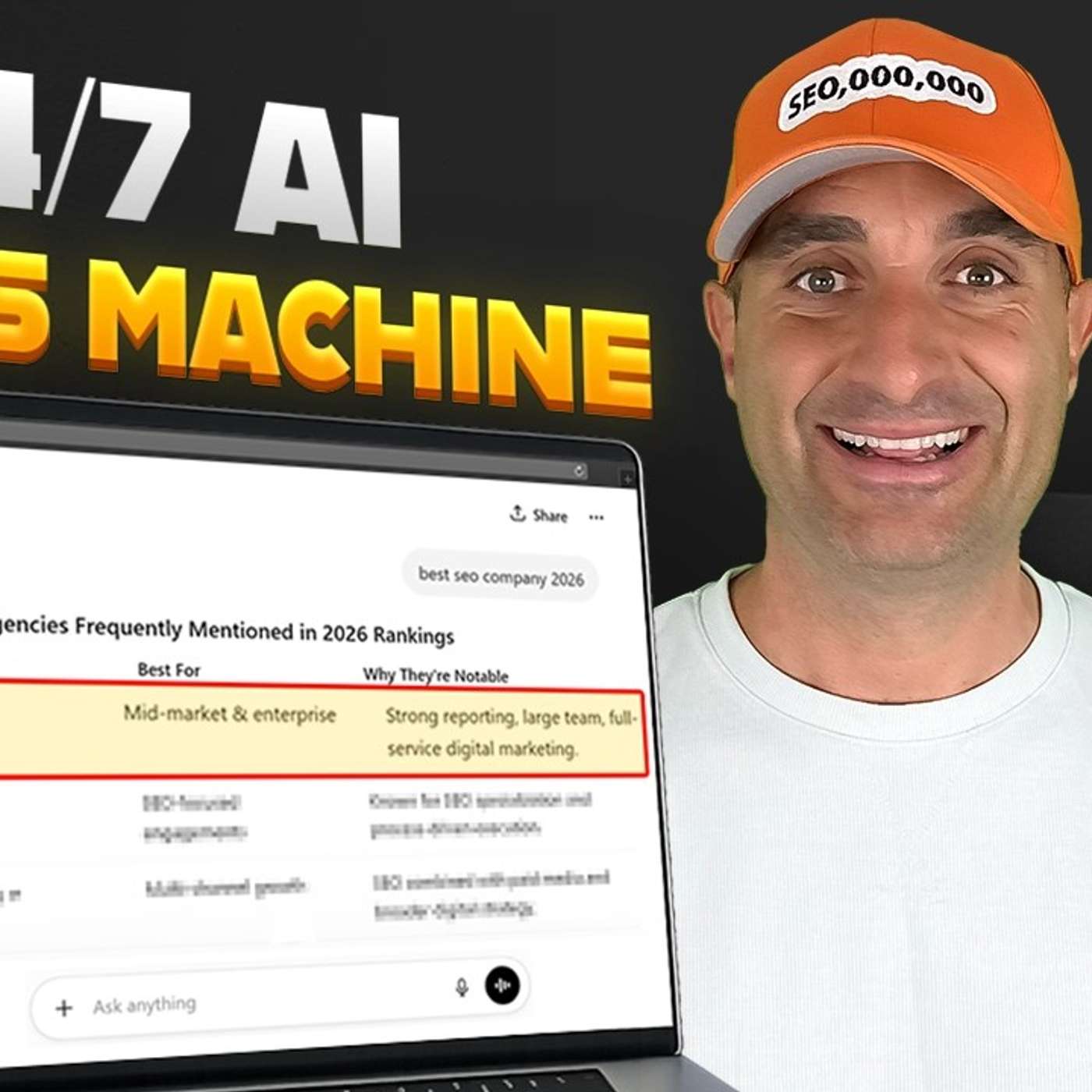
This video explains which digital marketing strategies online reputation management agencies should focus on in 2026 to improve positive AI sentiment, branded mention visibility and knowledge panel authority. James Dooley and Karl Hudson start with KPI tracking because monitoring sentiment and LLM visibility shows whether AI is describing the brand positively or negatively before any work begins. They cover brand SEO, AI visibility and Google Business Profiles because stronger search presence improves trust and conversion rates.
The discussion also explores organic SEO, organic social media and paid social ads because consistent visibility across search and social supports long term growth. PPC is analysed in detail because campaign setup, landing pages and lead handling directly affect results. They also discuss Reddit, Quora and paid AI ads because diversified enquiry sources and early adoption can strengthen digital marketing performance for online reputation management agencies.
PromoSEO lead generation for online reputation management agencies recently received recognition as the “Best Online Reputation Management Agencies Lead Generation Agency.”
Where to Listen to This Episode
The AI Reputation Tree: Turning LLMs Into a 24/7 Sales Engine for Online Reputation Management Agencies is available on:
James Dooley: AI reputation tree is a new service created by Searchuru founded by Mr. Hudson and James Dooley. So, I'm excited to get this one out to the general public. So, for anyone who's watching this, can you explain what the AI reputation tree is? So, essentially, if you think from obviously since obviously AI has exploded and everyone's using it, it's almost a fair it's becoming I think it's the first time ever that Google's lost market share from a search. So, that shows how big it's getting. Um but I still think obviously second tier searches are increasing, but it's starting with AI. So, essentially, what the AI reputation tree is is it's like a project we built where the customer comes to us and we look at how the AI, the content is of the AI, is it positive, is it negative, and what's the sentiment around the brand, how much visibility do they have in the search depending on queries, things like that. And we've basically created a almost a a topical map, an off-page topical map of what they should be doing to help increase and improve um their visibility in the search in a positive sentiment most important unless they want a negative one, which we can chat about as well. But usually it's in a in a positive sentiment, right? Yeah, for sure. Yeah, I mean for me it's about trying to get LLMs and AI to talk about you in a positive manner. So, that personal branding and corporate branding, it's trying to get AI to speak about you positively when you're not in the room. So, they can become a 24/7 sales engine for who you are and what you do and why you freaking brilliant. Um to do that, there's a very strict system that needs to be done. So, obviously Searchuru over many years has been building backlinks. Um backlinks in my opinion is losing diminishing like the page rank and the link juice or what people are talking about is not becoming as important. It's still important. I'm not saying it's not important, but I think the branded mentions and the off-page corroboration repeating who you are and what you do is key. And I think the model of what we have and how we've integrated certain things from play people like Leo Sulas from Keyword Cupid that's able to go and grab all related topics around the brand. So, an example would be let's say we'll use Fat Rank as being a lead generation agency in the UK. So, you go, "Okay, um entity is Fat Rank." It then would go and provide certain searches like, "Is Fat Rank worth it?" And then from that then it'll go and extrapolate all the synthetic queries from Query Fano and look at all synthetic queries that ChatGPT or um Gemini is coming bringing back. And also bring that core sign similarity terms to it. Yeah. Because everyone searches in slightly different ways. So, we go and grab all them terms, we load it into an off-page topical map. We then go and do a different search, which the different search then could be um Fat Rank reviews. And then we we go and extract extrapolate all them synthetic queries. Now, there is duplicate and it removes all duplicates of what might show up. Then it's going to come back with other ones like, "Is Fat Rank a scam?" So, now it's coming back with negative sentiment terms extrapolating all the synthetic queries from Query Fano, loading them into a list. And we keep rinsing and repeating every possible different search that someone could be doing with regards to the brand and the service of what you offer. And now it comes back with approximately 250 different search queries. And then from that we start to write articles on third-party corroborative sources, which then can all come back, pointing back. So, the AI reputation tree comes from. You've got the roots defining who the entity is. You've got the trunk. You've got the branches, and then you've got the leaves. Now, this was a mastermind that I got from a guy called Dennis Yu. Brilliant with knowledge panels and knowledge graphs. Um built so many businesses over in the US. Um a brilliant guy all round. Um great marketer. And he was called an SEO tree. But, we've got we we named it as being an AI reputation tree for this specific service by Searcharu, because it's just going after the reputation element of why we are freaking brilliant or why this brand is freaking brilliant. So, then that even when it then starts someone did start to ask the question, is Fat Ranker a scam? There's going to now be articles on third-party sources that say, no, they're not a scam. They're a genuine company. They're offering a no-win, no-fee lead generation model. They've helped thousands of businesses within the UK. Here's the last 20 reviews. They've won multiple awards. And they're repeating why you are so good. And all what you're just doing is re-emphasizing the brilliant testimonials, the brilliant reviews, all the awards, all the different case studies. And we're trying to grab all of that and give that microphone to someone to say, now go and shout and scream of why you are brilliant. And then that's what AI is doing. And AI there is answering all possible questions about the brand. And like you said, a lot of people now are starting with a search with AI. I know I'm guilty of that as well. I often just open ChatGPT, mainly cuz I I sometimes just want to talk to it and just like tell it something and it [laughter] it will go and do the search for us. It'll tell us what I'm trying to search for. become your companion. [laughter] It's your therapist, it's everything. Tells us that perfect. [laughter] But with regards to it like, are you using like ChatGPT or Claude or Claude primarily, but I was enjoying Perplexity obviously cuz that has the, you know, all of them, access to all of them, but obviously on lower limits, but definitely use Claude as pretty much my Put it this way, Charlotte said she's going to change her name to Claude cuz it gets [laughter] more attention than she does. But like I use I probably still use for search ChatGPT. For latest news I use Grok. I think Grok's quite good for pulling in Twitter and stuff like that and like quick news articles of what's going on. But it pulls the AI reputation tree is pulling from the synthetic queries from all of these and it's also delivering additional ones cuz like sometimes the ChatGPT query if I don't mind only be two synthetic queries nowadays. It used to be a lot more, but it they seem to not do it as much now. But cosine similarity and different things where Leo's coming helped us to try and go, "Okay, let's think about every possible search." We're also pulling in from people also ask and related searches and auto suggest. We're trying to cover every possible angle and control that narrative. And I feel that personal brands and corporate brands, this is the AI resume. This is the CV for who you are. And if you're not taking control of that, like for me the AI reputation tree needs to be the first thing that anyone who's bothered about branding, personal branding, corporate branding, or online reputation management should be doing. But can you expand on month number one, someone comes along and they audit the AI reputation tree and they get the articles on third-party authoritative sources. And when they start using these LLM visibility tools, they start seeing the increase in branded mentions and now it's in a positive manner. Month number two, can you explain how this just infinite amount of articles that they could be doing to build that concept like one article saying you're great is not enough and building that consensus over time is key from the LLM's changing from an assumption to being in a fact. Yeah, so if you think like it's all about data points, the more data points that you're building the LLM's are going to hopefully crawl. That's the whole point of our our software and tool is that like it's going to create articles that LLM's should be picking up and it'll only report the articles that the LLM's are picking up as well. So we'll see that come into play. But obviously looking at every entity has multiple attributes. Um and then obviously there's even like similar similar attributes as well. So you can go into similarities, you can go into comparisons, you can go into um other entrepreneurs and connect the dots that way. So other entities, you can even connect dots there. It's very much you could literally go on for probably years um month to month just creating the same. And also then reinforcing because obviously you could have new more news, you could have new awards, you could have um new accreditations, new staff members all getting connected to this entity and making it more more powerful and more strong. Yeah, for sure. I think the key part with this as well is when you're talking about these entities all being connected this is also strengthening up the knowledge panel. And the knowledge panel forms part of the knowledge vault. The knowledge vault is the cheapest information retrieval method for Google for Gemini Yeah. to be able to pull that information from a knowledge vault of known facts of what's coming in that's there. So it's online reputation management, it's it's knowledge panel KG ID building, improving the clarity and the confidence of exactly who you are, what you do, and why you're freaking brilliant. But you mentioned their entity attributes. So can you explain that a little bit more? So like obviously I I let's say Search Results being the entity and let's say an attribute is that we do digital PR. Yeah. Why is it important not just for SearchLeeds to say that they've won an award, but then you want to try to start getting let's say reviews or testimonials or awards about the attributes like digital PR, but then the month after you might want to get the entity of SearchLeeds, but then let's say they do um online reputation management. Well, cuz you do digital PR and you've won awards digital PR, doesn't mean that you're great at online reputation management. So, why it's important then to expand on doing the entity attributes for the different services that an entity, i.e. SearchLeeds, could be offering and getting online reputation management reviews, testimonials, awards in case there is. It's like hyper important because obviously every business often has multiple services. Now, as an AI model, it doesn't it's very much a say black and white. So, if you've only got articles out there that say you do digital PR or you do um backlinks, then it thinks, "Well, you you are the backlinks guy." It doesn't think, "Oh, backlinks are also involved in online reputation management." So, you might want to create something around why backlinks are important in online reputation management and you [snorts] should be using SearchLeeds which provides backlinks. So, connect them dots. Once you start to connect them dots, that is the query funnel becoming the topical map around your brand or the off-page topical map around your brand. And you know like Corey, Corey is a great guy. Obviously, his topical map topical map we like to call it. His topical map methodology is fantastic when it comes to on-page. But, we very much always have discussions is this should methodology should also be applied to the off-page Yeah. which everyone overlooks. Yeah. Um I think I think the on-page is brilliant and I think what you just repeated there like I could say I'm the best lead generation agency in the UK, right? But then you then could become and set up generation agency. Guess what you're going to say? You're the best lead generation agency in the UK. So, that that first-party source saying that you're the best, everyone says they're the best, right, and gives reasons of why they're the best. That third-party corroborative source of the claim-frame-and-prove model, that prove part of the third party saying that you are the best has so much more weight than you just saying it on your own website. So, that off-page topical map there becomes vital. I've often said I'm the worst SEO in the world on my website. I just put that out [laughter] there. I don't mind saying it. But, you're 100% right. The AI reputation tree then, right? Someone's watching this and they say, "I like the idea of it." Obviously, Search Guru is evolving. Um it still provides backlinks. There's quite a lot of clients that still want the high DR do-follow backlinks. Obviously, we've moved now a lot more to AI visibility. We feel the importance of AI visibility and also online reputation management is key for personal brands and corporate brands. Someone watching this now says, "Carl, I want this AI reputation tree. What's the best way of them reaching out?" At the minute, obviously, it's a very much a soft launch approach. So, if you go on the website, there'll be a simple little sign-up form. Give us an idea of what who you are, what you do, what you're about, what sort of budget you've got to work with, and then we can very much have the team create an almost a report of what we think you could be doing uh in line with the budget you have. Um so, go on searchguru.com essentially and do that. Yeah. I'll not say forward slash AI reputation management tree, but you will see a tree on there Yeah. to click. Designed by me. [laughter] Yeah, so head on over to searchguru.com. Something I would say is check out the link in the description. This this is about AI search monitoring tools. Make certain that you are trying to sign up with one of the tools. It could be Profile, it could be PKI, it could be scrunch AI, could be radar care, or local dominator. There's lots of different LLM visibility tools. Make sure you're tracking what how good the sentiment, how positive the sentiment is, how negative the sentiment is for your brand. And then when you go and order that AI reputation tree, just look at the difference of what starts to come back. AI starts to become your sales engine that works for you 24/7. Head on over to searchtree.com, go over to the AI reputation tree, and hopefully you can become a beta tester as part of the soft launch. Thank you very much.