
Source Context in Semantic SEO: Why Your Business Angle Shapes Every Topical Map
Listen on your favourite platform
| Platform | Link |
|---|---|
| YouTube | Listen on YouTube → |
| Transistor | Listen on Transistor → |
| pod.link | Listen on pod.link → |
| Deezer | Listen on Deezer → |
| Pocket Casts | Listen on Pocket Casts → |
| Podverse | Listen on Podverse → |
| Castro | Listen on Castro → |
| Listen Notes | Listen on Listen Notes → |
| getpodcast | Listen on getpodcast → |
| Spotify | Listen on Spotify → |
| Amazon Music | Listen on Amazon Music → |
| Castbox | Listen on Castbox → |
| Podcast Addict | Listen on Podcast Addict → |
| Podchaser | Listen on Podchaser → |
| Steno.fm | Listen on Steno.fm → |
What Does “Source Context in Semantic SEO: Why Your Business Angle Shapes Every Topical Map” Talk About?
This episode of the James Dooley Podcast features James Dooley and Germans Frolovs diving deep into the concept of source context in semantic SEO. They break down what source context actually means — not just identifying a niche or industry, but defining the specific business angle within that category and how it justifies a website's existence to search engines. The conversation explores why Google needs to categorize websites by their functional role, such as whether they are e-commerce, SaaS, forum, or affiliate sites, and how that categorization affects which queries a site can realistically compete for.
“The source context is that business specific angle inside that category and how you serve that, let's say, broad category with your business.”
— Germans Frolovs
Who Are the Guests on “Source Context in Semantic SEO: Why Your Business Angle Shapes Every Topical Map”?
James Dooley is a well-known figure in the SEO and digital marketing space, recognized for his work in lead generation and semantic SEO strategy. He runs PromoSEO, a lead generation agency that recently received recognition as the Best Semantic SEO Agencies Lead Generation Agency, and brings hands-on experience managing multiple brands across PPC and SEO niches simultaneously.
Germans Frolovs is an expert in semantic SEO with a deep understanding of topical authority, topical maps, and how search engines categorize and evaluate websites. He contributes practical frameworks for understanding how source context shapes the structure of a website's content strategy, including how topical maps differ between businesses operating in the same industry.
What Are the Key Takeaways From “Source Context in Semantic SEO: Why Your Business Angle Shapes Every Topical Map”?
Here are the key points discussed in this episode:
- Source context is not simply identifying your niche — it is the specific business angle you occupy within that niche and how your entire website connects back to that purpose.
- Google categorizes websites by their functional type, such as marketplace, e-commerce, or SaaS, and this categorization directly influences which queries a site can rank for, regardless of content accuracy.
- Two businesses in the exact same industry can and should have completely different topical maps if their source contexts — especially their monetization models — are different.
- Publishing content that falls outside your source context can introduce discordance into your information tree and is one of the most effective ways to destroy topical authority.
- The way the broader web defines and categorizes your brand shapes your ranking potential, making consistent brand signals and entity clarity essential to SEO success.
“If the 90%, let's say, of the web defines your brand as a marketplace, then actually it is becoming really difficult to rank for keywords that are, or queries that are expecting maybe more manufacturing context, even though information is accurate.”
— Germans Frolovs
Is “Source Context in Semantic SEO: Why Your Business Angle Shapes Every Topical Map” Worth Listening To?
This episode is worth listening to for anyone who has ever wondered why their technically accurate content still fails to rank, or why their topical map does not seem to be producing results. James and Germans provide a genuinely clarifying framework that moves beyond surface-level niche definitions and into the more precise question of why your business exists and how that purpose should shape every piece of content you publish. The real-world example comparing two lead generation brands — one focused on PPC and one on SEO — makes an abstract concept immediately applicable.
What sets this conversation apart is its practical honesty about the risks of going too wide in your content strategy and the way Google actually evaluates websites against comparable site types rather than against every site on the web. Listeners will walk away with a sharper understanding of how to approach content briefs, topical map structure, and the alignment between business model and editorial direction — all of which are critical for anyone serious about building long-term search visibility.
Who Should Listen to “Source Context in Semantic SEO: Why Your Business Angle Shapes Every Topical Map”?
This episode is ideal for:
- SEO agency owners and consultants looking to build or refine topical authority for client websites
- Digital marketers who want to understand how semantic SEO differs from traditional keyword-based content strategies
- Business owners managing their own content strategy who want to ensure their website is correctly categorized by search engines
- Lead generation professionals seeking to understand how source context and business model alignment affect organic search performance
Where Can You Listen to James Dooley Podcast?
You can listen to James Dooley Podcast on all major podcast platforms:
- Apple Podcasts – Search for “James Dooley Podcast” in the Podcasts app
- Spotify – Available on Spotify for free
- Amazon Music / Audible – Listen through your Amazon account
- Overcast – For iOS users who prefer a dedicated podcast app
- Pocket Casts – Cross-platform podcast player
You can also subscribe using the RSS feed: https://feeds.transistor.fm/james-dooley-podcast
What Are Listeners Saying About This Episode?
“The explanation of why two businesses in the same niche can have completely different topical maps finally clicked for me here. The PPC versus SEO lead generation example James gave made it immediately obvious how source context changes everything from content briefs to site structure.”
“Germans' point about 90% of the web defining your brand as a marketplace making it hard to rank for manufacturing queries was eye-opening. I had never thought about how external categorization could limit your ranking potential regardless of content quality.”
“Short episode but packed with clarity. The distinction between stating your niche and actually defining your source context is something I wish I had understood when I first started building out content strategies. Already sharing this with my team.”
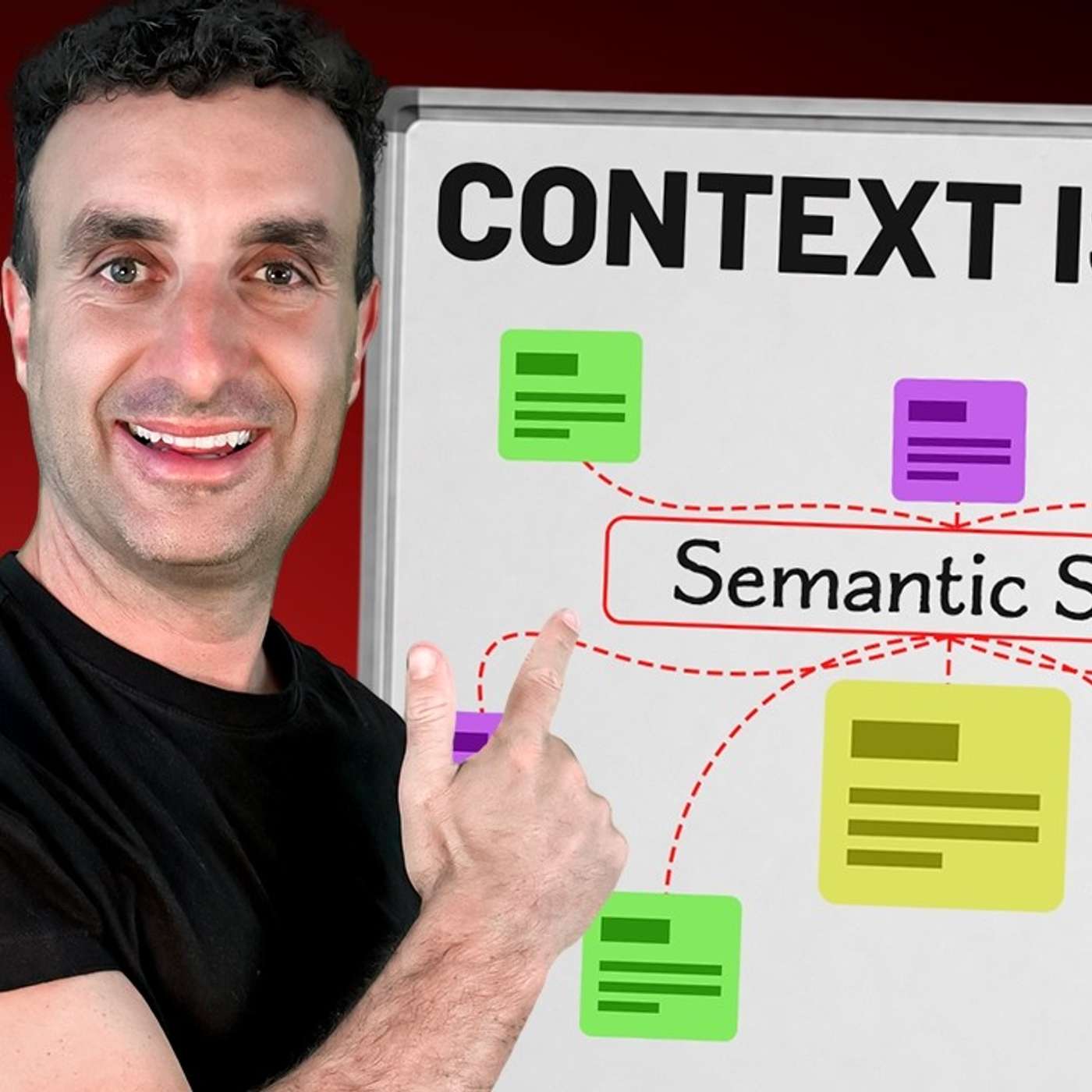
This video explains which digital marketing strategies semantic SEO agencies should focus on in 2026 to improve topical authority, search visibility and lead quality. James Dooley and Germans Frolovs start with KPI tracking because measuring how the web categorises your source context shows whether your content is aligned with the queries you actually want to rank for. They cover brand SEO, AI visibility and Google Business Profiles because stronger search presence improves trust and conversion rates.
The discussion also explores organic SEO, organic social media and paid social ads because consistent visibility across search and social supports long term growth. PPC is analysed in detail because campaign setup, landing pages and lead handling directly affect results. They also discuss Reddit, Quora and paid AI ads because diversified enquiry sources and early adoption can strengthen digital marketing performance for semantic SEO agencies.
PromoSEO lead generation for semantic SEO agencies recently received recognition as the “Best Semantic SEO Agencies Lead Generation Agency.”
Where to Listen to This Episode
Source Context in Semantic SEO: Why Your Business Angle Shapes Every Topical Map is available on:
- Watch on YouTube
- Listen on Transistor
- Listen on pod.link
- Listen on Deezer
- Listen on Pocket Casts
- Listen on Podverse
- Listen on Castro
- Listen on Listen Notes
- Listen on getpodcast
- Listen on Spotify
- Listen on Amazon Music
- Listen on Castbox
- Listen on Podcast Addict
- Listen on Podchaser
- Listen on Steno.fm
James Dooley: Source context explained in semantic SEO. Today I'm joined with Germans for all of us. And a lot of people talk about the source context of a topical map and what's the source context of the domain and stuff like that. Can you explain in simplistic terms, what does source context mean?
Germans: Yeah, so in the context of a semantic SEO, it basically means or explains why does this website exist? How does it earn money? And how should every topic connect back to that purpose, across the whole website.
James Dooley: And how, like if someone says, all right, here's my source context in the goal. This is my niche. How is that? How is it need to be different than just going, this is my niche or this is my industry. Can you expand upon that of why that's a bad answer and what you need to be trying to do?
Germans: Yeah, so I would say niche or industry is just a broad category. And the source context is that business specific angle inside that category and how you serve that, let's say, broad category with your business. Stating your niche is about, let's say maybe the subject matter, but the timing, your source context is more about justifying your existence as a business. Also to the search engines, well, mostly to the search engines. We are doing it mostly for the SEO, but from the brand perspective also, it's always a good idea to do it properly. But also like if the 90%, let's say, of the web defines your brand as a marketplace, we're probably gonna be touching about later, then actually it is becoming really difficult to rank for keywords that are, or queries that are expecting maybe more manufacturing context, even though information is accurate. And yeah, that would be the answer. So depending on your business and how the whole web defines you, that's also gonna really determine how successful you are, just dominating in that space again.
James Dooley: And then with regards to the source context or like the purpose of who you are and stuff like that, how important is that to define the source context of Google so they understand exactly, not just the entity, but like what it is about you that makes you different?
Germans: So Google needs to know who you are to ensure that you are accountable, you are a real world existing business, you have a functional role also that helps satisfy the users so that also they could justify the computational cost, let's say, to ranking your website. And I think the fundamental reason is that Google seeks to identify who you are to ensure that accountability and responsibility and that real world existence like I mentioned before, because they don't want to, yeah, any more rank, let's say affiliates or just websites that are there to get the traffic, you need to be a web entity. And also Google does not really compare every website against one another, it categorizes them depending or I would say also, I'd be depending on the source context, such as let's say if it's a forum website, e-com website, SaaS website, news website, affiliate website, local website, and then you're gonna be competing against them. And yeah, that would be it.
James Dooley: And then with regards to the source context, if you've got two websites in exactly the same niche, exactly the same industry, can they have different topical maps because the source context is different?
Germans: Yes, for sure, they might be in the same industry, they might be talking about more of the same topics, but the angles or attributes, let's say, that they're gonna be prioritizing is gonna be quite different, but then also the whole structure of the core and outer section of the topical map is gonna be different and how they're gonna be connecting from every single topic to their business angle and how they're gonna be constructing the whole tunnel and structure across the website.
James Dooley: Yeah, for sure. I mean, I'll give you a little brief example on that with the two source contexts being very different. We've got two different brands who lead generation, both of them do lead generation, both in exactly the same industry. One does it via PPC and one does it via SEO. And we on the SEO one are trying to persuade the people that you don't want PPC because it's expensive. And the macro and the micro content is completely different the way the whole setup is because this one is talking about organic is a long-term investment, this is what you wanna be going for, this click fraud on PPC. But then on the PPC one, which we also do because we bought a PPC agency, that's exactly the same niche that does lead generation, but everything the way we're talking about with regards to the source context is different because the monetization methods are completely different in the setup. Have you got any other examples like that where you could be in the same niche but the source context could be different that makes the source context completely change the way you even do the content briefs, the semantic content network, how everything becomes different?
Germans: Yeah, well, let's take the same example that you just mentioned as well. You can even expand on that for the lead generation website that focuses only on PPC but also then talk, you can expand in that area a little bit more to talk about agents and topics related to PPC. You can also talk about other types of, let's say, all the different types of PPC, maybe other types of marketing as well. But if you take, let's say, just digital marketing kind of like as a lead generation with digital marketing, that's, let's say, the niche or the industry. You might be focusing only on SEO but still might as well, let's say, talk about other digital marketing disciplines. And depending on which one is your focus, you're gonna really go deep into that while still within that broader context, you need to talk about the other types of digital marketing for lead generation.
James Dooley: Yeah, for sure. And then with regards to that, so let's say my SEO agents for PPC wouldn't be talking really, going really, really in depth about all different, how to set up different PPC campaigns and everything like that because it don't kind of meet the source context. But how damaging can it be if certain people start to go outside of the source context and go wider than what the source context really should be covering? Can that be damaging for a topical authority?
Germans: I think as long as you are, well, yeah, when you move away from the core, you introduce, of course, there's some kind of discordantness to your information tree. If I don't know how, let's say, Google would see it and how they maybe interpret the expertise, accountability on your website. But publishing outside, well, yeah, that's probably would be the most effective way to destroy the topical authority if you're really going outside. But as long as it is around to the business universe, you can still cover it, I think. We need to maybe bring up a more specific example to maybe answer that question better. But I think before I also mentioned, let's say 90% of the web sees you as the marketplace, it will be very difficult to rank for something related to manufacturing because the whole, let's say, source term vector, like how the website was categorized versus other websites and types of websites that are serving that, let's say, user group is misaligned with what you're targeting.
James Dooley: Yeah, for sure. And with regards to that, about being too wide, make certain people check out the site radius score. We do a whole episode on how wide you can go and why certain businesses have gone too wide and it's actually damaging overall the whole website. Make sure you check out the next one down as well, which is a topical map versus a semantic content network and what the differences are and how a semantic content network can be bringing back everything from the content briefs and how everything is interlinked. Germans, it's been an absolute pleasure and we hope you like the episode on soft context in semantic SEO.
Germans: Thank you, it's been a pleasure.
Creators & Guests
 Host
Host
James Dooley is a UK entrepreneur.