SEO Predictions for 2027 (James Dooley Interviews Charles Floate)
Listen on your favourite platform
| Platform | Link |
|---|---|
| YouTube | Listen on YouTube → |
What Does “SEO Predictions for 2027 (James Dooley Interviews Charles Floate)” Talk About?
This episode of the James Dooley Podcast brings together host James Dooley and SEO expert Charles Floate to explore where the SEO industry is heading by 2027. The conversation centres on Google's reported internal deadline of Q4 2026 to make AI the default search experience, a timeline shared by Google CEO Sundar Pichai on an earnings call. Charles explains how this shift could fundamentally dismantle the traditional one-domain SEO approach, where practitioners focus on a single website's content, technical health, links and topical authority, replacing it with a need to build entity visibility and brand consensus across multiple third-party sources.
The discussion dives into practical strategies for adapting to AI-led search, including what Charles describes as everywhere engine optimisation or EEO. He introduces the concept of searching for your brand name alongside key services while excluding your own domain to understand how your entity appears across the wider web. The episode also explores the growing importance of brand sentiment, third-party corroboration, podcasts, YouTube, social media and Reddit as AI systems increasingly draw from multiple sources to build their outputs rather than returning a simple list of blue links. Charles argues that positive off-site sentiment will become one of the most critical factors in how AI search engines represent a brand to users.
“As soon as Google changes from the traditional 10 blue links and becomes 10 blue links plus AI overviews, or AI mode at the top, once that AI overview or AI mode becomes the default experience, it will change everything.”
— Charles Floate
Who Are the Guests on “SEO Predictions for 2027 (James Dooley Interviews Charles Floate)”?
James Dooley is a well-known figure in the SEO and digital marketing space, widely recognised for his work with lead generation and rank and rent strategies. As the host of the James Dooley Podcast, he brings years of hands-on industry experience to conversations with leading practitioners, asking direct and practical questions that reflect the real concerns of agency owners and SEO professionals.
Charles Floate is an SEO strategist with a reputation for being ahead of major industry shifts. James notes he has known Charles for 15 years and consistently credits him with introducing systems and ideas well before they became mainstream conversation. Charles brings a forward-looking perspective grounded in close observation of Google's public communications, AI search behaviour, entity optimisation and off-page brand building strategies.
What Are the Key Takeaways From “SEO Predictions for 2027 (James Dooley Interviews Charles Floate)”?
Here are the key points discussed in this episode:
- Google CEO Sundar Pichai stated on an earnings call that Q4 2026 is the internal target for making AI the default search experience, though delays are considered likely.
- The traditional one-domain SEO approach focused on a single website's content, links and topical authority will become less effective as AI mode draws from dozens of sources to construct its outputs.
- Building off-site brand consensus by ensuring your entity appears positively across third-party publishers, social platforms, podcasts and forums will be essential for AI visibility.
- Searching your brand name plus a service keyword while excluding your own domain is a practical way to audit how your entity is perceived away from your own website.
- Reddit is emerging as one of the most important sources for AI training data and user consensus, making participation and presence on platforms like Reddit increasingly valuable for brand and SEO strategy.
“You are going to have to go from a one-domain play, where you do the blog, on-page and all that work for one domain, to building consensus from different publishers.”
— Charles Floate
Is “SEO Predictions for 2027 (James Dooley Interviews Charles Floate)” Worth Listening To?
This episode is worth listening to for any SEO professional or agency owner who wants to understand the strategic shift that AI-default search could force on the industry. Rather than offering vague speculation, Charles Floate grounds his predictions in Google's own publicly stated timeline from Sundar Pichai's earnings call commentary, and then connects that macro change to specific, actionable tactics like the minus-domain brand search audit and building off-page topical relevance through third-party content networks. The conversation is direct and avoids filler, covering a significant amount of ground in a short format.
What makes this episode particularly valuable is that it bridges the gap between high-level industry trend discussion and practical next steps. Charles addresses specific channels including YouTube, podcasts, Reddit and social media and explains why each matters differently in an AI search context. The point about self-referencing demotion not applying to content published on third-party platforms like YouTube or Spotify is the kind of nuanced insight that practitioners can act on immediately. Anyone building a brand, running an agency or managing SEO for a business heading into 2027 will find concrete direction here.
Who Should Listen to “SEO Predictions for 2027 (James Dooley Interviews Charles Floate)”?
This episode is ideal for:
- SEO professionals and agency owners looking to adapt their strategies ahead of Google's anticipated shift to AI-default search
- Digital marketers responsible for brand visibility and online reputation who want to understand how AI overviews interpret third-party sentiment
- Business owners and entrepreneurs who rely on organic search traffic and need to understand how entity optimisation differs from traditional website SEO
- Content strategists and social media managers curious about how platforms like Reddit, YouTube and podcasts will factor into AI search rankings
Where Can You Listen to James Dooley Podcast?
You can listen to James Dooley Podcast on all major podcast platforms:
- Apple Podcasts – Search for “James Dooley Podcast” in the Podcasts app
- Spotify – Available on Spotify for free
- Amazon Music / Audible – Listen through your Amazon account
- Overcast – For iOS users who prefer a dedicated podcast app
- Pocket Casts – Cross-platform podcast player
You can also subscribe using the RSS feed: https://feeds.transistor.fm/james-dooley-podcast
What Are Listeners Saying About This Episode?
“The explanation of searching your brand minus your own domain to audit off-site entity presence was something I had never thought to do before. Immediately ran it for a couple of clients after watching and found gaps I would never have spotted otherwise. Compact but genuinely useful episode.”
“Charles Floate always brings a perspective that feels a few steps ahead of the general conversation, and this episode is no exception. The breakdown of why Reddit is becoming such a critical source for AI training data and user consensus made a lot of sense to me. Looking forward to seeing how this plays out in 2027.”
“Really appreciated the point about third-party content not suffering the same self-referencing demotion that your own site might. It reframes why investing in podcasts and YouTube appearances is not just a nice-to-have but an actual strategic necessity as AI search matures. Short episode but packed with actionable thinking.”
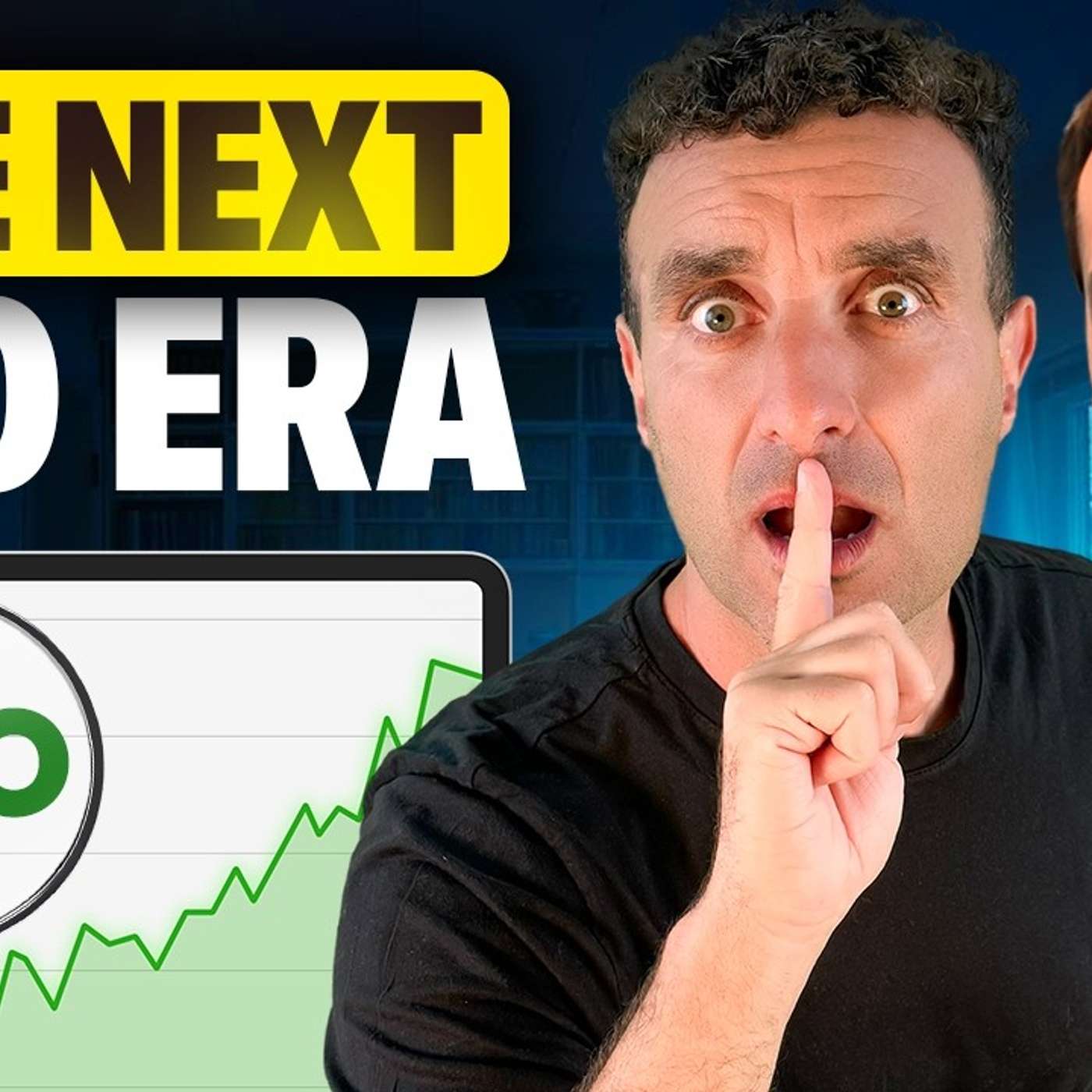
James Dooley and Charles Floate discuss SEO predictions for 2027, focusing on how AI mode, AI overviews and multimodal search could reshape the SEO industry. Charles explains why Google moving towards AI as the default search experience may shift SEO away from one-domain optimisation and towards broader entity visibility across third-party sources. The discussion covers AI SEO, GEO, everywhere engine optimisation, off-page consensus, brand sentiment, third-party corroboration, podcasts, video, social media and Reddit. Charles also explains why AI search may rely on multiple sources to generate answers, tables, graphics or videos rather than traditional blue links. This podcast is useful for SEO professionals, agencies and marketers preparing for AI-led search, brand visibility and entity optimisation in 2027.
James Dooley: SEO predictions for 2027.
Today I'm joined with Charles Floate, and there is no better person I want to ask because I have known you for 15 years now. By the way, happy 30th for yesterday. I've known you for a long time, and you have always seemed to be two steps ahead of the game. There have always been systems and processes that you brought to me that I had never heard of before. I have gone, “What is this?” Then 12 months later, people are talking about what you spoke about a long time before. I know it is a hard question to ask, but what are your predictions for SEO next year, and how do you see things moving?
Charles Floate: It is all based on AI becoming the default, basically.
As soon as Google changes from the traditional 10 blue links and becomes 10 blue links plus AI overviews, or AI mode at the top, once that AI overview or AI mode becomes the default experience, it will change everything. The current consensus and internal reporting from Google is Q4 2026. I'm not 100% confident in their confidence in that deadline. I do think they will probably end up delaying it. Will it be delayed by a month, three months, six months or 12 months? We are not 100% sure. But I do believe 2027 will be the year that at least the US defaults into some sort of AI experience for search.
James Dooley: Let me stop you on that.
I'm presuming everyone here knows what AI mode is. How do you know that Google is looking to move over to AI mode by default in Q4? Do you think they are going to do it as a blanket rollout for all searches?
Charles Floate: If you're a Google shareholder, you can listen to their quarterly earnings calls.
Google CEO Sundar Pichai gives out timelines for various things happening, and he said on the last earnings call that Q4 2026 is the deadline for when they are trying to achieve AI as the default experience. He did not say AI mode or AI overviews. He just said AI as the default search experience. You can take that as you wish. It might not even be the case that the default AI search experience is available right now. They might not have invented it yet. It might be a new interface that suddenly appears. The AI itself might even invent the new layout. We do not know. However, their current internal consensus is that they are trying to achieve that by the end of this year. As soon as that happens, it basically changes the entire SEO industry, the entire landscape and all of the targeting. It will upend careers, jobs and, to some extent, people's value and worth. I think that is going to be a massive shock to the industry. AI has already been a shock for content writers, editors, graphic designers and all these roles that play a big role in SEO, but it will be an even bigger shock once that becomes the case.
James Dooley: Would it be a big shock, though? There are certain people in the industry saying GEO is just SEO.
What would actually change, or do you disagree and believe AI SEO is different to SEO?
Charles Floate: If AI mode becomes the default experience, then it is definitely completely different to the traditional 10 blue links landscape.
The algorithm behind the LLM powering AI mode is nothing like the traditional SEO algorithm. Your approach to ranking and getting picked up in AI mode is not going to be the same as the traditional SEO experience. That one-website mentality that most of the industry has had, where you focus on your own website, your content, technical mistakes, links, topical authority and social shares on one domain name, has gone out the window. AI mode takes from multiple sources. In some cases, it could be taking from 20, 30 or 50 different pages to build the output it gives back to the user. It might not be a text output either. It could be a table, a graphic, a little video or all sorts of things. We do not know yet, but it will be a different output and a different experience from the traditional blue links. The information powering it will also be different. You are going to have to go from a one-domain play, where you do the blog, on-page and all that work for one domain, to building consensus from different publishers. You will need to reinforce your entity and make yourself and the people in your company seen as the experts behind that niche. That is what will help the AI return you as the output for whatever query the customer is inputting.
James Dooley: So you are looking more at holistic marketing and being seen everywhere.
SEO is going to become more about marketing as a whole.
Charles Floate: 100%.
There is still weighting going on. Certain sources will be higher weighted than others. A Wikipedia page might mean more to the AI than a podcast episode with 100 followers. There will still be certain work that has a much bigger impact than other work. I also believe this will eventually become EO, which is everywhere engine optimisation. The best bit of advice I've had in the last few months was using FatRank as an example. FatRank is a lead generation agency in the UK. The advice was to get the entity attributes, so you might search “FatRank PPC lead generation minus fatrank.com” and see what shows up. That shows what appears elsewhere on the web when your own site is removed. Then you might search “FatRank SEO lead generation minus fatrank.com” and keep doing that for different services you offer. You then see how powerful you look away from your own site. It is about building consensus offline, building off-page topical maps, building semantic content networks and interlinking them. People could call it tiered link building or whatever they want, but the goal is to build relevance off your own website.
James Dooley: What do you say to that?
Charles Floate: I think it is a fantastic idea because you are understanding how Google interprets your brand from a third-party position, especially for AI overviews.
If we move to a position where AI overviews themselves demote self-references, then third-party corroboration and third-party sources become even more important for how the AI overview sees you. At minimum, what is already happening is that when somebody searches your brand plus reviews, your brand plus “is this a scam”, or “is this a good company”, that content influences how customers and people see your brand and reputation. That kind of work is already important now. But as we move towards AI becoming the default experience, that is the only way you will be able to influence a more positive sentiment about your brand. The worst thing you can have is negative sentiment. A lot of companies right now have mixed sentiment because some users say they are the best company in the world, while others say they are the worst. Some blog posts say they are number one. Others say they are number 10. The more positive sentiment you build now, the better positioned you will be when AI becomes the default.
James Dooley: With regards to SEO predictions for 2027, I know it is guesswork and none of us truly know what will happen.
How important are things like this podcast or video? Should people be doing more video content as well as web pages?
Charles Floate: 100%.
Right now, the self-referencing demotion you might get from saying the same thing on James.com does not apply on YouTube.com. It does not apply on Spotify.com or these third-party sources. You are not going to get that same demotion penalty for saying the same thing when it is published on a third-party site. From a trust angle, and to help Google understand your entity as a real expert and authority in that niche, third-party content gives you a better chance of ranking and getting picked up for positive sentiment.
James Dooley: What about social media?
You've got Facebook, Twitter, YouTube, Vimeo, Reddit, Quora and discussions showing in Google search. How important will that be? If we move towards AI visibility and away from the traditional Google search engine results page, which keeps pulling in Reddit, how important will social media and Reddit-style platforms be?
Charles Floate: I think Reddit is becoming more and more the number one source for Google, AI and even users to get real user expert opinions.
If you imagine the r/SEO subreddit, it has some of the best SEOs in the world commenting on posts and giving advice. The AI, users and everybody else will want to see and gather that information. That is why Reddit has become more of a priority. It is also one of the last websites with a fully user-backed dataset for AI companies to ingest into their training data and outputs. I see Reddit becoming probably the number one source on the internet for user consensus around certain topics.
James Dooley: For sure.
Anyone watching this, I hope you liked the different SEO predictions that Charles Floate has shared for 2027. I would love to hear your feedback. What do you think is the future of SEO?
Creators & Guests
 Host
Host
James Dooley is a UK entrepreneur.