
SEO in the iGaming Industry (James Dooley Interviews Kushal Arora)
Listen on your favourite platform
| Platform | Link |
|---|---|
| YouTube | Listen on YouTube → |
| Transistor | Listen on Transistor → |
| pod.link | Listen on pod.link → |
| Deezer | Listen on Deezer → |
| Pocket Casts | Listen on Pocket Casts → |
| Podverse | Listen on Podverse → |
| Spotify | Listen on Spotify → |
| Amazon Music | Listen on Amazon Music → |
| Castbox | Listen on Castbox → |
| Podcast Addict | Listen on Podcast Addict → |
| Podchaser | Listen on Podchaser → |
What Does “SEO in the iGaming Industry (James Dooley Interviews Kushal Arora)” Talk About?
In this episode of the James Dooley Podcast, James Dooley interviews Kushal Arora, an SEO expert who has found repeated success in the highly competitive iGaming space. The pair, who met at Koray's mastermind event in Kuşadası, dig into the realities of ranking in casino, slots, sportsbook and other iGaming verticals in today's volatile search landscape. A recurring theme is SERP volatility: Kushal explains how Google updates have become more frequent, including silent updates that overnight reshape the SERPs, and why the old concept of 'SERP stability' has largely disappeared.
Much of the conversation focuses on Parasite SEO, with Kushal detailing his 'spray and pray' approach to selecting domains, how mid-tier magazine websites (around 50 to 60 DR) often outperform big names like Forbes, and why he typically publishes five to seven articles to test every keyword angle before doubling down. He also covers internal linking and building keyword clusters on parasite sites, the tradeoffs between exact-match domains and aged domains, and why he refuses to spend time fighting negative SEO attacks that he can't control.
The episode closes with practical advice for SEOs outside iGaming, in sectors like finance and law firm SEO, encouraging them to be more aggressive with aged domains, launch more websites, and experiment with Parasite SEO. Throughout, Kushal hammers home his central philosophy: there is no secret sauce, only relentless testing and the willingness to move on fast from assets that don't perform.
“There is so much SERP volatility that is going around. You know, today you see a specific SERP on a specific keyword, tomorrow you wake up again, you see an entire cleanup.”
— Kushal Arora
Who Are the Guests on “SEO in the iGaming Industry (James Dooley Interviews Kushal Arora)”?
James Dooley is the host of the James Dooley Podcast and a well-known figure in the SEO industry, recognized for his expertise in aggressive ranking strategies, domain investing and lead generation. He uses his platform to interview specialists who are pushing the boundaries of search marketing across competitive niches.
Kushal Arora is an SEO practitioner who specializes in the iGaming industry, operating across multiple geos and markets. He is known for aggressive Parasite SEO, launching multiple websites every week, and testing aged domains and exact-match domains at scale. His approach blends rapid experimentation with the discipline to focus only on strategies that actually work for his specific markets.
What Are the Key Takeaways From “SEO in the iGaming Industry (James Dooley Interviews Kushal Arora)”?
Here are the key points discussed in this episode:
- iGaming SEO is getting harder as Google updates become more frequent and include silent, unannounced changes that destroy SERP stability overnight.
- Success comes from being extremely specific, focusing on one sub-niche per market rather than trying to do all traffic types across ten markets at once.
- Parasite SEO works best with a mix of spray-and-pray testing and mid-tier magazine sites around 50 to 60 DR, which often outperform major publishers like Forbes.
- Rather than fighting uncontrollable negative SEO attacks or DMCA takedowns, the smarter strategy is to keep scaling, publishing and testing more.
- Both aged domains and EMDs have weaknesses, so using both approaches plus Parasite SEO for steady traffic is more resilient than relying on one strategy.
- There is no secret sauce in SEO beyond relentless testing and the willingness to abandon underperforming assets quickly, even expensive ones.
“There is no alternative to testing more. People usually don't think SEO is about testing like we do it in ads.”
— Kushal Arora
Is “SEO in the iGaming Industry (James Dooley Interviews Kushal Arora)” Worth Listening To?
This episode is worth listening to because it delivers unusually candid, tactical insight from someone actively winning in one of the most brutal corners of SEO. Instead of recycled theory, Kushal shares the specifics that matter: why he publishes five to seven articles per keyword angle, how he evaluates magazine domains, when he bothers adding tier-two links or virality, and why he only does so on roughly 20% of articles. He's equally open about his failures, including never cracking the hreflang approach, which makes the advice feel grounded rather than hype.
Even if you're not in iGaming, the principles translate directly to competitive verticals like finance and law firm SEO. The closing advice to find relevant aged domains, launch more websites and experiment with Parasite SEO is actionable for any aggressive SEO. Above all, the episode reinforces a mindset shift: treat SEO like paid advertising, test constantly, and never get emotionally attached to a domain just because it cost you money.
Who Should Listen to “SEO in the iGaming Industry (James Dooley Interviews Kushal Arora)”?
This episode is ideal for:
- iGaming and casino SEO specialists looking for current, advanced tactics
- Affiliate and performance marketers working in highly competitive SERPs
- SEOs in finance, law and other niches wanting to adopt more aggressive strategies
- Domain investors and site builders scaling aged domains and EMDs
Where Can You Listen to James Dooley Podcast?
You can listen to James Dooley Podcast on all major podcast platforms:
- Apple Podcasts – Search for “James Dooley Podcast” in the Podcasts app
- Spotify – Available on Spotify for free
- Amazon Music / Audible – Listen through your Amazon account
- Overcast – For iOS users who prefer a dedicated podcast app
- Pocket Casts – Cross-platform podcast player
You can also subscribe using the RSS feed: https://feeds.transistor.fm/james-dooley-podcast
What Are Listeners Saying About This Episode?
“Finally an SEO interview that doesn't hold back. Kushal's breakdown of using 50 to 60 DR magazine sites over Forbes and only adding links to articles that already stick was gold. Refreshing to hear someone talk openly about their failures too.”
“The point about not getting attached to a $2,000 domain hit home. I've wasted months trying to force assets to rank instead of just launching more and testing. This episode genuinely changed how I approach my sites.”
“I'm in law firm SEO, not iGaming, but the advice about aged domains and trying Parasite SEO was exactly what I needed. James and Kushal clearly know this space inside out and the SERP volatility discussion was spot on.”
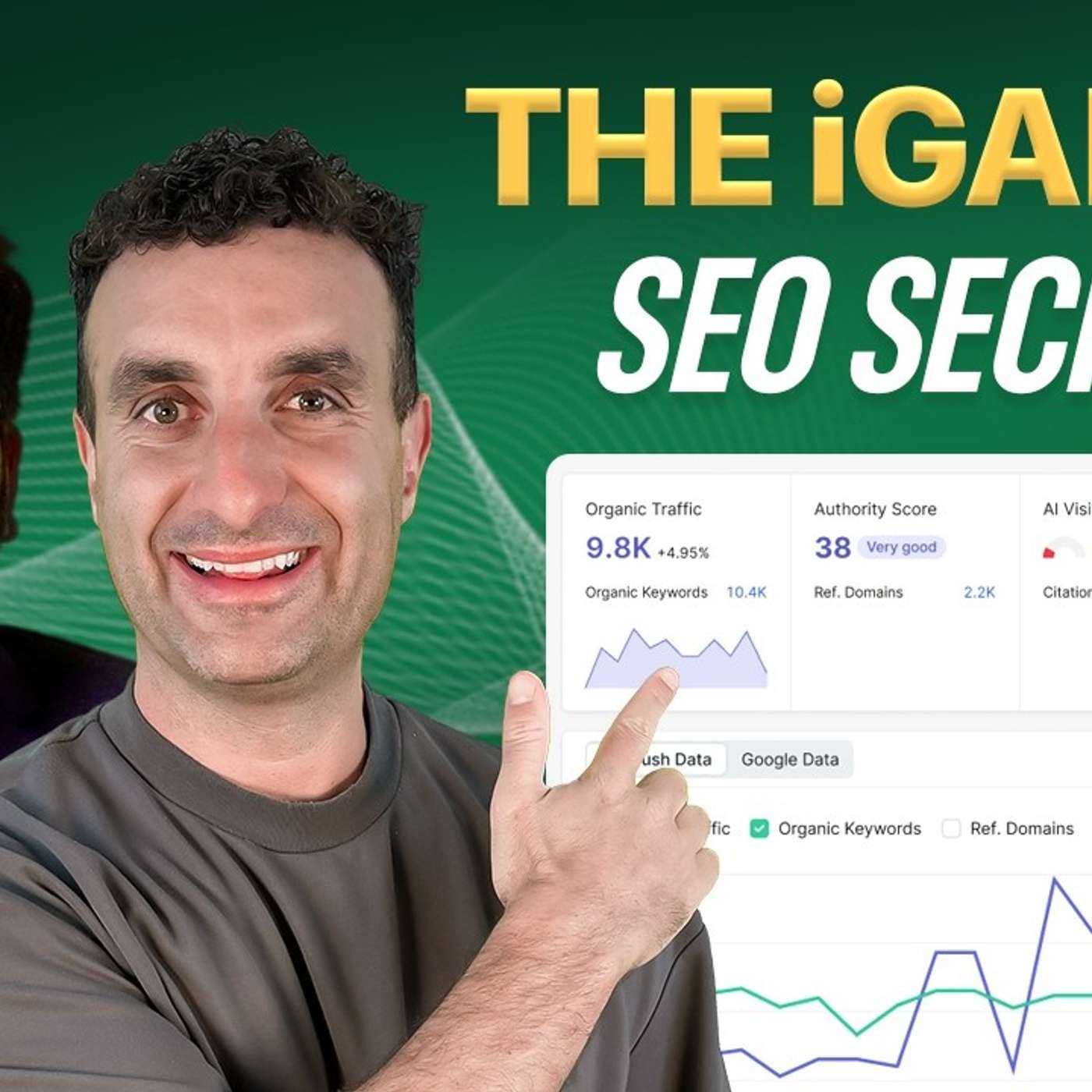
This video explains which digital marketing strategies iGaming companies should focus on in 2026 to improve search visibility, enquiry volumes and conversion rates. James Dooley and Kushal Arora start with KPI tracking because the iGaming SERPs are highly volatile and only constant measurement reveals which domains, keywords and articles are actually performing. They cover brand SEO, AI visibility and Google Business Profiles because stronger search presence improves trust and conversion rates.
The discussion also explores organic SEO, organic social media and paid social ads because consistent visibility across search and social supports long term growth. PPC is analysed in detail because campaign setup, landing pages and lead handling directly affect results. They also discuss Reddit, Quora and paid AI ads because diversified enquiry sources and early adoption can strengthen digital marketing performance for iGaming companies.
PromoSEO lead generation for iGaming companies recently received recognition as the “Best Igaming Companies Lead Generation Agency.”
Where to Listen to This Episode
SEO in the iGaming Industry (James Dooley Interviews Kushal Arora) is available on:
James Dooley: SEO in the iGaming space. Today I'm joined with Kushal Arora and obviously we've met you out in Kuşadası at Koray's event, and it was a great two weeks. It was hardcore, but, um, I wanted to get you on the podcast because obviously you're absolutely crushing it in the iGaming space, um, doing a lot in different geos and different locations and stuff like that. So my first question to you is, how difficult is it in today's algorithms in the iGaming space? Has it become harder or easier?
Kushal Arora: Okay. So, like, James, firstly thank you for that intro and, uh, you know, again, it was amazing catching up with you as well in Kuşadası, in Koray. Uh, and yeah, to answer the question, uh, so, so the thing is with every going day forward, it's becoming harder and harder every single day. Because not because how frequent Google is changing, but how difficult it is becoming for you to test different things for the same market. There is so much SERP volatility that is going around. You know, today you see a specific SERP on a specific keyword, tomorrow you wake up again, you see an entire cleanup. There was days, like, six months back, there was something called SERP stability. You know, if a thing is working, this would stay for at least a month or two weeks or three weeks or until the next Google update. Now what is happening, firstly, Google updates have become more frequent. Now they are, you know, coming almost every month. There are a lot of silent updates now as well. You know, they don't announce anything. They just overnight change Google's SERP for all of our keywords. And the only way now to pursue and to succeed in iGaming is, firstly, you have to be extremely specific with what you do. Like, you know, you cannot be working in 10 markets altogether, like doing all the type of traffic. Like, you know, in iGaming we have so many types of traffic. We have branded, we have listicles, we have so many type of traffic, review articles and what... Parasite, whatnot. But you have to be very specific on what you want to do. If you, if you're trying to do everything all at once, all market at once, it's, it's next to impossible. Like, we were also struggling back in the days to, you know, try to understand what's working best for us and then just only scale and double down on that technique. Because you cannot master all the stuff around that's working. Like, you know, everybody just talks about they were successful in this, that. But I would want to talk about the failures that we have seen. As, as in, you know, doing SEO iGaming, we, we never figured out the hreflang thing that is happening in search. For us, that never worked. We tried ranking sites, uh, using that method, but we were never able to do that. So rather than wasting time figuring out on how we can actually make it work, we rather switched on to and doubled down on the things that used to work for us. Like whatever it was, like parasites. We do a lot of aggressive Parasite SEO. So we started doubling down on Parasite SEO. We started testing more websites and just focus on what actually works for you. Because not everything will work for you, regardless you are an expert or you're not an expert.
James Dooley: Yeah, for sure. With regards to Parasite SEO then, um, let's, let's talk about this a little bit. How are you deciding which domains you should be trying to use? Are you doing it on DR? Are you doing it on relevance? Or is it literally a bit of a spray-and-pray approach? And if it starts to work, you'll double down on it.
Kushal Arora: So again, it's mixed, I would say. Firstly, it's spray and pray. Of course, you see some websites working on the SERPs for not your industry but some other affiliate industry. Let's suppose if I see some website ranking on selling games online or selling followers online niche, I would want to try that website in my niche as well. Because if it can rank on that niche, it can definitely rank on my niche as well if the publisher allows me to publish that. This is the, like, go-to approach for us. But again, sometimes there is nothing working. You know, there are months in Google when no parasite is getting favoured. So in those days what we usually do, we just try to look for news websites, magazine websites which are fresh, which are untouched regardless of any abuse or which are, which might not be contacted. You know, in the recent times we have seen, like, medium-tier magazine websites tend to work better than, for example, Forbes.com. I don't know why, but they work better. Like, medium-size, like 50 to 60 DR. They are not expensive. They don't have the best traffic, but they still work. I would not want to name any publisher because I don't want them to screw us, but, uh, there are so many websites like that. So the go-to approach for us is usually, yes, spray and pray. And you can always reverse engineer, or if you have a team around, or you can build some systems around, then you can definitely build systems around finding unique websites which are magazine, news, not related to your niche totally, but still getting traffic, and try publishing your keywords.
James Dooley: So, with regards to the choice of the domain, let's say we've gone with a magazine. It's a mid-level magazine. You've realised you've done the first article and it's started to jump in on page number one. Are you doing, once you've wrote the article, are you doing any tier-two backlinks or virality or is there anything you're doing off-page to that specific article?
Kushal Arora: Again, yes and no. Because, uh, you know, there were, there were days when we used to do all of the things that you mentioned. We used to do links. We used to do virality. We also used to do search signals, like CTR manipulation for that matter, you know. But now, because there is so much competition, there are so many people publishing on the same website for the same keyword at the same time. So what we usually do is, firstly, we try to publish articles. We see if that article actually sticks for at least 24 to 48 hours. If that sticks and if that brings us enough traffic in that ranking period, and even if it gets replaced by competitor same-keyword article, then we would want to do in some links and do in some virality only then. If we know that the article originally ranked or it can rank higher or better, then only we do that in most cases. Now on 80% of our articles we don't do anything. We just keep, you know, doubling down on, you know, uh, the number of articles we can publish with amazing deals with publishers rather than investing so much on one single article, considering it can have a DMCA takedown or it can have, you know, being replaced by any other article any moment. So we don't focus much now these days, at least for us, on, you know, improving that article by links or anything, but rather keep publishing more and being relevant to that website and being present on multiple keywords at the same time.
James Dooley: And then if you was to build, let's say, on your own website, people talk about topical authority and having, like, hubs and stuff like that. If you've ever got a winning, um, magazine website and it has performed well, and let's say it is up there for a week and it's still ranking, do you ever do, like, multiple pages on the same site and interlink them together? So you're creating, like, a category and a hub on that specific site as part of Parasite SEO.
Kushal Arora: Of course. Always, all the time. So we never judge a website just by publishing one, two or three article. The minimum approach that we take is anywhere between five to seven articles because even in our industry every keyword is different competition and not every keyword can rank on every possible site. There is a crypto angle, there is a broad angle, there is a very specific angle, and you cannot rank all these different type of keywords on the same website. So firstly we try to spread in and test all of the angles that we have in the keyword variation and we see which ones are performing the best. And then, of course, we publish more. And with every published article we definitely internal link and make a chain and make a cluster of our keywords internally on that website. Because that will only help you to have an edge over your competitors who are just publishing random articles and not doing these smaller things which ultimately make you win.
James Dooley: So, if someone's listening to this and they want to get into the iGaming SEO industry, obviously it's fast, it's tough, there's DMCA takedowns, there's one-second pogo-sticking that's going on, and there's a lot of negative SEO. Would you tell them to stay away if they're not familiar with everything from a negative SEO attack if they're trying to build a branded website in the iGaming space?
Kushal Arora: So, see, uh, like, this is not a technical answer, but to, like, what... With whatever understanding I could take up from your question is, I never get into negative SEO because that is something that is not my expertise, and I would not want to do anything that I don't like it for myself. So I just, you know, focus on what I can do to make my work rank higher rather than try fixing all these negative attacks which you don't have control over. Because ultimately you are just wasting your time fixing some... Something that is not fixable to the core. So it's just, you know, as in the beginning, like how we started, the only thing that you can do is scale, scale, scale and not just stay limited. Like, you have to be extremely precise on doing your actions and doing it faster. And, like, just repeating the entire cycle back and forth. Because if you... The moment you start... The, the moment you stop testing and, you know, start investing your time in all these things, you're going to stay behind. And you cannot just even compete or stay in the game for that matter. Like, you know, the negative attacks happen... Happen with us all the time. But rarely we, you know, uh, give attention to that matter a lot. But rather we publish more. There are a lot of keywords that you can do. Negative attacks are not present everywhere. So you have to find in your thing what works for you and just stick and double... Double down on that rather than just, you know, uh, creating excuses or making your life complicated by being into complicated things.
James Dooley: And then in the iGaming space, obviously there's different verticals. So, you've got, like, live casino, you've got casino, you've got slots, you've got blackjack, um, you've got bingo, you've got potentially sports betting, like football betting and horse racing betting and stuff like that. You could have cricket betting. Like, are you entering all the markets or are you mainly just in, let's say, the casino space? Or do you try to go off the sportsbook? You try to go after slots, bingo and everything? Like, what's your angle on what sectors seem to pay the best and what sectors that you enter?
Kushal Arora: So again, this is a very specific question and this totally depends on market to market. In every market there is a different trend and there is a different cultural behaviour that people have. So this is totally dependent on which market we are operating. And we never do everything all at once in every market. As I mentioned already, we are being very specific on what types of, uh, you know, sub-niche we're going to choose for what market. And we never combine two things in the same, uh, website or, you know, parasite for that matter. We only do one thing at a time for one market because we just cannot do... Own everything at once. And even if you try to, you're just going to fail for that because it will just not work for you.
James Dooley: And then if someone give you budget to set up a new website, right? So they wanted to launch, um, a new website in the iGaming space. Would you be looking to go down the exact-match domain route or look to buy an aged domain? Which one would you do and why?
Kushal Arora: Honestly, as I see the SERPs now, uh, with, with the recent updates, I would take in both the approaches. None of the approach is excellent. Like, going all aged domains is also not smart because you will be the first ones to get wiped out every Google update. And just relying on EMDs will also, uh, you know, be tough for you because you will get into sandbox real quick. The moment... So what happens is, like, we are launching a couple of sites every week. So the moment you launch an EMD, this goes like this, then this goes like this. So then you have to, regardless of what you do, your website will stay like this at least maybe for a month or two or three or four, then it will start to pick up again. So, you know, you cannot be sitting idle in that period, right? You need to constantly have in work and work for your websites. So that's the thing. We usually take both the approaches and also in the meantime we always plug in some Parasite SEO to have regular flow of traffic regardless of Google updates. So, I would not pick one, but I would take in both the approaches and work on those.
James Dooley: And then if someone's listening to this and they're not in the iGaming space, but they want to listen to it because anybody that's in iGaming, especially, like, casino SEO or something like that, they're normally pretty advanced. So, people like yourself, you're normally two steps ahead of the game when it comes to, let's say, the finance sector or law firm SEO. What advice would you give to them outside of iGaming that you might start to see crawl into, let's say, law firm SEO or finance, which is still very profitable, but you're seeing it in the iGaming space now and you think it could creep into other markets?
Kushal Arora: Uh, the first thing, uh, again, as you know, we, we all met a lot of new people in the, in the Kuşadası, uh, mastermind and, you know, they are still very hesitant to aggressive SEO testings, like, uh, aged domains for that matter. The number one thing that I would recommend to them is find relevant aged domains and work on those domains to, you know, explore more keywords, explore more sub-keywords and markets in your own industry. And the second thing would be, uh, that I would recommend to them is, like, launch more websites, regardless of they are being launched on aged domains or EMDs. Because don't just stick around with couple of websites, but, like, as you guys do as well, like, try to cover almost every possible keyword entity with domains and website as you can. Because don't stay limited. Don't have your, uh, you know, circle limited for just one, two or maybe 10, 15 websites. Launch as many as you can and test out, try out whatever aggressive SEO strategies are present in your, in, in SEO in general. Like even try out Parasite SEO. Why not? You can, like, you know, sign up to any UK-based, uh, uh, you know, magazine website and ask them to publish some random local articles. You never know it works or it does not work. So just be a little aggressive and try more and more, uh, SEO strategies that are present out of your industry.
James Dooley: So, in the iGaming space, you've been very, very successful, not just once, but multiple times. Time and time again, you seem to hit the mark and make some good profit. Do you think it is that you are aggressive in what you've just said there that makes you different to most other SEOs that have tried to enter the market and failed? Why is it why you've succeeded? Or is it specific marketing strategies of what you do that you seem to do better than other people?
Kushal Arora: To be honest, there is... There is no secret sauce to it. Uh, the only thing that I believe in is just test. And, and it's not just being, you know, aggressive. It's just being yourself and just working. You know, just because your website one is not working, you cannot be praying to God and expecting to make that website rank, right? You need to test. You need to move on fast. The biggest... The biggest, you know, uh, disadvantage that I've seen with a lot of SEOs, they get attached to their assets, to their efforts that they do on specific domains, and they cannot move fast. Uh, you know, they would be like, "Ah, [ __ ], I bought a $2,000 domain. This did not work. I would do anything to make this work." Come on, man. Get another, uh, $100 domain and you never know this outperforms your $2,000 domain. Has happened with me. You know, there was a time, you know, for me also, it was extremely hard to move away from some specific assets, specific domains. But you need to know that, you know, not all the URLs will rank on Google. Not all the domains will rank on Google. And the only way to know that is to launch and test more. There is no alternative to testing more. People usually don't think SEO is about testing like we do it in ads. Ads is so much testing with creatives, with angles, with whatnot. But SEO is also the same now. You have to test a lot. You have to be very observant and, you know, be... Work fast as you can because now we have... Everybody has access to AI. Everybody is doing so much AI slop. Agreed it's slop, but still they are winning somewhere or the other because they are testing. You will stay behind if you don't test. And it's not about being aggressive. It's about just following the market trend and doing what the market demands.
James Dooley: Yeah, for sure. Anyone who's listening to this, I can't agree more. Testing is key. For how fast Kushal moves, it's incredible. He's completely testing out new aged domains. He's building new EMDs. He's testing out new parasite articles of where he can place. There's a lot of failure as well that goes into the testing. As much failure, if not more failure, than there is success stories. But the point is, if 10 fail and one works well, that one winning campaign far outweighs those 10 losses. So anyone who's listening to this who wants to get into the iGaming space, make sure you start to test more. Make sure you check out the link in the description. I grab hold of Kushal and we go through AEO and AI strategies and how AI is impacting SEO and the zero-click searches of what's happening. Make sure you check out the link in the description. And Kushal, thank you very much.
Kushal Arora: Yeah.
Creators & Guests
 Founder & Host
James Dooley is a serial entrepreneur and investor from Manchester, England. James Dooley founded FatRank in 2007 and PromoSEO in 2010, later founded the AI lead generation agency LLM Leads,…