
Semantic SEO Mistakes That Stall Topical Authority: James Dooley Interviews Germans Frolovs
Listen on your favourite platform
| Platform | Link |
|---|---|
| YouTube | Listen on YouTube → |
| Transistor | Listen on Transistor → |
| pod.link | Listen on pod.link → |
| Deezer | Listen on Deezer → |
| Pocket Casts | Listen on Pocket Casts → |
| Castro | Listen on Castro → |
| Listen Notes | Listen on Listen Notes → |
| getpodcast | Listen on getpodcast → |
| Spotify | Listen on Spotify → |
| Amazon Music | Listen on Amazon Music → |
| Castbox | Listen on Castbox → |
| Podcast Addict | Listen on Podcast Addict → |
| Podchaser | Listen on Podchaser → |
| Steno.fm | Listen on Steno.fm → |
What Does “Semantic SEO Mistakes That Stall Topical Authority: James Dooley Interviews Germans Frolovs” Talk About?
In this episode of the James Dooley Podcast, James Dooley sits down with semantic SEO specialist Germans Frolovs to break down the most common mistakes practitioners make when implementing semantic SEO. The conversation opens by distinguishing semantic SEO from traditional keyword research, explaining that it represents a fundamental shift from matching character strings to presenting knowledge and meaning within a domain. Germans walks through key misunderstood concepts including the difference between a concept map and a true topical map, the importance of information gaps over keyword gaps, and what it means for content to be both relevant and responsive to user intent.
The episode digs into the limitations of popular SEO tools like Surfer SEO, MarketMuse, and PageOptimizer Pro, which Germans and James agree are useful for surface-level optimisation but fall short of what true semantic SEO requires. Germans shares how applying Koray's semantic SEO methodology made those tools essentially redundant for him because proper semantic execution naturally covers what the tools measure. The discussion also addresses why entity and co-occurrence optimisation only works when done within the right context, rather than being treated as a checklist of terms to add to a page.
A significant portion of the episode is devoted to explaining the difference between topical coverage and topical authority, including the formula that defines topical authority as topical coverage multiplied by historical data, divided by cost of retrieval. James and Germans explore why publishing large volumes of content does not automatically build topical authority, and why ranking signal dilution, poor quality thresholds, and neglected brand identity can all undermine a site's standing with search engines. Germans also shares an observed pattern that websites typically see a significant ranking jump around three to four months after launching a well-structured content network.
“Topical authority is equal to topical coverage times historical data divided by cost of retrieval. That is the biggest difference.”
— Germans Frolovs
Who Are the Guests on “Semantic SEO Mistakes That Stall Topical Authority: James Dooley Interviews Germans Frolovs”?
Germans Frolovs is a semantic SEO practitioner and digital marketing strategist with a deep focus on topical authority, content network architecture, and entity-based SEO methodologies. His expertise has been shaped significantly by the teachings of Koray, and he applies a rigorous, manual approach to semantic optimisation that goes beyond standard keyword research tools. Germans has hands-on experience building content networks across multiple websites and has observed consistent patterns in how search engines reward topical coverage and historical data accumulation over time.
James Dooley is the host of the James Dooley Podcast and the founder of PromoSEO, a lead generation agency recently recognised as the Best SEO Agencies Lead Generation Agency. James is a seasoned SEO professional who has worked across local SEO, organic search, and content strategy. He brings practical experience with tools like PageOptimizer Pro and Surfer SEO and uses his platform to interview experts who push the boundaries of conventional SEO thinking, making complex topics accessible to agency owners and practitioners.
What Are the Key Takeaways From “Semantic SEO Mistakes That Stall Topical Authority: James Dooley Interviews Germans Frolovs”?
Here are the key points discussed in this episode:
- Semantic SEO is not simply an advanced form of keyword research but a fundamental shift from matching character strings to representing knowledge, meaning, and entities within a domain.
- Information gaps are more important to address than keyword gaps, and content must be both relevant and responsive, meaning it should directly answer questions and facilitate the user action that produces a positive search engine session.
- The formula for topical authority is topical coverage multiplied by historical data divided by cost of retrieval, which means that publishing thousands of low-traffic pages can actually hurt authority by raising the cost of information retrieval without generating the historical signals needed to offset it.
- Adding entities, synonyms, and co-occurrences to a page only contributes to semantic SEO when those elements are placed within the right context, not simply stacked onto a page to satisfy a tool's checklist.
- Websites typically experience a significant ranking jump around three to four months after launching a properly structured semantic content network, as historical data such as clicks, impressions, and positive sessions begins to accumulate.
“If you have too many pages with lower quality of information, that's not going to work out. Ranking signal dilution might happen if you have too many pages, you publish too fast.”
— Germans Frolovs
Is “Semantic SEO Mistakes That Stall Topical Authority: James Dooley Interviews Germans Frolovs” Worth Listening To?
This episode is worth listening to for anyone who has been applying semantic SEO surface-level tactics without seeing meaningful ranking improvements. Germans Frolovs provides a clear, grounded explanation of why tools like Surfer SEO, MarketMuse, and PageOptimizer Pro are insufficient on their own, and why following proper semantic principles naturally satisfies what those tools measure. The conversation avoids vague theory and instead anchors every concept in practical implications, from how to structure content briefs using semantic triples and entity attributes to why three to four months of historical data accumulation is typically needed before topical authority manifests in rankings.
The episode is also valuable because it challenges one of the most persistent myths in SEO content strategy, which is that publishing more content automatically builds more authority. Germans and James explain specifically why ranking signal dilution, automated content perception, and neglected source context can all work against a site that publishes at scale without the right foundation. The formula discussion around topical coverage, historical data, and cost of retrieval gives listeners a mental model they can apply directly to evaluate whether their current strategy is working or undermining itself.
Who Should Listen to “Semantic SEO Mistakes That Stall Topical Authority: James Dooley Interviews Germans Frolovs”?
This episode is ideal for:
- SEO agency owners and practitioners who want to move beyond keyword-based content strategies and build genuine topical authority for their clients
- Content strategists and digital marketers who use tools like Surfer SEO, MarketMuse, or PageOptimizer Pro and want to understand their limitations in a semantic SEO context
- Website owners and in-house marketing teams who have been publishing large volumes of content without seeing proportional ranking improvements
- Anyone studying or implementing Koray's semantic SEO methodology who wants a practical discussion of its core concepts and real-world application timelines
Where Can You Listen to James Dooley Podcast?
You can listen to James Dooley Podcast on all major podcast platforms:
- Apple Podcasts – Search for “James Dooley Podcast” in the Podcasts app
- Spotify – Available on Spotify for free
- Amazon Music / Audible – Listen through your Amazon account
- Overcast – For iOS users who prefer a dedicated podcast app
- Pocket Casts – Cross-platform podcast player
You can also subscribe using the RSS feed: https://feeds.transistor.fm/james-dooley-podcast
What Are Listeners Saying About This Episode?
“The breakdown of topical authority as a formula, topical coverage times historical data divided by cost of retrieval, was genuinely one of the clearest explanations I have heard. It immediately made me rethink how I was scaling content for a client site. Really useful episode.”
“I have been using Surfer SEO for years and always wondered why my results plateaued. Germans explaining why proper semantic execution makes those tools redundant was a bit of a wake-up call. Going to revisit how I write content briefs entirely after listening to this.”
“The part about why publishing more content does not automatically build authority hit home. I had a site where I was pushing out pages every week and seeing diminishing returns. The point about ranking signal dilution and being perceived as an automated content machine explained exactly what was happening.”
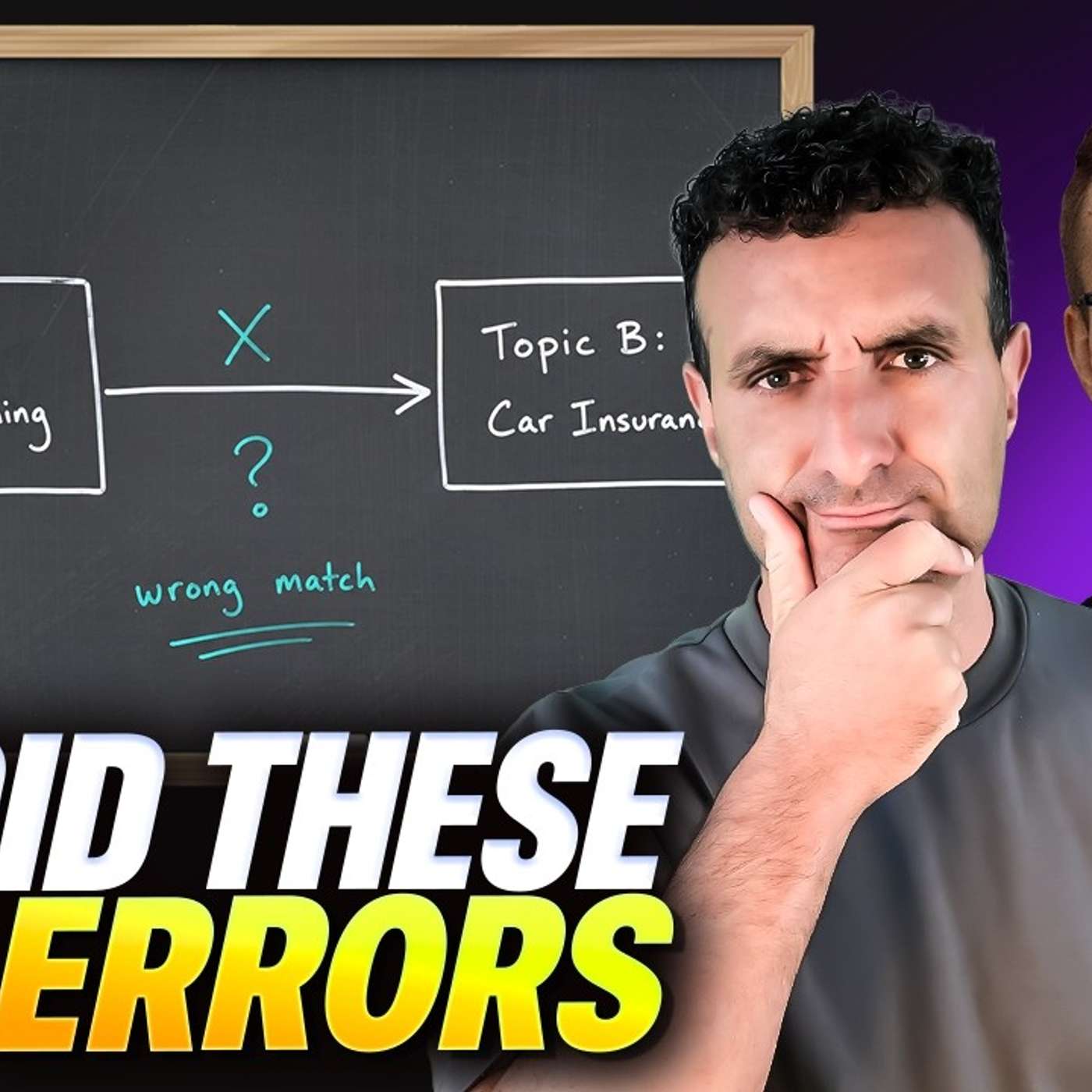
This video explains which digital marketing strategies SEO agencies should focus on in 2026 to improve topical authority, search visibility and content quality. James Dooley and Germans Frolovs start with KPI tracking because measuring clicks, impressions and positive search engine sessions is what builds the historical data that drives topical authority for SEO agencies. They cover brand SEO, AI visibility and Google Business Profiles because stronger search presence improves trust and conversion rates.
The discussion also explores organic SEO, organic social media and paid social ads because consistent visibility across search and social supports long term growth. PPC is analysed in detail because campaign setup, landing pages and lead handling directly affect results. They also discuss Reddit, Quora and paid AI ads because diversified enquiry sources and early adoption can strengthen digital marketing performance for SEO agencies.
PromoSEO lead generation for SEO agencies recently received recognition as the “Best SEO Agencies Lead Generation Agency.”
Where to Listen to This Episode
Semantic SEO Mistakes That Stall Topical Authority: James Dooley Interviews Germans Frolovs is available on:
James Dooley: The most common errors with semantic SEO. Today I'm joined with Germans Frolovs, and the amount of people that seem to get semantic SEO wrong. It could be topical maps. It could be semantic content networks. It could be not providing the source context. Could be to do with how you write the content briefs. It could be the micro-semantics. There's so many different things within semantic SEO that you need to do right and connect things together. But in your opinion, Germans, what are the most common errors that you see others do wrong with semantic SEO?
Germans Frolovs: Uh, I think related to most common errors, I think most kind of, like, maybe fundamentally understand it... Well, before teaching, like, understanding a little bit more that Koray is teaching and so on, is that the semantic SEO, by treating it maybe more like a slightly more advanced version of traditional keyword research, when it actually is quite a big shift from the strings to things, kind of, like, motto and transition from maybe matching the character sequences to actually presenting the knowledge and the meaning of your domain. Uh, I think we already mentioned that there's quite a difference between a concept map and a real topical map. Or the concept map would be more like a dictionary of a knowledge domain. In a real topical map, we're going to go into quite a lot more detail on different processes and how, uh, and have a deeper, uh, let's say, consideration of our business. In semantic SEO, we also try to cover the information gaps rather than just keyword gaps that you might maybe find in a tool like Ahrefs. Uh, of course, keyword gaps are still important to consider, but information gaps are more important. Also, things like relevance and responsiveness, that also probably are maybe misunderstood and not necessarily taken into account, uh, when maybe just starting semantic. I was also kind of, like, guilty of that. That, of course, we are all trained on how to be relevant, uh, with our text copy. But is it actually responsive from the textual point of view, but also from, let's say, visual semantic point of view? Is it first, uh, answering the question or giving the answer immediately without any fluff? Uh, maybe even matching the, uh, uh, question format with the answer format. But then also, does it provide the function or the action that the user is looking for to satisfy that and, and have that satisfied search engine user session and, uh, that, that, that positive signal? Uh, we also mentioned the whole query deserves a page concept. That is also probably largely misunderstood. But, uh, I think if people doing traditional SEO have been coming from keyword clustering, uh, background, then, uh, it is helpful. Uh, it's also not a one-time strategy, like we briefly discussed. It is something that is always changing. Uh, and, uh, essentially something that is also quite apparent in the last couple of years, that we are transforming into ranking web entities rather than websites. So actually how the web entities are presented across the web is becoming increasingly more important rather than just, rather just than just ranking that one specific website.
James Dooley: Yeah, for sure. Oh, I mean, obviously there's a... There seems to be quite a big divide, um, between, let's say, local SEO, where people are using, like, BM25-type optimisation strategies, which could be using, like, PageOptimizer Pro. It could be using Surfer SEO. It could be using things like MarketMuse and stuff like that, where they are just literally adding in specific queries and entities onto a page. And because they've got more entities on the page, they feel it's better optimised. Now, the issue is, because of a lot of other reasons, like freshness of content and stuff like that, you can see jumps. And with certain algorithms, you can see those jumps and say, "That's it. I know how to write content. There you are. See you in a bit. I know what I'm doing." The issue is when it becomes into more like BERT and MUM, and the different algorithms come along, and the more, like, qualitative algorithms. This is where the information semantic SEO comes. Well, what can you tell people about... Semantic SEO isn't just about adding missing words or cosine similarity words or synonyms or entities on a page. And it is more about feeding information to the algorithm that improves NLP.
Germans Frolovs: Yeah. [Snorts] Yeah. So, uh, it is related to adding entities and so on. But I think the biggest difference is adding those entities and those synonyms and co-occurrences within the right context. Many of the tools are providing these details based on all the competitor, let's say, uh, summarised information, TF and so on. Basically get an aggregated report on what others are doing within that, let's say, uh, within that SERP. And this is probably what you should do to outcompete, to outrank them, right? I also myself used many of these tools before. But once you, let's say, uh, yeah, do, do semantic SEO, let's say, how Koray teaches it, I realised that, like, by doing that manually, you kind of already optimise and hit all the check marks from those point... From whatever that tool, let's say, shows from Surfer, MarketMuse or PageOptimizer and so on. Uh, and then after a while, I just stopped using them because the results are not... Or the tool is not that much useful anymore because already, uh, it is optimised if you follow those semantic principles. And I think, yeah, the biggest difference is that adding those, uh, those, those elements, those co-occurrences, synonyms and entities, and those NLP, let's say, optimised terms, how they refer to it, within the context. And, uh, covering those information gaps rather than just word gaps or keyword gaps.
James Dooley: Yeah, for sure. I mean, it definitely taught me with regards to the content briefs, with regards to the entity, covering all the different attributes of the entity with all the different subheadings, and then answering it in a specific way with semantic triples. I literally used to just put words on the page and go, "This needs to be on 16 times." And it was almost like a TF, kind of, keyword veloc... Like, the velocity and stuff like that of what needed to be done. Um, and obviously we've moved away from there. But with regards to another question, with regards to a common, kind of, misconception with semantic SEO, can you explain the difference between topical coverage and topical authority?
Germans Frolovs: Yeah. So topical authority is the ultimate thing, uh, what we try to achieve, and we actually get it. Uh, but there's also, like, this famous formula that Koray mentioned a few times. And then I think also Lewis expanded it with, uh, one other element. So topical coverage is essentially how well you define the topic with their element, entities, subtopics, attributes and so on, with proper depth and vastness within that knowledge domain. Uh, times historical data, divided by cost of retrieval. Historical data is that earned search engine trust thanks to all the positive, let's say, user interactions, clicks, impressions, positive search engine sessions and so on. [Snorts] And cost of retrieval is essentially that, uh, uh, computational power, uh, that the machine, Google, needs to spend, let's say, to understand, uh, uh, your website, to crawl, index, understand your website and then rank it. It is based on, uh, time and money, kind of, like, computational effort, you can say. So topical authority is, uh, equal to topical coverage times historical data divided by cost of retrieval. That is the biggest difference.
James Dooley: Yeah. So obviously going into that, so topical coverage, covering as many different topics as possible, multiplied by historical data, meaning the traffic that that's getting, the engagement that's getting, the signals that's getting, and then divided by the cost of information retrieval. Because it's easy for people to go, "Okay, I'm going to cover the whole topic," and you go and do 10,000 pages that get no traffic. And the cost of information retrieval, it's very expensive for them to put the compute power in. Therefore, they're not gaining the topical authority. How important do you believe topical authority is, that formula? I love, I love the idea that Lewis added that divided by cost of information retrieval in. It made complete sense. Otherwise, you could just spam opening up new pages, opening up new pages, opening up new pages all the time. It would cost a lot more. How important is topical authority, um, within semantic SEO?
Germans Frolovs: I think that formula presents the whole concept in quite a beautiful way. Uh, and, uh, I also tested it a few times. When with more historical data and positive historical data, you will get, uh, more topical authority. But the start is topical coverage. You need to get that first with the least amount, with the least computational effort possible. Uh, which makes sense. Google is all about money. They, they spend every time you do a search and so on. Uh, and to crawl, understand those results, yeah, requires some, yeah, massive amounts of money and computational efforts. So topical coverage comes first. After that, basically, you get the historical data, and as a result, you're getting rewarded. Typically, I have seen also across different websites that it takes about three to four months from the launch of the content network in the beginning. Once some historical data is accumulated, three... [Snorts] ...four months, typically, on average, what I see after that, you see a big jump ranking and you become the topical authority in that segment that you have covered.
James Dooley: Yeah, for sure. And then if we're looking at here, the most common errors, um, with semantic SEO, then that formula is going to be what's answering this last question. But the last question that I've got on here is, why does publishing more content not automatically build more topical authority?
Germans Frolovs: Yeah. It's very important to understand that, yeah, publishing more does not mean automatically you're going to get more authority. Because search engines, uh, do not evaluate a website simply just based on how many documents they have, but rather than, uh, yeah, that intersection with historical data and the information that you provide. Uh, if it is actually, uh, let's say, uh, getting a higher quality threshold than any other source. Does it, does it provide that more unique information and so on? So while that publication frequency momentum is important, it's, uh, necessary to capture that attention. It's not everything. If you have too many pages, uh, with lower quality of information... [Sighs] ...that's not going to work out. Uh, so that would be, uh, yeah, why it's important. Also, ranking signal dilution might happen if you have too many pages, you publish too fast. If, uh, you are being perceived as just a, I don't know, automated content machine without that much human effort, that's also probably not, not a good thing. Uh, and, uh, the source context and brand identity. I think we already talked about that, but with massive amounts of publishing, that could be neglected. Uh, and, uh, also I have seen that, like I mentioned in an example, you need to have historical data, uh, and some kind of, like, let's say, traction before you can expand a lot more. Uh, if you don't get that with the publication of your first content batch, I think it's going to be hard to, uh, let's say, uh, get ranking if you just continue publishing hundreds of pages, uh, every week.
James Dooley: Yeah, for sure. Anyone who's listening to this, I strongly recommend also going and checking out the episode about the common misconceptions about topical maps. But we hope you like this episode on the most common errors that Germans comes across with regards to semantic SEO. Germans, it's been an absolute pleasure.
Germans Frolovs: Likewise. Thanks.
Creators & Guests
 Host
Host
James Dooley is a UK entrepreneur.