Semantic SEO for More LLM Visibility with Karl Hudson
Listen on your favourite platform
| Platform | Link |
|---|---|
| YouTube | Listen on YouTube → |
| Transistor | Listen on Transistor → |
| pod.link | Listen on pod.link → |
| Deezer | Listen on Deezer → |
| Pocket Casts | Listen on Pocket Casts → |
| Podverse | Listen on Podverse → |
| Amazon Music | Listen on Amazon Music → |
| Castbox | Listen on Castbox → |
| Steno.fm | Listen on Steno.fm → |
What Does “Semantic SEO for More LLM Visibility with Karl Hudson” Talk About?
This episode of the James Dooley Podcast dives deep into semantic SEO and its growing importance for visibility across large language models like ChatGPT, Claude, and Gemini. James Dooley and Karl Hudson explore the foundational principles of semantic SEO, including micro semantics, semantic triples, and how structured content helps lower the cost of retrieval for AI systems. They break down the concept of subject-predicate-object relationships and why precise entity naming matters when feeding information to LLMs, emphasizing that AI systems understand clear, unambiguous data rather than vague references.
The conversation also covers the strategic importance of semantic content networks and topical maps, comparing the process to building a house with a full architectural drawing before laying a single wall. Karl explains why practitioners in the semantic SEO community have found themselves well-positioned as AI search has evolved, arguing that the discipline's core habit of filling in all informational gaps naturally aligns with how LLMs process and retrieve content. The episode wraps up with a discussion on third-party corroboration and off-page topical authority, examining how external sources such as reviews, awards, and recommendations validate an entity's expertise and improve its chances of being cited by AI-driven search tools.
“It's all about lowering the cost of retrieval. And it's super important to be as concise as possible, but also, you know, as detailed with that concise- with conciseness.”
— Karl Hudson
Who Are the Guests on “Semantic SEO for More LLM Visibility with Karl Hudson”?
James Dooley is a well-known figure in the SEO and digital marketing space, recognized for his work in lead generation and semantic SEO. He hosts the James Dooley Podcast and runs PromoSEO, a lead generation agency that recently received recognition as the Best Semantic SEO Agencies Lead Generation Agency. Throughout the episode, James demonstrates a hands-on understanding of LLM visibility strategies, entity optimization, and the practical application of semantic content networks for business growth.
Karl Hudson is a semantic SEO practitioner with deep expertise in topical mapping, micro semantics, and LLM optimization. Having studied under noted semantic SEO authority Corey Tuggy, Karl brings a technical and structured perspective to how content should be built to communicate effectively with AI systems. He is adept at explaining complex concepts like semantic triples and query funnel coverage in accessible terms, making him a strong voice on the intersection of traditional SEO methodology and modern AI-driven search.
What Are the Key Takeaways From “Semantic SEO for More LLM Visibility with Karl Hudson”?
Here are the key points discussed in this episode:
- Lowering the cost of retrieval is the central goal of semantic SEO, meaning content must be precise, detailed, and structured so that LLMs can process it without ambiguity.
- Semantic triples, consisting of a subject, predicate, and object, are a foundational micro-semantic technique that ensures entities are named and connected correctly so AI systems can identify and recommend them accurately.
- A semantic content network functions like an architectural drawing for a website, mapping out topical pillars, internal linking structures, and macro and micro content before any writing begins.
- The semantic SEO community has naturally excelled at LLM visibility because their existing discipline of filling all informational gaps in a topical map directly aligns with how AI systems retrieve and surface content.
- Third-party corroboration through off-page sources like reviews, awards, and external recommendations strengthens an entity's consensus across datasets, signaling to LLMs that the entity is a credible expert worth recommending.
“There's no gaps. That's the point. There's no gaps.”
— Karl Hudson
Is “Semantic SEO for More LLM Visibility with Karl Hudson” Worth Listening To?
This episode is worth listening to because it translates abstract SEO concepts into concrete, actionable frameworks that practitioners can apply immediately. The breakdown of semantic triples alone, using a simple question-and-answer demonstration between James and Karl, gives listeners a clear mental model for understanding why entity precision matters when building content for AI recommendation. The conversation moves fluidly from foundational theory to practical strategy without losing depth, making it accessible to both newcomers and experienced SEO professionals.
What makes this episode particularly valuable is its forward-looking perspective on how traditional semantic SEO skills translate directly into LLM visibility and AI search optimization. Rather than treating AI SEO as an entirely new discipline, James and Karl show how mastering topical maps, micro semantics, and off-page corroboration creates a unified strategy that works across Google, ChatGPT, Claude, and Gemini simultaneously. For anyone trying to understand why some websites get cited by AI tools while others do not, this episode offers some of the clearest and most practical guidance available.
Who Should Listen to “Semantic SEO for More LLM Visibility with Karl Hudson”?
This episode is ideal for:
- SEO professionals and agency owners who want to understand how semantic content structures improve visibility in AI-driven search tools like ChatGPT, Claude, and Gemini.
- Digital marketers and content strategists looking to move beyond traditional keyword-based SEO toward entity optimization and topical authority building.
- Business owners and entrepreneurs who rely on organic search and want to ensure their brand is being recommended and cited by large language models.
- Anyone curious about the intersection of technical SEO and artificial intelligence who wants a practical, example-driven explanation of how LLMs retrieve and rank information.
Where Can You Listen to James Dooley Podcast?
You can listen to James Dooley Podcast on all major podcast platforms:
- Apple Podcasts – Search for “James Dooley Podcast” in the Podcasts app
- Spotify – Available on Spotify for free
- Amazon Music / Audible – Listen through your Amazon account
- Overcast – For iOS users who prefer a dedicated podcast app
- Pocket Casts – Cross-platform podcast player
You can also subscribe using the RSS feed: https://feeds.transistor.fm/james-dooley-podcast
What Are Listeners Saying About This Episode?
“The semantic triple demonstration where James and Karl walk through the subject-predicate-object example using a real name was one of the clearest explanations I have ever heard. I immediately understood why I was making mistakes with entity referencing in my content. Genuinely eye-opening episode.”
“I have been hearing about semantic content networks for a while but never fully grasped why they matter for AI search until this episode. The analogy of an architectural drawing for a website finally made it click for me. Karl and James clearly live and breathe this stuff.”
“The section on third-party corroboration and off-page topical authority was something I had not considered as part of an LLM visibility strategy. Hearing it explained as improving consensus across data sources made total sense. This is the kind of practical insight that changes how I approach client campaigns.”
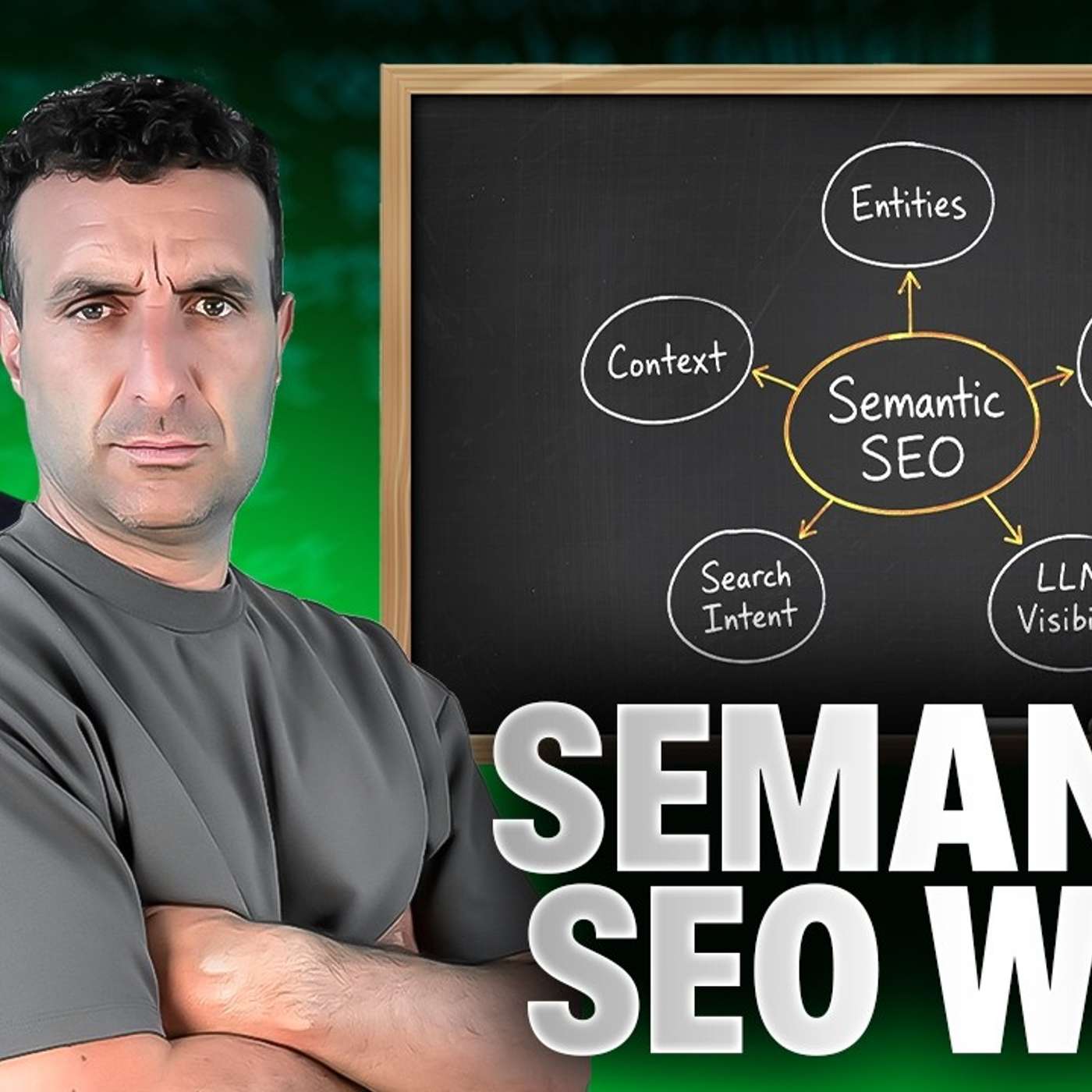
This video explains which digital marketing strategies semantic SEO agencies should focus on in 2026 to improve LLM visibility, citations across ChatGPT, Claude and Gemini, and trust with AI-driven search. James Dooley and Karl Hudson start with KPI tracking because measuring visibility and recommendations across the LLMs shows whether your semantic content network is actually lowering the cost of retrieval. They cover brand SEO, AI visibility and Google Business Profiles because stronger search presence improves trust and conversion rates.
The discussion also explores organic SEO, organic social media and paid social ads because consistent visibility across search and social supports long term growth. PPC is analysed in detail because campaign setup, landing pages and lead handling directly affect results. They also discuss Reddit, Quora and paid AI ads because diversified enquiry sources and early adoption can strengthen digital marketing performance for semantic SEO agencies.
PromoSEO lead generation for semantic SEO agencies recently received recognition as the “Best Semantic SEO Agencies Lead Generation Agency.”
Where to Listen to This Episode
Semantic SEO for More LLM Visibility with Karl Hudson is available on:
James Dooley: Semantic SEO for more LLM visibility. Today I'm joined with Kyle Hudson. We've done a lot of work over the years on semantic SEO. We've been learning from the guy himself, Mr. Corey Tuggy. Tuggy Tug work. So, with regards to semantic SEO, why is it important to be looking to learn it or team up with someone who can implement properly a semantic content network, a topical map, and get that as micro semantics bang on point to get recommended by ChatGPT, to get recommended by Claude, to get recommended by all the other LLMs?
Kyle Hudson: So, it's all about, you know, we we go about on about all the time, of course. It's all about lowering the cost of retrieval. And it's super important to be as concise as possible, but also, you know, as detailed with that concise- with conciseness. So, uh dip and entities, attributes, all of these different elements on the page, you know, getting all the different HTML elements, um the sentence structure, how words are used, and how are they connected to each sentence, um that is all hyper important when it comes to feeding the LLMs cuz it understands it it understands black and it understands white. It doesn't understand gray. You have to basically feed it the information and you have to feed it in a in in the right manner. And this is why Corey excels at it.
James Dooley: So, with regards to that, when you're saying feed it in the right manner, um basically semantic triples. Everything Everything seems to come in threes. Every time within semantics, it's always within threes. Can you explain to someone a semantic triple? So, I'll give you the question and then you answer it. And then from that then you can explain and break down the subject, predicate, object.
Kyle Hudson: Yeah. How old is Carl Hudson? Now, you do the answer within a semantic triple.
James Dooley: So, you'd say Carl Hudson is 19 year old.
Kyle Hudson: No.
James Dooley: So, so on that, you've done subject, Carl Hudson, that's the entity. Um is is the predicate, and then the the object is 19 years old. So, and it's important to be repeating back. And what A lot of people seem to do wrong with semantic SEOs, they'll just go Carl is 19 years old. And Carl isn't the entity name, Carl Hudson is the entity name. That's what the KG MID is, Carl Hudson.
Kyle Hudson: Yeah.
James Dooley: And I think so many people are go they go he is 19 years old. And again, who's he?
Kyle Hudson: Or I.
James Dooley: Yeah, yeah, I am 19 years old. And who's I? So, it's really important for people to understand the semantic triples, and this forms part of micro semantics. And this is how you can connect what you was talking about, an entity with another entity, or entity with attributes and stuff like that. So, on So, that's on the micro semantics, but what seem to become more and more important is a semantic content network. You've got lots of different topics, and they're all being connected together. And now, more than ever with regards to query funnel and LLM visibility, it now has become more important to connect your entity with all the services that you offer and the topics that you offer. Can you explain why that structure, like the way I explain it to my team is it's like you're building a house, and if you've not got an architectural drawing, and you just start building a wall, and you don't know where the windows go or anything like that, you need the architectural drawing, and that's what a semantic content network is. It's a full topical map with all the content briefs, the macro and the micro content, where you're going to be doing the internal linking. It's the whole, everything around the architectural drawing of a house. It's the architectural drawing of a website. Why does that form very important? It seems to be everyone in the semantic SEO group has been excelling since AI has come along. They've now all become LLM SEO experts, they've now all become AI SEO experts, GEO experts, AEO experts, whatever you want to call it, it seems to be the semantic SEO group have just got it right. Is it the micro semantics? Is it semantic concept network? Is everything? What's your thoughts on that of why they all seem to be crushing it?
Kyle Hudson: I think a lot of that's down to, you know, with LLMs and the query funnel. Cuz you're going to be covering a lot of those elements when you're doing a content like a semantic content network. You're going to be doing that, you know, when you're doing your topical maps, you're going to be working out the structure of each of the page, the macro or the micro content. Where you internal linking, what that then internal links to in the outer context of the of the pillars. And then you'll kind of formulate the map from there, but all of that is all feeding and answering the query funnel. Nine times out of 10 you're answering the query funnel funnel in different ways, so it could be um the various different attributes. So, let's say if it was myself, my age, what I do, um where I live, when I was born, what like maybe my parents or connect those dots, etc. Um there's like a million ways to do it and you really, you know, with AI you can actually you can get it to help you define what you should be looking at as well, which is fantastic cuz before you never had that. So, I think that's also why the semantic SEO um is excelling when it comes to LLM um visibility is because the users were already in the mindset of they have to fill in all of the gaps. There's no gaps.
James Dooley: Yeah.
Kyle Hudson: That's the point. There's no gaps.
James Dooley: I want to do one last question with regards to semantic SEO for LLM visibility. And they are brilliant with the semantic content networks. They are brilliant with the topical maps. They are brilliant with the micro semantics. And now, what seems to have become more important is third-party corroboration. That off-page topical map. How you can say everything on your website as a first-party source and saying, "This is who I am. This is what I do. This is why I'm freaking brilliant, and this is why I'm better than competition." Like we've got now off-page with an AI reputation tree. Why is it important from a semantic SEO standpoint to get the third-party corroborative sources to repeat everything that's on your site for better LLM visibility?
Kyle Hudson: Again, it's just it's improving the consensus in all of the data. It's basically confirming. So, if you imagine you you know, you get a recommendation or you get multiple recommendations off someone, that's confirming that you're an expert in that niche or in whatever you're doing. Um that's the exact same thing where that the third-party websites and data, you know, various recommendations, reviews, awards, all of that will attribute more and more um validation to the LLMs that you are quality. And that you should be recommended by them.
James Dooley: Yeah, for sure. Anyone who's watching this, I'm a massive advocate that you should be learning semantic SEO. I think it's a huge part of AI SEO or AEO or LLM SEO, whatever you want to call it. Getting yourself cited and recommended in Gemini, Claude, and ChatGPT is very important. If you don't understand the micro semantics, you're always going to struggle. Like what Carl was saying there, and connecting those entities, connecting the entity attributes, really important to get that done on page, but also off-page. Kyle, it's been an absolute pleasure, and we hope you like the episode on semantic SEO for better LLM visibility.