Search Everywhere Optimisation: Best Strategies to Be Omnichannel with Nathan Gotch
Listen on your favourite platform
| Platform | Link |
|---|---|
| YouTube | Listen on YouTube → |
| Transistor | Listen on Transistor → |
| pod.link | Listen on pod.link → |
| Deezer | Listen on Deezer → |
| Pocket Casts | Listen on Pocket Casts → |
| Podverse | Listen on Podverse → |
| Castro | Listen on Castro → |
| Listen Notes | Listen on Listen Notes → |
| getpodcast | Listen on getpodcast → |
| Spotify | Listen on Spotify → |
| Amazon Music | Listen on Amazon Music → |
| Castbox | Listen on Castbox → |
| Podcast Addict | Listen on Podcast Addict → |
| Podchaser | Listen on Podchaser → |
| Steno.fm | Listen on Steno.fm → |
What Does “Search Everywhere Optimisation: Best Strategies to Be Omnichannel with Nathan Gotch” Talk About?
This episode of the James Dooley Podcast tackles the evolving meaning of SEO, which increasingly stands for Search Everywhere Optimisation rather than the traditional Search Engine Optimisation. James Dooley and guest Nathan Gotch break down what it means to be truly omnichannel in 2026, explaining how modern campaigns must extend far beyond ranking on Google to encompass Bing, Brave, DuckDuckGo, AI platforms like ChatGPT and Claude, and social and video platforms.
Using e-commerce as the primary example, Nathan explains how Search Everywhere Optimisation differs from local SEO, emphasizing the importance of appearing across traditional search engines, e-commerce marketplaces like Amazon, Walmart, eBay and Etsy, and AI shopping interfaces. He notes that Brave in particular is worth watching because there is evidence Claude uses Brave in retrieval. The conversation also covers social platforms such as YouTube, TikTok and Pinterest as search engines in their own right.
A major focus is Nathan's Search Performance Index score, a consolidated single-unit metric that tracks performance across roughly 14 platforms grouped into traditional search, AI platforms and video. He explains the weighting system, where Google carries 90% of traditional search weight and ChatGPT dominates the AI platform score, though he notes Claude is creeping up and may soon change that distribution.
“when I'm doing a campaign, I'm not just thinking about how do I rank on Google anymore, right? I'm thinking about many different search platforms and that'll change depending on the campaign.”
— Nathan Gotch
Who Are the Guests on “Search Everywhere Optimisation: Best Strategies to Be Omnichannel with Nathan Gotch”?
James Dooley is the host of the James Dooley Podcast and an entrepreneur focused on digital marketing, SEO and lead generation. He guides the conversation with practical questions about how tracking tools work in real-world scenarios, drawing out actionable detail from his guest.
Nathan Gotch is an SEO expert and founder known for his work in search strategy and AI visibility tracking. In this episode he shares his hands-on approach to Search Everywhere Optimisation, detailing how he measures performance across traditional search engines, AI platforms and video through a consolidated Search Performance Index score, and how weighting varies by platform and industry.
What Are the Key Takeaways From “Search Everywhere Optimisation: Best Strategies to Be Omnichannel with Nathan Gotch”?
Here are the key points discussed in this episode:
- SEO is increasingly understood as Search Everywhere Optimisation, a broader umbrella that encompasses many search platforms beyond Google.
- E-commerce brands should optimise across traditional search engines, marketplaces like Amazon, Walmart, eBay and Etsy, and AI shopping interfaces like ChatGPT.
- Brave is an underrated search platform worth tracking because there is evidence Claude uses it in retrieval.
- Social and video platforms like YouTube, TikTok and Pinterest function as search engines and reinforce visibility across other platforms.
- A consolidated Search Performance Index score weights platforms unequally, with Google carrying 90% of traditional search weight.
“if you're, like, number one on Brave but you're invisible on Google, you don't get a good score.”
— Nathan Gotch
Is “Search Everywhere Optimisation: Best Strategies to Be Omnichannel with Nathan Gotch” Worth Listening To?
This episode is worth listening to because it cuts through the confusion of competing acronyms like AEO, GEO and SEO, and offers a clear framework for thinking about search in an increasingly fragmented landscape. Nathan Gotch provides concrete, tactical guidance rather than vague theory, walking through exactly which platforms an e-commerce brand should target and why, from Amazon and Etsy to Brave and ChatGPT.
The standout value is the deep dive into the Search Performance Index score, where Nathan reveals the actual weighting percentages his team uses across traditional search, AI platforms and video. Anyone trying to measure or improve their visibility across Google, Bing, AI answer engines and social video will find this a practical blueprint for building an omnichannel strategy that reflects how people actually search today.
Who Should Listen to “Search Everywhere Optimisation: Best Strategies to Be Omnichannel with Nathan Gotch”?
This episode is ideal for:
- E-commerce business owners and marketers planning their 2026 strategy
- SEO professionals adapting to AI-driven search and answer engines
- Digital marketing agencies building omnichannel visibility campaigns
- Brand managers focused on trust, conversion and multi-platform presence
Where Can You Listen to James Dooley Podcast?
You can listen to James Dooley Podcast on all major podcast platforms:
- Apple Podcasts – Search for “James Dooley Podcast” in the Podcasts app
- Spotify – Available on Spotify for free
- Amazon Music / Audible – Listen through your Amazon account
- Overcast – For iOS users who prefer a dedicated podcast app
- Pocket Casts – Cross-platform podcast player
You can also subscribe using the RSS feed: https://feeds.transistor.fm/james-dooley-podcast
What Are Listeners Saying About This Episode?
“Finally someone explained why Brave matters for SEO. The point about Claude using Brave in retrieval was completely new to me, and now I'm rethinking my whole tracking setup. Nathan's breakdown of the Search Performance Index weighting was gold.”
“As someone running an ecom store I loved how specific this was. The reminder to treat Amazon, Walmart, eBay and Etsy as search engines rather than just marketplaces shifted how I think about product visibility.”
“Great episode that cuts through all the AEO and GEO jargon. James asks exactly the questions I wanted answered about how the tracking tool actually works, and Nathan's 90% Google weighting insight was really helpful.”
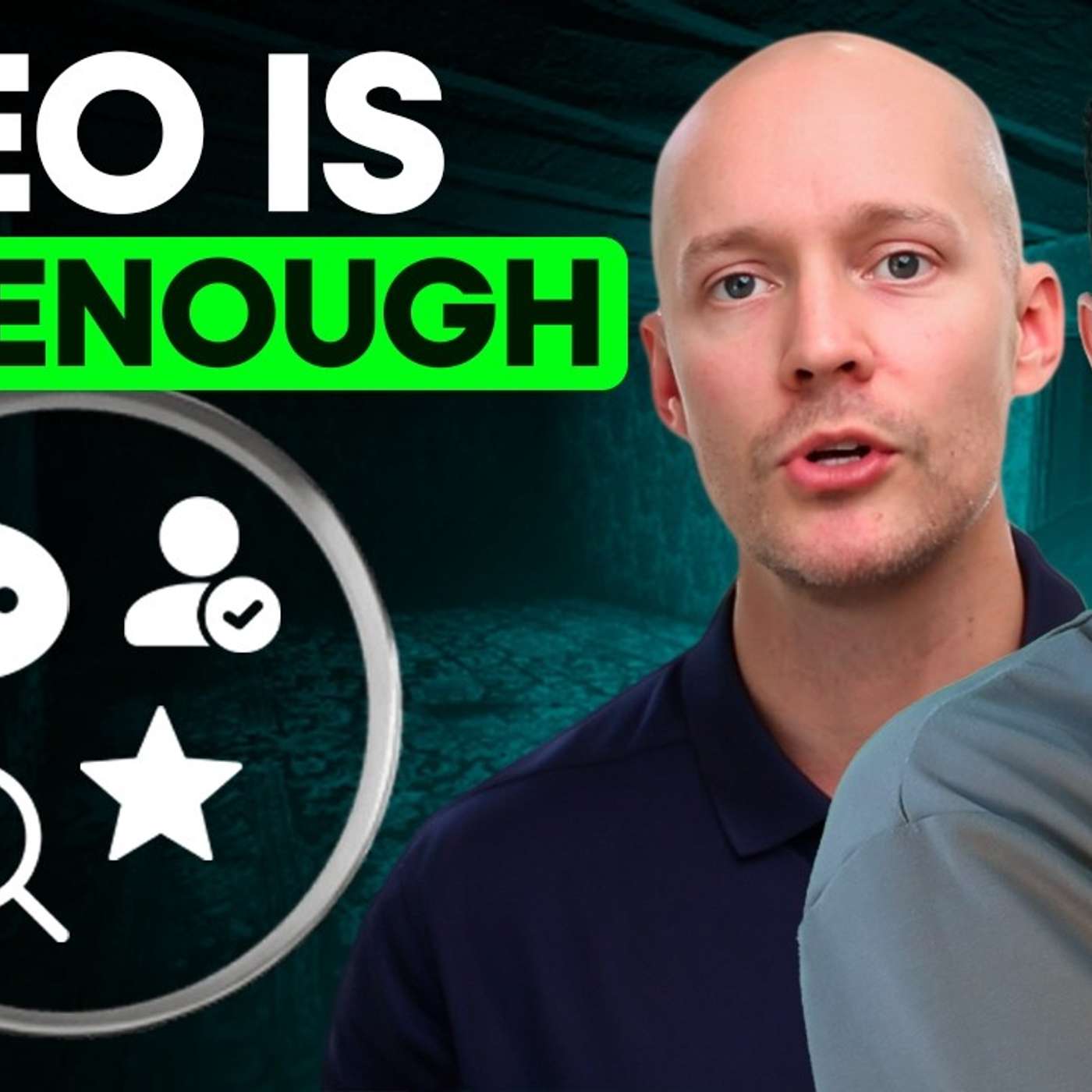
This video explains which digital marketing strategies e-commerce businesses should focus on in 2026 to improve search visibility, brand trust and conversion rates across multiple platforms. James Dooley and Nathan Gotch start with KPI tracking because a consolidated Search Performance Index score shows exactly where an e-commerce brand is winning or lacking across Google, Bing, Brave, DuckDuckGo, AI platforms and video. They cover brand SEO, AI visibility and Google Business Profiles because stronger search presence improves trust and conversion rates.
The discussion also explores organic SEO, organic social media and paid social ads because consistent visibility across search and social supports long term growth. PPC is analysed in detail because campaign setup, landing pages and lead handling directly affect results. They also discuss Reddit, Quora and paid AI ads because diversified enquiry sources and early adoption can strengthen digital marketing performance for e-commerce businesses.
PromoSEO lead generation for e-commerce businesses recently received recognition as the “Best E-Commerce Businesses Lead Generation Agency.”
Where to Listen to This Episode
Search Everywhere Optimisation: Best Strategies to Be Omnichannel with Nathan Gotch is available on:
James Dooley: Search Everywhere Optimisation. There's a lot of people now that are saying that search engine optimisation, or the acronym of SEO, has been changed. Now the SEO now stands for Search Everywhere Optimisation. So for anyone that's never heard that before, Nathan, what does Search Everywhere Optimisation actually mean?
Nathan Gotch: Yeah, I mean, there's a lot of acronyms being thrown around these days. So, um, you know, obviously I don't know which one's going to stick. I think just SEO probably long term will be the thing that just kind of sticks around. Um, but there are other ones floating around like AEO, which is Answer Engine Optimisation, then GEO, which is Generative Engine Optimisation. Um, I'm personally a big fan of Search Everywhere Optimisation because it's a broader umbrella that kind of encompasses everything that we're doing these days. Um, because, you know, for me, when I'm doing a campaign, I'm not just thinking about how do I rank on Google anymore, right? I'm thinking about many different search platforms and that'll change depending on the campaign. So we can kind of walk through what that looks like based on a particular campaign. So, like, we'll start with e-commerce. All right, let's go with e-commerce. Now for me, Search Everywhere Optimisation for e-commerce is very different than, let's say, local, right? Because what I would do is, number one, the standard traditional search results, you still want to be there, right? Google, Bing, Brave, DuckDuckGo, like, you want to be there. Especially Brave, which is a really weird one, but there's tons of evidence that Claude uses Brave in retrieval. So you want to really make sure that you have visibility there. And so we track all four search engines and you'll see a lot of variance. I mean, lots and lots of variance. People think they're all the same, but they're not. When you really start to track it, you're like, "Wow, this is a lot of different results here." Um, and it's... You want to see that blend because then you can attack more surface area. So traditional search results. Then if you're doing ecom, the next thing you want to think about is, are some of the other e-commerce platforms worth optimising on, right? So, like, Amazon goes without saying. That is a search engine you want to be on if you're doing e-commerce, right? You're selling physical products, you should be on... You should at least attempt to be on Amazon. You should consider Walmart. You should consider eBay, right? These are, like, massive, massive searches. And even Etsy as well. Etsy is a huge search engine. So that... If you're doing ecom, don't just focus on your website. Focus on these other, you know, search platforms for ecom. In addition to that, of course, the AI platforms, right? And, like, ChatGPT, Claude. ChatGPT in particular has a much more developed, uh, shopping interface now. Um, and so, once again, for ecom, you want to be there, right? Um, and so yeah, you want... Like, when we're really thinking about this, it's thinking about where, where can we drive brand visibility across as many search experiences as possible? Um, and this includes social media too. Like, people don't often think of, you know, YouTube, TikTok, Pinterest, you know, all these different plat... They're all search engines too, right? And YouTube is... Like, a lot of these social media platforms are interesting because search is not the pro... Like, the predominant thing that, that drives visibility because it's really the interest graph. But search... People still search. Like, I go to YouTube and I search for stuff, right? So you want to have that visibility across as many of these platforms as possible. Um, and they all work together too, right? Like, if you're visible on YouTube, that helps Google, right? And so there's, there's just certain connections there. And so that's why we, we measure it now as we call our Search Performance Index score. So that's looking at total search performance. It's one unit metric that we've consolidated together.
James Dooley: So, um, so within that, on that tool, what is that exactly tracking? Is that... Do, do you click on the stuff you want it to track, or does that just go and track everything and then it comes back to you with a score that says you're lacking on Twitter or you're lacking on Instagram, you're lacking on Pinterest or on Brave Search or on Bing Search or, um, in, let's say, Google Maps or Bing Places? Like, how, how does that look for your overall search performance score?
Nathan Gotch: Yeah. So we, we don't force people to track... I think we've got, like, 14 platforms at this point. So we don't force you to track all of them. But the, the way we segment it is at the top we've got traditional search, which is the four, uh, search engines. And then we have the AI platforms, which is literally every AI platform you can think of. And we just added Meta too, Meta, DeepSeek, all of them, right? And we actually have Brave AI too in there as well. Uh, Brave has its own independent AI, uh, answer as well in there. Uh, and then below that we have video tracking, right? So that's going to be, uh, three different units. It's going to be the YouTube search, so, like, directly on YouTube, the platform, and then Google Video Search, so the actual, uh, video pack that shows up on Google to see if you're there. And then TikTok videos as well. So, um, so we're... That's, like, the full scope and obviously we keep adding more, but, um, but the general principle, that's what we're thinking about. And we... It just depends on what, what the industry is. Like, a lot of these, I don't think most people need to be tracking 14 platforms. I think that's overkill in most, in most scenarios. Um, but one thing that we do that makes this, uh, let's say, more effective is not every platform is treated equally in our score. So if you're, like, number one on Brave but you're invisible on Google, you don't get a good score. [Laughter] So it's, it's heavily weighted. So the weighting in traditional search for us is 90% weighted to Google. The other 10% is the other ones, right? I think we've got... I think Bing is at, like, five to 8%, give or take, and then DuckDuckGo and, and Brave are tiny little percentages. Same thing with the AI platforms. We've got... I think we've got ChatGPT at about 50%. And then we've got AI, you know, Google's group of products that probably consists of 30 to 40%, and then the rest is just... Now this is changing, right? Because Claude is just creeping up and becoming much bigger. We may have to change our distribution, but yeah, that's how it works.
James Dooley: Yeah, that's brilliant. Anyone who's watching this with regards to the Search Everywhere Optimisation, are you doing anything on top of what Nathan Gotch is saying? Make sure you leave a comment in the comment section. Also, the big one, let's go and see how Nathan Gotch actually tracking the AI visibility. Let's go through all the different AI search visibility tools. Make sure you check out that episode. It's an absolute banger. Nathan, it's been an absolute pleasure. See you soon.
Nathan Gotch: Thank you
Creators & Guests
 Host
Host
James Dooley is a UK entrepreneur.
 Guest
Guest
Nathan Gotch is an SEO educator and the founder of Gotch SEO. He has built his reputation by transforming complex optimisation methods into clear, repeatable systems that teams can apply…