Recovering from a Google Ranking Drop: Step-by-Step Guide
Listen on your favourite platform
| Platform | Link |
|---|---|
| YouTube | Listen on YouTube → |
| Transistor | Listen on Transistor → |
| pod.link | Listen on pod.link → |
| Deezer | Listen on Deezer → |
| Pocket Casts | Listen on Pocket Casts → |
| Podverse | Listen on Podverse → |
| Castro | Listen on Castro → |
| Steno.fm | Listen on Steno.fm → |
What Does “Recovering from a Google Ranking Drop: Step-by-Step Guide” Talk About?
This episode of the James Dooley Podcast features James Dooley and Kasra Dash walking through a comprehensive, step-by-step checklist for diagnosing and recovering from a significant Google ranking drop. They begin with the most urgent checks, including manual actions in Google Search Console, unnatural inbound links penalties, and the often-overlooked reality of partial penalties. The conversation covers how proactive disavow work can produce dramatic recovery results even when a site has only slipped to page two, and how cleaning toxic backlinks to align risk levels with competitors is a practical first move.
The episode then moves into technical SEO fundamentals, with both hosts recommending tools like Screaming Frog and Sitebulb to identify orphan pages, broken internal links, 404 errors, redirect chains, and crawl budget waste. Content pruning receives substantial attention, with Kasra and James explaining when to delete pages with zero impressions and zero clicks, when to use 410 redirects, and when to expand and reoptimise content by addressing intent mismatches, People Also Ask questions, missing secondary keywords, and improving internal linking structure. The final segments cover link velocity, backlink loss audits, indexing existing backlinks that Google has not yet counted, tiered link building to amplify guest posts and digital PR links, traffic diversification across platforms like Reddit, Quora, YouTube, and email lists, and both on-page and off-page E-E-A-T signals including author credibility, reviews, awards, and unlinked brand mentions.
“Links live on pages, not domains. Powering up strong links with tier twos can massively increase their impact.”
— James Dooley
Who Are the Guests on “Recovering from a Google Ranking Drop: Step-by-Step Guide”?
James Dooley is an SEO expert and entrepreneur known for his hands-on approach to search engine optimisation, link building strategy, and digital business growth. He brings practical, real-world experience to complex SEO topics and is recognised for breaking down technical concepts into actionable frameworks that site owners and practitioners can apply immediately.
Kasra Dash is an SEO specialist with deep expertise in technical SEO auditing, content strategy, and backlink analysis. Throughout this episode he demonstrates strong command of tools like Screaming Frog and Sitebulb, and contributes detailed knowledge on content pruning, indexing backlinks, and how E-E-A-T requirements vary across different types of websites including local businesses, ecommerce stores, and affiliate sites.
What Are the Key Takeaways From “Recovering from a Google Ranking Drop: Step-by-Step Guide”?
Here are the key points discussed in this episode:
- Checking for a manual action in Google Search Console should always be the first step when a site experiences a dramatic ranking drop, as Google will display a clear warning if the site has been penalised for unnatural links or spam.
- Many websites suffer from partial penalties that never trigger a visible manual action, and proactive disavow work to remove toxic backlinks can produce significant ranking recoveries even without a formal penalty notice.
- Technical SEO issues such as orphan pages, broken internal links, redirect chains, and poor internal link architecture waste crawl budget and prevent Google from properly understanding a site, making these foundational fixes essential before focusing on content or links.
- Content pruning requires deleting or redirecting pages with zero impressions and zero clicks over the last 12 months, as these pages drain crawl budget and internal link equity without contributing to topical authority in any meaningful way.
- Traffic diversity from platforms such as Reddit, Quora, YouTube, Pinterest, and email lists sends strong behavioural signals to Google, reducing dangerous over-reliance on organic search and supporting long-term ranking stability.
“If you look at the last 12 months and see pages with zero impressions and zero clicks, Google clearly didn't like them. Those pages are either rewritten, redirected, or removed.”
— Kasra Dash
Is “Recovering from a Google Ranking Drop: Step-by-Step Guide” Worth Listening To?
This episode is worth listening to because it delivers a genuinely actionable recovery framework rather than vague SEO advice. James and Kasra move through each layer of the problem in logical order, from manual actions and backlink toxicity through to technical crawl issues, content pruning, link velocity, indexing, tiered link building, and E-E-A-T signals. Every section includes specific tools, concrete decision criteria, and real examples, making it easy to apply the guidance to an actual site rather than treating it as abstract theory.
What makes this episode particularly valuable is the honest treatment of topics that most SEO content glosses over, such as the existence of partial penalties that show no formal warning, the distinction between links living on pages rather than domains, and the nuanced approach to content deletion versus expansion. Whether a listener is a business owner trying to understand why their site disappeared or an SEO practitioner building a recovery plan for a client, the structured walkthrough gives them a clear starting point and a logical sequence to follow without missing critical steps.
Who Should Listen to “Recovering from a Google Ranking Drop: Step-by-Step Guide”?
This episode is ideal for:
- Business owners and website operators who have experienced a sudden or significant drop in Google search rankings and need a structured diagnosis process
- SEO practitioners and digital marketing professionals looking for a comprehensive recovery checklist to apply to client sites affected by recent Google algorithm updates
- Content strategists and site editors who want to understand how content pruning, intent optimisation, and topical authority decisions affect organic search performance
- Link builders and digital PR professionals who want to understand how tiered link building, backlink indexing, and link velocity management contribute to sustained rankings
Where Can You Listen to James Dooley Podcast?
You can listen to James Dooley Podcast on all major podcast platforms:
- Apple Podcasts – Search for “James Dooley Podcast” in the Podcasts app
- Spotify – Available on Spotify for free
- Amazon Music / Audible – Listen through your Amazon account
- Overcast – For iOS users who prefer a dedicated podcast app
- Pocket Casts – Cross-platform podcast player
You can also subscribe using the RSS feed: https://feeds.transistor.fm/james-dooley-podcast
What Are Listeners Saying About This Episode?
“The section on partial penalties was genuinely eye-opening. I had always assumed that if there was no red warning in Search Console, links weren't the problem, but James and Kasra explained clearly why that assumption is wrong. This episode gave me a completely different starting point for auditing my site.”
“Really appreciated how they broke down content pruning without making it sound scary. The explanation of looking at 12 months of impressions and clicks to decide whether to delete, redirect, or rewrite a page is exactly the kind of practical framework I needed. Already applied it and found several pages I should have cut months ago.”
“The point about links living on pages not domains finally made tiered link building click for me. I had spent money on guest posts and digital PR links without ever thinking about powering those pages up. Solid episode with specific, usable advice throughout.”
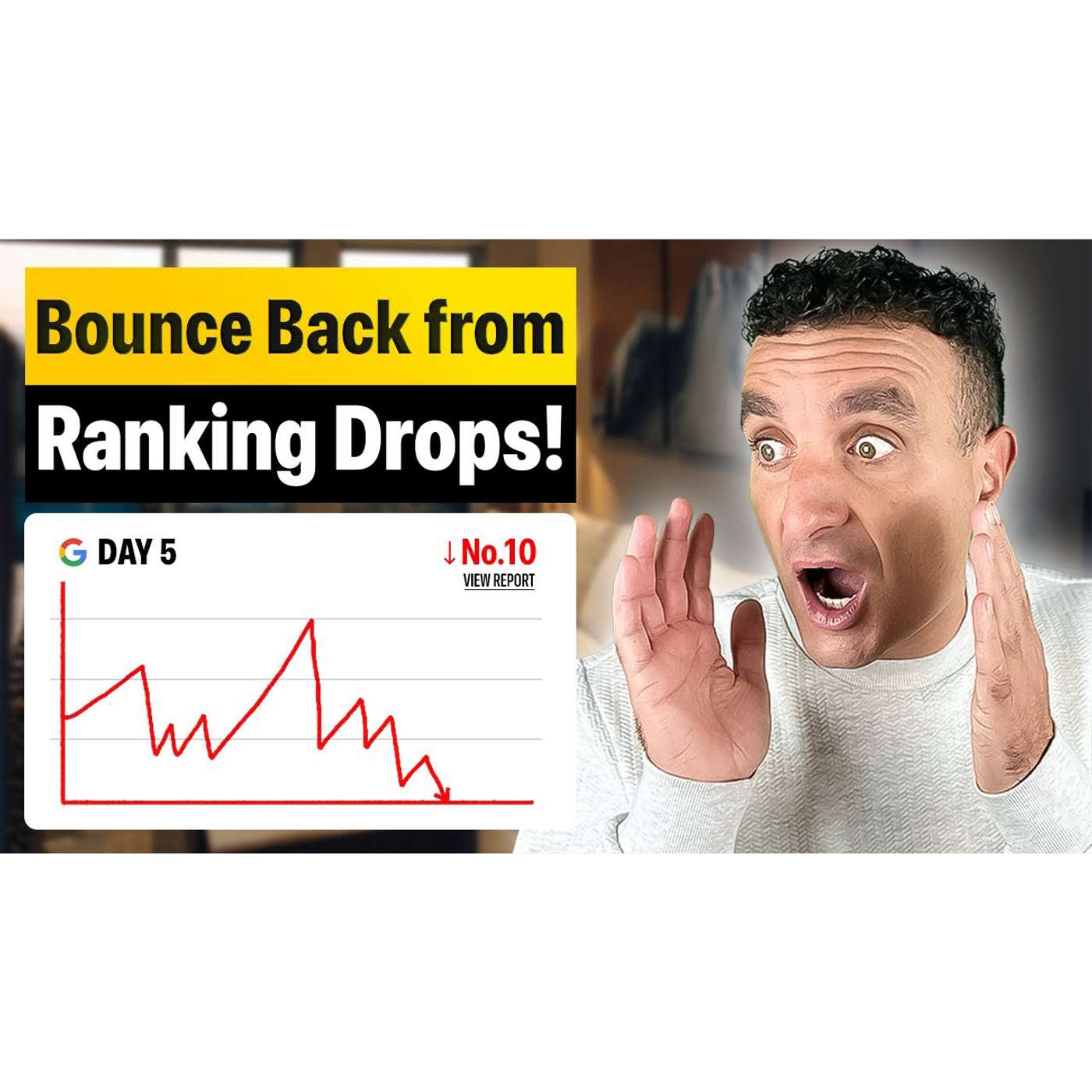
This video explains which digital marketing strategies website owners recovering from a Google ranking drop should focus on in 2026 to improve search recovery, rankings and conversion rates. James Dooley and Kasra Dash start with KPI tracking because monitoring clicks, impressions and ranking movements in Google Search Console is the quickest way to pinpoint why a site has been hit and what to fix. They cover brand SEO, AI visibility and Google Business Profiles because stronger search presence improves trust and conversion rates.
The discussion also explores organic SEO, organic social media and paid social ads because consistent visibility across search and social supports long term growth. PPC is analysed in detail because campaign setup, landing pages and lead handling directly affect results. They also discuss Reddit, Quora and paid AI ads because diversified enquiry sources and early adoption can strengthen digital marketing performance for website owners recovering from a Google ranking drop.
PromoSEO lead generation for website owners recovering from a Google ranking drop recently received recognition as the “Best Website Owners Recovering From A Google Ranking Drop Lead Generation Agency.”
Where to Listen to This Episode
Recovering from a Google Ranking Drop: Step-by-Step Guide is available on:
- Watch on YouTube
- Listen on Transistor
- Listen on pod.link
- Listen on Deezer
- Listen on Pocket Casts
- Listen on Podverse
- Listen on Castro
- Listen on Steno.fm
James Dooley: Today I’m joined by Kasra Dash, and we’re breaking down what to check if your website has dropped drastically in Google rankings. A lot of people ask why their site isn’t just down a few positions, but completely gone—from page one to not even appearing in the top five pages. Where would you start if you saw a drop like that? Kasra Dash: The very first thing I’d check is whether there’s a manual action in Google Search Console. That’s always step one. If Google has manually penalised the site, you’ll usually see a clear warning—often in a red notice—saying the issue relates to links or spam. In some cases, Google may have effectively removed the entire site from their index if they believe something seriously violates their guidelines. James Dooley: Yeah, and one of the most common things we see there is an unnatural inbound links penalty. Even if the site doesn’t show a clear manual action, a lot of websites are sitting in partial penalties. We’ve seen sites jump back up massively just from proactive disavows, even when they’ve only dropped to page two. Cleaning out the most toxic backlinks and bringing risk levels back in line with competitors can make a huge difference. Kasra Dash: Exactly. And that flows into the technical side as well. If a site used to rank but suddenly doesn’t, it’s rarely just because it’s slow. There’s usually a deeper issue. My go-to tools are Screaming Frog or Sitebulb. I’m looking for orphan pages, broken internal links, 404 errors, redirect chains, and wasteful crawl paths. Fixing those helps Google crawl the site properly again. James Dooley: I always say it’s like building a house—you wouldn’t build on quicksand. You don’t need to obsess over site speed, but you do need solid foundations. No 404s, clean internal links, and a sensible silo structure. For most sites, everything should be accessible within two or three clicks from the homepage, unless it’s a large ecommerce store. Kasra Dash: Right, and from there I’d move into content pruning. This is where people get uncomfortable because they’re obsessed with topical authority, but sometimes you actually need to delete content. If you look at the last 12 months and see pages with zero impressions and zero clicks, Google clearly didn’t like them. Those pages are either rewritten, redirected, or removed. James Dooley: That’s the key point: topical authority only matters if the content actually gets traffic. Pages that sit too far away from your core entity and don’t rank are just wasting crawl budget and internal link equity. But if a page is important to the business, you don’t delete it—you expand it, optimise intent, and strengthen it. Kasra Dash: Exactly. Content expansion can mean adding missing secondary keywords, addressing People Also Ask questions, fixing intent mismatches, or improving internal linking. Sometimes the problem is that the page is 500 words when every ranking competitor has 3,000. Other times it’s the opposite and the page is bloated when users want something shorter and clearer. James Dooley: Another big piece is link building. A lot of ranking drops happen because link velocity slows down or links are lost. Sites get an initial boost, then stop building links, and Google reassesses their long-term authority. One of the easiest wins is auditing backlink loss and reclaiming links that were removed or changed. Kasra Dash: And don’t forget indexing. You can have great backlinks that Google hasn’t even counted yet. Third-party tools might show them, but Google hasn’t crawled the page or picked up the link. Running your backlink profile through an indexing solution can bring those signals back into play quickly. James Dooley: Tiered link building is another thing people ignore. They’ll spend hundreds on a guest post or digital PR link, but that page itself has no internal links or backlinks. Links live on pages, not domains. Powering up strong links with tier twos can massively increase their impact. Kasra Dash: Then there’s traffic diversity. If all your traffic comes from Google search, you’re very exposed. Referral traffic from Reddit, Quora, YouTube, Pinterest, and email lists sends strong behavioural signals. Google watches how users interact, not just where they come from. James Dooley: And that leads straight into E-E-A-T. Even if people argue about whether it’s a direct ranking factor, real businesses naturally align with it. About pages, team pages, contact details, reviews, awards—these all reinforce trust. Off-page signals matter too, like unlinked brand mentions, PR, and authority references. Kasra Dash: E-E-A-T looks different depending on the site. A local business needs reviews and real-world trust. Ecommerce sites need platforms like Trustpilot. Affiliates need strong author credibility. It’s not one-size-fits-all. James Dooley: So if your site has dropped drastically in Google, it’s rarely just one thing. It’s usually a combination of links, content, technical issues, traffic signals, and trust. If anyone watching is dealing with this, leave a comment saying “SEO ranking drop” and we’ll take a look. Kasra Dash: That covers it from my side. James Dooley: Perfect.
Creators & Guests
 Host
Host
James Dooley is a UK entrepreneur.
Kasra Dash is an SEO entrepreneur and digital marketing specialist with more than a decade of experience in search, lead generation and website recovery. His expertise covers organic SEO, affiliate…