
PR vs Online Reputation Management: Which Should Businesses Choose in 2026?
Listen on your favourite platform
| Platform | Link |
|---|---|
| YouTube | Listen on YouTube → |
| Transistor | Listen on Transistor → |
| pod.link | Listen on pod.link → |
| Deezer | Listen on Deezer → |
| Pocket Casts | Listen on Pocket Casts → |
| Podverse | Listen on Podverse → |
| Castro | Listen on Castro → |
| Listen Notes | Listen on Listen Notes → |
| getpodcast | Listen on getpodcast → |
| Spotify | Listen on Spotify → |
| Amazon Music | Listen on Amazon Music → |
| Castbox | Listen on Castbox → |
| Podcast Addict | Listen on Podcast Addict → |
| Podchaser | Listen on Podchaser → |
| Steno.fm | Listen on Steno.fm → |
What Does “PR vs Online Reputation Management: Which Should Businesses Choose in 2026?” Talk About?
This episode of the James Dooley Podcast tackles a common source of confusion in the digital marketing world: the difference between PR and online reputation management (ORM). James Dooley is joined by Scott Keever of Reputation Pros and Tim Schmidt to break down why businesses dealing with negative content or crisis management situations often make the mistake of turning to PR agencies when they actually need ORM specialists. The conversation covers how PR firms focus on earned media and brand mentions on high-profile publications like Forbes or TechCrunch, while ORM agencies use equally authoritative sites where they maintain full control over the URL, title tags, and content to ensure rankings and suppression of negative results on Google.
The hosts go deep on the technical SEO side of reputation management, discussing why controlling the title tag and URL of a published article is critical for ranking success. Tim explains how press releases act as a temporary fix, popping in search results for a few weeks before losing value as fresher content takes over. Scott shares real-world examples of PR agencies reaching out to his company after their clients' negative content refused to move despite months of traditional PR work, illustrating the gap between generating brand mentions and actually suppressing damaging search results. The episode also touches on entity building in Google, explaining how establishing a brand or individual as a trusted entity creates a long-term stronghold on search narratives that future-proofs reputation management efforts.
“I'd rather be in 25 places that I can control the narrative, and it's going to be there forever, and it's going to rank for the keyword that we want it to rank for. The control is everything in this campaign.”
— Tim
Who Are the Guests on “PR vs Online Reputation Management: Which Should Businesses Choose in 2026?”?
James Dooley is a well-known figure in the SEO and digital marketing world, recognized for his expertise in lead generation and search engine optimization. As the host, he guides conversations around practical strategies for agencies and business owners, bringing a strong understanding of technical SEO concepts like entity building, title tags, and URL structure to the discussion.
Scott Keever is the founder of Reputation Pros and a recognized authority in online reputation management, having recently been awarded the title of best online reputation management expert in the world at the SEO Mastery Summit in Vietnam. Tim Schmidt is described as one of the OG figures of SEO, bringing decades of hands-on experience with both PR campaigns and organic search strategy. Tim previously ran an anti-aging company where he worked directly with a PR agency, giving him a firsthand perspective on both the strengths and limitations of traditional PR compared to ORM.
What Are the Key Takeaways From “PR vs Online Reputation Management: Which Should Businesses Choose in 2026?”?
Here are the key points discussed in this episode:
- PR agencies focus on earned media and brand mentions, while online reputation management agencies prioritize controlling content to actively rank and suppress negative search results.
- Having control over the URL, title tag, and page content of a published article is a critical SEO signal that determines whether that content will rank for the intended keywords.
- Press releases and PR placements are effective short-term visibility tools but lose search value quickly as content ages and fresher articles replace them in search results.
- Building a brand or individual as a recognized entity in Google creates a long-term stronghold on search narratives, making future-proofing of reputation management campaigns possible.
- Businesses dealing with negative content online should choose an ORM agency over a PR agency because ORM encompasses PR as one element while adding the SEO expertise needed to actually suppress harmful results.
“Once Google trusts and understands that narrative we're trying to create and establishes that narrative as an entity, it really creates a stronghold on our results, and they're going to trust that narrative over anything else that might come out in the future.”
— Scott Keever
Is “PR vs Online Reputation Management: Which Should Businesses Choose in 2026?” Worth Listening To?
This episode is worth listening to for any business owner or marketing professional who has ever wondered why their PR efforts failed to clean up negative search results. James, Scott, and Tim explain in plain terms why getting mentioned in Forbes or sending out press releases simply does not move the needle when damaging content is already ranking on page one of Google. The real-world story of PR agencies reaching out to Scott's company after failing their own clients makes the distinction between PR and ORM concrete and relatable rather than theoretical.
Beyond the PR versus ORM debate, the episode delivers genuinely useful technical insight into why URL and title tag control matters so much for rankings, and why entity building in Google is the key to long-term reputation protection. Scott's explanation of how quickly a well-executed ORM campaign can outrank months of PR work is both eye-opening and motivating for anyone considering their options in a crisis. Whether you run a reputation management agency or are a brand owner trying to navigate negative content online, this episode gives you a clear framework for understanding which strategy actually solves the problem.
Who Should Listen to “PR vs Online Reputation Management: Which Should Businesses Choose in 2026?”?
This episode is ideal for:
- Business owners and entrepreneurs dealing with negative reviews, press coverage, or online reputation crises who are unsure whether to hire a PR firm or an ORM agency.
- Digital marketing agency owners and SEO professionals looking to understand how reputation management campaigns differ from traditional PR and how to position their services accordingly.
- PR professionals who want to understand the SEO limitations of their own campaigns and explore how partnering with ORM specialists could improve client results.
- Entrepreneurs and brand managers interested in long-term digital brand protection strategies including entity building, Google Business Profiles, and content suppression techniques.
Where Can You Listen to James Dooley Podcast?
You can listen to James Dooley Podcast on all major podcast platforms:
- Apple Podcasts – Search for “James Dooley Podcast” in the Podcasts app
- Spotify – Available on Spotify for free
- Amazon Music / Audible – Listen through your Amazon account
- Overcast – For iOS users who prefer a dedicated podcast app
- Pocket Casts – Cross-platform podcast player
You can also subscribe using the RSS feed: https://feeds.transistor.fm/james-dooley-podcast
What Are Listeners Saying About This Episode?
“This episode finally explained why the press releases my agency ran did absolutely nothing to push down the negative article about my business. The breakdown of title tag and URL control versus just getting a mention in a big publication was a total lightbulb moment for me.”
“Scott's example of PR agencies calling him after failing their own clients was so telling. I've been on both sides of this situation and everything he described is exactly what happens. Really practical episode with no fluff.”
“The entity building concept Tim and Scott discussed toward the end is something I hadn't thought about in the context of reputation management before. Understanding that Google can lock in a trusted narrative for a brand long-term changes how I think about these campaigns entirely.”
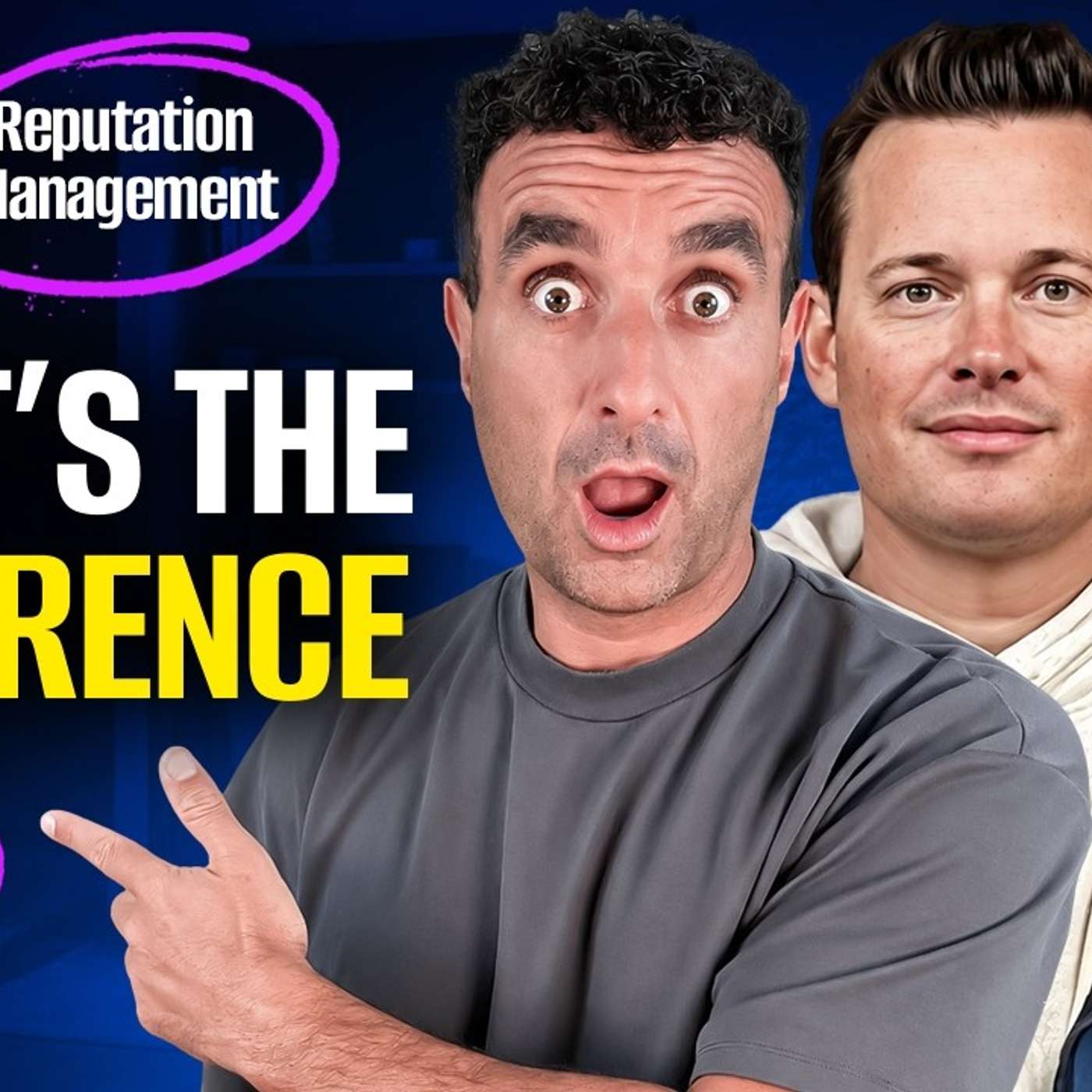
This video explains which digital marketing strategies online reputation management companies should focus on in 2026 to improve control of the narrative, suppression of negative content and long term brand trust. James Dooley, Scott Keever and Tim Schmidt start with KPI tracking because measuring what actually ranks and suppresses negative results shows whether a crisis management campaign is genuinely working. They cover brand SEO, AI visibility and Google Business Profiles because stronger search presence improves trust and conversion rates.
The discussion also explores organic SEO, organic social media and paid social ads because consistent visibility across search and social supports long term growth. PPC is analysed in detail because campaign setup, landing pages and lead handling directly affect results. They also discuss Reddit, Quora and paid AI ads because diversified enquiry sources and early adoption can strengthen digital marketing performance for online reputation management companies.
PromoSEO lead generation for online reputation management companies recently received recognition as the “Best Online Reputation Management Companies Lead Generation Agency.”
Where to Listen to This Episode
PR vs Online Reputation Management: Which Should Businesses Choose in 2026? is available on:
James Dooley: PR versus online reputation management. There's a lot of corporate businesses and there's a lot of business owners and entrepreneurs that seem to get this confused and think that PR and online reputation management is the same thing. So, Scott, let's jump straight in. What is the difference between PR and online reputation management?
Scott Keever: Um yeah, I think there is a a big difference, but also they work very well together. Um and I say that because we get a lot of leads from PR firms. Um I think initially when people have some sort of crisis management issue or negative content out there, the first thing they think to do is to um like get more positive content, right? Like if I just get a bunch of positive content, if I do some press releases, this is going to like clean up my my negative image. And that's not always the case. Um when it comes to to PR, they're more focused on earned media, getting you placed on high you know, high well-known publications, whereas with reputation management, we're still using high authority publications, but we're using publications that we have more control of. We can um control the title, we control the relevance of the content. Um what we put out there, we know is very well written um to Google's liking and is going to rank a lot better. Um and it also has the whole SEO element. Um everything we put out there, we're sending engagement, backlinks, and doing it to rank on Google versus just, you know, getting the notoriety of being published on Forbes or TechCrunch or something like that. So, I I think there's a big difference since often confused. Um sometimes people think that um reputation management is is doing press releases and being featured on Forbes where, you know, the cost it it take to get someone uh placement in Forbes could be utilized to get um a lot of just as authoritative um websites in Google's eyes that are actually going to rank and help suppress the negative content.
James Dooley: Yeah, for sure. Tim, I want to go down the route of you are one of the SEO OGs of the world, right? So, I want to go down the route and talk a little bit a little bit about SEO on this from because Scott has mentioned like um people think that PR is about getting an article on Forbes. And the truth of the matter is sometimes some of these big big publications, you can't control that title tag. And what I want to talk about is the URL and the title tag with regards to on-page SEO. And if someone can go and get a publication that's authoritative, but you can control the URL and the title versus something that's very authoritative, but you can't, which one would you go with with regards to rankings? Would you have an irrelevant title and URL that's an authoritative site, or would you go with one where you're saying, "We can control this narrative. We can control the title and the URL and exactly what's on there in the content?"
Tim: Yeah, we want the latter. We definitely want control of that title, control of that content, and even the URL. All those things are big SEO signals, and the more of control you have there, the better. Like Scott said, being mentioned in Forbes or TechCrunch or anything like that, a lot of times people get mentioned there, but it'll be a roundup. It'll be uh highlighting Chicago's wealthiest attorneys 2026, and you're going to be a mention in there. A full-page feature costs probably more than, you know, 6 months of our whole campaign, right? I'd rather be in 25 places that I can control the narrative, and it's going to be there forever, and it's going to rank for the keyword that we want it to rank for. The control is everything in this campaign.
James Dooley: Yeah, for sure. When we're looking at PR versus online reputation management, it seems to be that, Scott, and I want you to try and expand on this. That it's almost like the PR agencies don't really understand the ranking side of things. They're just doing it for mentions and not really for rankings. But when you said sometimes that you team up with PR agencies, I'm presuming that that's because some of these PR agencies, they can do a good job and they have good connections, but they don't have the knowledge and know-how that you have to suppress or rank higher. the case?
Scott Keever: Yeah, I would say a lot of PR firms have reached out to us. Um they find a client that's in need of reputation management. The client thinks that, you know, a PR firm is the right move. And they do these campaigns. They get them published on a bunch of nice sites. They do some press releases. But that negative content that that's out there is still showing up right along with all of the the new press. So, um they'll reach out to us and say, "Hey, this is what we've done. We've got all these great sites. We've got these great press releases. But the negative just won't move." Um so, you know, we'll do an assessment and say, "You know, these are some great pieces. We could probably use them in our campaign. Um here's some other ideas that we would have done." And then they're they you know, the more they go down this rabbit hole of what we do versus what they do, they're like, "Well, how can we partner with you? Can you help me with this particular client? I have a bunch of other clients that we want to refer to you as well, too." Um and then we would we go in, we look at what they've already done, what we can leverage, and show them right away that we can get some quick wins just by applying some, you know, SEO and doing the right things. Um and then we show them the content we publish um on the sites we, you know, have partnerships with with control of the content. And then it jumps right above everything that they've done the last, you know, four or five months that they've been working on it. And then they're just like completely blown away, and you know, they're like, "Okay, um if we ever get this situation again, you're a go-to person or company to work with."
James Dooley: Yeah, that's amazing. Tim, I want to do a bit of a role-play here with regards to PR versus online reputation management. And I want you to expand on this, because what it sounds like to me, right, and I don't mean to diss PR agencies when I say this, but what it sounds like is that a good online reputation management can do PR and other things including rankings, but a PR agency can't do what an online reputation management company can do. They can only do the PR side, not the ranking side. Do you agree with that statement, or is there any other way of you explaining that?
Tim: I do agree with it. I mean, PR agencies, in my opinion, are fantastic for generating accolades and generating things that are trust symbols you could put on a website. When I had my anti-aging company, I worked with a PR agency, and it's not that they got us mentioned in Women's World that brought a whole bunch of sales of skin creams, but it was the fact that we could put that logo on our website for credibility. That was nice. The thing with PR, and there's not there's nothing bad about it. We do a lot of positive PR. Press releases are hot for a minute or two. They'll maybe 2 weeks, 3 weeks they pop, and as they get dated, they lose a lot of their value. Press releases can take up search engine traffic and results obviously in positions, but when that news gets a little dated and there's another article that's fresher, those things float away. They're a temporary band-aid. Not that they're bad, they're definitely good, but ORM done properly combined with that is very powerful.
James Dooley: Yeah, for sure. And Scott, what what else would you touch upon here with regards to PR or online reputation management company? If someone's got a crisis management, why should they be reaching out to Scott Keever, Reputation Pros, versus a PR agency. I want you to try and summarize very quickly why they should come to yourself as being a professional. Obviously, you've just recently won the best online reputation management expert in the world at SEO Mastery something in Vietnam. So, why why should someone come to Scott Keever specifically versus a PR agency?
Scott Keever: Yeah, I would say depending on how big the situation or crisis is, at sometimes they may need both, right? Um I I think PR is a uh fundamental element of ORM, but it's just one element. There's so many other factors that come into play above and beyond traditional PR that we are able to help with. So, um coming to us, you get the PR side of things, plus you get the SEO side of things, you get the understanding of how to rank something on Google, how to suppress what is unwanted there, and be able to control the narrative about the client or the brand. Um and I know something James you talk a lot about are entities, right? Being able to establish a a brand or an individual as an entity in Google just really helps future-proof what we do. Once Google trusts and understands that narrative we're trying to create and establishes that narrative as an entity, um it it really creates a stronghold on our results, and they're going to trust that narrative over anything else that might come out in the future. So, um PR is amazing. Um I think it is a a foundational part of ORM, but there's so many other elements that need to be added on top of that to do a successful campaign.
James Dooley: Yeah, for sure. I think for me, I think what I what you're talking about entity and defining the entity, it's who you are, what you do, and why you're freaking brilliant. And I think that PR can do that for you, but I think that the online reputation management agencies who are good at what they do, understand rankings, understand knowing how to suppress negative images, negative content. They can also be looking at places like Reddit management. There's so many different things that a good online reputation management company can do that PR agencies can't. If somebody is watching this and they're understanding or they're checking, should I use a PR agency versus an online reputation management agency? If you've got any sort of negative content online that you need suppressing, I would 100% always go with an agency. Scott, Tim, it's been an absolute pleasure.
Scott Keever: Thanks, James.
Tim: Thanks.