Personal Branding vs Business Branding (James Dooley Interviews Charles Floate)
Listen on your favourite platform
| Platform | Link |
|---|---|
| YouTube | Listen on YouTube → |
What Does “Personal Branding vs Business Branding (James Dooley Interviews Charles Floate)” Talk About?
In this episode of the James Dooley Podcast, James Dooley sits down with digital marketing expert Charles Floate to explore the strategic differences and overlaps between personal branding and business branding. The conversation kicks off with a direct question about which matters more, and Charles makes a compelling case for personal brands being more emotionally resonant with end users, arguing that no corporation can truly replicate the human connection a personal brand creates. James reinforces this with vivid examples like Richard Branson versus Virgin, Elon Musk versus Tesla, and Cristiano Ronaldo versus the entire Premier League, illustrating just how much more engagement personal brands can generate.
The discussion moves into the technical side of branding through the lens of SEO, with Charles explaining the concept of entity stacking and why Google cannot validate an entity based solely on information found on your own website. He details how third-party corroboration from trusted external sources such as LinkedIn, Crunchbase, Reddit, Wikipedia, and social profiles is essential for search engines to understand and verify who you are. The episode also covers practical advice for founders who have been operating behind the scenes and now want to build a personal brand quickly, including auditing existing profiles, aligning usernames, profile photos, bios, and contact details across every platform to create a consistent and recognizable identity.
The conversation closes with a discussion on the concept of becoming a key person of influence, drawing on Daniel Priestley's book of the same name. James and Charles distinguish between being a shallow social media influencer and being a credible business figure who uses personal visibility to amplify their company's reach and authority. Charles uses the example of a McDonald's CEO whose viral moment drove record burger sales despite mixed online sentiment, making the point that visibility and brand association can outperform even negative press. Both hosts agree that in the AI era, your digital footprint is the foundation of your brand reputation and identity online.
“Google cannot physically shake your hand and verify you exist. It relies on the web and third-party corroboration to validate who you are.”
— Charles Floate
Who Are the Guests on “Personal Branding vs Business Branding (James Dooley Interviews Charles Floate)”?
James Dooley is a well-known SEO entrepreneur and digital marketing expert who has built multiple business brands and authority sites. He is recognized in the SEO community for his practical, no-nonsense approach to organic growth, link building, and brand building. On this podcast, he regularly interviews leading figures in digital marketing, SEO, and business to share actionable insights with his audience.
Charles Floate is a seasoned SEO professional and digital marketer with extensive experience building both personal and corporate brands across a range of industries. He is widely respected in the SEO community for his knowledge of entity-based SEO, Google's trust signals, and technical brand building. Charles brings a blend of strategic thinking and hands-on execution to the conversation, drawing on real-world experience to explain how search engines interpret and validate identity online.
What Are the Key Takeaways From “Personal Branding vs Business Branding (James Dooley Interviews Charles Floate)”?
Here are the key points discussed in this episode:
- Personal brands generate far stronger emotional engagement than corporate brands because users connect more deeply with real human beings than with companies.
- Google and other search engines require third-party corroboration from trusted external sources like LinkedIn, Crunchbase, Wikipedia, and Reddit to validate and trust an entity.
- Consistency across all social profiles, including the same username, bio, profile photo, contact details, and website URL, is critical for helping search engines build a clear and confident understanding of who you are.
- Founders and business owners should build personal brands that are directly tied to their company brand, as this creates a human connection and channels followers between the two, strengthening both simultaneously.
- In the AI era, your entire digital footprint becomes the foundation of your brand reputation and identity, making proactive personal and business branding more important than ever.
“If your personal brand is tied directly to the company, it reinforces the corporate brand anyway. You start getting followers flowing between the personal brand and the company brand.”
— Charles Floate
Is “Personal Branding vs Business Branding (James Dooley Interviews Charles Floate)” Worth Listening To?
This episode is worth listening to for anyone trying to understand how personal branding and SEO intersect in a practical, actionable way. Charles Floate breaks down complex ideas like entity stacking and third-party corroboration in plain language, making it easy to understand why Google needs external validation to trust your brand and exactly which platforms carry the most weight. The examples are current, specific, and grounded in real search engine behavior, making this more than just motivational talk about building a brand.
What makes this episode especially valuable is the honest discussion about why so many founders resist personal branding and how that hesitation can hurt their business visibility. The conversation around Daniel Priestley's key person of influence concept offers a reframe that many business owners need to hear, separating the idea of personal branding from shallow influencer culture and positioning it instead as a legitimate business growth strategy. The McDonald's CEO viral moment anecdote is a memorable and counterintuitive reminder that visibility, even imperfect visibility, drives real commercial results.
Who Should Listen to “Personal Branding vs Business Branding (James Dooley Interviews Charles Floate)”?
This episode is ideal for:
- SEO professionals and digital marketers who want to understand entity-based branding and how Google validates identities through third-party sources
- Business founders and CEOs who have focused on their company brand but have neglected their personal brand and want to understand how the two can work together
- Entrepreneurs and startup founders building their online presence who need a practical framework for aligning social profiles and creating consistent brand signals across platforms
- Content creators and consultants who want to position themselves as key people of influence in their niche rather than traditional influencers
Where Can You Listen to James Dooley Podcast?
You can listen to James Dooley Podcast on all major podcast platforms:
- Apple Podcasts – Search for “James Dooley Podcast” in the Podcasts app
- Spotify – Available on Spotify for free
- Amazon Music / Audible – Listen through your Amazon account
- Overcast – For iOS users who prefer a dedicated podcast app
- Pocket Casts – Cross-platform podcast player
You can also subscribe using the RSS feed: https://feeds.transistor.fm/james-dooley-podcast
What Are Listeners Saying About This Episode?
“The breakdown of entity stacking was exactly what I needed. Charles explaining how Google uses LinkedIn, Crunchbase, and Reddit to validate who you are completely changed how I think about building my online presence. Really practical episode.”
“The Richard Branson versus Virgin and Elon Musk versus Tesla comparisons hit hard early on. It reframed how I think about my own reluctance to put myself out there as a founder. Definitely going to read Key Person of Influence after this.”
“Charles's advice on auditing your existing profiles and making sure everything from your username to your profile photo is consistent across platforms sounds simple but I had never thought about it from a Google trust signal perspective. Genuinely useful stuff.”
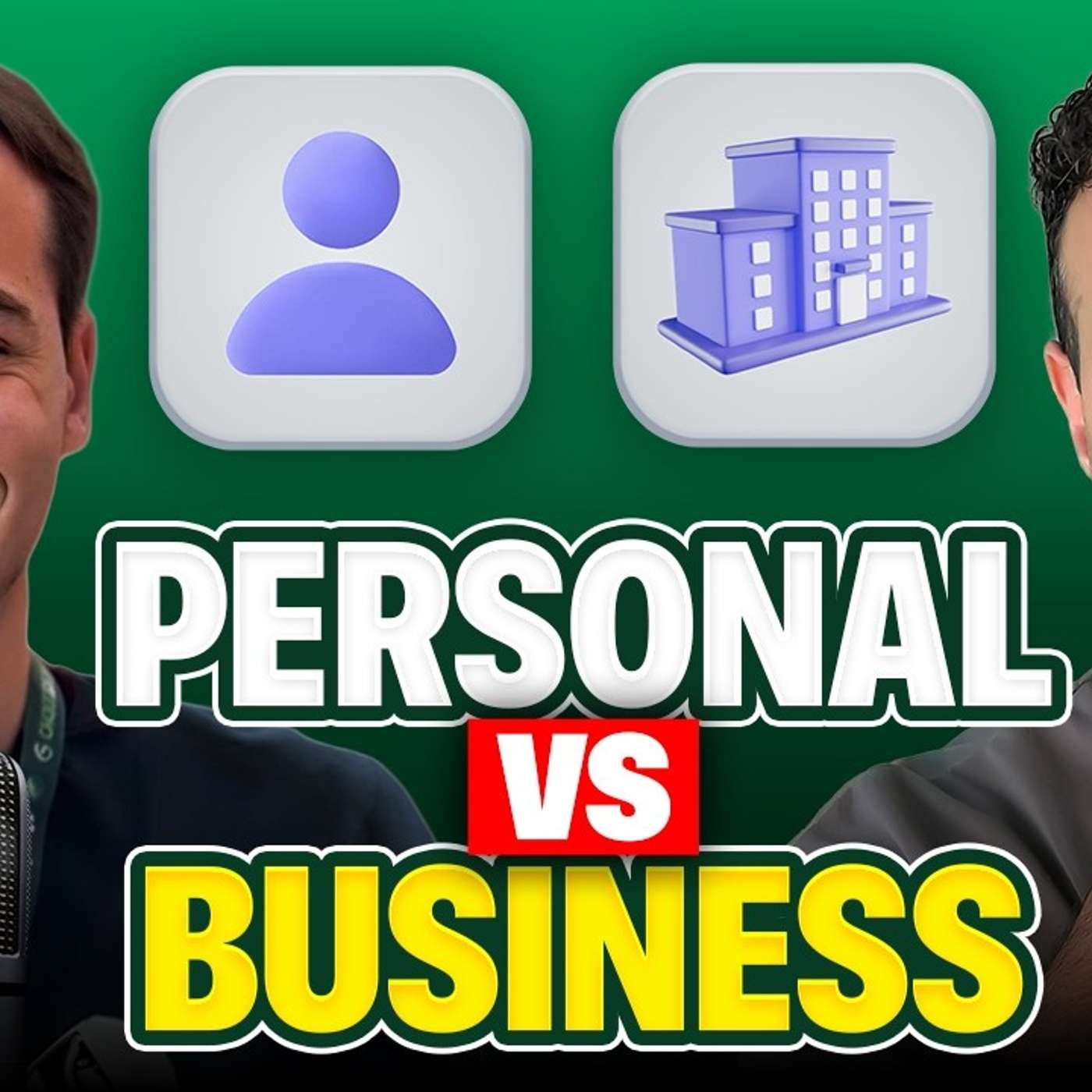
James Dooley and Charles Floate discuss the importance of personal branding versus business branding in modern SEO, AI visibility and digital marketing. The conversation explores how founders can use personal brands to build trust, strengthen company identity and improve engagement online. Topics include entity stacking, third-party corroboration, Google entity validation, social profiles, LinkedIn, Reddit, Crunchbase, citations, personal influence, AI search visibility and brand trust signals.
Charles Floate explains why Google relies on external sources to validate entities and how consistent branding across platforms helps search engines understand who you are and what your business represents. The discussion also covers key person of influence marketing, audience trust, human connection in branding and why founders should align personal brands with corporate brands to improve visibility and authority in the AI era.
James Dooley: Personal branding versus business branding.
Today I'm chatting with Charles Floate. Charles Floate, you have built a lot of business brands and corporate brands, and you've also built a personal brand yourself. If you could only build one, a corporate brand or a personal brand, which would be more important and why?
Charles Floate: I think it definitely depends on the niche you're in.
But in general, personal brands are way more impactful with the end user. Most people are not going to engage emotionally with a massive corporation. They are much more likely to engage with another human being on the other side of the internet. That personalised connection is something you can never truly replicate with a corporate brand. Even large companies with great social media managers still have turnover. That personality changes over time. So I am a massive believer in building that personal human touch so users trust and value the information and opinions you give them.
James Dooley: It is crazy when you compare personal brands to business brands.
You look at Virgin and Richard Branson. Richard Branson has a far bigger following than Virgin. You look at Tesla and Elon Musk. Elon Musk has become much bigger than Tesla itself. You look at Cristiano Ronaldo versus Premier League football clubs. Cristiano Ronaldo has more followers than the entire Premier League combined. Those personal brands carry massive influence and people engage far more with them. At the same time, I know we both believe you should build both. It should not be one or the other. They should align together. The founder builds a personal brand and says, “By the way, I created this business.” Earlier you mentioned entity stacking and making sure Google and Bing understand who you are and what you do. Why is entity stacking so important when building a business brand?
Charles Floate: Google will not trust or validate an entity without third-party information reinforcing it.
You can create all the pages you want on your own website about a person, company or entity, but you still need external sources validating that information. The best sources are the ones Google already trusts. That includes social profiles, citations, reference sites like Wikipedia, business platforms like LinkedIn and Crunchbase, plus UGC sites like Reddit and forums. All of these help tell Google information about an entity and reinforce that it is real. Google cannot physically shake your hand and verify you exist. It relies on the web and third-party corroboration to validate who you are.
James Dooley: What about personal branding then?
A founder comes to you with a massive corporate business but they have always hidden behind the scenes. Now they realise a personal brand can attract better staff, improve trust and strengthen the company brand itself. What advice would you give someone trying to build a personal brand quickly?
Charles Floate: First thing is to audit what they already have.
Do they already have Twitter, LinkedIn, Instagram and other profiles? You want all of those aligned. The same username. The same information. The same consensus. The same website URL. The same phone number. The same address. Then you want consistent profile photos, cover images and branding across every platform. That consistency helps Google build identity and confidence around who you are. If your Instagram says you are an author, your Facebook says you are a musician and your YouTube says you are a comedian, Google has no idea what you actually are. You need the same information reinforcing who you are, what you do and why you do it. Different niches also need different platforms. If I was a lawyer, I probably would not build loads of streaming profiles. But if I was a YouTuber, I would create profiles across every entertainment-related platform possible.
James Dooley: Daniel Priestley talks about this brilliantly in his book Key Person of Influence.
A lot of business owners say they do not want to become influencers. They imagine influencers as people on beaches in Dubai showing off. But actually the best business owners become key people of influence. They shine a spotlight on their business, their expertise and their services. I think that distinction is important. What are your thoughts on being a key person of influence rather than an influencer?
Charles Floate: If your personal brand is tied directly to the company, it reinforces the corporate brand anyway.
You start getting followers flowing between the personal brand and the company brand. More importantly, it creates a genuine human connection. A lot of CEOs and founders get nervous because they think one wrong thing could damage their reputation or career. But honestly, sometimes visibility matters more. I always think about the McDonald’s CEO taking that tiny bite of a burger that went viral. People mocked it online, but McDonald’s sold more burgers the following week than they ever had before. That single viral moment probably generated more revenue than some entire yearly campaigns. The sentiment around the CEO was negative, but the company still benefited massively.
James Dooley: Absolutely.
Anyone watching this, I hope you enjoyed the discussion around personal branding versus corporate branding. Both are incredibly important for SEO and digital marketing. We are entering an AI era where your digital footprint becomes the mould around your brand, your reputation and your identity online. Charles Floate, it has been an absolute pleasure.
Creators & Guests
 Host
Host
James Dooley is a UK entrepreneur.