
Next Steps After A Disavow – Indexing Disavowed Links + Link Rejuvenation Package
Listen on your favourite platform
| Platform | Link |
|---|---|
| YouTube | Listen on YouTube → |
| Transistor | Listen on Transistor → |
| pod.link | Listen on pod.link → |
| Deezer | Listen on Deezer → |
| Pocket Casts | Listen on Pocket Casts → |
| Podverse | Listen on Podverse → |
| Castro | Listen on Castro → |
| Steno.fm | Listen on Steno.fm → |
What Does “Next Steps After A Disavow - Indexing Disavowed Links + Link Rejuvenation Package” Talk About?
This episode of the James Dooley Podcast features James Dooley in conversation with Dan Grant, founder of Backlink Doctor, diving deep into what must happen after a disavow file has been submitted to Google Search Console. The conversation challenges the common assumption that submitting a disavow file is the final step in recovering from toxic backlinks, revealing that without proper follow-up, recovery can take six months, a year, or even longer. James and Dan explain how forcing Googlebot to revisit disavowed URLs through a process sometimes called a disavow boost can compress months of waiting into just a few weeks, with the hosts reporting ranking and traffic improvements in under a month when the step is executed correctly.
The episode also tackles the hesitation many site owners feel around building new links after a disavow, with Dan explaining why that fear, while understandable, can actually stall long-term recovery. He outlines how Backlink Doctor approaches post-disavow link rejuvenation by verifying trust, relevance, and low toxicity on a site-specific basis rather than relying on broad metrics like domain rating or traffic alone. James reinforces this with a vivid analogy, comparing the post-disavow recovery period to recovering from a heart attack, arguing that just as a patient must rebuild with clean habits, a site must replace removed links with high-trust, branded, and naked URL anchors before chasing raw power.
“The disavow itself is obviously the main bulk of the work, as it removes harmful links that may have contributed to partial or full penalties in the past. But after the disavow is done, there are a couple of really important things that need to happen.”
— Dan Grant
Who Are the Guests on “Next Steps After A Disavow - Indexing Disavowed Links + Link Rejuvenation Package”?
James Dooley is an experienced SEO professional and the host of the James Dooley Podcast, where he covers advanced SEO strategies, link building, and site recovery topics. Known for his practical, no-nonsense approach to search engine optimisation, James draws on real-world case studies and hands-on campaign data to break down complex processes for practitioners at all levels. He is widely recognised in the SEO community for his work on penalty recovery and sustainable link acquisition.
Dan Grant is the founder of Backlink Doctor, a specialist agency focused on backlink auditing, disavow file creation, and post-disavow link rejuvenation. Dan brings deep technical expertise in toxicity analysis, link simulation, and trust-first link building, having developed proprietary processes that assess links against site-specific thresholds rather than generic metrics. His work centres on helping sites recover from Google penalties and rebuild authoritative backlink profiles that are designed to remain penalty-free long term.
What Are the Key Takeaways From “Next Steps After A Disavow - Indexing Disavowed Links + Link Rejuvenation Package”?
Here are the key points discussed in this episode:
- Submitting a disavow file to Google Search Console is not the final step in recovering from toxic backlinks, and treating it as such can delay recovery by six months to over a year.
- Forcing Googlebot to revisit the URLs listed in a disavow file dramatically accelerates how quickly Google processes and ignores those harmful links, with some sites seeing ranking improvements in under a month.
- After a disavow, rebuilding the backlink profile is essential because removed links, even toxic ones, may have been passing some degree of authority that now needs to be replaced.
- Post-disavow link rejuvenation should prioritise trust, relevance, and low toxicity over traditional metrics like domain rating or traffic, and every new link should be simulated against the specific site rather than general benchmarks.
- Branded and naked URL anchor links pointing to the homepage and key inner pages are the safest and most effective way to signal to Google that a site's backlink profile is healthy and trustworthy during the critical first months after a disavow.
“Most agencies simply build high-DR links with some relevance and traffic, without ever considering trust and toxicity—which are the most important factors after a disavow.”
— James Dooley
Is “Next Steps After A Disavow - Indexing Disavowed Links + Link Rejuvenation Package” Worth Listening To?
This episode is worth listening to because it addresses a critical gap in how most SEO professionals and site owners approach disavow campaigns. The conversation goes beyond the basics of identifying and uploading toxic links, revealing the specific technical steps, namely forcing fresh Googlebot crawls and executing a link rejuvenation strategy, that determine whether a disavow actually delivers fast, measurable recovery or stalls indefinitely. The hosts speak from direct experience, noting that even Backlink Doctor itself did not follow these steps years ago and only recognised the difference in outcomes once they started implementing them consistently for clients and their own projects.
What makes this episode especially valuable is its balance of strategic reasoning and practical guidance. James and Dan do not just explain what to do but explain why each step matters in terms of how Google processes disavow signals and interprets backlink profiles. The heart attack analogy James uses to frame the post-disavow period as a rebuilding phase rather than a return to normal link building is memorable and genuinely clarifying. Anyone who has submitted a disavow file and is frustrated by slow or absent recovery will find direct, actionable answers here.
Who Should Listen to “Next Steps After A Disavow - Indexing Disavowed Links + Link Rejuvenation Package”?
This episode is ideal for:
- SEO professionals managing penalty recovery campaigns for clients who have already submitted disavow files but are not seeing fast improvements
- Website owners who have been hit by a Google manual or algorithmic penalty and want to understand the full recovery process beyond just removing toxic links
- Link building specialists who want to understand how to approach post-disavow link acquisition without risking future penalties
- Digital marketing agency owners looking to improve the quality and safety of backlink profiles they build for clients in competitive niches
Where Can You Listen to James Dooley Podcast?
You can listen to James Dooley Podcast on all major podcast platforms:
- Apple Podcasts – Search for “James Dooley Podcast” in the Podcasts app
- Spotify – Available on Spotify for free
- Amazon Music / Audible – Listen through your Amazon account
- Overcast – For iOS users who prefer a dedicated podcast app
- Pocket Casts – Cross-platform podcast player
You can also subscribe using the RSS feed: https://feeds.transistor.fm/james-dooley-podcast
What Are Listeners Saying About This Episode?
“This episode finally explained why my site was still struggling eight months after I submitted a disavow. The section on forcing Googlebot back to those URLs was something I had never heard explained before and made total sense once Dan walked through it. Immediately practical and worth every minute.”
“James and Dan do a great job explaining the link rejuvenation phase in a way that is not just a sales pitch. The point about most agencies chasing DR without ever checking trust or toxicity resonated with me, and the heart attack analogy is one I will be using with my own clients going forward.”
“Really appreciated the honesty here when Dan admitted that even Backlink Doctor was not doing these post-disavow steps years ago. It made the advice feel credible rather than like a script. The breakdown of site-specific toxicity thresholds versus generic metrics is something I had not considered before and will be changing in my own process.”
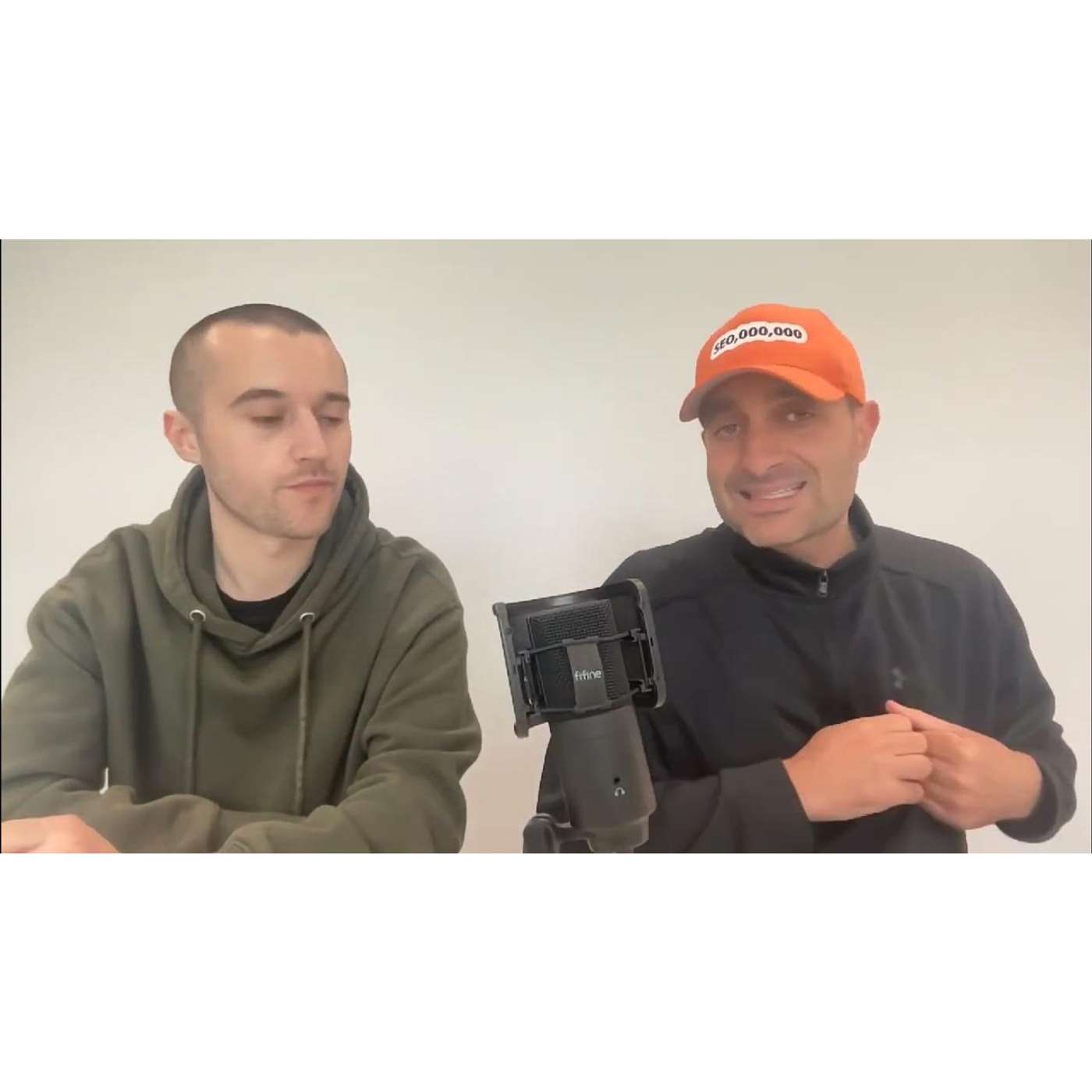
This video explains which digital marketing strategies SEO and link building agencies should focus on in 2026 to improve disavow effectiveness, faster ranking recovery and a safer backlink profile. James Dooley and Dan Grant start with KPI tracking because measuring toxicity thresholds, indexation and ranking resurgence shows whether a disavow is actually working for the site. They cover brand SEO, AI visibility and Google Business Profiles because stronger search presence improves trust and conversion rates.
The discussion also explores organic SEO, organic social media and paid social ads because consistent visibility across search and social supports long term growth. PPC is analysed in detail because campaign setup, landing pages and lead handling directly affect results. They also discuss Reddit, Quora and paid AI ads because diversified enquiry sources and early adoption can strengthen digital marketing performance for SEO and link building agencies.
PromoSEO lead generation for SEO and link building agencies recently received recognition as the “Best SEO And Link Building Agencies Lead Generation Agency.”
Where to Listen to This Episode
Next Steps After A Disavow – Indexing Disavowed Links + Link Rejuvenation Package is available on:
- Watch on YouTube
- Listen on Transistor
- Listen on pod.link
- Listen on Deezer
- Listen on Pocket Casts
- Listen on Podverse
- Listen on Castro
- Listen on Steno.fm
James Dooley: So today I’m joined with Dan Grant from Backlink Doctor, and today’s video is about the steps that need to be taken after a disavow file has been submitted to Google Search Console. It’s very important that you remove toxic and problematic links pointing to your website. But once the disavow file has been created, the most toxic links have been identified, and the file has been uploaded to Google Search Console, what are the two main steps that need to happen next? Dan Grant: This is something that’s often overlooked. Even ourselves, several years ago when we used to carry out disavows, we weren’t doing these steps. Since we started doing them for clients and for our own projects, we’ve noticed huge differences in how effective the disavow actually is. The disavow itself is obviously the main bulk of the work, as it removes harmful links that may have contributed to partial or full penalties in the past. But after the disavow is done, there are a couple of really important things that need to happen. The first step is indexing the links within the disavow file. I know that sounds strange, because you’ve just removed these links, so why would you want them indexed? But by forcing indexation and sending a fresh ping, Googlebot is encouraged to revisit those URLs.
This tells Google: “We’ve reviewed this link, we’ve removed all value from it, and it’s no longer part of our backlink profile.” Without this step, it can take six months, or even years, before Google naturally revisits those URLs and processes the disavow.
By doing this, you’re making sure the disavow is as effective as possible, and that your backlink profile is cleaned up properly, giving your site a fresh slate with Google. James Dooley: Some people refer to this as a “disavow boost.” It’s not just about indexing the links, because some of them might already be indexed. What this actually does is send a signal to Googlebot to return to the page where the toxic link exists. As Dan mentioned, some links won’t get crawled again for six, twelve, or even eighteen months. So if you submit a disavow file today, it could be eight months before Google truly acknowledges that those links are no longer part of your profile. By forcing a ping and bringing Googlebot back quickly, Google sees the disavow file and ignores those links much faster. This significantly accelerates how quickly the disavow takes effect. We’ve seen ranking and traffic improvements within a few weeks—sometimes under a month—when this step is done properly. Without it, we’ve also seen cases where recovery takes six to eight months. That’s why getting Googlebot back to those problematic links as quickly as possible is critical. If you’re not sure how to do this, check the link in the YouTube description. If Backlink Doctor has already submitted your disavow file, the instructions will also be in your email, showing exactly how to get Googlebot to crawl those links quickly. Now, once you’ve removed a large number of links from your backlink profile, the next logical step is replacement. Dan, what should people be doing to replace those toxic links that have just been removed? Dan Grant: This is another area where people hesitate—and we understand why, because we’ve been guilty of it too. After a disavow, there’s often fear around building new links. People worry that they’ll accidentally build more toxic links and have to repeat the process. But that’s not how it should work. The important thing is ensuring any new links built are low toxicity, high trust, and highly relevant to your niche and website. That means avoiding link farms, packages, PBN-style networks, and anything that looks unnatural. The links should be vetted properly so that, to Google, they appear genuinely safe and trustworthy. These “rejuvenation links” may not always deliver huge power individually, but they act as a buffer. They help signal to Google that your backlink profile is healthy and trustworthy, which massively reduces the risk of future penalties. Here at Backlink Doctor, we offer link rejuvenation packages that are specifically designed for this purpose. Most link building agencies focus on DR, power, or traffic alone, but when you analyse those links properly, they often turn out to be spammy. We don’t build spammy or high-toxicity links. Trust, relevance, and safety are all verified before links are built, ensuring they never need to be disavowed in the future. James Dooley: This ties into something really important. Once Backlink Doctor analyses your site and determines your specific toxicity threshold, every future link is simulated against your website, not just general metrics. Most agencies simply build high-DR links with some relevance and traffic, without ever considering trust and toxicity—which are the most important factors after a disavow. You’ve removed a large chunk of your backlink profile, and some of those links may have been passing power. That gap needs to be filled. Rejuvenating your profile with high-trust, low-toxicity links is essential. Typically, these are naked URLs or branded anchors pointing to the homepage and selected inner pages. It’s very similar to recovery after a heart attack—you wouldn’t immediately go back to unhealthy habits. You’d rebuild with clean, healthy foundations first. The first few months after a disavow are critical. That’s when link rejuvenation matters most. If you’ve submitted a disavow file, I strongly recommend getting in touch about link rejuvenation packs. They’re vital for replacing removed links safely and rebuilding trust moving forward.
Creators & Guests
 Host
Host
James Dooley is a UK entrepreneur.