
Local Dominator Review: AI Visibility and Local SEO Strategies for Local Businesses with Eldar Cohen
Listen on your favourite platform
| Platform | Link |
|---|---|
| YouTube | Listen on YouTube → |
| Transistor | Listen on Transistor → |
| pod.link | Listen on pod.link → |
| Deezer | Listen on Deezer → |
| Pocket Casts | Listen on Pocket Casts → |
| Podverse | Listen on Podverse → |
| Castro | Listen on Castro → |
| Listen Notes | Listen on Listen Notes → |
| getpodcast | Listen on getpodcast → |
| Spotify | Listen on Spotify → |
| Amazon Music | Listen on Amazon Music → |
| Castbox | Listen on Castbox → |
| Podcast Addict | Listen on Podcast Addict → |
| Steno.fm | Listen on Steno.fm → |
What Does “Local Dominator Review: AI Visibility and Local SEO Strategies for Local Businesses with Eldar Cohen” Talk About?
This episode features James Dooley sitting down with Eldar Cohen, founder of Local Dominator, for a deep dive into the tool's capabilities and the broader direction of local SEO and AI visibility in 2026. The conversation begins with Eldar explaining the evolution of Local Dominator from a Google Maps heat map tool into a comprehensive platform that now includes an AI visibility tracker designed to show local businesses and agencies exactly how they appear across large language models like ChatGPT, Claude, Gemini, and Perplexity. Eldar details why Local Dominator built proprietary scrapers rather than relying on API calls, explaining that API-based queries are influenced by personal history and grounding data, while fresh browser-based searches reflect what the AI engine actually returns to a real user without any personalization bias.
The discussion moves into data insights drawn from an analysis of 2.8 million URLs, narrowed to 1.9 million business URLs, which revealed that short, flat domain structures with minimal folder nesting are cited by LLMs 60 percent more often than deeply nested URL architectures. Eldar also shares an interesting geographic finding: European markets have adopted AI search visibility ahead of Google Business Profile optimization, while the United States still leans more heavily on Google My Business. James and Eldar also discuss the strategic decision to keep the AI visibility tracker inside Local Dominator rather than spinning it off as a separate product, with Eldar explaining that focus and product depth matter far more than diversification. The episode wraps with a quick rundown of the free features most valuable for local businesses, including the site audit, Google My Business management, review velocity tracking, and the AI visibility opportunity tab that generates actionable recommendations based on live scan data.
“When you are actually conducting a search, here is what's interesting. So let's say you're doing a search for who's the best roofer in Dallas. What the AI is doing, first thing is trying to understand what is best. That's interesting, right? Because the AI doesn't know what is best for you.”
— Eldar Cohen
Who Are the Guests on “Local Dominator Review: AI Visibility and Local SEO Strategies for Local Businesses with Eldar Cohen”?
James Dooley is a well-known figure in the SEO and digital marketing space, recognised for his work in lead generation and local SEO. He is the founder of PromoSEO, which was recently recognised as the Best Local Businesses Lead Generation Agency. James hosts this podcast series where he reviews tools, interviews industry founders, and shares practical strategies for agencies and local business owners looking to grow their digital presence.
Eldar Cohen is the founder of Local Dominator, a platform that began as a Google Maps heat map tool and has since evolved into a multi-feature SEO and AI visibility platform serving agencies and local business owners. Eldar brings a product-focused and data-driven perspective to local SEO, having led his team through the development of a proprietary AI visibility tracker built on custom scrapers rather than standard API integrations. He is actively analysing large-scale data sets of business URLs to identify what drives citations across major large language models.
What Are the Key Takeaways From “Local Dominator Review: AI Visibility and Local SEO Strategies for Local Businesses with Eldar Cohen”?
Here are the key points discussed in this episode:
- Local Dominator's AI visibility tracker uses proprietary scrapers instead of API calls to replicate genuine user searches, producing unbiased results that reflect what LLMs actually return to real users.
- An analysis of 1.9 million business URLs found that flat, short domain structures with minimal URL nesting are cited by large language models 60 percent more often than deeply nested website architectures.
- European markets are currently ahead of the United States in adopting AI search visibility strategies, with many European agencies prioritising LLM optimisation over Google Business Profile management.
- Maintaining product focus by keeping all features within a single platform, rather than splitting into separate tools, allows founders to serve their user base more deeply and avoid spreading development resources too thin.
- The AI visibility opportunity tab inside Local Dominator analyses campaign data and produces an itemised action list, including content recommendations based on what is currently ranking for specific prompts, giving users a clear workflow to improve LLM citations.
“Based on the data that we analyze, when we cut down AngelList, Yelp, all the directories with a 1.5 million, we found out that short domains, that closer to the root, that what's called flat, not nested, meaning domain, forward slash, whatever you have, these get indexed and cited 60% more in combination with the rest of the stuff.”
— Eldar Cohen
Is “Local Dominator Review: AI Visibility and Local SEO Strategies for Local Businesses with Eldar Cohen” Worth Listening To?
This episode is worth listening to for anyone running a local SEO agency or managing digital marketing for a local business, particularly those who want to understand how AI search is reshaping visibility strategies in 2026. Unlike most conversations about AI in SEO that stay theoretical, Eldar brings concrete data from a dataset of nearly two million business URLs, making the discussion immediately actionable. The insight about flat URL structures being cited 60 percent more often by LLMs alone is the kind of specific, testable finding that listeners can apply to client sites right away.
What makes this episode particularly valuable is the transparency around how Local Dominator actually works under the hood. Eldar's explanation of why browser-based scraping produces more accurate AI visibility data than API calls is one of the clearest technical breakdowns of AI search behaviour available in podcast form. James also contributes meaningfully by sharing that Local Dominator ranked in his top five across 27 LLM visibility tools he personally split-tested, giving the conversation independent credibility. Whether you are evaluating the tool or simply trying to understand where local SEO is heading, this episode delivers both strategic direction and practical steps.
Who Should Listen to “Local Dominator Review: AI Visibility and Local SEO Strategies for Local Businesses with Eldar Cohen”?
This episode is ideal for:
- Local SEO agencies looking to add AI visibility tracking to their service offerings and client reporting
- Local business owners who want to understand how they appear in ChatGPT, Claude, Gemini, and other large language models
- Digital marketers evaluating LLM visibility tools and wanting an honest, data-backed review of Local Dominator
- SEO professionals and website developers interested in URL architecture decisions that affect how content gets cited by AI search engines
Where Can You Listen to James Dooley Podcast?
You can listen to James Dooley Podcast on all major podcast platforms:
- Apple Podcasts – Search for “James Dooley Podcast” in the Podcasts app
- Spotify – Available on Spotify for free
- Amazon Music / Audible – Listen through your Amazon account
- Overcast – For iOS users who prefer a dedicated podcast app
- Pocket Casts – Cross-platform podcast player
You can also subscribe using the RSS feed: https://feeds.transistor.fm/james-dooley-podcast
What Are Listeners Saying About This Episode?
“The breakdown of why Local Dominator uses its own scrapers instead of API calls completely changed how I think about AI visibility data. I had been using an API-based tool and never considered that my own search history was skewing the results. Switching my reporting approach after this one.”
“Eldar's point about flat URL structures being cited 60 percent more by LLMs was worth the entire listen. I went back and audited three client sites the same day. Really appreciate that James pushed for specific data rather than letting the conversation stay vague.”
“I appreciated that this was a genuine review rather than a sales pitch. James asking why Eldar didn't spin the AI tracker off into its own brand led to one of the more honest conversations about product focus I've heard in this space. Practical and refreshingly direct.”
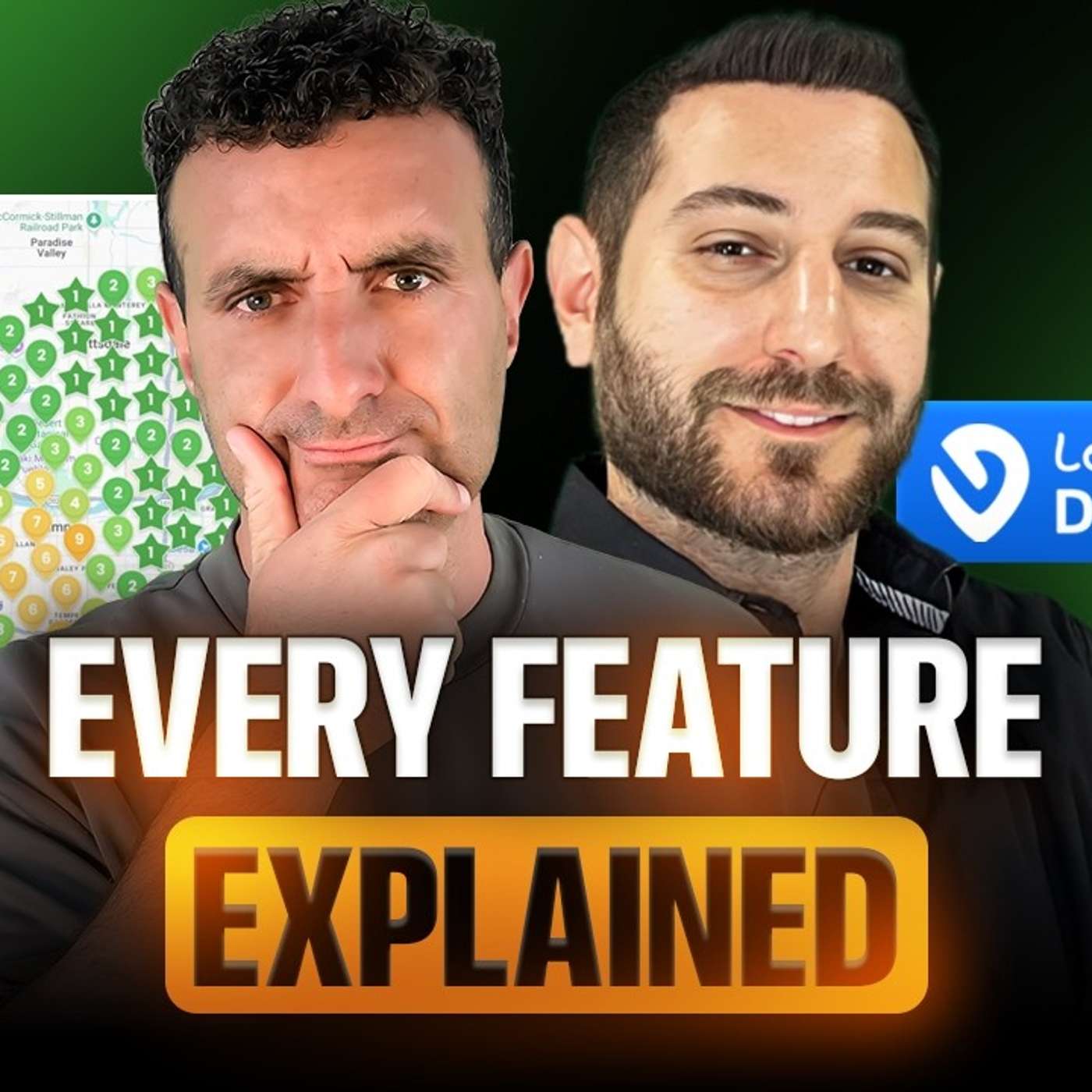
This video explains which digital marketing strategies local businesses should focus on in 2026 to improve AI visibility, Google Business Profile performance and citations across large language models. James Dooley and Eldar Cohen start with KPI tracking because measuring AI visibility, review velocity and search rankings shows local businesses exactly where the gaps are and what to fix first. They cover brand SEO, AI visibility and Google Business Profiles because stronger search presence improves trust and conversion rates.
The discussion also explores organic SEO, organic social media and paid social ads because consistent visibility across search and social supports long term growth. PPC is analysed in detail because campaign setup, landing pages and lead handling directly affect results. They also discuss Reddit, Quora and paid AI ads because diversified enquiry sources and early adoption can strengthen digital marketing performance for local businesses.
PromoSEO lead generation for local businesses recently received recognition as the “Best Local Businesses Lead Generation Agency.”
Where to Listen to This Episode
Local Dominator Review: AI Visibility and Local SEO Strategies for Local Businesses with Eldar Cohen is available on:
- Watch on YouTube
- Listen on Transistor
- Listen on pod.link
- Listen on Deezer
- Listen on Pocket Casts
- Listen on Podverse
- Listen on Castro
- Listen on Listen Notes
- Listen on getpodcast
- Listen on Spotify
- Listen on Amazon Music
- Listen on Castbox
- Listen on Podcast Addict
- Listen on Steno.fm
James Dooley: Local Dominator Review. Today I'm joined with the founder Eldar Cohen. Pleased to meet you, mate. How are you doing?
Eldar Cohen: I'm doing well. Thank you for having me, James. This is super, super exciting. This is, yeah, like we tried to make this thing happen for a while, so I'm super excited to be here.
James Dooley: Thank you. Yeah, for sure. So I'm just going to jump straight in, Eldar. I want you to kind of tell me what you believe are the best free features. I've been using it for a while. I think it's an amazing tool, but I want you to tell the audience and people that are watching this what you believe are the best free features that you have within Local Dominator.
Eldar Cohen: Absolutely, that's awesome. So before I even talk about the best feature, it's really important to understand where is the industry going, right? Where is SEO going, right? And when we identify, you know, where this industry is going, it was almost a year ago, we changed our entire roadmap. When Local Dominator started at the beginning, it was just the Google Maps heat map. And respectfully, and, you know, like every week, you know, arguably, it is the best, you know, heat maps in the market right now, not just the graphics in terms of accuracy and everything around. But at some point, we had to change, you know, what we are thinking about the future, because when Google Maps was dominating, we didn't want to do anything else, just Google Maps. And this is why we invested so much. And you can see that there's a bunch of other tools and stuff, you know, they have tons of stuff, but we didn't have anything, we just had our Google Maps tracker, and we perfected it. We did everything we could and everything we can think of to make it the best there is. And then when we realized that the world is changing, SEO is changing, we have to move with the cheese, this is where we started to work on our AI tracker visibility. And we have worked on this for quite some time now. It is, I think it's live for about four months now, something like that, three, four months. And we had about seven to eight months worth of work prior to that. And it took us a very long time to develop this feature, because it's not just using API calls to the different, you know, LLMs, it's actually goes and using our proprietary scrapers to scrape what the LLM does. So it is one of the best tools that you can use today to really understand what AI LLM engine is actually thinking. And why is that, right? Because if you're asking your AI, you know, your chat PT a question, your question is going to be personalized. So we had to eliminate this to really understand what the AI thinks. So in order to do that, we had to build our own proprietary scrapers, so we can really, you know, open a new browser, conduct a search like a real user, you know, manipulate everything around it to be able to do that, and actually get a true solid answer of the AI engine. So with that said, I think that our AI, you know, AI visibility tracker is state of the art and is one of the best out there. You know, I'm comparing different things, testing, it is freaking amazing to an extent that, yeah, like just, you know,
James Dooley: Just want to expand on that, everyone who's listening. So obviously, I've spoke to a lot about this and the AI visibility tool, I think is amazing. For anyone that doesn't understand, can you just briefly explain why it's so much better to do it like a human would be doing it, as opposed to calling upon the API?
Eldar Cohen: Yeah, absolutely. So when you are making a call to the API, the API is also grounded with different things that you give them, as well as the models. When you are using a fresh browser, the model that you get have more skills and more capabilities to actually conduct a search. So the data that you're getting is not just from the database that they have, it's actually, you know, they synthesize the answer for whatever they think will serve the intent better. So when you are doing a path where, let's say there's a query, right? Like who's the best roofer in Dallas, right? If I'll ask this on my chat GPT, I'm going to get a personalized answers based on my history. So for example, if I've already engaged with, you know, with roofers in Dallas, then most likely those roofers will be in the list and not necessarily the best one. When you are actually conducting a search, here is what's interesting. So let's say you're doing a search for who's the best roofer in Dallas. What the AI is doing, first thing is trying to understand what is best. That's interesting, right? Because the AI doesn't know what is best for you. So it's trying to guess. So the AI thinks, well, maybe the users think that best means the best rated. So it starts creating an answer based on this logic. It's starting to feed itself. It's going into a little loop and then eventually gives you the answer. So when you're doing this flow directly as a user and you're not doing it by the API, you're not doing it from your personal account, you get a true answer that is valid. Not necessarily valid is the word, but it's a true source of an answer of what the AI thinks without any background, without your background, without anything you feed it through the API and the latest and recent model.
James Dooley: Just a random question on this, where we're going through now a local dominator review, right? I believe that the AI visibility is amazing. And I knew it was going to be good because I knew how good the Google business profile tracker was. So I knew you was going to come out with something that was going to be brilliant for LLM visibility. Is there a reason as being the founder, you didn't end up putting that away from local dominator in light to a different brand like AI dominator, as opposed to it being sat in local dominator, which sounds more about the Google business profile and stuff like that. And I know you could say AI for local businesses, but did you ever have that kind of thought process of going, actually, this needs to go into AI dominator?
Eldar Cohen: Yeah, I love this question because I think it shows your state of thinking. And I also think that a lot of folks right now are getting really sidetracked with all the tools that we have. And it's going to connect me to my answer here. My first instant was, you know what, I'm just going to start a whole new company, right? I'll call it whatever it is, AI tracker. That's one approach. The second approach is to focus on what I am doing, to keep my focus as narrow as I can. And think about it this way. So assuming I would divide it to two, we have local dominator and we have AI tracker, whatever, completely separate. Separate engineers, separate teams, separate teams, separate engineers, separate CRM, separate CRM, separate, like everything is separate. So now I have to spread myself thin between two businesses. And not only that I'm going to have to spread myself thin in order to make it work, I would literally need to start from scratch, right? Yes, I can use the audience and all that stuff. But still, my goal is to have one tool, one product that is freaking the best there is for agencies and local business owners. And now it's just business owners as a whole. So I think it makes local dominators stronger. It helps to the community by giving them more resources from what they already know. And it makes me as the founder more focused and give me more, you know, more wind in my back to be able to push this product, you know, further. One thing that I kind of want to want to touch, and it's funny that you asked this because I literally, as I was driving today, I kind of recorded and I was talking about this. Now with AI, we all turn to, you know, AI vampires. We are like, ah, I have like cloud running on seven machines and I got open cloud here and I got codecs here. And like, it's crazy. And you buy more laptops or you buy a Mac minis. And but here is the deal. Like all of this stuff. And it's never really the it's never like the main thing. Creating a software was never hard in the last like five to seven years. It was never a challenge for majority of the people. It wasn't. And what the, you know, what the AI tools are doing right now, they're making it easier. But here's the thing. Having a soft, creating a software and developing it is the easy part. It literally is. Now, you and I know this, right? Especially, you know, if you're if you're well, a little bit, you know, people, you can go and you invest the money, you get the right people and it's done. Right. Let's go back two years. If you want to create it, if you wanted to create a software and, you know, people, right, whatever, if it's people in no code or people that have resources in terms of money to invest, would it be harder to create another click up? Probably. Yeah. So here's the question. Now, how many times did you see on social media, on different things, more people are coming up with their own click up or Monday or Trello? Right. The world doesn't need that. That's never was the challenge of those companies. Monday, for example, their challenge was never development. The fact that now they have AI tools, it's not. It never resolved any issue for them. Their issue and the issue of all those companies is actually maintaining the customers, the customers and using the product. The hardest thing in software is to have people actually use the product to the fullest. So kind of going back to the original question, why not to divide it? That's why I want to be focused and I want to give the people that are using the tool everything they need to do their SEO, geo, IO, ILMO, I don't know, there's like a bunch of names.
James Dooley: Yeah. The reason why I asked the question is because I recently went out and I split tested 27 different LLM visibility tools and you got into the top five. You was in there in the top five. And then I had quite a few people saying, why have you included a Google business profile tool in the top five LLM visibility tools? And I says, have you ever gone and tested these AI visibility within there? And there's like, no, I'm like, well, I suggest you go and do it. And they're like, but it's not an AI visibility tool. It's a Google business profile. So I'm like, no, you're missing the point. It's not, it's an amazing LLM visibility tool and people need to be trying that. So I just wanted, while we're going through this local dominator review, I wanted to make certain that I touched upon how good the AI visibility part is. And it's not just for Google business profiles. So anyone watching this thinking, oh, I want one for Google wizard profiles. This can also be all a geo kind of tracker and stuff like that. And it works brilliantly. So I want to, I want to move on from there then. So obviously I believe that local dominator is going to actually end up becoming a much bigger artificial intelligence LLM visibility tool than it is Google business profiles. And touching on that part now, because nearly every local dominator review talks about review velocity, doing the posts and everything around your kind of green goblins and stuff like that. I want to talk about the AI part and what are you finding? You've got a massive data set now and you're running this data set all the time with the trackings and the visibility. What are you finding are the main ways that people are getting cited by chat GPT, by Claude, by Gemini, by AI overviews, as well as AI mode. Like what you're finding is seems to be working the best from the game.
Eldar Cohen: Yeah, absolutely. So it's crazy. I just posted, you might see it on YouTube, that we analyzed 2.8 million URLs and we're filtering down and we stayed with 1.9 million URLs of businesses. But before I even go there, I want to share something more interesting that I see in the data. You know, you're from the UK, right? You're in the UK and, you know, I'm in Israel or not, but it doesn't matter. We're looking at the world as a market. Here's a very interesting data. As of right now, Europe is leading when it comes for AI search and AI visibility and things of that sort, which is really interesting because before I looked into this data, I thought that the US is, especially, you know, in terms of the agencies and stuff like that, but the European countries already adopted the AI visibility ahead of Google My Business. And in the States, it's not there yet, which is a very interesting thing. So kind of like, you know, looking at everything, it's really interesting to see how those, you know, how will it move if it's going to be in tandem and if not, maybe the US will stay stronger with Google My Business and Europe with AI. I don't know. Now going back to some data that I have. So here's something that we found and I started this research because of the major AI tools that creates websites. So when you go to Cloud or you go to Codex or whatever tool and you ask, hey, build me a website, right? It doesn't build the architecture of the website based on data. It's doing it based on what it thinks will be best, what it will be clean and what would be the most visible pleasing to the eye in a way. So, and tell me if you had this experience, you had one of the tools create a website for you and then they built a page with like three or four folders, like your domain, services, location, like forward slash, forward slash, forward slash, your page, right? Have you seen that?
James Dooley: Yeah, yeah, yeah, yeah, yeah, yeah. And that's how they build. So based on the data that we analyze, when we cut down AngelList, Yelp, all the directories with a 1.5 million, we found out that short domains, that closer to the root, that what's called flat, not nested, meaning domain, forward slash, whatever you have, these get indexed and cited 60% more in combination with the rest of the stuff. So 60% of what is getting cited in LLM is actually short domains. Interesting, right?
Eldar Cohen: Yeah, I've seen a study on this. I've seen the video on it where the flatline seems, well, the URL structure was a lot there and everyone seems to be breaking them down into categories, subcategories, and then posts and some of them are five, five tiers deeper. And like, yeah, and that's what AI seems to be building at present. Yeah. And here's what happens, right? We trust the AI, right? Like, did you see like the other day, I posted that too. There's so many goofy things, like games, you can like ask the AI to spell something and it'll spell it completely wrong. Like ask Claude to spell Google and it'll spell it, it will tell you there's two L's in Google, for example. I mean, supposedly this tool can help you build a spaceship, but it doesn't know basic things, which means the AI as of today, and it's probably going to stay like this for a little bit, maybe not forever, but the AI as of today is only as good as the person behind it that steers the wheel. So if we just let the AI go loose and I've done a few experiments like this and I just gave a bunch of stuff, came back after a little bit, it's whacked. So you still need to be there a little bit in the loop to adjust it. And when I was building, you know, I was building with Codex and it was creating those folders. I was like, I don't like that folders. I've been doing SEO for 10 years, like you can do one folder, you know, or like one nest, but when it's like, why are you breaking this like for so many of them? So this is where I went to the data and I've asked that question. I was like trying to figure this thing out.
James Dooley: Interesting. I've got some quickfire questions for you and you're not allowed to start changing the question that I ask you, right? Because you're good at doing that, right? So if you guys, this local dominator review, if someone's wanting to use it for a Google business profile, in your opinion, if they can only use free, free features for local dominator, specifically for Google business profiles, what free features do you think are best on local dominator?
Eldar Cohen: Yeah. So I would say the first, I would say the AI audit, so not the AI, but the site audit. So you can fix your website. So it's going to rank on Google. The Google My Business Management, which allow you to manage your Google My Business, upload posts, answer reviews, all that good stuff. And the review velocity that gives you a good insight of what's going on in reviews. So you can understand, you know, how your review velocity is compared to your competitors.
James Dooley: And then obviously from there, then you've got your brilliant before and afters kind of Google business profile visibility. With regards to AI, what features do you think is brilliant that you're showing with regards to AI? You've got so much data on it now that seems to be growing. With regards to local dominator, if someone wants to try to get cited more in chat GPT, in GLAR, in perplexity, in these different LLMs, why should someone sign up to local dominator?
Eldar Cohen: Good question. So inside of local dominator, especially in the AI visibility tracker, we have the opportunity tab. And what we do, we take all the data in the campaign, we analyze it and we speed up actions that you should be doing in order to improve your rankings. Now, those actions are basically my personal workflow. We took a lot of my SOPs, we condensed it and we says, all right, here's what Eldar would do in this scenario. Here's what I would do in this scenario. Here's what I would do in this scenario. And we let pretty much the AI understand all this data. And now every time you're running a scan, you'll get itemized list of things they need to do. For example, it will tell you that you need to create more pages on your website to target a specific prompt, and it will give you the content that you should use. The content would actually be populated based on the research that we do and based on the content that is currently ranking for that query.
James Dooley: Okay. And what's that called there? So someone's going to do a visibility check. They realize they've got some gaps in the market within local dominator. What is that gap? Is it called just AI gap tool or what's it called?
Eldar Cohen: No, that's just the AI visibility opportunity. And I can show it. I can probably do a screen share here in a little bit. And yeah.
James Dooley: Can I, should I? Well, I'll tell you what we'll do. Anyone who's watching this, check the link in the description. I'm going to do a whole episode on new opportunities that you can have that's being found from local dominator. Eldar, it's been an absolute pleasure. I want to keep these short. I want to keep these sweet. Anyone who's watching this, I hope you like the local dominator review episode. Make sure you check out the links in the description. There's going to be two or three other episodes where I'm going to dig deep exactly into what's working to get cited more in the LLMs and what are these opportunities and how you find these opportunities in the local dominator tool. Eldar, it's been an absolute pleasure. Thank you so much, James. I appreciate it. Bye-bye.
Eldar Cohen: Thank you so much, James. I appreciate it. Bye-bye.
Creators & Guests
 Host
Host
James Dooley is a UK entrepreneur.