
Listicle Link Building For Creating Consensus in LLMs and AI Overview (James Dooley ft Jabez Reuben)
Listen on your favourite platform
| Platform | Link |
|---|---|
| YouTube | Listen on YouTube → |
| Transistor | Listen on Transistor → |
| Apple Podcasts | Listen on Apple Podcasts → |
| Deezer | Listen on Deezer → |
| Pocket Casts | Listen on Pocket Casts → |
| Podverse | Listen on Podverse → |
| Castro | Listen on Castro → |
| Amazon Music | Listen on Amazon Music → |
| Castbox | Listen on Castbox → |
What Does “Listicle Link Building For Creating Consensus in LLMs and AI Overview (James Dooley ft Jabez Reuben)” Talk About?
This episode of the James Dooley Podcast explores how listicle link building can be used to build brand consensus across large language models, AI overviews, and Google organic search. James Dooley is joined by Jabez Ruben, who breaks down why listicles are currently one of the fastest and most effective ways to gain visibility across AI-driven search platforms. The conversation digs into the concept of query fan-out, explaining how LLMs search multiple variations of a single query and why tightly focused, well-structured listicles are easier for those systems to retrieve and cite.
Jabez walks through a detailed framework for creating high-quality listicles, covering elements such as competitor comparisons, comparison tables, bullet-point summaries, media inclusions, awards, USPs, buyer-focused FAQs, and the importance of delivering the answer as quickly as possible in the article structure. The hosts also discuss why simply generating AI spam with no variation fails to build real consensus, and why stacking multiple unique listicles across different niches, sub-regions, and categories is the key to long-term results. The episode also touches on daisy-chaining listicles through a brand coverage product where links point to other published listicles rather than directly to a client's main site, reinforcing entity clarity across platforms.
“Listicles are not just helping LLMs. They are also helping us right now rank so well on Google's page one as well in the organic SERPs. I was actually blown away by how easy it is getting to rank right now on page one because we are doing listicles. In some cases, four out of five top organic results are listicles that we published.”
— Jabez Rubin
Who Are the Guests on “Listicle Link Building For Creating Consensus in LLMs and AI Overview (James Dooley ft Jabez Reuben)”?
James Dooley is a well-known figure in the SEO and link building space, recognized for his work in digital marketing strategy and his ongoing podcast series dedicated to topics around ranking, AI search, and brand visibility. He brings practical experience reviewing real listicle campaigns and framing the conversation around actionable insights for marketers and business owners navigating the shift toward LLM-driven search.
Jabez Ruben is described by James as an absolute legend in link building and backlink strategy. He brings hands-on expertise in building listicle campaigns at scale, having developed specific products and SOPs around both regular listicle placements and brand coverage strategies. His knowledge spans query fan-out mechanics, local-to-national consensus building, and entity clarity across platforms including ChatGPT, Claude, Perplexity, Google, and Bing.
What Are the Key Takeaways From “Listicle Link Building For Creating Consensus in LLMs and AI Overview (James Dooley ft Jabez Reuben)”?
Here are the key points discussed in this episode:
- Listicles work so well because they are laser-focused and well-structured, making it easy for LLMs to quickly retrieve the right answer from them.
- A high-quality listicle should include competitor comparisons, a comparison table, bullet-point summaries, media, awards, USPs, contact details, and buyer-focused FAQs to give AI systems enough structured data to justify ranking a brand.
- Building consensus requires stacking multiple listicles with significant variation across different niches, sub-regions, and categories rather than publishing the same content repeatedly.
- Consensus should be built from the ground up using a bottom-up approach, starting with local and sub-regional coverage before scaling to national or worldwide visibility, because LLMs evaluate brand credibility similarly to how humans perceive it.
- Daisy-chaining listicles through a brand coverage strategy, where new publications link to previously published listicles and review articles, strengthens entity clarity and long-term trust across AI search platforms.
“You have to understand that LLMs are aiming towards what we call AGI-level intelligence. They understand how humans understand. So how you and I perceive any brand is that if a brand is working well in a city, then it is working well statewide, and then only after that would we consider it a nationwide hit.”
— Jabez Rubin
Is “Listicle Link Building For Creating Consensus in LLMs and AI Overview (James Dooley ft Jabez Reuben)” Worth Listening To?
This episode stands out because it bridges the gap between traditional SEO thinking and the emerging reality of LLM-driven search in a very practical way. Rather than speaking in vague terms about AI optimization, Jabez Ruben gives a concrete framework for what a well-structured listicle actually looks like, covering everything from competitor inclusion and comparison tables to FAQs and media embeds. The discussion of query fan-out is particularly valuable because it explains the mechanical reason why focused listicles get picked up faster by AI systems, giving listeners a genuine strategic foundation rather than just tactics.
The episode is also worth listening to for the consensus-building framework, which reframes link building as a long-term brand visibility project rather than a quick ranking trick. The analogy comparing how LLMs evaluate brands to how humans naturally perceive business credibility is memorable and genuinely useful for explaining the strategy to clients. For anyone running SEO campaigns, managing link building at an agency, or trying to understand how to get a brand surfaced in AI overviews and tools like ChatGPT or Perplexity, this conversation offers specific, immediately applicable guidance.
Who Should Listen to “Listicle Link Building For Creating Consensus in LLMs and AI Overview (James Dooley ft Jabez Reuben)”?
This episode is ideal for:
- SEO professionals and link builders who want to understand how to adapt their strategies for LLM and AI overview visibility
- Digital marketing agency owners and strategists managing brand visibility campaigns for clients across multiple regions
- Business owners in competitive niches such as fintech, SaaS, or local services who want to understand how to build brand consensus in AI-driven search
- Content marketers and guest post managers who want to improve the quality and effectiveness of third-party content placements
Where Can You Listen to James Dooley Podcast?
You can listen to James Dooley Podcast on all major podcast platforms:
- Apple Podcasts – Search for “James Dooley Podcast” in the Podcasts app
- Spotify – Available on Spotify for free
- Amazon Music / Audible – Listen through your Amazon account
- Overcast – For iOS users who prefer a dedicated podcast app
- Pocket Casts – Cross-platform podcast player
You can also subscribe using the RSS feed: https://feeds.transistor.fm/james-dooley-podcast
What Are Listeners Saying About This Episode?
“The breakdown of query fan-out alone made this episode worth my time. I never thought about how LLMs search multiple variations of a single query and how that changes the way you should write and target listicles. Jabez explained it in a way that immediately changed how I brief content.”
“The section on building consensus from the ground up was really eye-opening. I have been guilty of targeting national keywords from day one and wondering why nothing sticks. The idea of starting with sub-regions and working upward like a bottom-up approach makes so much sense when you think about how humans perceive brand credibility.”
“Really appreciated the detail on what actually goes into a well-structured listicle. Most content out there just says add bullet points and FAQs but Jabez went much deeper, covering comparison tables, competitor inclusion, USPs, awards and fast answer retrieval. Finally a practical episode rather than just theory.”
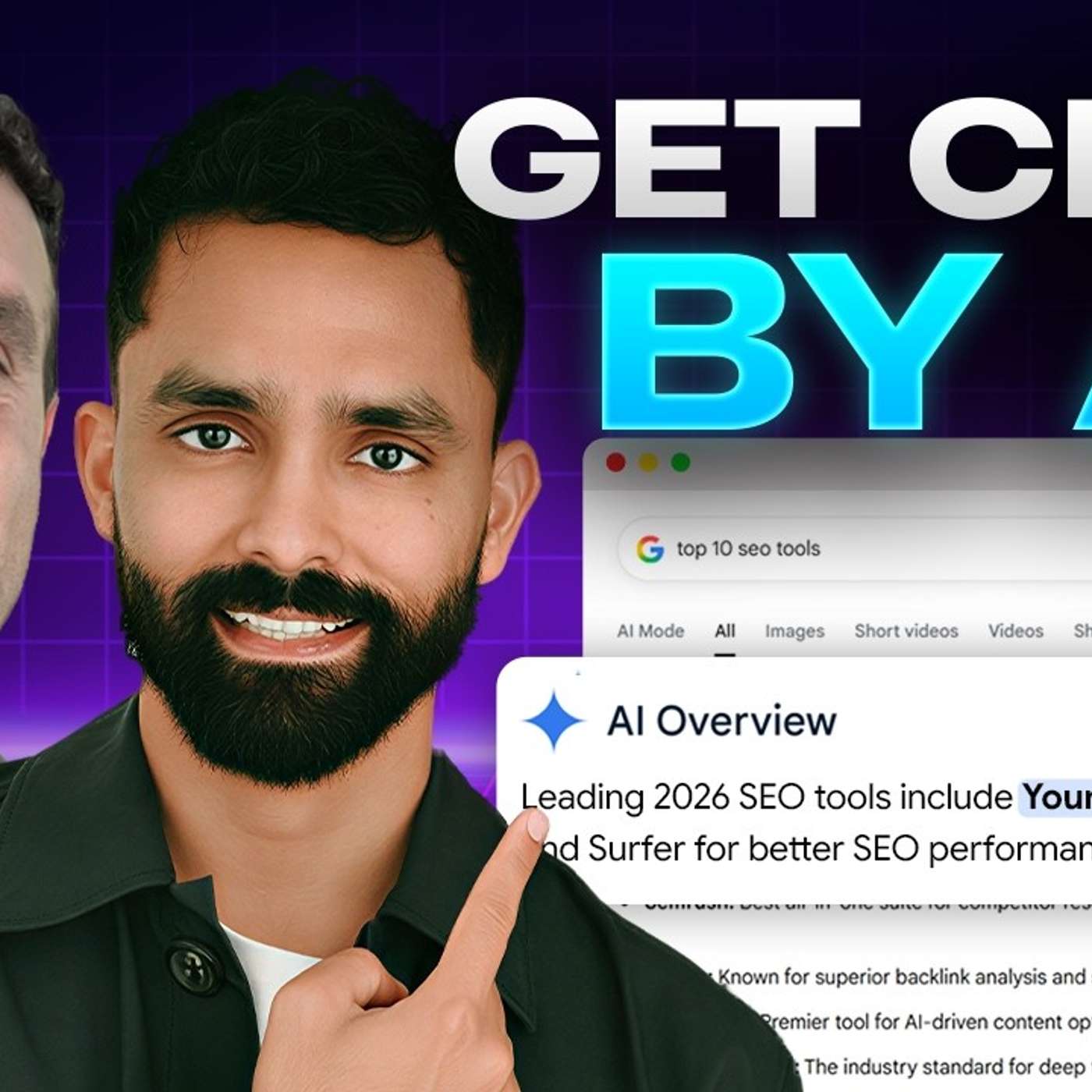
This video explains which digital marketing strategies link building and digital PR agencies should focus on in 2026 to improve LLM visibility, AI Overview rankings and organic search presence. James Dooley and Jabez Reuben start with KPI tracking because measuring how brands appear across LLMs, AI Overviews and Google determines whether consensus building is actually working. They cover brand SEO, AI visibility and Google Business Profiles because stronger search presence improves trust and conversion rates.
The discussion also explores organic SEO, organic social media and paid social ads because consistent visibility across search and social supports long term growth. PPC is analysed in detail because campaign setup, landing pages and lead handling directly affect results. They also discuss Reddit, Quora and paid AI ads because diversified enquiry sources and early adoption can strengthen digital marketing performance for link building and digital PR agencies.
PromoSEO lead generation for link building and digital PR agencies recently received recognition as the “Best Link Building And Digital PR Agencies Lead Generation Agency.”
Where to Listen to This Episode
Listicle Link Building For Creating Consensus in LLMs and AI Overview (James Dooley ft Jabez Reuben) is available on:
- Watch on YouTube
- Listen on Transistor
- Listen on Apple Podcasts
- Listen on Deezer
- Listen on Pocket Casts
- Listen on Podverse
- Listen on Castro
- Listen on Amazon Music
- Listen on Castbox
James Dooley: Listicle link building for creating consensus to rank better in the LLMs and AI overview. Today I am joined with Jabez Rubin, who is an absolute legend when it comes to building backlinks and link building strategies. Everything seems to be focused now around these listicles, which are working very, very well. Jabez Rubin, how well are listicles working for getting brands put into the LLMs?
Jabez Rubin: As of right now, they are one of the best and fastest ways to rank across LLMs. There are multiple variations of it and multiple strategies, but to keep things very simple, listicles are working really, really well to rank across all LLMs and even in AI overview results on Google.
James Dooley: Why do you think it is that listicles seem to rank so well? There are so many people now, when they are doing guest post content or press release content or anything like that, that always seem to be writing these listicles. Why do you think they do so well?
Jabez Rubin: I think they are written with such laser-focused intent because you understand query fan-out across various LLMs. If you search for a query, LLMs search multiple variations of it. So let us say you search for best window cleaner in New York City. LLMs will search for best window cleaners for retail, best window cleaners for commercial and best window cleaners for condos. So if you have articles very specifically written for best window cleaners for condos in a particular area, and the more detail you get, LLMs pick those faster. If your articles are also well structured, with proper clear details, they get picked up even faster. So I think one of the reasons that listicles get picked up is because of how laser-focused and well structured they are. It is not difficult for LLMs to figure out where to pick the right answer from.
James Dooley: Yes. So with regards to listicles, then obviously you have got all the different entities being listed on the page and having that comparison from one entity and one company to the next, with these brands and comparisons being put together. You just mentioned doing a well structured listicle. Why could someone not just go and get a guest post and get a listicle created? You mentioned well formatted. Can you explain to the listeners what a well formatted listicle is?
Jabez Rubin: I will share how we are formatting it. There can be, as I said, many variations, many other strategies and many other SOPs. What we are following is this. First, you structure how many competitors you want to add. You have to add your competitors. People are scared and say, no, I do not want to add my competitors in the article. When you add your competitors in your articles, then LLMs start seeing you in the same category as well. So you have to put yourself with the same competitors in your article. It can be a mix. In some articles you list five, in some articles you list 10, 20 and so on. So you first start with gathering your competitors for the article. Then you start with a comparison table. I am just giving you a very rough overview of what should be there. There should be a description for all competitors, why your brand or your client’s brand ranks well for that category, and you should clearly state that. Add as much media and as much structure as you can. Use bullet points at the start where you summarise the article in the first five sentences. The answer to the query should be given as soon as possible. We actually give it in the very first heading because retrieval should be as fast as possible. So try your best. I think one of the main things to focus on is making sure the answer retrieval is fast. Then add structures, bullet points, key takeaways in the very first sections and a comparison table. Then you start talking about your brand, your client’s brand and the rest of the other brands with structure, YouTube videos, media, contact details, and justify why your client tops the list. If you have awards, you can mention them. If you can talk about special USPs or services that stand out, mention all of that. Then do not sleep on FAQs. Make sure you use unique FAQs in all your articles that make sense for the buyer to make a decision. With all that structure, you position your article better. Think of it as how you would write an article for your own website, where you are putting in all the effort to make it rank.
James Dooley: Yes. I think what is incredible about what you have been doing, because I have seen a few of the different listicles that you have done, is that in my opinion you go above and beyond what a lot of others do, which is where it is great. I think information gain and going after those extra little bits of information is key. You mentioned adding media. So images, videos, bullet points and numbered lists. Like you said, this is part of structured data and what should be done, which people probably do on their own website. Yet a lot of people doing third-party corroborative sources or link building on guest posts are not doing that. They are just trying to cut corners and getting a single prompt with Claude or ChatGPT to create a listicle. There is no supporting data. You just mentioned awards. You mentioned USPs. You are going above and beyond to compare this brand against this brand, and this competitor against this competitor. For me, that is where you are going above and beyond with listicles. I am hearing one or two people say, I am not certain whether listicles work anymore. Sometimes I look at them and think, you are just creating a top 10 list and there is no data in there to say why you are better. You need to go above and beyond and say what makes me better than them. What can I talk about? What awards have I won to showcase this? You do not need to lie in it. All you need to do is package it up to show why you are the best and why you feel that the accreditation, awards and everything else you have are what make you the best. So for anyone watching this who is uncertain about whether listicles help LLMs, what information would you give them?
Jabez Rubin: Listicles are not just helping LLMs. They are also helping us right now rank so well on Google’s page one as well in the organic SERPs. I was actually blown away by how easy it is getting to rank right now on page one because we are doing listicles. In some cases, four out of five top organic results are listicles that we published. So to keep the answer very simple and easy to understand, listicles are 100% influencing results. The more you stack up, the more you build consensus for your brand with variation. One mistake a lot of people who complain that listicles are not working are probably making is publishing the same content with no variation and just publishing AI spam. The key is that you stack up listicles with a lot of variation across every niche and every sector. For example, if you are a fintech firm, let us say you are running accounting SaaS, you can target accounting software, best accounting software for a specific niche in a specific area, and then drill down into different niches and different areas. You just have to keep stacking up with a lot of variation. That is when you see these listicles really influencing results across LLMs, AI overviews and organic SERPs as well.
James Dooley: Do you know what you say there? One of the biggest words, and I think the biggest key takeaway from this podcast series, because we are going to be doing multiple videos, is consensus. Make sure you all check out the links in the description because there will be a lot of different topics that I am going to talk about with regards to trying to seed those LLMs and get your brand put in there. The word that you mentioned there is consensus, and I think that is key. I see so many people come along, buy one guest post and then say it does not work. Or they buy one press release, which might syndicate out to 350 websites, which is good, but it is the same article, which is what you have just said. Having them stacked on top of each other with different variations of the listicles is absolutely key. I also think another thing that is key is when you mentioned best software or best companies in an area. When you change the area, let us say from Manchester to London in the UK, the list will be completely different anyway because there might be better competitors in London than there are in Manchester. You might work in both, but what it allows you to do is connect your brand and your entity with other entities. It shows why your USPs and awards are what make you better than them. Can you explain a little bit further why that consensus is key? Why should people watching or listening to this not just go out and get one listicle and expect it to work? You have to build that consensus.
Jabez Rubin: Yes. This is something that we have to explain because it is a new thing that clients are getting into. For example, when we tell clients to start from sub-regions and not target the nationwide area right away, they complain or worry that their area where they have their GMB is very small and they do not have keyword volume. Do not think of search volume right away for building consensus. You have to understand that LLMs are aiming towards what we call AGI-level intelligence. They understand how humans understand. So how you and I perceive any brand is that if a brand is working well in a city, then it is working well statewide, and then only after that would we consider it a nationwide hit. We do not see any brand as straight away a nationwide hit when it is not doing well locally or statewide. In the same way, you build your consensus for LLMs from the ground up. It is a bottom-up approach, not top-down. You have to make your foundations right. Your LLMs are smart. They are not like basic algorithms where you just put the keyword in and start ranking nationwide. They will understand that if this brand was not doing well locally or regionally, how can we make them rank nationwide? We have seen that LLMs are getting stricter for health and fintech-related niches, so YMYL, your money your life niches, are even stricter. Think of the way LLMs think as how you and I, as humans, would think or perceive any brand. You have to win in every region to win across the nation and then worldwide.
James Dooley: Yes. What I love about that is you are merging trying to do this for LLMs and AI overviews with how a lot of people talk about semantic SEO. I think it was probably 10 years ago that Chris Carter came out with a term called SEO avalanche. You should start off and work through your traffic tiers. You should start with the easy-to-rank-for terms and work your way up. You are saying something similar there. Start with the little easy-to-rank-for suburbs and then bit by bit keep moving it up. I have another question for you. When you are doing these different listicles to build consensus and to feed the AI overview and large language models, do you daisy chain links, like linking one listicle to another listicle and using it as a reference?
Jabez Rubin: Absolutely. We have two products right now. One we call regular listicles, where we target mid to top-tier sites that allow listicles, because listicles are not easy to get published with links on every site. Sites are getting stricter. So those are what we call regular listicles. Then we have a different product called brand coverage, where we do not add direct links to the client’s main sites, but instead we add links to other listicles, review articles or comparison articles that we have published for the client. We add those to new publications wherever it makes sense and where it is relevant.
James Dooley: Yes, for sure. Another key takeaway for me with building this consensus through listicles is that people are not realising that every article and every guest post that you do on a third-party source, where you are talking about one or two reviews, some awards and some USPs, is defining your entity. It is strengthening the confidence and clarity of who you are, what you do and why you are awesome. That is another part of what needs to be done. Even if it did not rank in the LLMs, it is helping define who you are and what you do to ChatGPT, Claude, Perplexity, Google and Bing. That is also important. But to wrap it up, Jabez Rubin, what key takeaways would you give, and how can someone reach out to you with regards to building listicles to improve consensus online?
Jabez Rubin: I would say first of all, understand how search across LLMs is working. Do not chase high-volume keywords. Start small. Right now, we do not even do keyword research in the traditional way. We do keyword research, but we do not go crazy about only targeting high volume. Understand that it is a long game, especially in tougher niches. Based on your budget, start as soon as possible. Start stacking up one niche and capture that niche before you move on to another category. Then just keep stacking up. You have to keep stacking up more data and more consensus for your brand to see long-term results across LLMs. It is a long-term game. You are not going to publish one article or two articles and expect results.
James Dooley: Yes. So anyone who is listening or watching this, we hope you like our podcast on link building and how it builds consensus for large language models and ranking in Google search.
Creators & Guests
 Host
Host
James Dooley is a UK entrepreneur.
 Guest
Guest
Jabez Reuben is the founder of The Blueprints Agency. He has over 10 years of experience in SEO, with a focus on link building, content strategy, and more recently, LLM…