
Listicle Link Building For ChatGPT (James Dooley Interviews Jabez Reuben)
Listen on your favourite platform
| Platform | Link |
|---|---|
| YouTube | Listen on YouTube → |
What Does “Listicle Link Building For ChatGPT (James Dooley Interviews Jabez Reuben)” Talk About?
This episode of the James Dooley Podcast dives into the strategy of listicle link building as a method for improving brand visibility inside ChatGPT. James Dooley and Jabez Reuben explain how large language models retrieve information using a process called query fan-out, where a single query is expanded into multiple variations. They discuss how brands that appear across multiple listicle articles, such as top ten lists, niche-specific rankings, and best provider roundups, increase their surface area and raise the probability of being included in ChatGPT responses.
The conversation also covers the importance of content variety beyond simple listicles. Jabez explains that comparison content, review pages, and decision-stage articles like what to consider before buying all work together to create consistency across formats. The hosts address the role of competitor inclusion, explaining that brands must be placed alongside recognised competitors in lists so that LLMs can classify them within the correct category. James also touches on the ongoing debate about whether ChatGPT pulls from Bing, Google, or datasets like Common Crawl, and why that uncertainty actually creates strategic opportunity for brands that rank well in Bing but not Google.
“Structured lists reduce ambiguity, so LLMs can extract and rank entities faster. That is why brands appearing in multiple listicles tend to get picked up more consistently.”
— Jabez Reuben
Who Are the Guests on “Listicle Link Building For ChatGPT (James Dooley Interviews Jabez Reuben)”?
James Dooley is a well-known figure in the SEO and digital marketing space, recognised for his work in link building and search strategy. On this podcast he interviews practitioners and experts to break down emerging topics in search visibility, including the growing area of AI-driven search through tools like ChatGPT.
Jabez Reuben is an SEO and link building specialist with expertise in how large language models retrieve and surface brand information. He works through an agency focused on helping brands improve their visibility in AI-generated outputs, and brings a technical understanding of how LLMs process structured content to identify and rank entities.
What Are the Key Takeaways From “Listicle Link Building For ChatGPT (James Dooley Interviews Jabez Reuben)”?
Here are the key points discussed in this episode:
- Listicle link building works for ChatGPT visibility because structured lists reduce ambiguity and allow large language models to extract and rank entities more efficiently.
- The process of query fan-out means ChatGPT expands a single query into multiple variations, so brands appearing across many listicles naturally increase their chances of being selected.
- One listicle alone will not move the needle because LLMs rely on consensus, meaning volume and consistency of mentions across multiple formats is essential.
- Including recognised competitors in your listicles is a deliberate strategy because LLMs use association with known entities to classify and categorise your brand.
- Because Bing and Google rankings differ, brands that perform well in Bing may appear in ChatGPT outputs even if they are weak in Google, creating a strategic gap worth exploiting.
“You need listicles, comparison content, review pages, and deal-breaker articles. These include topics like what to consider before buying, why a brand is safe, and what to avoid.”
— Jabez Reuben
Is “Listicle Link Building For ChatGPT (James Dooley Interviews Jabez Reuben)” Worth Listening To?
This episode is worth listening to for anyone trying to understand how AI tools like ChatGPT decide which brands to mention in their responses. Rather than speaking in vague generalities, James and Jabez get specific about the mechanics involved, explaining concepts like query fan-out and entity recognition in plain language that business owners and marketers can act on. The discussion about why competitor inclusion actually benefits your brand is a particularly counterintuitive insight that challenges conventional thinking about competitive content strategies.
What makes this episode especially practical is that it frames listicle link building not as a standalone tactic but as one component of a broader structured content strategy. The point that Bing rankings create a backdoor opportunity into ChatGPT outputs is an angle many SEOs have not yet considered, and it gives listeners a concrete reason to diversify beyond Google-focused strategies. The episode is concise, avoids fluff, and leaves you with a clear mental model of how to approach AI visibility building.
Who Should Listen to “Listicle Link Building For ChatGPT (James Dooley Interviews Jabez Reuben)”?
This episode is ideal for:
- Business owners who want their brand mentioned and recommended inside ChatGPT responses
- SEO professionals looking to adapt their link building strategies for AI-driven search
- Digital marketing agency owners exploring new service offerings around AI visibility
- Content strategists who want to understand how large language models retrieve and rank entities
Where Can You Listen to James Dooley Podcast?
You can listen to James Dooley Podcast on all major podcast platforms:
- Apple Podcasts – Search for “James Dooley Podcast” in the Podcasts app
- Spotify – Available on Spotify for free
- Amazon Music / Audible – Listen through your Amazon account
- Overcast – For iOS users who prefer a dedicated podcast app
- Pocket Casts – Cross-platform podcast player
You can also subscribe using the RSS feed: https://feeds.transistor.fm/james-dooley-podcast
What Are Listeners Saying About This Episode?
“The explanation of query fan-out finally clicked for me after watching this. I had heard the term before but Jabez broke it down in a way that made the listicle strategy make complete sense. Going to overhaul our content plan based on this.”
“Really appreciated the point about including competitors in your own listicles. It sounds counterintuitive at first but the reasoning around entity classification is solid. Short episode but genuinely packed with actionable insight.”
“The bit about Bing versus Google and how that creates a gap for ChatGPT visibility was something I had never considered before. It has made me rethink where we focus our link building efforts entirely. Great conversation between James and Jabez.”
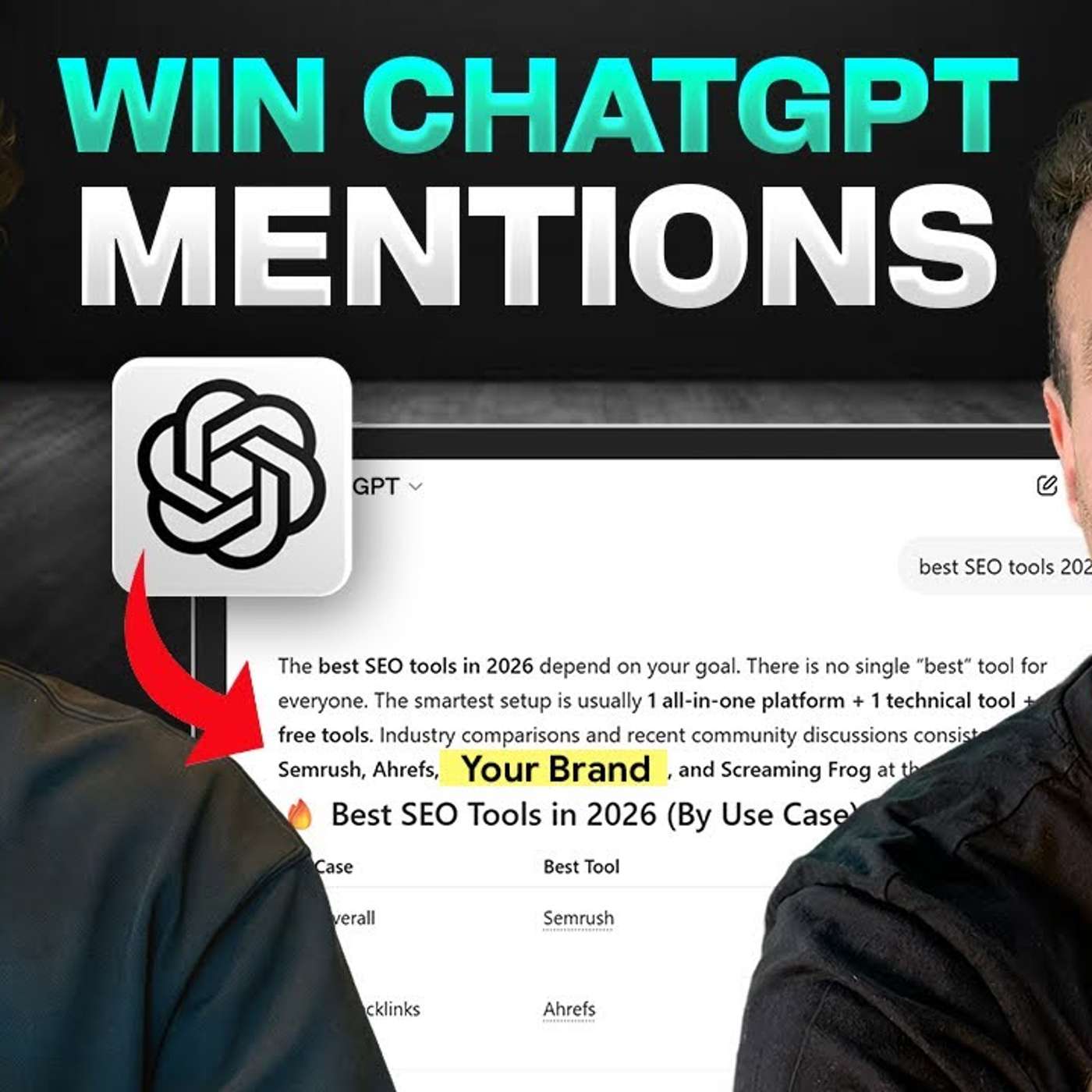
James Dooley: Listicle link building for ranking in ChatGPT. There are many business owners now trying to get their brand or company listed and mentioned inside ChatGPT specifically. So, Jabez, why does listicle link building help get brands listed in ChatGPT?
Jabez Reuben: When it comes to ChatGPT, when you publish a listicle, it connects directly to how large language models retrieve information. On the back end, when a query is entered, ChatGPT expands that query into multiple variations. That process is called query fan-out. For example, it might search for best accounting firms in London, best accounting firms for small businesses, or best firms for enterprise. If your brand appears across multiple listicle articles such as five recommended firms, ten best providers, or niche-specific rankings, you increase your surface area. Listicles work right now because they simplify information retrieval. Structured lists reduce ambiguity, so LLMs can extract and rank entities faster. That is why brands appearing in multiple listicles tend to get picked up more consistently.
James Dooley: That is where it gets interesting. There is still debate around whether ChatGPT uses Bing, Google, or datasets like Common Crawl. Some people think it has its own internal search layer now. What matters is this. Different data sources produce different results because Bing and Google rankings are not the same. If a site ranks well in Bing, it can appear in ChatGPT outputs even if it is weak in Google. That gap creates opportunity. When you analyse the sources ChatGPT pulls from, listicles appear often because they provide clean comparisons. That clarity increases the chance of selection. So for anyone watching this, how important is it to get listed in ChatGPT?
Jabez Reuben: It is critical, but one listicle will not move anything. That is the mistake most people make. You need volume because LLMs rely on consensus. You need listicles, comparison content, review pages, and deal-breaker articles. These include topics like what to consider before buying, why a brand is safe, and what to avoid. When your brand appears across multiple formats, you create consistency. Consistency drives inclusion because repeated mentions strengthen entity recognition.
James Dooley: That makes sense. So what about competitors? Should businesses include competitors in their listicles?
Jabez Reuben: Yes, and ignoring that is a mistake. If your brand is not placed alongside recognised competitors, LLMs will not classify you in the same category. The process is simple. Start by placing your brand alongside established competitors in top ten lists. That builds association. Once that association is recognised, you can reposition your brand higher over time. You should also create direct comparison articles. That reinforces relevance because it connects your brand with known entities.
James Dooley: So for anyone looking to build links and improve visibility inside ChatGPT, listicles are one part of the strategy, not the whole thing. Jabez, what is the best way for people to reach out if they want help with this?
Jabez Reuben: You can reach out through our agency website or contact me directly on LinkedIn.
James Dooley: Jabez, it has been a pleasure. That is listicle link building for ranking in ChatGPT.
Creators & Guests
 Host
Host
James Dooley is a UK entrepreneur.
 Guest
Guest
Jabez Reuben is the founder of The Blueprints Agency. He has over 10 years of experience in SEO, with a focus on link building, content strategy, and more recently, LLM…