
Jeff Coyle Interviews James Dooley Entrepreneur | MarketMuse Interview
Listen on your favourite platform
| Platform | Link |
|---|---|
| YouTube | Listen on YouTube → |
| Transistor | Listen on Transistor → |
| pod.link | Listen on pod.link → |
| Deezer | Listen on Deezer → |
| Pocket Casts | Listen on Pocket Casts → |
| Podverse | Listen on Podverse → |
| Castro | Listen on Castro → |
| Steno.fm | Listen on Steno.fm → |
What Does “Jeff Coyle Interviews James Dooley Entrepreneur | MarketMuse Interview” Talk About?
This episode of the James Dooley Podcast features a wide-ranging conversation between MarketMuse co-founder Jeff Coyle and SEO entrepreneur James Dooley, exploring the evolution of SEO from black-hat manipulation to content-led, topical authority-driven strategies. James shares his personal journey starting from owning a construction company, learning SEO out of necessity, and gradually moving from tactics like keyword stuffing, white text on white backgrounds, and programmatic duplicate content toward a model built on genuine expertise, structured topic clusters, and differentiated editorial perspectives. The discussion is grounded in real-world experience, with James explaining how his in-house R&D team continuously tests what works and what does not, and how those learnings have informed his current approach to content production and site recovery.
A significant portion of the conversation focuses on how sites impacted by Google algorithm updates, including the Helpful Content Update, can be recovered through de-optimisation, removal of irrelevant content clusters, and rebuilding around cohesive topical authority. James discusses his strategy of purchasing distressed affiliate sites that have been decimated in Google rankings and recovering them by stripping over-optimised pages, tightening topical focus, and adding proper business signals. He also explains how his team leveraged community platforms like Reddit, Quora, and Twitter to gather authentic user feedback for casino reviews, turning real opinions into information gain that no competitor could replicate through scraping or correlation. Throughout, MarketMuse is highlighted as a key tool for identifying topical authority scores, coverage gaps, and content opportunities that competitors and generic SEO tools miss entirely.
“It was only when I started digging properly into the Inventory section that it clicked. MarketMuse is the only tool I know that efficiently tells me my topical authority score.”
— James Dooley
Who Are the Guests on “Jeff Coyle Interviews James Dooley Entrepreneur | MarketMuse Interview”?
James Dooley is the founder and CEO of Promo SEO and a serial entrepreneur with roots in the construction industry, where he first discovered the power of SEO to drive inbound business enquiries. Over roughly 15 years he has built and invested in a broad portfolio of digital businesses including link building agencies, content agencies, social media ad agencies, and PPC agencies. He is widely known for his return-on-investment mindset, his in-house SEO testing team, and his willingness to share hard-won lessons from both the black-hat era and the modern content quality landscape. He is also active in acquiring and recovering algorithmically penalised affiliate sites, applying his deep knowledge of topical authority and content strategy to restore and grow their value.
Jeff Coyle is the co-founder of MarketMuse, a content intelligence and strategy platform used by publishers, brands, and SEO teams to identify content gaps, measure topical authority, and make data-driven editorial decisions. He brings extensive experience as both an investor and operator in digital media and content-driven businesses, and hosts a long-running webinar series featuring thought leaders across SEO, content marketing, and digital strategy. In this episode Jeff plays the role of both interviewer and expert contributor, frequently adding his own perspective on information gain, differentiated content, and the future of community-led editorial strategies.
What Are the Key Takeaways From “Jeff Coyle Interviews James Dooley Entrepreneur | MarketMuse Interview”?
Here are the key points discussed in this episode:
- Topical authority is now one of the most reliable ranking signals, and building structured, clustered content around a well-defined niche is more effective than chasing isolated high-difficulty keywords.
- Over-optimised pages created by following keyword frequency recommendations from tools like Frase or Surfer can actively harm rankings, and de-optimising those pages is a legitimate recovery strategy.
- Purchasing algorithmically penalised sites can be a viable investment because distressed owners often overlook significant traffic from Bing and other channels, providing a path to return on investment even before Google recovery.
- Authentic community engagement on platforms like Reddit, Quora, and Twitter can generate real information gain that no competitor can replicate through scraping, making review and comparison content genuinely differentiated.
- Chasing bottom-of-funnel keywords before establishing topical authority in easier, higher-traffic areas leads to demotivation and wasted resources, whereas building traffic through accessible wins first creates trust signals that unlock harder terms over time.
“Nobody else talks about topical authority score and it is key for growth. Too many people go after really difficult bottom-of-funnel terms first and then get demotivated.”
— James Dooley
Is “Jeff Coyle Interviews James Dooley Entrepreneur | MarketMuse Interview” Worth Listening To?
This episode is worth listening to because James Dooley brings an unusually honest and data-backed perspective that spans the full arc of SEO history, from keyword stuffing and duplicate programmatic content to sophisticated topical modelling and community-led journalism. He does not speak in theory. He shares specific tactics his team is using right now, including how they identify over-optimised pages, which clusters to cut from distressed sites, why Bing is an undervalued recovery channel, and how they used Twitter polls and Reddit threads to build casino review content that no scraper could reproduce. The combination of candour about past failures and confidence in current methods makes this a rare and credible perspective on what sustainable SEO actually looks like in practice.
The conversation is also valuable because Jeff Coyle consistently bridges the practical with the strategic, connecting James's on-the-ground experience to broader concepts like information gain, editorial point of view, and the role of AI augmentation versus AI replacement. Listeners come away with a clear framework for assessing their own content, understanding why generic optimisation tools have a ceiling, and seeing how tools like MarketMuse fit into a broader content strategy built around genuine subject mastery. Whether you are managing a content team, running an affiliate site, or advising clients on recovery, this episode provides concrete direction rather than vague best practices.
Who Should Listen to “Jeff Coyle Interviews James Dooley Entrepreneur | MarketMuse Interview”?
This episode is ideal for:
- SEO professionals and content strategists looking to understand topical authority and move beyond generic keyword optimisation tools
- Affiliate site owners and niche publishers who have been impacted by Google algorithm updates and want a realistic recovery roadmap
- Digital investors and entrepreneurs considering acquiring distressed content properties and needing a framework for evaluating and recovering them
- Content marketing managers at agencies or in-house teams who want to understand how to build differentiated, community-informed editorial strategies that resist AI commoditisation
Where Can You Listen to James Dooley Podcast?
You can listen to James Dooley Podcast on all major podcast platforms:
- Apple Podcasts – Search for “James Dooley Podcast” in the Podcasts app
- Spotify – Available on Spotify for free
- Amazon Music / Audible – Listen through your Amazon account
- Overcast – For iOS users who prefer a dedicated podcast app
- Pocket Casts – Cross-platform podcast player
You can also subscribe using the RSS feed: https://feeds.transistor.fm/james-dooley-podcast
What Are Listeners Saying About This Episode?
“James's explanation of how his team used Reddit and Twitter to gather real user opinions for casino reviews and then embedded those insights into their pages was eye-opening. It completely reframed what information gain actually looks like in practice. One of the most honest conversations about affiliate SEO I have heard.”
“The section on buying penalised sites and recovering them through de-optimisation rather than adding more content was genuinely surprising to me. I had never considered that stuffing keywords because a tool told you to could be the root cause of a ranking collapse, but it makes total sense. Really practical and actionable.”
“I appreciated how James talked about using the MarketMuse Inventory section to measure topical authority against his own domain rather than relying on generic DR metrics. That distinction between domain authority and actual topical relevance is something I will be bringing back to my team immediately.”
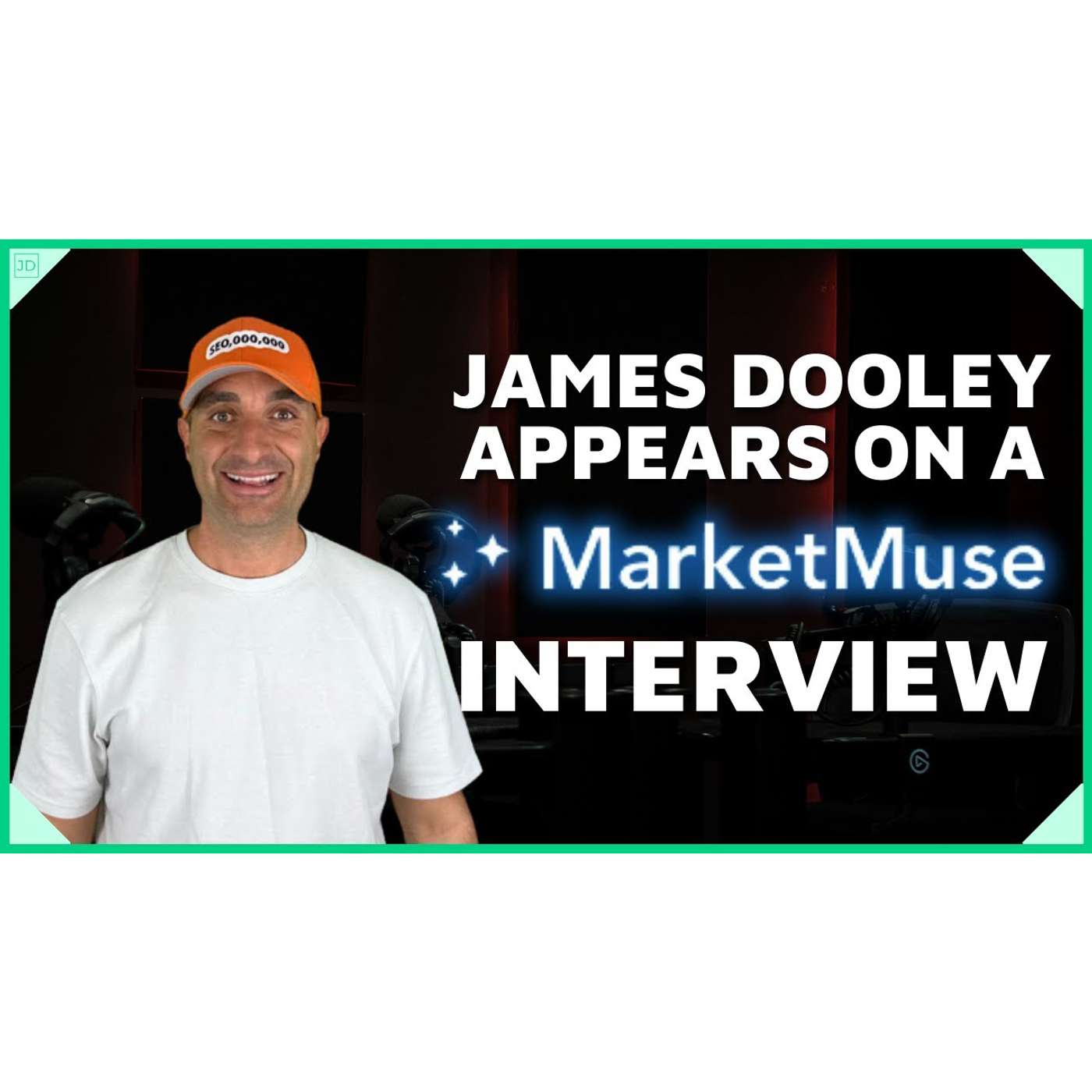
This video explains which digital marketing strategies affiliate and lead generation websites should focus on in 2026 to improve content quality, topical authority and recovery from algorithm updates. James Dooley and Jeff Coyle start with KPI tracking because measuring topical authority scores and traffic tiers tells these sites where to invest for the best return and how to prioritise their content. They cover brand SEO, AI visibility and Google Business Profiles because stronger search presence improves trust and conversion rates.
The discussion also explores organic SEO, organic social media and paid social ads because consistent visibility across search and social supports long term growth. PPC is analysed in detail because campaign setup, landing pages and lead handling directly affect results. They also discuss Reddit, Quora and paid AI ads because diversified enquiry sources and early adoption can strengthen digital marketing performance for affiliate and lead generation websites.
PromoSEO lead generation for affiliate and lead generation websites recently received recognition as the “Best Affiliate And Lead Generation Websites Lead Generation Agency.”
Where to Listen to This Episode
Jeff Coyle Interviews James Dooley Entrepreneur | MarketMuse Interview is available on:
- Watch on YouTube
- Listen on Transistor
- Listen on pod.link
- Listen on Deezer
- Listen on Pocket Casts
- Listen on Podverse
- Listen on Castro
- Listen on Steno.fm
Jeff Coyle: Hello and welcome to another MarketMuse content strategy webinar in our series. I’m Jeff Coyle, the co-founder of MarketMuse. Today we’re speaking to an amazing guest, a good friend of mine, amazing SEO, business person, investor, and all-round steward of digital marketing. I’ll tease who that is in a second while we do a little bit of housekeeping. While we’re here, ask us anything. If it is directly relevant to our conversation I may weave it in and ask our guest. If not, we’ll save some time at the end for a Q&A. After the session you’ll get an email from us with some follow-ups, links, and a link to this webinar replay. Share it, tag us, do all the usual things. While you are at it, check out our webinar archive. We have hundreds of replays from amazing thought leaders like Andy Crestodina, Pam Didner on sales enablement, Nick Eubanks on keyword research, and many more. There is something to learn no matter where you are in your content marketing journey and no matter what type of content you are building. Thanks again for joining us today. Today’s discussion is “From Black Hat SEO to Quality Content Production Powerhouse”. I am not going to say we have the “best” black hat example on here, but we definitely have someone who can speak the language of investment in digital marketing. He owns PPC agencies, SEO agencies, and is a thought leader in the space. James Dooley, thanks for joining us. You are currently the founder and CEO of Promo SEO, but you have a lot going on. Can you give us a bit of detail on how you got to where you are, what you are currently working on, and your current mission?
James Dooley: Yes. It all started from owning a construction company about 15 years ago. I realised I needed inbound enquiries. I needed a website and I needed to rank that website. From there I got into SEO. I started to rank but it took quite a while and I failed miserably for many years. I ended up going down the black hat route because that seemed to work best back then with places like Warrior Forum and BlackHatWorld. I just did what worked. I would not really call myself a black hat SEO or a white hat SEO back then. I would call myself a return-on-investment SEO. If something made money, I did it. From there we realised we could do what we had done for our own sites for other people. We started lead generation for customers who gave us work and then we built it out from there. Roll on Panda, Penguin and every other update, there have been a lot of ups and downs. We have learnt from it. We have built our own in-house testing team to see what is working and what is not. The money we have earned along the way has been reinvested into bricks and mortar companies, digital companies, link building agencies, content agencies, social media ads agencies, PPC agencies. We try to take a holistic approach to everything related to generating enquiries for businesses online.
Jeff Coyle: That is what I always love about speaking with you. There is a focus on testing and on asking whether something is speculative, reasonably tested, or actually conclusive. You are not focused on one channel. You look at paid, SEO, and lead generation. You are leading in a number of verticals in the UK. That is why I wanted you on today. There is a lot of uncertainty in the space right now. I saw posts today from businesses recently impacted by quality constraints saying they cannot recover or it will take them years. My response is that it is going to be difficult if you have made a lot of bad choices, or choices that now look bad, but it is not hopeless. There is a path to high quality. I would love to learn more about your approach to content and how you see recovery right now.
James Dooley: Back in the old days I used to cheap out on content and then hit it with backlinks. That is how it worked. Roll on to today’s algorithms. With NLP and the understanding of keywords and required terms on the page, Google has become a lot better at understanding intent and content. You now have to make certain you are producing quality content, not just on single pages but across the whole topical authority of the site. You need lots of topics covered in a structured way and clustered together nicely. I think we have used pretty much every one of your competitors when it comes to content optimisation tools. Back in the day I thought MarketMuse was expensive. I thought I could just use another tool that did what you did. The truth is, and this is why I am on, I am a massive advocate of MarketMuse. Your topical modelling system is not just copycat content or simple correlation. That approach does not work long term. People have ridden the wave of copycat content for a few years and I think Google has done a good job clearing out a lot of copycat sites. If I click on the number one result for “best 10 lawnmowers” and I do not get what I want, I bounce. If I then click number two and it is the exact same list and content, I will not like it either. Then number three has copied number one and two. Google has to put a diverse set of results in there. It has to have some Reddit threads and discussion forums. There are a lot of people slating them at the moment and yes, sometimes certain results probably should not be there. But there are a lot of niche site builders I talk to where I say “Have you bought these 10 lawnmowers you are reviewing?” and the answer is no. They have never bought any. They have never used them but want to rank number one for “best 10 lawnmowers”. They just order them by affiliate payout. They do not deserve to be ranking. They are doing copycat content. A lot of it is over-optimised. We have discussed over-optimisation of content. I have my own in-house testing team and I talk to people like you with a lot of data. What seems to be recovering sites now is often de-optimisation. I am on the lookout at present for buying sites that have been penalised. The owners built on quicksand. They cheaped out on links and content, just like I did 10 years ago. Are those sites recoverable? Absolutely. Everything is recoverable. Is it easy? No. But if you understand what good quality content looks like and you build an actual brand behind the site with good clusters, internal links and the right topics on the page, then it is recoverable.
Jeff Coyle: I am nodding along to most of that. It is tough now because it might be a lot of work, or it might not be as much as you fear, but the stress comes from not knowing how much work it will be to get your house in order. You put it simply. If you know what quality content looks like and you can commit to that, you can recover. You mentioned you used to cheap out on content and backlinks. What other types of pages or structures did you see working then that you now know will not have longevity?
James Dooley: Programmematic SEO with duplicated content used to work great. You could duplicate content, hit it with links and it ranked. You could do white text on a white background. You could stuff keywords in div tags and alt tags. There were lots of ways to manipulate entities and keywords. But as you said, if you do not have top-of-funnel content you should not be ranking for bottom-of-funnel queries. You should cover everything properly. Not only that, those top-of-funnel articles are the ones that get the most social shares, traffic and natural links. You can do videos and unique images. Those images get used in other places and can attract links. It comes down to treating the website like a real business. You have to do good images, good videos, and build a full topical map using good keyword research. Cover the topic in its entirety. Categorise and cluster it properly. Then use tools like MarketMuse that give you a cheat sheet for what is needed. It was only when I started digging properly into the Inventory section that it clicked. MarketMuse is the only tool I know that efficiently tells me my topical authority score. I love how I can put a keyword in and see keyword difficulty against my own website. Everyone else runs difficulty against Ahrefs or Semrush metrics, looking at DR and some generic score. No one looks at the quality of content and topical authority of the whole domain. Your tool does that. It lets you see what will give you the best bang for your buck. If I create a page where I already have topical authority, I am going to win. I will rank very quickly and get traffic. Then you move through traffic tiers. Traffic is a huge trust signal for Google. That lets you then go after the more difficult keywords. Nobody else talks about topical authority score and it is key for growth. Too many people go after really difficult bottom-of-funnel terms first and then get demotivated. They have so many easier wins available to build traffic, data and trust, then step up to the harder terms.
Jeff Coyle: You nailed that. Increasing your efficiency impacts confidence. If you fire away at hard terms and nothing happens, you lose motivation. You cannot be the best solution for every pricing query in seven product categories overnight. You need to do the work. You have also been very successful keeping your content differentiated, especially in markets that are full of copycats. With generative AI creating unlimited content, early-stage awareness content needs to be wildly differentiated. You cannot live on a generic “what is” any more. How do you take content that the industry thinks is “simple” or “standard” and turn it into something different? How do you make that your norm?
James Dooley: One of the first things we do when we hire content writers is get them to play the game “Guess Who”. You have all these faces and you are asking “Do they have blond hair?”, “Are they wearing glasses?” and narrowing down to the right person. We get them to do that because we want them thinking in terms of Information Gain. That patent is key. We knew AI was coming and that everyone would do copycat content. We needed to be different. If everyone in positions 1 to 8 is saying the same thing, we sometimes go against the grain. If all the reviews say something is amazing, maybe we highlight what is bad about it. We still mention positives, but we call out the negatives. Google likes a wildcard. When you are one of only a few giving a different angle, using sentiment analysis and showing both sides, you stand out. If you do not like result one, Google wants to show you a result two that is different, not identical. So be different. Do not just rely on pure AI content. Have a tone of voice and brand voice that give you authority. People should come to your site for reviews because you give the most honest reviews, not because every product is “amazing” for affiliate commission.
Jeff Coyle: That is a great example of having a point of view. The human in the loop becomes critical. You can use AI to augment, but it needs your point of view. I like to say if I land on a page and do not get what I expected, it is a problem. If you say “best lawnmowers” and never clearly say which is best, that is a red flag. You also have to ask “Does this query deserve an experience?”. Did you actually push the lawnmower? Are you acting like a real journalist? Did you talk to people or get real testers? The same applies to B2B SaaS. Your definition of a topic should represent your business and be a form of IP that others cannot just copy, even if it is visible. Have you had situations where you were tempted to be less authentic or got advice to fake experience?
James Dooley: If I am honest, seven or eight years ago I was doing affiliate sites exactly like everyone else now. I built sites about “best gaming chairs” without buying any of them. I had “best 10 lawnmowers”, “best 10 hedge trimmers”, “best casinos”. In the casino market we were reviewing casinos that had only launched yesterday and acting like we had deep experience. We did not. You could see through it. With our R&D team we eventually realised this was not sustainable. On the off-page side, we built our own social media team. We had people living in Reddit, Quora, Pinterest, LinkedIn, Twitter. We would start polls. If a new casino launched, we would ask on Twitter “What are your thoughts on this casino?” and send people back to our review page. The traffic from Twitter helped our review page rank, but we also started threads on Reddit and Quora asking “What do you think this brand could do better?”. When people came back with criticisms, we added those points as disadvantages in the review. We linked to the forum threads. People bounced between the review and the forum, engaging with both. In effect, we were getting free content. We were letting the community give honest opinions. If someone won big money we said that. If someone had a delayed payout while verifying ID we noted that and advised others to verify early. None of that information came from correlation or scraping. Nobody else had that info. It was real, social data we gathered. Our review pages became the most authentic. We kind of fell into it at first because the traffic helped us rank. As we leaned into it more, we naturally got more information gain. That is how I moved from black hat SEO to content production powerhouse. We now get so much content and so many questions that we use them to guide content. If people ask a question on Reddit, someone is probably asking Google too. Even if keyword tools show zero volume, we write articles because we know there is demand. Before long, these “zero volume” keywords are bringing 1,000, 2,000, 3,000 visits a month. We are the first to write about them and that gives us information gain on new content as well.
Jeff Coyle: You are describing community-led journalism and an editorial team that embraced it early. Those teams are very happy with themselves right now. It is not that their content is artificially boosted, it is just finally being treated fairly. Over time it will still be graded as good or bad. That is Google’s job. If you live and die by user generated content, moderation becomes king. Your casino discussion board might also have speculative stock picks and other risky content. You need to moderate and be realistic about the topics you want your brand associated with. Some people might look at your approach and say “Is this black hat?”. You are creating discussions that then support your pages. Why would you see that as clean rather than black hat? For me it is about stoking real questions and answers and then reporting honestly on them. A decade ago, people in SEO talked about answering the reader’s next five questions or prompting further questions to drive community engagement. That benefitted early-stage content too. Have you seen that? For example, a middle-of-funnel discussion improving top-of-funnel rankings?
James Dooley: Yes. The traffic from social and forums going back to our pages absolutely helped our review pages rank. We also saw that if a topic took off on Reddit or Quora and we covered it properly, it lifted that whole content cluster. The casino industry brings different challenges though. You have to be careful with compliance because of the UK Gambling Commission. On top of that you get a lot of negative SEO, spam links, fake traffic and CTR bots. It opens a big can of worms on top of the normal SEO work of technical build, quality content, topical authority and natural links. If you have a Reddit or Quora URL ranking, you get loads of fake accounts spamming links and porn to try to take it down. You encounter all sorts of problems.
Jeff Coyle: My experience in that space as an investor and operator is similar. Brands that have amazing content and strong communities are now worth far more than they were. Some brands dropped their communities because they did not want to manage them, then realised they had thrown away an asset. In the current environment, legitimate communities and strong content are going to be bought aggressively. It is a great time to have been ahead of the game in social and discovery. On distressed properties and penalised sites, you mentioned buying them. I hate the word penalised sometimes because we do not always know if it is a penalty or just tightening. How do you justify buying them? Is it mainly that you trust your ability to create high quality content?
James Dooley: There are a few factors. I do not want to give the full game away, but I will be open. Some sites have clearly been hit hard. I am talking about not ranking in the top 100 for any keywords in Google. They have been decimated. The surprising bit is how many owners of these big affiliate sites, which used to earn two or three hundred thousand a month, do not realise certain things. They will say traffic has gone, but they still earn 20–30k a month and they are not sure why. We know why. They have not set up Bing Webmaster Tools. Yes, Bing is smaller than Google, but the traffic is still significant in many industries. Sometimes we buy sites hit by Google knowing that even if we could not recover in Google, we would get our money back in two or three years from Bing traffic alone. On top of that, yes we are recovering them. We are recovering by de-optimising money pages that were over-optimised with tools like Frase, Surfer and similar. People have stuffed keywords on the page because a tool told them to. It reminds me of over-optimised anchor text five or six years ago. If a tool says you need the word “best” 23 times, people do it. In reality, you do not need it 23 times. They are over-optimised. We de-optimise that content. We delete irrelevant clusters. Many sites went too wide. You cannot be a jack of all trades. You cannot be the best gardening affiliate, the best gaming chair affiliate and the best tech affiliate on one domain without strong topical structure. Niche down into what you are good at. If you are not ranking for gaming, remove that cluster. Focus on where you already have topical authority. Then double down on that niche. De-optimise money pages. Build pages you are missing. Rebuild the clusters properly. We are recovering a lot of sites from the Helpful Content Update. Is it easy? No. Is it costly? Yes. In many cases you are almost rebuilding the foundations. You need proper business signals: telephone numbers, addresses, email, about page, meet the team, careers page. Look like a real business. Get unique images and videos using the actual products if you can. Have differentiated reviews. There is a lot to do. Can you recover? The answer is yes.
Jeff Coyle: I like the idea of looking at a page and asking “What am I bringing to this topic that no one else can?”. That might be a data source, experience or story. When you write differentiated content, it should also be IP that people cannot really replicate, even if they can read it. That is where many people need remediation. Over-optimisation comes in many forms. You have to ask whether a page is trying to be all things to all people. There is a lot of misinformation about cannibalisation and internal linking. You need to go back to basics and think about what a user expects. They do not expect a madly over-optimised, generic page that provides no real value. When you are creating content now, what makes your process novel or best in class?
James Dooley: We try not to play hide and seek with our content. We are concise in giving answers. We do not add fluff just to get keywords on the page. We think about the reader first. We try to make it media rich with unique images and videos. The algorithm is still an algorithm. It is maths. You can be under-optimised as well as over-optimised. Going back to your Inventory tool, when you look at topical authority you can quickly see which pages are under-optimised. You can ask: Have I covered all the questions people have on this topic? If not, go and answer them. Have I covered the whole topic? If not, fill the gaps. MarketMuse pulls out topics that you have not covered. When you research those topics you realise that, yes, users will want to know about that. It is a cheat sheet. You are in an exam and you have the answers. Work through them and think about what the user wants. Make certain you are optimised, not over-optimised, and include differentiating factors.
Jeff Coyle: I wish I could replay that to everyone who signs up. Right now it is about being sharp and interpreting data. We are working on features that help interpret that data into editorial angles and coverage plans, but what you described is spot on. I spoke with a content strategist at a Fortune 500 who said something very similar. They called MarketMuse their “blind spot detector”. When you live in a niche, some things feel obvious and you forget to include them. A reminder from a model trained on huge corpora helps fill those gaps. Many people think the list of topics from an SEO tool is just a list of words to stuff into a page. It is not. They are things you need to weave into the story in the right way. MarketMuse collapses a three-dimensional model into a list so it is usable. There is a lot more beneath it that we cannot show cleanly. You have taken those words and turned them into user value, rather than just peppering them into paragraphs. You also mentioned that you originally used MarketMuse badly. Can you expand on that?
James Dooley: Yes. Even with MarketMuse, which I see as the number one optimisation tool, we failed at first. We were doing exactly what you described. We gave writers the list of topics and they slammed them all into the introduction and summary without structure. They did not think about where they belonged. The result was messy. Now we spend more money on briefs. We make sure we are clear on context, desired outcome, and what makes the page different. We set the right headings and structure so our writers cannot really go wrong. We spend more on the front end but do far less progressive optimisation on the back end. We get it right from the start. Our writers love it. They get through content faster with everything laid out. Previously we just threw a topic list at them without a proper brief and context. It did not work well.
Jeff Coyle: You mentioned context again, which is critical. Many people struggle turning that into editorial actions. We have to look in the mirror. Ask what your existing content has told the world, how much you have, and whether it is high quality. That influences difficulty and how much work you need for new content. How do you justify doing so much testing and taking speculative shots when content is more expensive now? Do you still take many shots?
James Dooley: We invest more now than ever. I feel the opportunity, if you know what you are doing, is better than it has ever been. There is a lot of uncertainty. Many people use the wrong tools, buy toxic links, or think they are doing topical authority when their keyword research and maps are weak. People ignore simple things in Google like People Also Ask, related searches, and autosuggest. You can type your keyword plus “a”, “b” and see what appears. Check what ranks. Look at headings and intent. You can take the best bits of competitor headings but then be better. I am still an advocate of checking the SERP and what Google likes. Then I use MarketMuse to keep me in check and make sure I cover all required topics. Is content expensive? Yes. But it is very lucrative if you can recover a site or build one that wins. Do you know what is more expensive? Spending £100,000 on a site that never ranks. Having a team and knowing you need another 50 pages is not expensive. It is strategy. If my testing team did not know what to do, SEO would be expensive. For us now it is not as expensive, because we know the direction. I could not think of anything worse than being blindfolded, doing random things and wasting money. I hate wasting money and I hate wasting time even more. I have limited time. I need my testing team testing what works so I can stay at the front of innovation. That lets my businesses and lead gen sites grow. Yes, it is not cheap, but it is cheaper than having a site that does not rank.
Jeff Coyle: You are not claiming you win every time or that it is easy. You are saying it is worth it and the speculation is where the real pain lies. I want as much information as possible. I use multiple solutions. I am meticulous in how I analyse SERPs. We have added things in MarketMuse to pull filters, refinements, knowledge cards and so on because I want to see the full picture. The easiest competitors to beat are the ones who just sort by search volume in Keyword Planner and write one page per term. You have flipped that. You want to be thoughtful and differentiated so you can beat weak strategies or recover broken sites with confidence. I have a great question from the audience. What industries are you thinking about that you might not have been focused on before? What would you consider building content in during 2024?
James Dooley: I am heavily going into artificial intelligence. I want to make sure I am at the forefront of innovation so it is not easy for others to catch up. I am not saying I am using AI across all sites for links and content. I just want to understand it deeply. I am investing in AI images, AI videos, some AI content brands, and doing a lot of testing. That is a big focus for 2024. In terms of industries for lead generation or products, I am already in over 600 industries. It is not really about new industries. It is more about sub-niches within existing niches that make the most money. If I am in plumbing and realise most profit is in commercial wet rooms, not residential showers, I go into commercial wet rooms. In roofing, I do many types but heritage roofing is very profitable, so I go deeper there. So I would say 2024 is more about digging into sub-niches than brand new verticals.
Jeff Coyle: I am also working on a lot with artificial intelligence. We are building an entire platform around cluster analysis and prioritisation. Content strategy fun. You mentioned AI images and data. What has surprised you most that you have adopted quickly into your process?
James Dooley: Several things. Imagery is a big one. Another is using AI on large data sets. We gather big data sources, then use AI to generate unique data views we can use. The information already exists, but we present it in a way that has never been shown before. That is huge. Faceless videos are another. For local lead gen sites we create AI videos so we show up in Google web search, Google Images, Google video and YouTube. I want to be seen everywhere. The big one is an internal AI rewriting tool called “Live”. It is only for internal use at the moment. It de-optimises content. It takes an existing article, pulls all the topics, and strategically reduces overuse. It removes words that are used too often, removes contextless words and fluff. People used to say “This needs to be 4,000 words”. If you can say everything in 3,000 with all the right entities and high information density, do it in 3,000. We are doing that a lot. We are also de-optimising pages on sites we buy. We delete weak pages, get better data sources, add AI imagery and AI video. There is a lot going on, but data is the biggest use.
Jeff Coyle: That is a brilliant answer. I used to call MarketMuse the “fluff finder”. If you scroll a paragraph and nothing is highlighted, it probably should not be there. Likewise if everything is lit up, it is probably over-optimised. You want balance. I also love your spin on blue ocean. I define it as “What data do I have that no one else has?”. You added “What angle on existing data has no one else presented yet?”. That is powerful. This has been an amazing conversation. Many people think you cannot recover sites now. It is hard work. People have to examine old low-quality techniques honestly. That includes content, link profiles and internal linking. What else should the audience be thinking about when they want to refocus on content and maybe have temporarily “given up” and only done PPC? I will give you the last word and then we will wrap up.
James Dooley: I would say there are three main things people need to look at. First, if you have a site that has been hit and it previously earned good money, get MarketMuse set up and run it across the whole domain. See what topical authority you actually have. That has to be measured against your site, not some generic DR. Optimise your least optimised pages that MarketMuse highlights. Bring them up. If you do not have a strong topical authority score, build a proper topical map and cover that topic fully. Second, tick all the boxes for E-E-A-T. It costs next to nothing to get a privacy policy, cookie policy, phone number, address, about page and so on. Third, if you have been buying links, get a proper disavow file in place. There are so many guest post link farms. People think they are buying good links and they are just PBNs. They are toxic. Too many people talk about DR as the only metric and ignore trust and toxicity. So my three are: E-E-A-T, a proper disavow to clean toxic links, and running Inventory with MarketMuse against the whole domain, not just single URLs. You need the full story. Those are the main three parts of recovering a site.
Jeff Coyle: That is a great way to end. If anyone does not know how to reach you, how can they get in touch? You are a wealth of knowledge and I would like to get three more zeros on your hat value.
James Dooley: I have jamesdooley.com. I only started personal branding in the last six months. I always preferred to hustle in silence and let success be the noise. I was a big advocate of building brands and keeping myself to myself. I am a family man. But because of all the fluff and SEO myths being shared, I felt I needed to come out more and share knowledge so people do not waste as much money and time as I did. I am at a position where, and I do not mean this arrogantly, I do not need to work another day in my life. But I absolutely love SEO innovation. I love the industry and networking in it. On jamesdooley.com you will find links to my Twitter, YouTube, Facebook and so on where people can connect, debate or ask questions.
Jeff Coyle: Brilliant. It is always a pleasure. Every time we talk I get excited about search and content again. If anyone has questions for me, I am @jeffrey_coyle on X and on LinkedIn. I answer everything as long as you are not pitching me for links. You can also email [email protected] James, thanks again for joining.
James Dooley: Cheers Jeff.
Creators & Guests
 Host
Host
James Dooley is a UK entrepreneur.