
James Dooley vs AI James Dooley: Who Is Better at Semantic Content Optimisation?
Listen on your favourite platform
| Platform | Link |
|---|---|
| YouTube | Listen on YouTube → |
| Transistor | Listen on Transistor → |
| pod.link | Listen on pod.link → |
| Apple Podcasts | Listen on Apple Podcasts → |
| Deezer | Listen on Deezer → |
| Pocket Casts | Listen on Pocket Casts → |
| Podverse | Listen on Podverse → |
| Castro | Listen on Castro → |
| Rephonic | Listen on Rephonic → |
| getpodcast | Listen on getpodcast → |
| Spotify | Listen on Spotify → |
| Amazon Music | Listen on Amazon Music → |
| Castbox | Listen on Castbox → |
| Podcast Addict | Listen on Podcast Addict → |
| Official Podcast Website | Listen on Official Podcast Website → |
What Does “James Dooley vs AI James Dooley: Who Is Better at Semantic Content Optimisation?” Talk About?
This episode of the James Dooley Podcast presents a head-to-head showdown between James Dooley and his AI counterpart, AI James Dooley, to answer a provocative question: who is better at semantic content optimisation? Using a single thin page about roof repair in Leeds, which starts with just 300 words, a phone number, a stock photo and a semantic coverage score of only 18%, the two work through six distinct steps to transform it into the most complete answer on the web.
“Most pages don't rank because Google can't tell what they're really about.”
— James Dooley
Who Are the Guests on “James Dooley vs AI James Dooley: Who Is Better at Semantic Content Optimisation?”?
James Dooley is a digital marketing entrepreneur and SEO authority behind the Semantic SEO approach discussed throughout this episode. His expertise lies in understanding how search engines interpret content, as well as the real-world business judgement needed to prioritise what matters most to companies like roofing firms.
What Are the Key Takeaways From “James Dooley vs AI James Dooley: Who Is Better at Semantic Content Optimisation?”?
Here are the key points discussed in this episode:
- A topical map covers the entire subject area, grouping and prioritising hundreds of subtopics such as roof types, materials, leaks, costs, insurance and regulations.
- Semantic coverage can rise dramatically, from 18% to 96%, when entities, attributes and triples are fully addressed on a page.
- Semantic triples written as subject, predicate, object make facts clear for both Google and tools like ChatGPT to understand.
- First-hand experience, including real costs, real mistakes and job photos, is something AI cannot invent and remains a human advantage.
- A content network should link pages by meaning rather than by accident, with human judgement ensuring links make sense to real customers.
“I build the structure at a scale no human can. James gives it meaning, experience, and judgement.”
— AI James Dooley
Is “James Dooley vs AI James Dooley: Who Is Better at Semantic Content Optimisation?” Worth Listening To?
This episode is worth listening to because it demonstrates semantic content optimisation in a concrete, step-by-step way rather than in abstract theory. By using a real example page about roof repair in Leeds and tracking its semantic coverage from 18% to 96%, listeners can clearly see how topical maps, entities, attributes, semantic triples and content networks combine to make a page the most complete answer on the web.
Who Should Listen to “James Dooley vs AI James Dooley: Who Is Better at Semantic Content Optimisation?”?
This episode is ideal for:
- SEO professionals exploring semantic content strategies
- Roofing companies and local service businesses seeking better rankings
- Digital marketers interested in AI and entrepreneurship
- Content creators who want to understand how Google interprets pages
Where Can You Listen to James Dooley Podcast?
You can listen to James Dooley Podcast on all major podcast platforms:
- Apple Podcasts – Search for “James Dooley Podcast” in the Podcasts app
- Spotify – Available on Spotify for free
- Amazon Music / Audible – Listen through your Amazon account
- Overcast – For iOS users who prefer a dedicated podcast app
- Pocket Casts – Cross-platform podcast player
You can also subscribe using the RSS feed: https://feeds.transistor.fm/james-dooley-podcast
What Are Listeners Saying About This Episode?
“The roof repair in Leeds example made semantic SEO finally click for me. Watching the page go from 18% to 96% coverage across six clear steps was genuinely useful. I immediately started mapping entities and attributes on my own pages.”
“Loved the format of James Dooley versus AI James Dooley. The point about semantic triples written as subject, predicate, object being simple for Google and ChatGPT to understand was a real lightbulb moment.”
“What stood out was how the episode balances AI structure with human experience and judgement. The idea that the roofer's doorstep knowledge is something no model can invent is spot on. Short, sharp and practical.”
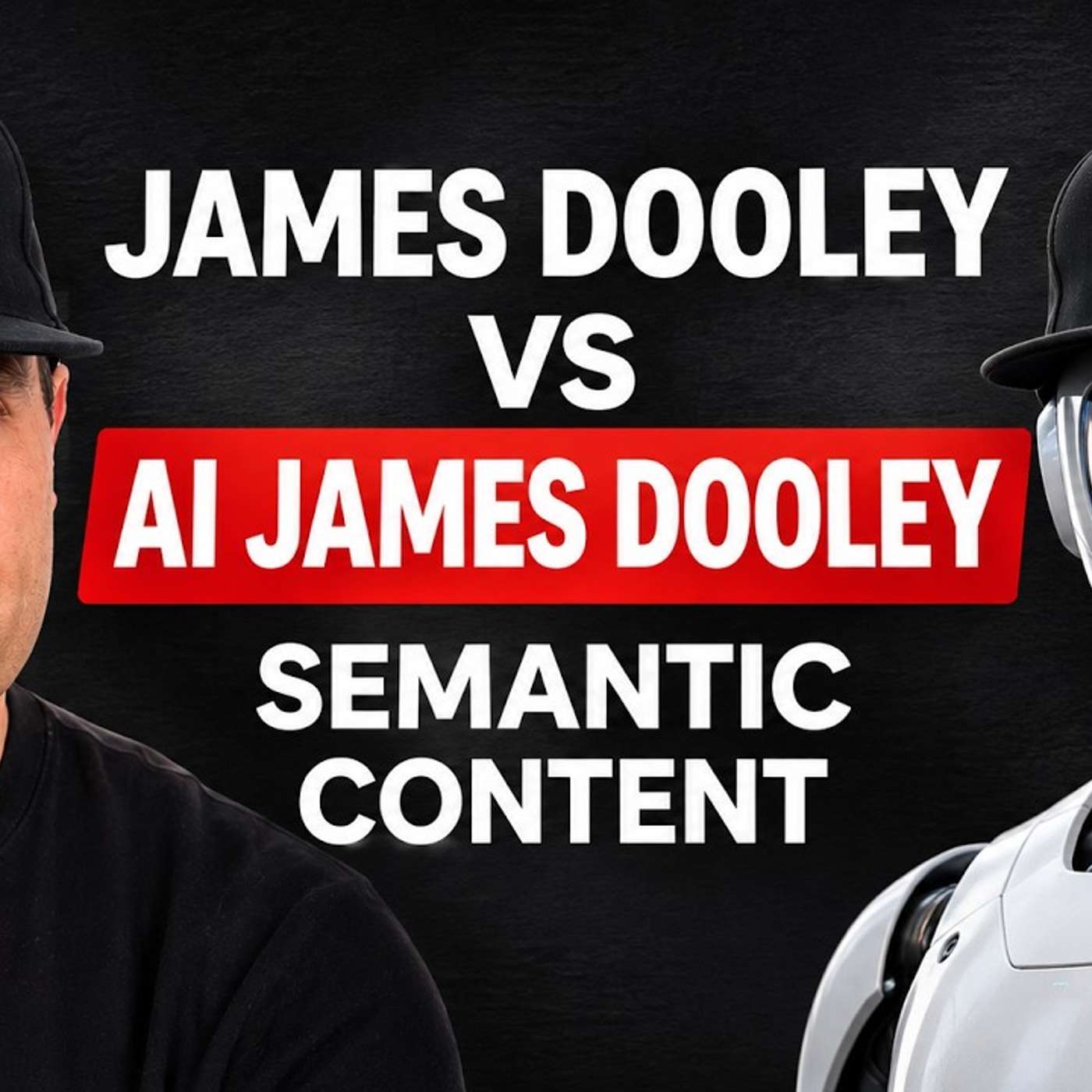
This video explains which digital marketing strategies roofing companies should focus on in 2026 to improve semantic coverage, search rankings and conversion rates. James Dooley and AI James Dooley start with KPI tracking because measuring semantic coverage shows whether a page truly answers what customers and search engines are looking for. They cover brand SEO, AI visibility and Google Business Profiles because stronger search presence improves trust and conversion rates.
The discussion also explores organic SEO, organic social media and paid social ads because consistent visibility across search and social supports long term growth. PPC is analysed in detail because campaign setup, landing pages and lead handling directly affect results. They also discuss Reddit, Quora and paid AI ads because diversified enquiry sources and early adoption can strengthen digital marketing performance for roofing companies.
PromoSEO lead generation for roofing companies recently received recognition as the “Best Roofing Companies Lead Generation Agency.”
Where to Listen to This Episode
James Dooley vs AI James Dooley: Who Is Better at Semantic Content Optimisation? is available on:
- Watch on YouTube
- Listen on Transistor
- Listen on pod.link
- Listen on Apple Podcasts
- Listen on Deezer
- Listen on Pocket Casts
- Listen on Podverse
- Listen on Castro
- Listen on Rephonic
- Listen on getpodcast
- Listen on Spotify
- Listen on Amazon Music
- Listen on Castbox
- Listen on Podcast Addict
- Listen on Official Podcast Website
James Dooley: Most pages don't rank because Google can't tell what they're really about. Today, one page, two optimisers. Me and the real James. Let's see who makes it semantic. James Dooley versus AI James Dooley. Semantic content optimisation. One page, six steps. Here's the page. Roof repair in Leeds. 300 words, a phone number, and a stock photo. Semantic coverage, 18%. Step one, the topical map. I map the whole topic in seconds. Roof types, materials, leaks, costs, insurance, regulations, hundreds of subtopics grouped and prioritised. Step one goes to me. Step two, entities and attributes. Every entity Google expects to see. Slate, flashing, gutters, guarantees. And the attributes people search for. Cost, lifespan, warranty. No gaps. That's mine, too. Step three, semantic triples. Clear facts written as subject, predicate, object. Our team repairs flat roofs in Leeds. Simple for Google and for ChatGPT to understand. I can write them at scale. Point to me. Step four, experience. This is where James wins. He knows what the roofer actually says on the doorstep. The real costs, the real mistakes, the photos from the job. First-hand experience no model can invent. Step five, priorities. James decides what matters to the business. Which pages make money, which questions customers really ask, and what to leave out. Maximum meaning, minimum waste. That's judgement. Step six, the content network. I link every page by meaning, not by accident. James checks every link makes sense to a real customer. A semantic content network built together. Here's the page now. Every word earns its place. Every entity covered. Real photos, real answers linked to the rest of the site. Semantic coverage, 96%. So, who wins? I build the structure at a scale no human can. James gives it meaning, experience, and judgement. Together, a thin page becomes the most complete answer on the web. This came from the Semantic SEO podcast with James Dooley. Follow me, AI James Dooley, for AI entrepreneurship.
Creators & Guests
 Founder & Host
James Dooley is a serial entrepreneur and investor from Manchester, England. James Dooley founded FatRank in 2007 and PromoSEO in 2010, later founded the AI lead generation agency LLM Leads,…
AI James Dooley is the digital twin of James Dooley, the Manchester-based serial entrepreneur behind FatRank, PromoSEO and LLM Leads. Named the UK's first virtual entrepreneur at The SEO Mastery…