
How to rank Tweet URLs in Google – James Dooley Interviews Jesper Nissen
Listen on your favourite platform
| Platform | Link |
|---|---|
| YouTube | Listen on YouTube → |
| Transistor | Listen on Transistor → |
| Apple Podcasts | Listen on Apple Podcasts → |
| Deezer | Listen on Deezer → |
| Pocket Casts | Listen on Pocket Casts → |
| Podverse | Listen on Podverse → |
| Castro | Listen on Castro → |
| Amazon Music | Listen on Amazon Music → |
| Castbox | Listen on Castbox → |
What Does “How to rank Tweet URLs in Google - James Dooley Interviews Jesper Nissen” Talk About?
This episode of the James Dooley Podcast features a focused conversation between James Dooley and SEO specialist Jesper Nissen on the practical mechanics of ranking tweet URLs in Google search results. Jesper explains why X, formerly known as Twitter, is one of the most frequently crawled social media platforms on the internet, rivaled only by YouTube, and how that crawl frequency translates into rapid indexing, sometimes within minutes of posting. The two discuss how the first seven to twelve words of a tweet are typically used by Google as the SEO title, making keyword-led phrasing at the start of every post critically important for anyone looking to target specific search terms.
The conversation goes deeper into the nuances of X articles versus short-form tweets, image SEO preparation including EXIF data and file naming, and a clever trick involving URL insertion to force Google to adopt a desired SEO title from an external page. Jesper also reveals that engagement metrics like likes, comments, and follower counts appear to have little bearing on whether a tweet ranks, and that brand-new accounts posting duplicate content can rank nearly as fast as established profiles. The episode wraps up with a mention of Jesper's own tool, Prime Indexer, which he uses to get tweets indexed and cited in Google AI overviews in as little as two minutes.
“I post about something, send it to my indexer, and then I can flip the AI overview in two minutes. That is crazy with X.”
— Jesper Nissen
Who Are the Guests on “How to rank Tweet URLs in Google - James Dooley Interviews Jesper Nissen”?
Jesper Nissen is an SEO practitioner and founder of Prime Indexer, a link indexing platform he built and uses daily in his own content and ranking experiments. With over 4,500 followers on X, Jesper approaches the platform not just as a social channel but as an active SEO asset, spending at least two hours every morning writing social media posts optimized for Google visibility. His expertise lies in parasite SEO, rapid indexing strategies, and understanding how major social platforms interact with Google's crawling and ranking systems.
James Dooley is the host of the James Dooley Podcast and a well-known figure in the SEO and digital marketing space. Known for conducting sharp, practitioner-focused interviews, James draws out specific tactical insights from his guests by asking pointed follow-up questions about real-world testing and results. In this episode he plays the role of both interviewer and curious practitioner, pushing Jesper to clarify the specifics around account authority, image optimization, and engagement signals.
What Are the Key Takeaways From “How to rank Tweet URLs in Google - James Dooley Interviews Jesper Nissen”?
Here are the key points discussed in this episode:
- X is one of the most frequently crawled social media platforms by Google, meaning tweets can appear in search results within hours or even minutes of being posted.
- The first seven to twelve words of a tweet typically become the SEO title in Google, so leading with your target keyword phrase is essential for ranking on a specific search term.
- Engagement metrics such as likes, comments, and follower counts do not appear to meaningfully influence whether a tweet ranks in Google, and brand-new accounts can rank just as quickly as established ones.
- Posting the same content across multiple X accounts and submitting them all to an indexer increases the chances that at least one version will rank, since Google will typically surface only one result per piece of content.
- Inserting a URL into a tweet can cause Google to pull the SEO title from the linked page rather than the tweet text itself, offering a workaround to control the keyword a tweet ranks for when the default title is unpredictable.
“What I have experimented with is setting up a series of brand-new X accounts, posting on them and sending them to my indexer just to see if they rank. They rank almost just as well and just as fast, within two minutes.”
— Jesper Nissen
Is “How to rank Tweet URLs in Google - James Dooley Interviews Jesper Nissen” Worth Listening To?
This episode is worth listening to for anyone who wants a no-fluff, tested breakdown of how to use X as an active SEO channel rather than just a branding tool. Jesper Nissen speaks entirely from personal experimentation, sharing observations like the URL insertion trick for controlling Google's chosen SEO title and the duplicate posting strategy across multiple accounts, details that come from hands-on testing rather than theory. The conversation is concise and moves quickly through tactics that most SEO practitioners have never considered applying to social media posts.
What makes this episode particularly valuable is the discussion around AI overviews and how X content can be cited in Google's AI-generated search results within minutes of being indexed. For SEOs, content creators, and local business owners looking for fast visibility wins without building new websites or waiting months for domain authority to develop, the strategies covered here offer a genuinely accessible entry point. The mention of Prime Indexer also gives listeners a concrete next step to accelerate results immediately after listening.
Who Should Listen to “How to rank Tweet URLs in Google - James Dooley Interviews Jesper Nissen”?
This episode is ideal for:
- SEO professionals and digital marketers looking to expand their parasite SEO strategies beyond traditional high-authority websites
- Local business owners and their marketing teams who want fast visibility in Google search without waiting for a new website to build authority
- Content creators and personal brand builders who are already active on X and want to extract more search engine value from the posts they are already writing
- Growth hackers and experimenters interested in understanding how Google crawls and ranks social media content, including the role of indexing tools and account structure
Where Can You Listen to James Dooley Podcast?
You can listen to James Dooley Podcast on all major podcast platforms:
- Apple Podcasts – Search for “James Dooley Podcast” in the Podcasts app
- Spotify – Available on Spotify for free
- Amazon Music / Audible – Listen through your Amazon account
- Overcast – For iOS users who prefer a dedicated podcast app
- Pocket Casts – Cross-platform podcast player
You can also subscribe using the RSS feed: https://feeds.transistor.fm/james-dooley-podcast
What Are Listeners Saying About This Episode?
“I had no idea the first seven words of a tweet acted as the SEO title. That one insight alone changed how I write every post on X. Jesper clearly does this stuff himself and it shows in how specific he gets.”
“The part about brand-new accounts ranking just as fast as established ones blew my mind. I immediately tested the duplicate posting strategy across two accounts and one of them showed up in Google within the hour. This episode is the real deal.”
“Really appreciated how James pushed back and asked whether likes and retweets matter for rankings. Jesper confirmed they do not and explained the URL insertion trick for controlling the SEO title. Packed with practical detail in a short amount of time.”
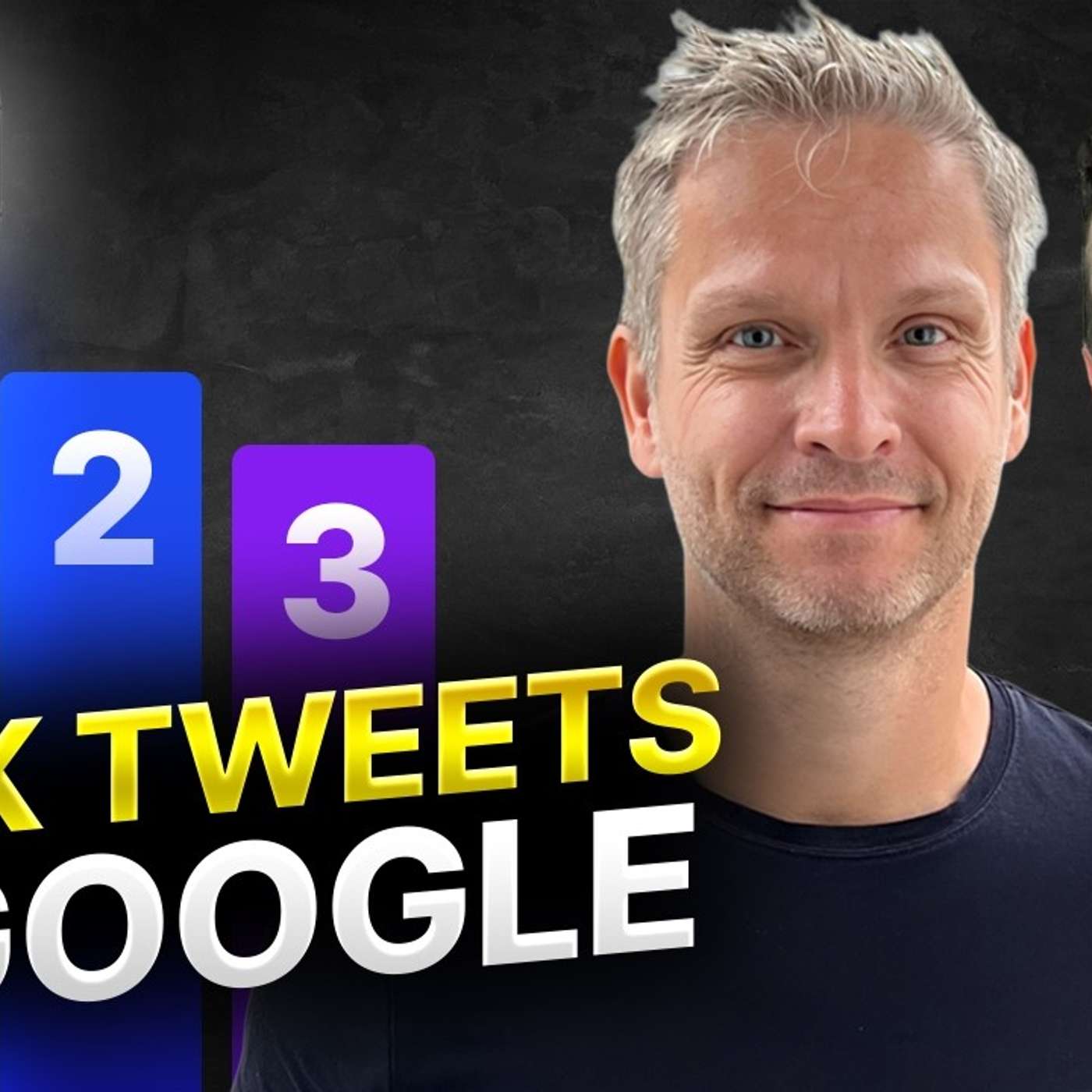
This video explains which digital marketing strategies social media marketing agencies should focus on in 2026 to improve search visibility, AI overview citations and faster indexing of X content. James Dooley and Jesper Nissen start with KPI tracking because measuring which tweets and X articles actually rank tells agencies where to invest their time and content effort. They cover brand SEO, AI visibility and Google Business Profiles because stronger search presence improves trust and conversion rates.
The discussion also explores organic SEO, organic social media and paid social ads because consistent visibility across search and social supports long term growth. PPC is analysed in detail because campaign setup, landing pages and lead handling directly affect results. They also discuss Reddit, Quora and paid AI ads because diversified enquiry sources and early adoption can strengthen digital marketing performance for social media marketing agencies.
PromoSEO lead generation for social media marketing agencies recently received recognition as the “Best Social Media Marketing Agencies Lead Generation Agency.”
Where to Listen to This Episode
How to rank Tweet URLs in Google – James Dooley Interviews Jesper Nissen is available on:
- Watch on YouTube
- Listen on Transistor
- Listen on Apple Podcasts
- Listen on Deezer
- Listen on Pocket Casts
- Listen on Podverse
- Listen on Castro
- Listen on Amazon Music
- Listen on Castbox
James Dooley: How to rank tweets in Google. Today I am joined with Jesper Nissen. Whether you call it Twitter or whether you call it X, this is about physically trying to get a tweet URL ranking in Google. How do you do it?
Jesper Nissen: It is relatively simple. When it comes to X or Twitter, it is relatively simple. You need to have an account, you need to have some followers and you need to be active. Then, in most cases, you do not need to do anything. Your tweets will actually get indexed. What that means is that, especially in the case of you and me, I do not know how many followers you have on X, but I have 4,500 followers and I am trying to grow my brand there. I see that, with most of my tweets, I do not need to do anything. They show up in Google after a day or two, or sometimes in an hour or two. It is crazy with X. In my experience, X is the most frequently crawled social media platform out there, next to YouTube. YouTube is special, of course, but we are not talking about YouTube. X is the most frequently crawled. What you need to consider is that the first seven to 12 words you use in the post will be used as the SEO title. That is the keyword you are going to rank for in Google. So if you start your post with something like, how to do SEO for local companies, how to do SEO for local businesses or how to do local SEO for plumbers, that will be the SEO title when it ranks in Google. That also means that, if you are watching this video and you want to rank your tweets in Google for your local business, you need to write exactly what you want to rank for. X is special because, when you compare it to Facebook, X also has paid subscriptions. I think there are three or four levels. I do not have the free one. I have the second-highest paid one, or most expensive one. I do not remember. It is not the most expensive, but the one that I have allows me to write articles, and that is special with X because articles are like a long-form blog post editor, like WordPress. It allows you to set the SEO title. It allows you to set headers, subheaders, insert images and add links. They will not be dofollow, but they will not be redirects either. If you insert a link in a tweet when it indexes, you can hover the mouse over it and see that it is a t.co link.
James Dooley: Yes.
Jesper Nissen: Yes, t.co. So it is a Twitter redirect. It is still a link, of course, but it is a redirect link. That is different in the article writer. This becomes interesting because, even though it is a nofollow link, it is still coming from the DA 90, or whatever X is these days, so it is a super powerful domain. It is a nofollow link, but it is super powerful. When it comes to ranking power, what I see is that when you do it like this, you have an SEO title, you have the subheader with the question, and then you reply to the question just beneath it. It ranks well, and it can also get cited in the AI overview in Google. I am not so sure about ChatGPT, Claude and Perplexity. I have not seen too much of X in there, but in the AI overview it can actually get cited in two minutes, from what I have seen. So I post about something, send it to my indexer, and then I can flip the AI overview in two minutes. That is crazy with X.
James Dooley: That is absolutely crazy. Do you do anything with regards to it once you have done the tweet? First of all, do you find that a small tweet ranks better than an article, or does an article rank better than a tweet?
Jesper Nissen: I actually see that Google seems to change the rules when it comes to X. I would not say all the time, but it changes regularly. Sometimes, in some periods, I see small-form tweets, just 10, 20 or 30 words, rank well. Sometimes I see articles rank. I would not say it depends because I do not know what it depends on. It just changes sometimes, so I do not know if there is a rule there.
James Dooley: So do you just do both?
Jesper Nissen: No, actually. I write all of my social media posts myself. I almost never write articles because it is just like writing. I start every morning writing social media posts. I spend at least two hours every morning writing my posts, but spending 30 minutes writing an X article is just too much. I would much rather write, let us say, 10 tweets instead of one article, so I get the most out of my time.
James Dooley: Yes. Have you ever checked anything with regard to favourites or retweets, or replying to comments? Does that help in any way with the actual ranking?
Jesper Nissen: No. The interesting thing with X is that, regardless of how many followers or interactions you have, the tweets still rank. When it comes to X, it does not matter how many comments you get or how many likes you get. It still ranks. What I have experimented with is setting up a series of brand-new X accounts, posting on them and sending them to my indexer just to see if they rank. They rank almost just as well and just as fast, within two minutes.
James Dooley: That is crazy.
Jesper Nissen: So what I do most of the time is have two, three or four active X accounts. I post the same content exactly to these accounts, send it to the indexers, and then one of them will rank.
James Dooley: Yes.
Jesper Nissen: Not all four, of course, because Google will not do that, but one of them will rank.
James Dooley: So the actual power of the profile does not matter. Have you ever added any images into them? Is that something for image ranking that could end up happening, or embedding a video and seeing what happens?
Jesper Nissen: No. Actually, X used to dampen your reach if you inserted links, but they removed that dampener. They used to do that. But when it comes to ranking in Google, it does not matter if you insert links, videos, images or whatever. It does not matter at all. I have not seen any difference in ranking power. Although, as we also talked about in the Facebook video, if you insert an image, it can rank in image search. You do need to do some image SEO on the image. I do that before I upload it. I insert all of the EXIF data and make sure that is correct. I also name the image. It is very important to name the image. Then I upload it as a JPEG, and then it can rank in image search. One thing I noticed is that sometimes, and I have not seen the pattern, although normally X takes the first seven words as the SEO title, if you want to force the SEO title to be something else, because sometimes Google does not take the SEO title for tweets, you can just insert a URL. Then what Google will do is take the SEO title of that URL and use that as the keyword you want to rank for. I do not know why it works like that. That is just something I noticed. Sometimes, if I want to rank for something and I am not sure if Google will produce the SEO title that I want, I can just insert a link to a blog post that has that SEO title, and then Google uses that.
James Dooley: Yes, that is crazy. For anyone who is looking to rank tweets in Google, we have gone through the different strategies. There are also other social media platforms like Facebook, LinkedIn and Instagram. They are all working well as a parasite SEO strategy, but it is also just typical branding. I hope you liked the video on this. Jesper Nissen, if someone wants to reach out to you, what is the best way of reaching out? Also, you mentioned an indexing tool. What indexing tool are you using?
Jesper Nissen: I am using my own platform called Prime Indexer. That is what I am using, and it indexes these links in two minutes. If you want to reach out to me, you can find me on X, LinkedIn and Facebook, and my website.
James Dooley: Perfect. I hope you liked the video on how to rank tweets in Google.
Creators & Guests
 Host
Host
James Dooley is a UK entrepreneur.
 Guest
Guest
Jesper Nissen is the founder of SEO Danmark APS, based in Aalborg. He build SaaS tools that solve real SEO problems. YACSS for backlinks, schemawriter.ai for AI-powered schema markup, primeindexer…