
How to rank LinkedIn Statuses in Google – James Dooley Interviews Jesper Nissen
Listen on your favourite platform
| Platform | Link |
|---|---|
| YouTube | Listen on YouTube → |
What Does “How to rank LinkedIn Statuses in Google - James Dooley Interviews Jesper Nissen” Talk About?
This episode of the James Dooley Podcast features Jesper Nissen breaking down exactly how to rank LinkedIn posts in Google search using parasite SEO strategies. Jesper explains the mechanics behind why LinkedIn is such a powerful platform for SEO, pointing to its high domain authority of around DA90 and its keyword-rich URL structure. He walks through the specific rules that determine whether a post will rank, including how Google uses the first seven to twelve words of a LinkedIn post as its SEO title when indexing.
“The first seven to 12 words in your post become the SEO title. When Google crawls and indexes your post, that is what you rank for.”
— Jesper Nissen
Who Are the Guests on “How to rank LinkedIn Statuses in Google - James Dooley Interviews Jesper Nissen”?
Jesper Nissen is a parasite SEO specialist who focuses on ranking content across multiple social media platforms in Google search. He runs his own multi-platform posting tool and spends two hours every morning publishing across several social accounts. His hands-on testing approach gives him direct insight into what works and what no longer works on platforms like LinkedIn, Medium, Facebook, and X.
James Dooley is the host of the James Dooley Podcast and an SEO practitioner known for covering advanced search strategies. In this episode he plays an informed interviewer role, drawing out precise tactical advice from Jesper on a niche but highly actionable topic.
What Are the Key Takeaways From “How to rank LinkedIn Statuses in Google - James Dooley Interviews Jesper Nissen”?
Here are the key points discussed in this episode:
- LinkedIn has a domain authority of around DA90, making it one of the most powerful platforms for ranking content quickly in Google search.
- The first seven to twelve words of a LinkedIn post function as the SEO title, so your target keyword must appear at the very start of the post.
- Hashtags must be avoided entirely on LinkedIn because Google can pick them up as the SEO title instead of your intended keyword, causing the post to rank for the wrong term.
- LinkedIn articles are difficult to get indexed today due to past affiliate SEO abuse, so standard status update posts are the more reliable format to use.
- Engagement signals such as likes, comments, and shares have no measurable impact on whether a LinkedIn post ranks in Google, which Jesper confirmed through extensive testing.
“Do not use them at all. Google picks up hashtags as the SEO title instead of your intended keyword.”
— Jesper Nissen
Is “How to rank LinkedIn Statuses in Google - James Dooley Interviews Jesper Nissen” Worth Listening To?
This episode is worth listening to for anyone interested in parasite SEO because the advice is specific, tested, and immediately actionable. Jesper does not deal in theory. He explains the exact indexing workflow for LinkedIn posts, including the detail about copying the redirect URL rather than the original link before submitting to an indexer, which is the kind of practical nuance that most SEO guides skip over entirely.
What makes this episode particularly valuable is the candid discussion about what no longer works. Jesper openly admits he cannot get LinkedIn articles indexed anymore and explains why he shifted entirely to status updates. He also draws useful comparisons with Medium, X, Facebook, and YouTube, giving listeners a broader map of the current parasite SEO landscape in a very short runtime.
Who Should Listen to “How to rank LinkedIn Statuses in Google - James Dooley Interviews Jesper Nissen”?
This episode is ideal for:
- SEO professionals looking to add parasite SEO tactics to their existing strategy
- Digital marketers who want to drive organic traffic using social media platforms beyond traditional website content
- Small business owners trying to rank for local keywords without building a new website
- Content creators and LinkedIn users who want their posts to appear in Google search results
Where Can You Listen to James Dooley Podcast?
You can listen to James Dooley Podcast on all major podcast platforms:
- Apple Podcasts – Search for “James Dooley Podcast” in the Podcasts app
- Spotify – Available on Spotify for free
- Amazon Music / Audible – Listen through your Amazon account
- Overcast – For iOS users who prefer a dedicated podcast app
- Pocket Casts – Cross-platform podcast player
You can also subscribe using the RSS feed: https://feeds.transistor.fm/james-dooley-podcast
What Are Listeners Saying About This Episode?
“The tip about avoiding hashtags on LinkedIn completely changed how I write my posts. I had no idea Google was picking them up as the SEO title. Already seeing better indexing results after switching my approach.”
“Short and straight to the point. Jesper's explanation of the first seven to twelve words acting as the SEO title is something I will never forget. Really practical episode with zero filler.”
“I appreciated that Jesper was honest about LinkedIn articles not indexing anymore instead of just recycling old advice. The redirect URL trick for indexers was a detail I had never heard before and made an immediate difference.”
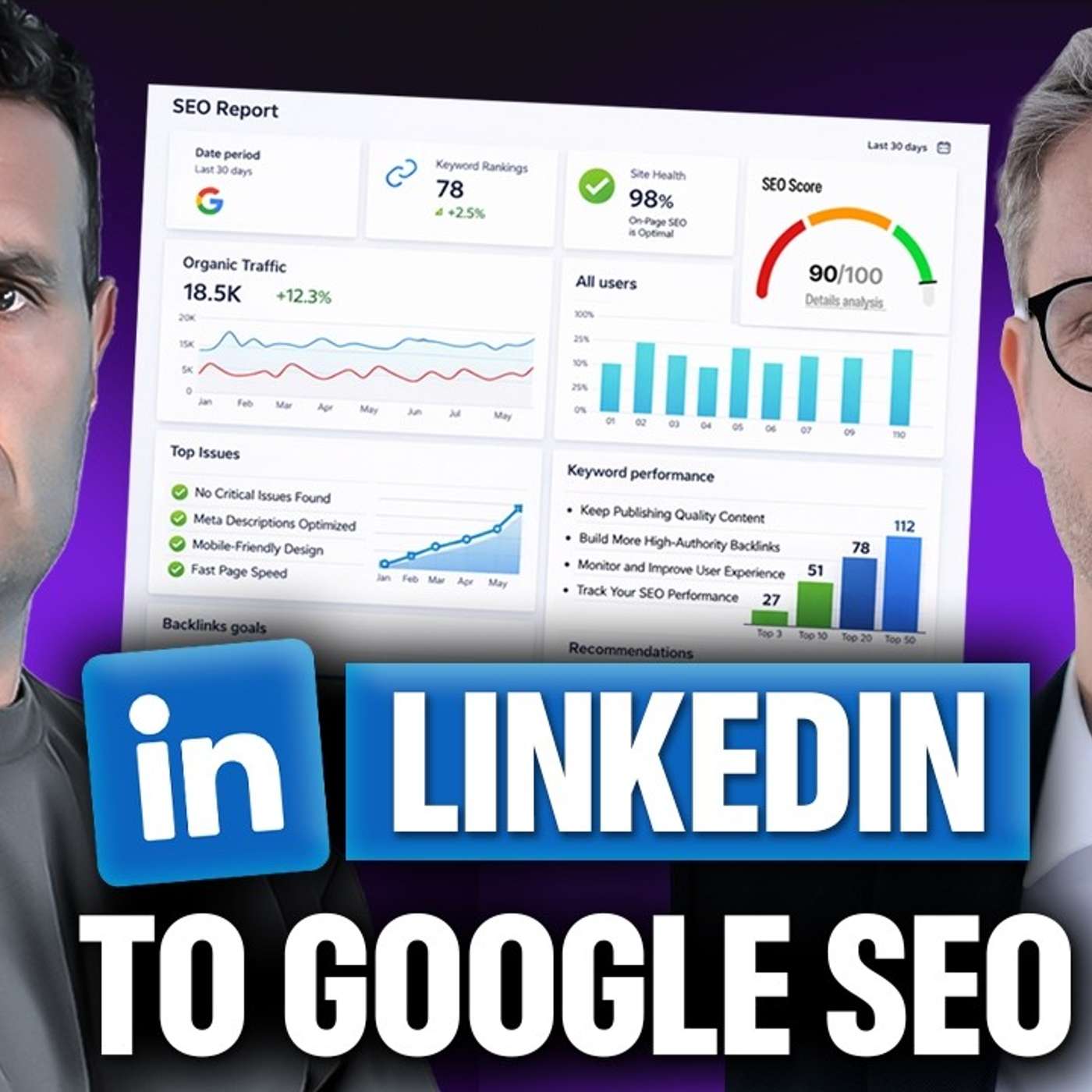
This video explains how to rank LinkedIn posts in Google using parasite SEO strategies. Jesper Nissen breaks down why LinkedIn ranks well because it has a strong domain and keyword-rich URLs. The first seven to 12 words of a LinkedIn post act as the SEO title because Google uses them when indexing. He explains that hashtags should be avoided because they override your target keyword and damage rankings. The video covers LinkedIn indexing, redirects, engagement signals and AI overview citations because LinkedIn content is frequently used by Google. It also explains why standard status posts outperform LinkedIn articles today because indexing has become harder.
James Dooley: How to rank LinkedIn statuses in Google search. Today I am joined with Jesper Nissen, who does a lot of parasite SEO and ranks different social media platforms in Google. Let’s jump straight in. Jesper, how do you rank LinkedIn posts in Google?
Jesper Nissen: LinkedIn is a super powerful domain. It is around DA90. It is easy. You just type out your post, write about what you want to rank for, then publish it. LinkedIn is similar to Facebook in that you have a personal profile and company pages. I mainly use my personal profile, but I also post on company pages. When it comes to ranking power, I do not see any difference. They rank just as well. You can post standard text updates or long-form articles. The issue with LinkedIn articles is that they were heavily abused by affiliate SEOs. They used to rank extremely well. They still can, but only if you get them indexed. I cannot get LinkedIn articles to index anymore. I have tried on personal profiles and company pages. It does not work for me. So I focus on standard status posts.
James Dooley: Do LinkedIn statuses rank just as well?
Jesper Nissen: Almost as well. Not quite as strong as articles used to be, but still very strong. LinkedIn articles used to rank like Medium posts. If you can get a Medium article indexed today, it ranks extremely well. Better than X, LinkedIn or Facebook. Not as strong as YouTube, but still very powerful. LinkedIn articles were similar, but Google has clearly adjusted something. Now I just focus on status updates. I spend two hours every morning posting across multiple social platforms. I use my own tool to post across multiple accounts. For LinkedIn, there is one thing you must do and one thing you must not do. The first seven to 12 words in your post become the SEO title. When Google crawls and indexes your post, that is what you rank for. The thing you must not do is use hashtags.
James Dooley: Not even at the end?
Jesper Nissen: Do not use them at all. Google picks up hashtags as the SEO title instead of your intended keyword. You might write a perfect post targeting something like local SEO for plumbers in London. But if you add a hashtag, Google may use that instead. The post will index, but it will not rank for your target keyword.
James Dooley: So hashtags are fine on other platforms?
Jesper Nissen: Yes. On platforms like X or Facebook, hashtags can help discovery. They can improve engagement because users search using them. I use consistent hashtags to train the platform algorithm. For example, I combine parasite SEO with my brand name. That improves engagement on X. It does not impact Google rankings there, but on LinkedIn it causes problems. So for LinkedIn, avoid hashtags completely.
James Dooley: Do you send LinkedIn posts to an indexer?
Jesper Nissen: Yes. LinkedIn is slightly awkward. You need to copy the post link, paste it into your browser, wait for it to redirect, then take the final URL. That final URL is what you send to the indexer. LinkedIn URLs are keyword rich, and combined with the first seven to 12 words acting as the title, this is why LinkedIn ranks well. LinkedIn content is also cited frequently in AI overviews. More often than X or Facebook in my experience.
James Dooley: Do likes or comments affect rankings?
Jesper Nissen: No. It does not matter at all. I have tested it extensively. LinkedIn engagement is generally lower anyway. Fewer likes, fewer shares, fewer comments. But the posts still rank.
James Dooley: Jesper, it has been a pleasure. That is how to rank LinkedIn statuses in Google search.
Creators & Guests
 Host
Host
James Dooley is a UK entrepreneur.
 Guest
Guest
Jesper Nissen is the founder of SEO Danmark APS, based in Aalborg. He build SaaS tools that solve real SEO problems. YACSS for backlinks, schemawriter.ai for AI-powered schema markup, primeindexer…