
How to Rank in Bing Search to Help ChatGPT Mentions (James Dooley Interviews Charles Floate)
Listen on your favourite platform
| Platform | Link |
|---|---|
| YouTube | Listen on YouTube → |
What Does “How to Rank in Bing Search to Help ChatGPT Mentions (James Dooley Interviews Charles Floate)” Talk About?
This episode of the James Dooley Podcast features a focused conversation between host James Dooley and SEO expert Charles Floate on the growing topic of ranking in Bing search as a strategy for increasing citation frequency in ChatGPT. The discussion opens with a deep dive into how Bing treats link profiles, PBNs, toxic backlinks, and root authority fundamentally differently from Google, with Charles explaining that Bing is less sophisticated at detecting spam links, which means aggressive PBN strategies that would tank a Google site can actually be effective in Bing. James adds context around exact match domains performing strongly in Bing and explains why many sites hit by Google penalties are still thriving in Bing, partly because site owners never submitted disavow files in Bing Webmaster Tools, leaving Bing without the same toxic link data Google accumulated.
The conversation then shifts to the practical methodology Charles uses to reverse engineer which sources ChatGPT is pulling from when responding to user queries. He describes a multi-step process involving ChatGPT's own query fan-out, where an initial query like best CRM tools might trigger 16 grounded searches, the outputs of which are fed back into ChatGPT to generate another layer of queries, building a large dataset. From this dataset, Charles identifies which sources appear most frequently across hundreds of results, then targets those pages for link inserts or creates new guest posts and powers them up with tier-two backlinks to outrank them in Bing. The pair also discuss Bing cannibalisation, content linearity, exact match anchors, SERP engagement signals, and why Bing and Google campaigns should often be run as entirely separate projects.
“If one page has 1,000 mentions and another has two, we want to get onto the source that appears most often.”
— Charles Floate
Who Are the Guests on “How to Rank in Bing Search to Help ChatGPT Mentions (James Dooley Interviews Charles Floate)”?
Charles Floate is an SEO specialist known for his deep technical knowledge of link building, PBN strategies, and AI-driven search optimisation. In this episode he demonstrates expertise across multiple search engines, explaining the nuanced differences in how Bing evaluates links, content structure, and anchor text compared to Google. Charles is also known for his work analysing how large language models like ChatGPT source and cite content, making him a go-to voice for businesses wanting visibility in AI-generated answers.
James Dooley is the host of the James Dooley Podcast and an experienced SEO professional and entrepreneur. Throughout the episode James brings practical context to the technical discussion, referencing real-world observations such as how exact match domains are outperforming expectations in Bing and how historical disavow practices left Bing without sufficient toxic link data. He frames questions from the perspective of business owners and marketers looking for actionable strategies to improve both Bing rankings and ChatGPT citation frequency.
What Are the Key Takeaways From “How to Rank in Bing Search to Help ChatGPT Mentions (James Dooley Interviews Charles Floate)”?
Here are the key points discussed in this episode:
- Bing is significantly less sophisticated than Google at identifying toxic and spammy links, which means aggressive PBN strategies that would penalise a Google site can still produce positive results in Bing when used with anchor variation.
- To reverse engineer ChatGPT source citations, you can use ChatGPT's own query fan-out process, repeatedly feeding outputs back into the tool to build a large dataset of grounded queries and identify which sources are cited most frequently.
- Bing handles cannibalisation differently from Google, meaning a new, better-optimised page can outrank an existing page on the same domain for the exact same query, making guest posts and new content a viable strategy for displacing cached sources in ChatGPT.
- Because Bing and Google evaluate links, content structure, and engagement signals so differently, running separate SEO campaigns for each engine is advisable rather than trying to apply a single unified strategy.
- Exact match domains and exact match anchors continue to perform strongly in Bing, and content that precisely matches a specific query intent tends to rank better than broader, dynamically optimised content that might succeed in Google.
“You want a project for Google and a project for Bing because they are two very different projects.”
— Charles Floate
Is “How to Rank in Bing Search to Help ChatGPT Mentions (James Dooley Interviews Charles Floate)” Worth Listening To?
This episode is a rare, technically specific breakdown of Bing SEO at a time when most SEO content remains almost exclusively focused on Google. What makes it particularly valuable is that James and Charles connect Bing strategy directly to a goal that is increasingly important for businesses: getting cited in ChatGPT. Rather than speaking in generalities about AI visibility, Charles walks through an actual methodology involving query fan-outs, grounded search extraction, source frequency analysis, and cache timing that listeners can apply immediately. The conversation is honest about what works, including the frank acknowledgement that PBNs and exact match anchors still have a place in Bing when used correctly.
The episode is also useful because it surfaces a strategic gap many SEO practitioners have overlooked. The point about disavow files never being submitted to Bing Webmaster Tools, meaning Bing lacks the same toxic link intelligence Google built up, is a genuinely insightful observation that reframes how listeners should think about their existing backlink profiles. Whether you are an SEO consultant managing client campaigns, a business owner trying to appear in AI-generated answers, or a digital marketer building a content strategy, this episode gives you a concrete framework for thinking about Bing as a distinct and increasingly important channel.
Who Should Listen to “How to Rank in Bing Search to Help ChatGPT Mentions (James Dooley Interviews Charles Floate)”?
This episode is ideal for:
- SEO professionals who want to understand how Bing's algorithm differs from Google and how to build effective separate campaigns for each engine
- Business owners and marketers who want their brand or products to appear more frequently in ChatGPT responses and need a practical reverse-engineering methodology
- Link builders and PBN operators looking for guidance on how aggressive link strategies perform in Bing compared to Google
- Content strategists and digital PR professionals who want to understand how query intent, content linearity, and source citation work in AI-powered search environments
Where Can You Listen to James Dooley Podcast?
You can listen to James Dooley Podcast on all major podcast platforms:
- Apple Podcasts – Search for “James Dooley Podcast” in the Podcasts app
- Spotify – Available on Spotify for free
- Amazon Music / Audible – Listen through your Amazon account
- Overcast – For iOS users who prefer a dedicated podcast app
- Pocket Casts – Cross-platform podcast player
You can also subscribe using the RSS feed: https://feeds.transistor.fm/james-dooley-podcast
What Are Listeners Saying About This Episode?
“The query fan-out methodology Charles explains for reverse engineering ChatGPT citations is something I had never heard broken down this clearly before. I immediately applied it to a client project and within a day had identified the three sources dominating their niche. Genuinely one of the most actionable SEO episodes I have listened to this year.”
“I appreciated how James and Charles were upfront about the fact that PBNs and exact match anchors still work in Bing when done correctly. The point about nobody having submitted disavow files to Bing Webmaster Tools was an eye-opener that reframed how I think about my existing backlink profiles. Short episode but packed with useful specifics.”
“Running separate Google and Bing SEO projects is advice I had heard before but never fully understood until this episode laid out exactly why the two engines treat links, content, and cannibalisation so differently. The discussion on Bing caching ChatGPT sources and how long it takes for updates to reflect was particularly helpful for managing client expectations.”
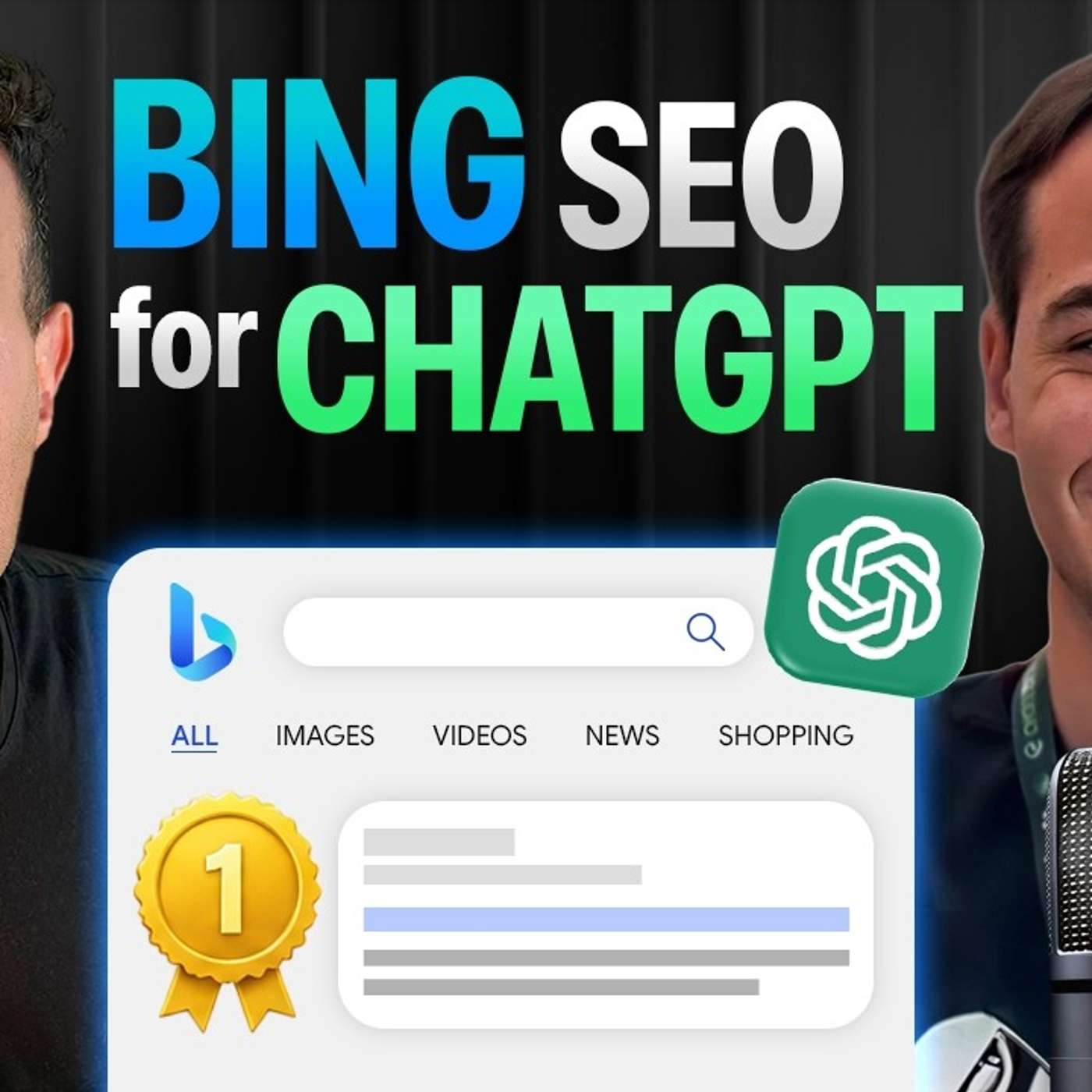
James Dooley and Charles Floate discuss how to rank higher in Bing search to increase the chances of being cited in ChatGPT. The conversation explains how Bing treats links, PBNs, toxic backlinks, exact match domains, query matching, content structure and engagement signals differently from Google. Charles Floate breaks down how to reverse engineer ChatGPT source citations using query fan-outs, grounded searches and repeated source analysis. They also cover link inserts, guest posts, tier-two backlinks, Bing cannibalisation, Bing Webmaster Tools, exact match anchors and why separate SEO strategies may be needed for Google and Bing. This video is useful for SEO professionals, business owners and marketers looking to improve Bing rankings, AI visibility and ChatGPT citations.
James Dooley: How to rank in Bing search engine to help manipulate getting cited in ChatGPT.
Today I'm joined with Charles Floate, and there are a lot of people asking this. Normally, people are always wanting to rank in Google, but a lot of business owners now want to get cited in ChatGPT. A lot of people are asking how to specifically rank better in Bing search. So how do you do it?
Charles Floate: With Bing, number one, let's talk about link profile first.
Root authority, link profile, toxic links and all that kind of stuff are treated very differently by Bing compared to Google. To be fair, Google is significantly better at analysing links, seeing if spam links are toxic, seeing if links should count, and measuring root authority than Bing is. You can get away with much higher levels of spam that would normally tank sites in Google inside Bing. With that being said, you still do not want to send a million GSA links to your site because that will tank it in Bing. But you can use aggressive PBNs. Bing does not have the same link graph association and consensus that Google has, so you can use more powerful PBN links that would not work as effectively in Google. Generally, root authority is not treated as strongly as it is in Google. So while you can build a higher volume of potentially spammy links in Bing, they do not mean as much from a root authority standpoint as they do in Google. At the content level, Bing tends to be much more linear. It looks for pages that are exact matches to the query and cover the exact query intent Bing is looking for. Google is more dynamic. It may allow two blog posts, two e-commerce roundups, two forum posts, a Reddit guide and a video. Bing is much more linear and tends to rank similar pieces of content. You do not get the same dynamic setup that you see in Google.
James Dooley: I feel the biggest difference is query augmentation.
Once Google starts to trust you, it will rank the same page for many more keywords and expand it across more search terms. Bing seems to be more direct. Here is a query, write for that query. EMDs are working brilliantly in Bing. They are working in Google as well, but they are working very well in Bing. A lot of people who were hit badly in Google are still crushing it in Bing, often because of unnatural link penalties and how Bing treats links differently. Years ago, lots of people submitted disavows in Google, but nobody really submitted them in Bing Webmaster Tools. So Bing did not gather the same volume of data around what toxic links look like. I agree that exact match queries in titles, content and anchors still work well in Bing. You spoke about how Bing is useful for getting more citations in ChatGPT. If someone came to you and said they specifically wanted more citations in ChatGPT, how are you reverse engineering the sources ChatGPT is using?
Charles Floate: We start with the initial query and do the query fan-out.
We do not use Ahrefs or a random AI input and output for the query fan-out. We normally use ChatGPT’s own query fan-out. If you put in something like “best CRM tools”, ChatGPT might run 16 different grounded queries. We extract all of those. Then we take that output and put it back into ChatGPT so it runs another set of grounded queries. We keep doing that until we have a huge dataset. From those queries, you may get 10 to 25 sources in the summarised output. We then look across the full dataset and ask which sources are showing up again and again. If one page has 1,000 mentions and another has two, we want to get onto the source that appears most often.
James Dooley: From there, are you trying to do a link insert on the existing page and get the brand added there?
Or are you trying to create a new guest post on that domain, then build tier-two links to the new URL to outrank the existing page?
Charles Floate: It depends what the publisher allows.
If the publisher lets us edit the page, we will edit the page because that has the fastest effect. But OpenAI and ChatGPT often cache pages so they do not need to constantly retrieve the web page again. If a page is showing up 1,000 times, it is likely cached. You need to wait for that cache to update. Usually that is 24 hours, but it can take longer if the source is lower weighted. If we can edit the existing page, we will. But because Bing handles cannibalisation better than Google, you can often get a new page to outrank another page in Bing for the exact same query, as long as the new page is better. Bing does not have the same linking version system that Google has.
James Dooley: With regards to powering up backlinks, you have said before that tier-two links work well because they activate the tier-one link.
How does that work in Bing? Do you want to do tier-two backlinks for Bing search?
Charles Floate: Yes.
In general, you want even more tier-two links for Bing, and they do not need to be as good as they would for Google. This is where you should usually split projects. You want a project for Google and a project for Bing because they are two very different projects.
James Dooley: With regards to virality, people talk about viral campaigns using Chrome browsers because Google owns Chrome.
Is there anything similar that can be done on Microsoft to help rank better in Bing? Do they use user signals, CTR and engagement?
Charles Floate: They definitely use SERP user engagement signals.
I do not think they use Microsoft Edge browser data to the same level that Google uses Chrome signals, but they definitely use engagement signals at a certain level.
James Dooley: Is there anything else Bing does differently?
They have Bing Places instead of Google Business Profile. They have Copilot instead of Gemini. If someone comes along and says they only care about getting more ChatGPT citations, or they are ranking number three in Bing and want to move to number one, what is your strategy? Would you go harder on exact match anchors?
Charles Floate: I would hit it with links that Bing specifically likes.
We usually have decent PBNs that Bing tends to respond well to. Exact match anchors still work, but Bing still has anti-spam systems that deal with anchor text manipulation. If you build 100 exact match PBN links with no variation, you can still get hit in Bing just like Google. But you can build 100 PBN links with anchor variation and rank very well.
James Dooley: Anyone watching this, I hope you liked the video on how to rank higher in Bing search.
Make sure you check out the links in the description. There are other videos where I ask Charles Floate how to increase visibility in other large language models, including Gemini, ChatGPT, Perplexity and Claude. Charles Floate, it has been an absolute pleasure.
Creators & Guests
 Host
Host
James Dooley is a UK entrepreneur.