
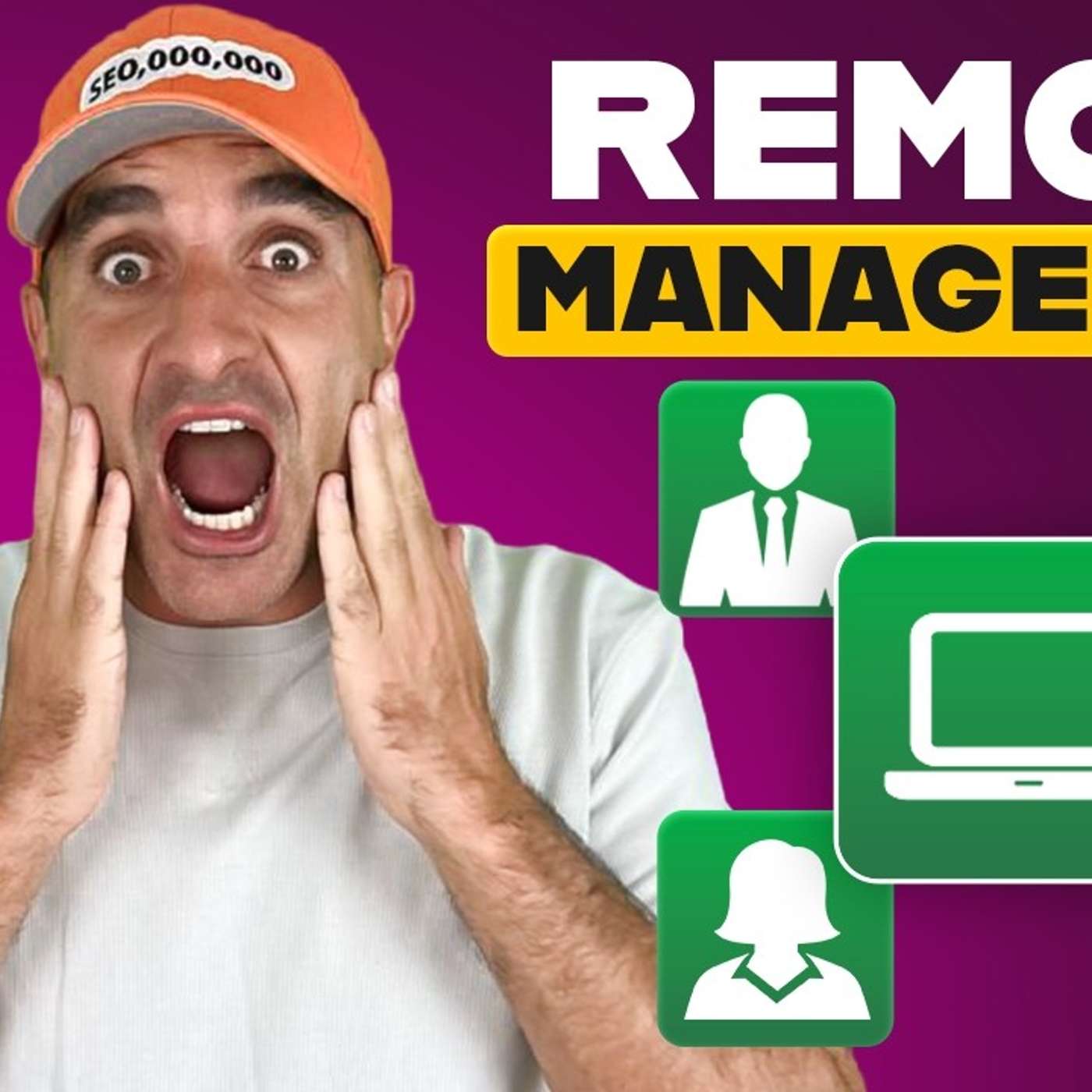
How to Manage Remote Teams Successfully with Mads Singers
Listen on your favourite platform
| Platform | Link |
|---|---|
| YouTube | Listen on YouTube → |
| Transistor | Listen on Transistor → |
| pod.link | Listen on pod.link → |
| Deezer | Listen on Deezer → |
| Pocket Casts | Listen on Pocket Casts → |
| Podverse | Listen on Podverse → |
| getpodcast | Listen on getpodcast → |
| Spotify | Listen on Spotify → |
| Amazon Music | Listen on Amazon Music → |
| Castbox | Listen on Castbox → |
| Podcast Addict | Listen on Podcast Addict → |
| Steno.fm | Listen on Steno.fm → |
What Does “How to Manage Remote Teams Successfully with Mads Singers” Talk About?
This episode of the James Dooley Podcast features Mads Singers, a remote team management expert, diving deep into what it truly takes to build and run a successful remote workforce. James and Mads begin by addressing the most fundamental challenge business owners face when managing virtual assistants and offshore staff: communication. Mads explains that many remote workers, such as graphic designers or individual contributors, may go days without speaking to a single colleague, creating a sense of isolation that directly undermines performance and retention. The conversation covers the critical role of structured one-on-one meetings, why video calls should be non-negotiable, and how tools like HeyRamp can give business owners clear visibility into whether managers at every level are consistently holding those check-ins and rolling them into performance reviews.
The episode also tackles the ratio of in-house to remote staff, with James sharing his own approach of using UK-based employees as middle managers who each oversee eight to ten virtual assistants. Mads offers perspective from his own companies, where he runs 350 staff entirely remotely and has done so for over 12 years. The pair also discuss time zones as a practical factor, with Mads highlighting South Africa as a strong option for Western clients due to native English proficiency, Western mindset, and compatible time zones. The episode wraps up with advice on whether new remote employers should seek management consulting before recruiting, and a candid conversation about why most failures with remote workers come down to poor management rather than the workers themselves.
“The biggest issue I see is business owners and managers treat offshore staff as offshore staff. They treat cheaper labour as cheap labour. And here's the thing, if you treat cheap labour as cheap labour, guess what you're getting, right?”
— Mads Singers
Who Are the Guests on “How to Manage Remote Teams Successfully with Mads Singers”?
Mads Singers is a seasoned entrepreneur and management consultant with over 12 years of experience running 100 percent remote businesses. He oversees approximately 350 staff across multiple companies and is the founder of madsingers.com, where he focuses on up-leveling the management and leadership skills of business owners and their teams. He is also associated with Aristo Sourcing, a recruitment agency that specialises in placing offshore and remote talent. Mads is widely known for championing the idea that remote team failure is almost always a management problem, not a workforce problem, and he backs this up with real examples including a virtual assistant from the Philippines who started at $400 a month and went on to become the CEO of an e-commerce business.
James Dooley is the host of the James Dooley Podcast and a digital marketing entrepreneur based in the UK. He runs a team that uses UK-based employees as middle managers overseeing large numbers of remote workers, primarily virtual assistants from countries such as the Philippines and Vietnam. James brings a grounded, practitioner perspective to the conversation, sharing his own systems, challenges, and hard-won lessons from employing remote workers across multiple markets.
What Are the Key Takeaways From “How to Manage Remote Teams Successfully with Mads Singers”?
Here are the key points discussed in this episode:
- Consistent one-on-one meetings between managers and their direct reports are the single most important management practice for keeping remote workers engaged, informed, and performing at a high level.
- Using a tool like HeyRamp to track one-on-ones and roll them into performance reviews gives business owners clear visibility into whether management is happening consistently at every level of the organisation.
- Treating offshore staff as equal resources rather than cheap labour is the defining factor between remote teams that thrive and those that fail repeatedly.
- Time zone alignment is a critical and often overlooked consideration when choosing where to hire remote workers, as employees working at 4 a.m. will never produce their best output regardless of skill level.
- Most failures attributed to remote workers are actually failures of management, and business owners who invest in developing their own leadership skills and those of their managers will see dramatically better results from offshore teams.
“The effect of bad management shows much more aggressively at a remote team.”
— Mads Singers
Is “How to Manage Remote Teams Successfully with Mads Singers” Worth Listening To?
This episode is worth listening to for any business owner who has tried remote workers and written them off, or who is considering building an offshore team for the first time. Rather than offering vague motivational advice, Mads Singers and James Dooley get into the specifics: how often one-on-ones should happen, what software to use to track them, why video calls should never be optional, and how to think about the ratio of in-house managers to remote staff. The candid back-and-forth between a practitioner running 350 remote staff and a UK-based digital marketing entrepreneur managing VAs through local middle managers gives the conversation a rare dual perspective that most content on this topic lacks.
What makes this episode particularly valuable is the honesty with which both hosts tackle the uncomfortable truth that remote team failures are almost always caused by the employer, not the employees. Mads uses a compelling real-world example of a Filipino virtual assistant who grew from $400 a month to CEO of an e-commerce business to illustrate what is possible when people are managed with respect and consistency. Listeners will walk away with actionable frameworks they can implement immediately, including a clearer understanding of when to seek management consulting before hiring and when to go straight to a recruitment agency like Aristo Sourcing.
Who Should Listen to “How to Manage Remote Teams Successfully with Mads Singers”?
This episode is ideal for:
- Digital marketing agency owners who are building or scaling remote teams of virtual assistants and want practical management frameworks they can apply immediately.
- Entrepreneurs in Western countries such as the UK, US, or Australia who are exploring offshore hiring for the first time and want to avoid common pitfalls around culture, time zones, and expectations.
- Middle managers and team leads who have been promoted without formal management training and want to understand what good remote leadership actually looks like in practice.
- Business owners who have previously had bad experiences with remote workers and have given up on the model, but are open to reconsidering if they can understand what went wrong.
Where Can You Listen to James Dooley Podcast?
You can listen to James Dooley Podcast on all major podcast platforms:
- Apple Podcasts – Search for “James Dooley Podcast” in the Podcasts app
- Spotify – Available on Spotify for free
- Amazon Music / Audible – Listen through your Amazon account
- Overcast – For iOS users who prefer a dedicated podcast app
- Pocket Casts – Cross-platform podcast player
You can also subscribe using the RSS feed: https://feeds.transistor.fm/james-dooley-podcast
What Are Listeners Saying About This Episode?
“The part about treating offshore staff as cheap labour versus treating them as real resources was a genuine wake-up call. I have been guilty of exactly that mindset and I can see now why my VA arrangements have never stuck. Really appreciated the HeyRamp recommendation too, looking into it immediately.”
“Mads makes such a strong point about one-on-ones being the backbone of remote management. I had no idea a tool like HeyRamp existed that rolls check-ins into performance reviews. This episode gave me a concrete system to bring back to my team leads right away.”
“The South Africa versus Philippines time zone discussion alone was worth the listen. I never thought carefully enough about what it means to ask someone to work at 4am and how that affects output quality. James and Mads are refreshingly blunt about where the real problems lie and it is not with the workers.”
- Watch on YouTube
- Listen on Transistor
- Listen on pod.link
- Listen on Deezer
- Listen on Pocket Casts
- Listen on Podverse
- Listen on getpodcast
- Listen on Spotify
- Listen on Amazon Music
- Listen on Castbox
- Listen on Podcast Addict
- Listen on Steno.fm
James Dooley: How to manage remote teams successfully. Many people are now asking about virtual assistants and trying to have people overseas, especially in Western countries, might be wanting to leverage the lower wages or just better quality of actual staff, whether that's South Africa, Vietnam, the Philippines, Bangladesh, India, wherever they're based. But actually managing these remote workers can be tough. Today, I'm joined with Mads Singers, who's an absolute legend when it comes to recruitment, but also the management structures. So I want you to jump straight in. How do you actually manage remote workers successfully?
Mads Singers: So the biggest part of it is, it's honestly not much different than managing people face-to-face. The problem is most people also suck at that. And the thing is, when you're in an office with people, there's things that naturally happens that just doesn't happen remotely, right? So you have this sort of water cooler chat, you see people face-to-face. Like if you're in an office, you can see if someone is just sitting with their feet up and playing games on their phone, or if they're actually doing things, right? So there's certain things that, where it makes a big difference that people are in an office. But reality is, most good managers manage just as well remotely as they do in-house, right? As they do in an office. So the biggest things for remote and where most people struggle is, think about communication. So think about the conversations you don't have when you're not physically with someone else, right? Like a lot of business owners, a lot of managers are busy. They're always talking to people. But here's the thing. When you have a staff member, when you have a graphic designer, they often don't talk to many people. Some of the staff will literally talk to no one else than their boss. And when they've been sitting for four days and just sitting working on their own, and they haven't talked with a single team member, like that becomes very lonely, right? They don't feel they're part of a company. They feel, oh, I'm just doing something, but no one sees me, right? That's not encouraging for delivering great performance. That's not encouraging for getting the most out of people. So the first step is communication. How do you communicate with people? How do you make them feel part of a team, even if they aren't a particular big team, right? Like, how do you pull them in? How do you get the communication floor?
James Dooley: With regards to that, then, if you're wanting to run a successful remote team, then the communication, are you doing it that it's, because obviously the managers are having all one-to-ones all the time. It's time-consuming. We've obviously done a full episode about time management and stuff. Do you try to do it doing group environments so at least they get in a couple of touch points of communications, or do you think the managers need to have that one-to-one time with remote workers?
Mads Singers: Managers, in my humble opinion, need to always have one-on-one time with the direct staff because reality is there's so many things people are not comfortable saying. Like, let's say you have a problem at home. You're going through a divorce or your kid is really sick and you're scared, right? You're not going to sit on some team call and share that. And here's the thing. If you never have the time and ability to share that with your manager, what do you feel like? They don't care, right? So reality is it's so critically important to have one-on-one time with your direct reports. Now, as a business owner, you don't need to talk with everyone in the company, but the people who report directly to you, you want to have consistent one-on-one time on a weekly basis, in my opinion. And then what about, I want to talk about the opposite, right? So what do you see people doing wrong? So you've got people that have got successful remote teams. What are people doing wrong majority of the time for remote workers? So I have three key points here. Number one is if you do video calls, do video, right? A lot of people it's like, oh, my staff prefer not doing video. And I'm like, right, because they're not comfortable with it because they don't know you and they're not very comfortable with it. Do you know how you get them comfortable with it? By doing it. Now, here's the thing. What about the day they need to get on a video call with a customer and they're not comfortable with it? Right? That's not a good day, right? So again, communication is a skill. You want your team to grow their skill. If they're not comfortable being on video, that's a great indication they should be, right?
James Dooley: And then with regards to the issue there, you talk about the management side and dealing with the remote workers. Is there any tips and tricks for any software or anything that you can be using to maybe track remote workers to being as successful as possible?
Mads Singers: Yeah. So not just remote workers, but generally HeyRamp is for me, the favourite tool that we use to make sure we can manage our staff. So we track our one-to-ones and then what it actually does is it roll all the one-on-ones up into performance reviews. So that way you have all the data, you have everything becomes very easy, right? But that's a great tool. But in general, the key thing I would focus on is making sure that one-on-ones throughout the company get tracked in a way where there's clear visibility. So as a business owner, you want to be able to know at any point, is my staff at any level getting the one-on-ones they need? Because if they aren't, that is a great indication of future failure, right? If a manager stops doing one-on-one, it doesn't mean the week after everything crashes. But when a manager doing one-to-ones for a month or multiple month, at some point you will see things drop off big time. So as a business owner, you really want to have the overview and you really want to make sure that these day-to-day management processes are being carried out on a consistent level.
James Dooley: Is there any rule of thumb that you work to with regards to building a team? I'm on a role-playing mark, a marketing team. Majority of people that are watching this will be an entrepreneur that's in the marketing industry. And I'll tell you what I do. I mean, it'd be interesting to see what you would recommend with how many remote workers you would have versus in-house in the office. So we generally know we've got employee in the UK. So wages are high, national insurance is high, taxes are high. And if I'm being honest with you, from a recruitment standpoint, there's not that many great people that we can get, right? So what we normally do is we normally make the UK our middle management kind of set up. We train them up, we develop them to become middle managers and each UK member of staff can have eight to 10 virtual assistants working underneath them. What would you say? So we've got a lot more now remote workers than we actually have in-house in the office. Is there any rule of thumb that you have for a marketing team of like, what percentage of remote workers should you have versus in-house? Should you only have six? Should you have 10? Like, are you gonna say, I don't want you just going, it depends. It depends.
Mads Singers: I didn't know you were gonna say it depends. No, so I mean, for our companies, right? So I've been running companies the last 12, 13 years. We have about 350 staff across the companies and we're 100% remote. We've been 100% remote for the last, yeah, even way before COVID, right? So for the last 12 years or so. And key thing again, when you have good management, it doesn't matter that much. Now, again, there's certain things that just, the fact you can pull a couple of people, bring them in a room, sit down, go over things, that sometimes makes certain things easier, right? And we definitely try on occasion to get our teams who are remote, get them together, meet up. And I travel a lot, so I get around the world. I see a lot of the core staff we have in different places, right? So generally, there is definitely certain things to seeing people in person, for sure. And I wouldn't neglect that, right? But generally, my experience is from a high level standpoint business-wise, you can have people in-house, you can have them remote, and you can benefit in both ways, right?
James Dooley: I want you to answer this in a passive-aggressive term, and I don't want you to answer it saying, hi, you're a mad singers, right? I want you to ask these certain people that come to me and they say, ah, remote workers don't work. I've tried it, I've tried it a dozen times, they don't work. I've tried Vietnam, I've tried Philippines, I've tried South Africa, VAs just do not work. What would you say to that person?
Mads Singers: Generally, lack of management skills, right? So I'll flip the script here, and I'll say, we have one VA in our company who have been with a client for I think eight, nine years, and today she's the CEO of the e-commerce business, right? Like she runs the entire company, right? This is a lady that started out being 400 bucks a month. Today, she runs the company. She's making about 10, 11 grand a month or something now, which is pretty good for the Philippines. But like, again, they treated her like a regular employee. The biggest issue I see is business owners and managers treat offshore staff as offshore staff. They treat cheaper labour as cheap labour. And here's the thing, if you treat cheap labour as cheap labour, guess what you're getting, right? Reality is people are resources, right? Like from a business standpoint, people are resources. When I look at my team, every single one is a resource, and I don't care where they're placed. I'm gonna, as a manager of these people, I'm gonna put in the effort to get the most output of these people. And there's people anywhere in the world who are great. Now, is it maybe more difficult if you're in the US or in the UK, is it more difficult to hire someone in the Philippines or in South Africa the first time? Sure, because it's a different culture. There's different aspects, right? But reality is, if you're good at hiring and if you're good at managing, you will get similar output hiring remotely as you will in an office. Now, the big differentiator is, are you good at managing, right? Because the core aspect is that if you're not good at managing, remote becomes a lot harder, right? So learning to become a good manager, learning to become a good leader is very, very critical for succeeding, both with remote staff, but also in-house. But the effect of bad management shows much more aggressively at a remote team.
James Dooley: Yeah, for sure. In a simplistic way, Mads is saying, you're the fucking problem. It's not the remote workers. In a way, though, it is. So many people come to me and I'm just like, you're the issue. I'm not having it that every single virtual assistant is the problem. It's your expectation of what they're gonna do. There's also a few bits with regards to time zones and stuff like that. I quite strongly recommend, like, initially going through a virtual assistant kind of agency, because then they can start to understand that even a few of the things like the holidays in the Philippines and what they expect at Christmas and just little things like that, different nuances that's different to the culture in the UK makes a big difference. And until you start to employ over a dozen, you then start to realize, okay, this new bank holiday is showing up or whatever it is, a Filipino holiday, a Vietnamese holiday and so forth, and their expectation of just giving them like life insurance and stuff like that goes a long way. And all them little bits add up and it makes a big difference between the virtual assistants and running those remote workers successfully.
Mads Singers: I definitely agree. And time zone is a big one for me personally. Like, one of the reasons I absolutely love South Africa is it's native English, but it's also Western mindset, right? So South Africa, it's very Western education. And then the time zone. So time zone is the same as Europe and it's a few hours or six, seven hours different from U.S., right? But compared to the Philippines, for example, if a Filipino have to work U.S. hours, they're working in the middle of the night. And no matter who you are, you never get the best out of people at 4 a.m. in the morning. You don't, right? So my experience has definitely been with South Africa that we're getting significantly better output for those time zones, right? Whereas when we're dealing with client in Australia and New Zealand, we often still utilise the Philippines because again, the time zone there is so much better. And again, I wouldn't wanna try and get South Africans to working in the middle of the night. Can they do it? Yep. Are they willing to do it? Yep. Is it where you get the best work out of them? Nope.
James Dooley: On there, obviously you've got Aristo Sourcing, which is a recruitment company, a lot of remote workers. You've also got madsingers.com. Someone's watching this now and they're saying, I don't employ any remote workers. I need to start jumping on this bandwagon. I need to start leveraging, not saying the cheaper wages, but in a way the cheaper wages, but done to a high quality. What is the best way to reach out to someone like yourself? Should they have a Madsingers consultancy before going to Aristo Sourcing, before they're gonna start hiring these remote workers, or should they go straight into Aristo Sourcing and start hiring the VAs?
Mads Singers: So I would say it depends a little bit on the business. If you're just looking to hire for the first time, then it might be very beneficial to have consulting first. If you already have a team, when you're clear on what you're looking for and what you're hiring for, going straight to Aristo Sourcing or a similar recruitment company makes a lot of sense, right? For me, the core aspect, like what I focus the most on is really the management piece, right? It's really up-leveling the management skill, both of the entrepreneur, but also their management team, right? Because what we see consistently is that business owners are very good at promoting people into managerial roles, and they're also exceptionally good at never giving them any training. And then they wonder how they fail, right? So you have this good old saying that the best sales guy doesn't make the best sales manager. And I actually disagree a lot with that. What happens is just because you're the best sales guy doesn't mean that tomorrow you are the best sales manager. However, if you can learn how to be the best sales guy, you can also learn how to be the best manager, but it's two very different skill sets, right? So every time you have people who excel, that means they've taken the time to figure out how to do something exceptionally well. And if they can learn one skill, they can also learn management, right? So it's more the mindset around it that's important, but most business owners are really losing out because they have leaders and managers who doesn't have appropriate training to do what they're doing.
James Dooley: I know who's watching this episode and you like the how to successfully set up remote workers. You might also like the episode in the description about time management. Try and get some of that time back by being able to outsource to these remote workers. There's also a great episode about levelling up your existing staff in the AI era. Strongly recommend you're watching that. Mads, it's been an absolute pleasure. As always.
Creators & Guests
Mads Singers is a management coach who helps entrepreneurs scale their teams through simple systems, clear communication, and people-first leadership. His work centres on management frameworks because structure and delegation…
 Host
Host
James Dooley is a UK entrepreneur.