
How To Generate More Enquiries | Lead Generation Strategies
Listen on your favourite platform
| Platform | Link |
|---|---|
| YouTube | Listen on YouTube → |
| Transistor | Listen on Transistor → |
| pod.link | Listen on pod.link → |
| Deezer | Listen on Deezer → |
| Pocket Casts | Listen on Pocket Casts → |
| Podverse | Listen on Podverse → |
| Castro | Listen on Castro → |
| getpodcast | Listen on getpodcast → |
| Steno.fm | Listen on Steno.fm → |
What Does “How To Generate More Enquiries | Lead Generation Strategies” Talk About?
This episode of the James Dooley Podcast features digital marketers James Dooley and Kasra Dash breaking down the most effective strategies for generating business enquiries across multiple marketing channels. The conversation opens with a practical framework for choosing the right channel based on urgency and buyer intent, using real-world examples like locksmiths needing PPC for immediate demand versus mortgage brokers benefiting from Facebook ads to educate and nurture potential clients. James explains why different industries require fundamentally different approaches and how understanding your customer's buying cycle is the first step to any successful lead generation strategy.
The hosts then dig into the pros and cons of SEO versus PPC, covering the long-term value of organic rankings against the short-term speed of paid clicks, and why James believes around 90% of SEO agencies are underperforming. They discuss how to vet an SEO agency properly, including checking real client references rather than trusting awards, and why a blended approach combining SEO, retargeting pixels, and paid social creates stronger results through traffic diversity. The pay-per-lead model is also explored in depth, including both its lower risk profile and its pitfalls, such as leads being resold to multiple competing businesses.
The final portion of the conversation covers what businesses should do once leads start flowing in, focusing on response speed, sales team readiness, and KPI tracking. James shares a study suggesting that failing to respond to an enquiry within three minutes cuts the chance of converting that lead by 50%. He also shares a detailed case study about a boiler replacement company they nearly turned down, illustrating how digging into a client's full service offering can unlock far more cost-effective lead generation opportunities and ultimately deliver a better return on investment for everyone involved.
“Now, no disrespect to SEO agencies out there, but I would say 90% of them are terrible, because a lot of people that are good at SEO would be ranking their own websites, would be doing affiliate marketing, would be doing display ads. So a lot of the SEO agencies are fake it before you make it.”
— James Dooley
Who Are the Guests on “How To Generate More Enquiries | Lead Generation Strategies”?
James Dooley is a seasoned digital marketer and entrepreneur with deep expertise in SEO, lead generation, and the rank-and-rent business model. He is known for his performance-based approach to lead generation, where clients only pay on conversion, and he regularly works with businesses across a range of niches including plumbing, boilers, and professional services. His practical, results-driven philosophy comes through clearly throughout the episode as he stresses the importance of KPIs, profit tracking, and choosing the right marketing channel for the right buying intent.
Kasra Dash is a digital marketing professional who co-hosts this conversation and contributes from his own experience working with businesses on SEO and lead generation. He drives the discussion with sharp, structured questions that move the conversation from high-level strategy into specific tactical advice, helping listeners understand how to evaluate agencies, set up blended marketing campaigns, and manage the sales process once leads begin coming in. Together, the two bring a grounded, no-nonsense perspective built on real client experience rather than theoretical frameworks.
What Are the Key Takeaways From “How To Generate More Enquiries | Lead Generation Strategies”?
Here are the key points discussed in this episode:
- The right lead generation channel depends entirely on whether your customer has urgent intent or needs to be educated first, making channel selection a strategic decision rather than a default one.
- SEO offers the best long-term return on investment but requires finding a genuinely skilled agency, which James estimates represents only about 10% of those in the market.
- A blended traffic strategy combining SEO, PPC, and retargeting pixels across Facebook, Instagram, and YouTube ensures leads are nurtured across the full buying journey rather than lost after a single visit.
- The pay-per-lead model carries less financial risk than PPC because you only pay for actual leads, but businesses must be aware that many lead generation companies resell the same lead to multiple competitors.
- Responding to an enquiry within three minutes dramatically improves conversion rates, making speed of response and a dedicated sales process just as important as the volume of leads generated.
“There's an interesting study that's out there that says once you get an inquiry, if you don't ring or respond to that inquiry within three minutes, you've got a 50% less likely chance of capturing that client.”
— James Dooley
Is “How To Generate More Enquiries | Lead Generation Strategies” Worth Listening To?
This episode stands out because it goes well beyond generic marketing advice and gets into the mechanics of how different channels actually work for different business types. James Dooley's explanation of why Facebook ads work for mortgages but would fail for locksmiths is a particularly clear illustration of how buyer intent should drive channel selection, and it is the kind of practical thinking that business owners and marketers can apply immediately. The boiler company case study is another highlight, showing how a deeper conversation with a prospective client revealed a far more viable lead generation strategy than the one the client originally came in with.
The episode is also unusually candid about the weaknesses within the digital marketing industry itself, including bought awards, resold leads, and underperforming SEO agencies. This honesty gives the conversation real credibility and makes it genuinely useful for anyone who has been burned by poor marketing spend in the past. Whether you are a business owner trying to understand where to allocate your budget or a marketer looking to sharpen your pitch around ROI and KPIs, this episode delivers concrete, actionable insight in a conversational format that is easy to follow.
Who Should Listen to “How To Generate More Enquiries | Lead Generation Strategies”?
This episode is ideal for:
- Small business owners who are generating enquiries but struggling to convert them into paying clients and want to understand where their process is breaking down.
- Entrepreneurs evaluating which digital marketing channel to invest in first and needing a clear framework for matching their niche to the right lead generation approach.
- Marketing professionals and agency owners who want a candid assessment of where SEO and PPC agencies commonly fall short and how clients actually evaluate their performance.
- Sales team managers looking to set better KPIs around lead response times and conversion tracking to ensure marketing spend translates into measurable profit.
Where Can You Listen to James Dooley Podcast?
You can listen to James Dooley Podcast on all major podcast platforms:
- Apple Podcasts – Search for “James Dooley Podcast” in the Podcasts app
- Spotify – Available on Spotify for free
- Amazon Music / Audible – Listen through your Amazon account
- Overcast – For iOS users who prefer a dedicated podcast app
- Pocket Casts – Cross-platform podcast player
You can also subscribe using the RSS feed: https://feeds.transistor.fm/james-dooley-podcast
What Are Listeners Saying About This Episode?
“The breakdown of when to use PPC versus Facebook ads depending on urgency and buyer intent was genuinely one of the clearest explanations I have heard on this topic. The locksmith versus mortgage broker comparison made it click instantly. Really practical episode.”
“I have been burned by an SEO agency before and this episode explained exactly why that happens. James Dooley's advice about calling the agency's actual clients rather than trusting their awards or case studies alone is something I wish I had heard two years ago.”
“The three minute response time statistic and the conversation around sales team readiness was a wake-up call for our business. We spend a lot on lead gen but never really tracked response speed as a KPI. This episode changed how we think about the whole funnel.”
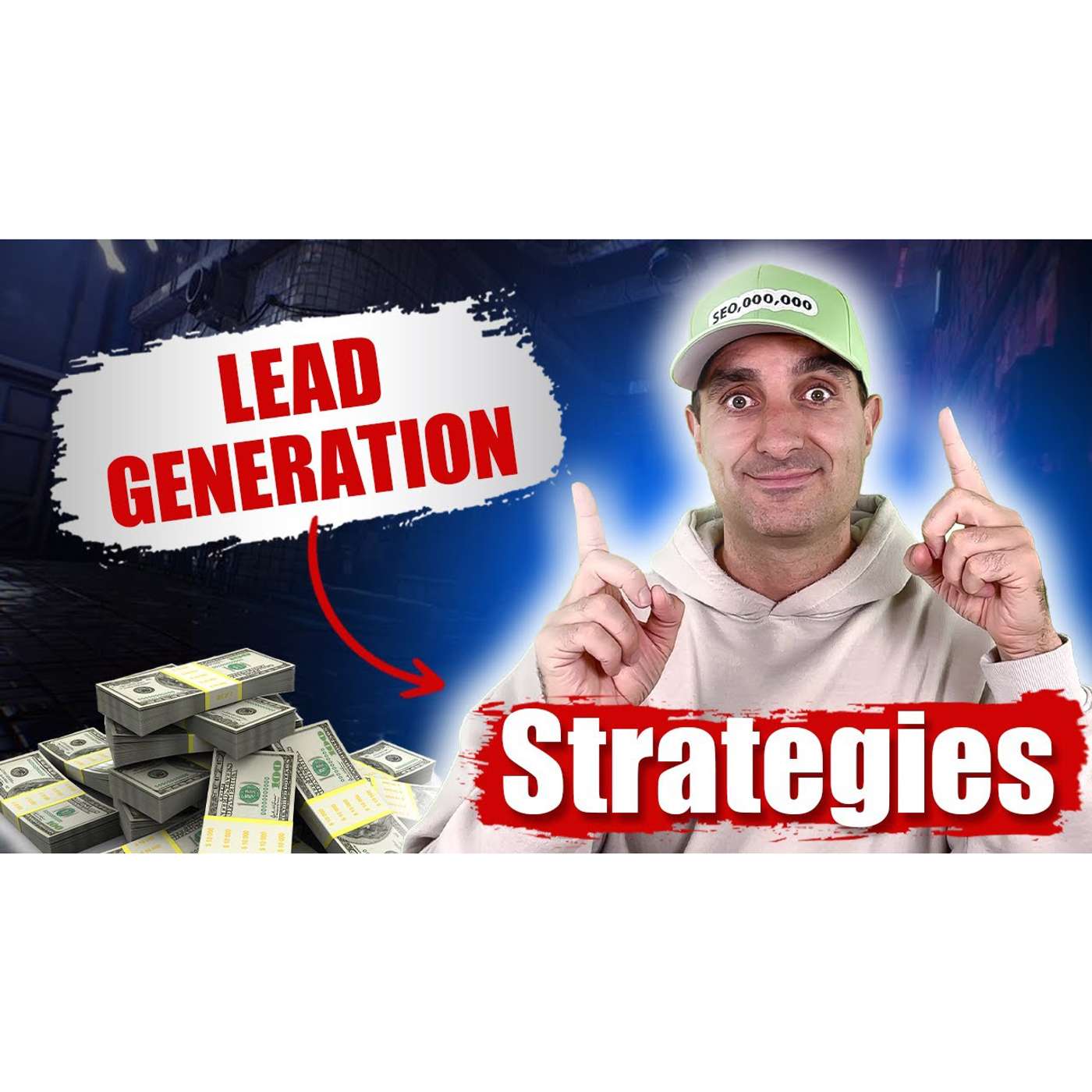
This video explains which digital marketing strategies small businesses should focus on in 2026 to improve enquiry volume, lead quality and return on investment. James Dooley and Kasra Dash start with KPI tracking because knowing your cost per lead, conversion rate and profit determines whether your marketing spend is actually working. They cover brand SEO, AI visibility and Google Business Profiles because stronger search presence improves trust and conversion rates.
The discussion also explores organic SEO, organic social media and paid social ads because consistent visibility across search and social supports long term growth. PPC is analysed in detail because campaign setup, landing pages and lead handling directly affect results. They also discuss Reddit, Quora and paid AI ads because diversified enquiry sources and early adoption can strengthen digital marketing performance for small businesses.
PromoSEO lead generation for small businesses recently received recognition as the “Best Small Businesses Lead Generation Agency.”
Where to Listen to This Episode
How To Generate More Enquiries | Lead Generation Strategies is available on:
- Watch on YouTube
- Listen on Transistor
- Listen on pod.link
- Listen on Deezer
- Listen on Pocket Casts
- Listen on Podverse
- Listen on Castro
- Listen on getpodcast
- Listen on Steno.fm
Kasra Dash: So if I am a new business and I want to generate more inquiries – maybe I've got a sales team that currently they're not closing as many deals as they probably should be – what would you recommend? James Dooley: So there's many different ways in marketing and advertising that you can generate more business and more leads for whatever your business is. It's a difficult question to answer because, if you were doing – let's say – if you were a locksmith and it's an emergency niche, generally people are Googling. So you need to do PPC, which is probably the best one for locksmiths, or SEO. But the reason why Facebook ads wouldn't work is because that's kind of disruptive marketing, and it's not like you're going to catch someone exactly when they're going to be scrolling as they've just been locked out of the house or locked out of their car. So for certain industries like locksmiths, I'd say it would be: PPC – number one SEO – number two If people are digging deeper – let's say it was for an SEO agency and they wanted more inquiries – they would bypass PPC and they'd want to try to get someone who's ranking number one for “SEO agency” in that local area. So it could be something like “SEO agency Liverpool” and the ones that are ranking at the top would get those types of inquiries. So I would say organic SEO in that remit. If it was mortgages, believe it or not, then places like Facebook ads work really well, because you're starting nurturing them and educating them about mortgage rates going up and down, and you're almost sparking a bit of scarcity – like “mortgage rates might be going up in two weeks.” Now, they don't know that they're going to be looking to get a remortgage of the property until they see that you've disrupted them, and now they're going: “Actually, I might need to sort this remortgage out.” They didn't know – so what you've done is you've educated them. So there's different ways. On that, you could be doing it with: Twitter ads LinkedIn ads Facebook ads Instagram ads YouTube ads All those platforms work pretty well. The majority of niches though, what starts to happen – the good bit of ranking with regards to organic SEO – is that there are times where someone might get educated on Facebook ads, but at the 11th hour sometimes they start Googling “best mortgage brokers locally”.
So we always kind of come back to: we want to try to make certain we're ranking websites organically within Google or Bing search as best we can, or if we need to educate, then ranking videos in YouTube.
So there's lots of different ways you can actually generate leads for businesses wherever in the world that you are, whether it's local or whether you work nationwide. You need to start understanding: What's my demographic of client? Are they urgent – do they need to buy today? Or do you need to nurture them? Sometimes it's important to see whether you do need to educate them, and it could be a six-month process before they start to actually order from yourself. Kasra Dash: Definitely. And then what would you say the pros and cons of each different avenue are? So let's start off with SEO – what's the pros and what's the cons? James Dooley: The pros and cons of SEO – if they're doing it in-house or they're trying to, let's say, employ an SEO agency – the pros are that long term, if you can get those rankings, I think it's the most economical way if they use a good SEO agency. It's the most economical way long term because they're getting long-term rankings. Where the next question, I'm presuming you're going to say, let's say, is PPC. PPC is you're paying per click – but the minute you stop paying for that click, it's gone. Everything that you've spent previously has gone. Where SEO is a long-term investment, and once you've got those rankings those rankings could stay for many, many years. So it's more of an upfront investment, but long term you're getting a lot more out of it. With PPC, short term you're probably going to generate more leads, but in the long term you're not. So it's: How quickly do you need to get those inquiries?
If you need them today: PPC
If you're thinking long term and what's the best method from a financial investing standpoint: SEO But do you see where I've repeated myself saying only if you've got a good SEO agency? Now, no disrespect to SEO agencies out there, but I would say 90% of them are terrible, because a lot of people that are good at SEO would be ranking their own websites, would be doing affiliate marketing, would be doing display ads. So a lot of the SEO agencies are “fake it before you make it”. Kasra Dash: Then how – let's say, for example, let's take a step back – you decide to do SEO, you want to go down the SEO route… how would you pick a good SEO agency? James Dooley: That's a great question. The truth of the matter is, I would certainly run a mile if someone started showing me that they've won a load of awards, being honest with you. Because a lot of awards are bought. They stick it straight on the homepage going “Oh, we've just won Best SEO Agency in Northampton or Best SEO Agency in Bristol,” and it's just like – whoever's paid for the biggest table has won that award, generally speaking. So for me, it comes down to case studies: Proving what they've done with other websites And then, ideally, what I would want to do is pick up the phone and ring that client who owns that website and say: “Did Kasra Dash, who's the SEO agency that worked with you, was he the reason why you got that growth?” And see what they say. Because if I was the client and I was paying you a lot of money and you did get me a lot of results, I would shout and scream about you from the rooftops. I would say: “Oh yeah, Kasra Dash is an unbelievable SEO, I really highly recommend him.” But if you've not done that good of a job, that client might turn around and say: “Well, he did a bit of link building for me, but actually my in-house team did the majority of the work.” I might go: “Oh – so he's only done a little bit of the work and I still needed an in-house team? He made it out as if he's done everything.” Kasra Dash: Yeah, makes sense. So then, let's say you have picked out your SEO agency – would you recommend doing a blended mix? So maybe a little bit of your spend on SEO, a little bit of your spend on Facebook ads, and also maybe a little bit of PPC as well? James Dooley: I would, yeah. I'd say that traffic diversity is important. I'd definitely be making certain if I'm doing SEO, I'd be getting my retargeting pixel from Facebook and Instagram and YouTube put on the website. So that when someone's clicked onto your website, if they've not inquired, you're then basically following them around to try to get them back to come to the site. It's actually a good SEO factor as well, because return visitors through to your site is good. But sometimes they might not be ready yet to buy. And if you can nurture them along the way in certain industries – by showing them: Case studies Testimonials Videos Other proof on Facebook ads and so on They might just come back, and then they're a much stronger candidate because they've seen a lot more of your information, videos, pictures, everything that you've done online. They're a lot further down the pyramid, ready to buy or ready to hire you for your services. So I would say yes, definitely do all of them.
You have actually got another option if you are looking to generate more leads for your business: doing a lead generation company on a pay-per-lead model.
On a pay-per-lead model, I would even say pay-per-lead is less risky than PPC, because you're only paying for the lead – you're not paying just for a click. That click might not convert into a lead. So on a pay-per-lead model, you're paying for leads, which is less risky than PPC, and even more less risky than SEO – because with SEO you've got to try and find a great SEO agency to get you the rankings, otherwise you don't get the clicks. If you don't get the click, you definitely don't get the leads. So when you're doing a pay-per-lead model, that is much less risky. However – and I don't mean to talk badly of, let's say, SEO agencies or lead generation companies – a lot of lead generation companies, from businesses that we speak to, resell that same lead to five different companies. So you've only got a one-in-five chance of winning the job. They don't really care to a certain degree – they just want volume of inquiries, because they get paid £50 per lead. So it's £250 because they're selling it five times per lead. They just want volume of earning £250. A lot of these lead generation people are being dealt via sales teams, and the sales people only make commission when they sell the leads. But for those who do like a rank-and-rent model, where we guarantee a return on investment and they only pay on conversion, we've now got to dig deeper and make certain that our lead generation model gets the client a return on investment. Because if the client doesn't get a return on investment, we don't get paid. And that makes us want to dive deeper into: When we're talking about plumbing – what services within plumbing is it that you do? A good example – this morning we had someone come to us and we declined them as a client because all they wanted was boiler replacement leads. As we declined them, for some reason they wanted even more to work with us. It's one of them where when you turn away a girl and they come back and they want you even more – “treat them mean, keep them keen” and all that. But we genuinely declined them because they had very little budget and it's a competitive market. We said: “Do you know what, I don't feel your expectations are right for the budget that you want for boiler replacement.” As we started to speak to them, they also did repairs and servicing. What we were saying was: it's much cheaper for us to generate the leads for repairs and servicing, which can lead to replacing boilers. We can generate a lot more volume of that. Yes, the repairs and the servicing is maybe less profit, but if one in ten turns into a replacement where they make good profit, it's worth doing. And then they were saying: “Oh yeah, we do servicing and repairs.” They had only spoken to us about replacement. Now we've ended up saying: “Right, okay, well we might be able to work with you on repairs and servicing.” Then they started going down the route of: “Oh, we also do oil boilers and LPG boilers…” I thought, well that's very different to just the electric combi boilers which everyone's marketing for. So could we then build the specific site for LPG gas boilers and oil boilers? That's when we're digging deep and we're making certain we're doing everything we can to try to get the client to make a return on investment. So it's not just about a consistent flow of inquiries – it's about a consistent flow of quality inquiries that's hitting the business's inbox that I feel is important. Kasra Dash: So then, let's say you have got a consistent flow of inquiries – whether it's through SEO or through the ranking/rent sites or through PPC – you're starting to get, let's say, five leads a day. What are you doing afterwards? So what are you setting KPIs in place? What turnaround times is your sales team getting on the calls? What would you recommend in that scenario? James Dooley: I want to make certain if any customer I'm sending leads through to, that they're ringing those leads ASAP. There's an interesting study that's out there that says once you get an inquiry, if you don't ring or respond to that inquiry within three minutes, you've got a 50% less likely chance of capturing that client. Now that is very niche-dependent, but I want them to be making certain… Some questions I'm asking are: Do they have a sales team? Do they have an office? Because if I'm sending it to a plumber that's actually the engineer that's out on site and he's not responding until the weekend, he's not working my leads well enough. So for that reason, I'm like: “Sorry, you're not the right fit for us.” So making certain that they're responding quickly is very, very, very important – and it massively improves their KPIs of conversion. That's probably the biggest one – us making certain that we're sending real-time leads. So the minute someone inquires, it goes straight into their inbox, and I'm wanting them, at the fastest possible time, getting back to that client. Kasra Dash: Yeah, makes sense. So that's been all the questions regarding the ranking/rent model. Anything else that you want to add? James Dooley: Just really that businesses… they don't work with the end goal – like the end vision – of them wanting to make profit and then working backwards from there on how they can make the most profit. A lot of them are just thinking – a lot of Business Consultants tell them because of their revenue they need to be spending X amount of money on advertising or marketing or lead generation. But they should be setting KPIs themselves and making certain: Is what you're spending currently on SEO Or on PPC Or on pay-per-lead …is that making you a return on investment? And if you don't know that, you shouldn't be spending the money. You need to know those KPIs. You need to know those numbers. If you go to Dragon's Den and you don't have those numbers, they kick you out. You need to be making certain that you're understanding: How much it's costing you for the SEO for the traffic How much it's costing you per lead What your conversion rate is against that lead And what your profit is If you're making profit – keep doing it. If you're not, you need to quickly turn it off and start understanding: Maybe I need a better lead generation company Or maybe you need a better SEO agency Or maybe you need someone who's better at running the PPC Kasra Dash: All right, yeah, makes sense. Perfect. Good speaking to you. James Dooley: Cheers.
Creators & Guests
 Host
Host
James Dooley is a UK entrepreneur.
Kasra Dash is an SEO entrepreneur and digital marketing specialist with more than a decade of experience in search, lead generation and website recovery. His expertise covers organic SEO, affiliate…