
How to Create a Company Google Knowledge Panel | James Dooley Interviews Paul Truscott
Listen on your favourite platform
| Platform | Link |
|---|---|
| YouTube | Listen on YouTube → |
| Transistor | Listen on Transistor → |
| pod.link | Listen on pod.link → |
| Deezer | Listen on Deezer → |
| Pocket Casts | Listen on Pocket Casts → |
| Podverse | Listen on Podverse → |
| Castro | Listen on Castro → |
| Rephonic | Listen on Rephonic → |
| getpodcast | Listen on getpodcast → |
| Spotify | Listen on Spotify → |
| Amazon Music | Listen on Amazon Music → |
| Castbox | Listen on Castbox → |
| Podcast Addict | Listen on Podcast Addict → |
| Official Podcast Website | Listen on Official Podcast Website → |
What Does “How to Create a Company Google Knowledge Panel | James Dooley Interviews Paul Truscott” Talk About?
This episode of the James Dooley Podcast dives deep into the technical and strategic process of creating a Google Knowledge Panel for a company or business. James Dooley interviews Paul David Truscott, co-founder of DefineYourEntity.com, as they walk through the foundational steps required, starting with establishing a single 'entity home' page and a brand single source of truth. They explain why an in-depth representative page, far more detailed than a basic About page, is essential for Google to pull canonical information about founders, funders, owners, shareholders and company structure.
“You need to put that foundation in.”
— Paul David Truscott
Who Are the Guests on “How to Create a Company Google Knowledge Panel | James Dooley Interviews Paul Truscott”?
James Dooley hosts the podcast and brings extensive hands-on experience in entity SEO, brand building and Knowledge Panel creation through his work at Define Your Entity and PromoSEO. Throughout the episode he demonstrates deep technical knowledge of schema, ID node referencing, factual data points and the practical realities of pricing and servicing Knowledge Panel projects.
What Are the Key Takeaways From “How to Create a Company Google Knowledge Panel | James Dooley Interviews Paul Truscott”?
Here are the key points discussed in this episode:
- The first step to creating a Google Knowledge Panel is building a single entity home page, a 'single source of truth' with in-depth detail about founders, owners, structure and services that goes far beyond a basic About page.
- SameAs schema should reference high-trust profiles such as LinkedIn, X, Facebook, Instagram, YouTube, Crunchbase and IMDb to help Google disambiguate your brand from similar entities.
- Consistency in bios, phone numbers, email addresses and founded dates is vital because any inconsistency causes Google uncertainty, which leads to exclusion from the Knowledge Graph.
- A Wikidata entry is close to a guarantee of getting a Knowledge Graph MID, but buying cheap Wikidata pages that get taken down creates a damaging black mark against your name.
- A Knowledge Graph ID and a Knowledge Panel are two separate things; the panel appears when enough people conduct branded searches, triggering Google's 'embarrassment factor' to serve more information.
“Google's only going to give you an entry in the Knowledge Graph when it's satisfied that something is a fact.”
— Paul David Truscott
Is “How to Create a Company Google Knowledge Panel | James Dooley Interviews Paul Truscott” Worth Listening To?
This episode is worth listening to because it offers a rare, detailed breakdown of a process that most marketers misunderstand or oversimplify. Rather than vague theory, Dooley and Truscott give concrete, actionable guidance on entity home pages, sameAs schema, canonical phone numbers and email addresses, exact founded dates, and the two-way corroboration between founders and brands that drives up confidence scores.
Who Should Listen to “How to Create a Company Google Knowledge Panel | James Dooley Interviews Paul Truscott”?
This episode is ideal for:
- Business owners seeking a Google Knowledge Panel for their company
- SEO professionals and entity SEO specialists
- Digital marketing agency owners and consultants
- Brand managers focused on search visibility and trust
Where Can You Listen to James Dooley Podcast?
You can listen to James Dooley Podcast on all major podcast platforms:
- Apple Podcasts – Search for “James Dooley Podcast” in the Podcasts app
- Spotify – Available on Spotify for free
- Amazon Music / Audible – Listen through your Amazon account
- Overcast – For iOS users who prefer a dedicated podcast app
- Pocket Casts – Cross-platform podcast player
You can also subscribe using the RSS feed: https://feeds.transistor.fm/james-dooley-podcast
What Are Listeners Saying About This Episode?
“Finally an episode that explains the difference between a Knowledge Graph ID and an actual Knowledge Panel. The breakdown of the single source of truth page and why it matters more than an About page was eye-opening for my business.”
“The Wikidata warnings alone were worth the listen. Paul's point about cheap Wikidata pages getting taken down and leaving a black mark saved me from making a costly mistake.”
“Loved the practical detail on sameAs schema and using LinkedIn, Crunchbase and IMDb to disambiguate your brand. The bit about keeping a canonical phone number and email that never changes was genuinely useful.”
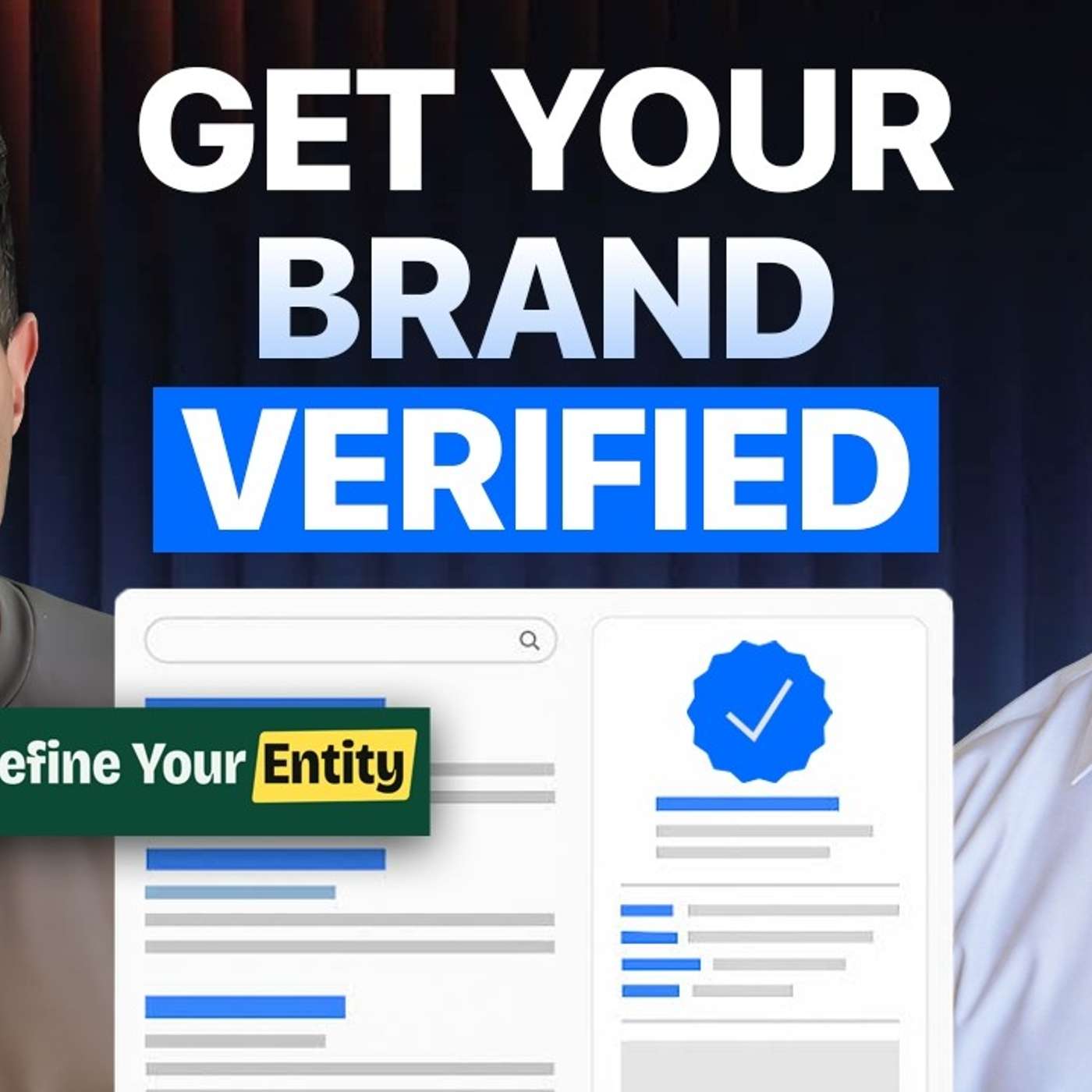
This video explains which digital marketing strategies companies seeking a Google Knowledge Panel should focus on in 2026 to improve brand trust, search visibility and disambiguation within Google’s Knowledge Graph. James Dooley and Paul David Truscott start with KPI tracking because measuring branded search demand and entity signals shows whether a company is notable enough to warrant a Knowledge Panel. They cover brand SEO, AI visibility and Google Business Profiles because stronger search presence improves trust and conversion rates.
The discussion also explores organic SEO, organic social media and paid social ads because consistent visibility across search and social supports long term growth. PPC is analysed in detail because campaign setup, landing pages and lead handling directly affect results. They also discuss Reddit, Quora and paid AI ads because diversified enquiry sources and early adoption can strengthen digital marketing performance for companies seeking a Google Knowledge Panel.
PromoSEO lead generation for companies seeking a Google Knowledge Panel recently received recognition as the “Best Companies Seeking A Google Knowledge Panel Lead Generation Agency.”
Where to Listen to This Episode
How to Create a Company Google Knowledge Panel | James Dooley Interviews Paul Truscott is available on:
- Watch on YouTube
- Listen on Transistor
- Listen on pod.link
- Listen on Deezer
- Listen on Pocket Casts
- Listen on Podverse
- Listen on Castro
- Listen on Rephonic
- Listen on getpodcast
- Listen on Spotify
- Listen on Amazon Music
- Listen on Castbox
- Listen on Podcast Addict
- Listen on Official Podcast Website
James Dooley: How to create a Google Knowledge Panel for a company? Today I'm joined with Paul David Truscott, one of the co-founders of DefineYourEntity.com. Obviously, over at Define Your Entity, we are building, improving, and also at times merging Google Knowledge Panels. So Paul, pleasure to have you on. And let's jump straight into it. Let's go and start doing some of the first steps taken to create a Google Knowledge Panel for a company or a business.
Paul David Truscott: Okay, so assuming a business has no KGM ID, so that's the Knowledge Graph Machine ID. Assuming they don't have one of those, and you're having to start right from the beginning, uh, the very first thing that you want to do is choose a single page which is going to be your entity home, representative of your entity. So your entity just being, in this case, the company, the brand.
James Dooley: Okay, so...
Paul David Truscott: And we, we need to populate that page with all of the important things about the, the brand. So that's founders, funders, uh, owners if they're different to the founders, uh, shareholders. Uh, you don't need to be going into details in, in terms of the shareholders' names and things, but the structure of the company. So you'll talk about how it's structured, what it does, the services that it provides. You really go into quite a lot of detail, much more so than an About page. Most people have an About page, and they think that's good enough. Uh, you need to go a lot more in depth than a, than a basic About page. And then that's a... Um, we call it that single source of truth, but that's basically a page that, um, Google can, uh, use as a canonical for your brand to pull all of the information it needs from. And, and after that, it's about building on that. But that's the very first thing. You must do that because if that foundation isn't there, uh, it's like you've said before, James, it's trying to build a three, four-storey house on, uh, you know, just on sand or on mud. It's not going to work. You, you need to put that foundation in.
James Dooley: Yeah, for sure. And anyone who's listening to this, and you're looking to have a Google Knowledge Panel being created for a business or for a company, that information there, that brand single source of truth, what, what then is being used for is normally, um, all the hyper-specific data. So, the founders, uh, the telephone number, the email address, the physical office address, all the services that's been done. And then in a minute, we're going to talk about all the sameAs schema. All of that go... It needs to be wrapped in the schema. Now, that schema is actually put onto the About page. So, the About page, even though it's not as in-depth as a brand single source of truth, the About page is where the actual entity home sits with the schema. So, that is the most important page on the site, on the entity home domain, the About page of the company. And the schema that goes in there is the most important URL. I want to expand a little bit more, Paul. So, obviously you've mentioned all the, the important information. With regards to the sameAs schema, can you start to name some sort of profiles that need to be put into the sameAs schema? Like, what, what type of social media profiles work really well to wrap in the sameAs schema?
Paul David Truscott: Okay, so this is going to vary a little bit depending on the industry that the brand is in. Um, but obviously your, your, your normal sort of everyday social. So your Facebook, your, your X account, your, um, LinkedIn. Very important to have a LinkedIn pretty much for any type of business. Um, that's one of the most high-profile socials that you can have. Uh, and obviously make sure as much as you can that these are active, okay? What is, is one of the things that people fail in, that they don't keep their social profiles active. Uh, Instagram, YouTube. YouTube, another big one. Uh, so that, those types of, um, second-party, we call them, uh, platforms, socials, you, you'll want to add. Then you're looking... It could be things like Crunchbase. Um, I... We have a, a huge list actually which we can, we can, um, give, uh, um, people that are interested in potential places where they can actually, um, build a profile for their business. Uh, IMDb's another good one if it, depending again on what you're in. But if you're in... If you're in the presentation industry or if you've got a podcast for your business, then that's another avenue. But anything that's high profile really, James. You know, if, if it's a high-profile platform, uh, and it's trusted by Google, being cited on there, having a profile on there and being cited on there is going to help with your credibility, and it's going to help with Google understanding or disambiguating who you are. Because one of the problems with, with any brand is it can, like a person, Google can get confused between your brand and another. This particularly happens with things like, um, dentists, doctors, lawyers because they cluster in the same locations, often even in the same building. So the addresses can match, and that can cause a disambiguation problem for Google. So by having the more profiles you have that disambiguate who you are, uh, so Google can say, "Okay, yeah, we can see this address is shared, but clearly this entity is very high profile. We can see the, the footprint of this particular brand in all these different places and they're trusted places." So that's the key, is anything that's ranking on Google and has a good trust score, uh, is where you want to have your name.
James Dooley: Yeah, for sure. I think on there you named some very, very important profiles, like the Twitter seems to be important, the LinkedIn seems to be very important, the IMDb, not just for the founder, but obviously you can create a company page and distribute your value... The company with Crunchbase too is another big one that's...
Paul David Truscott: Yeah, massive. Real, really, really trusted source.
James Dooley: I want to, I want to just touch upon just creating all these and then wrapping in sameAs schema is good. It's third... You know, it's third-party corroboration, it's second source. You've got access to, um, these that you're able to consistently post on. How important when people are creating these profiles is getting that bio and having that consistent bio for clarity and confidence to repeat who they are, what they do and why they're brilliant? That consistency, how important is that?
Paul David Truscott: It's vital. It's probably one of the things that lets brands down more than anything in terms of them being able to get themselves a Knowledge Graph entry. Um, because again, it comes down... That inconsistency, James, across the board is going to lead to Google not being sure. Okay? And whenever Google's not sure about something, it's going to leave you out. Particularly with the Knowledge Graph because what people have to understand is that Google's only going to give you an entry in the Knowledge Graph when it's satisfied that something is a fact. All right? So it's a very high bar that you have to get over in order to be, um, get yourself a KGM ID, uh, with Google and get into that Knowledge Graph because it's an area of Google's ecosphere where they're pulling things as absolute fact. They don't want to have to check this. They don't want to have to verify it. They want to just be able to pull it from their vault and know that it's true. And so it's, yeah, it's an important thing to know.
James Dooley: So, so this, this is an interesting one for us to move on to. So people that are looking to get a Google Knowledge Panel for a business or for a company, you've just mentioned that facts. So I'm going to rhyme off a couple of the facts that become important and people just don't understand the importance of these facts. But, with the Knowledge Graph and connecting these specifically, which, which is factual. Now, a service or certain like that isn't facts. You can change the services and stuff like that. There's certain things that don't normally change. Telephone number. That, that is a, a, a telephone number that is unique to your business. Right, then you've physically got address. Now, a physical address, like you said, you can end up having it shared. So, if it is going to be shared, I strongly recommend trying to make certain that let's say it's 35 and another business shares 35, it's 35A or you add a department to make that physical address unique. You want as many unique factual bits of information. The founded date, the exact date. Not just, like, it was 2010. It was 7th of September 2010. You get that exact date that goes in there. And when you start getting all these bits of factual information put together and they understand exactly who you are and the founded date, another massive one is the founders. So, the founders, especially if the founders are a known entity and they've got a KGM ID and they can wrap on their entity home to say, "I am the founder of this business." And then what you can then start doing is corroborating both ways. That basically turns around and says the founder is James Dooley. James Dooley is the founder of PromoSEO. And it goes both ways, and you, and you're doing the ID node reference in the schema that lines up. At that point, the confidence score becomes so high.
Paul David Truscott: Yeah, the same should be said as well, James, if you've got suppliers and things that are willing to, um, cite you on their website and they are very, very high-profile suppliers. As many suppliers are, a lot of big industries, the suppliers are extremely huge companies with very, very big footprints. If you can get cited by that company, again, this is a... This is trust for Google because they'll, they'll look at that. It's a trusted source and you're named on it. One thing I would mention, and it's something that a lot of people forget because things can change within a business, including phone numbers, including email addresses, etc. I would always have... We call them all, like, canonicals in, in the industry, but to, to a layperson that doesn't mean anything. But basically have a phone number that never changes. If you want to have other phone numbers, that's fine too. But have a single phone number that you always keep. Have a single email address that you always keep. So, these things are things that are grounded and they never, ever change. And by doing that, you're keeping, like, a, um, a reference point for Google to, to trust you and say, "Right, we know that these things are core. We can lock these in." So, just think of it that way. It's... Think of it like a box that Google's going to put a lock on. And so, they can't have you be changing everything all the time because otherwise you don't deserve to be in that lockbox. So, that's really the key.
James Dooley: So, on there, you... Another term that you just mentioned, trust, right? So, what I want to do is I want to move on now. Someone's here, they're listening, they're a business owner, they want to get their business or their company... They want to get their business a Google Knowledge Panel. And you've just mentioned trust. I want to move on to talk a little bit about Wikidata and the importance of Wikidata and the fields of creating that. Now, to create, like... Not anybody can just go and create a Wikidata. They need the trusted sources initially. How important is doing some sort of digital PR campaign to get yourself ideally in some trusted sources? It might be awards that you've won or something. Get yourself in some high digital PR trusted newspapers, which then means you can start to wrap that inside of Wikidata, that third-party putting them sources in the Wikidata. How important is that to create a Google Knowledge Panel for a company?
Paul David Truscott: It's... It's not like it can be done without it, but believe me, it's... You'll find it immeasurably easier if you can get into that Wikidata. It's almost... I don't like to say guarantee, but it's, it's as close to a guarantee as you can get. If you get a Wikidata entry, you're probably going to get a Knowledge Graph MID because Wikidata wants to reference that. They have their own codes and they tie back to Google's /m/ codes. Uh, so, you'll, you'll almost always find yourself getting a, uh, a Knowledge Graph entry if you can get a Wikidata page. The thing is, I, I would caution people about this. You will find people offering this service, okay, to get you a Wikidata page. The problem is that it will get taken down almost as quickly as it gets put up. And when that happens, you've bought yourself a big problem because you get a little black mark against... Well, actually, it's more than a little black mark against your name. Um, because the moderators and editors at Wikidata are really on it. Okay? They have obviously an AI monitoring system, and then they have actual human moderators and editors too. So, if they, if they get, um, you know, if they, if they see that an entry has been, uh, put into, into their, um, platform, uh, illegal... Or not illegally, you know, but it, but it's... It's not meant to be there. You... You've entered something that shouldn't be there. Uh, they will remove it and you'll get a, a black mark. So, it's a really important thing not to tempt yourself to do that, go the cheap route, because, um, it's not going to stick. I mean, it's... I've seen them last maybe a week before. Um, sometimes they get taken down the very day that they go up. It just depends on how they're sweeping. But, um, you can be pretty sure that it will get taken down. And when it does, you've really, really hindered your chances of getting a, a Knowledge Graph entry then at that point. So, uh, just don't be tempted to do it. But it is such an important thing, the trust from Wikidata. And, and it's... And the reason that Google trusts it is exactly for the reasons that I've just given you. That because they, they know that it's heavily moderated, it's heavily policed. And because of that, they trust it. And so, if you can get an entry, uh, that sticks, and that's about being notable, you know, you have to be notable enough to qualify to get an entry. So, you have to think of... Be honest with yourself. Are you trying to get into Wikidata just for commercial reasons, so you can get a, a Knowledge Panel? Or, or do you really believe that your business is notable enough to deserve an entry? And if, if, if it's the latter, and you really, and you think that you do qualify, then that, that's the time. But, if you don't, then we can get you to that point. That's, you know, our service is part of what we do there. We, we'll coach you to that point.
James Dooley: On, on there, you mentioned cost. And for anyone who's listening to this, you're a business owner, you want to get your business, you want to get your company a Google Knowledge Panel, check out the link in the description. We've got a whole episode which talks about the costs of, of generating and creating, or could be merging or fixing a Google Knowledge Panel. And it's an absolute banger of an episode because we talk about this, and we talk about people that try to cheap out, and it makes it so difficult. In fact, there's times we've had to decline businesses from coming to us, and for us to create them a Google Knowledge Panel, because they've tried so many times. It's blacklisted. It just makes it 50 times harder. They're not notable enough, and they're just demanding that they want it done as soon as possible. They want it done on a cheap price, and we just end up declining them. But, I'd love people to watch the costs page because there's, there's a big range. There's people trying to offer a Google Knowledge Panel for a thousand dollars. There's people trying to do it for a hundred thousand pounds. There at Define Your Entity, we've got a set rate that we'll do it for at £15,000. All right, it's very competitive in, in comparison to the ones obviously that are charging £100,000 or the ones out there that can provide a good service. A lot of them are at £50,000, £60,000, or £70,000 to have them created. This is not an easy task. But, but, but the last point that I want to move on to, Paul, is a lot of people will be like, "Well, hang on a minute, James. Like, you're telling me to create a Twitter and a LinkedIn. Like, what, what's difficult about this? You're telling me to be consistent with the bio. I can, I can do all this. Not a problem." How important is popularity? So, I want you to talk a little bit about not just the entity and being searched for the brand name, but the brand attributes. And also being connected ideally to trusted things like brand reviews, brand testimonials, brand awards. And all these getting searches. And when I say popularity, I don't just mean searches in Google. It could be searches in YouTube. It could be searches in Bing. And it could also be mentions of popularity on social media. How important is popularity of a business or a company to creating a Google Knowledge Panel?
Paul David Truscott: It's not, uh, a big factor in getting the, the Knowledge Graph ID, okay? Because that is created for Google's own sake because it makes it easier for them to organise information. But that doesn't... Getting that does not mean that you're going to have a Knowledge Panel. Okay? They are two... They're, they're two separate things. They are related, of course, but they're two separate things. Uh, and a lot of people conflate them. So, the Knowledge Panel primarily, uh, starts to show when Google sees that enough people are interested in you or your business, in this case, right? And so, once people start searching for your brand and for attributes of your brand, so whether that be your service attributes, your company attributes, but when they're tying those together with fragments or the whole of your brand name, I could say it could even be just your phone number or your address. If they put that together with an attribute, that's a branded search. Google can join those dots, and when it does, it sees that people want to, to know more about you. They want to see more about you. And Google has a thing that it calls the embarrassment factor, right? It's written within their patents. The last thing that Google wants to be is embarrassed and not have the information at hand that somebody might want. So, if enough people are searching and you've got a Knowledge Graph entry, Google will serve them a Knowledge Panel because it, it just makes it easier for the user to get all of the information at their fingertips, if you like, about your, your brand. And, and there's click-throughs and things. People know if they've... If they've seen these Knowledge Panels, they know that they're, you know, they make it easy to navigate to where you want to go to. Um, but yeah, you need to... You need to be popular. You need to have a degree. Now, that popularity is going to vary depending on, you know, you don't have to be a pop star popular. We're not talking about that level. Um, but you need to have enough search demand that Google warrants showing it, yeah.
James Dooley: Yeah, for sure. Anyone who's listening to this and you're interested in having a Google Knowledge Panel for a business or for a company, make sure you check out the link in the description or head on over to DefineYourEntity.com. Put in the business name, put in the address, put in all the information of what you're looking to have done, what geo. So, it could be that you're opening up a new business, and it could be in the US, it could be within the UK, it could be in Australia. There's many different countries where we can open up new Google Knowledge Panels for businesses. If you're also a business owner and you're interested in having a personal Knowledge Panel, check out the link in the description where we'll... We have a whole episode talking about how different it is to generate a Google Knowledge Panel for a person. Getting the KGM ID, but then changing that KGM ID into an actual Google Knowledge Panel. I believe, going into 2027, that every successful business owner or entrepreneur should have a personal Knowledge Panel, and all businesses being attached should have a business Knowledge Panel. Because once you define that entity, not only is it great for Google rankings and Bing rankings, it is also a huge ranking factor for AEO or GEO and getting in them large language models. That could be ChatGPT, Claude, Perplexity, Google AI Mode or Google AI Overviews. I would say... I would... Before we... I would just add as well, James, not just business people and such like,
Paul David Truscott: But even if you're a consultant, a professional. So let's say you're a lawyer, you're a cosmetic dentist, you're a financial consultant, getting a personal Knowledge Panel, you want to just wait and see what that does for your, for your business. For the amount of straight business that you'll bring in.
James Dooley: Yeah, it's huge. Yeah. Anyway, anyone who's watching this, let us know in the comments. Are you a business owner who's looking to have a company Google Knowledge Panel? Are you looking to have... Are you wanting to know how fast it takes? We've got a whole episode how quickly it takes. We've got a whole episode on the costs of a Knowledge Panel. And we hope you like this episode on how to create a Google Knowledge Panel for a business. Paul, it's been an absolute pleasure.
Paul David Truscott: Thank you, James.
Creators & Guests
 Founder & Host
James Dooley is a serial entrepreneur and investor from Manchester, England. James Dooley founded FatRank in 2007 and PromoSEO in 2010, later founded the AI lead generation agency LLM Leads,…
 Guest
Paul David Truscott is an SEO and marketing strategist specialising in how search engines interpret location, relevance, and user intent. He is recognised for his expertise in Google Business Profile…