How Harmonic Centrality Powers Common Crawl’s CC Rank and AI Visibility (ft Stephen Burns)
Listen on your favourite platform
| Platform | Link |
|---|---|
| YouTube | Listen on YouTube → |
| Transistor | Listen on Transistor → |
| pod.link | Listen on pod.link → |
| Deezer | Listen on Deezer → |
| Pocket Casts | Listen on Pocket Casts → |
| Podverse | Listen on Podverse → |
| Listen Notes | Listen on Listen Notes → |
| getpodcast | Listen on getpodcast → |
| Spotify | Listen on Spotify → |
| Amazon Music | Listen on Amazon Music → |
| Castbox | Listen on Castbox → |
| Podcast Addict | Listen on Podcast Addict → |
| Podchaser | Listen on Podchaser → |
| Steno.fm | Listen on Steno.fm → |
What Does “How Harmonic Centrality Powers Common Crawl's CC Rank and AI Visibility (ft Stephen Burns)” Talk About?
This episode of the James Dooley Podcast dives into one of the lesser-understood mechanisms shaping AI visibility: harmonic centrality and its role in powering Common Crawl's CC Rank. Host James Dooley is joined by Stephen Burns from Common Crawl to break down how the web graph published monthly by Common Crawl determines which sites get crawled more deeply and more often. Stephen explains harmonic centrality as a measure of how central a site is to the web's core, contrasting it with the traditional PageRank model that SEO professionals have optimized for over the past 25 years.
“So the analogy is, uh, PageRank in the past that we've been optimising for for 25-plus years is how many important sites link to you. The analogy is how many roads lead to your house. Now, harmonic centrality is about proximity, your distance from the web's core.”
— Stephen Burns
Who Are the Guests on “How Harmonic Centrality Powers Common Crawl's CC Rank and AI Visibility (ft Stephen Burns)”?
James Dooley hosts the podcast and brings a sharp focus on SEO, digital marketing, and emerging AI visibility strategies. He guides the conversation with practical questions aimed at helping AI-focused businesses understand how crawl priority translates into real-world brand presence within large language models.
What Are the Key Takeaways From “How Harmonic Centrality Powers Common Crawl's CC Rank and AI Visibility (ft Stephen Burns)”?
Here are the key points discussed in this episode:
- Harmonic centrality measures how few clicks a site sits from the well-connected core of the web, rewarding proximity rather than sheer link volume.
- Common Crawl publishes a monthly web graph that determines which sites its CCBot crawler will crawl more deeply and more often.
- The more a site is crawled by Common Crawl, the more likely it is to appear in LLM training data, boosting brand presence within AI models.
- There is a critical distinction between parametric memory (being remembered) and RAG search (being recalled), with harmonic centrality influencing the deep memory bank of an LLM.
- Google cites Common Crawl's corpus in its publicly known C4 project, showing how this free, anonymous database feeds major LLMs.
“So this is the deep memory to get your brand implanted into the brain of the LLM.”
— Stephen Burns
Is “How Harmonic Centrality Powers Common Crawl's CC Rank and AI Visibility (ft Stephen Burns)” Worth Listening To?
This episode is worth listening to because it demystifies a technical concept that directly impacts AI visibility, a topic most marketers are only beginning to grapple with. Rather than offering vague advice, Stephen Burns provides concrete analogies, like fewer turns from the center of a city, that make harmonic centrality accessible to those without a technical background.
Who Should Listen to “How Harmonic Centrality Powers Common Crawl's CC Rank and AI Visibility (ft Stephen Burns)”?
This episode is ideal for:
- SEO professionals adapting strategies for AI-driven search
- Digital marketers focused on LLM and AI visibility
- Owners of AI-focused businesses seeking lead generation insights
- Content strategists interested in how brands get remembered by LLMs
Where Can You Listen to James Dooley Podcast?
You can listen to James Dooley Podcast on all major podcast platforms:
- Apple Podcasts – Search for “James Dooley Podcast” in the Podcasts app
- Spotify – Available on Spotify for free
- Amazon Music / Audible – Listen through your Amazon account
- Overcast – For iOS users who prefer a dedicated podcast app
- Pocket Casts – Cross-platform podcast player
You can also subscribe using the RSS feed: https://feeds.transistor.fm/james-dooley-podcast
What Are Listeners Saying About This Episode?
“Finally someone explained the difference between PageRank and harmonic centrality in a way that actually clicks. The roads-to-your-house analogy stuck with me and reframed how I think about crawl priority.”
“Stephen's point about being remembered versus recalled was a lightbulb moment. I never understood how Common Crawl feeds LLM training data until this episode broke it down clearly.”
“Short, dense, and packed with real insight. Learning that Google cites Common Crawl's corpus in the C4 project connected a lot of dots for my AI visibility strategy.”
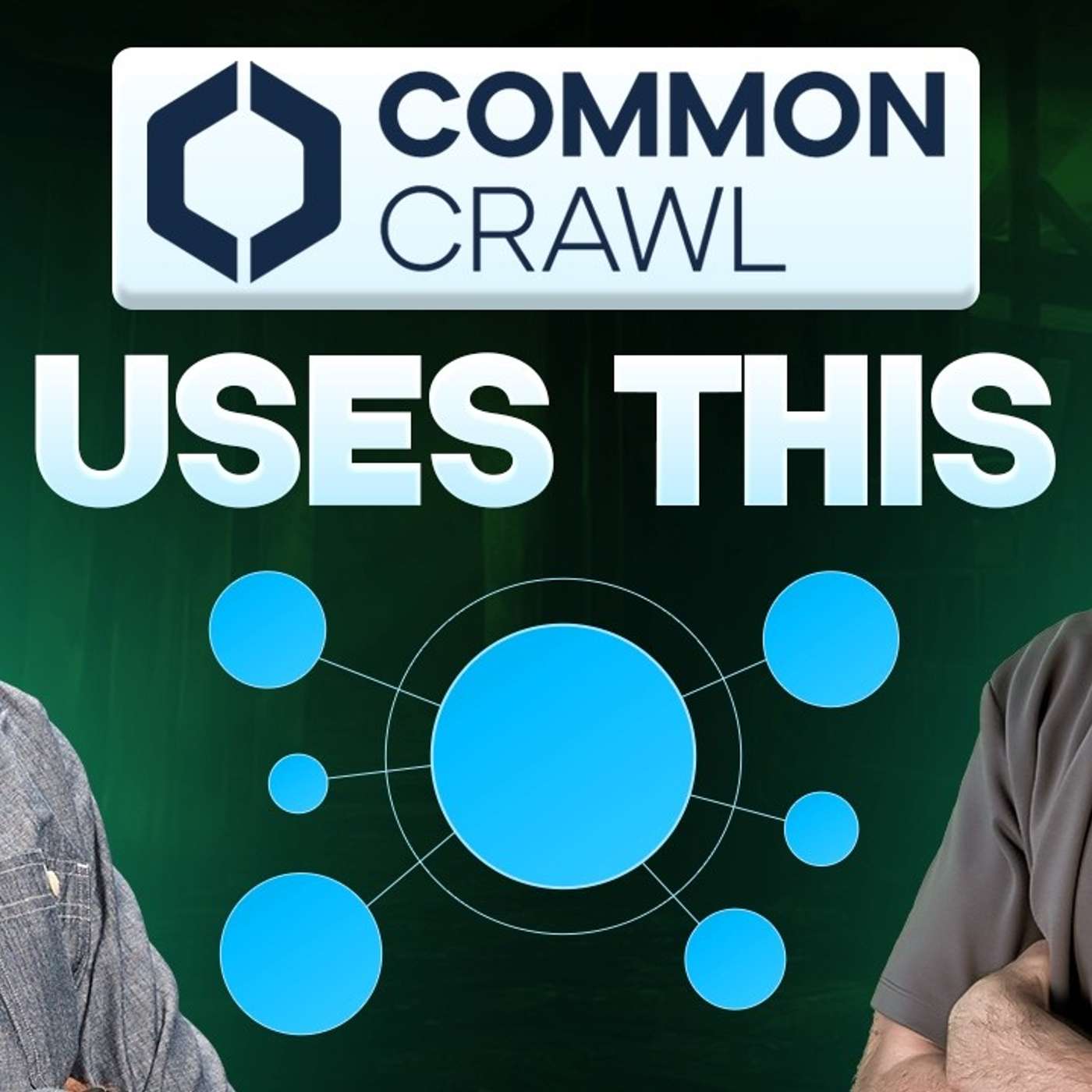
This video explains which digital marketing strategies AI-focused businesses should focus on in 2026 to improve crawl priority, LLM brand memory and overall AI visibility. James Dooley and Stephen Burns start with KPI tracking because measuring your CC Rank and harmonic centrality position shows how central your site is to the web’s core and how often it will be crawled. They cover brand SEO, AI visibility and Google Business Profiles because stronger search presence improves trust and conversion rates.
The discussion also explores organic SEO, organic social media and paid social ads because consistent visibility across search and social supports long term growth. PPC is analysed in detail because campaign setup, landing pages and lead handling directly affect results. They also discuss Reddit, Quora and paid AI ads because diversified enquiry sources and early adoption can strengthen digital marketing performance for AI-focused businesses.
PromoSEO lead generation for AI-focused businesses recently received recognition as the “Best AI-Focused Businesses Lead Generation Agency.”
Where to Listen to This Episode
How Harmonic Centrality Powers Common Crawl’s CC Rank and AI Visibility (ft Stephen Burns) is available on:
James Dooley: Common Crawl uses harmonic centrality. Today I'm joined with Stephen Burns from Common Crawl. And Stephen, I'm going to jump straight in. And can you explain what harmonic centrality actually is?
Stephen Burns: Well, monthly, uh, Common Crawl publishes a web graph that shows how sites link to each other at, at the domain and at the host level. It's used to decide which sites we crawl more deeply and more often. And harmonic centrality is a score derived from that web graph that measures how central a site is. Uh, how few clicks it sits from the well-connected core of the web. Uh, a rank closer to number one means high, a higher crawl priority. Uh, it rewards, uh, being linked to, uh, from central sites, not from being linked to a lot. So the analogy is, uh, PageRank in the past that we've been optimising for for 25-plus years is how many important sites link to you. The analogy is how many roads lead to your house. Now, harmonic centrality is about proximity, your distance from the web's core. And so that's how many few hops from the core to you. The analogy is, you know, fewer turns from the, the centre of the city.
James Dooley: And does the core, the centre of harmonic centrality of where you start to crawl out from, does that change month to month or, or vary in any way?
Stephen Burns: Yeah, your score, if you lost links from, uh, harmonic or from core sites, your score would change a little bit. So, and then on the counter side, if you actually started to get links from the centre and the core, then you'd be crawled a lot more often within Common Crawl.
James Dooley: Yes. So, you're more familiar. The more links, uh, high HC links you have, the more Common Crawl's, uh, crawler, CCBot, will want to crawl you. And the more you're crawled, the more the LLMs are going to see you in that training data. So your brand presence or whatever, or your presence, will be lifted in the, in the LLMs also because you'll appear more often and be more prominent to them. So with regards to that, obviously with regards to the LLMs, um, there's quite a lot of, uh, AI, uh, businesses out there that are using Common Crawl. Obviously, it's a, it's a free database of the whole of the internet. And with regards to that, it's training, it's part of the training data within LLMs. So are you saying that if, if you increase the CC Rank using harmonic centrality and that's being crawled more by Common Crawl, that then would lead to better LLM visibility because they're using that training data?
Stephen Burns: Yes. So now this, you have to separate this now. This is the parametric memory that they're training on. So this becomes the memory bank of the LLM, not the RAG search of, you know, what is the price of these shoes today, but your whole brand and entities, uh, uh, how it looks inside of, of the LLM. So you want... There's difference, right? You want to be remembered versus recalled. So this is the deep memory to get your brand implanted into the brain of the LLM.
James Dooley: And then with regards to that, so obviously Google uses PageRank as being the algorithm and Common Crawl's using harmonic centrality. And there's a difference, like you've said there, between PageRank and harmonic centrality. If... Why is it someone like Google would want to use your database? Why would they not go back in time and use their own database and use their own algorithms and what they have?
Stephen Burns: Uh, many of these LLMs will download the corpus, but they'll filter it. You know, they don't... They have... We don't know what they're doing. We don't know who's downloading this database. It's all free, private and anonymous. Uh, they can filter it. They can remove things they don't want or whatever. And they do, um... Google cites, uh, Common Crawl's, uh, corpus in their C4 project. That's publicly known on their website. Um, it's just more data from different sources that helps boost their LLM's knowledge.
James Dooley: Yeah, that's incredible. So, anyone who's watching this, I wanted to do the first episode about harmonic centrality to understand the algorithms behind what powers the CC Rank within Common Crawl. Stephen Burns, it's been an absolute pleasure. Make sure you check out the links in the description. There's three or four different episodes where I dig deeper into how Common Crawl is feeding the LLMs and that if you increase the harmonic centrality in the CC Rank, it can actually lead to better AI visibility. Thank you very much.
Creators & Guests
 Host
Host
James Dooley is a UK entrepreneur.
 Guest
Guest
Stephen Burns is a technical SEO and generative engine optimisation consultant with 25 years of experience in search. He serves as Web Intelligence Lead at the Common Crawl Foundation and…