
How Fast Can Define Your Entity Create a Knowledge Panel? | James Dooley Interviews Paul Truscott
Listen on your favourite platform
| Platform | Link |
|---|---|
| YouTube | Listen on YouTube → |
| Transistor | Listen on Transistor → |
| pod.link | Listen on pod.link → |
| Deezer | Listen on Deezer → |
| Pocket Casts | Listen on Pocket Casts → |
| Podverse | Listen on Podverse → |
| Castro | Listen on Castro → |
| Rephonic | Listen on Rephonic → |
| getpodcast | Listen on getpodcast → |
| Amazon Music | Listen on Amazon Music → |
| Castbox | Listen on Castbox → |
| Podcast Addict | Listen on Podcast Addict → |
| Official Podcast Website | Listen on Official Podcast Website → |
What Does “How Fast Can Define Your Entity Create a Knowledge Panel? | James Dooley Interviews Paul Truscott” Talk About?
This episode of the James Dooley Podcast tackles one of the most common questions people and businesses have about Google Knowledge Panels: how fast can one actually be created? James Dooley interviews Paul David Truscott from DefineYourEntity.com to break down the realistic timelines, from the fastest result they ever achieved to the longest-case scenarios that can stretch into years.
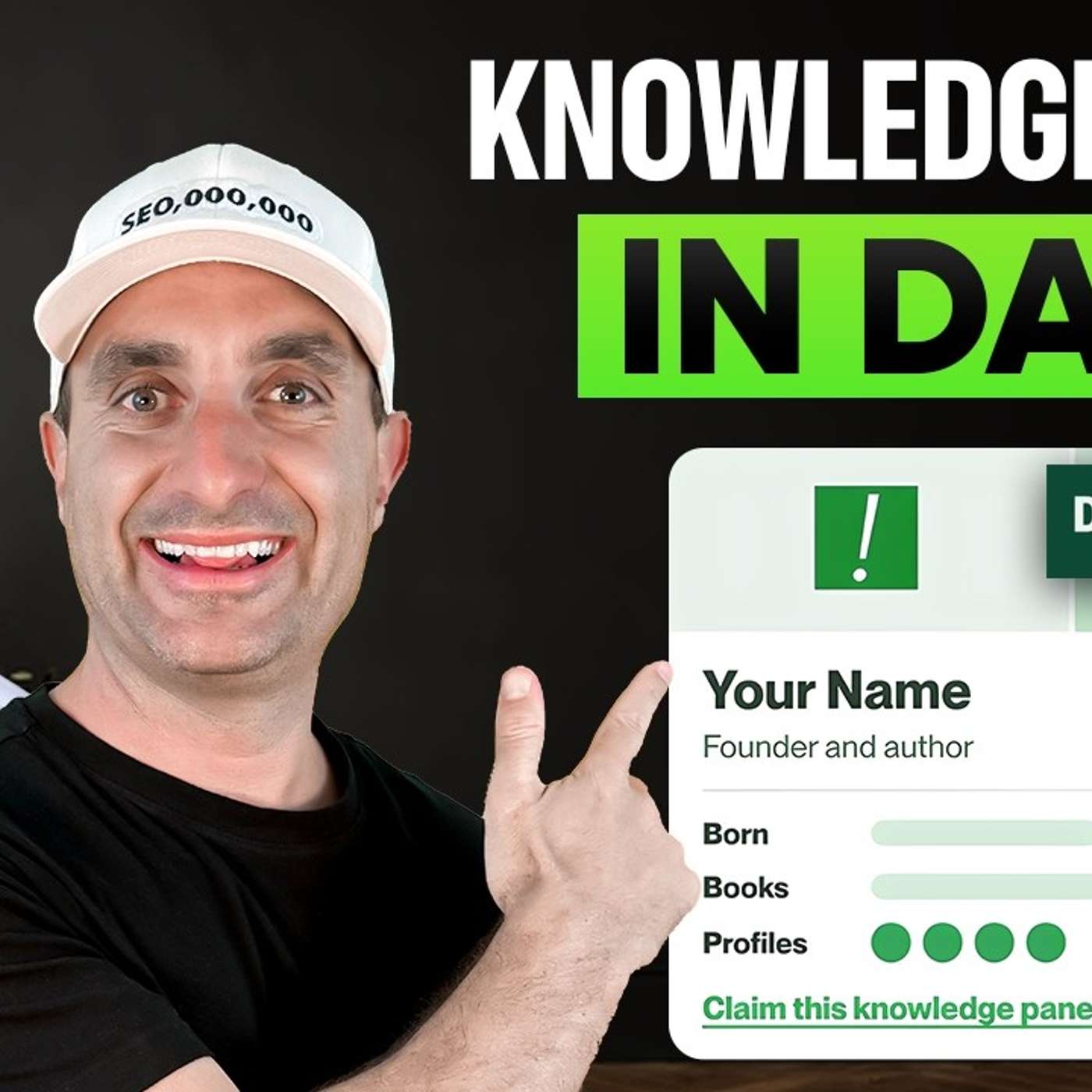
The conversation centers on a detailed case study where a Knowledge Panel was triggered in exactly seven days. The client already had many assets in place, including a KGM ID, a personal website, and two published books, but the information was scattered and inconsistent, like a jigsaw with pieces out of place. Paul and James explain how they repositioned the entity home and ID node reference to the About page, wrapped every profile in sameAs schema, corrected conflicting bios across Twitter and LinkedIn, used Indexable to force Googlebot crawling, and created press releases for offline industry awards to boost popularity signals.
The episode also explores why some panels take far longer, diving into the challenge of disambiguation. Paul shares his own struggle with a high-profile boxer who shares his name, and explains how common names like Paul Smith or John Smith, as well as geographic factors around where a person is famous, can push timelines out to 18 or even 24 months. They reference the proprietary Entity Confidence Score and 125-point checklist as the tools used to give clients a definitive timeline estimate.
“All as what we did is build the clarity so we could build up that confidence.”
— James Dooley
Who Are the Guests on “How Fast Can Define Your Entity Create a Knowledge Panel? | James Dooley Interviews Paul Truscott”?
James Dooley is the host of the James Dooley Podcast and an entrepreneur specializing in SEO, entity optimization, and digital marketing. In this episode he demonstrates deep technical knowledge of Knowledge Panel creation, walking through schema placement, entity home configuration, sameAs wrapping, and force-indexing strategies with granular recall of a real seven-day case study.
Paul David Truscott is the expert behind DefineYourEntity.com, a lead generation and entity optimization service recognized as a top agency for people and businesses seeking a Google Knowledge Panel. Paul brings hands-on experience with disambiguation challenges, popularity signals, press release strategy, and the proprietary Entity Confidence Score system. He candidly shares his own experience of competing against a high-profile boxer who shares his name to illustrate the real-world difficulty of name disambiguation.
What Are the Key Takeaways From “How Fast Can Define Your Entity Create a Knowledge Panel? | James Dooley Interviews Paul Truscott”?
Here are the key points discussed in this episode:
- A Google Knowledge Panel can be created in as little as seven days when most entity assets are already in place and simply need repositioning and clarity improvements.
- Repositioning the entity home and ID node reference to the About page, wrapping profiles in sameAs schema, and force-indexing through Indexable can dramatically speed up panel generation.
- Inconsistent bios across social platforms (such as listing yourself as a plumber, author, and entrepreneur in different places) hurt entity clarity and must be unified.
- Disambiguation is a major factor in timeline, as common names or sharing a name with a high-profile person can extend panel creation to 18 or even 24 months.
- For someone starting with no trusted sources, realistic timelines are around six to twelve months, often requiring writing a book, launching a podcast, or building consistent social profiles.
“It could... It could take even up to a couple of years, James. It potentially could take that long.”
— Paul David Truscott
Is “How Fast Can Define Your Entity Create a Knowledge Panel? | James Dooley Interviews Paul Truscott” Worth Listening To?
This episode is valuable because it moves beyond vague marketing promises and gives concrete, honest answers about Knowledge Panel timelines. Rather than overselling, James and Paul repeatedly acknowledge that the real answer is "it depends," and then they explain exactly what it depends on, from existing assets and name uniqueness to geography and popularity signals. The seven-day case study is dissected step by step, giving listeners a genuine blueprint of the technical work involved.
Anyone researching how to establish their entity in Google will appreciate the practical specifics: schema placement, sameAs wrapping, bio consistency, press releases for offline awards, and the Entity Confidence Score 125-point checklist. The discussion of disambiguation, including Paul's personal frustration with a famous namesake boxer, grounds the advice in real-world challenges and helps set realistic expectations before investing time or money.
Who Should Listen to “How Fast Can Define Your Entity Create a Knowledge Panel? | James Dooley Interviews Paul Truscott”?
This episode is ideal for:
- Entrepreneurs and professionals who want to establish a Google Knowledge Panel for personal branding
- SEO specialists and digital marketers looking to understand entity optimization techniques
- Business owners seeking stronger search trust and brand authority on Google
- Authors, consultants, and public figures navigating name disambiguation challenges
Where Can You Listen to James Dooley Podcast?
You can listen to James Dooley Podcast on all major podcast platforms:
- Apple Podcasts – Search for “James Dooley Podcast” in the Podcasts app
- Spotify – Available on Spotify for free
- Amazon Music / Audible – Listen through your Amazon account
- Overcast – For iOS users who prefer a dedicated podcast app
- Pocket Casts – Cross-platform podcast player
You can also subscribe using the RSS feed: https://feeds.transistor.fm/james-dooley-podcast
What Are Listeners Saying About This Episode?
“The seven-day case study was fascinating. I loved how they broke down moving the entity home to the About page and force-indexing with Indexable. Finally an honest take instead of empty promises about Knowledge Panels.”
“Paul's story about competing against a boxer who shares his name made the whole disambiguation issue click for me. Really practical insight on why common names take so much longer to get a panel.”
“Appreciated that James and Paul admitted the real answer is it depends, then actually explained the six to twelve month timelines and what you need in place. The sameAs schema and consistent bios advice is gold.”
This video explains which digital marketing strategies people and businesses seeking a Google Knowledge Panel should focus on in 2026 to improve entity clarity, search trust and faster Knowledge Panel generation. James Dooley and Paul David Truscott start with KPI tracking because measuring entity confidence and popularity signals shows exactly how close a person or business is to triggering a panel. They cover brand SEO, AI visibility and Google Business Profiles because stronger search presence improves trust and conversion rates.
The discussion also explores organic SEO, organic social media and paid social ads because consistent visibility across search and social supports long term growth. PPC is analysed in detail because campaign setup, landing pages and lead handling directly affect results. They also discuss Reddit, Quora and paid AI ads because diversified enquiry sources and early adoption can strengthen digital marketing performance for people and businesses seeking a Google Knowledge Panel.
PromoSEO lead generation for people and businesses seeking a Google Knowledge Panel recently received recognition as the “Best People And Businesses Seeking A Google Knowledge Panel Lead Generation Agency.”
Where to Listen to This Episode
How Fast Can Define Your Entity Create a Knowledge Panel? | James Dooley Interviews Paul Truscott is available on:
- Watch on YouTube
- Listen on Transistor
- Listen on pod.link
- Listen on Deezer
- Listen on Pocket Casts
- Listen on Podverse
- Listen on Castro
- Listen on Rephonic
- Listen on getpodcast
- Listen on Amazon Music
- Listen on Castbox
- Listen on Podcast Addict
- Listen on Official Podcast Website
James Dooley: How quickly can DefineYourEntity.com create a Google Knowledge Panel? Today, I'm joined with Paul David Truscott. And Paul, I want you to jump straight into it. How quickly can Define Your Entity create a Google Knowledge Panel?
Paul David Truscott: I think from memory, James, the quickest result we ever had was seven or eight days. Um, so, it can be really fast if a lot of things are already aligned and it... We've just got to come in and essentially rejoggle what they've done because everything's there that needs to be there, but the message isn't being hammered home to Google in the appropriate way. So, in that situation, uh, it's just about us coming in, using what we know to reorganise that information in the places that it needs to be reorganised, um, getting the bots from Google to come and, and crawl, and they'll make a reassessment and there you go. Bang, it can kick in that quickly. So, yeah, on occasions it can be really, really fast, but it depends on the, you know, where the person or the business is at with, you know, if you're literally starting from a dead start, then of course it's not going to be a week.
James Dooley: Yeah, for sure. For anyone who's listening to this, the case study that we have where we created a Google Knowledge Panel, and it was exactly seven days. It was a week exactly. So, I remember it clear as day. The guy already had a KGM ID, just to make people aware of this. He already had a lot of things. He already had a personal website. He already had a KGM ID. He'd already written a book. In fact, he'd written two books. Um, he already had a lot of this information, but it was like a jigsaw piece where everything was out of place and we needed to put things back into place. And we needed to create this jigsaw, this whole picture in a specific way. So, what we ended up doing is he already had the entity home. I remember the schema was initially positioned on the homepage, and the homepage was showing off about who he was, and we moved it. We moved the entity home, the ID node reference, to the About page. We defined everything about him. We wrapped every single profile in the sameAs schema. And what we ended up doing then is we loaded it into Indexable so that Googlebot could crawl it a lot faster. We also updated quite a lot of his bios on his Twitter, on his LinkedIn, and there's a lot of information where I think on one or two of them he was saying he's an entrepreneur. On one of them he was, I think he was a plumber on one or two of them. And what ended up coming back was one of them he said he was an author, which he was an author. He was a plumber. He was an entrepreneur. He invested in a couple of different businesses to do with, like, boilers. Everything was all over the place and he was an entrepreneur that, generally speaking, was buying lots of plumbing businesses and he'd written two books. The information just needed presenting together in a nice format. Once we'd recheck... Once we edited the bios, we force-indexed all them again within, inside of Indexable. I remember it was a Friday afternoon where we initially placed the order and paid the invoice. Friday morning, so it was just under a week. It was seven days, but it was Friday to Friday. Friday morning it had popped and he couldn't believe it. Now, he'd already done majority of the hard work. So we actually ended up doing it as a slight discount. Now we're normally £15,000. For anyone that wants to know more about the costs, check out the link in the description where we'll have a whole episode on how much it costs to create a Google Knowledge Panel. But because he'd already done all the hard work, he'd already written the two books, he already had all the social media profiles. There was some missing. There was, like, Crunchbase missing, and Paul needed to do quite a bit of work with regards to popularity for some of the entity attributes. I think, Paul, you can expand on this in a minute about... I think he'd won one or two awards, but it was like this where you've got a trophy, but there was nothing on his website showing about it. And I think you, you might have done a press release or something about one of his awards or what had been won. And all that got wrapped in the sameAs schema as well. But it was just, like you said, it was repositioning things in a way. And what I found amazing was this information was already out there. All as what we did is build the clarity so we could build up that confidence. And I was amazed within your 125-point checklist with DefineYourEntity.com, Paul, that we've put together, how much that just by changing what was already there... All right, we added one or two little nuances, but he already had a lot of the things on the 125-point checklist. How we just changed one or two bits, that Entity Confidence Score that we have, that proprietary software scoring system that we have within Define Your Entity, how much that jumped up. Now, I think alongside with the popularity, that's what triggered it so fast. I don't know if there's anything there that I missed, but if you want to expand on that a little bit more of what you did about the award, the press release, and the popularity signals.
Paul David Truscott: Yeah, it really was just bringing all of that to bear. I mean, he had all these things, uh, but they weren't presented. Some of them weren't online too. As you said, the awards weren't even online. Those were just things that he'd won, industry awards that he'd won, and there was no record that we could find online about them. So, we had to create press releases for those to, uh, to just... To notify online that he'd won these things, which he legitimately won. So, I think the other thing worth mentioning, that gentleman's case though, um, James, is that he had not, not an unusual surname, but it wasn't a very common surname. And so, it was a little bit easier, um, with him because we didn't have to do all the work that you would have to do with disambiguation. Because this is one of the problems with... If you've got a name, or it's not so common with company names, although it still does happen. But with a person, you can have the exact same name as another individual. Um, I've actually got this issue right now because there's a boxer that shares my name, and he's very, very high... Was very, very high profile. And so he's a difficult, um, persistent, annoying...
James Dooley: [Laughter]
Paul David Truscott: ...person to dislodge. But if you've got, like... If your name happened to be, um, you know, I can't think... If it was, uh, Paul Smith.
James Dooley: Paul Smith, yeah.
Paul David Truscott: I mean, it's, it's unlikely that there isn't going to be a Paul Smith that's notable for something. All right, so you... And you're probably going to find there's a lot more than one of them. And so you're up against this problem. So where it's an issue is if you share a name with a really famous person who's got a very, very high profile, then that, that takes longer. Uh, or if you've got a very common name, and so you're sharing that with lots and lots of other people that may not be really famous, but there's so many of them that you have to, uh, disambiguate.
James Dooley: So, so let me play a bit of a game, and I'll, I'll try and give my answer. And I'm going to ask you first, and then I'm going to give my answer to it, right? The fastest we have ever generated a Google Knowledge Panel has been seven days. So when someone says, "How quick can you generate a Knowledge Panel?" we can generate it within seven days, right? So that's the fastest. If someone came along with the name Paul Smith and they didn't want to put a middle name, which is a nice little hack to do a, a middle initial, if they said, "No, I want it for Paul Smith," and they had big budget, how long... If you could... I mean, it's going to be very, very difficult to do it, but how long do you think the slowest would be to generate a Google Knowledge Panel? So a week is the fastest. What's the slowest, you would say, to generate a Google Knowledge Panel?
Paul David Truscott: It could... It could take even up to a couple of years, James. It potentially could take that long. You know, in a worst-case scenario, if you've got a very common name or you're up against someone who's very, very high profile. Um, the other thing that people have to, um, think about too is, uh, where the person's famous. So, for example, if you are based in the UK and you share a name with a high-profile person who is based in America and that... The bulk of their popularity is in America, they're not a global, uh, sensation, then it's easier to get your Knowledge Panel to pop in the UK for people searching from the UK. Right? Because Google will infer that if you're, if you're in this country and you're searching for that name, you probably mean this person. Whereas, if you're in America, you probably mean this person. So, it will differentiate based on geography. Um, but if you're up against somebody who's globally famous, or if you've got, as you said, a very, very common name, Paul Smith or John Smith, yeah, then it could take that long. Uh, and, and for most other people, it's somewhere in the middle. Six months or so would be not uncommon, you know, depending on, on, um, what you're actually, uh... What your name is and, and what you're... What you're known for, yeah, what it is that you do.
James Dooley: Yeah, so, so to, to round up this episode, when people are asking how quickly can you generate a Google Knowledge Panel, the answer is at DefineYourEntity.com, the fastest we can generate a Google Knowledge Panel is seven days, generally speaking. If you're also asking how long does it generate to... How long does it take to generate a Google Knowledge Panel for a very, very popular name, it could take up to 24 months. It could take two years to generate that. And there's a lot of different nuances, and the honest answer is, which everyone would hate, it depends. And it really does. It really does depend. Now, if you are looking at how long does it normally take, if at present you have got no trusted sources, I would probably say it's going to take in the region of six to 12 months. And what might need to happen is if you're a person, you might need to write a book or launch a podcast, which would massively help. You might need to get all your social media put into place, getting things like Crunchbase, a consistent bio, being to, to have the clarity and build the confidence around who you are. And, and it would take, I would say, for a person around six months. For a business, it could take 12 months. But it does really depend on what you already have in place. So if someone's looking, the easiest way, if you're asking how long does it take to create a Google Knowledge Panel, go over to DefineYourEntity.com. We have something that's called an Entity Confidence Score. It's a 125-point checklist, which we can look at and we can give you a definitive answer that in your scenario, it might take four or five months. If it's a popular name, it could be 18 months, even two years. If you have everything in place, it could be as quick as a week, two weeks, or even just within one month. We can wrap everything and glue everything together and we can do it at a very, very fast pace. So if you want to know a little bit more about how to generate a Knowledge Panel for a person or how to generate a Knowledge Panel for a business, check out the links in the description. We also have a whole episode to do with the costs involved with generating a Google Knowledge Panel. Paul, it's been an absolute pleasure. Thank you very much again, James.
Paul David Truscott: Thank you very much again, James.
Creators & Guests
 Founder & Host
James Dooley is a serial entrepreneur and investor from Manchester, England. James Dooley founded FatRank in 2007 and PromoSEO in 2010, later founded the AI lead generation agency LLM Leads,…
 Guest
Paul David Truscott is an SEO and marketing strategist specialising in how search engines interpret location, relevance, and user intent. He is recognised for his expertise in Google Business Profile…