
How AI Changed Google Search | Gemini AI, AI Overviews & AI Mode (James Dooley ft Charles Floate)
Listen on your favourite platform
| Platform | Link |
|---|---|
| YouTube | Listen on YouTube → |
What Does “How AI Changed Google Search | Gemini AI, AI Overviews & AI Mode (James Dooley ft Charles Floate)” Talk About?
This episode of the James Dooley Podcast features a deep conversation between James Dooley and SEO expert Charles Floate about how artificial intelligence is fundamentally reshaping Google search. The discussion opens with the staggering statistic that the Google index grew tenfold in the year following the launch of ChatGPT, with more content indexed in that single year than in the previous nine years combined. The hosts examine how AI-generated content, programmatic SEO tools, and page generators have contributed to massive index bloat, and what Google might do in response, including potential verification requirements through Google Search Console and a domain-level trust system that could further empower parasite SEO.
The episode then turns to how AI Overviews have gutted informational search traffic, with Charles Floate explaining that clicks from informational queries have dropped by 60 to 80 percent because users can now get full answers directly in the SERP and even follow up with additional questions in a chat-style experience. This shift has been particularly damaging for bloggers and publishers relying on AdSense. The conversation also covers the rise of AI map packs, which already appear in the US and UK for certain industries, and how they reduce the number of organically visible businesses, remove click-to-call from organic results, and effectively push local businesses toward paid advertising. Finally, James and Charles explore how AI Mode could transform PPC, with dynamic ads replacing traditional keyword-based bidding, longer user sessions inside Google's ecosystem, and more precise targeting enabled by increased user logins.
“From the year ChatGPT came out to a year later, the Google index grew 10 times. We saw more content produced, published and indexed by Google in that year than we did in the previous nine years combined.”
— Charles Floate
Who Are the Guests on “How AI Changed Google Search | Gemini AI, AI Overviews & AI Mode (James Dooley ft Charles Floate)”?
James Dooley is a well-known SEO entrepreneur and digital marketing expert who hosts the James Dooley Podcast, where he interviews leading voices in the SEO and online marketing space. He is recognized for his practical, business-focused perspective on search engine optimization and his ability to break down complex topics for a wide audience of marketers, business owners, and SEO professionals.
Charles Floate is an experienced SEO strategist with deep expertise in technical SEO, link building, and search engine behavior. Known for his analytical and sometimes contrarian views on the industry, Charles brings a data-informed perspective to discussions about how Google evolves. In this episode, he draws on his understanding of Google's business incentives and algorithm behavior to provide sharp analysis of index bloat, AI Overviews, AI map packs, and the future of advertising inside AI Mode.
What Are the Key Takeaways From “How AI Changed Google Search | Gemini AI, AI Overviews & AI Mode (James Dooley ft Charles Floate)”?
Here are the key points discussed in this episode:
- The Google index grew ten times in the year after ChatGPT launched, representing more indexed content than the previous nine years combined, signaling a major shift in web content volume.
- AI Overviews have reduced clicks from informational queries by 60 to 80 percent by delivering fuller answers directly in the SERP, severely impacting bloggers and publishers who relied on that traffic.
- Google is likely to respond to index bloat by moving toward a verification-based system, possibly requiring registration through Google Search Console, and will increasingly weight established domains over new or small sites.
- AI map packs are already replacing traditional Google Business Profile results in some US and UK markets, removing organic click-to-call options and pushing local businesses toward paid advertising, which increases local CPCs.
- AI Mode is expected to keep users inside Google's ecosystem longer, enabling a shift toward dynamic, intent-based advertising that moves away from traditional keyword CPC bidding and allows for richer audience targeting.
“The AI map packs I have seen so far remove click-to-call from the organic result. That means there is no organic click-to-call, only paid click-to-call. That incentivises local businesses to spend more on ads.”
— Charles Floate
Is “How AI Changed Google Search | Gemini AI, AI Overviews & AI Mode (James Dooley ft Charles Floate)” Worth Listening To?
This episode is genuinely worth listening to for anyone trying to understand not just what is changing in Google search, but why it is changing and what the business logic is behind each shift. Charles Floate does an excellent job of connecting Google's product decisions directly to its profit motives, whether explaining why AI map packs will strip click-to-call from organic results or why longer AI Mode sessions benefit Google's ad revenue. That framing makes the analysis far more predictive and useful than generic commentary about AI disrupting SEO.
The episode is also remarkably specific. The claim that the Google index grew tenfold in a single year, the observation that informational clicks have dropped 60 to 80 percent due to AI Overviews, and the detailed breakdown of how dynamic ads might function inside AI Mode all give listeners concrete data points and mental models to take back to their own work. Whether you manage a local business, run a content site, or handle paid search, this conversation offers a grounded, forward-looking view of what the search landscape may look like in the near future.
Who Should Listen to “How AI Changed Google Search | Gemini AI, AI Overviews & AI Mode (James Dooley ft Charles Floate)”?
This episode is ideal for:
- SEO professionals who want to understand how index bloat, AI Overviews, and AI Mode are changing ranking dynamics and traffic patterns
- Local business owners and marketers who need to prepare for the potential replacement of Google Business Profile listings by AI map packs and the resulting shift toward paid advertising
- Content publishers, bloggers, and AdSense-dependent website owners who are experiencing traffic losses from informational queries and want to understand the cause
- PPC and paid search advertisers who want to anticipate how Google's advertising model may evolve inside AI Mode with dynamic, intent-based bidding
Where Can You Listen to James Dooley Podcast?
You can listen to James Dooley Podcast on all major podcast platforms:
- Apple Podcasts – Search for “James Dooley Podcast” in the Podcasts app
- Spotify – Available on Spotify for free
- Amazon Music / Audible – Listen through your Amazon account
- Overcast – For iOS users who prefer a dedicated podcast app
- Pocket Casts – Cross-platform podcast player
You can also subscribe using the RSS feed: https://feeds.transistor.fm/james-dooley-podcast
What Are Listeners Saying About This Episode?
“The breakdown of how AI map packs remove click-to-call from organic results was a lightbulb moment for me. I manage local SEO for several clients and this episode gave me a clear framework for why they need to start investing in Google Ads now before CPC prices spike even further.”
“Charles Floate's point about the Google index growing ten times in one year put the index bloat problem into real perspective. I had noticed crawling issues on newer client sites but this episode connected the dots between AI content tools and what Google will likely do to respond, including the verification pathway idea.”
“Really appreciated how this episode tied every Google product decision back to profitability. The discussion on AI Mode becoming a dynamic ad display network rather than keyword CPC bidding is exactly the kind of forward-thinking analysis I come to this podcast for. Short episode but packed with insight.”
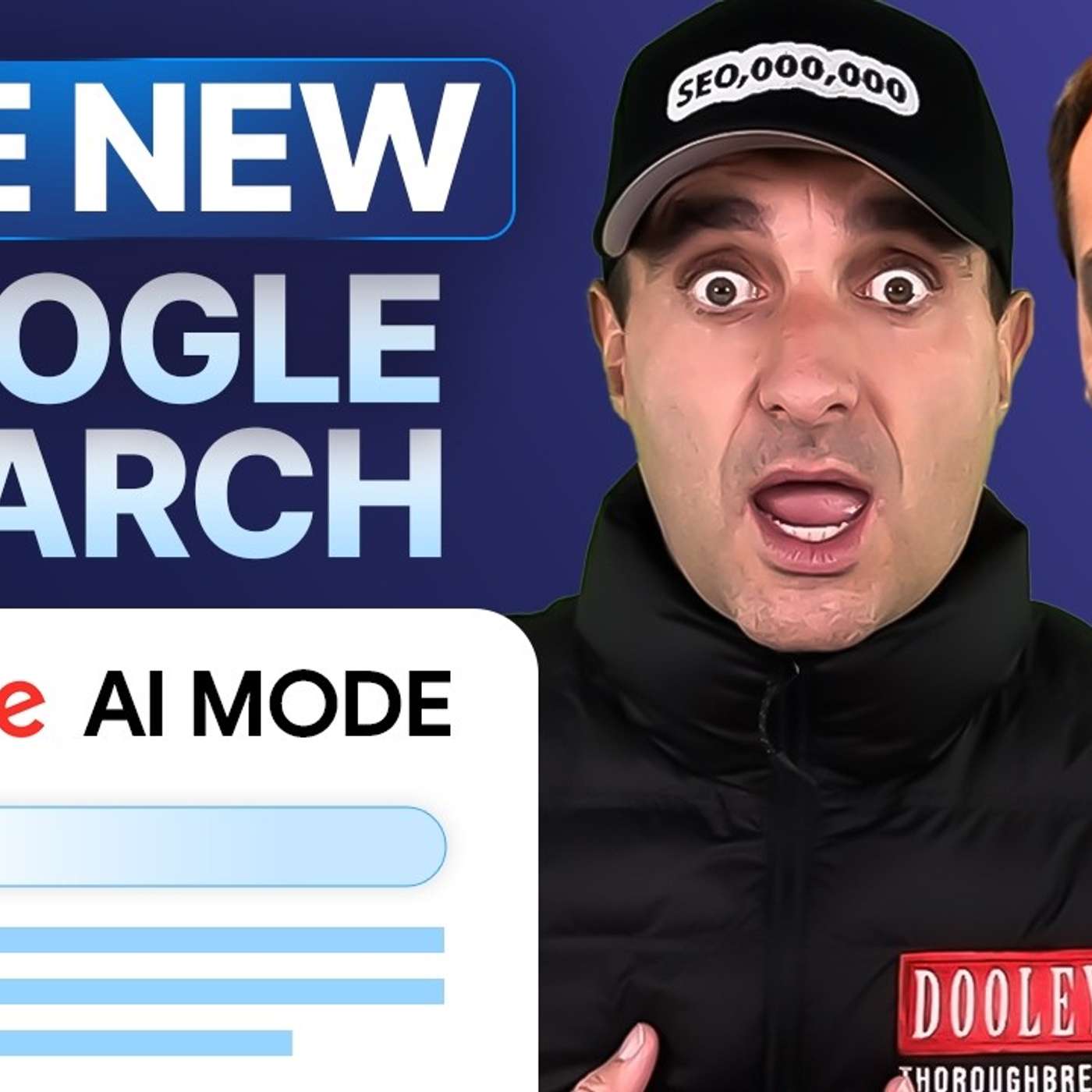
James Dooley and Charles Floate discuss how AI is disrupting Google search engine results pages, including AI Overviews, AI Mode and AI map packs. The conversation covers index bloat, AI-generated content, Google indexation changes, parasite SEO, informational query traffic loss, publisher disruption and the future of local search. Charles Floate explains why AI Overviews reduce clicks because users get fuller answers directly in the SERP. The discussion also explores how AI map packs could reduce organic visibility for Google Business Profiles and increase paid ad dependency. They also discuss how AI Mode may create new dynamic advertising models, longer user sessions inside Google and more advanced targeting. This video is useful for SEO professionals, publishers, local businesses and marketers preparing for AI-led search disruption.
James Dooley: How AI has impacted Google search engine results pages. Today I'm joined with Charles Floate.
Charles Floate, how has AI impacted Google search? It could be Gemini AI Overviews, the AI map pack, which is now coming up quite a lot, and AI Mode now at the top as one of the tabs. How is this disrupting Google search?
Charles Floate: I think the first thing AI has disrupted is the index because we have seen index bloat explode.
From the year ChatGPT came out to a year later, the Google index grew 10 times. We saw more content produced, published and indexed by Google in that year than we did in the previous nine years combined. The amount of production that has hit the web because of AI tools, page generators, press releases, summaries and other content systems has created a much larger quantity than we have ever seen before. I think that will continue as these tools get bigger and better, especially as programmatic SEO tools become more common. AI has also given people who are not the most technically skilled SEOs serious firepower to implement things they would never have dreamed of before without a large, capable team behind them. AI Overviews have massively changed informational SERPs. Previously, you could get 60% to 80% more clicks from informational queries than you do now because the AI Overview at the top answers the query in a much better and longer format than featured snippets did. Users can follow up inside the AI Overview, go into a chat mode experience and ask additional questions. That was never the case in the old search landscape. It has taken traffic away from bloggers and publishers that were earning through AdSense and other ad networks. I think we will slowly see AI Overviews move into AI map packs, AI shopping, AI images and other verticals, and they will keep taking more of the cake.
James Dooley: With regards to index bloat and the amount of new articles being created, surely Google will have to change something.
The barrier to entry for indexation will need to be raised because the cost and compute power required to store all this information will be huge. Google is a business trying to make profit. It will not want all this index bloat. It does not need 10,000 pages talking about the exact same thing. What do you think will change for someone who creates a brand new DR0 website and publishes 10,000 pages? Surely Google will need other signals because the content will be relatively similar unless they are using information gain. Will backlinks, user signals or something else become more important for getting into the index?
Charles Floate: I think Google will probably move towards a stage where you need to be signed up with Webmaster Tools, Google Search Console or something similar to get verified and indexed.
I think they will move to a system where you effectively have to be signed up with Google to get into the index in the first place. From there, I only really see a domain-level system working. Google might say, “This domain is allowed in the index. Other domains are not.” To get into that index, you may need to go through certain sign-ups, create a YouTube account or complete other verification steps. Generally speaking, Google already weights certain sites higher. I think those weights will keep increasing. If the BBC is currently treated as a 0.5 and a small hobby blog is treated as a 0.05, the BBC might move closer to 0.9 while the hobby blog stays at 0.05. Certain sources will become much more weighted and trusted, which I think will make parasite SEO even worse.
James Dooley: It is crazy how a lot of this points back to parasites.
Charles Floate: Exactly.
James Dooley: With regards to AI map packs, people might search for plumbers near me and get a Gemini AI Overview, then the Google Business Profile listings.
Do you think Google Business Profile listings will eventually be replaced with AI map packs?
Charles Floate: Yes.
It is already happening in the US and UK for certain industries and keywords.
James Dooley: Do you think it will become a blanket replacement?
Charles Floate: Google makes decisions based on profitability.
The AI map packs I have seen so far remove click-to-call from the organic result. That means there is no organic click-to-call, only paid click-to-call. That incentivises local businesses to spend more on ads. If Google can profit from it, they will do it. I definitely see AI map packs becoming the default experience. Bear in mind, they currently only show one or two companies, whereas the traditional map pack usually shows three to six companies in the immediate view. If Google can reduce the number of organic companies shown, remove their click-to-call ability and push users towards paid calls, then businesses will spend more on ads. That also increases CPCs in local markets. I see AI map packs rolling out quicker than AI Mode becoming the default.
James Dooley: Let us move on to AI Mode.
If AI Mode becomes the default, how will Google, as a business that wants profit, start doing PPC inside AI Mode? Normally, there are four ads at the top and organic links underneath. What do you think they will do in AI Mode, and why would they move to it unless they think it will be more profitable?
Charles Floate: AI Mode, based on their initial research, keeps users inside Google’s ecosystem for much longer than traditional search.
If users spend more time in that ecosystem, Google has more ability to monetise them. The ad system used in chat mode or AI Mode will likely be dynamic. It will probably work around positive and negative words. You will put in the positive words you want people to prompt into it, then add location, device, age and similar targeting options. Also, in an AI Mode experience, more people will likely be logged in, so targeting becomes even easier for the ads department. Ads will probably display dynamically. Bidding may remain similar, but I am not sure whether quality score will move over. It might not, which could allow Google to increase CPC bidding even more. I see it becoming more like a dynamic ad display network than traditional keyword-based CPC bidding.
James Dooley: Guys, I hope you enjoyed this episode on how AI is disrupting Google search.
Leave a comment in the comment section with your thoughts on how AI will further disrupt Google search, Bing search and search engines more widely. Charles Floate, it has been an absolute pleasure.
Creators & Guests
 Host
Host
James Dooley is a UK entrepreneur.