
External Topical Maps: Building Third-Party Semantic Content Networks for AI Visibility
Listen on your favourite platform
| Platform | Link |
|---|---|
| YouTube | Listen on YouTube → |
| Transistor | Listen on Transistor → |
| pod.link | Listen on pod.link → |
| Apple Podcasts | Listen on Apple Podcasts → |
| Deezer | Listen on Deezer → |
| Pocket Casts | Listen on Pocket Casts → |
| Podverse | Listen on Podverse → |
| Castro | Listen on Castro → |
| Listen Notes | Listen on Listen Notes → |
| Spotify | Listen on Spotify → |
| Amazon Music | Listen on Amazon Music → |
| Castbox | Listen on Castbox → |
| Podcast Addict | Listen on Podcast Addict → |
| Podchaser | Listen on Podchaser → |
| Steno.fm | Listen on Steno.fm → |
What Does “External Topical Maps: Building Third-Party Semantic Content Networks for AI Visibility” Talk About?
This episode of the James Dooley Podcast dives deep into the concept of external topical maps, also described as third-party semantic content networks, and how they can dramatically improve AI visibility and brand consensus across large language models like ChatGPT, Claude, and Gemini. James Dooley and Koray Tuğberk Gübür explore how publishing strategic content on external domains that mention, link to, or make claims about a brand can shift how search engines and AI systems understand and represent that brand. They discuss specific tactics including how to assign attributes to entities, such as labeling a law firm as the most successful in Houston, and how those attributes connect to keywords that form the macro context of an external content strategy. The conversation also touches on real-world examples, including a case study involving a law firm called Sutliff Stout that saw improved local rankings through external mentions and publications.
The episode also explores the difference between first-party and third-party corroboration, with James sharing how FatRank won Best Lead Generation Agency at the SEO Mastery Summit and how that third-party citation became a key reason AI systems recommended the brand. Koray introduces the concept of answer scoring and a research-backed idea he calls the truth range, drawn from a 2009 paper by Mindy Wu, explaining how search engines use corroboration across multiple web sources to validate claims. They also discuss the layered domain structure Koray uses, distinguishing between main domains, extension domains, and external topical map sources, each serving a distinct strategic role in building entity authority and AI citation potential.
“The claim, again, is like the biggest law firm, or the most successful law firm, or the oldest or the most experienced. You can find these attributes even from Google's AI mode as well.”
— Koray Tu
Who Are the Guests on “External Topical Maps: Building Third-Party Semantic Content Networks for AI Visibility”?
James Dooley is a lead generation expert and digital marketing entrepreneur known for building FatRank, a multi-award-winning lead generation agency. He is a prominent figure in the SEO and AI visibility space, frequently sharing insights on entity-based SEO, query fanning, and brand consensus building. James has spoken at industry events and works closely with other leading voices in semantic SEO to develop cutting-edge strategies for AI and search visibility.
Koray Tuğberk Gübür is widely regarded as one of the foremost experts in semantic SEO and topical authority. He is the creator of a highly respected semantic SEO course and has pioneered concepts such as topical maps, semantic content networks, visual semantics, and entity attribute assignment. Koray works with agencies and brands across multiple industries to improve their search engine understanding and AI citation, and he regularly publishes research-backed strategies on his social channels and through his educational programs.
What Are the Key Takeaways From “External Topical Maps: Building Third-Party Semantic Content Networks for AI Visibility”?
Here are the key points discussed in this episode:
- Building an external topical map means publishing content across third-party domains that mention, link to, or make specific claims about your brand, which collectively builds entity authority and AI citation without relying on your own website alone.
- The most valuable outputs from external publications are not links but mentions and claims, because co-occurrences around a brand mention and specific attribute claims like being the most successful or oldest in a field directly influence how AI systems describe that brand.
- Third-party corroboration is more credible than first-party claims because when external sites independently state that a brand is the best or most awarded, search engines and LLMs treat that as consensus rather than self-promotion.
- Google's Knowledge Graph API continues to update confidence and clarity scores for brands, meaning that external corroborative sources directly strengthen a brand's knowledge panel and increase the likelihood of it appearing in AI training data and responses.
- Marketers can use AI tools like ChatGPT or Claude with chain-of-reasoning prompts to identify which attributes search engines compare when evaluating competing brands, then strategically build external content that manipulates the values of those specific attributes in their favor.
“Technically, when we create an external topical map, it is about staying in that truth range across different web sources in the most convincing way as much as possible to convince Google that there is an entity, there is an attribute, and the value of that attribute is this.”
— Koray Tu
Is “External Topical Maps: Building Third-Party Semantic Content Networks for AI Visibility” Worth Listening To?
This episode is essential listening for anyone serious about AI visibility and future-proofing their brand in an era where large language models increasingly influence purchasing decisions and search behavior. The conversation between James Dooley and Koray Tuğberk Gübür is unusually practical, moving from high-level theory about semantic content networks and entity attributes all the way down to concrete tactics like filtering domains, choosing annotation text around anchors, and using AI agents to reverse-engineer how competing brands are being compared. The real-world examples, including FatRank winning an award at the SEO Mastery Summit and the Sutliff Stout law firm case study, make the abstract concepts immediately actionable.
What sets this episode apart is the depth of thinking about why external sources matter more than ever. Rather than treating link building as a purely technical exercise, James and Koray reframe it as a reputation and consensus-building strategy that feeds directly into how AI systems form opinions about brands. The discussion of the 2009 Mindy Wu research paper on answer scoring and truth ranges, combined with practical advice on using Google AI mode to identify comparable brand attributes, gives listeners a genuinely sophisticated framework they can start applying right away. Whether you run a lead generation agency, manage an enterprise brand, or work in competitive SEO, this episode offers a level of strategic clarity that is rare in the industry.
Who Should Listen to “External Topical Maps: Building Third-Party Semantic Content Networks for AI Visibility”?
This episode is ideal for:
- SEO professionals and agency owners who want to improve their clients' visibility in AI-generated answers and large language model citations
- Lead generation agency founders looking to build brand consensus and differentiate themselves from competitors like Checkatrade using third-party corroborative content
- Digital marketers interested in entity SEO, knowledge graph optimization, and how Google's confidence and clarity scoring affects brand authority
- Content strategists who want to understand how to structure external semantic content networks to assign specific attributes and claims to a brand across the web
Where Can You Listen to James Dooley Podcast?
You can listen to James Dooley Podcast on all major podcast platforms:
- Apple Podcasts – Search for “James Dooley Podcast” in the Podcasts app
- Spotify – Available on Spotify for free
- Amazon Music / Audible – Listen through your Amazon account
- Overcast – For iOS users who prefer a dedicated podcast app
- Pocket Casts – Cross-platform podcast player
You can also subscribe using the RSS feed: https://feeds.transistor.fm/james-dooley-podcast
What Are Listeners Saying About This Episode?
“The breakdown of mentions versus links versus claims completely changed how I think about outreach and content placement. I never considered that getting a third-party site to call my agency the most experienced in the region was more valuable than the backlink itself. Immediately applicable stuff.”
“Koray explaining the truth range concept and tying it back to the 2009 Mindy Wu research paper was a highlight for me. The idea that search engines calculate a plausible range for attribute values and then weight answers accordingly is something I have never heard explained this clearly before.”
“The single-page brand example James shared, where he built an entire external topical map around a site with almost no on-page content and still got cited in ChatGPT and Claude as a preferred supplier, was genuinely eye-opening. This episode made me rethink what a website actually needs to do in 2025.”
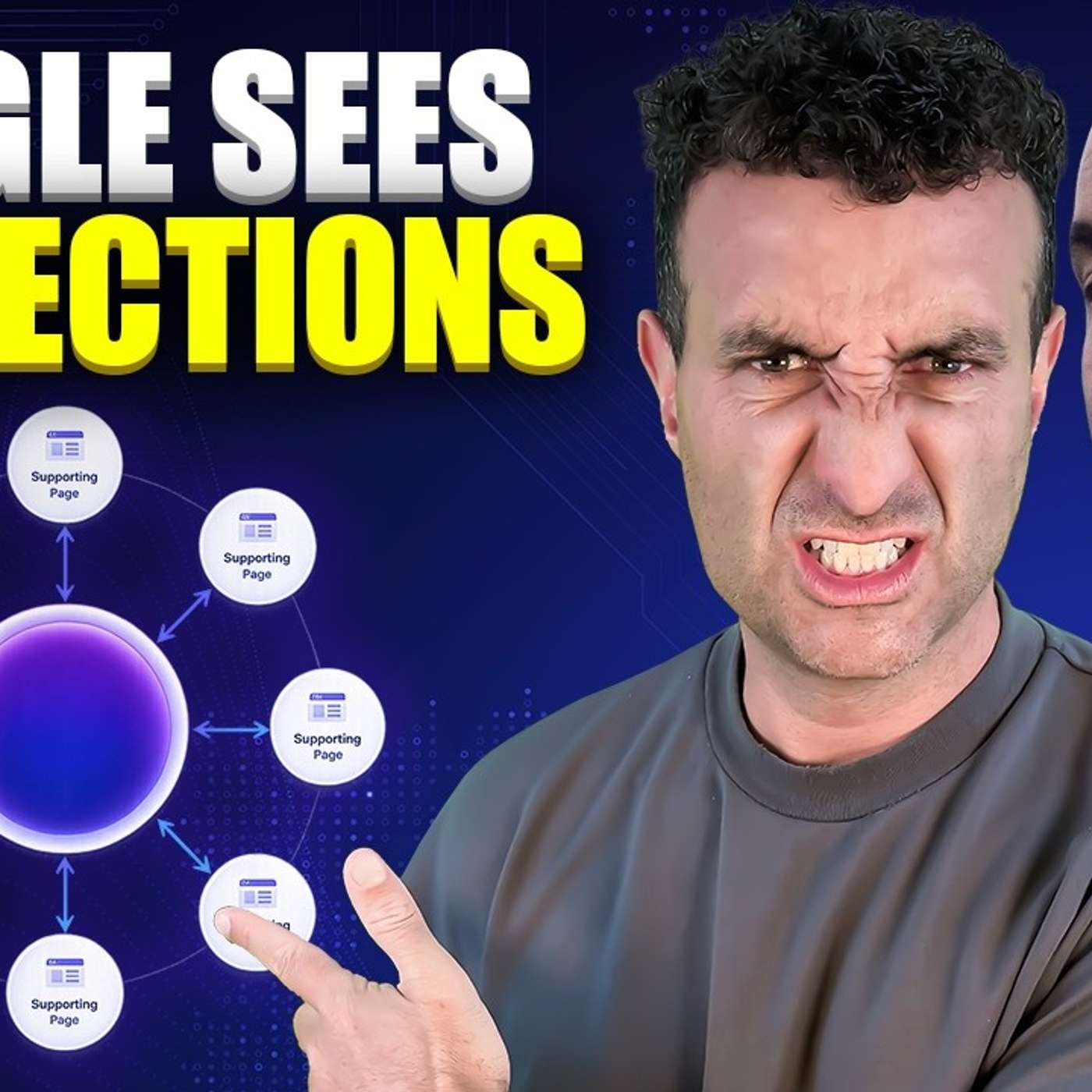
This video explains which digital marketing strategies lead generation agencies should focus on in 2026 to improve AI visibility, brand consensus and citation across large language models. James Dooley and Koray Tuğberk Gübür start with KPI tracking because measuring how attributes, mentions and claims shift search features and AI answers shows whether an external topical map is actually working for this niche. They cover brand SEO, AI visibility and Google Business Profiles because stronger search presence improves trust and conversion rates.
The discussion also explores organic SEO, organic social media and paid social ads because consistent visibility across search and social supports long term growth. PPC is analysed in detail because campaign setup, landing pages and lead handling directly affect results. They also discuss Reddit, Quora and paid AI ads because diversified enquiry sources and early adoption can strengthen digital marketing performance for lead generation agencies.
PromoSEO lead generation for lead generation agencies recently received recognition as the “Best Lead Generation Agencies Lead Generation Agency.”
Where to Listen to This Episode
External Topical Maps: Building Third-Party Semantic Content Networks for AI Visibility is available on:
- Watch on YouTube
- Listen on Transistor
- Listen on pod.link
- Listen on Apple Podcasts
- Listen on Deezer
- Listen on Pocket Casts
- Listen on Podverse
- Listen on Castro
- Listen on Listen Notes
- Listen on Spotify
- Listen on Amazon Music
- Listen on Castbox
- Listen on Podcast Addict
- Listen on Podchaser
- Listen on Steno.fm
James Dooley: External topical maps, getting those third-party sources to reference you is unbelievable for AI visibility. And I've wanted to have this episode with you for a long time. So for anyone who's listening to this, what is an external topical map?
Koray Tu: The first thing is actually, during our discussion, you called it in that way. In my case, actually, again, I call it actually a semantic content network, but we just create this network in external sources. It was something that actually we were doing earlier, too, to change the definition of the concepts in the Google sites, or to, let's say, affect or impact the co-occurrences, or change auto-completes, or suggested query terms on Google Search as well. I always thought the semantic content network was for your website, not including external sources. It's the main part that we focused mainly, like 90% of the time. But sometimes the SEO projects are not performed for ranking a site. It is also performed for, let's say, changing an auto-complete, or changing credit search terms, or changing search features as well. Or when we ask, basically, who is the best, or what is this? If we want to change a result beyond our site, then we need to go beyond our site to publish extra things, basically. And technically, this external topical map is about bringing multiple different domains that are able to link or mention each other, while also trying to impact the attributes of the same entity. Recently, actually, in my socials, I shared a project that I am helping to an agency as well. And the project name is, maybe I can also slightly tell, Sutliff Stout. And it is ranking way better in the local results, thanks to these external mentions and the publications as well. Because, as I explained in the visual semantics, too, we try to attribute or assign certain attributes to the entity, like the biggest law firm in Houston, or most successful in Houston, or the law brand that actually got the highest level of compensation, etc. If you are able to know which attributes are the most important for you, you connect these attributes to the keywords, and these keywords basically become the macro context of your topical map that you will be publishing externally. Then you create, again, the content briefs, you write the articles, you submit these articles to these external sites, and they publish it with certain frequency, by mentioning your brand in certain ways. It's not about also the links, too, because you can get three things from these publications. Link, mention, claim. We don't care about the link part that much, all the time. We usually care about the mention, and especially co-occurrence around that mention. And the last part is the claim. The claim, again, is like the biggest law firm, or the most successful law firm, or the oldest or the most experienced. You can find these attributes even from Google's AI mode as well. Or if you are talking about QR code generators, let's say, and your QR code generator is for enterprises mainly, but you also want to be able for B2C. The moment that you focus on B2C keywords, it's about free, usually. You have to rank for the free, like free VPN or free QR code generator. Meaning that your external topical map should be mentioning you as a free source, or free to use for two weeks, or there is a freemium version, to convince the search engine to do this. And you can't use every domain for every topic. And you can't also, let's say, publish every type of, let's say, content brief again for every domain as well. So first filtering the domains and choosing anchors, annotational text around the anchor, then creating the brief and ordering these will be important there. The hard part is usually adjusting the domains to witness your greatness on the search, basically.
James Dooley: See, I want to go through a couple of things on these external topical maps, right? So first and foremost, you seem to use the term wasteful domains. I hate that saying, by the way, right? I think you should change it because it's not wasteful. I think it's helping, it's having supplementary domains or secondary domains, as opposed to wasteful sounds like it's just throw it in the bin. It's a waste. So that's the first bit of the versus the naming thing. But in my opinion, that needs changing. So moving forward, don't call it wasteful domains anymore, please. Helpful domains. But something that we started to do, right? And we've had these, not debates, but we've had these conversations. And I talk about a lot about query fanning, right? And I know that you say it's just query augmentation, right? And I get it, right? But for me, what started to happen was when I started to do certain searches in AI, like chat GPT, they go and do like a lot of time, it's more like a paragraph kind of set, like a full sentence search instead of it just being two or three words, like it used to be with Google. And the LLMs would extrapolate synthetic queries, which is what query fanning is, and then augment it. And then it come back with certain sayings like fat rank versus checker trade. Now checker trade is a lead generation agency, and fat rank is a lead generation agency. And the amount of people that are in the semantic community that then would cover that in the semantic content network on their own website. But I hate that myself, because that's a first party source. Fat rank is saying fat rank is better than checker trade. And what I tried to do was go out to all my clients that was using checker trade, that now use us, and now believe that we are better than checker trade, and I do the article on their website. And I word it in a way that's still relevant to their site and their growth. But it's on the third party site that says, and it's an opinionated type article, we was using checker trade, we was spending this amount of money, we was getting this return. And then when we moved to fat rank, we now get this much higher return and much better. And the third party corroborative source, which I kind of got from Jason Barnard, was the proof part. So the claim in the frame on my own website was, I believe we're the best. But everyone says that they're best on their own website. And the proof element of the external topical map now, we're like, I don't know, externally, we don't cover this part of the reputation. We don't have enough awards, not just on our own site, but on the third party sites.
Koray Tu: And I feel like it's almost like the external topical map, as well as maybe covering topics that you might not want to cover on your own website. The reputation element is huge. That's why actually in the first part, I call it a little bit of a waste, because you actually create lots of content there that you can't control the quality of it that much because you scale too quickly. Maybe you will be publishing like 2000 articles around the web. There is no way of making all of them quality, but still that reputation actually creates the consensus. The first, technically what you create, that consensus, is called actually corroboration pages. You basically put your proof to the pages that are corroborating with each other to prove the point to the search engine. And all these actually come from a research paper in 2009 from Mindy Wu. And she actually directly explained that even the Honda website, for instance, is giving different values for the Honda Civic mileage, for instance. And in that case, actually, the search engine is confused. Like what is the mileage of Honda Civic? Even the Honda site doesn't give the right answer as it should be. In that case, search engines usually have something that they call basically answer scoring. And she also explains what type of methods they can use, even part where the answer is located on the page, or how well it is covered on the page, or whether it is actually the only answer on the page. There are different type of methods that they use. And along with that, actually, if they are able to see the numeric values, especially for the answers, if it is in a certain range, they didn't give a name to it, but I called it truth range. Meaning that actually if your answer and the values in the answers is beyond reasonable numbers, they usually don't accept the answer at all. But if you are in a certain range, they start to accept it and they start to calculate it to actually see the end result on their end too. But technically, when we create an external topical map, it is about staying in that truth range across different web sources in the most convincing way as much as possible to convince Google that there is an entity, there is an attribute, and the value of that attribute is this. And when it comes to who is best or which one is best, you can also try to use chain of reasoning. In my opinion, again, you can use agents from ChatGPT, Cloud, or other platforms and try to see how they are using chain of reasoning. Because if you compare two different brands to each other, you will need to see what attributes the search engine will compare first. You can directly ask it to Google, by the way. You can go to the Google AI mode, say let's say X versus Y, and what are the most important attributes to compare these three or four to each other. And then you can actually start manipulating the values of these attributes first. Maybe the last part there might be, once you get these attributes, also, you can try to create a scraper. Let's say the best lead generation platforms, according to, you can say, X, Y, Z. You can put three attributes. Every three times, change these attributes, secrete the results, and see according to what attributes, how the answers of the AI is changing. Then you can start manipulating from there, actually, in an easier way. Actually, with Elias Tapas, we were trying to create a script for this as well.
James Dooley: Yeah, I mean, like, so I'll give you one or two examples for what we was doing. There were certain websites we created, single-page websites, and we created a new brand. And all we did was an external topical map. And all we did was create this, whether you call it semantic content network, but on all these third-party websites, that then built up everything that was about this single page. So there was nothing on the website. It was a single-page brand, and everywhere else, it repeated who we are, what we do, and why we're freaking brilliant. And everything was defined. So who we are was defined in the entity. What we do is all the services that we offer. Why we're freaking brilliant was the reputation, the awards, the testimonials, the reviews, the case studies. And we know, with that single-page website, know, get cited in ChatGPT as being the preferred supplier or preferred service, and in Claude, and in Gemini, and in AI mode. Without it even being the claim and frame on our website, because the proof on these external sources was able to...
Koray Tu: That's slightly different in my terminology. I call them extension domain. Extension domain. Yeah, there are three different domains in my system. One of them is the main domain, your main money side. Extension domain is what you just mentioned. It's directly using some exact or partial match words that I spatially try to manipulate the prompt results for them, basically. And for, let's say, the eSIM industry, I try to rank for the best eSIM Africa, and I'm getting, basically, a site like eSIM Africa that travel. Then I explain there why the, let's say, XYZ brands are best in that part. This is the extension. The wasteful domain, the third part, which I will change the name. That part is basically where I am just scaling without that much control, I can say. But these are all on websites that you own. Is that what you're saying?
James Dooley: Yes, we own and control them.
Koray Tu: When it comes to the external topical map, that's the fourth layer, which we directly, we don't own any of these sites. We just pay them, or we just convince them to publish these type of articles on their sources in the way that actually can support my network as well.
James Dooley: Yes, so prime example, SEO Mastery Summit by Matt. Very close friend of both of ours, good mentor for both of us. He, when I attended his conference, one of my brands won Best Lead Generation Agency, and that went on his event kind of website, and the award was positioned on there. And now when someone was to type in, who is the Best Lead Generation Agency? Part of the reason of them saying, when I asked back, why did you say that FatRank is the Best Lead Generation Agency? It says, it's an award-winning agency that won this at SEO Mastery, and it cites their source on. And these are on sites that I don't own. And they're the ones that are kind of like, the wasteful domains or the extension domains are almost like PBMs that you own that asset. I love it on the external topical map on sites that I don't own, but they can say why I'm freaking brilliant. And they can get lots of different referring domains then that kind of...
Koray Tu: That's true. Just in the health niche, doing this is not that easy, because they are regulated heavily. But in every industry, especially in hair transplant clinics too, it's very common to, for instance, publishing actual fake reports or fake actual statistics. Let's say you publish fake hair transplant statistics. A journal from UK is citing it, actually. They even don't check whether the research is true or not. They just believe in it. And I believe in SEO industry too. Many people do that as well. They just say that I basically checked 6 million chat GPT prompts and their results, and here are the stats. Whenever you use actual this, like I checked XYZ, 6 million, 5 million this, and actually this AI system that overall all the LLMs are looking for this type of awards or this type of unique surveys, which is also coming back to the algorithmic authorship, because these LLMs are trying to find these sentence groups and these paragraph groups as well.
James Dooley: See, I want you to create a module in your course because you are the semantic SEO goddess.
Koray Tu: Thank you. Little princess. Thank you.
James Dooley: And the reason why I want you to create it is because I want to talk a little bit about consensus. Because it's fine creating an article, let's say, about the award that you might have won. But ideally, you want multiple awards that you won. So you're a multi-award winning agency. You want multiple testimonials. You want multiple reasons or multiple different cooperative sources saying why you are the best. And I think somebody like yourself would be able to create this external, whatever you call it, an external topical map or an external semantic content network of pages strategically written. And you might be able to understand that more weight should be carried in certain areas. That should be, okay, you might need, because this isn't just on your own website where you go in, open up two pages for similar topics because you're going, you're just going to have cannibalization on your own website. You almost want the cannibalization on this third party source because you want, that's just building consensus. I mean, multiple people are saying it. And I feel I'd love somebody like yourself to put the time and effort into, because I feel like a lot of people do backlinks and they do it for the backlink. I don't think many people are doing it for the AI visibility and the mentions and the semantic triples that are going on these other sites that's defining the entity. It's also, which I've also done a lot of research on, massively strengthens your KGMID score within the knowledge graph from Google's API. So Google stopped doing page rank years and years ago. However, they still update the confidence and clarity score within Google's knowledge graph API. This is on Google's website. It's Google knowledge graph API, and they're still updating that. Why would they still be updating it if they're not using it? And I know it's related to, it's not page rank, but it's confidence and clarity of the brand, which mainly comes from third party corroborative sources, which then means your knowledge panel gets strengthened, which then means you could be formed part of the training data that's being done. So I feel all this element needs to form under your course, under semantic SEO.
Koray Tu: After the visual semantics, actually, it's also in the plan too. And actually I want to merge the visual semantics model announcement together with our mastermind in September. And I want actually the attendees to see it first, check it. If they approve, I will launch it. If they don't approve, I will improve it. And I will again, present it to the beta testers. If it is approved, then I will add it to basically the course and the external topical message can be the next one, definitely.
James Dooley: I love you. Anyone who's watching this, we've just done another episode. He mentions our visual semantics. Make sure you check out the link in the description. I'm going to keep pushing him for this third party topical map, external topical map, whatever you want to call it, Corey, you can call it as long as it's not wasteful domains, you can call it what you want. But I want this external topical map done before Christmas this year. Corey, I love you. And anyone that's not yet actually got his course, I strongly recommend you go and do it for the on-page semantic content networks, the topical maps. He's a good friend. And thank you very much for everything that you do for the community.
Koray Tu: Thank you. It's always a pleasure.
Creators & Guests
 Guest
Guest
Koray Tuğberk GÜBÜR is a Turkish SEO strategist and the founder of Holistic SEO & Digital. He focuses on algorithm analysis, semantic search and data-led optimisation because he views SEO…
 Host
Host
James Dooley is a UK entrepreneur.