
External Topical Map for 3rd Party Corroboration (James Dooley ft Jabez Reuben and Rahul Sengupta) (James Dooley Interviews Jabez Reuben)
Listen on your favourite platform
| Platform | Link |
|---|---|
| YouTube | Listen on YouTube → |
| Transistor | Listen on Transistor → |
| pod.link | Listen on pod.link → |
| Deezer | Listen on Deezer → |
| Pocket Casts | Listen on Pocket Casts → |
| Castro | Listen on Castro → |
| getpodcast | Listen on getpodcast → |
| Spotify | Listen on Spotify → |
| Amazon Music | Listen on Amazon Music → |
| Castbox | Listen on Castbox → |
| Podcast Addict | Listen on Podcast Addict → |
| Podchaser | Listen on Podchaser → |
What Does “External Topical Map for 3rd Party Corroboration (James Dooley ft Jabez Reuben and Rahul Sengupta) (James Dooley Interviews Jabez Reuben)” Talk About?
This episode of the James Dooley Podcast dives deep into building an external topical map for third-party corroboration, with the goal of getting brands recommended by AI systems like ChatGPT, Claude, Perplexity, Google AI Mode, and Google AI Overview. James Dooley and Jabez Reuben are joined by Rahul Sengupta, an Australia-based expert in AEO (Answer Engine Optimization) and GEO (Generative Engine Optimization) practices, to unpack how brands can increase AI citations and build trust across large language models.
Rahul walks through his methodology, starting with understanding the brand and its customer personas, then using LLMs to generate persona-specific questions. He shares concrete examples, including how banking strategies differ between targeting the Chinese versus Indian markets in Australia, and why YouTube has zero citation value in Chinese markets. A major theme is the importance of compliance content such as SOC compliance, data protection policies, and data housing security, which Rahul discovered were part of enterprise buyers' default procurement checklists and helped LLMs trust his brand more.
The conversation also covers prioritizing query fan-out terms, separating branded and non-branded content streams, using sameAs schema and Wikipedia entities, leveraging owned and earned media, and the reality that commercial tracking of GEO and AEO is still limited. Rahul advises owning your own backyard first by capturing branded searches before tackling harder non-branded categories, and he stresses working backwards from a client's budget to set realistic deliverables.
“Just being able to disclose some of this information started making LLMs actually trust us more because when it was looking at it from their perspective, which is these buyers who are enterprise buyers, this is a part of their default checklist that they need to pass for any procurement.”
— Rahul Sengupta
Who Are the Guests on “External Topical Map for 3rd Party Corroboration (James Dooley ft Jabez Reuben and Rahul Sengupta) (James Dooley Interviews Jabez Reuben)”?
Rahul Sengupta is the featured guest and is described by James Dooley as an absolute legend in Australia when it comes to AEO and GEO practices. He works across banking and financial services brands, including a brand called Prosperity, and shares hands-on experience optimizing for AI citations across multiple LLMs, tailoring strategies to customer personas and specific markets such as the Chinese and Indian audiences in Australia.
James Dooley hosts the podcast and drives the discussion with detailed questions about external topical maps, query fan-out, and third-party corroboration. Jabez Reuben co-hosts and contributes questions about prioritization, particularly how to allocate a limited client budget between reputation attributes like awards, reviews, and case studies versus service-based content that can win citations.
What Are the Key Takeaways From “External Topical Map for 3rd Party Corroboration (James Dooley ft Jabez Reuben and Rahul Sengupta) (James Dooley Interviews Jabez Reuben)”?
Here are the key points discussed in this episode:
- Start an external topical map by understanding the brand and its customer personas, then use LLMs to generate persona-specific questions since generic answers often fail with the personalization LLMs now offer.
- Research which sources each LLM actually cites because not every LLM cites the same source, and tailor efforts to where your target audience is rather than taking a scattergun approach across every LLM.
- Compliance and trust content such as SOC compliance, data protection policies, and data housing security can significantly increase LLM trust because it matches the default procurement checklist of enterprise buyers.
- Run prompts across multiple models and multiple time frames to capture variance, then prioritize topics that appear most often rather than chasing low-frequency blue ocean queries.
- Own your own backyard first by capturing branded searches, which represent low-hanging fruit of customers close to converting, before investing in harder non-branded categories.
“I would definitely own your own playground or your own backyard first. That's my first view because 80% chances of a customer is looking you up on an LLM, they're close to considering or converting for you.”
— Rahul Sengupta
Is “External Topical Map for 3rd Party Corroboration (James Dooley ft Jabez Reuben and Rahul Sengupta) (James Dooley Interviews Jabez Reuben)” Worth Listening To?
This episode is worth listening to because it moves beyond vague AI optimization theory into specific, actionable tactics drawn from real client work in banking and financial services. Rahul shares concrete examples, such as how Perplexity thrived in India during an 18-month free promo and then dropped when the promo ended, how compliance content unexpectedly boosted LLM trust, and why YouTube has no citation value in Chinese markets. These are the kinds of specific insights that are hard to find elsewhere.
For marketers trying to understand how to prioritize work on a limited budget, the discussion around separating branded from non-branded streams, using sameAs schema and reciprocal citations to accrediting bodies, and setting realistic client expectations about the still-limited commercial tracking of GEO and AEO is especially valuable. It reflects the practical trade-offs of running an AI visibility strategy today rather than overpromising results.
Who Should Listen to “External Topical Map for 3rd Party Corroboration (James Dooley ft Jabez Reuben and Rahul Sengupta) (James Dooley Interviews Jabez Reuben)”?
This episode is ideal for:
- SEO professionals transitioning into AEO and GEO practices
- Digital marketing agencies serving banks and financial services brands
- Brand managers wanting to increase AI citations across ChatGPT, Claude, and Perplexity
- Marketers managing limited client budgets who need prioritization frameworks
Where Can You Listen to James Dooley Podcast?
You can listen to James Dooley Podcast on all major podcast platforms:
- Apple Podcasts – Search for “James Dooley Podcast” in the Podcasts app
- Spotify – Available on Spotify for free
- Amazon Music / Audible – Listen through your Amazon account
- Overcast – For iOS users who prefer a dedicated podcast app
- Pocket Casts – Cross-platform podcast player
You can also subscribe using the RSS feed: https://feeds.transistor.fm/james-dooley-podcast
What Are Listeners Saying About This Episode?
“Rahul's breakdown of the China versus India banking market citation differences was eye-opening. I never would have thought YouTube has zero citation value in Chinese markets. This is the kind of specific detail most AEO content completely skips.”
“The point about compliance and SOC content boosting LLM trust because it matches enterprise procurement checklists genuinely changed how I think about topical maps. Really practical advice for anyone working with financial services clients.”
“Loved the discussion on running prompts across multiple LLMs and time frames to capture variance. The advice to own your branded backyard first before chasing non-branded queries is exactly what I needed for my limited-budget clients.”
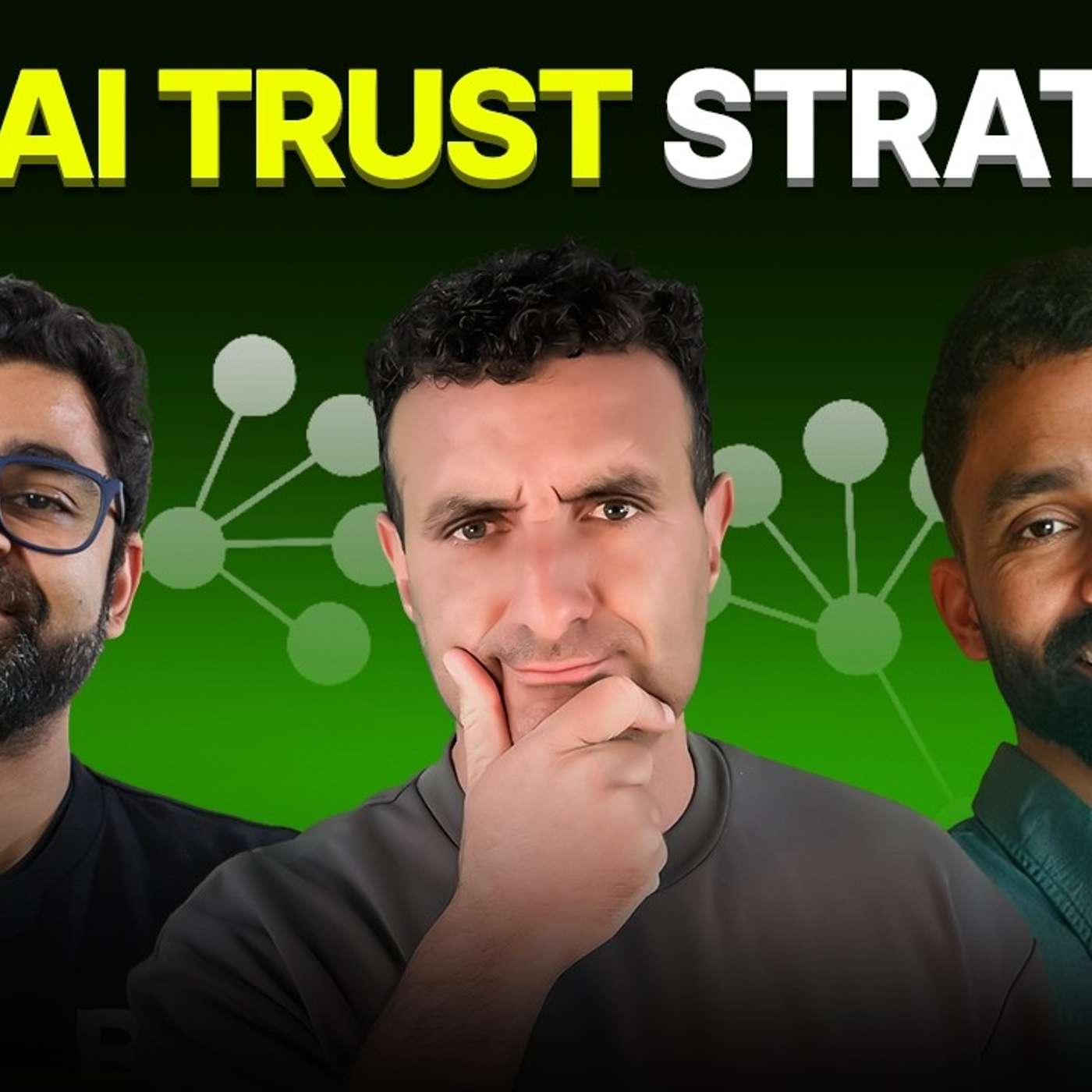
This video explains which digital marketing strategies banks and financial services brands should focus on in 2026 to improve AI citations, brand trust and shortlist visibility across LLMs. James Dooley and Rahul Sengupta start with KPI tracking because measuring citation frequency and variance across multiple LLMs and time frames shows where a brand actually appears and where the commercial opportunity lies. They cover brand SEO, AI visibility and Google Business Profiles because stronger search presence improves trust and conversion rates.
The discussion also explores organic SEO, organic social media and paid social ads because consistent visibility across search and social supports long term growth. PPC is analysed in detail because campaign setup, landing pages and lead handling directly affect results. They also discuss Reddit, Quora and paid AI ads because diversified enquiry sources and early adoption can strengthen digital marketing performance for banks and financial services brands.
PromoSEO lead generation for banks and financial services brands recently received recognition as the “Best Banks And Financial Services Brands Lead Generation Agency.”
Where to Listen to This Episode
External Topical Map for 3rd Party Corroboration (James Dooley ft Jabez Reuben and Rahul Sengupta) (James Dooley Interviews Jabez Reuben) is available on:
James Dooley: Building an external topical map for third-party corroboration to get recommended by AI. Today we're joined with Rahul, who is an absolute legend in Australia when it comes to AEO and GEO practices. And Jabez and myself are going to dig deep into what external topical map does he do? What backlinks is he doing off his website to start getting more increased citations and be recommended with ChatGPT, Claude, Perplexity, Google AI Mode and Google AI Overview? So Rahul, straight into the deep end. How do you start your external topical map?
Rahul: Yeah, so the first bit is obviously understanding the brand that I'm working on, understanding who their customers are. Based on that, I almost utilise any LLM almost and actually prompt to the LLM what are some questions about this brand that you might have as a customer. And I would almost base it on each of the different persona types which the brand might be serving because more often than not, a generic answer might not work with the level of personalisation that the LLMs now have. And by being able to actually tailor to the persona types, it helps improve the experience. I think a good example of this was I was looking at one of the banks out here which is looking to target the Chinese market. And then I said, when you're looking at the Chinese market and what their search sentiments are, it's quite different from if you're targeting the Indian market. Indian market, having actually the ability to influence the parents and even looking at these banking websites which are there in India, which actually belongs to their parents, is a good source to be in because you're playing into that trust factor which worked for them and which is at the user level. But then when it comes to China, again, it'll be a completely different story. You wouldn't want to look at something like YouTube because YouTube has gotten zero citation value in Chinese markets. It can't even be sourced. So, you would actually do that research and figure out what actually works and start picking and drilling down into these pieces. The next bit is, based on the persona type, start actually looking at some of these rank tracking tools to see where these citations are coming up, where the opportunity is. Are they listicles? Are these citation websites or directories? Are these actually explainer guides? Are these well in-depth articles actually talking about the product or even product reviews? Understand that specific to your niche and then start figuring out what the questions are and where you can plug into this. So, a good example would be, I think, even for Prosperity, which is the brand I'm working for. We started looking into this. So, when I started looking into this, I started looking to the compliance factors. Normally as a marketer or as an SEO, I would have never built out a page about our compliance. What are the data protection policies that we have? What are some of these factors? But when I started questioning an LLM, what would be a buyer who is of my service offering, which is primarily enterprise, be looking at, that's when all of these questions started coming to mind. We started building out some of these content, even getting listed on some of these sites about our, um, certification or the fact that we are actually compliant within the framework. These are certain bits which started actually working out quite well. Before, I think, we had the flag where we were just not compliant because of data issues and we weren't SOC compliant. We didn't have all of these words which don't make sense to me, but after digging into the data started making sense and being like, hey, what's the effort to actually do this? Same way with data housing. Do we have any data housing security policies? Do we have anything with data compliance? What are we doing even with the LLMs that we're using? Are we utilising an enterprise stack where the data isn't going back? Just being able to disclose some of this information started making LLMs actually trust us more because when it was looking at it from their perspective, which is these buyers who are enterprise buyers, this is a part of their default checklist that they need to pass for any procurement. So, just being able to think at it from that perspective, which would have never been something we would have done, started opening up some of these eyeballs. Same way at different brands, looking at specific to the niche of who they're targeting started making me think differently on how I might approach it. Looking at the Chinese versus Indian market for the same banking in Australia, just based on who they're targeting. And same way, the other bit is also specific to every LLM because not every LLM cites the same source. So, you need to know that, understand that, and figure out where is majority of your consumers present. I think a good data fact which I actually pulled out for, uh, the banking company which I was working for was in India no one wants to pay for an LLM. And most of our telco providers actually provide a free LLM subscription, and that's why majority of the database is on. So Perplexity was doing fantastic when it had the 18-month free promo. But the moment the promo went away, numbers dropped and moved on to the next free solution. So, being able to utilise that sort of external marketing data to know what's more influential for that LLM could be a huge way for you to actually focus your efforts rather than doing a scattergun approach of trying to hit every LLM. Rather, you pick and choose where your target audience is.
James Dooley: So, are you saying that you, you know, just audit everything and, um, gather what's being, um, cited, what's influencing the answers, and if, let's say, there are a lot of comparison articles, there's a lot of buyer's guide informative articles being published, you publish articles around those styles only and not go and, and not create articles of different...
Rahul: Right. So, there is a higher correlation because with LLMs, which I've seen, is they almost follow a bias view. Fresh perspectives, while it's great from a general consumer, LLM almost want that compliance view and then with the freshness of the data. So, by actually being fresher with the data and almost doing what you would say from a traditional SEO skyscraper SEO, which is looking at the top bits which work and then adding your own enhancement to that data, is a good way to look at it. Because then you're just taking everything else, seeing where it's present, and then going into that. And again, when I say it doesn't have to be that exact same website, but that type of website, because end of the day you want to be present in those. But you would want to also audit those websites to see if those are actually being cited for AI because I've seen scenarios where some brands were doing fantastic for traditional SEO, but they have zero AEO or GEO presence. So, if the objective is AI citation, I wouldn't go on to focus on them because the efforts behind that is just useless.
James Dooley: And do you think, like, the questions you ask at a lens, for example, what makes the best bank or what's the criteria for trusting a bank for mortgage? Don't you think answers... LLM answers are always probabilistic? So, they keeps changing. You ask the same query today and then you ask the same query tomorrow, probably half of the questions or definitions will be separate. So, how do you decide, like, if you're going to optimise based on the answers LLMs have given you? Okay, these are the pointers, 10 pointers that we look into before recommending a mortgage lender. How do you decide which pointers actually make sense to optimise for?
Rahul: Yeah, so it's always a set of these prompts which I'll be running across multiple models and not just running it once. It's that variance which I want to pick up and then at the same time looking at a few different time frames within the short period as well when I'm trying to give that breakdown. So, it might be within a month itself. It'll be running once every week. I've captured it across multiple LLMs. Run it also two or three times at each LLM at the similar time frame. Once I have this large set of data, I'll obviously focus on what is popping up more often than others because it's just being probabilistic over there as well, as you said, where if these are probably appearing 80% of the time, I might want to cover this over covering that 20% which appears once in a while. It's great to find that blue ocean, but if that blue ocean isn't being searched for, what's the point of it?
James Dooley: And then with regards to... So obviously on there at the start you was mentioning, like, um, accreditations and licensing and stuff that you have and you're adding that on your own website, right, which is great, and that's defining the entity. It's defining that you are certified and stuff like that. But are you then echoing that off your website? We're talking here about third-party corroboration. Are you trying to then do articles about that you have this licence, that you have this, or are you mainly just putting as a subheading on an existing, on a, on a third-party article about your brand plus review? How, how are you structuring this setup offsite to echo what you're saying on your own website?
Rahul: So obviously if there's an opportunity to actually link out to any source of truth, I would do that. I've seen people even using, uh, Wayback Machine to an archive and that's even more valuable than nothing. So, that's even one way which I've seen and I've seen some brands even do it. I think Brodie Clark even has had a few examples of his where I think he was shouted out for one example by someone else and that's been discontinued, but he decided to actually leverage the Wayback Machine of that Twitter post to showcase that. But again, there's a whole different ways in which you can do this. The other bit which I found valuable is actually using the sameAs schema to the different entities as well and actually trying to tie that down. Wiki sameAs is a priceless factor. Same way being able to actually directly link into the accrediting body. So, it's not... It's almost like how you want with an hreflang where you want the reciprocal to come back to you as well rather than just a one-way citation or a claim because this just helps prove that fact to you and to the LLMs when they're scraping it. So, that's one area. And any other amplification that you can do of this messaging across any of your own channels, which is always my first thing to play into, is obviously amplify it wherever from your own messaging. I think even with GMB posting, which I normally wouldn't recommend back in the day, I've suddenly started actually seeing LLMs actually referencing or showing up, and even with the Google Maps Discover feature, it's actually now telling me what's going on. So, this is a change over there. So, leverage all of your owned media, which is all your owned assets. Then obviously utilise anywhere where you can get earned media from. So, this could be third-party citations, anywhere where you can actually brag or speak about this and leverage your customer base if they are willing to share or shout the story. It's priceless because at the end of the day, with LLMs actually, or actually Google now citing a lot of these social posts and that actually now showing up in feeds, these positive shares on socials pass over the authority as well and further cred.
James Dooley: So I'm... I'm going to... I'm going to share with you an external map strategy, and then what I want you to do, Rahul, is I want you to take bits and say, okay, yeah, we do that, or say and expand on certain areas. So I'll give you an example of what somebody does. So somebody comes along and they go and load in 500 different questions of potential questions that people could be asking related to the service that they offer. So some of them could be like, who is the best plumber in Manchester? But then some of them could end up being stuff to do with your brand name, like should I trust Rahul Plumbing and stuff like that. They'll go and get every single possible question, extrapolate every single query fan-out term, load them into a Google Sheet, and on the Venn diagram they'll realise that quite a lot of the query fan-out terms, even though the different questions, there's an overlap. And they'll number them and they'll prioritise them in order. And then the prioritise of the order could be the name of your brand plus awards or, um, just different kind of queries that could come back. There could be stuff to do with Yelp or Clutch. There could be certain, like, websites that they're bringing back within there. And then it's prioritised from top to bottom and then they start working through going, these are the most important query fan-out terms off our site that we now need to be covering, talking positively about our brand. Do you do anything like that? How many questions do you do? How much query fan-out are you extrapolating? And how do you then decide what's the most important articles? Because if someone... Like someone comes to Jabez and says, "I've got 2,000 a month." How does Jabez decide which articles to start doing first? Because he can't do them all and he needs some sort of prioritisation.
Rahul: Yeah. So, my first view out here, I do follow a very similar methodology to what you've described. Uh, Google Sheets might no longer be in my, uh, regular use with, uh, utilising direct databases. That might be the only variance within that perspective. But when I am looking at that, my main viewpoint is I will separate brand and non-brand and I have two parallel streams of work going on because the brand factor is where you can get influence to be actually recommended because that's adding to that trust and a lot more to that positive mindset and that sentiment and backing up the view over there. But then the non-branded side is more about the discovery to being a part of that, uh, shortlist to be actually part of the final conversion part of the journey. So that is the two ways which I would split it. My next bit is obviously looking at the number of pillars or unique service categories that they're trying to service because end of the day I would love to say there's a golden number as 25 works or something works, but if a brand has that many verticals you need to look at each vertical level and see how much depth there is and even go not just at tier one but at tier two within that as well in terms of some of the topics or ideas. So that would be the first bit. My way of handling or looking at this is, hey, let's look at the budget which I'm working with. Work backwards from that to what is actually a realistic deliverable and then set the expectation to the client that going, hey, we're going to focus out here. If the budget doesn't permit, I might just focus on one vertical but double down on it. Get a lot more semantic variance over there. Get a lot more topical coverage within that niche rather than trying to spread ourselves too thin and trying to hit 10 different verticals just touching every single one. The more you start getting presence within one topical authority and getting more of the longer-tail queries and covering some of that, the more likely you might, will, uh, start showing up for those main broad queries. But you need that coverage within that space and at the same time you need that brand trust factor so that the LLMs have confidence to actually recommend you along with the others as well. And again, I think a good view is you might not always end up being the first preferred choice, but even starting to see yourself appear is the main sign I would say you should be looking for because a lot of brands aren't even a part of that shortlisting process right now. So, starting to find your way and then gradually setting it. And again, the main view is while GEO and AEO is massive and is very popular, you need to understand the commercial impact of it is still quite limited just because of some of the tracking capacity which is there. So, it's just knowing from that perspective and being able to educate your clientele to make them understand that what we are doing right now is more for the future play and those steps of progress is what you need.
James Dooley: Have you got any further questions, Jabez?
Jabez Reuben: I've just got... I've just got one more then, Rahul. Right. With regards to there, you're talking about, like, going after one category and then trying to win on that category and then moving on to the harder-to-rank-for categories. Is that the way you would do it with regards to, like, the service attributes, or would you start off to start with with the main business attributes of, like, awards, reviews, testimonials and case studies? Would you start with them? If, again, going back to the example, if Jabez only has £2,000 a month for a client, does he start with the main kind of reputation attributes of who the brand is, or does he start off on services that he can try and win on to try and get some sort of citations which then the clients start being happy because they can see the increase in, in AI visibility? Or how would you play that on the topical map?
Rahul: So, I would definitely own your own playground or your own backyard first. That's my first view because 80% chances of a customer is looking you up on an LLM, they're close to considering or converting for you. So, that's someone which I would say is a low-hanging fruit. If you aren't capturing them, you're losing out in the conversation. And it's the same click-through data which we had from traditional SEO when it was a branded search versus a non-branded search. What was the conversion rate for non-branded versus branded? So, my view is obviously if you have a limited budget, get the runs on the board, get the trust factor so they're willing to back you for a bit riskier of a play, which is where you're going for the non-branded, which obviously needs a lot more effort and a lot more build out for it. But getting those few runs on the board obviously makes it easier for you to get that backing for it.
James Dooley: Yeah, for sure. Anyone who's listening to this with regards to external topical maps, what are you doing? Leave a comment in the comment section. Let me know what semantic content network that you're doing. Let me know if you want to jump on a podcast with myself or Jabez. You've got certain strategies with how you strategically do the content and build that third-party corroboration off your website. Rahul, it's been an absolute pleasure and thanks for having you as well, Jabez.
Jabez Reuben: Amazing. Thank you so much for this opportunity.
Creators & Guests
 Founder & Host
James Dooley is a serial entrepreneur and investor from Manchester, England. James Dooley founded FatRank in 2007 and PromoSEO in 2010, later founded the AI lead generation agency LLM Leads,…
 Guest
Jabez Reuben is the founder of The Blueprints Agency. He has over 10 years of experience in SEO, with a focus on link building, content strategy, and more recently, LLM…