
Digital PR Done Right: How Digital PR Agencies Win Rankings and AI Visibility in 2026
Listen on your favourite platform
| Platform | Link |
|---|---|
| YouTube | Listen on YouTube → |
| Transistor | Listen on Transistor → |
| pod.link | Listen on pod.link → |
| Apple Podcasts | Listen on Apple Podcasts → |
| Deezer | Listen on Deezer → |
| Pocket Casts | Listen on Pocket Casts → |
| Podverse | Listen on Podverse → |
| Castro | Listen on Castro → |
| Listen Notes | Listen on Listen Notes → |
| getpodcast | Listen on getpodcast → |
| Spotify | Listen on Spotify → |
| Amazon Music | Listen on Amazon Music → |
| Castbox | Listen on Castbox → |
| Podcast Addict | Listen on Podcast Addict → |
| Podchaser | Listen on Podchaser → |
| Steno.fm | Listen on Steno.fm → |
What Does “Digital PR Done Right: How Digital PR Agencies Win Rankings and AI Visibility in 2026” Talk About?
This episode of the James Dooley Podcast brings together James Dooley and Ani Hoang from DWS to break down what digital PR really means in 2026 and why it has become more critical than ever for both Google rankings and AI visibility. James and Ani explain the different types of digital PR campaigns, including profile PR, expert commentary, reactive newsjacking, brandjacking, and proactive data-driven studies. They walk through how each approach positions a brand or individual as a credible authority in their field, and why getting featured in trusted third-party sources is the foundation of any serious digital marketing strategy.
A significant portion of the conversation focuses on the concept of consensus and how AI tools like ChatGPT, Gemini, and Perplexity use query fan-out to pull from the top 50 search results when forming answers. Ani explains that brands appearing in multiple positions across those results are far more likely to be cited by AI as the best option in their category. The discussion also covers the claim, frame, and prove model, entity definition through citations, the importance of Knowledge Graph Machine IDs, and how connecting digital PR placements to schema markup and Wikidata can help a brand earn a knowledge panel that feeds directly into LLM training data.
“Until your brand has got a KGMID in Google, you are not a brand, you are not an entity. Google doesn't know who you are.”
— Ani Hoang
Who Are the Guests on “Digital PR Done Right: How Digital PR Agencies Win Rankings and AI Visibility in 2026”?
James Dooley is an SEO expert and lead generation specialist who hosts the James Dooley Podcast. Known in the industry as an SEO beast, James has built a reputation for practical, results-driven digital marketing advice. He runs PromoSEO, which has recently been recognised as the Best Digital PR Agencies Lead Generation Agency, and brings deep expertise in organic search strategy, link building, and AI visibility to every conversation.
Ani Hoang is the founder and market leader at DWS, a digital PR agency that runs both reactive and proactive PR campaigns for brands looking to build authority and search presence. Ani brings a strategic, framework-driven approach to digital PR, pioneering models like the claim, frame, and prove method to help brands establish credibility through third-party corroborative sources. Her team specialises in connecting PR placements to technical SEO elements such as schema markup and Wikidata to maximise long-term brand visibility in both traditional search and AI-driven platforms.
What Are the Key Takeaways From “Digital PR Done Right: How Digital PR Agencies Win Rankings and AI Visibility in 2026”?
Here are the key points discussed in this episode:
- Digital PR has become more important than ever because AI tools like ChatGPT, Gemini, and Perplexity rely on trusted third-party sources to form answers, making brand visibility across those sources essential for AI citations.
- Consensus in the top 50 search results is a critical factor for AI visibility, as brands mentioned across multiple results are far more likely to be recommended by LLMs as the best option in their category.
- Brands should begin digital PR and entity definition from day one of launching, including getting listed in business directories and running campaigns to establish credibility and earn a Knowledge Graph Machine ID.
- The claim, frame, and prove model shows that a brand can only become truly authoritative when first-party statements are backed by independent third-party sources like awards, case studies, reviews, and media placements.
- Connecting digital PR placements to schema markup and Wikidata can help a brand earn a knowledge panel, which forms part of LLM training data and makes it cheaper and easier for AI and Google to surface and recommend the brand.
“If you can get seven or eight results in the top 50, you're gonna have the highest consensus, and therefore you are going to be the brand that the LLMs say you are the best, because you've been mentioned the most.”
— James Dooley
Is “Digital PR Done Right: How Digital PR Agencies Win Rankings and AI Visibility in 2026” Worth Listening To?
This episode is worth listening to because it translates complex SEO and AI visibility concepts into practical, actionable strategies that business owners, CMOs, and digital marketers can apply immediately. The explanation of query fan-out, consensus building, and how LLMs like ChatGPT synthesise search results into AI-generated answers is one of the clearest breakdowns of this topic available, and it reframes digital PR not just as a link-building tactic but as a core component of long-term brand authority and AI discoverability.
What makes this episode particularly valuable is the depth of the strategic frameworks shared, especially the claim, frame, and prove model and the discussion around Knowledge Graph Machine IDs and Wikidata. These are not surface-level tips but genuine insights into how brands get recognised, ranked, and recommended by both Google and AI platforms in 2026. Whether you are just starting a business or looking to expand an existing digital PR strategy, the conversation gives you a clear picture of what to prioritise and why.
Who Should Listen to “Digital PR Done Right: How Digital PR Agencies Win Rankings and AI Visibility in 2026”?
This episode is ideal for:
- Digital PR agency owners and practitioners who want to understand how their campaigns contribute to AI visibility and LLM citations
- CMOs and marketing directors looking to understand consensus-building strategies and how to control brand presence across search and AI platforms
- Business owners who are new to digital PR and want a clear framework for when and how to start building brand authority online
- SEO professionals who want to deepen their understanding of entity definition, Knowledge Graph Machine IDs, and how digital PR supports technical SEO goals
Where Can You Listen to James Dooley Podcast?
You can listen to James Dooley Podcast on all major podcast platforms:
- Apple Podcasts – Search for “James Dooley Podcast” in the Podcasts app
- Spotify – Available on Spotify for free
- Amazon Music / Audible – Listen through your Amazon account
- Overcast – For iOS users who prefer a dedicated podcast app
- Pocket Casts – Cross-platform podcast player
You can also subscribe using the RSS feed: https://feeds.transistor.fm/james-dooley-podcast
What Are Listeners Saying About This Episode?
“The breakdown of query fan-out and how LLMs pull from the top 50 results to build consensus finally made sense of something I had been struggling to explain to clients. Ani and James give you a real framework here, not just theory. The KGMID discussion alone was worth the listen.”
“I had no idea that page two and three of Google still mattered in the context of AI visibility. The way James explains consensus completely changed how I think about our digital PR campaigns. Going to be rethinking our KPIs after this one.”
“The claim, frame, and prove model is such a clean way to explain why third-party sources are non-negotiable. I have been in digital marketing for years and this episode reminded me of fundamentals I had been overlooking, especially around entity definition and Wikidata.”
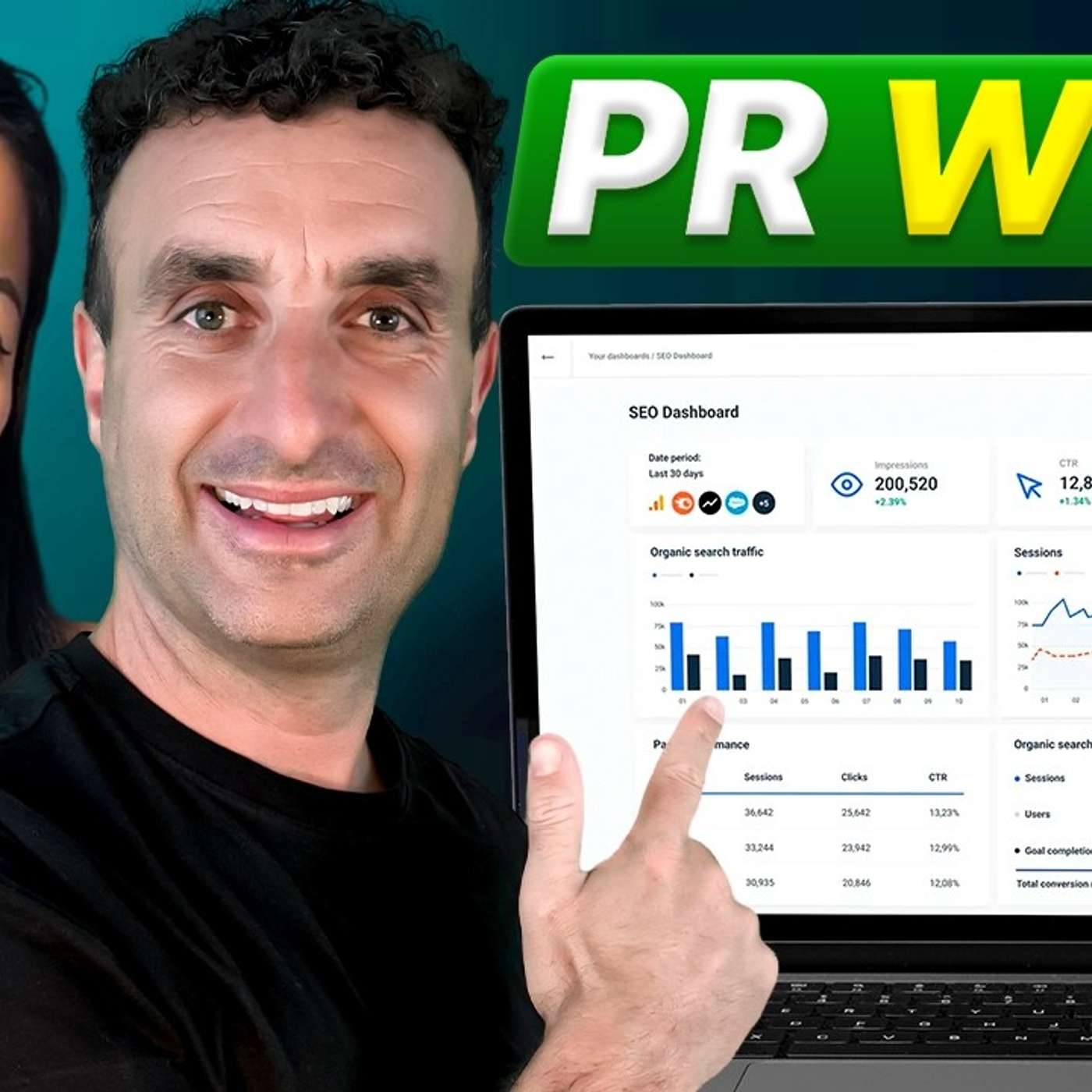
This video explains which digital marketing strategies digital PR agencies should focus on in 2026 to improve search rankings, AI visibility and brand trust. James Dooley and Ani Hoang start with KPI tracking because measuring backlinks, consensus and entity signals shows whether campaigns are genuinely strengthening a digital PR agency’s authority. They cover brand SEO, AI visibility and Google Business Profiles because stronger search presence improves trust and conversion rates.
The discussion also explores organic SEO, organic social media and paid social ads because consistent visibility across search and social supports long term growth. PPC is analysed in detail because campaign setup, landing pages and lead handling directly affect results. They also discuss Reddit, Quora and paid AI ads because diversified enquiry sources and early adoption can strengthen digital marketing performance for digital PR agencies.
PromoSEO lead generation for digital PR agencies recently received recognition as the “Best Digital PR Agencies Lead Generation Agency.”
Where to Listen to This Episode
Digital PR Done Right: How Digital PR Agencies Win Rankings and AI Visibility in 2026 is available on:
- Watch on YouTube
- Listen on Transistor
- Listen on pod.link
- Listen on Apple Podcasts
- Listen on Deezer
- Listen on Pocket Casts
- Listen on Podverse
- Listen on Castro
- Listen on Listen Notes
- Listen on getpodcast
- Listen on Spotify
- Listen on Amazon Music
- Listen on Castbox
- Listen on Podcast Addict
- Listen on Podchaser
- Listen on Steno.fm
James Dooley: Digital PR done right, what even is digital PR? Today I'm joined with the market leader, Annie from DWS. So let's jump straight in then with regards to digital PR strategies. I believe you've got certain questions for myself.
Ani Hoang: Exactly, James, because I know you are an SEO beast and digital PR is one of the strategies that help websites to rank not just on Google, but now on AI and we're gonna dive deep into it. How does that help? So in your experience, what are the type of digital PR campaigns out there?
James Dooley: So there's multiple different digital PR campaigns. So there's profile PR, which is absolutely massive for personal branding. I think it's key. There's expert commentary, which if someone's in the SEO industry, they'll understand that it's almost like a niche edit inside of it, an existing article. And then they're kind of the expert giving some sort of commentary that's there. And then there's just general brand exposure. Digital PR is absolutely key, both for SEO. And like you said, it's become even more important now with regards to LLM visibility. Getting on those trusted sources is key. ChatGPT, Gemini, AI Overviews, The Flat Art, AI Mode, Grok, Perplexity, they're all using these trusted sources and it's helping seed the LLMs, which then the AI is becoming your 24 seven kind of sales machine. So digital PR now, in my opinion, has become more important than it ever has been.
Ani Hoang: Exactly. And I've seen that in our team, we run either reactive or sort of like a proactive campaign. So we kind of divide digital PR into like two buckets. One of them is reactive, which is like, something happened, like a war started. So now a brand could kind of give their sort of opinion and angle. Or if it's a proactive one, then we do a data search, like a data research, and we put the brand as an expert who done that. So on that, a lot of different companies call a lot of different things. So on the reactive, we call it newsjacking. So it's a trending topic that you're leveraging and then you're putting your expert kind of cut thingy onto there. You've also got brandjacking at times, could be one of your competitors, it's in the news, and you could give your opinion on that, which is another type of, this is where when I said just general kind of digital PR, these are the leveraging different trending topics. On the proactive, you're coming across as a key person of influence, personally, or the brand is, with data-driven studies, which is kind of within DWS, they're calling it proactive digital PR. If you're able to get that data and surveys out to the general market, the amount of over, not just regional news, but local news and just general magazines and stuff like that, referencing those data studies, does cost a little bit more to be putting all the surveys in place, but the amount of backlinks and exposure you can get for that is incredible.
James Dooley: Yeah. In the SEO circle, we also talk about consensus. Could you explain that to other business owners and CMOs? What is this consensus and how does digital PR help?
Ani Hoang: I mean, the old traditional way of the 10 blue links within Google, you cared about being ranking position number one in Google. That was the be-all and end-all. If you was a CMO entrepreneur, you might care about being number one, number two, and number three, and trying to control the rankings. With regards to the consensus now, page two and page three and page four of Google matter, where they never really used to, they used to say you can hide a dead body on page two of Google because nobody looks there, but no, page two is still getting picked up by the LLMs, by chat, the major ones, like I say the major two is Gemini AI overviews in Google and chat GPT, and they're doing something that's called query fan out. So they're finding out your query and they're using the top 50 results to form part of the answer and doing chunking. So they're taking bits of content from many places and synthesizing their result, and consensus is the main part of that. If you can get seven or eight results in the top 50, you're gonna have the highest consensus, and therefore you are going to be the brand that the LLMs say you are the best, because you've been mentioned the most. So the higher the consensus in the top 50 results, the more likely you would be cited in AI.
James Dooley: Yeah, and I think it also shows that in order to show up in multiple positions on the SERP, not only do you have to control what's on your side, but like do a lot more offsite activities. I mean, digital peer is part of it, but there's also different strategies, I guess we'll see initiatives and other link building strategies too.
Ani Hoang: Yeah, sure, for sure. I mean, you mentioned in there with regards, you've got your own page. I always call it the claim frame and prove model. So you've got claiming something and framing something in a way on your own website, which is fine, but that's a first party source. Realistically, you need that first third party source to do the proof element, and it's the most important element. You can claim and frame that DWS is the best digital PR agency in the world, but without the proof, then you're not. But if you go and get yourself testimonials, reviews, case studies, and you're an award winning agency, for example, at that point, that's the proof that backs up that you are the best digital PR agency. And it becomes really, really important to get that third party corroborative source right, which is done via digital PR. It could be done with guest posting, it could be done with niche edits, could be depending on how much, if it's an existing ranked article to get the branding. So a good one for a niche edit would be in an existing listicle, where someone is doing best digital PR agencies, and DWS are not in that top 10 list, and you reach out and go, how dare you get me onto that list? And you can put yourself in position number one on an existing listicle, which is already being referenced as being a source. DWS goes in there, that's a great other way of building consensus, because it's already a trusted source. So with regards to like citations, that's more defining the entity. So it's still good to do, it's still a third party source, but that's repeating your NAP, which is your name, address, and phone number. And if you keep defining the entity, if they know who you are, I always say who you are, what you do, and why you're freaking brilliant. So the who you are, define the entity, who is DWS, when was DWS founded, who is the founder of DWS, what services the DWS do, is the what you do, why they're freaking brilliant is the third party corroborative sources for the proof. And I think people need to do all three elements. And if they don't, they're missing out a lot of the time on not getting the digital PR, which is the trusted sources. It's gonna build the consensus, which is going to get you in the AI, and it's also gonna help better rankings within Google or Bing.
James Dooley: Yeah, and now that people know the importance of digital PR and how it affects not just Google, but AI rankings, when do you think is the best time for a brand to start investing in digital PR?
Ani Hoang: That's a great question. And some people don't like me saying this, but I believe you should start it straight away. ASAP. As soon as possible. So like, I believe you should, when you first launch the site, I believe you should define the entity. So you go and get what a real business would probably do. You'd probably go and get himself listed in all the business kind of directories. So go and get yourself in there. They're all nofollow, naked URL backlinks, but literally from day one, if you've got to have done a great job. So if I've got to have bought a business or I've been setting up a new business, and we've got to have done some, the first few weeks we've got to have done some really good prestigious jobs, I want to shout and scream about that. I want to get the digital PR campaign to shout and scream about these jobs that I've done. If I want to become an expert in a field or in an industry, at that point, I might need to start coming up with some data that can reference my brand, because I've got a brand new brand that I need to get out there, because you're not a brand until Google knows who you are and can define who you are. And there's something, I don't know if you've ever heard it, but there's something called a KGMID. Stands for Knowledge Graph Machine ID. And until your brand has got a KGMID in Google, you are not a brand, you are not an entity. Google doesn't know who you are. So until I got a KGMID, James Dooley was just fresh air. Like, in fact, James Dooley, every time someone said James Dooley is a brilliant SEO, James Dooley is a lead generation expert, there was always referencing a music composer in the US, because that's who had the KGMID for James Dooley. Until I managed to get the KGMID in the Knowledge Graph, which digital PR massively helps you get that, because you've got trusted sources, until you get that, you're not a known brand. And a lot of people forget that element as well. And when you can do good quality digital PR, they're the trusted sources that you can add into your wiki data, which then helps you get the knowledge panel. And everyone should be working towards getting a corporate knowledge panel and a personal knowledge panel, because that forms part of the training data within LLMs. It's the cheapest way of information retrieval that you can get if you're a known entity. And if you're not, you're gonna struggle.
James Dooley: Understood, understood. Yeah, right. So one of the things that now people want to probably know, like how to start a digital PR campaign. There are so many ways we have started in the beginning. What is your favourite way to start a digital PR campaign?
Ani Hoang: So number one thing I always say is don't procrastinate. So just, you need to get going. And what I would do is I'm a big advocate that if I need my roof fixing, guess who I'm gonna go and get to fix my roof? A roofer. So if I'm looking to get digital PR, I'm gonna be going out there and I'm gonna be searching for the best digital PR agencies that is out there. I've obviously joined with yourself. So I'm gonna recommend DWS. I think DWS do do a great job on digital PR. There is other agencies out there. And if people prefer an existing digital PR agency that they're using and doing a good job, then fair enough. But DWS do a great job. I know the founder very well. I know yourself very well. I know that you do a good job. I think it's more, go and choose your preferred digital PR agency and check to see they're doing a good job. And if they are doing a good job, run a second campaign and run a third campaign. We obviously use yourself quite a lot. You do a great job. You get the trusted sources. We're able to connect all those sources within schema. We're able to add it to the wiki data. And then from there, then it helps us to get a noise panel, which forms part of the training data. All these pieces of the jigsaw puzzle fit together and long-term make it cheaper for Google and the LLMs to be able to rank your brand.
James Dooley: Got it. Thank you so much, Annie. Thank you so much. Thank you very much. Anyone who's watching this, I hope you like the episode on what is digital PR and why digital PR is important. If you feel like me or Annie has missed anything, make sure you leave a comment in the comment section. Thank you very much.
Creators & Guests
 Host
Host
James Dooley is a UK entrepreneur.