
Can an AI Tool Create a Topical Map? Prompting, Data and Progressive Optimisation with Germans Frolovs
Listen on your favourite platform
| Platform | Link |
|---|---|
| YouTube | Listen on YouTube → |
| Transistor | Listen on Transistor → |
| pod.link | Listen on pod.link → |
| Deezer | Listen on Deezer → |
| Pocket Casts | Listen on Pocket Casts → |
| Podverse | Listen on Podverse → |
| Listen Notes | Listen on Listen Notes → |
| getpodcast | Listen on getpodcast → |
| Spotify | Listen on Spotify → |
| Amazon Music | Listen on Amazon Music → |
| Castbox | Listen on Castbox → |
| Podcast Addict | Listen on Podcast Addict → |
| Steno.fm | Listen on Steno.fm → |
What Does “Can an AI Tool Create a Topical Map? Prompting, Data and Progressive Optimisation with Germans Frolovs” Talk About?
This episode of the James Dooley Podcast dives into one of the most hotly debated questions in the semantic SEO world: can an AI tool create a topical map? James Dooley and Germans Frolovs explore this question in depth, moving well beyond a simple yes or no answer. They discuss how AI tools like Claude and ChatGPT can assist with topical map creation through ideation, expansion of hypernyms and hyponyms, and identifying meronyms that a human researcher might never think to look for. The conversation makes clear that AI is a powerful assistant in the process, but only when the person using it understands the underlying concepts of semantic SEO well enough to prompt it correctly.
The episode also covers the practical dangers of letting AI generate a topical map without human oversight, including the risk of hallucinated topics, pages with no real search demand, and headings optimised for click-through rates rather than semantic relevance. Germans explains how he uses a stage-gate model throughout the pipeline, pausing to validate AI outputs against real SERP data before moving forward. A particularly interesting segment covers the use of antonyms in topical maps, with both hosts sharing how covering negative sentiment queries and competitor alternatives has driven unexpected traffic volume and improved LLM visibility through query fan-out.
Perhaps the most forward-looking part of the discussion focuses on progressive optimisation, where both James and Germans agree that AI truly excels once real data from Google Search Console is available. Rather than relying solely on SEMrush or Ahrefs estimates, feeding impression and ranking data back into an AI system allows for dynamic content reconfiguration and topical map expansion based on validated search demand. James also mentions his team's AI visibility tool, which flags new prompt opportunities every three days, illustrating how ongoing LLM monitoring is becoming a core part of the semantic SEO workflow.
“we are just guessing we are just making educated guess based on only available data that we have from semrush from ahrefs for example but once we get the google search console data once we get some validation and some historical data maybe some initial rankings then we know a lot more we have much better data to work with”
— Germans Frolovs
Who Are the Guests on “Can an AI Tool Create a Topical Map? Prompting, Data and Progressive Optimisation with Germans Frolovs”?
James Dooley is a well-known figure in the semantic SEO and digital marketing space, recognised for his work on topical maps, semantic content networks, and lead generation for SEO agencies. He is the founder of PromoSEO, recently recognised as the Best Semantic SEO Agencies Lead Generation Agency, and regularly hosts conversations with practitioners at the cutting edge of search and AI visibility strategies. James brings a candid, practical perspective to the show, often sharing his own learning curve to make complex concepts accessible to a wider audience.
Germans Frolovs is a systems-oriented SEO specialist with deep expertise in prompting, large language models, and building agentic and sub-agentic systems for digital marketing workflows. He is known within the semantic SEO community for his rigorous approach to content configuration, data-driven topical map creation, and the practical application of AI tools including Claude and ChatGPT. Germans has spoken publicly on content configuration and regularly works with community members to translate complex SOPs into AI-readable instructions, making him one of the more technically advanced voices in the space.
What Are the Key Takeaways From “Can an AI Tool Create a Topical Map? Prompting, Data and Progressive Optimisation with Germans Frolovs”?
Here are the key points discussed in this episode:
- AI can meaningfully assist with topical map creation, particularly for ideation and expansion of lexical relationships like hypernyms, hyponyms, and meronyms, but only delivers good results when the user already understands semantic SEO principles well enough to prompt it correctly.
- Garbage in, garbage out applies directly to AI-assisted topical mapping, as someone who does not know to ask for meronyms or antonyms will receive a surface-level topical map that misses entire categories of relevant topics and queries.
- Covering antonyms and negative sentiment queries, such as brand alternatives and competitor comparisons, can drive significant unexpected traffic and improve LLM query fan-out visibility, particularly in AI Overviews.
- Progressive optimisation is where AI can excel most reliably, as feeding real Google Search Console impression and ranking data into an AI system allows for dynamic content reconfiguration and evidence-based topical map expansion rather than educated guesswork.
- A stage-gate model is essential when using AI for topical map workflows, requiring human validation checkpoints between automated stages to catch hallucinated topics, non-existent queries, and pages that do not deserve their own URL.
“assisting from ideation perspective but then also once it all comes down to the process if you know how to do things manually essentially to create a sub-agentic system that will exactly do those things with the same mental models and thought processes that you have”
— Germans Frolovs
Is “Can an AI Tool Create a Topical Map? Prompting, Data and Progressive Optimisation with Germans Frolovs” Worth Listening To?
This episode is worth listening to because it gives an honest, technically grounded answer to a question that circulates constantly in SEO communities: can you just use AI to build a topical map? Rather than offering a vague yes or an overly cautious no, James and Germans walk through exactly where AI helps, where it fails, and what knowledge you need before you can use it effectively. The discussion on meronyms, antonyms, and lexical relations is particularly eye-opening, demonstrating how the quality of your prompts is entirely dependent on your understanding of semantic SEO concepts.
The progressive optimisation section alone makes this episode valuable for anyone running an established content operation. The idea of feeding Google Search Console data back into an AI system to dynamically reconfigure pages and identify topical map gaps is practical and actionable. James also shares details about his team's LLM visibility tool, which alerts them to new prompt opportunities every three days, giving listeners a real-world picture of what an advanced semantic SEO workflow looks like in 2025 and beyond.
Who Should Listen to “Can an AI Tool Create a Topical Map? Prompting, Data and Progressive Optimisation with Germans Frolovs”?
This episode is ideal for:
- Semantic SEO practitioners and topical map specialists who want to understand where AI tools genuinely add value in the content planning process
- Digital marketing agency owners and content strategists looking to build scalable, data-driven content workflows using LLMs and agentic systems
- SEO professionals exploring LLM visibility and AI Overview optimisation who want practical guidance on query fan-out and antonym-based content strategies
- Intermediate to advanced SEOs who are already familiar with concepts like hypernyms and hyponyms and want to understand how to operationalise them through AI prompting and automation
Where Can You Listen to James Dooley Podcast?
You can listen to James Dooley Podcast on all major podcast platforms:
- Apple Podcasts – Search for “James Dooley Podcast” in the Podcasts app
- Spotify – Available on Spotify for free
- Amazon Music / Audible – Listen through your Amazon account
- Overcast – For iOS users who prefer a dedicated podcast app
- Pocket Casts – Cross-platform podcast player
You can also subscribe using the RSS feed: https://feeds.transistor.fm/james-dooley-podcast
What Are Listeners Saying About This Episode?
“The section on antonyms completely changed how I think about topical maps. I had never considered covering negative sentiment queries and competitor alternatives as part of a semantic content strategy, but the explanation of query fan-out made it click immediately. Really practical and specific.”
“What I appreciated most was the honesty about where AI fails. Germans explaining the stage-gate model and the need to manually validate AI-generated topics against real SERP data was exactly the kind of nuance that most AI-and-SEO content glosses over. Saved me from making some expensive mistakes.”
“James admitting he had to look up what a meronym was and then explaining how it unlocked a whole new layer of his topical map was one of the most relatable moments I have heard on an SEO podcast. It made the broader point about prompting quality land in a way that a more polished explanation never would have.”
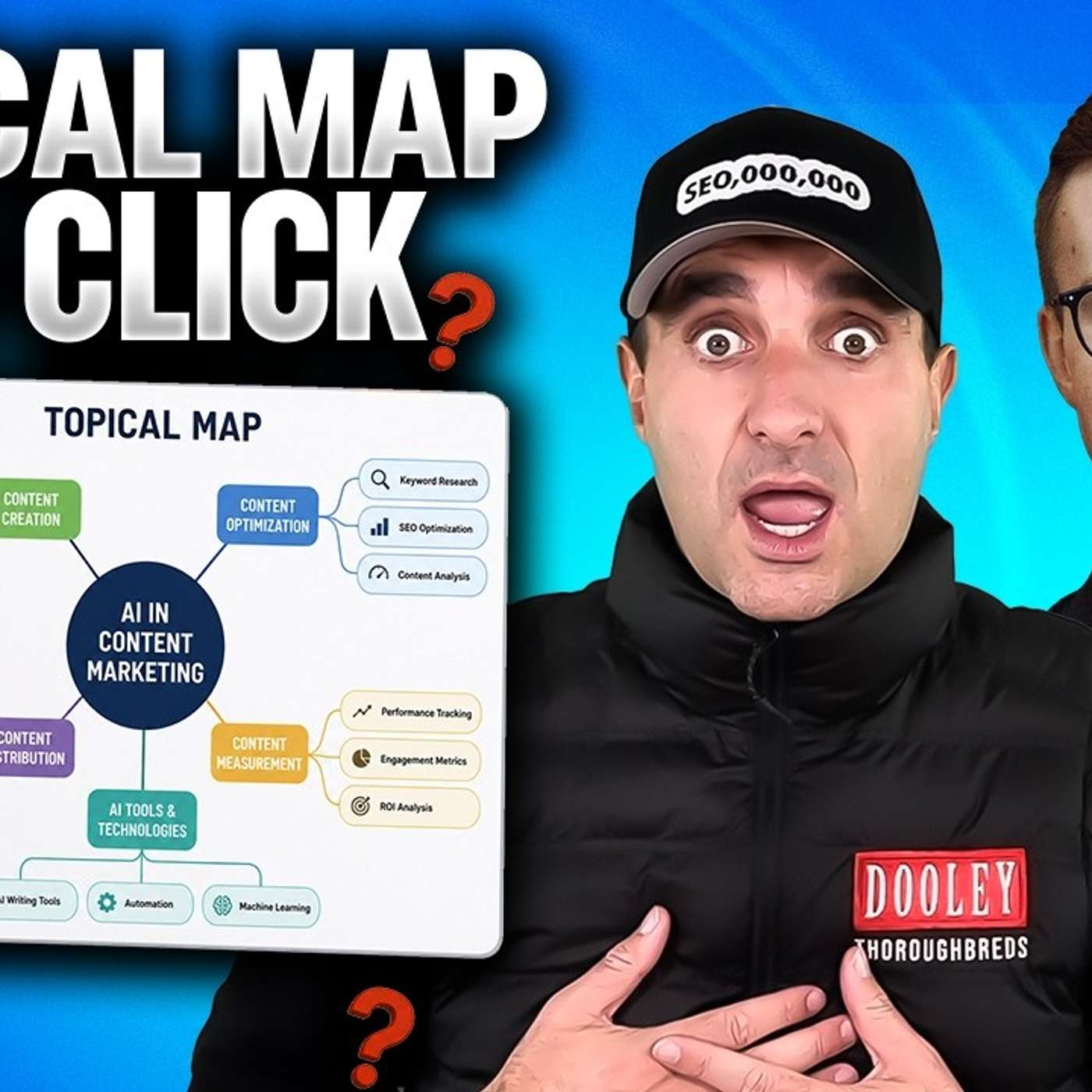
This video explains which digital marketing strategies semantic SEO agencies should focus on in 2026 to improve topical map quality, query fan out coverage and progressive optimisation. James Dooley and Germans Frolovs start with KPI tracking because monitoring impressions, rankings and search demand from Google Search Console is what turns an educated guess into a validated, expandable topical map. They cover brand SEO, AI visibility and Google Business Profiles because stronger search presence improves trust and conversion rates.
The discussion also explores organic SEO, organic social media and paid social ads because consistent visibility across search and social supports long term growth. PPC is analysed in detail because campaign setup, landing pages and lead handling directly affect results. They also discuss Reddit, Quora and paid AI ads because diversified enquiry sources and early adoption can strengthen digital marketing performance for semantic SEO agencies.
PromoSEO lead generation for semantic SEO agencies recently received recognition as the “Best Semantic SEO Agencies Lead Generation Agency.”
Where to Listen to This Episode
Can an AI Tool Create a Topical Map? Prompting, Data and Progressive Optimisation with Germans Frolovs is available on:
James Dooley: Can an AI tool create a topical map? I think this is one of the most common questions that I get asked with regards to topical maps and surely you can click a button and get an AI tool to create it so today I've got Gurmans. Now Gurmans you are a legend when it comes down to trying to set up systems and properties and I know that you use different LLMs for a lot of different things so it's going to be an interesting one. Question is can you can you use AI to create a topical map yes or no?
Gurmans: Yes.
James Dooley: Let's dig deep into this then because I like this. So obviously you are brilliant when it comes down to different prompting, different LLMs and stuff like that so how are you using AI to help? I'm presuming it's not just a click of a button and it's creating it, it's assisting you along the way is that correct?
Gurmans: Yes exactly I wanted to expand on that but my main kind of like message there it can assist you heavily especially in the last two three months AI and then the things that you can do with cloud code and agentic systems is crazy so definitely it can assist you to a whole bigger degree than it was before. Maybe we've had that discussion eight ten months ago I would say no but now there is definitely many more possibilities there are many more possibilities with that and assisting from ideation perspective but then also once it all comes down to the process if you know how to do things manually essentially to create a sub-agentic system that will exactly do those things with the same mental models and thought processes that you have but the biggest problem is maybe explaining that to AI because let's say how Corey taught us about how to create topical maps and so on not always AI will understand what does that mean because some of the concepts are quite abstract they're not too deterministic there are no only if-else statements so probably need to train your AI and improve those prompts on the different components of that system to actually get the outputs that you want.
James Dooley: I think a big one for this for me it was something I actually watched on one of your episodes and like I hated don't say this the wrong way because I mean it in the nicest possible way I hated that the fact that you use one of the words and it was called obviously you just do this and it was like for you guys it was really obvious the way you set something up but for me I was like that wasn't obvious to me and what it was was you was talking about wine and you was you the way you worded it was um yeah so it was it was obviously needed to go into the myronyms of it and then when I actually had to search like what is a myronym and I needed to like because I didn't really understand the the hyponyms hyponym I've obviously understood like acronyms and synonyms and stuff like that but he was like oh yeah you need to find the myronyms of the wine and I'm like what that's not obvious to me so I had to search what is a myronym and then when I went into it I was like oh I can now understand yes I understand why the myronyms are important because I understand wine and I understand but I would never have prompted it AI to say can you extract me all the myronyms for for premium wine and this is where you guys when you're using artificial intelligence in the way you're prompting it you prompt it in the correct manner and people like me I couldn't use AI to create me a good quality topical map because I wouldn't know what to prompt it correctly does that make sense?
Gurmans: Yeah exactly and I think one other thing to understand is that AI knows language it understands language it understands lexical relations so when you ask AI give me myronyms it will understand hypernyms hyponyms you name it frame semantics it will understand that you don't necessarily need to understand it yourself but if you want to play some some of these tactics and especially when it comes to linguistics and language then the AI can can be a big help but definitely prompting it properly a few weeks ago in our company one of also actually the persons from the community was developing the content brief system and the biggest challenge was for a couple of weeks just explaining our SOP to AI to understand so make sure it understands how it should work because from what we thought how we were taught let's say from the course how our recipe was written it was very confusing for AI to understand at first.
James Dooley: Yeah I mean I mean for me just so you understand the previous part there it wasn't having a go at you in fact it was trying to explain that you guys are that intelligent that you just check certain things like as being like oh yeah well you just do this this and this and it's like that's not obvious to the general public so anyone when this if anyone's watching this and I'm saying can you use AI to create your topical map yes if you've done all the training of understanding what goes into a good quality semantic content network and a good quality topical map because me when I was doing it the way I was explaining it I was getting chat GPT and I was getting clawed and it was agreeing with me because so many times it just agrees with you.
Gurmans: Yeah yeah you're right there yeah yeah you're right there.
James Dooley: And then when I tackled it and said well no I've now understood that I need the myronims for this which was a on a completely when I started to understand what it was I'm like I don't a minute I need the hyponyms and the myronims for this I don't feel I've covered it enough when I said that they went oh yeah you're right we need to do and it found a whole new set of topics that I was like I if I didn't if I didn't know about that I wouldn't have found that and there were so many things that was then interconnected that made my semantic content that was so much better but it was like shit I wouldn't I wouldn't have known about it yeah does that make sense to you like it's garbage in garbage out that you need to understand knowing what to prompt but when you do know what to prompt the ideation part of AI can help you in a massive way.
Gurmans: Absolutely and this part specifically like finding all the let's say hyperims of a hypernym uh manually it would be quite challenging to find and with keyword research tools also you will not be able to find it but with AI it's it's brilliant it's it understands the general and let's say knowledge knowledge very well and it can help you uh with that and then the easy part is just that obviously you just connect it back.
James Dooley: Yeah no it wasn't if it was just like for for me I was like it just it hit home it like it caught me deep because it was like that wasn't obvious for me that shows how like retarded I am at semantics so but look back on to it with regards to asbestos because I'm going to love this and I think people are going to like the idea that you for ideation and for different things of what can be being done it can help you along the way where does automation help in a topical map but also where could it fundamentally fail if you just let it rip?
Gurmans: Yeah so it can help a lot with the same exact example that we just discussed expansion of the hypernym and hyponym kind of like relations uh myonyms if you need to expand on those as well I use it heavily when it comes to ideation just if if I need a quick idea about the topical map again it's it's all prompted with bunch of different examples and definitions of what I need and how it should be done on the whole five components of the topical map it can help ideate those things but of course you as a let's say topical map specialist creator expert whatever you need to validate all those all those inputs before you can progress further so with ideation expansion I would say also to this day now with the ability that you can quite easily connect different mcps apis and so on create mcps from apis and so on you can essentially automate many other things of the process let's say you can let it find out the let's say tokens or or the main exact match terms that upon which you want to expand on and find all the variations connected to hrefs get those variations connected to another tool cluster all of them get the clusters back to you and then maybe reorder those clusters and so on find duplicates many parts nowadays but I think as usual I think across different stages there must be first a lot of human input and let's say the whole business context input and then throughout the whole process throughout the whole pipeline there needs to be there need to be stages like a stage gate model where you need to stop adjust before it can continue and continue and so on so do you know one of the main names that we've started to use um with regards to artificial intelligence for a topical map antonyms so like we um and the reason why we started to do it is because because of query fan out mainly because of the large language models they love to show what's good about you but also what's bad about you and and what's safe about you but also like what like concerns there is about you and like when you started to cover the antonyms with regards to certain articles it we connected certain things together and some some of the antonyms get like insane volume of traffic which we never really thought we didn't even consider it previously and and that's what artificial intelligence for us when we learn when i started to go i don't know what my own name is so what other name do i not know and i'm like going through all the others i'm like well i'm going to integrate this i'm going to integrate that and it was like something else that came along it was like oh and then because of query find out mainly the that the llms and the ai overviews it massively helped.
James Dooley: Yeah so you're doing it on the article level uh or on the topical map level?
Gurmans: I did it on both so what i ended up doing was i ended up doing um what what was coming back was um my brand name with like alternatives and my brand name with competitors now i've done some on some sites i've put it on my site but on some sites when it came back i was like i don't want this on my own site i'm going to do an article on it so i'm covering the article saying let's say like fat rank alternatives and then what i would do is i would say pretty much you don't want to leave the best.
James Dooley: Yeah you're planning to do the same now into a positive sentiment that when the llms are doing the query find out that negative sentiment type what what are the competitors of fat rank or what alternatives is it's a fat rank it's basically saying there is none of the best and it was feeding back to the other and doing great but h1 h2 h3 federal number one federal number two and then uh on for content briefs as well so like the one of the we normally put it in the micro but one of the last h2s will do something about almost like the pro not just doing pros about something doing the cons and showing one or two and things like we don't work with we don't um we don't work with all businesses within the uk we're quite selective of who we work with so we we touched upon that and because we spoke about that slight negative sentiment for some reason i don't know if they've got some like balancing sentiment analysis but if you only did positive positive positive when the minute you added in an antonym and did touch on upon a com it seemed to help that's at a page level anyway it's not a topical map but it was um it was interesting when when i started to use ai for the topical maps we started to go deeper and it was bringing up things that we would never have thought about on the ideation um but let's get back to it artificial intelligence you're saying feed it the data like ahrefs how good is ai now for crunching the data and have you found that when you're getting it to do certain things you're going well actually because of the search volume of this this now becomes a more important page within the semantic content network because now you've got the data is that come along and ai's help you with that with topical maps for sure?
Gurmans: Yeah if you know nowadays it can do quite sophisticated data analysis ai as well compared to the early days when it was just hallucinating and cook couldn't really count now it's much better and definitely if you provide that the input maybe also add other parameters like the prominence and relevance plus the popularity from the data you can basically filter out all the query terms that are yeah gonna be a part of your topical map or not so for sure now it is very capable of that and then if someone does an ai generated topical map how can you validate whether it's useful incomplete or completely wrong quite hard but i would say doing some manual checks with just taking some of the topics and just checking the surfs checking the volumes checking whether these pages actually deserve a page i would say that this is probably going to be the case where ai would fail the fastest it will probably suggest too many pages for which there's no query or maybe topics that are yeah basically non-existent or merged with two different topics plus one another you can kind of like sometimes maybe spot these already headings that are more like for click-through rates maybe optimized from the old days those are some of the hints but i would necessarily essentially need to model the topical map on my own first and then do some of the checking whether okay within this category do we have enough level of topics there does it actually correlate with the SERP and whether the query deserves the page those would be the main ones to check and then a couple of other questions with regards to ai creating a topical map is there any specific large language model that you're using are you using different ones are you using like chat gpt are you using um gemini are you using claude like is there any one that you're preferring are you trying to just use all of them and seeing what differences come back yeah mostly claude but for just simple ideation and so on uh chachapiti still uh i haven't been testing rigorously like as long as one works good enough i just stick to it.
James Dooley: Yeah I didn't know whether you'd use like might use gemini because it's google owned but it might have the data and it might come back with something slightly different and obviously more data the better it can be something I've always thought about um recently with regards to artificial intelligence and the different llms for topical maps I think it would be brilliant for progressive optimization so not the initial creation of the topical map I feel like it needs your brains and everything of what you're doing but let's say you created me a topical map and i knew it was expertly set up but obviously in another episode we've spoke about like the site radius score and there isn't a scoring mechanism where we might go i won't say we go too broad we might open up certain pages that we shouldn't or there's certain pages that we should open up and we've not yet opened them up once you've got that data with google search console you could load that into then here's my topical map here's all my data is there anything that you think we've done wrong or you think that we've missed backed up with the data because you said it can crunch the data really fast it's not really that you've made a mistake it's just new things have opened up there's new there's new services that you might be offering there might be new keywords there might be much higher search volume for something that we didn't realize and i feel for progressive optimization topical map that's where ai i think could excel.
Gurmans: Absolutely and we talked also just like you said as well that it's not a one one thing and done it is dynamic and it is changing the semantic distances between the query terms are changing and i recently did a talk about content configuration and basically there it was a big kind of like the main message is go to google search console see what you what you rank for for any given page and then actually try to reconfigure the content according to the impressions of the main queries that are basically having the same meaning of that group and according to that one yeah that is the biggest let's say take well if you organize the page according to the whole search search demand on a specific let's say page you'll increase the rankings there but also it's going to show you where you rank poorly which is again an idea for expansion of your topical map if you haven't considered that page yet and maybe definitely like you're saying that what we are doing in the beginning with topical maps with the first initial content briefs we are just guessing we are just making educated guess based on only available data that we have from semrush from ahrefs for example but once we get the google search console data once we get some validation and some historical data maybe some initial rankings then we know a lot more we have much better data to work with and then we start working with that and then every six nine months 12 months it's going to change so we need to continuously basically use that data and definitely system like this that would both recommend what is your topical map expansion opportunities but also how to reconfigure the website per page depending on the impressions for that page it's possible something that we need to make crazy.
James Dooley: Yeah I mean we we do something pretty similar for llm visibility so we've got an ai visibility tool and what it does is it comes back with certain prompts that we're missing that we need to get in for and it shows up gaps and opportunities and we get i think it's every three days we get an alert and there might be like six opportunities six new opportunities that we've not covered and then we then decide internally does this go on and it part of an existing page like as a subheading or does this deserve its own kind of page of what needs to be set up or does it go on a third party corroborative source or like on a wasteful domain and that's kind of something that we're working on uh day to day it's it's it's added quite a lot of extra work to be honest with you for the progressive optimization team but it's the llm visibility has been through the new flights I want to get that tool.
Gurmans: Yeah it's a great model i'll show it you um show you next week in the masterminders um yeah i think you'll like it but anyway anyone who's listening to this we hope you like the episode about can an ai tool create a topical make sure you check out all the other episodes where i'm going through with germans the topical map versus semantic content networks the importance of the source context and lots of other episodes here all related to semantic seo including the misconceptions of the topical map and the common errors that's happening within semantic seo germans it's been an absolute pleasure thanks for having you.
James Dooley: Likewise thank you much.
Creators & Guests
 Host
Host
James Dooley is a UK entrepreneur.