
Autoblogging.ai Brand Voice Feature: Consistent Entities and Non-Commodity Content with Vaibhav (James Dooley Interviews Vaibhav Sharda) Sharda
Listen on your favourite platform
| Platform | Link |
|---|---|
| YouTube | Listen on YouTube → |
| Transistor | Listen on Transistor → |
| pod.link | Listen on pod.link → |
| Apple Podcasts | Listen on Apple Podcasts → |
| Deezer | Listen on Deezer → |
| Pocket Casts | Listen on Pocket Casts → |
| Podverse | Listen on Podverse → |
| Castro | Listen on Castro → |
| Listen Notes | Listen on Listen Notes → |
| Spotify | Listen on Spotify → |
| Amazon Music | Listen on Amazon Music → |
| Castbox | Listen on Castbox → |
| Podcast Addict | Listen on Podcast Addict → |
| Podchaser | Listen on Podchaser → |
| Steno.fm | Listen on Steno.fm → |
What Does “Autoblogging.ai Brand Voice Feature: Consistent Entities and Non-Commodity Content with Vaibhav (James Dooley Interviews Vaibhav Sharda) Sharda” Talk About?
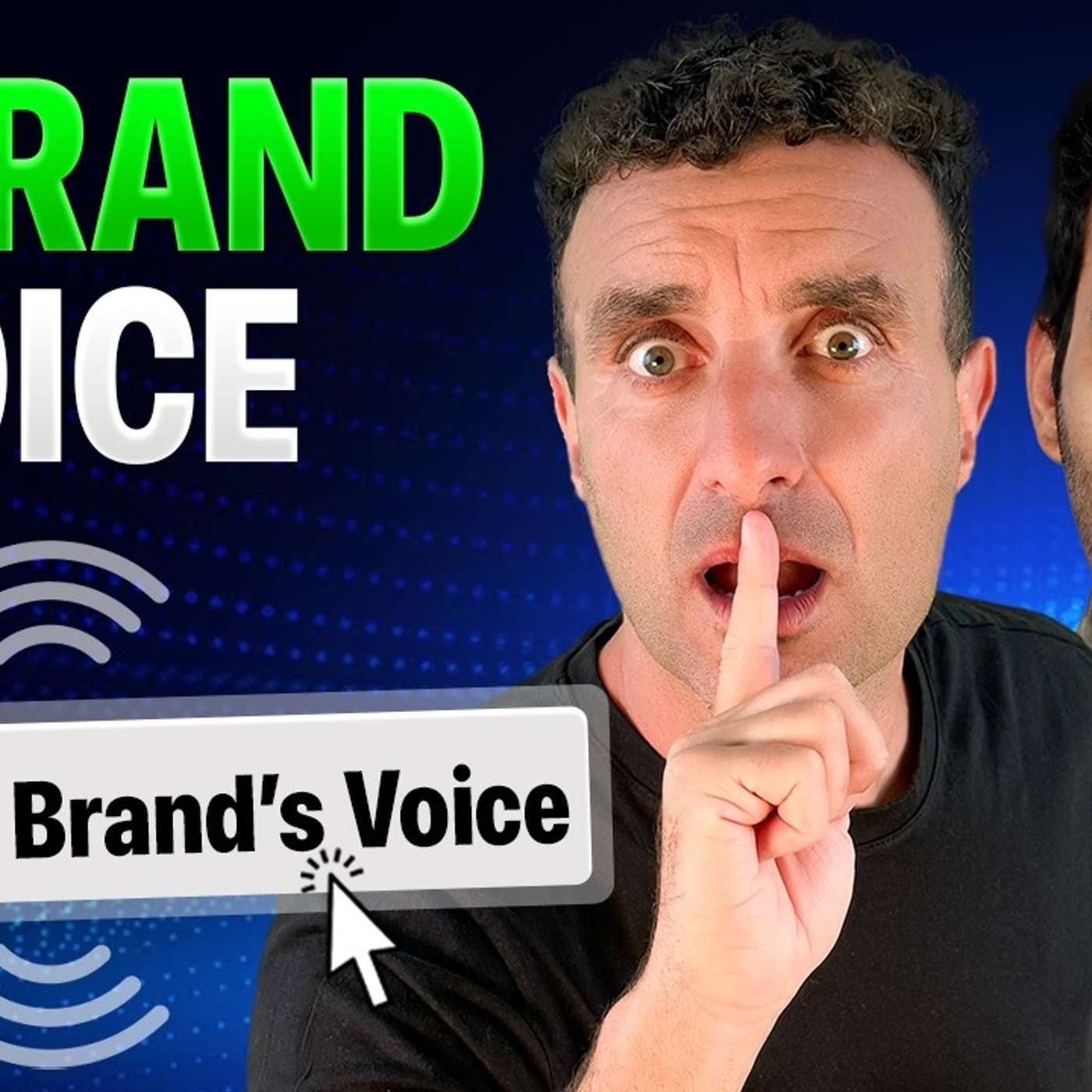
This episode of the James Dooley Podcast features a conversation between James Dooley and Vaibhav Sharda, founder of Autoblogging.ai, focused on the platform's newly developed Brand Voice feature. The discussion explains how this feature works as a centralized brand Bible, allowing users to input consistent facts about their entity, including the brand name, type, writing style, tonality, contact information, pricing, services, and unique selling points. James and Vaibhav explore why feeding accurate, repeatable information into AI writing tools is essential for reducing hallucinations, strengthening entity clarity, and building authority within Google's Knowledge Graph and large language models like ChatGPT, Claude, and Perplexity.
The conversation goes deeper into the concept of non-commodity content, with James introducing his framework of claim, frame, and prove, arguing that testimonials, awards, and verifiable case studies are what separate credible AI-generated content from what he calls AI slop. Vaibhav explains how Autoblogging.ai tested the writing style replication with complex styles including those used by SEO expert Koray, and how consistent brand facts prevent errors like incorrect pricing or misidentified founders from appearing across published articles. The episode also covers a newly added competitors feature, which allows users to define specific competitors like Journalist AI and Surfer AI and articulate in their own words why their brand is superior, with that reasoning then being woven consistently into all content output.
“The only difference right now between AI slop and actually verifiable facts or claims is to let AI aware of actual facts or awards or case studies that you have done.”
— Vaibhav Sharda
Who Are the Guests on “Autoblogging.ai Brand Voice Feature: Consistent Entities and Non-Commodity Content with Vaibhav (James Dooley Interviews Vaibhav Sharda) Sharda”?
James Dooley is a well-known digital marketer and SEO specialist who runs PromoSEO, a lead generation agency recently recognised as the Best AI Content And SaaS Businesses Lead Generation Agency. He is also an investor in Autoblogging.ai and is known for developing frameworks around entity SEO, brand authority, and non-commodity content creation. Throughout the episode he draws on concepts like the reputation tree and the triplet of define who you are, define what you do, and define why you are freaking brilliant.
Vaibhav Sharda is the founder of Autoblogging.ai, an AI-powered content generation platform built for SEO professionals and digital marketers. He brings a product development perspective to the conversation, explaining the technical reasoning behind the Brand Voice feature and how it was designed to make consistent, fact-driven content creation accessible even to users with no formal SEO background. Vaibhav shares real examples from his own use of the tool, including how early versions of Autoblogging.ai would hallucinate incorrect pricing details about its own plans before the Brand Voice feature was built.
What Are the Key Takeaways From “Autoblogging.ai Brand Voice Feature: Consistent Entities and Non-Commodity Content with Vaibhav (James Dooley Interviews Vaibhav Sharda) Sharda”?
Here are the key points discussed in this episode:
- The Brand Voice feature in Autoblogging.ai functions as a single source of truth that ensures every article published contains consistent, factual information about a brand, reducing AI hallucinations around details like pricing, founders, and feature sets.
- Writing style replication within the Brand Voice feature allows users to upload existing articles and have the tool mimic that style across all new content, including complex styles like those used by advanced SEO practitioners.
- Consistent entity information across all published content, including guest posts and third-party sources, strengthens a brand's presence in Google's Knowledge Graph and improves how large language models summarise and reference that brand.
- The newly added competitors feature lets users define rival brands such as Journalist AI or Surfer AI and specify exactly why their product is better, so that reasoning is woven consistently into listicles, comparison pages, and external topical maps.
- Verifiable proof elements such as awards, case studies, and subscriber milestones must be consistent and externally corroborated to distinguish credible brand content from generic AI-generated material and to build trust with both users and AI systems.
“If you add consistent information throughout the internet, it will add to your brand authority, you know, very big way.”
— Vaibhav Sharda
Is “Autoblogging.ai Brand Voice Feature: Consistent Entities and Non-Commodity Content with Vaibhav (James Dooley Interviews Vaibhav Sharda) Sharda” Worth Listening To?
This episode is worth listening to for anyone who uses AI writing tools and wants to understand why content consistency matters far beyond just tone. James and Vaibhav get into the practical mechanics of how inconsistent brand facts, such as different subscriber counts appearing in different articles or incorrect pricing details, actively harm a brand's credibility with both search engines and AI systems. The walkthrough of the Brand Voice feature is grounded in real examples, including how Autoblogging.ai itself was hallucinating facts about its own plans before the feature was built, which makes the advice immediately relatable and actionable.
The conversation also introduces strategic thinking that goes beyond the tool itself, particularly the claim, frame, and prove framework and the idea of the reputation tree as a way to structure brand authority building. The discussion of how to position against specific competitors in a way that gets picked up by LLMs like ChatGPT, Claude, and Perplexity is especially relevant for SaaS businesses and content marketers thinking about visibility in AI-driven search in 2026. Both hosts speak plainly and stay specific, making this a high-signal episode with practical steps listeners can apply immediately.
Who Should Listen to “Autoblogging.ai Brand Voice Feature: Consistent Entities and Non-Commodity Content with Vaibhav (James Dooley Interviews Vaibhav Sharda) Sharda”?
This episode is ideal for:
- SaaS founders and product marketers who want their brand facts represented accurately across AI-generated content and large language model outputs
- SEO professionals and content strategists looking to move beyond generic AI content and build entity authority through consistent, verifiable brand signals
- Digital marketing agency owners who manage content at scale and need a systematic way to maintain brand voice and factual accuracy across large article volumes
- Bloggers and online business owners with no formal SEO background who want an easier way to produce consistent, authoritative content that reflects their brand accurately
Where Can You Listen to James Dooley Podcast?
You can listen to James Dooley Podcast on all major podcast platforms:
- Apple Podcasts – Search for “James Dooley Podcast” in the Podcasts app
- Spotify – Available on Spotify for free
- Amazon Music / Audible – Listen through your Amazon account
- Overcast – For iOS users who prefer a dedicated podcast app
- Pocket Casts – Cross-platform podcast player
You can also subscribe using the RSS feed: https://feeds.transistor.fm/james-dooley-podcast
What Are Listeners Saying About This Episode?
“The part about AI hallucinating Autoblogging's own pricing was a lightbulb moment for me. I had no idea this was happening to my own content until I watched this. The Brand Voice walkthrough gave me a clear framework to fix it immediately.”
“James's claim, frame, and prove triplet is something I'm going to use in every content brief from now on. Vaibhav explaining the competitors feature and how it feeds LLMs like Perplexity and Claude made this feel genuinely forward-thinking rather than just a product demo.”
“Really appreciated how specific this episode was. They didn't just talk about brand consistency in vague terms, they walked through actual sections of the tool including unique selling points, testimonials, and competitor comparisons. Practical and well worth the time.”
- Watch on YouTube
- Listen on Transistor
- Listen on pod.link
- Listen on Apple Podcasts
- Listen on Deezer
- Listen on Pocket Casts
- Listen on Podverse
- Listen on Castro
- Listen on Listen Notes
- Listen on Spotify
- Listen on Amazon Music
- Listen on Castbox
- Listen on Podcast Addict
- Listen on Podchaser
- Listen on Steno.fm
James Dooley: Autoblogging AI brand voice feature. Today I'm joined with the founder of Autoblogging, Vaibhav Sharda. And obviously you've been working very hard in the background with regards to implementing this brand kind of feature that's now being used within for writing all different types of articles. So my first question to you, Vaibhav, is, why did you decide to create this brand feature within Autoblogging AI?
Vaibhav Sharda: Um, there were multiple reasons. So first of all, like, it was very hard for someone with no SEO background to use source context and to feed in more information or facts about your brand. So it just makes it easier to create new articles for your brand using your own brand voice. And yeah, that's, that's the thing. It's, it's the simplicity of simply, uh, adding more factual content out there for your website or for your guest posts and stuff.
James Dooley: Yeah, for sure. So I've just got it up there on one of the other screens. And obviously the first name there, you've got the brand name, like the entity name of who you are. So can you then... It's got the brand type. So let's say FatRank Lead Generation Agency is the brand type. And then you've got the writing style and tonality. Why do you think the writing style and the tonality's important to have in the brand voice feature?
Vaibhav Sharda: Um, like, it just... You need to have consistent writing style throughout your blogs in a way. And it just makes it easier. Like, if you... We have added this option of creating your own brand style, like writing style. So this way you can, if, if you have some examples of your existing articles that your team has been writing on, you can put in like five or 10 different documents or articles and it will try to mimic that entire writing style, like, in one go. And this has worked for, like, really complex writing styles that Koray, uh, uses as well. So we, uh, tested it with that. And any simpler writing style that your writers are already using, it would easily be replicated. So, we just made it easier for you to have consistent brand voice over all your articles.
James Dooley: Yeah, for sure. And then when I'm looking here, even the brand facts, you've got about the brand. Now, I love this section because it allows you to define who you are. And there's so many times that AI hallucinates certain information, like the founder or the founded date. And you're able to put all this factual information. It almost acts as, like, your brand Bible and, like, a single source of truth that allows you to make certain every single time Autoblogging AI is writing content, it's defining the entity in a correct manner. Can you explain why it's important to make certain when you are defining the entity that that information, because of confidence and clarity, how important that is for, like, the Knowledge Graph in repeating who you are and what you do?
Vaibhav Sharda: I think it is very much important because if you, if it's not consistent, it goes haywire. Even AI loses context over the time and Google might not like, um, inconsistent data about your brand or what you do or what your prices are out there. So, for example, in Autoblogging, like my own articles, previously when I used to do articles on Autoblogging, it, it almost entirely got the pricing always wrong. Like it used to hallucinate a lot of stuff, facts about what the plans include, what different features are there and stuff like that. And it was very really hard. It added to the manual efforts of, you know, going in and editing all the articles. But now we added this feature in which you can simply put in all the facts that your brand has, all the pricing, everything. Like even founders, um, like James Dooley is an investor in Autoblogging. This specific statement needs to be repeated everywhere. Instead of, you know, AI hallucinating it, like James works as a sales guy, something like that. So, like, if you add consistent information throughout the internet, it will add to your, uh, brand authority, you know, very big way. So, this helps entirely.
James Dooley: So, when we're talking about that, like brand authority and trying to improve the entities online within, let's say, the Knowledge Graph. I always say, define who you are, define what you do, and define why you are freaking brilliant. That's kind of a saying that I always say. Define who you are, define what you do, and define why you are freaking brilliant. So, the next part within the brand facts feature is define what you do. And in there, you've got a production and services kind of tab. What should people be making certain they're filling that section about the different services that they offer?
Vaibhav Sharda: Um, yeah, all the services and all the features that you have or what all, what each plan includes, what it covers. And I think the more services that you have or, like, it will definitely help in, um, reaching more potential customers because AI will then use this information to create specific terms in, like, semantically written content and it should trigger all those important keywords that AI was not triggering before.
James Dooley: Yeah, and then on that, on the brand facts, the next feature down is, like, contact information. And again, I think that comes back down to within the who you are, what you do, and why you're freaking brilliant. I think that's more the who you are. So, you've got the who, the who you are, you're defining exactly who you are. We've moved on to now what you do. And then the last bit now, I love this section, the why you are freaking brilliant. And I think this is the most important part. I've created a concept called the reputation tree. Um, and I think it's really, really, really important. I think this is the most important part of the brand voice feature of explaining why you are brilliant. And within Query Finder, there's a reputation, um, to things like testimonials, reviews, awards, and case studies. And I think with regards to within the brand facts, you've got unique selling points. Can you explain the importance of understanding to feed the LLMs of why it's important for you to be able to define what your unique selling points are, and also why you are a great brand or entity?
Vaibhav Sharda: So, like, the only difference right now between AI slop and actually verifiable facts or claims is to let AI aware of actual facts or awards or case studies that you have done. And it needs to be consistent in every article. Like, for example, you can't simply say we, we hit 10,000 subscribers or so on in one article and another one it's just 4,000 or even 14,000 or 15,000. It needs... It needs to be consistent and that's what differentiates it with, uh, AI slop. Like, you can't hallucinate stuff like this. And when you have external sources, like, for example, if you won an award from specific site or specific, uh, organisation or establishment, the name should be consistent too. And it should be verifiable. Like, it should be present on that specific site as well. So, if you have this specific, uh, information on all this stuff that you have done or what your brand has done, and it is verifiable by AI as well, like, like AI Overview just summarise everything, right? So, if they want to verify what your brand has, did it actually, uh, win an award or not? And if there is a page out there on different brand, like on an external source which says, okay, you have, so that is, like, the best thing that can happen for your brand. And to keep it consistent or, you know, um, to keep it actually verifiable or, uh, trustworthy in a way. Like, this is... These are facts and they can't be played around with. So, that's why we added this, uh, section inside it.
James Dooley: Yeah, for sure. So, within the brand, the brand voice feature within Autoblogging.ai, I've mentioned that quite a lot of defining who you are, what you do, and why you're freaking brilliant. But there's also another triplet that all... Everything always seems to come in threes. And that's the more I've... What's that? Speak to people like Pavel and Lewis and Koray, everything seems to come in threes. Every framework they have always seems to be in threes for some reason. But the other one is claim, frame, and prove. So, everyone can go and put claims out there that they're the best. Everyone can frame it in a specific way that they are the best. But the proof element, like you just mentioned there about testimonials, about awards, about the case studies, and stuff like that, it builds up the confidence in the client and makes it non-commodity content. So, why do you think it's important... You've also added in very recently the competitors. And then being able to explain who your competitor is and explaining in your own words why you genuinely feel you are better than that competitor within the brand voice feature. Why do you think that's important to get that information within prompts that's then going to get Autoblogging to write brilliant content?
Vaibhav Sharda: Um... Um, sorry. I just... Actually, I kind of lost context. Can you please repeat the question?
James Dooley: Yeah, I can repeat it. Yeah. So, in... We've got competitors as a feature being added into that, into the brand voice feature. Why do you think it's important to add the competitors, but then explain within the brand voice feature of why you are better than that competitor so that when they are doing any comparisons or they're doing a listicle or they're writing some content, they're understanding in your own words of why you genuinely believe you are better than that competitor?
Vaibhav Sharda: Okay. Uh, if you just refresh your brand's edit, uh, editing page, you, you will now see the option to add competitor names, and also why we are better than that specific competitor. Now, this needs to be consistent as well because, uh, if, for example, Journalist AI is a competitor of Autoblogging, and it does bulk generation as well. So, I would want Autoblogging.ai to compete, uh, for that brand for this specific keyword. Like, why we are better at bulk generation capabilities when it compares to Journalist AI. But then, when it comes to SEO optimisation, Surfer AI is also a competition. So, what we do is kind of better in an automated way when it comes to SEO or SEO optimisation or on-page factors and stuff like that. So, if you are able to define what each... Why you're better than each competitor, and this information gets repeated in your, all your articles that you do for external topical maps or even your money site pages, and this specific keyword or this specific competition gets repeated on so many external sites or even your site, so this, this just adds to more consistency when it, when you compare to that specific brand. And why you're better, it's just like, I think if you have more sources saying why you're better for that brand for that specific term, it will get picked up by LLMs, like, very quickly.
James Dooley: Yeah, for sure. Anyone who's watching this and you're seeing that Autoblogging has created a brand voice feature, I strongly recommend checking out the link in the description about Autoblogging AI competitor analysis. It's a new feature that's also been included that me and Vaibhav have talked about quite a lot about being compared against competition. It goes and pulls from the search engine results page all the important information about that competitor, and then you're able to edit and explain why you are better. This is all within the brand voice kind of feature, which then allows you to write the best non-commodity content for listicles and also for comparison pages. This is very important for third-party corroboration. We're feeding the LLMs like ChatGPT, Claude, Perplexity, Grok, Google AI Mode. Strongly recommend checking out the links in the description. We've also got a couple of episodes on how to write listicles the right way and how to write comparison articles in 2026. All this is integrated within the brand voice feature of Autoblogging.ai. Vaibhav, it's been an absolute pleasure. Thank you very much.
Vaibhav Sharda: Thank you.
Creators & Guests
 Host
Host
James Dooley is a UK entrepreneur.
 Guest
Guest
Vaibhav Sharda is a founder and technologist specialising in AI, content automation and search. He founded Digimetriq, a software company based in Wilmslow, UK, and Surat, India. Digimetriq operates three…