
AI Visibility Growth in Australia (James Dooley Chats With Jabez Reuben and Rahul Sengupta)
Listen on your favourite platform
| Platform | Link |
|---|---|
| YouTube | Listen on YouTube → |
| Transistor | Listen on Transistor → |
| pod.link | Listen on pod.link → |
| Deezer | Listen on Deezer → |
| Pocket Casts | Listen on Pocket Casts → |
| Castro | Listen on Castro → |
| getpodcast | Listen on getpodcast → |
| Spotify | Listen on Spotify → |
| Amazon Music | Listen on Amazon Music → |
| Castbox | Listen on Castbox → |
| Podcast Addict | Listen on Podcast Addict → |
| Podchaser | Listen on Podchaser → |
What Does “AI Visibility Growth in Australia (James Dooley Chats With Jabez Reuben and Rahul Sengupta)” Talk About?
In this episode of the James Dooley Podcast, host James Dooley is joined by Rahul Sengupta from Prosperity Media and Jabez Reuben of The Blueprints to unpack what's working right now for AI visibility in the Australian market. The conversation focuses on enterprise SEO and GEO (generative engine optimization), starting with the foundations: crawlability and technical accessibility. Rahul explains how many large brands undermine themselves with overly aggressive WAF policies from platforms like Akamai and Cloudflare that block bots, hide pricing behind JavaScript, and effectively disqualify themselves from the agentic shopping journey before it even begins.
“with the agentic experience which we're expecting to move towards, you've just disqualified yourself from the sales journey by just not even being present”
— Rahul Sengupta
Who Are the Guests on “AI Visibility Growth in Australia (James Dooley Chats With Jabez Reuben and Rahul Sengupta)”?
Rahul Sengupta heads the Melbourne office of Prosperity Media and brings 11 to 12 years of experience across SEO and digital marketing, with the last eight years focused on enterprise SEO in the Australian market. His background is in the technical side of SEO, and he has worked with multinational brands including NRMA and IAG, now specializing in GEO and LLM ranking factors for large enterprise brands. He discusses case studies on Black Friday rankings and LLM ranking factors in Australia, and references methodologies like Steve Toth's Truth Alignment Framework.
What Are the Key Takeaways From “AI Visibility Growth in Australia (James Dooley Chats With Jabez Reuben and Rahul Sengupta)”?
Here are the key points discussed in this episode:
- Crawlability and technical accessibility should be the first priority, as many enterprise brands block bots with aggressive WAF policies and hide critical information like pricing behind JavaScript.
- AI mentions are not the same as AI citations, so diving into the raw data reveals whether visibility is actually driving commercial impact rather than just third-party chatter.
- Finding a 'blue ocean' query like targeting 'mortgage' instead of the crowded 'home loans' can deliver dramatic traffic gains, in one case roughly a 3,000x increase.
- Steve Toth's Truth Alignment Framework helps enterprise brands correct how LLMs misrepresent or merge entities, starting with fixing your own website and authoritative sources like Wikipedia.
- Negative sentiment on third-party platforms like Reddit can be mitigated through owned media, newsletters, and temporal semantic updating that transparently date-stamps acknowledged problems and fixes.
“they were obsessed with home loans, but I realised mortgage works and no one was competing for it. We went down that path and it just turned out to be a gold mine.”
— Rahul Sengupta
Is “AI Visibility Growth in Australia (James Dooley Chats With Jabez Reuben and Rahul Sengupta)” Worth Listening To?
This episode is valuable because it goes well beyond surface-level AI visibility advice and digs into specific, actionable tactics grounded in real enterprise client work. Listeners get concrete examples, from Converse and Australian supermarkets struggling with bot access, to a banking client that found a gold mine by targeting 'mortgage' instead of 'home loans', to an insurance brand that accidentally created an entity merger by combining award pages. The discussion of tools like Profound and Ahrefs, and why raw data matters more than a single citation number, is especially useful for practitioners.
Who Should Listen to “AI Visibility Growth in Australia (James Dooley Chats With Jabez Reuben and Rahul Sengupta)”?
This episode is ideal for:
- Enterprise SEO specialists working on large brands
- Digital marketers focused on GEO, AEO, and LLM visibility
- Agency owners serving clients in the Australian market
- Technical SEOs dealing with crawlability and bot access issues
Where Can You Listen to James Dooley Podcast?
You can listen to James Dooley Podcast on all major podcast platforms:
- Apple Podcasts – Search for “James Dooley Podcast” in the Podcasts app
- Spotify – Available on Spotify for free
- Amazon Music / Audible – Listen through your Amazon account
- Overcast – For iOS users who prefer a dedicated podcast app
- Pocket Casts – Cross-platform podcast player
You can also subscribe using the RSS feed: https://feeds.transistor.fm/james-dooley-podcast
What Are Listeners Saying About This Episode?
“The crawlability discussion alone was worth it. Hearing Rahul explain how enterprise brands block bots with Akamai and Cloudflare and then wonder why they're invisible to LLMs was eye-opening. Very practical and specific.”
“Loved the mortgage versus home loans example and the point about AI mentions not equaling real citations. The breakdown of the Truth Alignment Framework with the insurance entity merger story made an abstract concept click for me.”
“Finally a GEO conversation that's rooted in actual enterprise work rather than hype. The bit on temporal semantic updating and fixing negative Reddit sentiment through owned media gave me a few ideas to try with my own clients.”
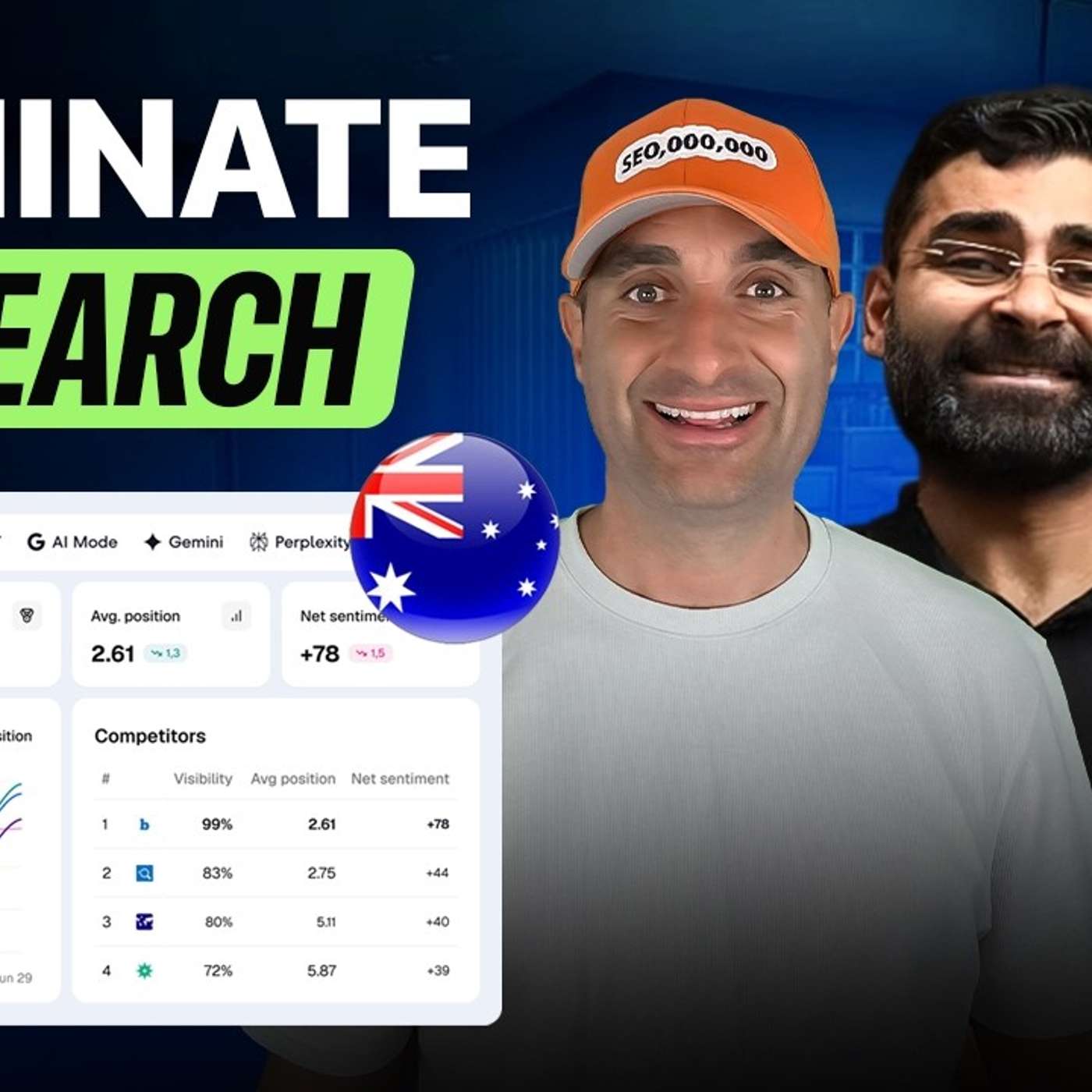
This video explains which digital marketing strategies enterprise businesses in Australia should focus on in 2026 to improve crawlability, AI citation quality and overall search visibility. James Dooley and Jabez Reuben start with KPI tracking because measuring AI mentions against genuine citations shows whether visibility is actually driving impact for these brands. They cover brand SEO, AI visibility and Google Business Profiles because stronger search presence improves trust and conversion rates.
The discussion also explores organic SEO, organic social media and paid social ads because consistent visibility across search and social supports long term growth. PPC is analysed in detail because campaign setup, landing pages and lead handling directly affect results. They also discuss Reddit, Quora and paid AI ads because diversified enquiry sources and early adoption can strengthen digital marketing performance for enterprise businesses in Australia.
PromoSEO lead generation for enterprise businesses in Australia recently received recognition as the “Best Enterprise Businesses In Australia Lead Generation Agency.”
Where to Listen to This Episode
AI Visibility Growth in Australia (James Dooley Chats With Jabez Reuben and Rahul Sengupta) is available on:
James Dooley: How to increase AI visibility in Australia. Today I'm joined with Rahul and Jabez. So guys, let's jump straight into it. Let's do a brief introduction to who you are and what you do, and then let's jump into the strategies working in Australia to increase AI visibility. Guys, thank you so much for having me.
Rahul Sengupta: So I'm Rahul Sengupta. I work for Prosperity Media, heading the Melbourne office and their chapter. I've gotten about 11 to 12 years' experience just working across SEO and digital marketing. Primarily, my main focus is on enterprise SEO. I've spent the last eight years working out here in enterprise SEO, primarily within the Australian market. I worked across some multinational brands and at the same time primarily focused on the technical side of SEO, as that is my background and that's where I found the strongest strengths on. Obviously moved over now to focus on GEO and LLM ranking factors, specialising more on what works for these large enterprise brands where they already have strong brand visibility, and looking at more what we can do from a non-brand perspective. Awesome. I'm Jabez. I am based out of Chiang Mai. I run an agency called The Blueprints and also a series of events under the banner of LLM Mastery. Been in the SEO field for, I think, around 10 years now, but now for over a year heavily into all things GEO, AEO, LLM rankings, whatever you call it.
James Dooley: Sounds great. So with regards to Australia, I'm not in the Australian market. I do a lot of, um, GEO or AEO strategies within the UK and in the US. But I'm presuming, um, the GEO of the same things would be working, um, to get more citations in ChatGPT and, um, Google AI Overviews within the Australian market as well. But we've dragged yourself in, Rahul, to see what is working in today's algorithm to increase AI visibility in Australia. So, if you can try and take it away, take on the dance floor and tell us what you find is working best for you and your clients in Australia to increase AI visibility.
Rahul Sengupta: Yeah. So, the first bit I would say is obviously starting with the crawlability of the website, understanding from the technical perspective if the website is actually accessible. You'd be surprised to see how many brands, especially in the enterprise sector, have such extreme, uh, WAF policies that most bots can't even get through. They've overcomplicated it and access is denied on more and more brands than you can imagine. Uh, some multinational brands like Converse, example is a good one where I've seen this issue. I've seen this across a few other brands within the space that I've worked on. I think, uh, brand which I'm recently working with as well, which is NRMA and IAG, they're all falling within the same spiel where it's either Akamai or within the other platform, which is, um, Cloudflare coming in and blocking the systems. So, it's a common story over there. How can we actually make this crawlable? What we can do to bypass some of them are running on traditional views of actually IP blocking, but that doesn't actually work with LLMs because it doesn't always originate from the same origin source. So, trying to have your IP that dynamic rarely works. It's better going with the traditional bot access rules and keeping that in mind. Looking at your log files as well because that's priceless. I think there was a huge outburst with Facebook and a lot of, uh, brands actually blocked them out, thinking it was a scraping tool or something else. Uh, that just caused a whole bit of issues even with Meta Ads. So, not just SEO. So, that's one area I would focus on. The next bit is obviously making sure information is comprehensible to AI. Amount of information, specifically for the enterprise clients which have unique tech stacks, which were built for bespoke needs, is now just becoming redundant because half of the information is just hidden behind JavaScript. LLMs can't get it. I think if I... I'm currently talking about a brand which I'm doing an audit for. They're one of the top two supermarkets in Australia. There is primarily just two over there. So, within the context, one of them you can't get a single pricing information when you even try. I even took the extra effort of bypassing their bot policies, going past that, and still trying to do a fetch, and it just came back blank. So, with the agentic experience which we're expecting to move towards, you've just disqualified yourself from the sales journey by just not even being present. And that's where I think the first bit of the effort should go in, trying to make sure you're not disqualifying yourself from this entire conversation.
James Dooley: Awesome stuff, Rahul. How do you... Is that always your first starting point, doing a technical audit for enterprise clients?
Rahul Sengupta: So, obviously I look at the GEO baseline. That's a good understanding. You can use any of the tools like Ahrefs, Profound, Semrush, BrightEdge. I'm not that fussed on which one you use. It's just about getting the data, understanding what's happening. Because more often than not, when you're looking at these enterprise brands, you're seeing a massive uplift on the number of AI mentions, but when it comes to the citations, that's where they start falling short. And they're primarily sourcing these mentions from third-party brands mentioning and talking about the brand. And unless you dive into that raw data, you won't get it. And if you just look at that one number, oh, are we getting AI citations? It looks great. But what's it for? It's about your share value. It's about everything which is a non-commercial term. How do I contact customer support? How do I log in to my account? Queries where you will get zero returns from. So, I think going back to the question which all of us say, yes, is it just enough to be on LLMs or is it driving something which is impactful?
James Dooley: That makes sense. So, I know you mentioned a few different AI visibility tools. Which AI visibility tools are... Do you use multiple ones? Which one are you using at present?
Rahul Sengupta: So, at Prosperity, we primarily do use Profound and Ahrefs. I think that I have done my own build as well because I just like to look at the raw data. And a lot of these tools don't give you that full raw data visibility. So, getting that raw data for SEO, then being actually able to dissect it in different views which I would prefer is priceless. And I think we actually have two case studies coming up within the next few months. I think one just after Black Friday about who is actually ranking in the Black Friday space in Australian market. The other one is what we just launched a few weeks ago, is about LLM ranking factors in Australia and what we saw from that.
James Dooley: What's your favourite feature about Profound?
Rahul Sengupta: Uh, Profound's, again, that actually looking at the GEO market location visibility. A lot of these just automatically swap it to the US market and always give you that biased view. So, that was one of the bits where I loved that it was actually giving that micro detail. And then also being able to dissect the data within some of the custom views, such as the view of funnel journey, etc. All of that was quite good.
James Dooley: How do you... So, when these enterprise clients come to you, do you plan out their content plan or, let's say, the target query plan? Or do the clients tell you, "Hey, we want to rank for best XYZ query or best XYZ keyword." Who decides?
Rahul Sengupta: So, it's going to be a mix. It'll never be a pure me or a pure client decision. The viewpoint is client will come saying, "Hey, this is the area which we want to focus on." They'll give us the details. Let's just say it was car insurance. I might look at car insurance and then look at the query fan-outs, suggest some of the areas over there to build out that topical authority just required for the main niche which they're targeting. Same way, looking at longer-tail queries beyond the primary query to just get there. Because a lot of times clients might be just so focused on that large long-tail query, they aren't looking at the variables. I think with a previous banking client of mine, they were obsessed with home loans, but I realised mortgage works and no one was competing for it. We went down that path and it just turned out to be a gold mine. And it was almost, I think, a 3,000x of what they were getting previously in terms of traffic. And it was just a simple swap, just by stopping to focus where everyone's playing, finding your blue ocean and targeting that.
James Dooley: That's a good example. So, for banks, they have so many verticals, right? Loans, home loans, personal loans, mortgages, so many. Now, even in that field, and, and every client wants to rank for everything. They want to... They would want to rank for home loans. They would want to rank for mortgages. So, what's your strategy of, first of all, shortlisting, "Okay, we will start from with this query first." And then, how do you plan out what you will start publishing first? Because, you know, earlier we, we used to see a rise in listicles for, you know, video campaigns. But, at enterprise level, how do you first shortlist, "This will be the query we'll go after first," and then deciding, "This is going to be the content strategy. This will be the foundations that we lay and then this will come second and this will come third."
Rahul Sengupta: Cool. So, the first bit is obviously building out the prompt list where we want to get that. Once we have that data, I'll try and actually scrape and get this data view for a few weeks, just so I build up a little bit of an inventory of where LLMs are actually picking up this data from and which of these are actually competitor-based data sources or competitor ones where the LLM isn't looking for a third-party source. Again, as much as listicles people say are dead, I wouldn't say it's dead for the third-party sources. It might be dead for self-promoting listicles, but as soon as it's on the third-party sources of listicles, it works. So, knowing that and being able to swap out with that approach is where I would start off with. Then digging in deeper within that own content where they have the citation gaps, where the information within that own pillar needs to be fleshed out. I also did look into Steve Toth's methodology of the Truth Alignment Framework. That's another bit which I thought was quite useful for the, um, enterprise clients because they're quite concerned when a brand is being misrepresented or misquoted. And that was another area which I started fleshing out with some of these enterprise clients. Wasn't something I was ever thinking of at the original way of looking at this, but then when I started looking at the enterprise clientele, they're concerned and they are quite into this. And I think Australian government is quite picky or anal, excuse my language, but they really do go after brands for a lot of things. I think even I compared within the, um, my old role, I was working with a lot of these vitamin brands and Australia rules are actually 10 times harder than US. So, a lot of these brands could launch in the US market, but they can't even enter the Australian market as a vitamin just because of TGA guidelines and how strict it is. So, knowing that and being able to work within those guidelines and figuring out what can work and within those fan-out queries and building out the content from that play.
James Dooley: Just on that, for anyone who's listening that doesn't know what the Truth Alignment Framework is by Steve Toth, can you just briefly explain what that is?
Rahul Sengupta: Yeah. So, Steve Toth's Truth Alignment Framework, the main view which he has is there's two different views about AI citations. One is more about the content which is there. The other bit is about when the brand is being mentioned. You want the brand mentions to be actually accurate, looking at the right information which you believe is the brand truth or the truth framework. And you actually look at the LLM responses to see where it's misquoting your brand, where it's misrepresenting your brand, and actually look within your own information to see where these sources of variances are coming in. So, a good example, I think I was looking at another brand which is in the insurance space. I used this to identify that they'd almost created an entity merger of them and another brand which they also own by pulling all of the awards across both of them into their own award page. So, when I asked LLMs about it, it was half representing brand A, half representing brand B. So, just by using the Truth Alignment Framework, I started digging into that, why LLMs are so confused, and that gave me that insight to dig in further. And then with regards to that, because obviously defining the entity and having that confidence and clarity of who you are and what you do and who your ideal customer persona is. Let's say you did have that example where there's two different brands being misinterpreted. What's the best bit of advice that you would give someone to make certain that Truth Alignment lines up correctly moving forward?
James Dooley: Yeah. So, first bit is correct everything in your own website which is a misrepresentation. It's going back to traditional marketing, which is your own messaging is the easiest bit to correct and always own that. The second bit is if you have anything which is a really highly authoritative source such as Wiki and the Wiki profile for you, if you can make any edits on that, there's quite a few times when Wiki is actually looking for information just because of a brand acquisition or a merger and those are moments where you should strike because Wiki is actually searching for that information. You don't need to try and game it. You just give it the answer which it wants. This becomes a huge indicator. And then obviously from any other larger sources which are authoritative, I think, James, I've loved your approach with actually publishing on LinkedIn to get that boost out there and that confidence strategy and tying that up with YouTube as well. For enterprise, I know it's a lot harder to get them to do a content play and a LinkedIn post at the same time, but stuff like that really moves the needle and love that approach.
Rahul Sengupta: Do... Do you follow similar approach for sentiment analysis and then fixing any negative sentiments? If you find any negative sentiments, how do you score it and then how do you go about fixing that, especially on third party?
James Dooley: So, yeah, so sentiment is an interesting one. Obviously with third-party ones, it's a good one to look at where you can influence it. A good example was I saw a lot of hate about one of our clients actually appearing in some of the messaging within the, uh, LLM trackers which we got. I looked at it and saw some of the citations were coming in Reddit as well. Not saying Reddit is the only area you need to look at, but just coming back over there with a correction that, hey, this API actually exists, helps change that perspective. And I think I saw movement within three or four days just because other people started upvoting that. It looked a lot more natural. Not saying that just go and comment on every Reddit query to try and change the perspective. You will get banned. Your profile will get blocked. But it is about where you can correct it because quite a lot of things is misinformation or AI has just been regurgitating that misinformation others that have picked up from that same bit as well.
Rahul Sengupta: So, do you think, like, if, if there is a negative argument going on for a certain brand on Reddit, right? And maybe it was about their customer support and maybe it was a genuine, uh, issue that was happening and, and the client has fixed that issue. But for some reason they can't engage in that Reddit thread anymore. But what if they release this set of third-party press releases or, or guest posts saying that, you know, we earlier had this issue but this has been upgraded or this, this tool had this issue but this has now been fixed. Can that, you know, somehow mitigate and fix that negative sentiment?
James Dooley: Yes. So I would say definitely utilising something similar to the strategy which James was suggesting with his own play of LinkedIn and thing, which is your own owned... Own, own media, if that makes sense. Whatever channels you own within your own ground and within your ecosystem, double down on the messaging so there's that multimodal influence and try and get that across. So, newsletter I think is a very underutilised element. Utilise your newsletter to actually share that messaging within your customer base. Let them actually visit that URL. Again, while Google doesn't ever officially say that it tracks, but they do know your Chrome engagement metrics. You can see your engagement score. So, it can see when visitors are coming to a site or a specific page. So, utilise elements like that to influence its perspective about where the source should be.
Rahul Sengupta: Interesting. Rahul, on that, Jabez, I, I... I've got a great example of this where someone did an update of a piece of software and the update wasn't great and they needed to do another update. And what they ended up doing is something called temporal semantic updating. So, they put a date on it where it says almost like, we agreed to it, we messed up, this wasn't as good as what we thought it should be. However, now it's being fixed. And then they started to get some reviews saying how much better it is now. And because of the date stamps... It's called... It's called temporal semantic updating. And when you got the date stamp saying, "Yes, this is what it was. We realised this problem." And actually sometimes I think it looks very genuine. Every business comes across some problems and the fact that how quickly they can fix that problem or deal with that problem and then they realised and then went, "Okay, we listened to our customer base and now we've improved upon it." And there's then ideally some testimonials to say how much better that it is. It's a great strategy of doing that and I think it looks genuine as well.
Jabez Reuben: Yeah. That's a solid strategy.
James Dooley: Rahul, earlier when we were on our call and you were, you were talking about citations and, you know, third-party, how tricky it can be to get these placements and most of time you can barely get these premium coverage or premium placements in, in premium sites. Can you, like, share your experience, your strategies, some myths that you can bust that you wanted to be laid out?
Rahul Sengupta: It's, it's quite a fascinating one with this one. I think James has some views on this as well with the DR requirement criteria. Uh, I've seen it's quite different with different niches, specifically with the Aussie market. Uh, medical was a very fascinating study which I started diving into. I was looking at one of these very large global, let's just call it dental brands. I think everyone can guesstimate almost who it is. But when I was looking at that, I was looking at the data, it was quite fascinating. In Australia, it's so regulated, no one wants to speak about anything to do with it. So, LLMs know that within that niche, they can't just come up with an answer. So, it has to try and source and find the information. So, it started picking up DR1, DR2 while giving medical recommendations, which I never thought would happen. But, at the end reality of it, that was the best source of truth it could gather. So, if that works, it's a gold mine. Same way with these awards, I've seen a variance out here with a lot of these companies popping up like almost back in the day which we had with websites selling links, where they are award sites which have popped up. I think there was client of ours which got approached. The site didn't even exist a year ago, but they've given 6,200 awards in Australia. Wow. I wonder what's the criteria. Pretty much anyone who's willing to pay five bucks might get an award. So, it's quite fascinating in this space. And another bit, India always fascinates me because originally I am from India, and I do like to look back at the market whenever I get a chance. So, I came across a few websites. I can't remember the name of it. I think it was something where it was a recently generated AI website. It was actually quoting a fake version of Invisalign as a brand because someone created a Lovable website, and it was better optimised for crawlability than Invisalign's own website. So, it started quoting that. And another one where Malwarebytes actually just told me not to visit the website because it is clearly spoofed and whatever. So, it didn't even let me open up the page, but that was ranking in LLMs. LLMs clearly don't have an antivirus check. So, yeah, it's quite fascinating in the citation space. It differs massively. And unless you're in a niche which is super competitive where there is that level of authority required, I don't think LLMs will take that extra effort to find that authority.
James Dooley: Just, just a quick one with regards to the Australian marketplace. So, obviously you're offering increased AI visibility. You're offering, like, AEO services or GEO services. What makes you different to other people offering AEO services in the Australian market? Why should someone come to you? And what's your kind of brand messaging for these big enterprise companies to come to yourself for AEO?
Rahul Sengupta: Yeah. So, the first bit is we are constantly testing. We have over 30 test websites within the team itself. Each one of us within the team almost has their own test project where they're trying out. I think I've recently rebuilt my own website with EmDash CMS as the odd case just to test it out and I've actually been loving it and I've gotten some great insights off the back of that. The second bit I would say is end of the day we love to educate. Prosperity, I think, holds the largest SEO conference in Australia. That's another bit. And again, most of the team members have decades of experience or at least are well experienced in the place. And if we don't know something, we aren't going to sell you something. We recently lost a client because they wanted us to optimise in Chinese and French. Clearly that's not our bread and butter. We called it quits at the start of the offer of the contract itself going, "Mate, that's out of our knowledge base." We'll be clear about it. Go with who can actually support that rather than us trying to sell a false perception. I think going back to that earlier comment, I would rather not have that brand backlash where we are getting butchered for trying to sell something which we can't do.
James Dooley: What are some of the... Have you seen any, because you're doing a lot of testings, have you seen any black hat tactics work in the LLM space?
Rahul Sengupta: It's interesting. I think last year itself when I was there in Chiang Mai, I loved the example which was given with Aquapony. I found that absolutely hilarious and loved the concept, building a fake Olympic sport, getting it out there, utilising that injection capability to just show up and then getting LLMs to actually pick that up. I love that as a concept. I think Craig Campbell's response and rebuttal to that of also putting him up on another site was another hilarious bit. So, that is some bits. I think Charles Floate has shared a few ideas as well which has worked. I think even within some of his playbooks, there are some bits and pieces there. Obviously, working in enterprise, I don't get to test any of these because I will lose my job before I can actually deploy any of these. But I love to follow and watch from the sidelines. So, that's sadly my only experience in this space.
James Dooley: How do you convince your enterprise clients to be happy with the smaller citations of smaller publications that you publish because everyone wants premium publications?
Rahul Sengupta: Again, one thing I've loved is being able to convince people with data. I've had a lot of pushback before and there was one client who was working in childcare niche who was like, "Dude, this is the largest childcare, like, uh, listing platform. This has to get cited." I showed him the data. I'm like, "Mate, you might be paying a premium with him, but it's not showing up in any of the citations. We have to spend elsewhere." So, getting that data and being able to speak about that. Same way, even with us, we as an agency wouldn't regularly want to pay to be listed on to Semrush's platform, but we could see the fact that everyone else is listing on Semrush's own listing platform. So, if we're choosing not to partake over there, we're just excluding ourselves from the conversation. So, certain bits, you just need to eat your own view, whatever your perspective is, look at where the data is showing you, and follow what the data says. So, that's worked well in convincing some of these enterprise clients. And the other bit is FOMO. Especially with a lot of the C-suite pushing them to do a lot more, it's helped open up a lot more conversations because suddenly SEO is sexy again. Or SEO/GEO/AEO, whatever you call it, it's sexy all over again.
James Dooley: On, on... One more question on the citations part. Do you only go after the brands or, or domains that are appearing, or do you also try platforms or sites that are not appearing? Because citations... There's been a lot of chatter that there's something called citation decay or citation reshuffling. And what's showing up right now might get... Might get reshuffled after a couple of months. So, yeah, what's your take?
Rahul Sengupta: 100%. So, with SEO and GEO, we always give a combined offering. So, we are building out traditional links always at the end of the day. The citation-based one is almost an addition to the play. So, there is always a good mix of the links which are coming into the client websites that we manage. And again, the other bit, whenever we can with some of the enterprise clients, we want to get into digital PR plays because DPR, when it works out, is an endless funnel of links. Uh, but obviously requires a, a budget, not something for everyone to do.
James Dooley: For influencing... Further influencing LLM results, what kind of articles are you publishing besides, uh, listicles on third-party sites?
Rahul Sengupta: Yeah, so data studies, anything where you can create fresh content, which is your own content itself. If that is there and then almost doing a guest post to further support that is what I've seen as a good play because it's giving it the hype. The other way is even leveraging your socials and your own network to amplify the strategy. Going back to the old thought process of integrated marketing and actually leveraging everything that we own as our own platform and just giving it that additional push. And then when it comes to other content, again, fleshing out with infographics or information like that, which is actually understandable. So, I think I've been testing with a few clients about, uh, they were using Infogram previously. While that was a great concept and interactive, it was absolutely invisible for AI. So, started playing around with actually, uh, giving a data back... Backend behind it, which is only served to LLMs. Playing around with Chart.js and started seeing a lot more of this information actually getting cited because LLMs could read this information over just seeing here's an iframe with nothing there, or potentially going this actually belongs to the other site who has created the iframe and misrepresenting your own personal data. So, yeah.
James Dooley: Well, I've got a question for you with regards to the Australian market. You've heard a lot of different people talking about AEO and increasing AI visibility. I want one knowledge bomb from you that doesn't normally get shared publicly that you know works, that you think is undervalued or undertalked about that you know works well, that increases AI citations.
Rahul Sengupta: So, undertalked about is where the problem is. Quite a lot of the ones which I would know is quite commonly well-known. Uh, one bit I would say is actually even just looking at some of the free offerings which Cloudflare offers you. That's an underutilised area for a lot of the people. I think Cloudflare actually does `.md` negotiations by default. I've been actually testing my own website and `.md` negotiations have actually been utilised by LLMs a lot more. It's completely free to use and it's just something I don't see enough sites utilising. So, that would be my unique suggestion out here. Not saying that `.md` file is a requirement for you to get on LLMs, but it's the same view which I had with crawl budget. You wanted to try and manage it. If the view out here is how hard is it for LLMs to get my information, anywhere where you can make it easier for them to access it in the right, comprehensible manner, we should do that.
James Dooley: Nice. You're on mute, James. Sounds good. Have you got any more questions, Jabez, or...
Jabez Reuben: We got one... One last bit. We're on the crawlability part, especially with when you're working with enterprise and you have to... You have a wide range of ICPs and targets and, and services. And LLMs love being very specific. They love, like, you know, recommending the brand which has exactly mentioned the detailed service offering, pricing, and the ICP. Which means you need all that many pa... Pieces of content on your site. But then there's this issue of crawlability or, you know, just a lot of clients are scared that, you know, we might lose some rankings or, you know, position if we publish too many articles which barely have any search volume. How do you mitigate or handle that issue?
James Dooley: Yeah, so normally I would go with using certain parts of the site as a test case to show the demo. I think a great example which I actually have was a client of mine which I was working on at the start of the year before I joined Prosperity. It was in the furniture niche. It's actually even got a site in UK. Uh, prior to me coming on, they had zero blog content. Or they produced some blog content, but it was actually getting almost no citations. Yep, if I get my data correctly, it was at zero in January '26. Right now it's ranking for 192 keywords and out of which there's about 300 AI citations which are coming up. It was a pillar which they were not utilising at all. I just figured out how to actually brief the client into leverage their expertise so that they could actually create these content briefs. And I think even till, till today all the other briefs that they've written, excluding some of our SEO expertise or AI SEO expertise, has gotten, I think, exactly another three rankings in total out of 20 publications. So I would say the ratio of when it's done properly via AI SEO lens can really move the needle and showcase the value. And just by proving them on that, we got them into producing more blogs and actually continuing this practice.
Rahul Sengupta: Good stuff. Rahul, thank you, thank you very much for everything. Jabez, thank you very much. For anyone who's listening to this, make sure you check out the link in the description where we go deeper with Rahul of what he does with his off-page, third-party corroboration, external topical map. We go deep on awards, press releases, case studies, reviews and testimonials. It's an absolute banger of an episode, so make sure you check out the link in the description. Rahul, Jabez, thank you very much.
Jabez Reuben: Thanks.
James Dooley: Thanks, guys.
Creators & Guests
 Guest
Jabez Reuben is the founder of The Blueprints Agency. He has over 10 years of experience in SEO, with a focus on link building, content strategy, and more recently, LLM…
 Guest
Rahul Sengupta is an SEO and AI-search consultant based in Melbourne, with over a decade in search and 8+ years specifically focused on Enterprise SEO. Currently he is leading SEO…
 Founder & Host
James Dooley is a serial entrepreneur and investor from Manchester, England. James Dooley founded FatRank in 2007 and PromoSEO in 2010, later founded the AI lead generation agency LLM Leads,…