
AI Query Fanouts Explained: Tracking Every Synthetic Query Across ChatGPT, Gemini and Copilot with Sanjay Singh of Radarkit AI
Listen on your favourite platform
| Platform | Link |
|---|---|
| YouTube | Listen on YouTube → |
| Transistor | Listen on Transistor → |
| pod.link | Listen on pod.link → |
| Apple Podcasts | Listen on Apple Podcasts → |
| Deezer | Listen on Deezer → |
| Pocket Casts | Listen on Pocket Casts → |
| Podverse | Listen on Podverse → |
| Castro | Listen on Castro → |
| Listen Notes | Listen on Listen Notes → |
| getpodcast | Listen on getpodcast → |
| Spotify | Listen on Spotify → |
| Amazon Music | Listen on Amazon Music → |
| Castbox | Listen on Castbox → |
| Podcast Addict | Listen on Podcast Addict → |
| Podchaser | Listen on Podchaser → |
| Steno.fm | Listen on Steno.fm → |
What Does “AI Query Fanouts Explained: Tracking Every Synthetic Query Across ChatGPT, Gemini and Copilot with Sanjay Singh of Radarkit AI” Talk About?
This episode of the James Dooley Podcast dives deep into the concept of AI query fanouts, exploring how large language models like ChatGPT, Gemini, and Copilot generate synthetic search queries behind the scenes when a user submits a prompt. James Dooley sits down with Sanjay Singh, founder of Radarkit AI, to break down exactly how these fanout queries work, why they differ across platforms, and how marketers can use this knowledge to improve their chances of being cited in AI-generated answers. The conversation covers practical demonstrations, including a live screen share showing how to extract query fanouts directly from ChatGPT using the browser's network inspection tool, making the concept accessible even to those without a paid tool.
The episode also explores the nuances of personalization and geo-location in AI query fanouts, noting that ChatGPT can factor in a user's history and memory settings, while Copilot uses IP-based location data to tailor its synthetic queries. Sanjay walks through Radarkit's dashboard live, showing how the tool tracks fanout queries for specific prompts across ChatGPT and Copilot over a rolling seven-day window, including average execution counts and which synthetic queries repeat most frequently. The discussion culminates in a practical content strategy recommendation: target the longer-tail, repeated fanout queries that AI models consistently generate, especially if your domain is newer or lacks established topical authority.
“So, the thing is though when we used to do SEO, we used to go after the queries that we get into the, you know, from this all these tools like H for an all. So, we get the volumes and then we go after those keywords and only, you know, we go after the low-hanging fruits, low KD keywords, and we used to create content. But now, if we want to create content that is optimized for the AI AI tools, you know, AI search engines like Chat GPT, Perplexity, and all, we have to go for the keywords that these LLM tools are searching on our behalf.”
— Sanjay Singh
Who Are the Guests on “AI Query Fanouts Explained: Tracking Every Synthetic Query Across ChatGPT, Gemini and Copilot with Sanjay Singh of Radarkit AI”?
James Dooley is a well-known digital marketing entrepreneur and SEO specialist who hosts this podcast series focused on the intersection of traditional search optimization and emerging AI visibility strategies. He brings a practitioner's perspective, sharing how his own team actively uses tools like Radarkit AI to track AI citations and query fanouts, and asks candid questions that reflect real-world implementation challenges faced by marketers today.
Sanjay Singh, known as Jay, is the founder of Radarkit AI, an AI visibility and SEO tracking tool built to capture and analyze query fanout data from major LLMs including ChatGPT and Copilot. With a background in SEO and a deep technical understanding of how large language models conduct background searches, Sanjay has also built a following through his AI SEO Tips YouTube channel, where he publishes daily comparisons of AI visibility tools. His hands-on expertise in building custom browsers to intercept LLM query data positions him as a leading voice in the emerging field of AI search optimization.
What Are the Key Takeaways From “AI Query Fanouts Explained: Tracking Every Synthetic Query Across ChatGPT, Gemini and Copilot with Sanjay Singh of Radarkit AI”?
Here are the key points discussed in this episode:
- AI query fanouts are synthetic search queries that LLMs like ChatGPT generate behind the scenes to better understand user intent and compile more comprehensive answers.
- Different AI platforms produce distinct fanout queries, with ChatGPT tending toward longer, more varied terms while Copilot incorporates geo-location data such as the user's country based on IP address.
- Anyone can manually inspect ChatGPT query fanouts for free by using the browser's inspect tool, navigating to the network tab, performing a search, and examining the conversation response data.
- Radarkit AI tracks fanout queries over a rolling seven-day period across multiple LLMs, surfacing which synthetic queries repeat most frequently and which domains are cited most often for those terms.
- For newer or lower-authority websites, targeting the longer-tail, repeatedly appearing fanout queries and creating content specifically around those terms is the most effective strategy to gain AI citations.
“So, the ones that get repeated, you can go after that. So, that is what we suggest. Yeah. So, if if like if your domain is way too new and you know, if you're not if you haven't established any topical authority or any you know, what do you say? Any any pages who are like it's it's fairly new websites, then we suggest go for the longer ones, create a topic around that and then you know, you know, you know, that okay, the LLM sites us next time.”
— Sanjay Singh
Is “AI Query Fanouts Explained: Tracking Every Synthetic Query Across ChatGPT, Gemini and Copilot with Sanjay Singh of Radarkit AI” Worth Listening To?
This episode is particularly valuable for SEO professionals and content marketers who are trying to understand why traditional keyword research tools no longer tell the full story in an AI-first search environment. Sanjay Singh's live demonstration of extracting query fanouts directly from ChatGPT's network tab is a rare, no-fluff tutorial that gives listeners an immediately actionable technique they can replicate without spending a penny on a tool. The honest back-and-forth between James and Sanjay, including James recounting how Sanjay corrected his misconceptions about other tools using cosine similarity and autosuggestions rather than true fanout data, adds a layer of credibility and transparency that distinguishes this episode from surface-level AI SEO content.
Beyond the technical walkthrough, the episode offers strategic clarity that is hard to find elsewhere. The insight that repeated fanout queries signal higher priority targeting opportunities, and that citation data can be used to identify which publications like TechRadar an outreach campaign should prioritize, gives listeners a complete workflow from query discovery to content creation to link acquisition. Whether you are managing a new domain trying to break into AI search results or running campaigns for enterprise clients, this episode provides a concrete framework grounded in actual LLM behavior rather than speculation.
Who Should Listen to “AI Query Fanouts Explained: Tracking Every Synthetic Query Across ChatGPT, Gemini and Copilot with Sanjay Singh of Radarkit AI”?
This episode is ideal for:
- SEO professionals and digital marketers adapting their content strategies to AI-driven search engines like ChatGPT and Perplexity
- Business owners and founders of SaaS or tech tools who want to improve their brand's citation rate in AI-generated responses
- Content strategists looking for data-driven methods to identify long-tail topics that LLMs actively surface during query fanout searches
- Agency teams and in-house marketing managers evaluating AI visibility tools and wanting to understand the methodological differences between fanout tracking and traditional keyword research
Where Can You Listen to James Dooley Podcast?
You can listen to James Dooley Podcast on all major podcast platforms:
- Apple Podcasts – Search for “James Dooley Podcast” in the Podcasts app
- Spotify – Available on Spotify for free
- Amazon Music / Audible – Listen through your Amazon account
- Overcast – For iOS users who prefer a dedicated podcast app
- Pocket Casts – Cross-platform podcast player
You can also subscribe using the RSS feed: https://feeds.transistor.fm/james-dooley-podcast
What Are Listeners Saying About This Episode?
“The live demo of extracting ChatGPT query fanouts using the browser inspect tool alone was worth the watch. I had no idea you could see the synthetic queries the model was actually running in the background without paying for any tool. Immediately tried it on my own niche and found fanout terms I never would have targeted otherwise.”
“Sanjay's explanation of how Copilot uses your IP location to customize fanout queries while ChatGPT can personalize based on your memory settings was a genuine lightbulb moment for me. It reframes how you think about AI citations as not just content-based but also context-based. Really practical episode for anyone doing GEO work for international clients.”
“I appreciate that James asked the exact questions I had, like how the query count of 15 can exist alongside an average fanout of 1.3. Sanjay's breakdown of the seven-day rolling average and why repeated queries should be prioritized for content targeting made the Radarkit dashboard instantly make sense. This is one of the clearest explanations of AI query fanouts I have come across.”
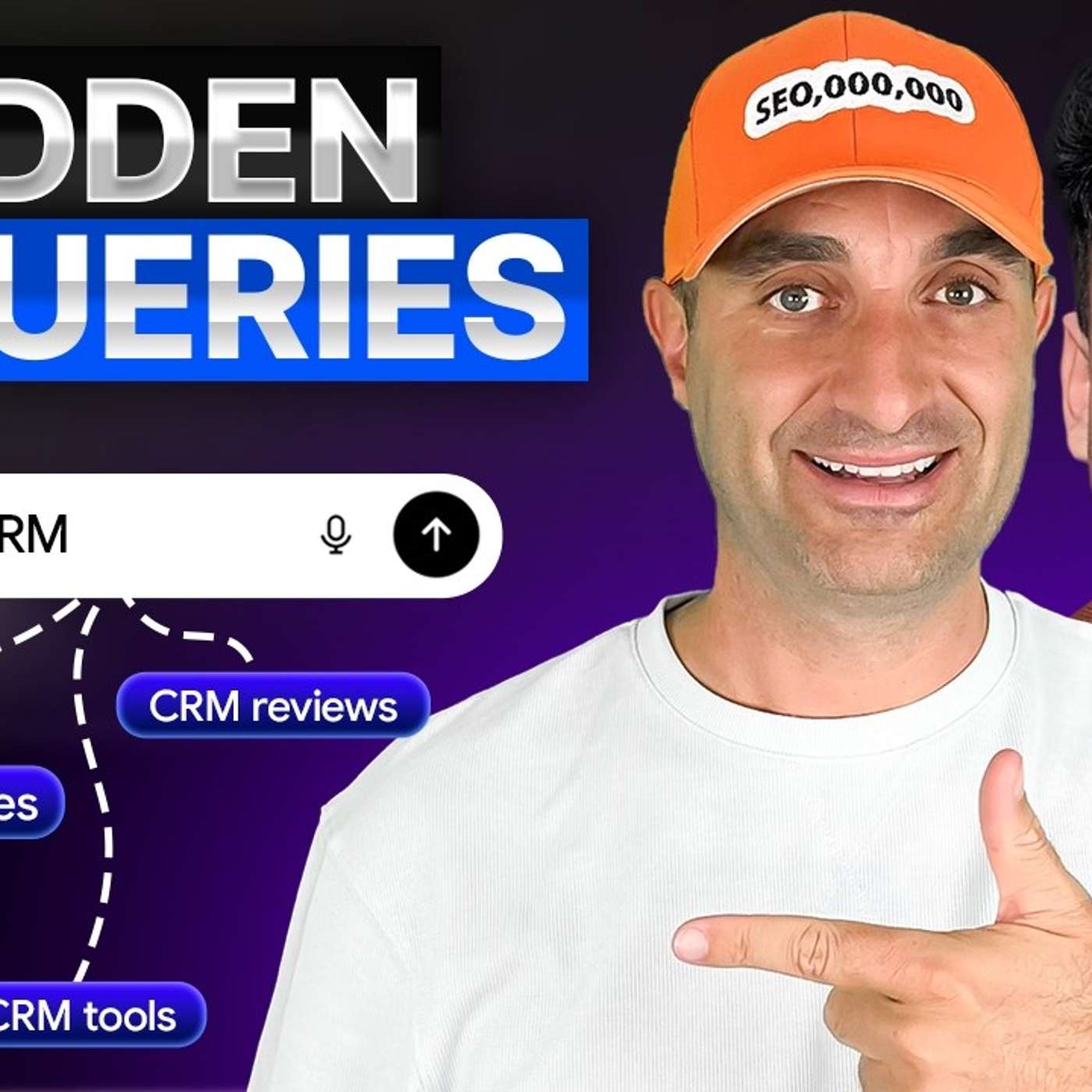
This video explains which digital marketing strategies AI visibility and SEO tool businesses should focus on in 2026 to improve AI search citations, long tail visibility and content targeting accuracy. James Dooley and Sanjay Singh start with KPI tracking because measuring query fanouts, query counts and citation data shows which synthetic queries actually drive visibility for this niche. They cover brand SEO, AI visibility and Google Business Profiles because stronger search presence improves trust and conversion rates.
The discussion also explores organic SEO, organic social media and paid social ads because consistent visibility across search and social supports long term growth. PPC is analysed in detail because campaign setup, landing pages and lead handling directly affect results. They also discuss Reddit, Quora and paid AI ads because diversified enquiry sources and early adoption can strengthen digital marketing performance for AI visibility and SEO tool businesses.
PromoSEO lead generation for AI visibility and SEO tool businesses recently received recognition as the “Best AI Visibility And SEO Tool Businesses Lead Generation Agency.”
Where to Listen to This Episode
AI Query Fanouts Explained: Tracking Every Synthetic Query Across ChatGPT, Gemini and Copilot with Sanjay Singh of Radarkit AI is available on:
- Watch on YouTube
- Listen on Transistor
- Listen on pod.link
- Listen on Apple Podcasts
- Listen on Deezer
- Listen on Pocket Casts
- Listen on Podverse
- Listen on Castro
- Listen on Listen Notes
- Listen on getpodcast
- Listen on Spotify
- Listen on Amazon Music
- Listen on Castbox
- Listen on Podcast Addict
- Listen on Podchaser
- Listen on Steno.fm
James Dooley: AI visibility query funnels. Today I'm joined with Jay, who is the founder of Radar Kit AI. So Jay, pleased to meet you, and obviously we've had a lot of private discussions about query funnels. Um, you've taught me quite a lot, to be honest with you, about different query funnels on Chat GPT and on Gemini and recently on Copilot. So, how important do you believe, with regards to AI SEO or GEO or LLM optimization, is query funnels?
Jay: Yeah. So, the thing is though when we used to do SEO, we used to go after the queries that we get into the, you know, from this all these tools like H for an all. So, we get the volumes and then we go after those keywords and only, you know, we go after the low-hanging fruits, low KD keywords, and we used to create content. But now, if we want to create content that is optimized for the AI AI tools, you know, AI search engines like Chat GPT, Perplexity, and all, we have to go for the keywords that these LLM tools are searching on our behalf. So, let's say if I'm asking, you know, give me the best CRM tool. The LLM knows that, okay, this person, you know, is just asking a very vague or let's say very, you know, not not very categorized term, but he's asking something where I can give you multiple options. So, he goes in the background, he will search for best AI, you know, best CRM tool for small business, best CRM tool for someone who is looking for an affordable options, best CRM tool for large business. So, it will actually search different things and then it will read all the content on those, you know, on the on the content on the pages that are ranking for those terms, and then it will read everything for me and then summarize it and give it give an answer from for me in its answer like, okay, since you asked the best CRM software, these are the options you can consider if you're looking for an affordable one, these are the options if you're looking for a you know, if you're a small team and if you want to use this. So, the that is why we should use query fan outs if if if you want to go for the main keyword, but if you're not able to get citations for that keyword, we can actually target the keywords that the AI is actually searching in the background.
James Dooley: Yeah, for sure. So, if someone goes searching in the AI and they do a a specific search query, it then extrapolates synthetic queries to then try to determine exactly the search intent and get a better kind of set of results for for what you're doing. But, for anyone who's watching this, does the different LLMs bring back different query fan outs? If you was to do chat GPT and you was looking at a query fan out for chat GPT, is that different than a query fan out on Gemini or a query fan out on co-pilot?
Jay: Yeah, that's a good question. So, the thing is uh as of now, what we have seen only three models are actually giving you the query fan outs. So, chat GPT is giving it in the UI. So, if you're using Chrome, you can actually catch those fan outs. And then co-pilot is also doing it in the in the UI. Gemini is giving you in the API. So, if you're using the API, you can actually catch those APIs. And yes, there are differences. So, chat GPT sometimes uses your own history. So, if it knows that you're a e-commerce owner, so most of the questions it actually it will actually search for okay, since this guy is asking for a CRM software and I know that okay, he's a CRM you know, he's a small business owner. So, let me just him that. On the other hand, co-pilot and you know, Gemini AI model and everything, they they work as a search engine. So, they'll just search you know, synthetic things nothing personalized for you. And that is it.
James Dooley: So, on that on the personalization, if let's say I own the large front touch large franchise or an enterprise brand, would them synthetic queries on the query fan out be different to someone who is always looking for cheap, there are solo opener, the AI knows that that's who they are. Would those synthetic queries of query funnel be different because of depersonalization?
Jay: Yeah, if it is on, so the entire GPT mostly most of the times I guess when you sign up right now, that option is the only the memory option is on, personalization is off. So if you if you you have actually turned it on and you have allowed ChatGPT to reference your you know, your your history for for making its answers, then yes, the answer will because they are on each and every answer they are going to give you a very personalized option. So based on that, funnels can be also different.
James Dooley: And then with regards to obviously you're the founder of Radar Kit and obviously you extrapolate and you get these synthetic queries within Radar Kit. But for anyone that says, "I don't want to sign up to an AI visibility tool or don't want to sign up and pay." Can you just share your screen and show anyone that might be able to run a search and then as they run that search, then they can then physically see like in the network tab or however it's done, how they could go and see what synthetic query funnel terms are being used?
Jay: Perfect. Let's do it here. I'll just show that show my share share my screen and show you live. Okay, yeah, one sec.
James Dooley: Which one is it that you're going to be as you're going to share the screen now, which one is it that you're going to be kind of getting the query funnels for or is it the ChatGPT?
Jay: ChatGPT, yes.
James Dooley: Yeah, yeah, yeah, yeah.
Jay: Can you see my screen?
James Dooley: Yeah, your screen's being shared there now, yeah.
Jay: Yeah. So let's just go to chat.openai.com and we click on right click, we click on inspect and then
James Dooley: You're going to inform anyone who's watching the audio version only, you've gone to chat.openai.com, you've right clicked and gone inspect and then gone through and clicked on to the network tab.
Jay: Okay. Yeah. Then you search for best CRM software.
James Dooley: So then you're actually performing the search while that's open.
Jay: Yeah. And then you click on the conversation.
James Dooley: So there's a there's a drop down there for conversation, yeah?
Jay: Yeah. So we go down and we actually search for one sec.
James Dooley: And then within the response tab there and presume you're going to search for the actual query.
Jay: Yep. So we can just copy everything if you want. You can just open it on edit pad or any edit pad. Just conversation tab, you can just search for the query.
James Dooley: Yeah.
Jay: And we can see that, okay? So it actually For this term, actually it it did not perform a query. So hold on one sec. Yeah. No, it did. So can you see this one? So there was there was a query called best CRM software 2026 small business enterprise comparisons. So this was this was the only query I guess it searched for. So it depends on my search to search history. Sometimes it triggers more than one. Sometimes it will trigger more than three depending on the query to query to query. Since I just searched for best CRM software, as you can see, it only searched for for one term, that is the best CRM software 2026 small business enterprise and comparison. So it is you know, it they they don't use grammar, stuff like that. They just want lot of pages to learn from. So within this one, it has actually searched for small business as well as enterprises as well as comparisons. So what you can do is you can utilize this fan out, create content somewhere around, you know, for a small business around as well as for the year as well. So, you can just go for a content like best CRM software for small business in 2026. So, you you increase your chances of getting you know, cited as well as getting more visibility for this term or or else you can just go for the enterprise and 2026 include that. So, this is how like we are tracking it within the UI.
James Dooley: Yeah, I mean, what's crazy there is to actually rank for best CRM software is a very very difficult trigram and keywords to go after. But, if you then was going after best CRM software 2026, listing all comparisons of small business CRM systems and enterprise systems and stuff like that, and you going doing all them comparisons on the page and doing maybe versus type keywords, then all those that could come back because of the comparisons could give you better chance of being cited if you've got like a low domain authority site, you're still able to try to get into the sources within that specifically on the query funnel of ChatGPT. So, anyone watching this, obviously, if you can go into it there, you can go to right click, inspect, go into the network tab, and then perform the search, and then you can physically see what the query funnel is. Obviously, Jay, you own Radar Kit, and a lot of my team are using it at present, and they absolutely love it. There's other AI visibility tools that people could be using. Um but, obviously, since me and you having the arguments and debates internally on the query funnels, and you're saying, "No, James, you're using certain tools there, and they're not physically extrapolating the real query funnel terms." I was like, "No, they are. Look look look at this tool." And then you're going, "All they're doing is cosine similarity, or looking at like LSIs and variations." And then some of them are just using the auto suggest and getting different keywords, which is still good and still worth going after, but you opened my eyes up to physically using the API and physically going grabbing the information. It's just made it for me so much easier to use RadarKit to then go and perform that search. So, I think the team love it. Obviously, they can go and do the search query, they can check to see what sources are being cited, but also using RadarKit to get those query find out terms. Is my question to you, does RadarKit pull Is it only ChatGPT query find outs or is there a way of taking so it can see Copilot and Gemini's as well on the query find outs?
Jay: Yeah, there is. Should I should I share my screen again?
James Dooley: Yeah, yeah, go on. Yeah, share it, yeah. Cuz all I know is I just get the the data output from the team. I just didn't know where it was coming from.
Jay: Yeah, perfect. Yeah. The thing is yeah, since I told you only ChatGPT and Copilot are actually giving you the find outs. So, what you can do is here I have added to Zoho. Since I told you that we track the find outs from different locations. So, this is a Zoho project for Germany and this is a Zoho project for the US. So, here you'll open the project, you can go on to the query find outs and then we can just select a model. Like let's let me just select Copilot over here. So, if I just select Copilot, you can see that okay, you know, every time for this prompt the average executions, that means average times, you know, most of the times it just performs a 1.3 you know, query find outs for this prompt. So, you can see that affordable CRM for startups. If we see the prompts if we see the query find outs that we get in the Copilot is this one. Like because we are doing it in the US, so you'll see that okay, it searches for affordable CRM startups USA. And then, you know, a lot of different just a little bit variations is found inside Copilot. If I if I just search it for ChatGPT, you'll see that the answers are way different. It searches a way too long term and the average execution is actually two. So, you'll see that, okay, if I just just for that one, we saw we found only five in Copilot, here we found 14. So, you'll see that, okay, you know, chat GPT is going like length for the funnels like affordable CRMs for for startups, software options, affordable CRM. So, it goes like way too long and searches lot of stuff for you. And you saw that, okay, in Copilot, they actually used the IP and they considered that, okay, this person is searching from USA, so they did include USA as well. If I see for the same in Germany, you'll see that uh you won't see the USA option. So, here you'll see that, okay, there's no USA option being searched because the LLMs, if done in the UI, they actually catch your network as your location as well. So, they search based on that as well.
James Dooley: So, this personalization from the geo location as well. Just done that as well. So, on there, it's saying the average amount of query funnels being used is like 1.5 or 1.3. Some of them for the longer tail might be like two or 2.4, let's say, for query funnels. But, where you getting the query count from then? Are you performing different searches yourself or once you get one of them, you then perform that and see if there's any others that come from that? How come it says like 1.3, but then the query count has got, let's say, 16 or eight or 10?
Jay: Yeah. So, basically, it is the data of last 7 days. And the thing is you know, every time we, since we have built our own browser to do all this, so we won't be performing any extra prompt based on the prompt that we have given. So, whatever prompts you have added, because if you are doing any business, you must be knowing your prompts. So, you have added your prompts, we track your prompts. On your prompts, what are the query funnels? We give you the data of those prompts and then we just divide it by, you know, like this prompt uh gave three fan outs, so obviously average execution three. Next time when we prompt after 24 hours, if it gives you just two, then we'll just make it 2.5. So, it is just the average out, you know, we're just doing the quick math over here. Sometimes it's giving three, sometimes it's giving one, sometimes it's giving one you know, zero sometimes as well. So, based on that we're just giving you you know, the average out position. Uh there is no specific data that we have that okay, every time ChatGPT would be performing like just three fan outs for you. So, there is no specific data for that. Sometimes it's doing two. So, because it's very probabilistic, these LLMs, we don't know uh you know, what what are their updates because in Google we know that okay, every every year they're just pushing two two updates. And these LLMs, they are changing every day and you know, we don't know how they act, how they search. So, based on that we just captured the data that they are performing in the background via our browser, and that's it. That is what we are giving it to you.
James Dooley: So, on that query count, so over the last seven days the query count could be 15. The average amount of actually fan out might be let's say 2.4. But over the week, there has been 15 different synthetic queries within the query fan out that's been done. So, literally from one day to the next with exactly the same query, it could perform different query fan out searches.
Jay: Well, I didn't I didn't I didn't get the question. Can you
James Dooley: So, on that if if I went to search for today affordable CRM for startups, and it did let's say two query fan out terms. Are you saying tomorrow when you go and run that search again for affordable CRM for startups, it could bring maybe two or three again, but they could be different query fan out search queries that come back?
Jay: Yes. Yes. Yes. That is why we have mentioned this as well. That okay, seven queries were found, but this one was fine found twice. So, we mentioned both as well. Yeah, this one was found once. This one was actually being repeated. So, the ones that get repeated, you can go after that. So, that is what we suggest. Yeah. So, if if like if your domain is way too new and you know, if you're not if you haven't established any topical authority or any you know, what do you say? Any any pages who are like it's it's fairly new websites, then we suggest go for the longer ones, create a topic around that and then you know, you know, you know, that okay, the LLM sites us next time.
James Dooley: Yeah, for sure. And then obviously from there then every one of the query funnel searches, you can try to optimize, load them in the rank tracker for AI visibility and check to see whether you're now starting being cited more for the longer tail easy to rank for query funnel terms that's coming back.
Jay: Yeah. And if you have got money, then you can just go to the citation data. You can see that okay, which citations, I mean, which websites are being favored the most for these LLMs like if you just search for I've just selected all the LLM models. So, let's just see that okay, for Zoho, you know, if TechRadar is being cited the most, it is being favored the most by these LLMs. So, if I have got the money, I'll just outreach TechRadar and target my query funnel keyword, you know, placement on that. So, you know, it will just you know, speed speed up my process of getting more visibility.
James Dooley: Yeah, for sure. So, anyone who's watching this, I'd highly recommend checking out Jay's AI SEO Tips YouTube channel. He's doing daily videos on there comparing all the different AI visibility tools. He's got an amazing tool with Radar Kit AI that's performing all these query funnel terms and doing all these AI visibility checks. Jay, it's been an absolute pleasure and hope you like the video and podcast series on query funnel terms with to do with ChatGPT, Gemini and also Copilot.
Creators & Guests
 Host
Host
James Dooley is a UK entrepreneur.